Keeping your rugs clean isn't just about appearances; it’s about protecting your investment and ensuring a healthier space for everyone at home. But with so many materials and products out there, choosing the right cleaner can feel like a guessing game.
In this guide, we’ll help you narrow it down by looking at what makes each rug unique, which cleaning solutions actually work, and what’s safest for your home. Whether you’re dealing with delicate wool, durable synthetics, or pet-related messes, you’ll find tips tailored to your rug’s needs, without risking damage or wasted effort.

Exploring Your Rug’s Material First
Before reaching for a cleaner, it’s important to understand what your rug is made of. Different materials respond to moisture, pH levels, and agitation in unique ways, so using the wrong product can do more harm than good. Below, we’ll explore common rug materials and what you should know to choose the safest and most effective cleaning approach for each one.
Wool Rugs
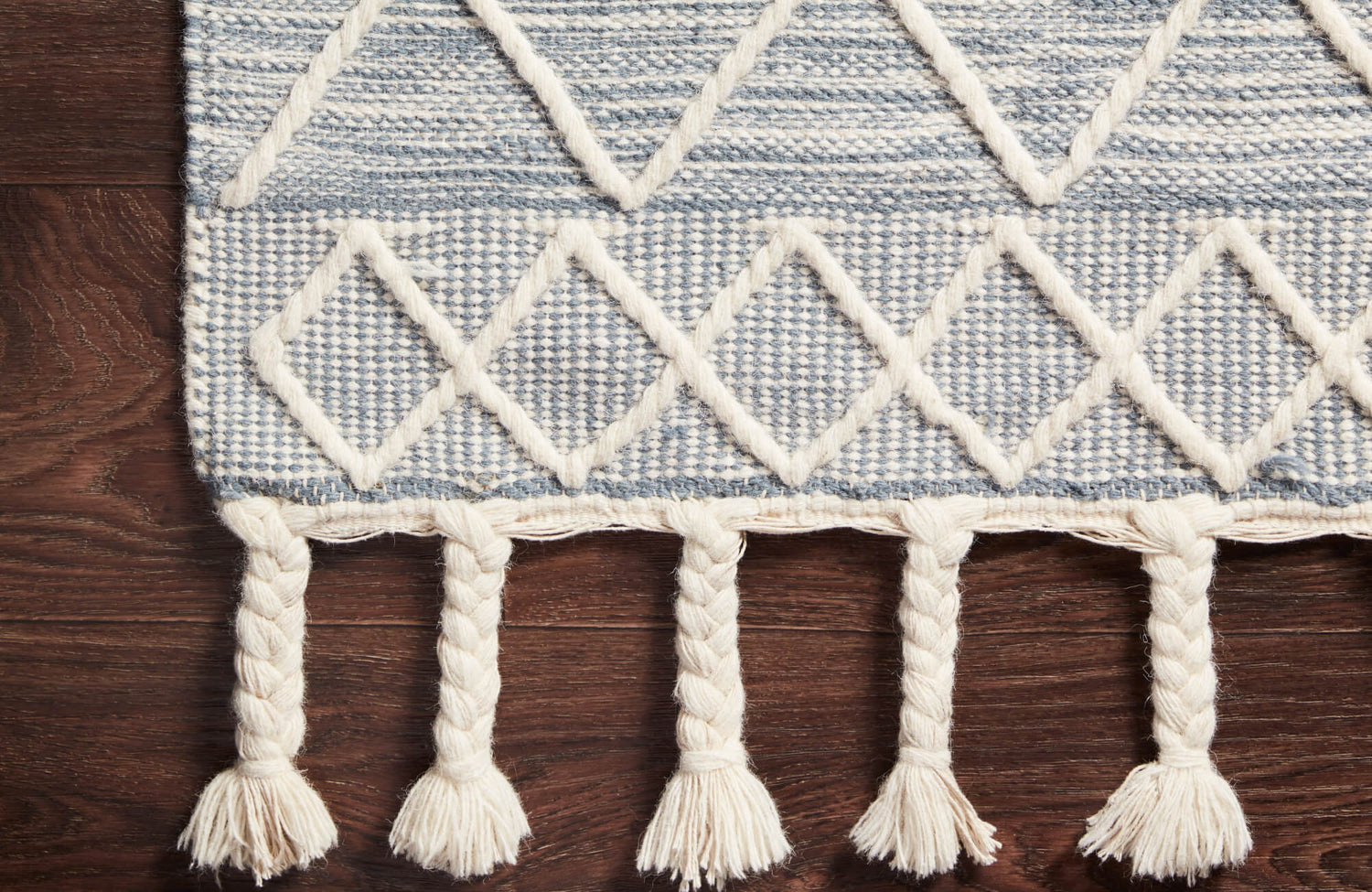
Wool rugs, such as our Lafferty Wool Blend Rug in Indigo above, are made from natural sheep fibers and are known for their softness, warmth, and durability. Because wool naturally repels stains and moisture to some degree, it often doesn't need harsh cleaning agents. However, wool is also highly absorbent and sensitive to alkaline cleaners, which can strip its natural oils and cause shrinkage or fiber distortion.
It’s best to use pH-neutral or wool-specific cleaners, ideally after testing a small hidden section for colorfastness. Avoid over-wetting or using hot water, as wool can be prone to felting. Spot-clean gently with a soft cloth and allow the rug to air-dry completely, preferably flat and out of direct sunlight, to preserve its texture and shape.
Cotton Rugs
Cotton rugs are made from natural plant fibers and are typically lightweight, breathable, and affordable. They absorb liquid quickly, which makes them easier to clean, but also more prone to staining and mildew if not dried properly. Cotton rugs are usually machine-washable in smaller sizes, although larger or dyed versions may need extra care.
For regular maintenance, a mild soap and cold water solution is often enough. Be careful with bleaches or strong detergents, as they can weaken the fibers and fade colors over time. Also, check the rug’s backing before washing, since cotton rugs may be stitched to other materials like rubber or latex that don’t hold up well to soaking.
Polyester Rugs
Polyester rugs are synthetic and known for their resistance to staining, fading, and moisture. They’re a popular choice in busy households because they hold up well to frequent cleaning and usually don’t absorb spills as quickly as natural fibers. That said, polyester can attract oil-based stains more than water-based ones, which makes the spot-treatment technique important.
For everyday cleaning, mild detergents or water-based carpet cleaners work well. Also, a soft brush or cloth can help lift residue without harming the fibers. Avoid heavy scrubbing or high-heat drying, which can flatten or melt polyester threads. With consistent upkeep, these rugs often keep their color and shape longer than many natural options.
Polypropylene Rugs
Polypropylene (also called olefin) is another synthetic material designed for durability and water resistance. These rugs are extremely stain-resistant and affordable, making them ideal for outdoor spaces, basements, or busy rooms. Since the fibers are dyed during manufacturing, they typically don’t bleed or fade easily, even after repeated washes.
Still, polypropylene rugs can trap odors and oils if not cleaned thoroughly. For most messes, a gentle detergent or diluted vinegar mix can lift stains without issue. You can also hose them down if used outdoors, but be sure to dry them completely, especially if they have jute or felt backings underneath that may hold moisture.

Types of Rug Cleaners Available
When it comes to keeping rugs clean, there’s no shortage of options—but not all cleaners work the same way. Some are great for convenience, while others are better suited for delicate fibers or specific stains. Below, we’ll walk through the most common types and when to use each one.
Store-Bought Carpet and Rug Shampoos
Commercial rug shampoos are a go-to for many households because they’re easy to use and widely available. The best ones are pH-balanced and clearly labeled as safe for use on rugs, which helps minimize the risk of damage or discoloration. They often come with detailed instructions and are compatible with most portable carpet cleaners, too.
That said, it’s important to avoid harsh formulas with bleach, ammonia, or high alkalinity, especially on natural fibers. These ingredients can strip color, weaken threads, or leave a sticky residue that attracts more dirt. A quick label check goes a long way in choosing something both effective and safe.
DIY and Natural Cleaning Solutions
For those who prefer a gentler approach, homemade cleaners offer a budget-friendly and eco-conscious alternative. Common mixtures like vinegar and water, baking soda, or a dash of unscented castile soap can tackle light stains and freshen up fibers without introducing harsh chemicals. These solutions are especially useful for routine spot cleaning and light maintenance.
However, not all DIY mixes are suitable for every rug. For instance, vinegar or lemon juice, while great on synthetic fibers, can break down wool or fade natural dyes if used too often. Always test a small area first, and avoid oversaturating rugs with too much liquid during cleaning.
Enzyme-Based Cleaners for Pet Stains
If you’re dealing with pet accidents, enzyme cleaners are often the safest and most effective option. These products are designed to break down organic stains and neutralize odors at the source, which is especially helpful for urine, vomit, or drool. Many are non-toxic and safe for use around kids and pets, making them a go-to for busy homes.
Still, not all enzyme cleaners are created equal. Some may leave behind residues that require extra rinsing, or they may contain added fragrances that linger longer than expected. To avoid buildup, choose a formula that rinses clean and is specifically labeled for rugs or carpets.

Spot Cleaning vs. Deep Cleaning
Not every rug cleaning job needs a full deep treatment. Spot cleaning is ideal for fresh spills, stains, or messes in small areas, especially when caught early. A clean, white cloth, some diluted vinegar or mild soap, and gentle blotting can often fix the issue without fuss. Acting quickly helps prevent the stain from settling into the fibers or seeping into the backing.
Deep cleaning, on the other hand, should be done less often but more thoroughly. Most rugs only need a full deep clean every 6–12 months, depending on where they’re placed and how much activity they see. For instance, a hallway runner may need it more frequently than a bedroom accent rug. Also, the cleaning method should match the rug type; some can handle water extraction, while others need low-moisture techniques.
Over-cleaning or using harsh machines too often can wear down fibers and backing materials faster than necessary. Too much water or heavy scrubbing can also lead to shrinkage, color fading, or mildew issues, especially on natural or delicate rugs. The key is knowing when a quick touch-up will do the trick, and when it’s time for a deeper refresh based on actual use and material needs.

Tools That Help Cleaning Go Smoothly
Even the right cleaner needs the right partner to do its job well. Using proper tools makes stain removal easier, protects delicate fibers, and helps extend your rug’s lifespan. Below are a few essentials that pair well with different cleaning approaches and make the whole process more efficient.
Soft-Bristle Brushes
Gentle brushes are perfect for working in cleaning solutions without damaging your rug’s surface. They help lift dirt and stains from the fibers without roughing them up, making them especially helpful for wool or cotton rugs. Also, they’re great for working in natural or enzyme-based cleaners where you want light pressure and even coverage. Avoid stiff bristles that can fray edges or pull on loops over time.
Microfiber Cloths
Microfiber cloths are a go-to for blotting, rinsing, and drying rugs after spot cleaning. They’re highly absorbent and soft enough for even the most delicate materials. For instance, they’re ideal when testing a cleaner on a small area or when removing residue from natural fiber rugs. They also help minimize friction and avoid leaving lint behind like paper towels sometimes do.
Carpet Extractors (Low-Moisture Models)
For occasional deep cleans, a low-moisture carpet extractor can give your rug a fresh reset without soaking it. These machines rely on gentle suction to lift dirt and solution from the fibers, which is safer than steam or high-heat methods. They work especially well for synthetic rugs like polypropylene or polyester, where faster drying is key. Just be sure to choose one designed for area rugs, not full carpets, to avoid overpowering delicate materials.

Safety Considerations for Kids, Pets, and the Environment
When cleaning rugs in a home with kids or pets, safety isn’t just a bonus—it’s essential. Many conventional cleaners contain harsh chemicals or strong fragrances that can irritate sensitive skin, eyes, or airways. That’s why it’s smart to choose non-toxic, biodegradable formulas that are clearly labeled as pet- and child-safe. For instance, products with Green Seal or EPA Safer Choice certifications can offer peace of mind while still delivering great results.
Also, keep ventilation in mind. Even safe cleaners can build up in enclosed spaces without proper airflow, so open a window or run a fan while cleaning. Look out for formulas with low or no VOCs, especially in multi-use areas like living rooms or nurseries. Avoid anything overly fragrance-heavy—what smells “fresh” to one person might be a headache trigger for another, especially for kids or allergy-prone family members.
Choosing an eco-conscious cleaner also means protecting the environment beyond your home. Many plant-based or enzyme-based options break down naturally and reduce chemical runoff into water systems. They also tend to be packaged more sustainably, which is a small but meaningful step toward greener cleaning. It’s all about balancing performance with care for your family, your pets, and the planet, too.
Choosing the Right Rug Cleaner with Confidence
Finding the safest and most effective rug cleaner starts with knowing your rug's material and choosing solutions that work with, not against, its natural properties. From gentle wool-friendly formulas to powerful enzyme-based sprays for pet stains, every product has its place when matched thoughtfully to fiber type, stain source, and use case. Combining the right cleaner with smart habits, like spot-treating early, avoiding overwetting, and using soft tools, can keep your rugs looking great for years without risking damage.
If you're still unsure about what cleaner suits your rug best, don't hesitate to get expert advice. Whether you’re trying to protect an heirloom wool piece or deep-clean a polyester hallway runner, a professional design or care consultation can help tailor your cleaning routine. With the right approach, rug care doesn’t have to be a guessing game, it can be a confident part of your home maintenance routine.