Refined, timeless, and endlessly versatile, white tile has long been cherished by interior designers and architects for its ability to bring light, purity, and structure into a space. When crafted from ceramic, it becomes more than just a surface—it offers lasting durability, easy maintenance, and exceptional resistance to moisture and stains. Whether softly diffusing light in a serene bathroom, providing a crisp, clean backdrop for a modern kitchen backsplash, or adding sculptural depth to a decorative wall, ceramic white tile adapts with elegance to a wide range of interior styles.
Beyond its aesthetic value, ceramic ensures technical performance ideal for vertical installations in both residential and commercial settings. This guide explores the most impactful and innovative ways to use white ceramic tile exclusively on walls and backsplashes, bringing clarity, contrast, and character to every room they enhance.

White Ceramic Tiles for Kitchen Backsplash Applications
As a backsplash material, white ceramic tiles are both functional and aesthetically adaptable, providing a clean, heat-resistant surface that enhances the overall brightness and organization of a kitchen. Their versatility in design and resilience in daily use make them a preferred choice for home chefs and design professionals alike.
Hygienic Surface for Food-Prep Zones
Offering a non-porous, easy-to-clean finish, white ceramic kitchen backsplash tiles provide a hygienic barrier against food splashes and grease. Their glazed surface resists moisture, preventing bacterial buildup and ensuring sanitary conditions near high-use prep areas. Unlike porous materials such as natural stone, ceramic doesn’t require sealing, which simplifies maintenance and long-term care. This makes them especially well-suited for busy kitchens that prioritize food safety and cleanliness. The smooth surface also supports frequent cleaning with standard household cleaners without degrading the finish. For enhanced hygiene, combining ceramic tile with antimicrobial or epoxy grout can create a more resistant and seamless backsplash installation.
Enhancing Visual Depth with Light Reflectivity
Glossy white ceramic wall tiles are particularly effective at reflecting both natural and artificial light, contributing to a brighter and more spacious kitchen environment. Their high Light Reflectance Value (LRV) helps minimize shadows and reduce the reliance on additional lighting fixtures, especially in compact or enclosed kitchens. Large-format or continuous tile patterns further amplify this effect by reducing visual breaks and enhancing surface continuity. Even under-cabinet lighting becomes more effective when bouncing off reflective white surfaces. This synergy between material and light transforms the backsplash into a functional and luminous design element. The overall result is a more inviting, efficient, and visually open cooking space.
Styling and Layout Variations for Design Contrast
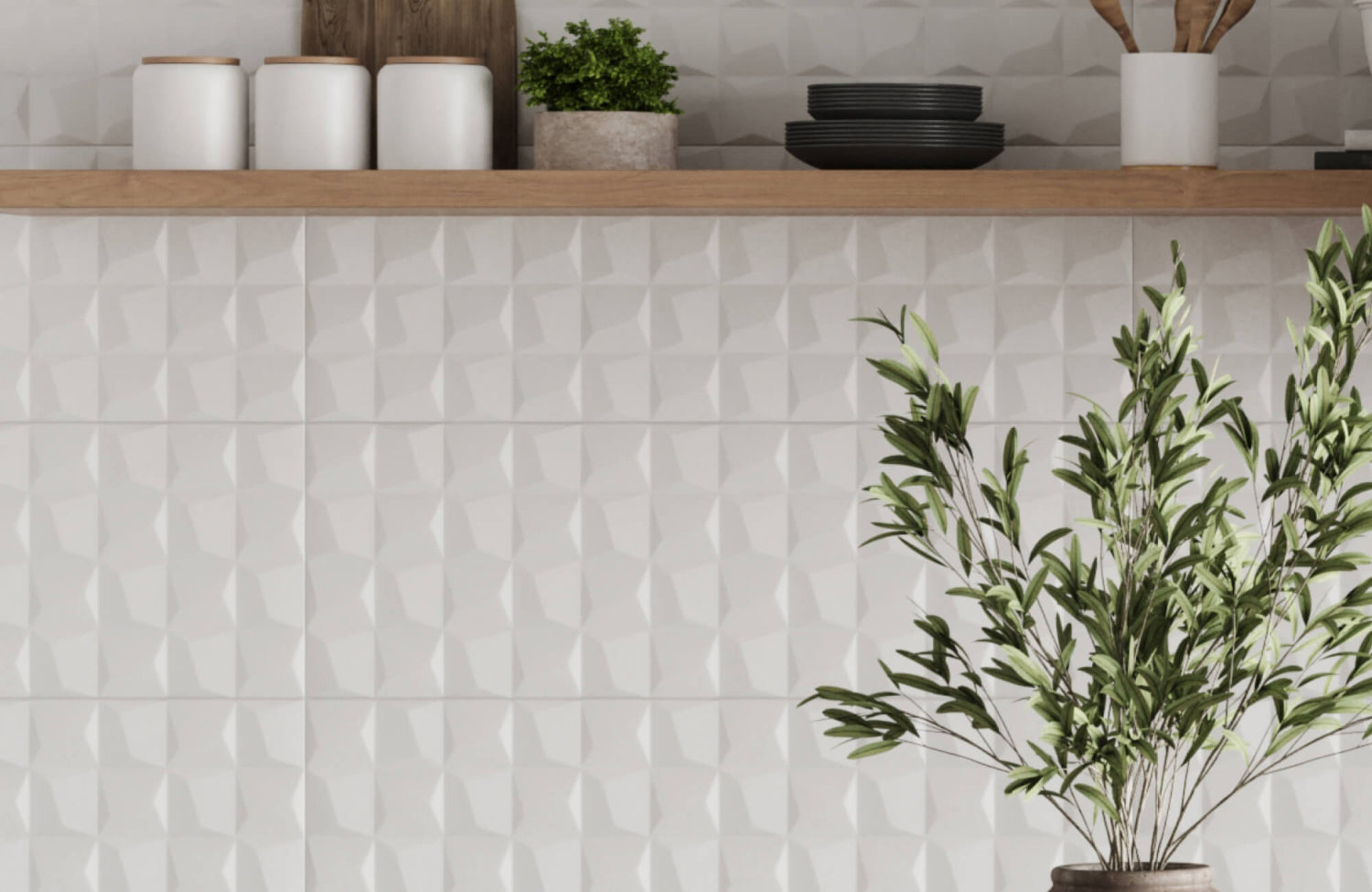
White ceramic backsplash tiles are available in a wide range of patterns and formats that allow for customized visual interest without overwhelming the space. Sculptural surface reliefs, subtle geometric patterns, and large-format dimensions are especially effective for creating depth and movement while keeping a monochromatic palette. Tiles with low-profile grout lines and matte finishes can also emphasize form over color, allowing texture and layout to carry the design. Whether stacked horizontally for a clean grid or laid vertically to elongate the wall, these stylistic variations bring dynamic structure and tactile contrast to otherwise minimalist kitchens.
A striking example is the use of Edward Martin’s Zayne 12x36 Matte Ceramic Tile in Blocks, as shown in the picture above. These large-format tiles feature a sculpted, geometric relief that adds architectural depth to the backsplash while maintaining a refined, tone-on-tone look. Their block motif also introduces quiet rhythm and dimension, while the matte surface softens light reflection, lending a modern yet grounded quality to the space. The minimal grout lines enhance continuity and ensure the texture becomes the visual centerpiece. Whether used in residential or commercial kitchens, this style of tile transforms a simple backsplash into a design-driven feature wall.

White Ceramic Tile Solutions for Bathroom Wall Surfaces
In bathroom settings, white ceramic wall tiles offer both functional benefits and design refinement, making them a reliable choice in wet areas where cleanliness and moisture resistance are critical. Their light-enhancing properties and adaptable finishes bring a serene, cohesive quality to bathroom interiors.
Moisture-Resistant Shower and Bath Enclosures
White ceramic tiles excel in wet-zone applications such as shower walls and bathtub enclosures due to their low water absorption rates and durable glazed finishes. Meeting ANSI A137.1 standards, these tiles act as an effective moisture barrier, especially when installed over waterproofing membranes with mold-resistant grout. Their surface also resists hard water stains and mineral deposits, maintaining a fresh appearance even with regular exposure to humidity. This reliability makes them ideal for both residential and hospitality-grade bathrooms that endure frequent use. Their technical performance ensures longevity while preserving indoor air quality through VOC-free manufacturing. The end result is a bathroom surface that remains both beautiful and structurally sound over time.
Amplifying Natural and Artificial Light
The reflective qualities of white ceramic bathroom wall tiles can transform the perception of space, particularly in compact or windowless environments. Glossy or semi-gloss finishes maximize light distribution by bouncing illumination around the room, reducing shadows, and creating a clean, radiant atmosphere. These reflective surfaces work especially well near mirrors and vanity lighting, enhancing the overall functionality of the space. When paired with floor-to-ceiling installation or large-format tiles, the visual effect is seamless and expansive. The tiles not only brighten the room but also contribute to a calm, spa-like ambiance that supports relaxation. This interplay between finish and light elevates the aesthetic while supporting practical needs.
Elevated Visual Design through Texture and Finish
Today’s white ceramic tiles come in a variety of textures and finishes that add subtle but impactful visual interest to bathroom walls. Options like fluted, ribbed, or sculpted surfaces introduce depth and dimension without overwhelming the color palette. Matte and satin finishes also offer a softer, more organic look that diffuses light for a soothing effect. Specialty glazes, including crackle or hand-applied finishes, provide artisanal character while maintaining the ease of maintenance associated with ceramic. These details allow designers to tailor the tile to the overall aesthetic, whether contemporary, traditional, or transitional. With the right finish, white ceramic tiles become more than a functional choice—they contribute to the emotional experience of the space.
To further support the design process, Edward Martin offers an intuitive Augmented Reality (AR) tool that allows you to visualize ceramic tile options directly within your bathroom environment. By using your mobile device, you can explore tile shapes, textures, and finishes in real time, ensuring the selection aligns perfectly with your lighting, fixtures, and color palette. This interactive tool bridges the gap between inspiration and implementation, making it easier to choose tiles with confidence and clarity.

Decorative White Tile Accent Walls and Feature Panels
As a design feature, white ceramic wall tiles can create striking focal points that bring texture and depth to otherwise neutral interiors. Their versatility in texture, pattern, and form makes them ideal for accent walls in living rooms, hallways, and transitional spaces.
Three-Dimensional Reliefs and Architectural Texture
Three-dimensional white ceramic tiles add sculptural interest to walls by playing with depth, shadow, and light. These relief patterns, ranging from geometric protrusions to organic waveforms, transform flat surfaces into architectural features that shift visually throughout the day. The material’s durability also ensures that these effects remain intact in both residential and commercial installations. Such textural surfaces are especially effective when paired with directional lighting, which accentuates their form and creates dramatic visual interplay. Unlike painted or plastered surfaces, ceramic relief tiles are scratch-resistant and easily cleaned. This combination of function and artistry positions them as a sophisticated design element for curated interior environments.
Grout as a Design Element
Grout, often overlooked, can play a pivotal role in the overall impact of white ceramic tile installations. Using a contrasting grout color outlines each tile, reinforcing pattern visibility and contributing to the graphic structure. On the other hand, matching grout tones creates a seamless, monolithic appearance that emphasizes tile texture and format. Specialty grouts, such as those with glitter, metallic pigments, or stain resistance, can further customize the wall’s character. In decorative applications, grout can be chosen as deliberately as the tile itself, enhancing or softening the overall design language. These choices enable deeper personalization while ensuring long-term performance and aesthetic cohesion.
Integrating with Mixed Materials
White ceramic accent walls serve as a visual anchor when integrated with contrasting materials like wood, concrete, or metal. This interplay of textures adds depth and dimension, allowing the tile’s clean surface to act as a neutral yet refined backdrop. For example, vertical wood slats adjacent to white tile can create a Scandinavian or Japandi aesthetic, while pairing with raw concrete supports an industrial look. Edge trim in brushed brass, matte black, or aluminum also enhances definition and introduces a refined transition between materials.
A great example of this material harmony is showcased in the image above, where Polly 3x10 Glossy Ceramic Tile in White is used in a clean, horizontal brick pattern. The polished surface of the tile reflects natural light beautifully, amplifying brightness in the space while maintaining a sleek, uninterrupted rhythm. It also pairs effortlessly with the warm tones of the natural wood shelf and the soft metallic sheen of the brass hanging rod and faucet. Together, these mixed elements create a sophisticated and functional utility area that feels intentionally composed. The tile’s crisp geometry and reflective finish unify the design, grounding the space while allowing other materials to shine.

White Ceramic Wall Tiles in Commercial and Hospitality Interiors
In commercial and hospitality environments, white ceramic wall tiles deliver aesthetic neutrality, ease of maintenance, and long-term performance in busy areas. Their compliance with safety and hygiene standards further reinforces their value in public spaces.
Regulatory Compliance and Fire Resistance
White ceramic wall tiles offer inherent fire resistance and are often classified as Class A materials under ASTM E84, making them suitable for regulated commercial applications. These non-combustible surfaces provide peace of mind in corridors, lobbies, and public restrooms where fire codes are strict. Additionally, ceramic’s chemical resistance allows for repeated cleaning with industrial-grade disinfectants, ensuring hygiene in food service or healthcare environments. Because the tiles do not off-gas VOCs, they also support healthier indoor air quality. These technical benefits make ceramic a go-to material in both new construction and commercial renovations. Safety, durability, and compliance converge in one elegant package.
Corporate and Retail Brand Integration
In retail and hospitality design, white ceramic tiles act as a flexible visual backdrop that supports branding without competing with featured products or signage. Their crisp, clean aesthetic aligns well with minimalist and luxury design strategies, allowing lighting, merchandise, and color accents to take focus. For high-end spaces, large-format or glossy tiles convey precision and modernity, while textured finishes introduce tactile interest. Some tiles can be custom-printed with logos or motifs, subtly reinforcing brand identity within the design framework. This design neutrality also allows for seasonal changes or branding updates without requiring wall renovation. Ceramic's permanence offers long-term branding flexibility in a durable format.
Minimized Lifecycle Costs and Maintenance
One of ceramic’s strongest advantages in commercial use is its exceptionally low lifecycle cost. Unlike drywall, laminate, or vinyl, ceramic doesn’t dent, stain, or fade under daily wear and tear, reducing the need for repair or replacement. Routine maintenance involves simple cleaning with standard commercial products—no special sealants or protective coatings are needed. This makes it ideal for restrooms, kitchen areas, and public-facing surfaces that must be consistently clean and presentable. Additionally, ceramic supports sustainability goals, being recyclable and often manufactured with post-industrial content. These long-term savings in maintenance and environmental impact make ceramic an economically and ethically sound investment.

Artistic and Custom Applications of White Ceramic Wall Tile
Beyond function, white ceramic wall tiles serve as a creative medium, adaptable to artistic installations that express personality, culture, or brand identity. Advances in customization techniques have unlocked new possibilities for one-of-a-kind tile compositions.
Laser Etching and Digital Printing for Graphic Precision
With high-resolution digital printing and laser etching, white ceramic tiles can become storytelling surfaces embedded with intricate patterns, typography, or imagery. These custom designs are bonded to the tile glaze during kiln firing, making them scratch-resistant and colorfast. Ideal for museums, corporate lobbies, or boutique hospitality spaces, such tiles create lasting visual narratives that resist wear and time. The precision of this technology also allows designers to maintain both creative control and material integrity. It’s now possible to reproduce detailed illustrations or maps across entire walls using modular ceramic panels. This capability merges artistry with architectural function in a powerful way.
Parametric and Modular Design Integration
Parametric tile systems and modular ceramic wall formats allow for sculptural expressions driven by algorithmic design. These installations often involve interlocking or repeating geometric shapes that produce a dynamic sense of movement across a wall. Perfect for creative offices, tech campuses, and galleries, parametric ceramic walls also evoke innovation and modernity. Fabricated with CNC precision, these systems ensure tight tolerances and clean alignments. When paired with strategic lighting, their undulating forms create dramatic shadow interplay. The combination of modular logic and ceramic durability makes them ideal for bold yet maintainable installations.
Custom Glazing and Artisanal Techniques
Artisan-crafted ceramic tiles with custom glazes bring warmth and personality to wall surfaces, combining handcrafted beauty with industrial resilience. Techniques like crackled glaze, raku firing, or brush-applied finishes introduce subtle variations in sheen, tone, and texture. These effects also elevate white ceramic tiles from a mass-produced surface to a piece of functional art. Particularly in luxury residential or boutique retail environments, these tiles contribute to a tactile, immersive experience.
A perfect example, as displayed in the picture above, is our Estelle 12x12 Satin Ceramic Tile in Deco 3 White Gold, which pairs a clean satin white surface with delicate, gold-accented linear grooves in a modern triangular motif. This refined yet understated detail introduces a subtle shimmer and directional texture that plays with both light and geometry. The handcrafted precision of the gold inlay also adds a layer of elegance that feels bespoke, yet the tile maintains all the durability and ease of maintenance of ceramic. It’s this blend of artisanal detail and everyday functionality that makes this Estelle tile ideal for curated spaces seeking quiet luxury, where surfaces don’t shout, but whisper distinction.
Design Possibilities with White Ceramic Wall Tiles
White ceramic wall tiles offer more than just surface coverage—they bring light, harmony, and refined structure to interior spaces. Their adaptability across vertical applications allows them to transition seamlessly from kitchen backsplashes to sculptural feature walls and elegant commercial interiors. With their enduring beauty, easy maintenance, and technical reliability, these tiles serve as both design elements and functional surfaces. When thoughtfully applied, white ceramic tiles transform walls into timeless statements of clarity and sophistication.
To experience the quality firsthand or explore styles that suit your next project, request tile samples from Edward Martin and begin designing with confidence. A curated sample in hand can spark new ideas, helping you visualize how texture, tone, and shape will transform your walls into timeless works of design!