Brick tiles bring the timeless character of masonry into modern interiors, offering the texture, depth, and warmth of real brick with the versatility of tile installation. Whether crafted from genuine thin brick or durable porcelain reproductions, these tiles create striking surfaces that balance rustic charm and architectural sophistication.
Their slip-resistant, heat-tolerant, and low-maintenance qualities make them ideal for both decorative and functional spaces. Below, we’ll discuss some of the best places to showcase brick tiles inside your home, and how to use them effectively for lasting beauty and performance.

Kitchens and Culinary Spaces
Every home’s design story often begins in the kitchen, the space where function meets daily life. Brick tiles bring warmth, resilience, and a handcrafted quality to culinary environments, setting the tone for material continuity throughout the home.
The Classic Kitchen Backsplash
A brick tile backsplash offers an ideal balance of form and function. Its textured surface introduces visual depth and a handcrafted look that pairs beautifully with stainless steel appliances and quartz countertops. Materials like Edward Martin’s Jaden 2.5x16 Glossy Ceramic Tile in Ink, shown above, bring a refined, modern interpretation to the classic brick format, with deep tonal variation and a reflective glaze that enhances both light and contrast. Unlike full masonry, these thin ceramic tiles are lighter, easier to install, and feature nonporous surfaces that resist staining and splashes from oils, ensuring long-term performance and enduring sophistication.
Texturizing the Kitchen Island Base
Cladding the kitchen island base in brick tile adds an unexpected tactile element that contrasts smooth countertop materials. This technique enhances spatial definition in open-plan layouts, grounding the island as a visual centerpiece. Designers often select elongated brick formats or modular brick slips to accommodate corners and curved forms seamlessly. When paired with under-counter lighting, the uneven surface of matte brick tile creates subtle shadow play, highlighting its artisanal quality. Mortar color choice, whether tonal for cohesion or contrasting for emphasis, further refines the design’s character.
Rustic Brick Tile Flooring in the Pantry or Scullery
Brick tile flooring brings old-world authenticity to secondary culinary spaces like pantries or sculleries. Known for their compressive strength and slip resistance, brick tiles withstand heavy storage loads and foot movement. When sealed properly, they offer exceptional resistance to moisture and thermal fluctuations. In radiant-heated floors, brick’s high thermal mass enhances energy efficiency by retaining and gradually releasing warmth. Tumbled or wire-cut finishes contribute to a rustic, lived-in appearance, making these utilitarian zones feel both functional and inviting.

Living Room Focal Points
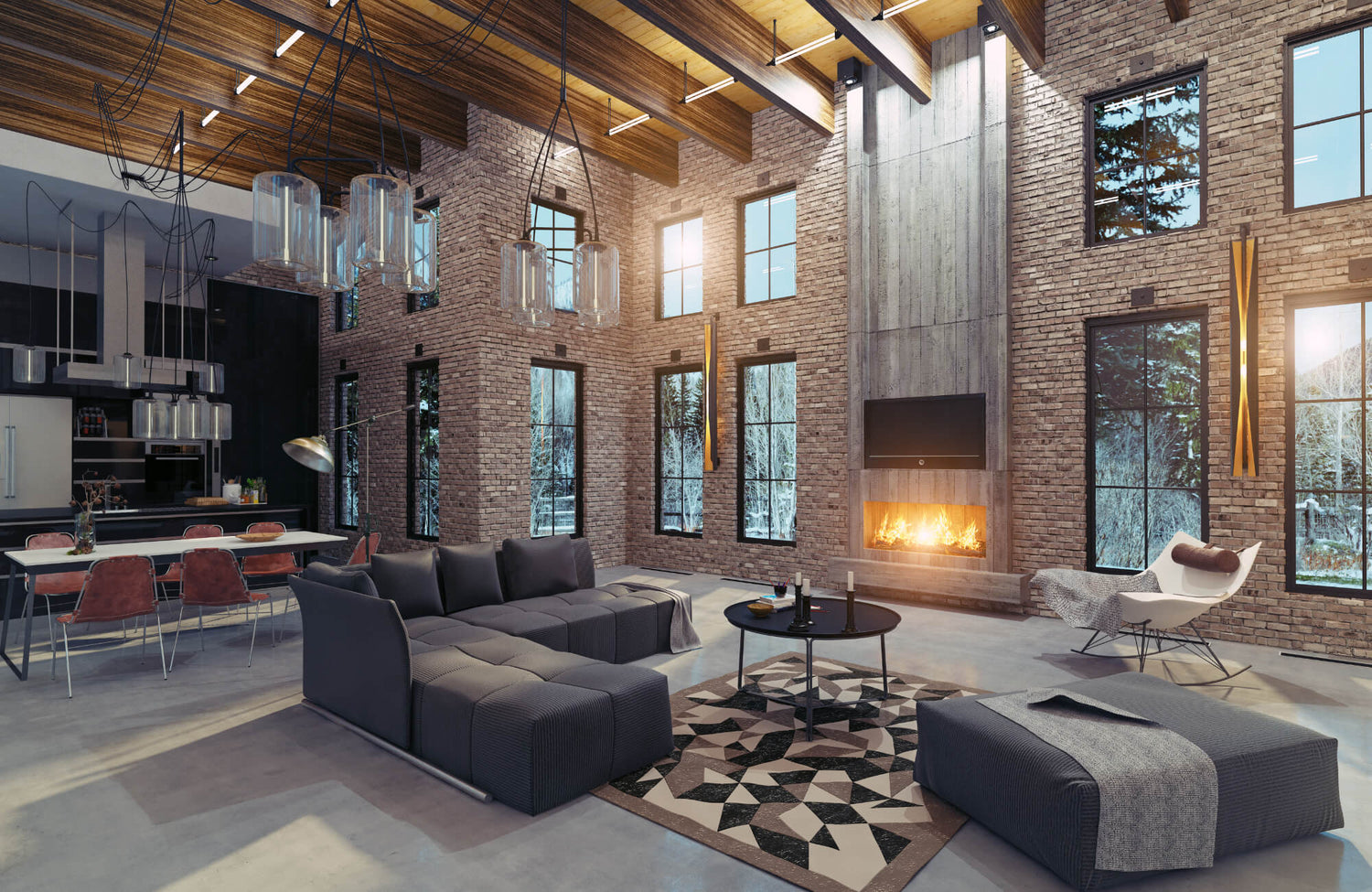
Extending that sense of texture beyond the kitchen, brick tiles can transform living areas into architectural statements. Whether surrounding a fireplace or framing a media wall, they add both visual weight and timeless appeal to shared spaces.
Transforming the Fireplace Surround
A brick tile fireplace surround creates a timeless centerpiece that blends tactile character with thermal functionality. Thin brick veneer or porcelain brick-look tiles withstand heat exposure and temperature changes without cracking or discoloration, making them a durable cladding choice. As shown above, Edward Martin’s Everett 2x10 Matte Ceramic Tile in Almond offers a beautifully balanced palette of warm beige and soft clay tones, ideal for achieving a natural, handcrafted feel. Its matte finish and subtle surface variation enhance the texture and depth of a fireplace surround, complementing both traditional and modern interiors with understated warmth.
Defining the Television Accent Wall
Integrating brick tile behind a wall-mounted television establishes a grounded focal point that visually balances high-tech elements with natural materiality. Its rough surface subtly diffuses glare, improving visual comfort while adding architectural context to the media zone. Lightweight brick slips or large-format porcelain panels minimize load on interior framing, making them suitable for renovation or retrofit projects. Color selection is critical, neutral greys and desaturated reds lend warmth without competing with screen visuals. When paired with concealed wiring and floating media consoles, the brick backdrop transforms an ordinary wall into a sophisticated, design-forward installation.
Backing Built-in Shelving Units
Lining the back panels of built-in shelving with brick tile introduces depth and contrast to display niches and cabinetry. The tactile backdrop enhances the silhouette of decorative objects, books, and lighting fixtures, creating a curated, gallery-like effect. To maintain precise alignment and minimize visual clutter, designers typically use rectified porcelain brick-look tiles or thin brick veneers with tight joints. Sealing or matte glazing protects against dust accumulation while preserving the authentic look of exposed masonry. This subtle yet impactful application turns storage into a design statement, enriching the living room’s overall architectural narrative.

Creating Ambiance in Bedrooms and Private Retreats
From the social energy of the living room to the quiet calm of the bedroom, brick tile introduces depth and intimacy. Its tactile surface and natural warmth create a comforting backdrop ideal for spaces centered on rest and reflection.
The Feature Headboard Wall
A brick tile headboard wall creates a striking focal point that anchors the room’s design while evoking a sense of permanence. Thin brick veneer or porcelain brick-look tiles are ideal for vertical installations, offering reduced weight and simplified application compared to full masonry. Designers often favor soft, desaturated tones, such as whitewashed, blush, or sand-colored bricks, to maintain a tranquil palette. The interplay between directional lighting and the tile’s surface texture produces gentle shadowing, adding dimension without visual clutter. Sealed matte finishes ensure easy maintenance and prevent dust accumulation, preserving the wall’s refined aesthetic over time.
A Cozy Reading Nook Area
Cladding a reading nook or alcove in brick tile introduces a sense of intimacy through material enclosure. The inherent thermal mass of brick contributes to consistent ambient temperature, enhancing comfort in spaces intended for relaxation. Pairing brick with layered textiles, such as linen cushions and wool throws, creates a pleasing juxtaposition between hard and soft surfaces. Narrow-format tiles or herringbone arrangements can visually elongate smaller corners, while warm-toned grouts unify the look. Incorporating recessed wall lighting or sconces accentuates the tile’s relief, producing a cocooning, softly illuminated retreat within the bedroom.
Unexpected Ceiling Detail
Extending brick tile to the ceiling redefines spatial perception by drawing the eye upward and adding architectural drama. This technique, reminiscent of exposed loft-style interiors, introduces a sense of texture and authenticity that contrasts with smooth drywall planes. Lightweight brick slips or faux brick panels are preferred for overhead applications to minimize structural load. When installed over a vaulted or tray ceiling, brick emphasizes the geometry of the architecture and can visually lower overly tall spaces for a more intimate scale. Coordinating ceiling-mounted lighting allows the material’s natural relief to cast subtle, atmospheric shadows, creating a uniquely immersive and restorative environment.

High-Impact Transitional Areas
As you move through the home, transitional spaces like foyers and hallways offer perfect opportunities to carry that cohesive design forward. Brick tiles bring both durability and design presence to these busy areas, uniting practicality with style.
Setting the Tone in the Entryway or Foyer
A brick tile installation in the entryway immediately establishes character and durability at the threshold of the home. Its tactile surface and subtle color variation evoke a sense of craftsmanship, providing a grounded first impression. As seen above, Edward Martin’s Catalina 2x16 Matte Porcelain Tile in Cotto embodies this warmth with sunbaked clay tones and a smooth matte finish that enhances natural light. Porcelain brick-look tiles like this one offer low water absorption and excellent resistance to tracking dirt or moisture—ideal for transitional spaces. When paired with soft lighting and organic materials, they create a welcoming, cohesive entryway design.
The Hallway and Staircase Wall Runner
Using brick tile as a wall runner along hallways or staircases introduces visual rhythm and tactile contrast in areas that typically lack architectural definition. Installed at chair-rail height or full height depending on proportion, brick cladding provides both design continuity and surface protection against scuffs and contact. Slim-format thin brick or lightweight veneer ensures minimal intrusion into circulation space. Vertical stacking or staggered bonds can elongate the corridor visually, while painted or whitewashed finishes help reflect light and maintain an open, airy feel. Integrating concealed LED lighting along the base or handrail line highlights the tile’s texture, subtly guiding movement through the space.
Durable Design in the Mudroom
Brick tile’s robust composition and inherent slip resistance make it a practical yet stylish choice for mudroom flooring and wall bases. Unlike natural brick, porcelain variants require minimal sealing and are impervious to salt, mud, and cleaning agents, common in transitional utility zones. A matte or textured surface ensures safe footing, even when wet, while darker grout tones disguise dirt between cleanings. Extending brick tile partially up the wall creates a wainscot effect, protecting surfaces from abrasion and moisture. Combined with built-in storage, hooks, and benches, this application delivers both performance and aesthetic cohesion, transforming a purely functional area into a polished design feature that bridges the home’s interior and exterior.

Unexpected Places for Rustic Charm
Beyond the main living zones, brick tile continues to surprise in smaller, specialized spaces. From laundry rooms to home bars and offices, it delivers unexpected charm, proving that even the most functional areas can express refined, rustic character.
Architectural Detail in the Home Bar
In a home bar, brick tile adds depth and texture that complement reflective materials like glass shelving, metal fixtures, and natural wood. Installing brick as a backsplash or full accent wall establishes an inviting, lounge-like ambiance reminiscent of vintage cellar bars. Thin brick veneer or porcelain brick-look tiles are preferred for their manageable weight and ease of maintenance. When illuminated with undercabinet or wall-mounted lighting, the tile’s irregular surface creates soft shadow gradients, enhancing visual depth. For a refined industrial aesthetic, designers often pair charcoal or whitewashed brick with matte black hardware and reclaimed wood finishes.
Adding Warmth to the Laundry Room
The laundry room offers a surprising opportunity to blend utility and comfort through the use of brick tile. As a flooring material, brick provides superior durability under constant foot movement, water exposure, and cleaning cycles. Its slip-resistant surface and high compressive strength ensure long-term performance, while its thermal mass moderates temperature fluctuations in compact, enclosed spaces. As shown above, Edward Martin’s Marsden 3x10 Matte Ceramic Tile in Clay captures this balance beautifully, with sun-warmed terracotta tones that infuse the room with natural warmth. On walls or floors, it softens the sterile feel of appliances while maintaining a clean, inviting aesthetic.
Anchoring the Home Office or Study
In home offices and studies, brick tile introduces a grounded, architectural backdrop that supports focus and creativity. A brick accent wall behind a desk or built-in shelving creates visual depth, helping define the workspace within open-plan layouts. The organic texture contrasts effectively with modern office furnishings, lending the space a tactile balance between tradition and technology. Designers may opt for thin brick slips or rectified porcelain panels to achieve a seamless installation with minimal joint lines. Combined with warm task lighting and wood or leather accents, brick surfaces convey stability and craftsmanship, qualities that elevate the atmosphere of productivity and comfort in professional-grade home workspaces.
Final Considerations and Your Next Design Step
In the end, brick tiles offer an unmatched opportunity to infuse your home with authentic texture, history, and warmth across virtually every room. By considering the style, color, and finish of the brick veneer, be it classic red, industrial black, or bright whitewash, you can tailor this powerful material to fit seamlessly into any design movement, from rustic farmhouse to minimalist contemporary.
To make this process effortless, Edward Martin’s Augmented Reality (AR) Visualization Tool allows you to preview how different brick tiles will look in your actual space. Once you’ve found your ideal match, you can easily order tile samples directly through the same interface. This combination of digital visualization and tactile confirmation ensures that every selection aligns perfectly with your design intent, bridging inspiration and execution with precision and confidence.