Marble and granite are two of the most popular natural stones used in home design, valued for their timeless beauty and lasting durability. While both materials can elevate the look of a space, their distinct characteristics influence how well they perform in different areas of the home.
In this article, we’ll explore the key differences between marble and granite, including their appearance, durability, maintenance requirements, and cost. We’ll also introduce marble-look tiles as a stylish, low-maintenance alternative that captures the elegance of natural stone without the added upkeep.

Appearance and Visual Characteristics
Marble and granite each offer distinct visual qualities that shape the overall look and atmosphere of a space. Marble is widely recognized for its smooth, polished surface and flowing veining, which reflect light beautifully and create a sense of luxury and refinement. Granite, on the other hand, features a grainier texture formed by interlocking mineral crystals, giving it a more natural and grounded appearance that complements both modern and rustic interiors.
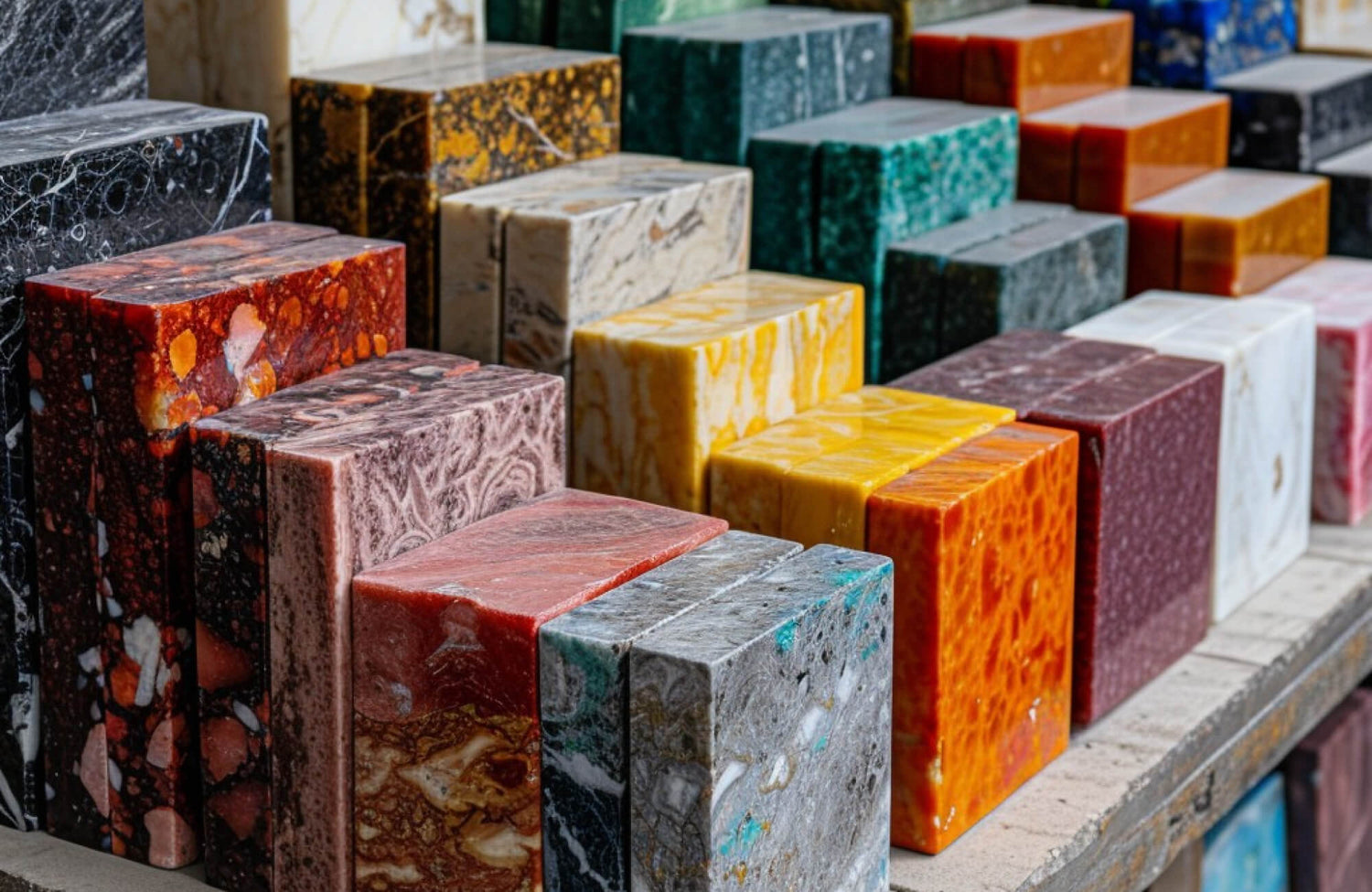
When it comes to color and pattern, marble’s bold veining and diverse palette set it apart. Ranging from soft whites to deep greens and blues, the unique veining is created by mineral impurities such as iron oxide, graphite, and clay, giving each slab artistic flair. Granite, in comparison, offers a more uniform, speckled appearance shaped by mineral deposits like quartz, feldspar, and mica. This consistent pattern can vary from subtle neutrals to vibrant tones. The intricate flecks and grains in granite also add depth, making it a stylish option for enhancing home design.

Hardness and Durability
Another key difference between marble and granite lies in their hardness and overall durability. Granite ranks between 6 and 7 on the Mohs hardness scale, making it significantly harder and more resistant to scratches than marble, which typically falls between 3 and 5. Because of this higher hardness rating, granite can better withstand daily wear from kitchen utensils, cookware, and heavy use, while marble’s softer surface is more susceptible to scratches and surface marks if not handled carefully.
To gauge scratch resistance at home, lightly drag a key or utensil across a sample piece–granite will typically remain unscathed, whereas marble may reveal subtle scratches. This simple test offers a practical way to understand how each material will perform in busy spaces. Granite’s resilience makes it an ideal choice for frequently used areas, while marble’s softer surface thrives in decorative or less active settings, where visual appeal is the priority.

Staining and Etching Resistance
One of the most important practical differences between marble and granite is their resistance to staining and etching. Marble is particularly sensitive to acidic substances, which can cause etching—a chemical reaction that dulls or discolors the stone’s surface. Common household items such as lemon juice, vinegar, and wine can leave marks if spills are not cleaned quickly. In addition, marble’s porous structure allows oils and pigmented liquids to seep into the stone, increasing the risk of staining if the surface is not properly maintained.
In comparison, granite has a much higher resistance to etching and staining due to its dense composition. Its less porous surface can withstand acidic liquids without being damaged, making it a practical and long-lasting option for areas that receive frequent use. Although granite can stain over time if not sealed, it generally offers better protection against everyday spills.

Maintenance and Recommended Uses
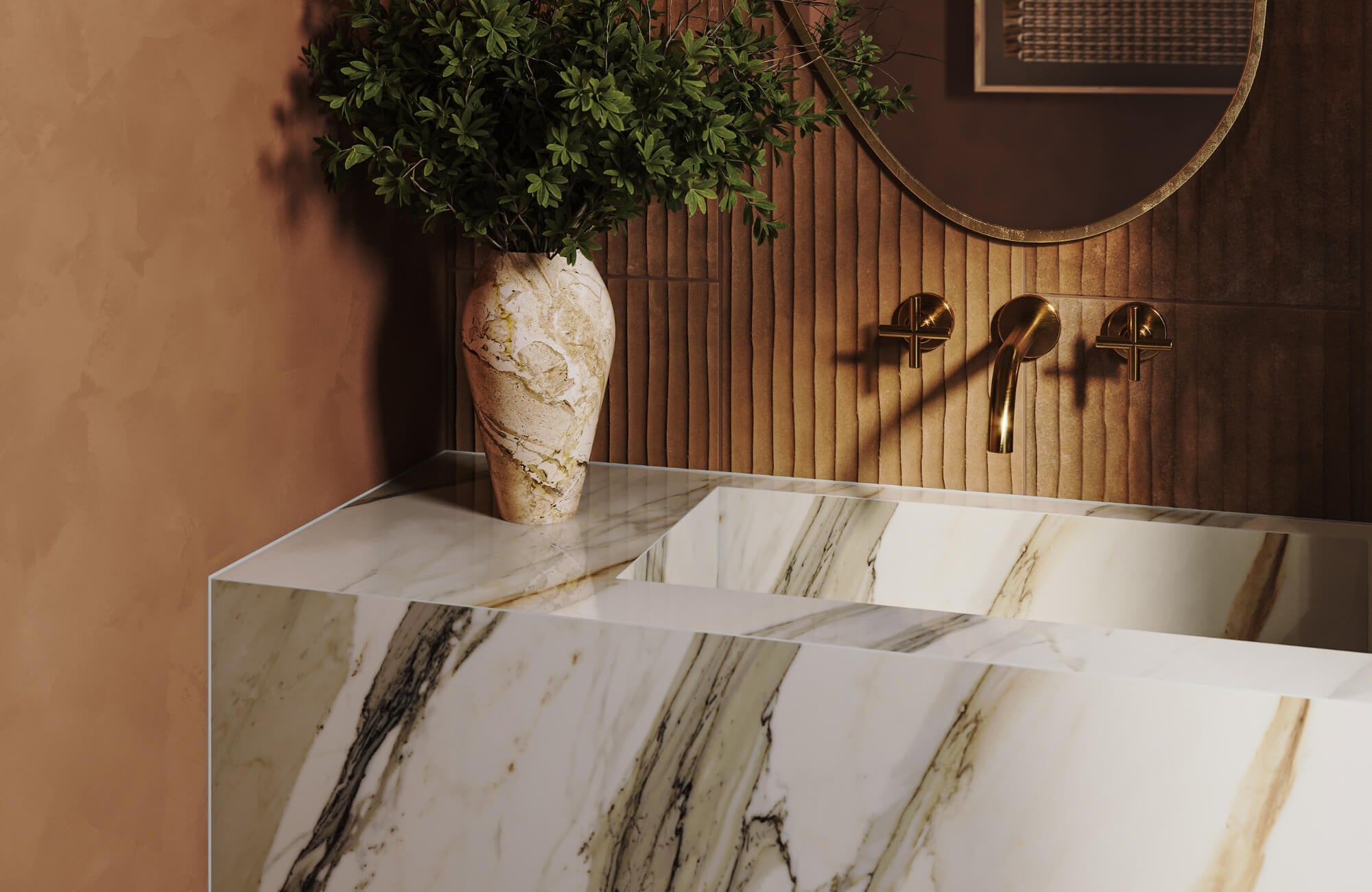
Because marble is more delicate than granite, it requires more attentive care to maintain its appearance over time. Regular sealing helps protect the stone’s porous surface from absorbing moisture, oils, and other staining substances. Daily cleaning should also be done with gentle, pH-neutral cleaners and soft cloths to prevent scratching or dulling the finish. Due to these maintenance needs, marble is often best suited for decorative or low-traffic applications such as bathroom vanities, accent walls, or sculptural features.
Granite, on the other hand, offers a more forgiving maintenance process. Sealing is recommended once every 12 to 18 months to preserve its surface, though some dense granites may require even less frequent reapplications. Granite can also withstand stronger cleaners and heavier use, making it ideal for kitchen countertops, busy flooring areas, and covered outdoor spaces. Its durability and low-maintenance nature make it the preferred choice for functional, busy spaces that experience daily wear.

Cost Comparison: Marble vs Granite
Cost is another important factor when choosing between marble and granite. Marble often commands a higher price due to its luxurious appearance and the complex quarrying process required to extract high-quality slabs. Granite is generally more affordable, though prices can still vary depending on color rarity, pattern, and place of origin. For homeowners seeking the beauty of natural stone while staying within budget, granite often provides a more accessible option.
When it comes to long-term expenses, granite is also often the more cost-effective option. While marble's higher price can add sophistication to a room, it may necessitate additional investments in sealing and upkeep to maintain its appearance, as previously discussed. Ultimately, granite's lower initial cost, combined with easier maintenance, makes it a practical option for those seeking durability without high ongoing costs.

Marble-Look Tiles: A Practical Alternative
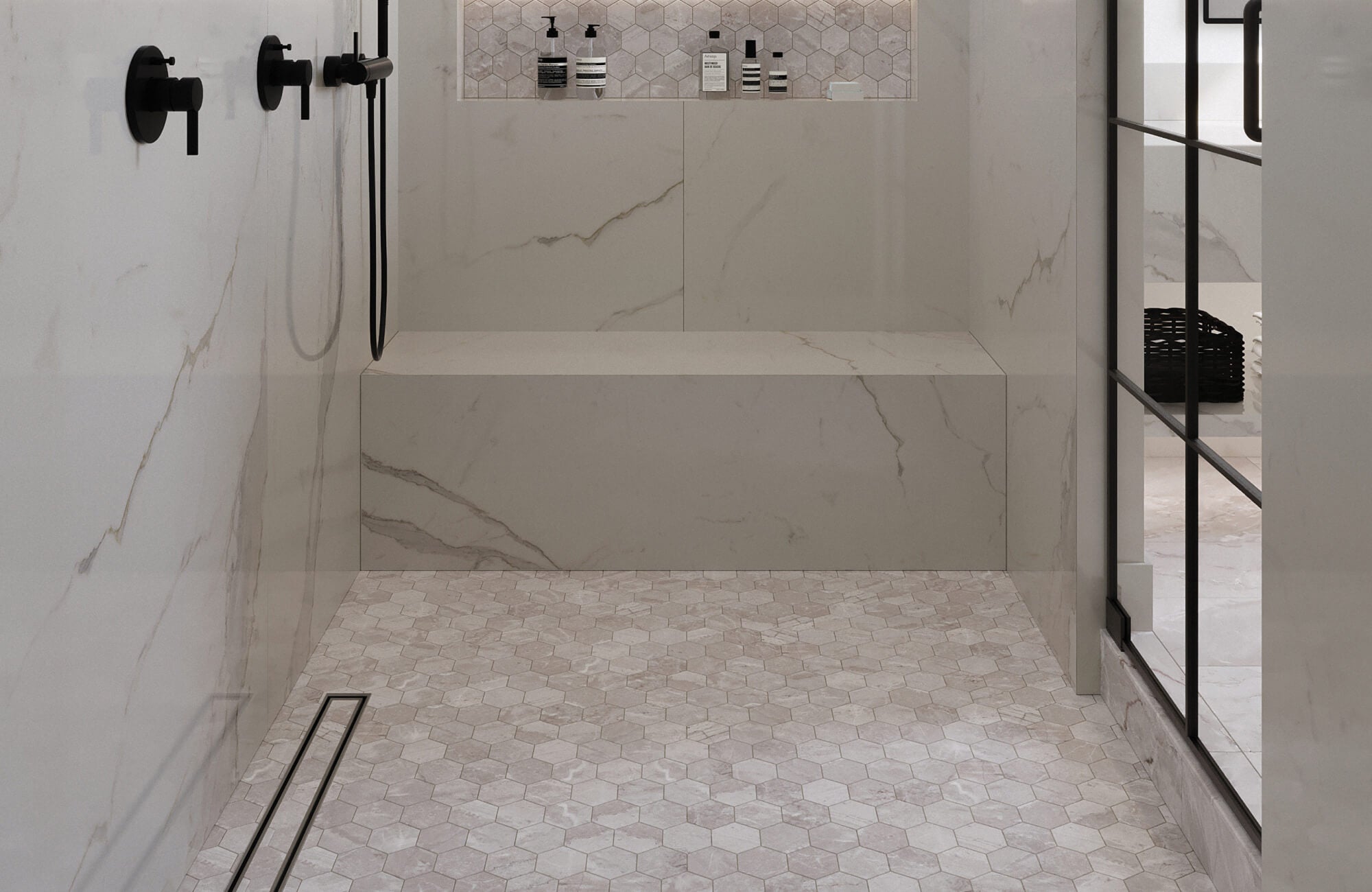
While marble and granite both offer timeless appeal, they may not always be the most practical choice for every space. Marble-look tiles provide a stylish alternative that captures the elegance of natural stone without the demanding maintenance or higher cost. Typically crafted from durable porcelain or ceramic, these tiles replicate the intricate veining and refined textures of marble while offering greater durability and easier upkeep. Designs such as Edward Martin’s Leona 24x24 Matte Porcelain Tile in Amani Grey, shown in the image above, illustrate how porcelain tiles can recreate the soft veining and natural movement associated with marble while maintaining the easy-care benefits of porcelain. Unlike natural marble or granite, these tiles require no sealing to maintain their polished appearance.
Marble-look tiles also offer greater design flexibility than natural stone. Available in a wide range of colors, finishes, and patterns, they make it easy to create cohesive flooring, accent walls, or backsplashes that suit both contemporary spaces and Scandinavian interiors. Because porcelain tiles are highly durable and moisture-resistant, they perform well in areas where natural stone may be more vulnerable, including bathrooms, patios, and kitchens. This versatility allows homeowners to achieve the refined look of marble in busy environments without worrying about long-term wear or damage.
To explore different styles before committing, you can use the Edward Martin Augmented Reality (AR) Visualization Tool to preview marble-look tiles in your space. This feature lets you view various colors and finishes in real time, helping you visualize how they will complement your interior design. For an even closer look, ordering Edward Martin tile samples allows you to examine the texture, tone, and quality of each tile at home before making a final selection.
Choosing the Right Material for Your Space
Understanding the differences between marble and granite can help you select the material that best fits your design goals, lifestyle, and maintenance preferences. Marble offers timeless elegance and striking veining, while granite provides superior durability and resilience for high-use areas. By weighing factors such as appearance, hardness, maintenance, and cost, homeowners can confidently choose a surface that balances both beauty and practicality.
For those who appreciate the elegance of marble but prefer a more practical surface, marble-look tiles offer a compelling alternative. Designed to replicate the refined veining and sophistication of natural stone, these tiles combine the classic beauty of marble with enhanced durability and easier maintenance. As a result, they provide a versatile solution for homeowners who want to achieve a polished, high-end aesthetic while ensuring their surfaces remain functional for everyday living.