Choosing between luxury vinyl flooring and wood look tile is one of the most common decisions homeowners and designers face when seeking the natural warmth of hardwood with added durability and ease of maintenance. While both materials offer realistic wood aesthetics, they differ significantly in composition, performance, installation, and long-term value. Understanding these differences is crucial for making an informed decision tailored to your project’s functional and aesthetic needs.
This article will examine the technical composition, durability, moisture resistance, comfort, installation, maintenance, and cost-effectiveness of each flooring type, as well as key performance factors that influence residential and commercial applications. By the end, you’ll have a clear, detailed understanding of which material best aligns with your design goals, climate, and lifestyle requirements.

Material Composition and Structural Differences
The inner structure of flooring determines everything from comfort and resilience to its reaction to moisture and temperature changes. Understanding these foundations clarifies why vinyl feels warm and flexible, while tile remains rigid, cool, and architecturally permanent.
Luxury Vinyl Flooring Composition
Luxury vinyl plank flooring is crafted through a precise layering process that blends resilience with realistic wood texture. Its top urethane or aluminum oxide wear layer shields against scratches and everyday abrasion, while the printed film layer beneath captures intricate wood grains and knots with photographic accuracy. At its core, either Stone Polymer Composite (SPC) or Wood Polymer Composite (WPC) provides structure—SPC offering a denser, more impact-resistant base, and WPC supplying enhanced cushioning and sound absorption. A soft acoustic backing layer further quiets footsteps and improves comfort underfoot, giving the material its signature warmth. Each layer works in harmony to deliver durability, comfort, and striking realism in one unified surface. Through this engineered design, luxury vinyl achieves both tactile authenticity and long-lasting resilience.
Porcelain Wood Look Tile Construction
Wood look tile, usually made of porcelain, begins as refined clay, feldspar, and minerals that are molded, then fired at temperatures exceeding 1,200°C to form a vitrified, stone-hard body. Its surface is enhanced through high-definition digital inkjet printing, which recreates authentic wood textures complete with knots, grain variations, and tonal depth. The result is a non-porous, colorfast tile that resists stains, wear, and fading even in sunlit or busy environments. Each piece can also be rectified—cut with precision edges—allowing narrow grout joints that emulate the seamless look of hardwood planks. Because of its dense mineral composition, porcelain wood look tile remains dimensionally stable across temperature extremes and heavy use. This structural integrity gives wood look tile the enduring quality associated with architectural-grade flooring.

Durability, Lifespan, and Performance Under Pressure
A floor’s durability defines not only its lifespan but also its ability to maintain appearance and function under daily stress. While both luxury vinyl and porcelain wood look tile deliver long-term performance, they do so through fundamentally different mechanisms of strength.
Impact and Scratch Resistance
Porcelain wood look tile ranks between 7 and 8 on the Mohs hardness scale, placing it among the hardest flooring materials available. Its surface can withstand heavy use, dragged furniture, or pet claws without visible scratching, thanks to a PEI rating of 4–5 that certifies high abrasion resistance. Luxury vinyl, though softer by nature, relies on its protective wear layer, ranging from 12 to 28 mils, to defend against scuffs and micro-abrasions. Modern formulations incorporate ceramic-bead reinforcements that strengthen this surface barrier while preserving flexibility. However, concentrated pressure from furniture legs may leave subtle dents over time, a trade-off for vinyl’s comfort. In essence, porcelain wood look delivers unmatched surface hardness, while vinyl offers a balance of strength and resilience underfoot.
Temperature and UV Stability
Porcelain wood look tile remains dimensionally stable regardless of heat, cold, or sunlight exposure, which makes it ideal for radiant-heated floors or sun-drenched spaces. Its fired pigments resist fading and thermal expansion, maintaining a consistent look through decades of use. Vinyl flooring, though improved with SPC technology, can expand or contract slightly with temperature fluctuations if not properly acclimated before installation. In addition, direct UV exposure may cause gradual fading, though advanced polyurethane coatings now minimize this effect. Tile, on the other hand, remains completely unaffected by ultraviolet light, preserving color even in outdoor applications. For spaces exposed to intense sunlight or variable temperatures, porcelain’s inherent stability provides long-term reliability.

Moisture Resistance and Environmental Suitability
Moisture exposure is one of the most critical factors influencing flooring performance. Both luxury vinyl and porcelain wood look tile excel in this area, yet they manage humidity and water in uniquely effective ways.
Waterproof Construction in Luxury Vinyl
Luxury vinyl flooring with SPC or WPC cores is engineered to be entirely waterproof, maintaining its integrity even in areas exposed to spills or standing water. The interlocking plank system creates a tight seal, preventing moisture from seeping into the subfloor and causing damage. Its closed-cell structure also resists mold and mildew growth, making it ideal for bathrooms, kitchens, and basements where humidity fluctuates. Even after prolonged exposure to water, luxury vinyl retains its shape without swelling or warping. This dimensional stability gives it an edge over laminate or engineered wood in wet environments. As a result, luxury vinyl provides reliable, low-maintenance protection in spaces prone to moisture and humidity.
Porcelain Tile’s Impervious Surface
Porcelain wood look tile possesses an exceptionally low water absorption rate—less than 0.5%, classifying it as an impervious material. This density allows it to perform effortlessly in wet or outdoor conditions, from spa showers to pool decks. Its glazed surface also repels moisture and stains, while sealed grout lines maintain long-term waterproofing. Even steam and temperature changes leave its form and finish untouched. Because it does not swell, crack, or discolor under water exposure, porcelain remains a top performer in moisture-heavy environments. With proper installation and grout maintenance, it offers a permanent, watertight flooring solution that endures through decades of daily use.

Comfort, Acoustics, and Thermal Properties
Comfort, sound absorption, and thermal performance define how flooring feels in daily use. These sensory qualities often influence user satisfaction just as much as aesthetics or durability.
Underfoot Comfort and Cushioning
Luxury vinyl plank flooring delivers a cushioned, forgiving surface that feels warm and comfortable underfoot. Its flexible core absorbs impact, making it easier on joints during prolonged standing. When paired with an underlayment, it softens each step and reduces fatigue, which is especially valuable in busy kitchens or living areas.
Luxury vinyl also retains ambient heat, creating a cozy surface during cooler months. In contrast, porcelain wood look tile offers little elasticity but compensates with stability and strength under heavy loads. For homeowners prioritizing comfort and quiet, vinyl provides a gentle, ergonomic flooring solution without sacrificing durability.
Sound and Thermal Regulation
Because of its multi-layered design, luxury vinyl naturally dampens noise, reducing echoes and footsteps in multi-level homes or offices. Its acoustic properties make spaces feel calmer and more insulated. It also maintains warmth through insulation, staying comfortable underfoot even without additional heat.
Porcelain wood look tile, being denser and more rigid, tends to reflect sound rather than absorb it, which may require supplementary rugs or acoustic materials to soften its effect. Thermally, it excels in heat conduction, making it an ideal match for radiant floor heating systems.
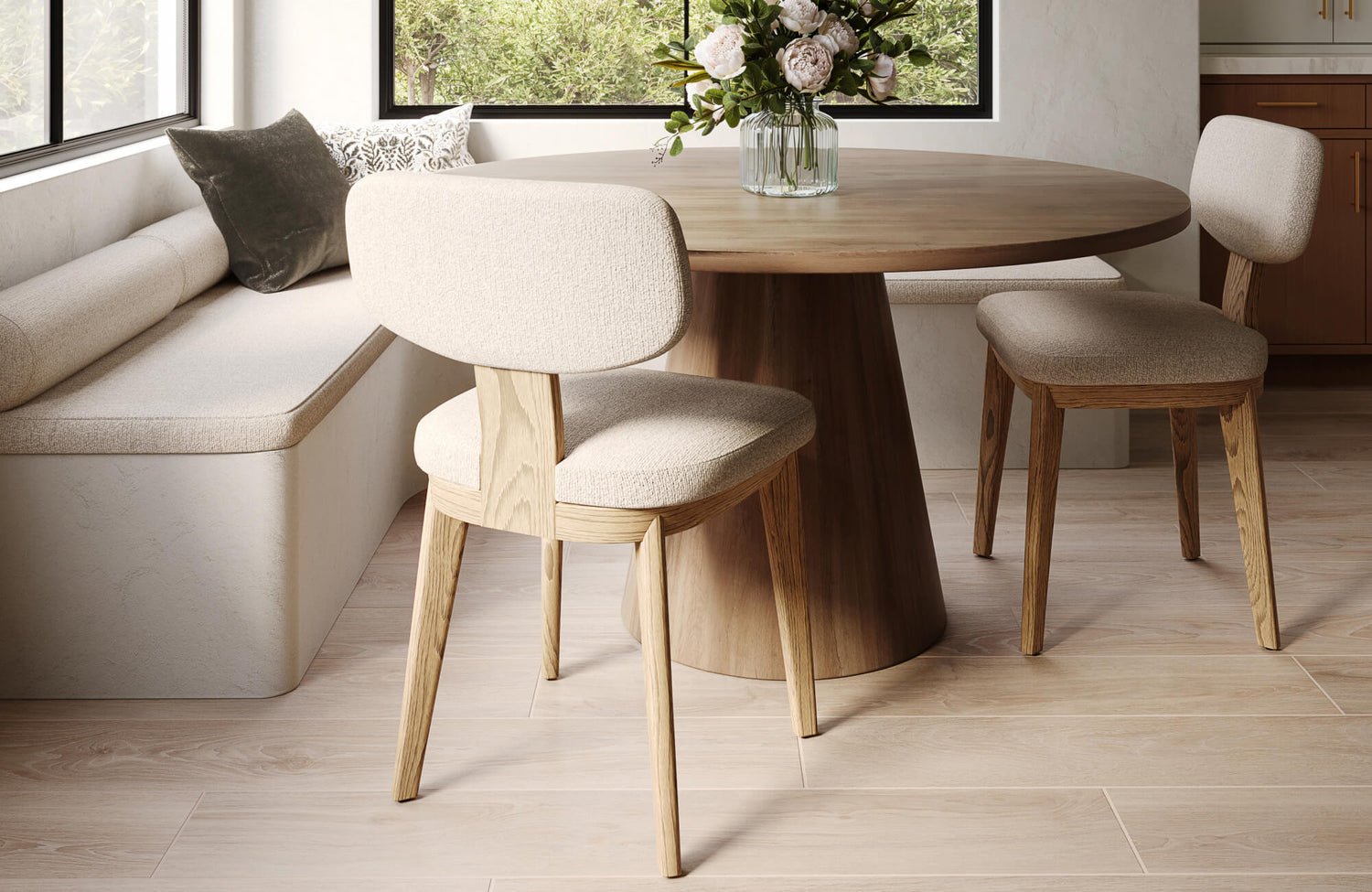
A perfect example of this balance, as displayed in the photo above, is Edward Martin’s Preston 8x48 Matte Porcelain Tile in Birch. It pairs the natural warmth of its tone with porcelain’s cool, durable resilience. The result is a surface that enhances thermal comfort while grounding spaces like kitchens and open-plan areas in inviting, neutral elegance. It proves that practical performance and aesthetic harmony don’t just coexist—they elevate each other.
This contrast gives designers flexibility to tailor materials to the climate—porcelain wood look tile for efficient heat dispersion, vinyl for ambient heat retention.

Installation Complexity and Subfloor Requirements
The installation process influences both aesthetics and long-term stability. Vinyl offers speed and flexibility, while wood look tile rewards precision and craftsmanship. Regardless of the material, professional installation ensures proper alignment, secure adhesion, and a finish that maintains its integrity over time.
Luxury Vinyl Installation Methods
Luxury vinyl installation is relatively straightforward, offering flexibility through both click-lock floating systems and glue-down applications. Its lightweight planks can often be placed directly over existing subfloors, as long as the surface is smooth and clean. With floating systems, the planks simply snap together to form a seamless, water-resistant layer—no adhesives required. Because vinyl typically needs minimal subfloor preparation, installation stays efficient and budget-friendly. The result is a sleek, professional finish that can often be achieved within a single day. This simplicity makes luxury vinyl an ideal choice for remodels or time-sensitive projects where performance and speed are equally essential.
Tile Installation Precision
Installing porcelain wood look tile demands meticulous attention to leveling, spacing, and alignment. Professionals use polymer-modified thin-set mortar to secure tiles, ensuring full contact with the substrate for maximum adhesion. Large format planks also often require rectified edges and narrow grout joints to mimic hardwood’s seamless flow. Moreover, any subfloor irregularities must be corrected before setting, as uneven bases can lead to cracks or lippage. Once cured, grout is sealed to protect against moisture and staining. Though labor-intensive, the result is an exceptionally stable, architecturally refined floor designed to last for generations.

Maintenance, Cleaning, and Repair Considerations
Ease of maintenance is key to preserving a floor’s long-term appearance. Both vinyl and porcelain wood look tile offer minimal upkeep, though their cleaning and repair methods differ. In every case, following the manufacturer’s care guidelines ensures that each surface performs at its best and maintains its finish over time.
Luxury Vinyl Care and Upkeep
Luxury vinyl is refreshingly easy to maintain. Routine care, such as light sweeping, occasional vacuuming, and mopping with pH-neutral cleaners, keeps its surface looking spotless. Its protective coating resists stains, allowing spills to be wiped away quickly without lasting marks. Because the color runs beneath the wear layer, minor scuffs also remain barely noticeable, even with regular use. If a plank does get damaged, it can be individually replaced, restoring the floor with minimal effort or disruption. Moreover, adding furniture pads and area rugs helps protect against scratches or dents from heavy pieces. Altogether, this simple upkeep makes luxury vinyl a practical choice for those who want lasting beauty without the high maintenance.
Porcelain Wood Look Tile Maintenance
Porcelain wood look tile’s glazed finish resists dirt, bacteria, and discoloration, allowing easy cleaning with mild detergent and water. While the tiles themselves are nearly maintenance-free, grout joints benefit from periodic resealing to maintain stain resistance. Cracked tiles, though rare, can be replaced individually without affecting the surrounding layout. Over years of use, porcelain maintains its color and texture without fading or dulling. Using epoxy grout can further reduce maintenance frequency and enhance longevity. When properly maintained, wood look tile retains a freshly installed look even after decades of wear.

Cost, Value, and Environmental Impact
Choosing flooring is also a financial and environmental decision. Understanding cost over time and sustainability helps weigh practicality against long-term investment.
Initial Cost and Installation Investment
Luxury vinyl plank typically costs $3 to $7 per square foot installed, offering affordability and speed. Its efficient click-lock design reduces labor time, lowering overall project costs. On the other hand, porcelain wood look tile ranges from $6 to $15 per square foot, reflecting higher material density and skilled installation requirements. While vinyl suits budget-conscious renovations, wood look tile’s exceptional lifespan often offsets its initial expense. Over decades, porcelain’s durability translates into higher resale value and lower replacement frequency. Evaluating total lifecycle cost also helps clarify which investment yields the best balance between performance and price.
A perfect example of this enduring value, as shown in the picture above, is the Jameson 8x48 Matte Porcelain Tile in Camel, which embodies craftsmanship, durability, and timeless appeal. Its warm neutral tone and realistic wood grain deliver an elevated look that justifies the initial investment, offering homeowners a sophisticated surface that stands the test of time both functionally and aesthetically.
Sustainability and Environmental Performance
Porcelain wood look tile is composed of natural clay and minerals, fired without harmful additives, resulting in a zero-VOC, fully recyclable product. Its longevity and inert nature contribute positively to sustainable construction standards. Luxury vinyl, made from polyvinyl chloride (PVC), has evolved into low-VOC, phthalate-free formulations certified by FloorScore and LEED programs. Although production requires more energy, vinyl’s recyclability and improved air-quality ratings have made it increasingly eco-friendly. Tile’s extended lifespan, however, reduces environmental impact through fewer replacements. For those prioritizing long-term sustainability, porcelain wood look tile remains the benchmark for eco-conscious, high-performance flooring.

Aesthetic Versatility and Design Longevity
Both flooring types deliver stunning hardwood realism, yet their visual endurance and creative flexibility vary subtly. These aesthetic differences shape how each material integrates with modern and traditional design.
Visual Realism and Texture
Luxury vinyl uses embossed-in-register (EIR) technology to align its surface texture perfectly with the printed wood grain beneath, creating a tactile realism that closely mimics genuine hardwood. Porcelain wood look tile, by contrast, achieves its depth and variation through multi-pass digital printing—layering pigments so that no two planks ever appear identical. Luxury vinyl comes in a range of finishes, from soft matte to subtly wire-brushed, offering versatility across different interior styles. Wood look tile, meanwhile, retains its color and sheen for life, remaining unaffected by UV exposure or chemical wear. Together, these innovations enable both materials to capture the warmth and character of natural wood with remarkable accuracy and timeless appeal.
Design Flexibility and Color Permanence
Vinyl’s flexibility invites creative expression, accommodating layouts such as herringbone, chevron, or mixed-width planks that adapt effortlessly to different spaces and subfloor heights. Its lightweight construction also makes it suitable for upper floors where structural loads may be limited. Porcelain wood look tile, on the other hand, features colorfast glazes fired permanently into its surface, ensuring resistance to fading even under constant sunlight. This durability makes tile an ideal choice for sunrooms, entryways, and outdoor patios. While vinyl may develop a gentle patina over time, tile maintains its pristine tone indefinitely. For designs that prioritize long-term stability and architectural sophistication, wood look tile delivers a truly enduring advantage.
A perfect example of this versatility is our Preston 8x48 Matte Porcelain Tile in Pine, which brings natural warmth and refined grain patterns to living spaces with effortless elegance. As featured in the photo above, its adaptable neutral tone complements both modern and traditional interiors, seamlessly pairing with soft textiles, natural light, and organic elements to create a cohesive, timeless environment.
Edward Martin’s innovative augmented reality (AR) tool further enhances design visualization by allowing users to preview luxury vinyl and wood look tile selections directly within their spaces. This interactive feature empowers you to make confident, well-informed decisions by seeing real-time flooring combinations that align perfectly with your aesthetic vision.
Final Thoughts on Choosing Between Luxury Vinyl and Wood Look Tile
Selecting the right flooring ultimately depends on how you balance performance, aesthetics, and long-term value within your space. Luxury vinyl plank flooring excels in comfort, warmth, and installation efficiency, offering a practical yet visually sophisticated option for busy households and modern interiors. Wood look porcelain tile, on the other hand, provides unmatched durability, water resistance, and structural integrity, making it ideal for busy or moisture-prone areas that demand permanence. By assessing factors such as maintenance requirements, subfloor conditions, and environmental impact, you can choose the surface that best enhances functionality and design cohesion.
To help you make your decision with complete confidence, Edward Martin offers tile samples, allowing you to experience the texture, tone, and finish of each option firsthand. This hands-on approach ensures that your final flooring choice not only looks exceptional but also feels perfectly suited to your home’s style and performance needs!