
)
)
)
)
)
)
)
)
What Tiles Are Suitable For Swimming Pools?
From serene backyard retreats to resort-style aquatic landscapes, every detail in a swimming pool and its surrounding environment contributes to a seamless blend of beauty, function, and safety. Selecting the right swimming pool tiles, both beneath the water and around its edges, is a sophisticated process that requires balancing technical performance with visual harmony.
The most suitable tiles for swimming pools must withstand constant moisture, shifting temperatures, and exposure to pool chemicals, all while maintaining long-lasting color and surface integrity. Just as important are the tiles that line the surrounding pool deck, coping, and transitional areas, which must deliver slip resistance, heat tolerance, and aesthetic cohesion. With an informed approach, your tile choices can transform a functional space into a refined and enduring outdoor sanctuary.
Interior Pool Tile Materials and Their Technical Properties
Tiles installed inside a swimming pool must withstand prolonged submersion, chemical treatment, and the physical stresses imposed by fluctuating temperatures. The type of tile material chosen plays a central role in determining both the functional durability and the visual quality of the pool’s interior finish.
Porcelain Tiles
Porcelain swimming pool tiles, particularly those rated as vitreous or impervious, are known for their low water absorption rates, typically less than 0.5%, which makes them exceptionally suitable for full pool immersion.
This dense composition provides excellent resistance to frost, stains, and chemical attacks, offering dependable performance in indoor and outdoor aquatic environments.
As they meet rigorous standards such as ANSI A137.1 and ISO 10545, these tiles also offer a level of durability well-suited for residential and commercial installations. Additionally, the availability of porcelain in various formats and textures allows for creative freedom without sacrificing structural reliability.
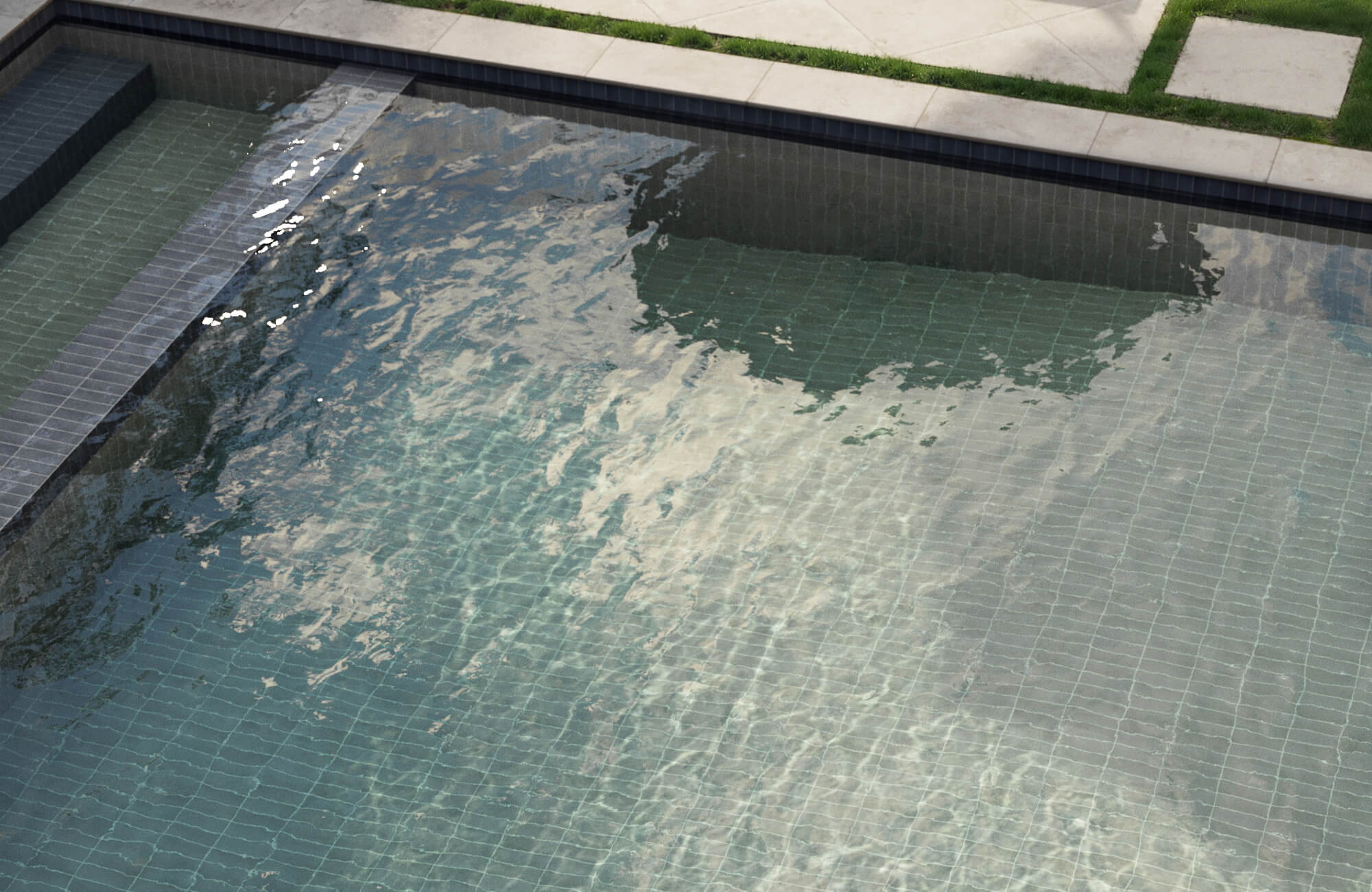
A standout example, as shown in the pool floor photo above, is Edward Martin’s Natasha 2x6 Glossy Porcelain Tile in Amber Grey, with its elegant grid layout and soft, muted gray hue that shimmers beautifully under water. Its glossy finish enhances light reflection while maintaining the performance expected from impervious porcelain, making it both a practical and visually refined option for contemporary pools.
Ceramic Tiles
While not as dense as porcelain, high-fired ceramic pool tiles remain a viable option for areas where decorative flair is desired without full submersion. These tiles are typically used for waterline bands or artistic accents, where their vibrant glazed finishes can add visual interest and contrast.
However, because of their higher porosity compared to porcelain, they must be fully glazed and carefully sealed to prevent moisture infiltration that could compromise their longevity.
When used strategically, ceramic tiles can enhance the design of the pool without detracting from its overall durability. To ensure proper installation, these tiles should be set over a waterproof membrane using latex-modified thin-set mortars rated for wet environments.
Although they require more maintenance than porcelain or glass, ceramic tiles remain a valuable option for achieving intricate, customized aesthetics in non-critical areas of the swimming pool.
Glass Pool Tiles
Among the most sought-after options for luxury swimming pools, glass pool tiles offer a stunning blend of visual brilliance and reliable performance. Their reflective surface enhances water clarity and brightness, adding depth and vibrancy that elevate the entire pool aesthetic.
Technically, glass tiles are highly durable. With minimal thermal expansion and high tensile strength, they maintain their integrity even in areas with extreme temperature shifts. Their impervious surface resists water absorption completely, which helps prevent staining, mold growth, and freeze-thaw cracking, especially important for outdoor applications.
Their flexibility makes them ideal for curved surfaces and intricate mosaic designs, allowing for artistic expression across pool walls, benches, and waterlines. For long-term durability in submerged conditions, epoxy-based adhesives are recommended to ensure proper adhesion.
However, glass tiles can be more prone to surface scratching and edge chipping, particularly in busy areas. As a result, they are best suited for decorative accents, vertical surfaces, and waterlines rather than main pool floors.
Slip-Resistant Tile Solutions for Pool Surrounds, Decking, and Coping
The areas surrounding a swimming pool are constantly exposed to water, foot movement, and outdoor weather, making safety and durability paramount. To mitigate the risk of slips and falls, while also maintaining aesthetic consistency, tiles in these zones must offer excellent traction and long-term weather resistance.
Textured Porcelain Deck Tiles
For pool decks and walkways, textured porcelain tiles with an R11 or higher slip-resistance rating are among the most effective choices. Their surface micro-texture offers a reliable grip under wet conditions, reducing slip hazards without feeling abrasive underfoot.
In addition to their superior traction, these tiles are engineered to resist mold, algae, and chemical buildup—common issues in outdoor pool environments. Their dense, non-porous structure ensures frost resistance and minimizes water infiltration, which is crucial for installations in freeze-thaw regions.
Modern production methods now allow for realistic stone and wood aesthetics, offering design flexibility without sacrificing safety. With a Dynamic Coefficient of Friction (DCOF) of 0.42 or greater, these tiles meet industry standards for safe use in areas with high barefoot movement.
Natural Stone Finishes
For those seeking a more natural and organic aesthetic, stone tiles such as flamed granite or sandblasted travertine offer both functional and visual advantages. Their textured finishes provide a high level of slip resistance while preserving a smooth, comfortable feel that is ideal for barefoot areas.
These stones also retain less heat compared to darker or glazed materials, helping to keep deck surfaces cooler in direct sunlight. Their earthy color palettes and natural variation create seamless integration with landscape features and architectural elements.
However, because natural stone is more porous, it must be properly sealed to protect against moisture penetration, staining, and weathering. When used in conjunction with frost-resistant bedding systems and proper drainage design, natural stone tiles provide an attractive and practical solution for surrounding pool environments.
Bullnose Coping Tiles
Coping tiles serve both a structural and aesthetic function, acting as the transition between the pool shell and the deck while also protecting pool edges from wear and impact. Bullnose coping tiles, available in porcelain or tumbled stone, feature a smooth, rounded edge that enhances safety by minimizing sharp corners and reducing the risk of injury. In addition, their curved profile helps to prevent chipping and facilitates easier entry and exit from the swimming pool.
UV-stable and resistant to chlorine or saltwater degradation, these tiles maintain their appearance and performance over time, even in challenging outdoor conditions. Additionally, properly sloped coping directs water runoff away from the pool, improving deck drainage and reducing slip risk. To ensure flexibility and durability, coping tiles should be installed with expansion joints and flexible mortar systems that accommodate movement and thermal shifts.
Understanding Moisture Absorption, Frost Resistance, and Dimensional Stability
Pool tile assemblies must be designed to handle water absorption, freeze-thaw cycles, and temperature-induced expansion, all of which can lead to premature failure if not properly addressed. By selecting materials based on standardized technical classifications, designers and builders can ensure both the integrity and longevity of tiled pool installations.
Water Absorption Classifications and Material Selection
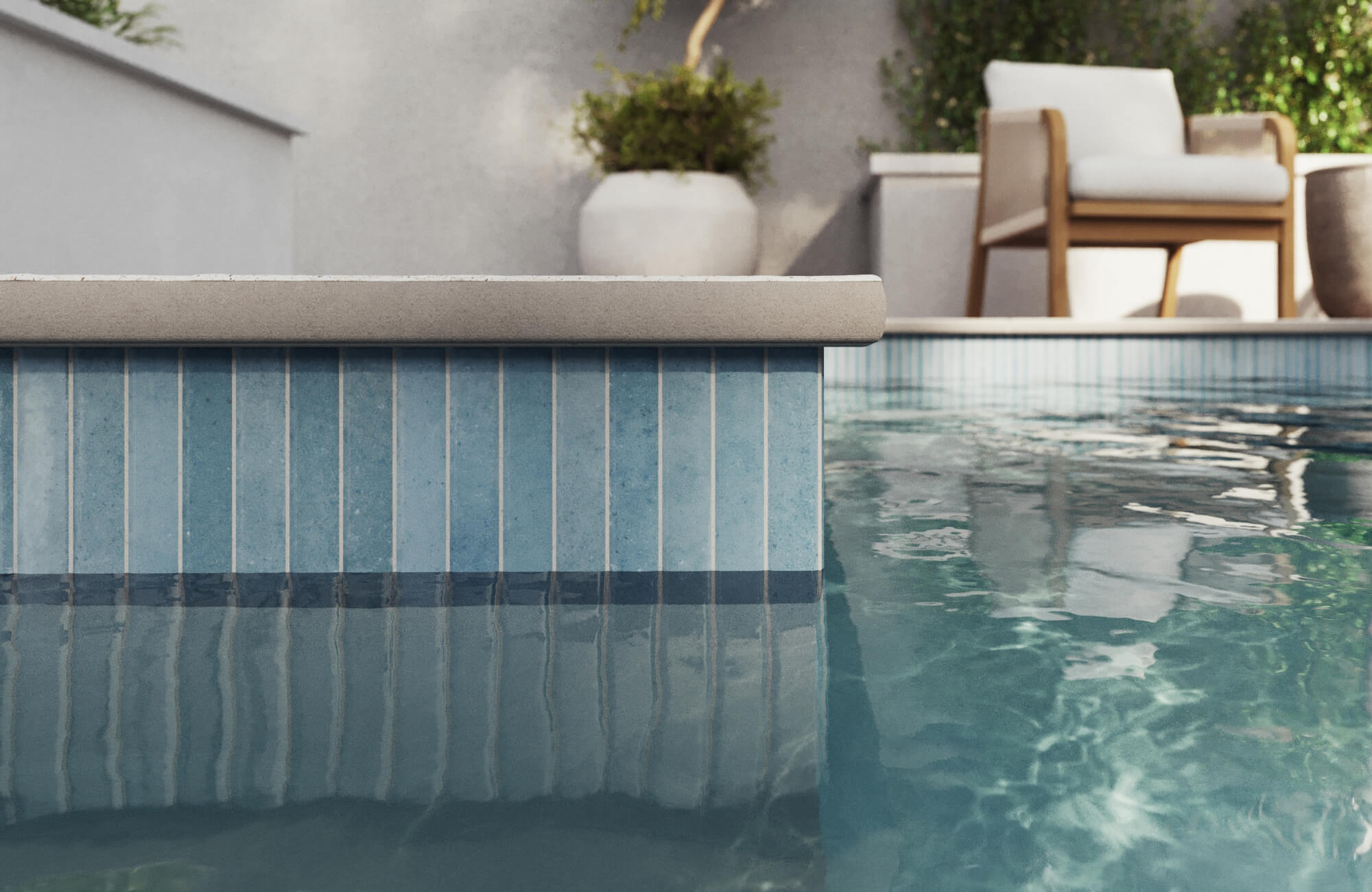
The most critical performance factor for pool tile is water absorption, which directly affects the tile's ability to resist cracking, staining, and microbial growth. Tiles categorized as impervious (less than 0.5% absorption) or vitreous (0.5% to 3%) are considered suitable for pool interiors and surrounding wet areas. Materials that fall outside these classifications, such as semi-vitreous or non-vitreous tiles, should be avoided in submerged or moisture-prone zones.
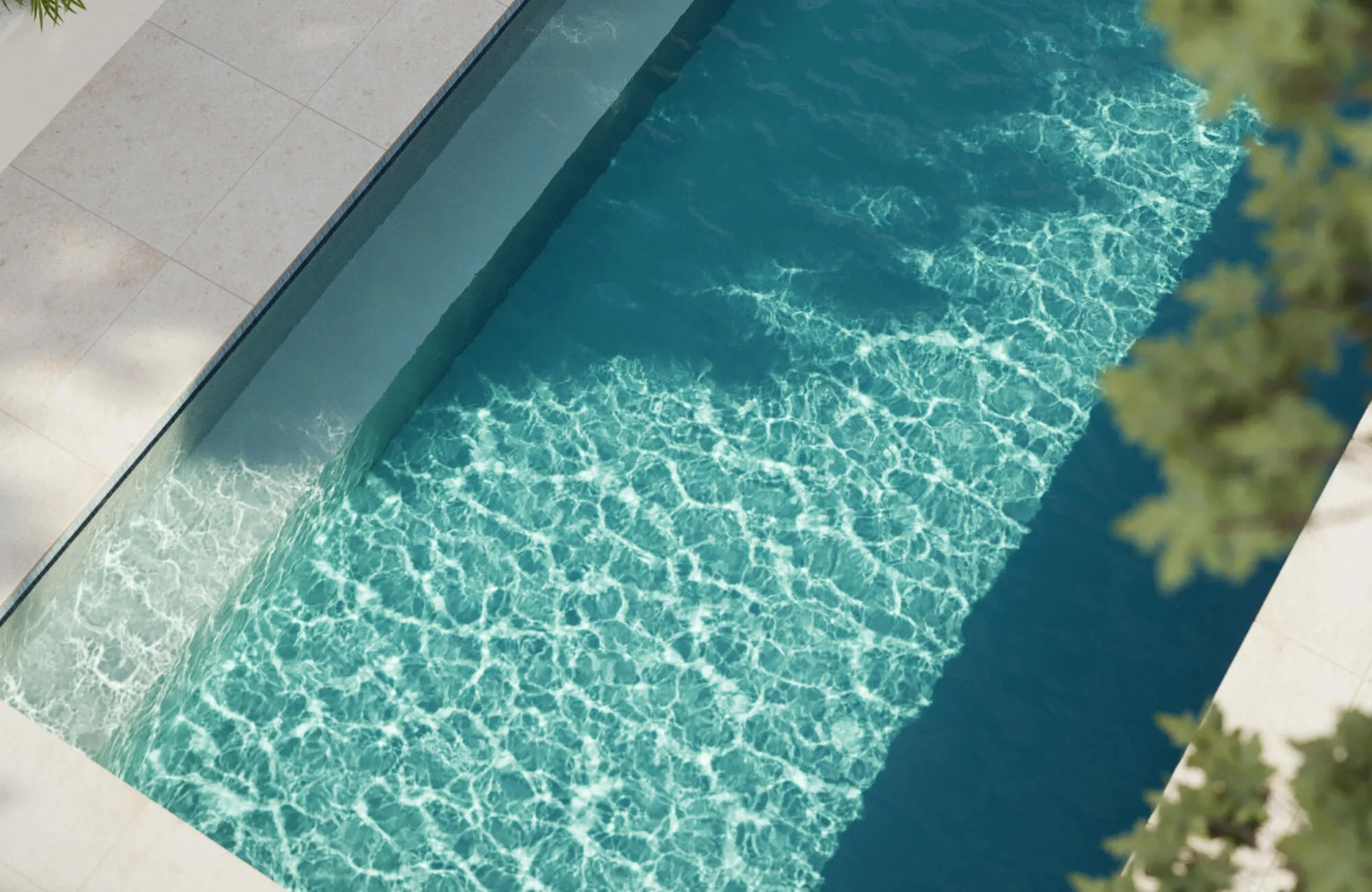
Porcelain and glass tiles consistently meet or exceed these criteria, making them the most reliable choices for swimming pool applications. A prime example is the Miley 4.5x9.1 Glossy Porcelain Tile in Water, as shown in the photo above. It offers an impervious surface and a luminous, blue tone that enhances water clarity while maintaining exceptional moisture resistance. Its combination of aesthetic elegance and certified low absorption makes it ideal for pools that demand both performance and visual refinement.
Frost Resistance and the Role of Pore Structure
In climates where temperatures regularly dip below freezing, frost resistance becomes a crucial selection criterion for pool tiles. Water that penetrates porous tiles can expand during freeze-thaw cycles, leading to cracks and surface spalling that compromise both appearance and safety.
To prevent this, materials must feature a compact microstructure with minimal open pores, which inhibits water absorption and internal pressure buildup. Porcelain and select natural stones, such as dense granites, are engineered or selected for this purpose and perform exceptionally well in cold weather conditions.
Frost resistance is typically validated through tests like ISO 10545-12, which simulate repeated freeze-thaw cycles under saturation. To further safeguard installations, appropriate drainage design and the use of breathable underlayment systems are recommended.
Managing Expansion Through Dimensional Stability
Temperature fluctuations and environmental stresses cause tiles to expand and contract, a process that, if unmanaged, can lead to cracking, delamination, or joint failure. Materials with a low Coefficient of Linear Thermal Expansion (CLTE) demonstrate greater dimensional stability, reducing the risk of such failures. Porcelain tiles are known for their minimal expansion rates, making them particularly suitable for outdoor pool decks and large-format applications.
However, even with stable materials, expansion joints must be strategically integrated into the tile layout to accommodate movement. These joints, filled with flexible, UV-resistant sealants, absorb stress and prevent structural disruption. Adhering to established guidelines such as those outlined in TCNA EJ171 ensures a system that maintains both function and finish over time.
Surface Finishes: Functional Impact on Safety, Maintenance, and Aesthetics
The choice of tile finish not only defines the visual identity of a swimming pool but also influences safety, comfort, and long-term maintenance requirements. By understanding the practical impact of various surface finishes, one can select options that harmonize aesthetics with performance across both wet and dry pool zones.
Matte and Grip Finishes
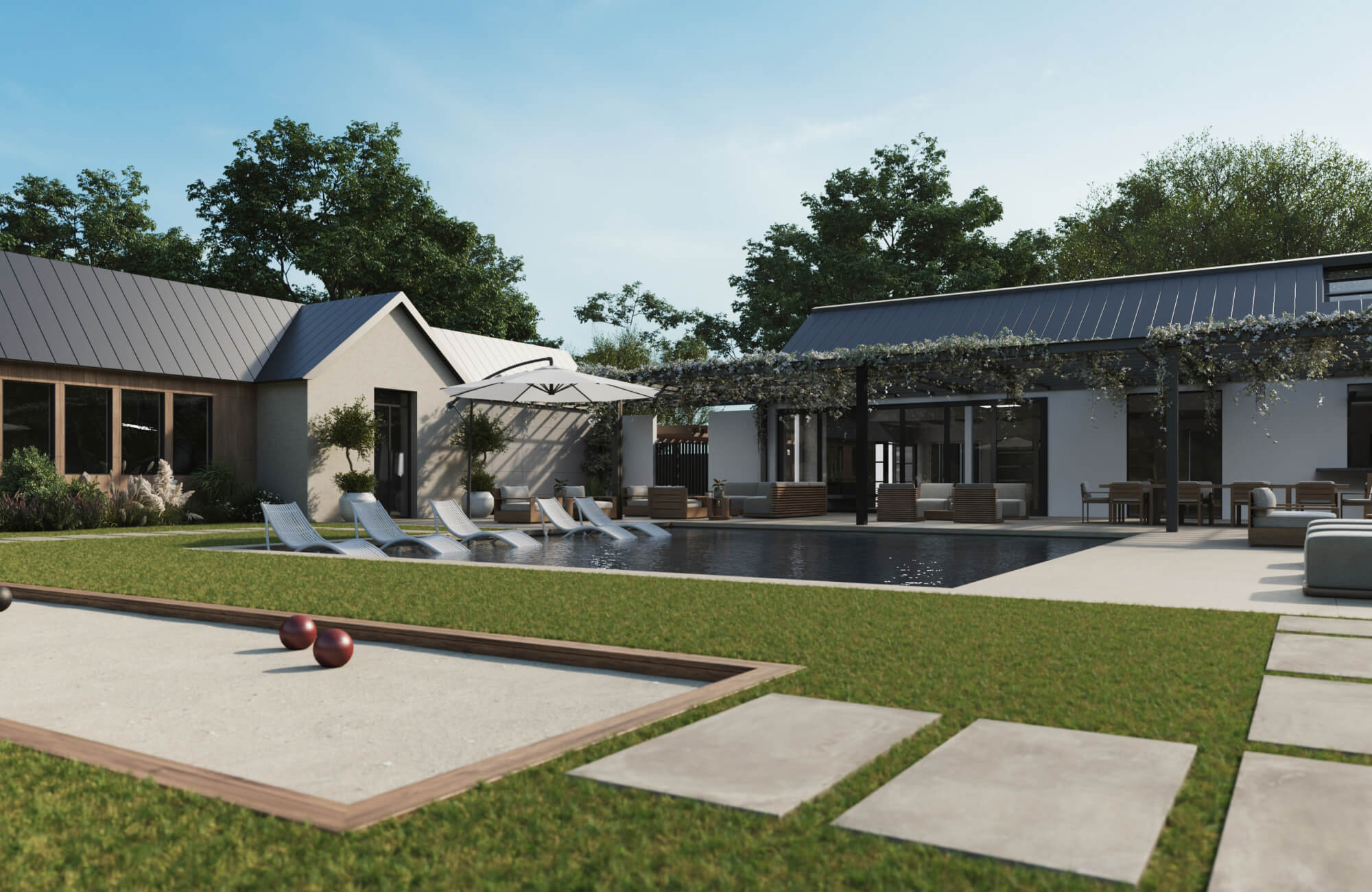
Matte and grip finishes are ideal for areas of the swimming pool where both safety and visual comfort are essential, particularly on tanning ledges, shallow zones, and surrounding pool decks. These finishes minimize surface glare by diffusing sunlight, which improves visibility and creates a more relaxing atmosphere for swimmers.
In addition to their visual benefits, their lightly textured surface enhances underfoot traction, making them a reliable choice for busy wet environments. Grip-finished tiles, in particular, are engineered to meet slip-resistance standards while maintaining a refined appearance that complements modern and natural poolscapes alike.
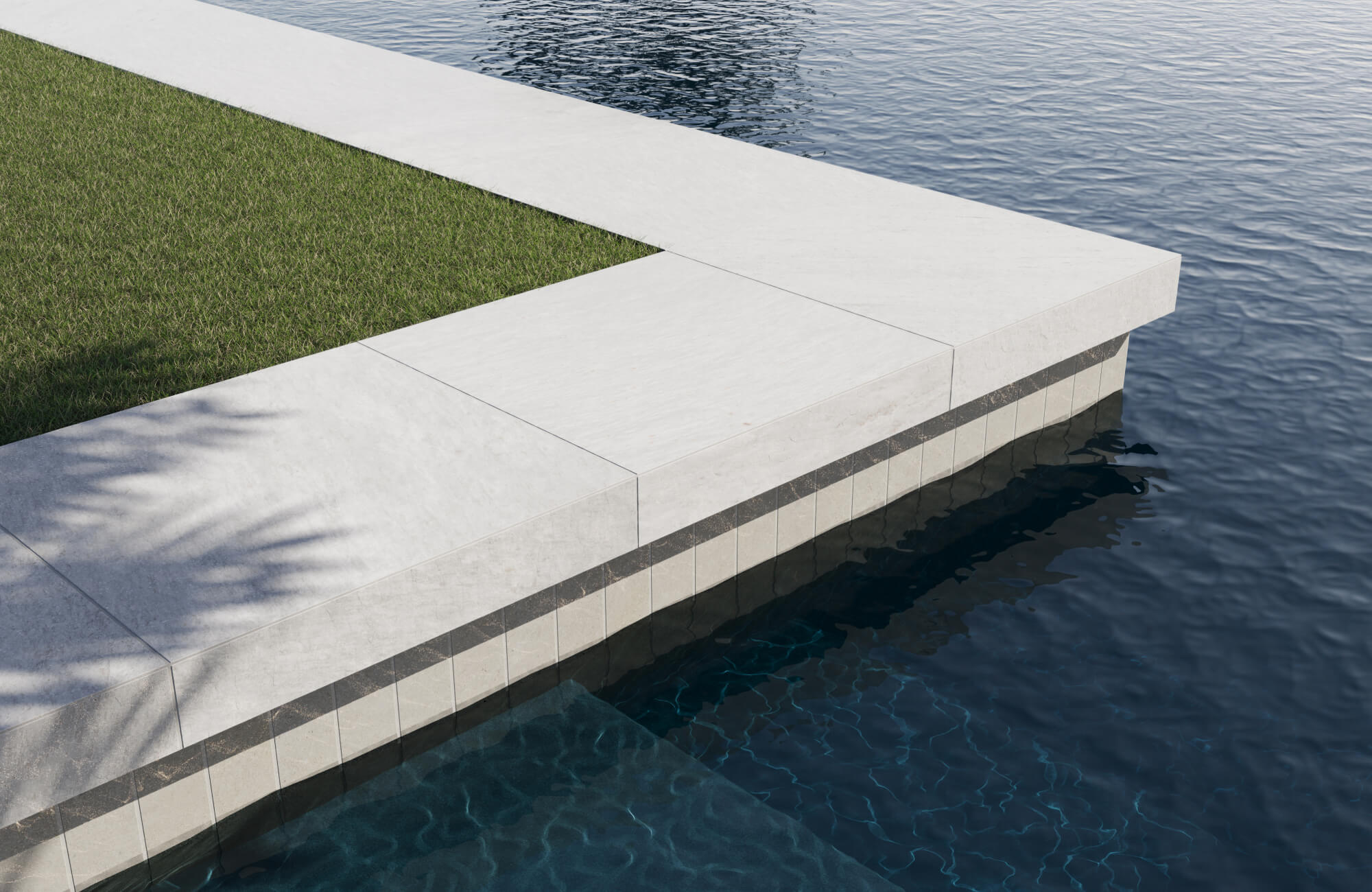
A perfect example is our Ramsey 24x48 Grip Porcelain 2cm Paver Tile in Putty, as featured in the picture above. It offers a clean, neutral tone and an elongated format ideal for achieving a seamless, contemporary look with elevated safety, while the subtle grip finish provides reliable traction without compromising the tile’s soft visual texture, making it equally practical and sophisticated for any outdoor poolside setting.
Glossy and Glass-Like Finishes
Glossy finishes, often found in glass and glazed ceramic pool tiles, bring exceptional light reflection and vibrant color saturation that can dramatically transform the look of a pool. These highly polished surfaces intensify the depth and clarity of water, creating a luxurious, mirror-like effect that is especially striking in deeper or illuminated sections.
Because of their smooth finish, they are best reserved for submerged vertical surfaces or design accents rather than busy horizontal zones where slipping could be a concern. The reflective quality of these tiles also makes them ideal for highlighting mosaics and waterline details. However, to preserve their brilliance, regular cleaning is necessary to remove buildup from calcium, sunscreen, or pool chemicals. When used strategically, glossy finishes add an unmistakable touch of elegance while maintaining their technical integrity under water.
Tumbled and Brushed Stone
Tumbled and brushed stone finishes lend a naturally weathered, timeworn look that complements outdoor environments while offering practical benefits around the pool. These finishes produce a textured yet smooth surface that increases slip resistance without sacrificing barefoot comfort. The subtle irregularities in the stone's surface contribute to its rustic character and create visual interest that blends beautifully with the surrounding landscaping or natural hardscape.
Over time, these tiles develop a natural patina, which not only enhances their charm but also reduces glare and improves surface grip. To maintain structural integrity and appearance, proper sealing is required to protect against water absorption and UV-induced fading. When paired with permeable mortars and neutral-toned grout, tumbled and brushed stone tiles create a cohesive, organic look that suits both modern and traditional poolscapes.
To help you envision how these finishes will complement your own pool environment, Edward Martin’s Augmented Reality (AR) tool allows you to preview different tile finishes directly within your space before making a final decision.
Installation Methods and Technical Standards for Long-Term Durability
No matter how advanced the tile material, long-term performance ultimately depends on expert installation practices that follow established technical standards. From substrate preparation to grout selection, every detail contributes to a durable, waterproof, and visually flawless swimming pool finish.
Substrate Preparation and Waterproofing Membranes
The installation process begins with a properly prepared substrate, which must be structurally sound, clean, and free from contaminants that could interfere with bonding. Applying a waterproofing membrane that meets ANSI A118.10 standards is critical to preventing water infiltration into the substructure, which can lead to costly failures over time.
These membranes, whether cementitious or liquid-applied, form a continuous barrier that protects both the tile assembly and the underlying pool shell from hydrostatic pressure and chemical erosion. Adequate curing time must be observed to ensure compatibility with adhesives and finishes.
This step also facilitates easier maintenance by minimizing moisture-related issues such as efflorescence or mold. When executed correctly, substrate and membrane preparation provide a solid foundation for a high-performance tile system.
Mortars and Adhesives Rated for Submerged Use
The adhesive selected for swimming pool tiles must be formulated to withstand constant exposure to water, chemicals, and thermal movement. Polymer-modified thin-set mortars that comply with ANSI A118.15 are highly recommended for their superior bond strength, flexibility, and resistance to chlorine degradation.
For glass or impervious tiles, epoxy-based mortars offer even higher chemical resistance and adhesion performance. Achieving 100% mortar coverage beneath each tile is essential to prevent voids that can trap water or allow for movement.
Installers must also respect manufacturer-recommended open times and cure periods to ensure a fully bonded and watertight installation. When appropriate mortars are matched with compatible tiles and substrates, the entire system becomes significantly more resilient and stable.
Grouting Techniques for Pool Environments
In swimming pools, grout must endure constant wetting and drying cycles, chemical exposure, and mechanical stress without deteriorating. Epoxy grout is often considered the gold standard in pool applications due to its impermeability, high compressive strength, and resistance to algae, staining, and chlorine.
For lower-budget projects, polymer-modified cementitious grouts offer a serviceable alternative, though they require careful sealing and more frequent maintenance. Uniform joint widths, proper packing, and smooth tooling help to ensure a consistent, watertight finish that resists cracking.
The use of color-stable grouts also enhances the visual harmony of the tile surface, especially when paired with natural stone or intricate mosaics. Sealing, where necessary, adds an extra layer of protection and extends the grout’s lifespan.
Incorporating Expansion Joints and Structural Flexibility
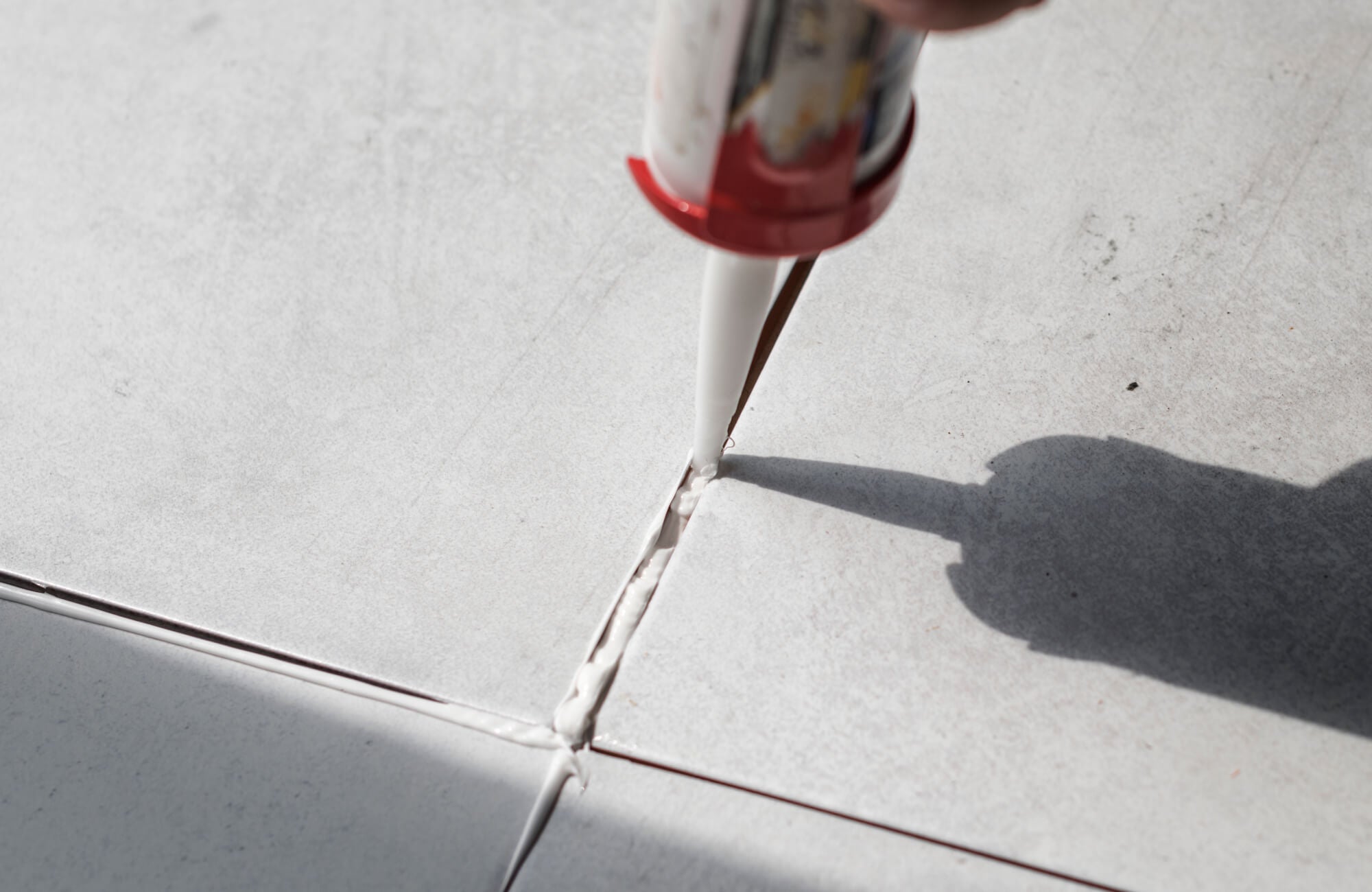
To accommodate the inevitable movement caused by temperature shifts, moisture absorption, and structural settling, properly designed expansion joints must be included in every swimming pool tile installation.
These joints allow the tile surface to flex without cracking or losing adhesion, particularly in large-format or sun-exposed applications. They should be placed at transitions between different materials, around the pool perimeter, and at regular intervals as outlined in TCNA EJ171 recommendations.
Flexible, UV-stable sealants such as silicone or polyurethane are commonly used to fill these joints, ensuring both durability and aesthetic consistency. When integrated during the initial design phase, expansion joints greatly reduce the likelihood of stress-related failures. Ultimately, their inclusion reflects a proactive approach to protecting both the functional and visual longevity of the tile system.
Elevating Pool Design with Purposeful Tile Selection
Creating a visually stunning and technically sound swimming pool begins with choosing materials that are engineered to perform while complementing the surrounding design elements. The right swimming pool tile system, including the deck, coping, and interior finish, ensures long-term durability, slip resistance, and lasting visual appeal in all climates. Among these options, porcelain tiles stand out for their exceptional strength, low water absorption, and ability to mimic natural stone or wood while maintaining superior performance. From glossy mosaics to textured natural stone and grip-finished porcelain, each material offers a unique way to elevate the space while addressing environmental demands. When these elements come together with expert installation, they create an aquatic setting that is as enduring as it is extraordinary.
To help you make a confident selection, Edward Martin offers tile samples that let you feel the texture and see the true color in your own space. Sampling options in natural light and real outdoor conditions ensures your chosen tile aligns beautifully with your swimming pool's design and environment.
Follow us on Instagram
@EDWARD.MARTIN
)
)
)
)
)
)
)
)
)
)
)
)
)
)
)
)