Checkerboard floors have a timeless charm, but the real magic lies in choosing the right tile size to bring the look to life. Whether you dream of a bold statement or a subtle classic, the size you select will shape how the pattern feels, functions, and flows in your space. In this guide, we’ll walk you through everything you need to know, so you won’t just be inspired to use checkerboard tiles, but also know how to make them work beautifully in your home.

Choosing the Right Size for Each Room
Before choosing a tile size, it’s important to think about where your checkerboard floor will go; what looks just right in a kitchen might feel off in a compact bathroom. Every room has its rhythm, and the right tile size can bring that pattern to life in a way that feels balanced, natural, and thoughtfully integrated.
Kitchens Need Balance and Easy Maintenance
Tile size has a direct impact on how your checkerboard floor functions and feels in a kitchen; too small can make the layout feel busy, while too large may disrupt the room’s balance. A 12x12 format, like Edward Martin’s Leona 12x12 Matte Porcelain Tile in Marfil and Nero Marquina, shown in the photo above, offers the perfect blend of visual clarity and practical coverage. This size is especially effective in standard to mid-sized kitchens, ensuring the pattern aligns well with cabinetry and retains a clean, timeless aesthetic.
In contrast, larger kitchens benefit from tile sizes like 16x16 or 18x18, which can help open up the checkerboard pattern and give the space a more expansive feel. With fewer grout joints, these larger tiles can also simplify maintenance; an advantage in areas prone to spills and frequent use. Additionally, the scale of the tiles complements long countertops and kitchen islands, creating a sense of structure and visual cohesion.
Ultimately, it’s important to consider how tile dimensions align with your specific layout. In narrow spaces, smaller checkerboard tiles can help avoid awkward cuts and support a cleaner, more symmetrical finish. And since most porcelain tiles are precisely cut with uniform edges, you can install them with minimal grout spacing, enhancing the overall sharpness and geometry of your checkerboard floor.
Bathrooms Require Grip and Compact Style
Bathrooms, particularly powder rooms and en-suites, call for tile layouts that prioritize both scale and safety. In these compact, moisture-prone spaces, smaller porcelain tiles like 12x12 inches are ideal for achieving a checkerboard pattern that feels intentional rather than crowded.
Their modest size allows the pattern to repeat cleanly while adapting easily around plumbing, vanities, and curved fixtures without disrupting the layout. This helps maintain geometric consistency, even in rooms with unusual angles or tighter footprints.
From a performance standpoint, the added grout lines offer increased slip resistance, especially when paired with matte finish porcelain tiles. Visually, a tighter checkerboard can bring a refined, boutique look to the space without overwhelming it, while supporting smooth transitions into showers or other wet zones.
Entryways Benefit from Durability and Definition
Entryways, which connect the outdoors to the interior, require flooring that combines durability with thoughtful design. Porcelain checkerboard tiles excel in these spaces, as they are resistant to moisture, dirt, and daily wear. They also provide structure to areas that are often overlooked in design.
In most cases, 12x12 tile sizes work best for foyers and vestibules. They’re small enough to adapt to tighter layouts but large enough to keep the checkerboard pattern clear and balanced. Additionally, this size allows for cleaner cuts in irregular spaces, making the installation more efficient and visually consistent. Not only does the checkerboard layout define the space, but when paired with a border tile or threshold inlay, it also creates a more defined entry. This combination further enhances the design, resulting in a seamless transition that feels intentionally integrated with the rest of the home.
Living and Dining Rooms Call for Impact
In open-concept spaces like living and dining rooms, checkerboard flooring should make a bold statement without overwhelming the design. Large-format porcelain tiles, such as 18x18, 20x20, and 24x24 inches, are ideal for these areas, providing the right scale to anchor furniture and maintain balance within the layout.
Because of their size, these tiles can create wider checkerboard repeats that hold their visual presence, even beneath dining tables or sectionals where parts of the pattern may be partially hidden. With fewer grout joints, the floor feels smoother and more continuous, which also helps maintain a clean and cohesive look across broader areas.
To get the best results with large format tiles, it’s important to work with a level subfloor and use back buttering to ensure full mortar coverage. These steps can help prevent lippage and keep the surface even. In naturally bright rooms, low-sheen porcelain tiles with clean edges can also reduce glare and keep the checkerboard pattern sharp and consistent.
Bedrooms Work Best with Versatile Scale
In bedrooms, where design leans toward comfort and layered textures, checkerboard porcelain tiles should support the space and not overpower it. Mid-sized formats like 12x12 and 14x14 inches are ideal, offering the versatility to suit a variety of bedroom styles and layouts.
These sizes provide enough contrast to define the checkerboard pattern without competing with soft elements like rugs, bedding, or drapery. Additionally, mid-sized tiles simplify the layout alignment, especially when working around details such as baseboards, door frames, or hearths, where clean transitions make a noticeable difference.
Since bedrooms usually have fewer built-ins or fixed obstructions, they offer more flexibility during installation. This makes it easier to experiment with layout, whether you’re centering the pattern under a bed or continuing it up a feature wall in a loft-style space. Porcelain’s durability also makes it a practical choice for children’s rooms or guest spaces, where floors must withstand constant activity and shifting furniture, ensuring long-lasting performance without sacrificing style.

Matching Tile Size to Pattern Scale
Once you’ve chosen the right tile size for each room, the next step is understanding how that size influences the overall look of the checkerboard layout. Tile dimensions affect more than just fit, they also define the rhythm, scale, and visual impact of the pattern.
Tighter Repeats Feel More Traditional
If you’re drawn to vintage interiors or want to echo historic architectural details, tighter checkerboard repeats created with smaller tiles are an excellent choice. With formats like 6x6 and 8x8 inches, the pattern alternates more frequently, producing a busier, more decorative effect that adds character without overwhelming the space. This style also works well in pre-war apartments, European-inspired rooms, or bathrooms with classic features like clawfoot tubs and pedestal sinks.
Larger Repeats Add Spaciousness
By contrast, larger checkerboard tiles slow the rhythm of the pattern and create more visual breathing room. Sizes such as 16x16 and 24x24 allow each square to stand out individually, with fewer color transitions across the floor. This broader scale also brings a sense of openness that fits beautifully in contemporary interiors, loft-style layouts, or minimalist kitchens where subtlety and space are key.
Matching Scale to Furniture and Fixtures
Beyond aesthetics, it’s also important to consider how tile size interacts with the items in your space. For instance, in dining rooms, choose a tile size that aligns proportionally with the table to avoid awkward overlaps or unbalanced framing. Similarly, in bathrooms, consider how the checkerboard pattern will align with vanities or tubs, as proper placement can enhance the room’s cohesion. When in doubt, visualize how the tiles will frame key features; this can help guide your sizing choices for a more harmonious result.

Design Goals and Style Direction
Designing with checkerboard tiles goes beyond just choosing size; it’s about crafting a space that aligns with your broader style goals. Whether you’re aiming for a modern vibe or a timeless classic look, the tiles should complement the aesthetic, enhancing color contrast, visual balance, and overall harmony in the room.
Classic vs Contemporary
If your vision leans toward a traditional style, smaller tile formats are often the way to go. Options like 6x6 and 8x8 inches in timeless materials such as marble or porcelain can bring a sense of old-world charm while keeping the checkerboard pattern crisp and intentional. These sizes also seamlessly complement vintage-inspired kitchens, historic foyers, or bathrooms that feature classic details and period-style finishes.
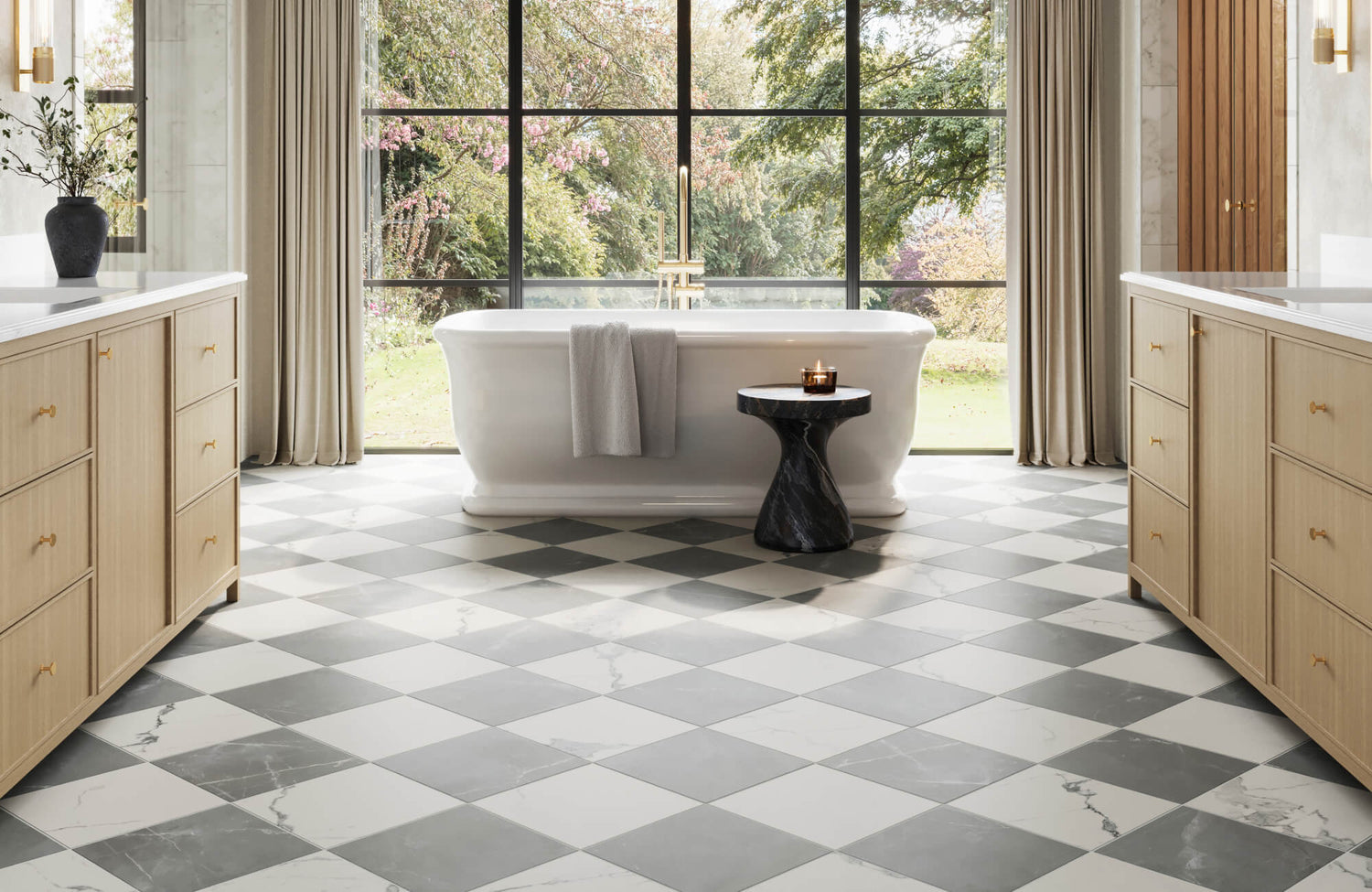
On the other hand, if you're aiming for a more modern, clean-lined aesthetic, larger tiles are the way forward. Porcelain tiles in 16x16, 20x20, and 24x24 inches, especially in matte finishes, can deliver a sleek, architectural checkerboard look that feels calm and expansive. As shown above, Edward Martin’s Leona 24x24 Checkerboard Matte Porcelain Tile in Calacatta and Nero Marquina is a perfect example. Its bold scale, minimal grout lines, and striking contrast make it a standout choice for contemporary spaces that prioritize clean lines, natural texture, and strong visual balance.
Subtle Contrast or Bold Drama
Tile size also influences how color contrast is perceived across the floor. Smaller tiles tend to amplify contrast, especially when paired with high-contrast combinations like black and white. The result is a more dynamic, high-energy look that grabs attention and energizes the room.
Larger tiles, by contrast, soften the rhythm of the checkerboard floor. When paired with more muted tones, like beige and charcoal or ivory and soft grey, they can create a more relaxed, tonal pattern that feels polished without being overpowering. This kind of layout works well in minimalist or transitional interiors where the goal is to create a calming atmosphere with a quiet visual structure.
.
Visual Anchoring with Scale
Tile size can help define different zones within a space, especially in open layouts or rooms that serve multiple functions. For example, larger checkerboard tiles placed under a kitchen island, dining table, or sectional create a sense of visual structure, anchoring each area without the need for walls or rugs. This not only brings clarity to the layout but also encourages a natural, seamless flow between zones.
Smaller tiles, in contrast, are ideal for more intimate spaces. For instance, in areas like a breakfast nook, reading corner, or tucked-away bench, a tighter checkerboard pattern can draw the eye inward while adding subtle detail, bringing character without overpowering the room.

Installation Layout and Room Orientation
Once your tile size is locked in, the next decision is the layout. The way you orient your checkerboard tiles can either stretch the space, frame it, or lead the eye. These layout strategies work in tandem with tile size to shape how your room feels.
Diagonal Layouts Feel Larger
One way to shift the feel of a space is by rotating the checkerboard pattern 45 degrees to create a diagonal layout. This angled approach introduces movement and depth, making it especially effective in smaller rooms where it draws the eye outward and creates the illusion of more space. In these layouts, medium-sized tiles like 12x12 inches often work best as they offer enough coverage without overwhelming the room or requiring too many cuts.
Grid Layout for Structure
Alternatively, if you're aiming for a more structured or traditional look, a standard grid layout is a smart choice. In this setup, checkerboard tiles align square to the walls, reinforcing symmetry and bringing a sense of calm and order to the room. Larger checkerboard tiles like 24x24 inches tend to perform well here, as their bold scale enhances the clean geometry and also creates a striking visual anchor.
Entry View and Focal Points
As you plan the layout, consider where people will enter the room and what will catch their attention first. Starting the checkerboard pattern near the entry gives it an immediate impact and helps establish the room’s overall tone. In these prominent areas, larger tiles like 24x24 inches can create a bold, structured feel, while smaller options like 12x12 inches introduce a gentler rhythm. No matter which tile size you choose, let the direction of the pattern naturally draw the eye toward key features, like a fireplace, freestanding tub, or custom-built-in.

Grout Lines and Pattern Impact
Grout might not be the first thing on your mind, but it can dramatically influence how your checkerboard floor looks, especially depending on the tile size you choose. The spacing, color, and frequency of grout lines can either sharpen the geometry of the pattern or soften its edges.
Fewer Lines with Larger Tiles
Larger tiles naturally result in fewer grout lines, which allows the checkerboard pattern to appear cleaner and more defined. With less visual interruption, each tile stands out more clearly, giving the floor a bold and expansive feel. This kind of clarity works especially well in modern spaces where simplicity and open layout are key. As a bonus, fewer joints also mean less grout to maintain, making the surface easier to clean and care for over time.
Smaller Tiles and Intricate Detailing
Smaller tiles introduce more grout joints, which adds texture and makes the checkerboard floor feel more detailed and layered. This extra definition works especially well in traditional or vintage-inspired spaces, where a tighter, more intricate look feels right at home. However, grout color becomes especially important in these settings. Choosing a grout color that closely matches one of the tiles can soften the contrast, giving the pattern a more blended and cohesive appearance.

Surface Material and Edge Finish
When it comes to checkerboard floors, the size of your checkerboard tile doesn’t work alone; it’s also influenced by the tile material and edge finish you choose. These factors directly affect how your selected tile size looks, installs, and performs in a real space.
Matte vs Glossy Reflections
The surface finish plays a key role in how your tile size appears across the floor, and Edward Martin’s Blair 24x24 Checkerboard Polished Porcelain Tile in Oniciata Grey and Volakas White, shown above, is a great example. With its polished finish and large-scale format, Blair creates a crisp, dramatic effect that reflects natural light and visually expands the space. A glossy sheen like this can enhance both contrast and clarity, making the checkerboard floor feel bold and pronounced, especially when paired with tiles 24x24 and larger.
Conversely, matte tiles absorb more light, which can help soften the look of smaller formats and give the floor a more grounded, relaxed feel. If you're after a subtle, timeless finish, matte is a great choice, while gloss works best in spaces where you want added brightness and striking visual impact.
Edge Treatments Influence Spacing
Tile edges, whether squared, pillowed, or beveled, affect how close tiles can be installed and how defined the grout lines appear. With smaller tiles, edge variation becomes more noticeable, especially if there are a lot of them. For the cleanest checkerboard floor, squared edges are typically the best choice. They allow for tighter spacing and a more refined finish, which works especially well in grid or diagonal layouts where clarity and alignment are key.
Thickness and Weight Considerations
Tile size plays a direct role in how thick and heavy each piece is, especially when working with larger formats in materials like natural stone or concrete. In a checkerboard layout, this added weight can impact how easily the tiles are installed and whether your subfloor needs extra reinforcement. On the other hand, smaller porcelain tiles like 12x12 inches are lighter, more manageable to cut, and better suited for spaces with tight corners, built-ins, or complex layouts. Choosing the right size for both your design and structural needs can help ensure your checkerboard floor not only looks beautiful but also performs well over time.
The Right Tile Size for Your Checkerboard Floor
Checkerboard floors can be playful or elegant, subtle or bold, but what truly makes them successful is selecting a tile size that complements both the room’s proportions and your overall design vision. For most spaces, 12x12-inch tiles work beautifully in smaller spaces like bathrooms, powder rooms, or compact kitchens, where a tighter pattern adds character without overwhelming the layout. In contrast, larger rooms, such as open-concept living areas, dining spaces, or expansive entryways, benefit from 24x24-inch tiles, which offer a more balanced, open feel, minimize grout lines, and give the pattern a sleek, modern finish.
To help you find the right fit for your space, you can explore our augmented reality (AR) tool, which allows you to visualize different tile sizes and patterns directly in your room. It’s a simple way to test how each format will look before making a final decision. Should you have any further questions, please don't hesitate to contact our team. We are here to assist you with tile selection, layout planning, and all aspects of your project.