An outdoor coffee table can look right on its own, but feel completely off once it’s placed next to your outdoor sofa. That usually comes down to size, not style. If it’s too small, it disappears. If it’s too large, it starts to interrupt how you move and use the space. The tricky part is finding something that fits both the layout and how you actually sit, reach, and relax outside. It’s not just about proportions on paper, but how everything works together in real outdoor settings. In this blog, we’ll walk through how to choose an outdoor coffee table size that feels balanced, practical, and tailored to your space.

How Your Sofa Layout Shapes the Right Coffee Table Size
Before thinking about specific table sizes, it helps to look at how your sofa is arranged and how the space is actually used. Whether you’re working with a standard sofa or a larger sectional, the layout naturally influences what will feel balanced. Once you view your coffee table as part of your overall lounge furniture setup, the sizing decisions start to feel more intuitive.
How Sofa Length Influences Outdoor Coffee Table Proportion
The length of your sofa is one of the biggest factors that affect how your outdoor coffee table will look and feel in the space. A longer sofa naturally calls for a table that has enough presence to match it visually. If the table is too short, it can feel disconnected, almost like it was placed there as an afterthought. On the other hand, a table that stretches too far can start to overpower the seating area. Finding that middle ground is what helps everything feel cohesive.
It also helps to think about how the table interacts with the entire seating span, not just the center portion. When the proportions are right, the table feels like it belongs to the sofa rather than sitting in front of it. You’ll notice the space feels more balanced without needing extra pieces to fill gaps. This makes the overall layout easier to read at a glance. Instead of drawing attention to mismatched sizing, everything works together quietly. That’s usually when the setup starts to feel complete.
Looking at the setup above, our Vetra Coffee Table works well because its 50-inch width and 26.8-inch depth give it enough presence to visually match the sofa without stretching too far. The proportions feel aligned with the seating span, so it doesn’t come across as too small or overly dominant. Its grooved top and slim frame also help maintain that balance, keeping the table grounded while still feeling light and easy within the layout.
What Changes When You’re Working With a Sectional
Sectionals shift things a bit because they take up more space and often wrap around the seating area. This creates a larger zone that the coffee table needs to visually anchor. A table that works with a standard sofa can feel too small when placed inside a sectional layout. Because of that, the scale needs to be adjusted so the table doesn’t get lost in the middle of the arrangement. It’s less about filling space and more about matching the presence of the seating.
You also have to consider how people move around the sectional and interact with the table from different angles. Since the seating extends on multiple sides, the table should feel accessible from more than one direction. This changes how the proportions are perceived compared to a straight sofa setup. When everything lines up well, the sectional and table feel like one connected arrangement. That connection is what keeps the space from feeling fragmented. It helps the layout feel more intentional without adding unnecessary elements.
Open Layouts vs More Defined Seating Areas
Open layouts tend to make furniture feel smaller because there’s more space surrounding everything. In this kind of setup, an outdoor coffee table needs enough visual weight to hold its place within the seating area. If it’s too subtle, it can feel like it’s floating rather than grounding the space. This is especially noticeable in larger outdoor living areas where everything has more breathing room. The table should help define the seating zone without needing walls or dividers.
In more defined outdoor seating areas, the surrounding boundaries naturally help frame the furniture. This means the coffee table doesn’t need to work as hard to establish presence. It can be slightly more restrained without feeling out of place. You’ll also notice that proportions feel easier to manage because the space is more contained. The layout already gives you a clear structure to work within. That difference changes how bold or subtle your outdoor coffee table can be. It’s all about responding to how open or enclosed the outdoor setup feels.
Why the Table Should Feel Visually Connected to Seating
An outdoor coffee table should never feel like a separate piece that was added after everything else was in place. It works best when it feels visually tied to the sofa and the surrounding seating. This connection helps the entire area feel more unified instead of broken into parts. If the table feels disconnected, the setup can look slightly off, even if each piece looks good on its own. It’s a subtle detail, but it makes a noticeable difference.
When the table feels connected, the layout becomes easier to understand as a whole. Your eyes naturally move between the sofa and the table without interruption. This creates a smoother visual flow that makes the outdoor setup feel more comfortable. It also reduces the need to add extra elements just to make things feel complete. Everything already works together in a way that feels intentional. That’s what gives the seating area a more finished and cohesive look.

Getting the Length and Width Right Without Guessing
Once your layout is clear, the next step is figuring out how the coffee table should relate to the size of your seating. This is where proportion starts to matter more than anything else, because the wrong size can throw off the entire setup. When the length and width feel right, the outdoor space becomes easier to use and looks more put-together without much effort.
Choosing a Length That Feels Proportional to Your Sofa
The length of your outdoor coffee table should feel connected to your sofa without trying to match it exactly. If it’s too short, it can look like it’s sitting in the middle without really relating to the seating area. If it’s too long, it starts to stretch beyond the sofa in a way that feels a bit heavy. A balanced length helps the table feel like part of the setup rather than a separate piece. It also makes the outdoor setup easier to read because everything lines up more naturally. When the proportions feel right, you don’t have to second-guess whether something looks off. It simply fits into the layout in a way that feels intentional.
Picking a Width That’s Easy to Reach From Every Seat
Width plays a big role in how practical your outdoor coffee table is during everyday use. If the table is too narrow, it might not feel useful, especially when you’re placing items or reaching from different seats. If it’s too wide, it can start to interrupt movement or feel like it’s taking up too much space. The goal is to find a width that feels comfortable from wherever you’re sitting. You shouldn’t have to lean too far or adjust your position just to use it. When the width works well, the table becomes part of your daily routine without getting in the way. That balance makes the seating area feel more natural to use.
Avoiding Tables That Feel Too Small or Too Bulky
One of the easiest mistakes is choosing a table that feels out of proportion once everything is in place. A table that’s too small can make the entire seating area feel unfinished, even if everything else is styled well. On the other hand, a bulky table can take over the space and make it feel tighter than it actually is. Both situations affect how comfortable the setup feels day to day. It’s not just about looks, but how the outdoor setup functions when you’re actually using it. Finding that middle ground keeps everything feeling balanced.
Adjusting Size Based on Outdoor Space Scale
Outdoor space size naturally changes how your outdoor coffee table is perceived, even if the sofa stays the same. In larger outdoor setups, smaller tables can feel like they disappear, especially when there’s more open space around them. In smaller outdoor spaces, the same table might feel much more prominent and take up more visual weight. That’s why it helps to step back and look at the full space, not just the seating area. The table should feel like it belongs within the setup, not just in front of the sofa. When you adjust for the overall scale, everything starts to feel more balanced. It’s a small shift in thinking, but it makes a noticeable difference in the final look.

Why Outdoor Coffee Table Height Affects Comfort More Than You Think
Once the size feels right, height becomes the detail that really affects how the space works day to day. It’s one of those things you don’t always notice right away, but you definitely feel it when it’s off. When the height is right, using the table feels natural instead of something you have to adjust to.
How Table Height Relates to Sofa Cushion Level
The easiest way to think about outdoor coffee table height is by comparing it to your sofa cushions. When the table sits close to the cushion level, everything feels more connected and easier to use. You don’t have to reach up or down in an awkward way just to grab something or set something down. If the table is too low, it can feel slightly inconvenient, especially when you’re using it often. If it’s too high, it can start to feel like it’s in the way instead of part of the setup. This balance becomes more noticeable the more you use the space throughout the day. When the height lines up well, it almost disappears into the experience of using the outdoor setup. That’s usually when you know it’s working.
Getting the height right really comes down to how closely your table aligns with the seat level of your sofa. In the setup above, our Mysa End Table is a great option, even though it’s not a traditional outdoor coffee table, thanks to its 21-inch height that sits comfortably within reach without feeling too low or too high. Its compact 21-inch width and depth also keep it proportional to the seating, while the solid 70.55 lb build gives it a grounded, stable presence. The rounded top and pedestal base help it feel integrated rather than intrusive, making everyday use feel more natural
When Lower Tables Create a More Relaxed Feel
Lower outdoor coffee tables tend to create a more laid-back and open feel in an outdoor space. They sit back a bit, which makes the setup feel less structured and more relaxed overall. This works especially well in setups where comfort and casual use are the priority. You’ll notice that the seating area feels more open because the table doesn’t interrupt the view as much. At the same time, it encourages a slower, more relaxed way of using the outdoor setup. However, if it’s too low, it can become less practical for everyday tasks. It’s really about finding that point where it feels relaxed but still usable.
When Slightly Taller Tables Work Better for Daily Use
Slightly taller outdoor coffee tables can make everyday use feel a bit more convenient, especially if you’re often placing drinks, food, or other items on them. They bring the surface closer to you, which reduces how much you have to lean forward. This can make a noticeable difference if you’re using the table frequently throughout the day. It also helps the table feel more present in the setup without overpowering the space. At the same time, going too tall can make it feel disconnected from the seating. You want it to support your routine, not interrupt it. When the height feels just right, the table becomes something you use naturally without thinking about it.

Choosing an Outdoor Coffee Table Shape That Fits the Way You Move Around
Once size and height feel right, shape becomes what really influences how you move through the space. It’s not just about how the table looks, but how easily you can walk around it and use it without thinking twice. The right shape helps everything feel smoother and more natural in your daily routine.
Rectangular Tables for Straight Sofa Layouts
Rectangular outdoor coffee tables tend to work best with standard sofas because they follow the same direction and structure. When everything lines up this way, the layout feels more organized without needing much adjustment. It also makes the seating area easier to use since the table stretches across the main seating zone. You’ll find that it feels natural to reach for things no matter where you’re sitting. At the same time, it helps define the outdoor space without adding extra pieces. However, it’s important to make sure it doesn’t feel too long or rigid in the setup. When it’s sized well, it supports the layout without making it feel stiff.
Round Tables for Easier Movement in Tight Spaces
Round tables are a great option when you want the outdoor setup to feel easier to move around in. Without corners, they naturally soften the layout and reduce the chance of bumping into edges. This makes a noticeable difference in tighter spaces or areas with a lot of movement. You’ll also find that they create a more relaxed flow, especially in spaces that don’t follow a strict layout. Because of their shape, they feel less intrusive even when placed close to seating. At the same time, they still provide enough surface to be functional. It’s a good choice when you want something practical that also makes the outdoor setup feel more open.
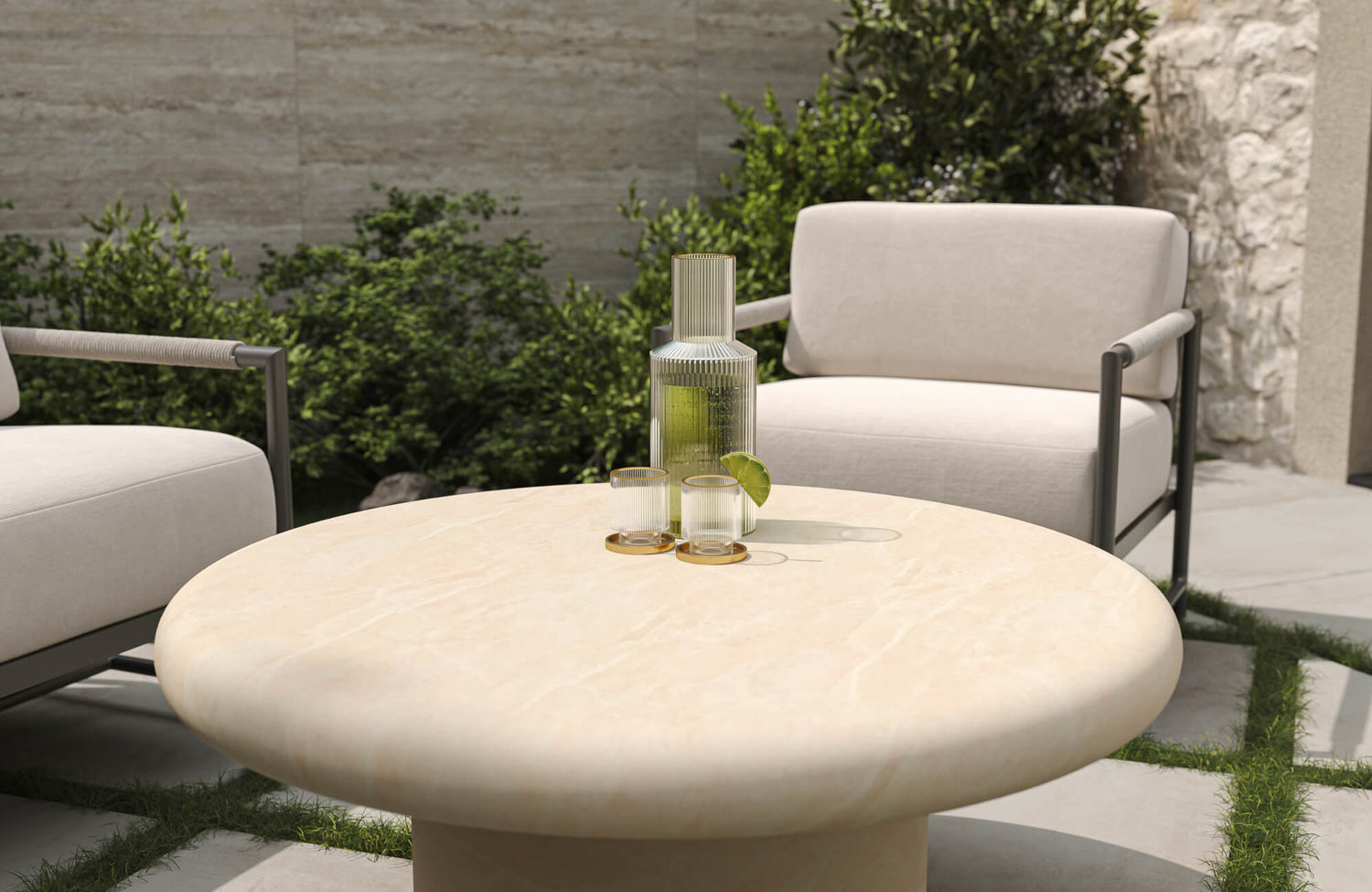
If your goal is to keep movement around your seating area easy and uninterrupted, round tables tend to make a noticeable difference. In the space above, our Lina Outdoor Coffee Table in Cream shows how a curved, organic shape softens the layout while still holding its presence. The gently rounded edges and sculpted concrete top remove sharp corners, so it feels more natural to move around without thinking about it. Paired with its oak wood-inspired base, it adds structure while still keeping the overall setup relaxed and fluid.
Square Tables for Sectionals and Balanced Layouts
Square outdoor coffee tables tend to work well with sectionals because they match the shape of the seating arrangement. Instead of stretching in one direction, they sit more centrally and feel balanced from every side. This makes them easier to use from multiple seating positions without favoring one side. You’ll notice that the outdoor setup feels more grounded when everything lines up this way. It also helps create a sense of structure without adding complexity. However, it’s important that the table doesn’t feel too large within that central area. When the proportions are right, it keeps everything feeling connected and easy to use.
Oval Shapes for a Softer, More Flexible Fit
Oval coffee tables offer a nice middle ground between rectangular and round shapes. They give you the length of a rectangular table while still softening the edges like a round one. This makes them feel more flexible in different layouts, especially when you want both reach and flow. You’ll find that they’re easier to move around compared to sharper-edged tables. At the same time, they still provide enough surface area to be practical. This balance makes them a strong option for spaces that don’t fit perfectly into one layout style. When used well, they help the outdoor setup feel more fluid without losing structure.

When Alternatives Like Ottomans or Nested Tables Make More Sense
Not every outdoor space works best with a traditional outdoor coffee table, especially if your setup needs to adapt throughout the day. In some cases, more flexible pieces make the area easier to use without sacrificing how it looks. These options tend to fit better into real routines, where movement and function matter just as much as style.
Using Ottomans for Comfort and Multi-Use Function
Ottomans can be a great alternative when you want something that feels softer and more versatile in your seating area. Instead of acting as just a surface, they can double as extra seating or a place to rest your feet. This makes them especially useful in outdoor setups where comfort is the main priority. You can still use them like a table when needed, especially with a tray to hold drinks or decor. They also tend to blend more naturally into lounge setups, since they feel like part of the seating rather than a separate piece. At the same time, they make the space feel more relaxed without losing structure. It’s a practical option that adapts easily to different situations.
Nested Tables That Adjust to Your Outdoor Space
Nested tables work well when you need something that can shift depending on how the outdoor setup is being used. Instead of one fixed surface, you have multiple pieces that can be pulled out or tucked away as needed. This makes them useful in smaller outdoor areas or setups that change often throughout the day. You can spread them out when you need more surface space, then bring them back together to keep things compact. They also allow you to use the space more efficiently without committing to a single layout. Because of that, the area feels more flexible without looking cluttered. It’s a simple solution that gives you more control over how the outdoor setup functions.
Mixing Coffee and Side Tables for Better Flexibility
In some setups, using a combination of coffee and side tables can work better than relying on one central piece. This approach spreads out the functionality, so you’re not limited to one surface in the middle. It also makes things easier to reach from different seating positions without having to lean too far. You can place tables where they’re actually needed instead of forcing everything into one spot. This setup feels more natural in everyday use, especially in larger or more open layouts. It also allows you to adjust things over time without reworking the entire outdoor setup. When done right, it creates a balanced setup that feels both practical and intentional.
Getting the Right Outdoor Coffee Table Size for a Setup That Actually Works
Finding the right outdoor coffee table size really comes down to how well it fits into your everyday use, not just how it looks in the space. When the proportions, height, and shape all align with your sofa and layout, everything starts to feel more natural without forcing it. It’s those small adjustments that make the seating area easier to use and more comfortable to spend time in. When nothing feels off or out of place, the entire outdoor setup just works without needing constant tweaking.
If you’re still unsure how to pull everything together, getting a second perspective can make the process much clearer. A personalized design consultation helps you look at your sofa, layout, and surrounding outdoor space as a whole, so your choices feel more intentional. It gives you a better sense of what fits, what feels off, and what actually works for your daily routine. Instead of guessing or adjusting things later, you end up with a setup that feels right from the start. That way, your coffee table isn’t just the right size; it actually supports how you live in your outdoor space.