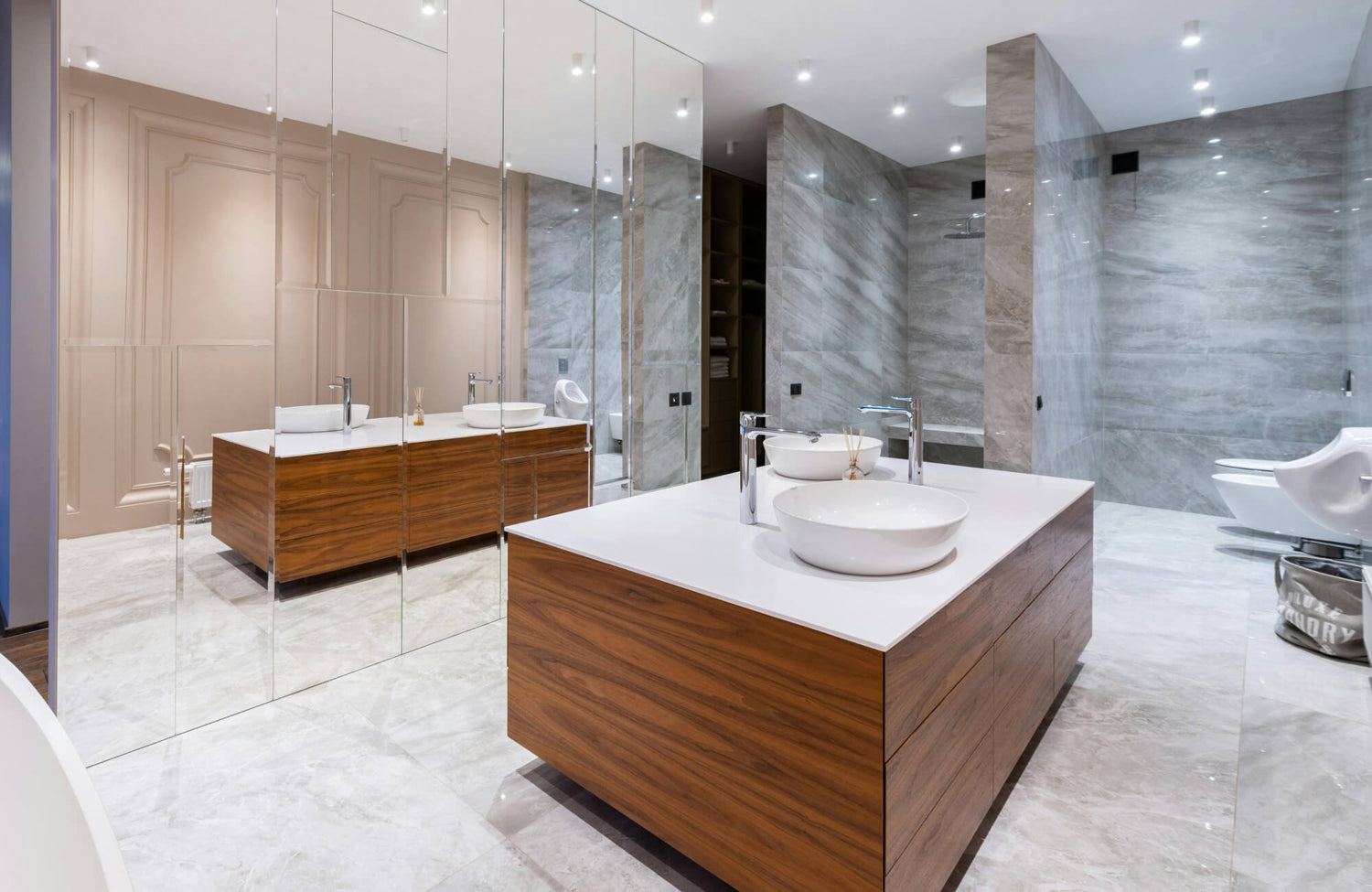
A bathroom vanity is more than just a storage unit—it’s a centerpiece that defines your bathroom’s style, functionality, and spatial balance. Choosing the right modern vanity involves far more than aesthetics; it requires consideration of materials, configurations, installation methods, and plumbing compatibility. The right choice can also maximize storage, enhance usability, and align with current interior design trends while ensuring long-term durability.
In this article, we’ll explore the essential factors to evaluate before purchasing a modern bathroom vanity, from construction quality and countertop materials to size, mounting style, and moisture resistance. Whether you’re upgrading a compact powder room or designing a luxury master ensuite, understanding these technical and stylistic details will help you invest in a vanity that’s both timeless and functional.

Size, Layout, and Spatial Harmony
The scale and layout of your vanity set the foundation for visual rhythm and functional ease. Every dimension, from height to depth, should harmonize with the architecture of the room, allowing movement to feel instinctive and the design to appear intentional.
Measuring for Precision
Precision in measurement transforms installation from a mere fitting into an act of visual balance. A standard vanity width typically ranges from 24 to 72 inches, while a depth between 18 and 22 inches accommodates plumbing comfortably without interrupting movement. Maintaining about 30 inches of clearance in front also allows users to move fluidly while keeping the space breathable.
When dimensions are tight, a floating vanity can lighten the visual load, allowing the floor to extend uninterrupted and making compact spaces feel larger. Corner vanities, conversely, use architectural constraints to their advantage, guiding the eye diagonally and softening angular layouts. Together, these adjustments ensure the vanity integrates seamlessly into both spatial logic and visual proportion.
Single vs Double Configurations
Choosing between a single or double vanity often reflects how the space will serve daily routines. A single configuration offers efficiency and a centered focal point, perfect for guest bathrooms or minimal layouts. In shared spaces, double vanities bring comfort and flow, allowing simultaneous use without crowding. Each basin also benefits from roughly 36 inches of counter width, ensuring movement feels natural rather than confined. The plumbing must follow this symmetry, aligning both drain and supply lines to maintain order beneath the surface.
A perfect embodiment of this balanced functionality, as displayed in the picture above, is Edward Martin’s Royce 72" Double Vanity in Chestnut with 3 cm White Zeus Quartz Top. Its spacious dual-sink layout accommodates shared use effortlessly, while the fluted chevron-patterned wood design adds texture and architectural rhythm to the bathroom. The warm, brown tone also grounds the vanity in natural sophistication, complemented by the crisp, polished quartz top that enhances light reflection and contrast. Paired with brushed gold fixtures, this double vanity transforms a functional necessity into a refined centerpiece—proving that thoughtful proportions and tactile detail can create harmony between usability and style.
Visual and Proportional Balance
Visual proportion defines whether a vanity feels grounded or intrusive within the room. When placed centrally beneath a mirror or lighting fixture, it anchors the wall plane, creating balance across the composition. Floating vanities also enhance this relationship by lifting the structure, introducing breathing room, and visual lightness. Larger freestanding designs, by contrast, lend a sense of permanence and architectural depth, grounding expansive spaces with their mass and symmetry. In addition, the proportion between vanity width, mirror span, and wall height reinforces this equilibrium, ensuring no element overpowers another. In the end, scale and spacing orchestrate a subtle harmony that turns utility into design poetry.

Material Composition and Structural Durability
Material integrity determines whether your vanity withstands the demanding environment of moisture, heat, and time. Each surface, joint, and finish must perform under daily stress, preserving both structure and sophistication without compromise.
Base Cabinet Materials
The cabinet body forms the structural backbone of a modern vanity, and its material selection dictates long-term resilience. Solid hardwoods like oak and maple excel in dimensional stability, their dense grain resisting warping even under humidity. Plywood, engineered from cross-laminated veneers, combines strength and flexibility, offering superior performance against expansion.
MDF and particleboard, while more economical, require high-quality laminate skins to shield them from moisture intrusion. Many modern manufacturers also enhance stability with resin-infused cores or composite frames that mimic the density of solid wood without its weight. When properly finished, these engineered materials provide durability that aligns with the evolving demands of modern bathroom environments.
Moisture-Resistant Finishes
The finish acts as both protector and aesthetic unifier, sealing the surface from moisture while defining its tactile quality. For instance, polyurethane coatings form a hard, impermeable shell that deflects water and resists scratching under daily use. On the other hand, thermofoil and high-pressure laminates, bonded under heat and pressure, create a sleek, consistent exterior that withstands fluctuations in temperature and humidity. In premium applications, marine-grade sealants or catalyzed lacquers also extend the life of natural wood tones without dulling their richness. PVC edge banding further fortifies vulnerable joints, preventing water penetration at corners and seams. Together, these layers of defense create a finish that feels refined yet remains impervious to the challenges of a wet environment.
Hardware and Joinery Integrity
Hardware forms the mechanical rhythm of a vanity, and its quality determines the longevity of smooth, silent operation. Stainless steel and zinc-alloy components, for example, resist corrosion, maintaining strength where humidity is constant. Meanwhile, full-extension drawer slides with ball-bearing systems provide effortless glide, extending completely for full interior visibility. Dovetail and mortise-and-tenon joinery also lock panels together with structural precision, distributing load more evenly than glued or stapled joints. When these construction methods converge, movement feels weightless, and the vanity’s frame maintains its geometry for decades. Each hinge, screw, and bracket, though small, contributes to a larger sense of craftsmanship that endures both time and use.

Countertop Materials and Functional Aesthetics
The countertop is both the vanity’s work surface and its visual signature, linking tactile performance to refined design expression. Its composition influences how light interacts with the room, how easily it resists daily wear, and how cohesively it ties together the overall aesthetic narrative.
Engineered Stone and Quartz
Quartz countertops exemplify the marriage between technology and natural beauty, combining precision-engineered strength with an elegant, stone-like appearance. Made from natural quartz crystals fused with resin under intense pressure, these surfaces achieve exceptional hardness and resistance to stains, scratches, and bacterial growth. Their non-porous composition ensures effortless maintenance, while variations in polish, from soft matte to reflective gloss, allow designers to adapt finishes to a bathroom’s ambient tone. Subtle veining and consistent color control lend quartz a sleek, architectural quality suited for contemporary interiors.
Closely related are quartz-based engineered stone surfaces, which blend quartz aggregates with advanced composite binders to create even greater structural stability and visual uniformity. This evolution of quartz technology has allowed for increasingly refined and customizable vanity applications that balance durability with luxury.
A striking example of quartz’s refined versatility, as shown in the photo above, is the Abigail 72" Double Vanity in Light Natural Oak with 3 cm White Zeus Quartz Top. Its crisp white surface offers a luminous counterpoint to the vanity’s warm, natural oak base, balancing organic texture with modern precision. In addition, the durable, quartz-based top maintains a pristine finish even under daily use, while its reflective quality enhances the sense of brightness and spaciousness within the bathroom. This harmony between engineered performance and natural elegance demonstrates how quartz-based surfaces elevate both the function and visual sophistication of modern vanity design.
Natural Stone Elegance
Natural stone counters, like marble and granite, capture a depth of tone and texture that synthetic materials strive to emulate. Marble’s soft translucence interacts beautifully with ambient light, but its porous nature demands careful sealing to prevent etching and discoloration. Granite, harder and more resilient, withstands heat and abrasion with remarkable endurance. Each slab carries unique mineral veining, transforming the countertop into a natural artwork. Polished surfaces also highlight organic luster, while honed finishes introduce tactile sophistication. When properly maintained, natural stone unites durability with timeless refinement, enriching any modern vanity ensemble.
Porcelain and Solid Surface Options
Porcelain and solid-surface materials represent the next frontier in vanity design, merging sustainability with sculptural form. Porcelain slabs are created through sintering—a high-heat process that compresses minerals into an ultra-compact, non-porous surface impervious to heat and UV radiation. Solid surfaces, often made from acrylic and mineral composites, allow seamless transitions between countertop and basin for a unified, contemporary look. Their homogenous structure also prevents staining, while micro-repairable surfaces maintain appearance even after years of use. Available in a range of finishes, from stone-like matte to glassy polish, they adapt beautifully to both minimalist and statement interiors. These innovations redefine the modern vanity, blending durability, hygiene, and visual precision into one cohesive material expression.

Sustainable Design and Eco-Conscious Material Innovation
Sustainability in modern bathroom vanities has evolved beyond trend into a defining standard of responsible design. Today’s eco-conscious consumers and designers prioritize materials and construction methods that minimize environmental impact without sacrificing style, strength, or luxury.
Eco-Friendly Material Choices
Sustainable bathroom vanities increasingly incorporate renewable, recyclable, or low-emission materials that balance durability with environmental responsibility. Bamboo, for instance, offers rapid renewability and striking grain patterns that rival hardwood aesthetics. FSC-certified plywood also ensures timber is ethically sourced, maintaining forest biodiversity while guaranteeing structural reliability. Moreover, composite materials with recycled glass, aluminum, or stone aggregates reduce waste without compromising performance. Water-based finishes and low-VOC adhesives further enhance indoor air quality, creating a healthier environment for long-term living. By combining aesthetic sophistication with ecological mindfulness, these materials set a new benchmark for sustainable interior craftsmanship.
Energy Efficiency in Manufacturing
The production process behind a vanity can significantly affect its environmental footprint. Modern manufacturers use closed-loop water systems, solar-powered facilities, and precision CNC machinery to reduce waste and energy consumption. Automated cutting technologies also ensure maximum yield from each board, minimizing offcuts that would otherwise enter landfills. Meanwhile, powder-coating and UV-cured finishing systems eliminate solvent emissions, improving workplace and product safety. These innovations not only enhance manufacturing efficiency but also reduce embodied energy in the final product. Ultimately, the result is a vanity that upholds design integrity while aligning with global sustainability goals.
Longevity as a Sustainable Value
Durability is an often-overlooked pillar of sustainability, as longevity reduces material waste and resource depletion. Vanities constructed from high-density cores and corrosion-resistant hardware extend usability for decades, delaying the environmental cost of replacement. Repairable finishes, removable components, and replaceable panels enable easy maintenance over time. Choosing a timeless silhouette also prevents premature obsolescence, allowing the vanity to adapt seamlessly to future aesthetic updates. Sustainable design, therefore, lies not only in recycled content but in enduring craftsmanship as well. Each layer of longevity contributes to a reduced carbon footprint and a more responsible approach to modern living.

Lighting Integration and Visual Cohesion
Lighting has become an integral part of modern vanity design, shaping atmosphere, enhancing visibility, and elevating overall functionality. When thoughtfully integrated, it blurs the line between architecture and furniture, turning illumination into both a design feature and a performance element.
Task and Ambient Lighting Balance
Successful bathroom lighting begins with a delicate balance between focused task illumination and soft ambient diffusion. LED strips beneath floating vanities create a subtle halo that defines form without overwhelming brightness. Above-counter fixtures with diffused glass shades also provide clarity for grooming tasks while minimizing harsh shadows. Additionally, adjustable color temperatures, typically between 2700K and 5000K, allow transitions between warm relaxation tones and bright task-oriented lighting. This interplay of shadow and reflection gives the vanity visual depth and dimension. When these layers of light work together, they enhance usability while lending a calm, spa-like ambiance to the room.
Integrated Mirror and Vanity Lighting Systems
Modern bathroom design often integrates mirrors and lighting fixtures as complementary rather than unified elements, achieving balance through coordinated placement and finish rather than built-in illumination. Strategically positioned wall sconces or pendant lights flanking the mirror provide even, shadow-free illumination ideal for grooming. Edge lighting from nearby fixtures or ceiling sources can further enhance visibility while preserving ambient warmth.
Additionally, dimmable and color-adjustable LEDs allow users to fine-tune brightness and tone, shifting seamlessly between functional and atmospheric lighting. When these independent components are thoughtfully aligned in proportion, color temperature, and material finish, they create a cohesive sense of visual continuity. This approach emphasizes harmony between reflection, texture, and light rather than mechanical integration.
This refined balance of light, reflection, and materiality is beautifully exemplified in our Sasha 72" Double Vanity in Mid Century Walnut with 3 cm White Zeus Quartz Top, as featured in the photo above. The vanity’s fluted walnut texture and luminous quartz-based top are framed by the Tristan Square Mirror in Polished Brass and paired with the Ortega Wall Sconce in Patina Brass. Together, these elements form a cohesive composition of light and tone, where the mirror’s polished brass border echoes the sconce’s warm patina finish, enhancing the natural richness of the walnut cabinetry. This synergy of lighting, reflection, and craftsmanship transforms a practical zone into an elegant centerpiece of modern bathroom design.
Highlighting Material and Color Coordination
Proper lighting accentuates the vanity’s material character, revealing subtleties in wood grain, stone veining, or matte lacquer depth. Warm white lighting, for instance, enhances natural wood tones, while cooler light highlights marble or quartz with crystalline sharpness. Directional spotlights can also emphasize feature walls or under-mounted sinks, creating a dynamic visual layering. Moreover, backlighting behind mirrors or open shelving produces depth and floating effects that amplify spatial perception. Integrating dimming systems further allows control over mood and visual intensity throughout the day. This synergy of illumination and material detail transforms the vanity into a centerpiece that evolves with its environment.
Refining Your Bathroom Design Vision
A well-chosen vanity unites craftsmanship, proportion, and performance into one statement of modern sophistication. Durable bathroom vanity materials such as quartz, hardwood, and marine-sealed plywood ensure that longevity never comes at the expense of beauty. Proper ventilation and finish selection also protect against humidity, maintaining the vanity’s integrity in moisture-heavy environments. Integrating lighting, mirrors, and fixtures completes the design narrative, turning function into a cohesive visual experience. When these considerations align, the result is a bathroom that feels curated, efficient, and enduring. In essence, investing in a modern vanity is not merely a purchase—it’s the foundation for lasting design excellence.
For tailored guidance that brings these design principles to life, Edward Martin’s design services offer expert support in selecting vanities, materials, and lighting for cohesive, enduring spaces. Begin your bathroom transformation today and contact us to create a design that reflects timeless craftsmanship and modern sophistication!