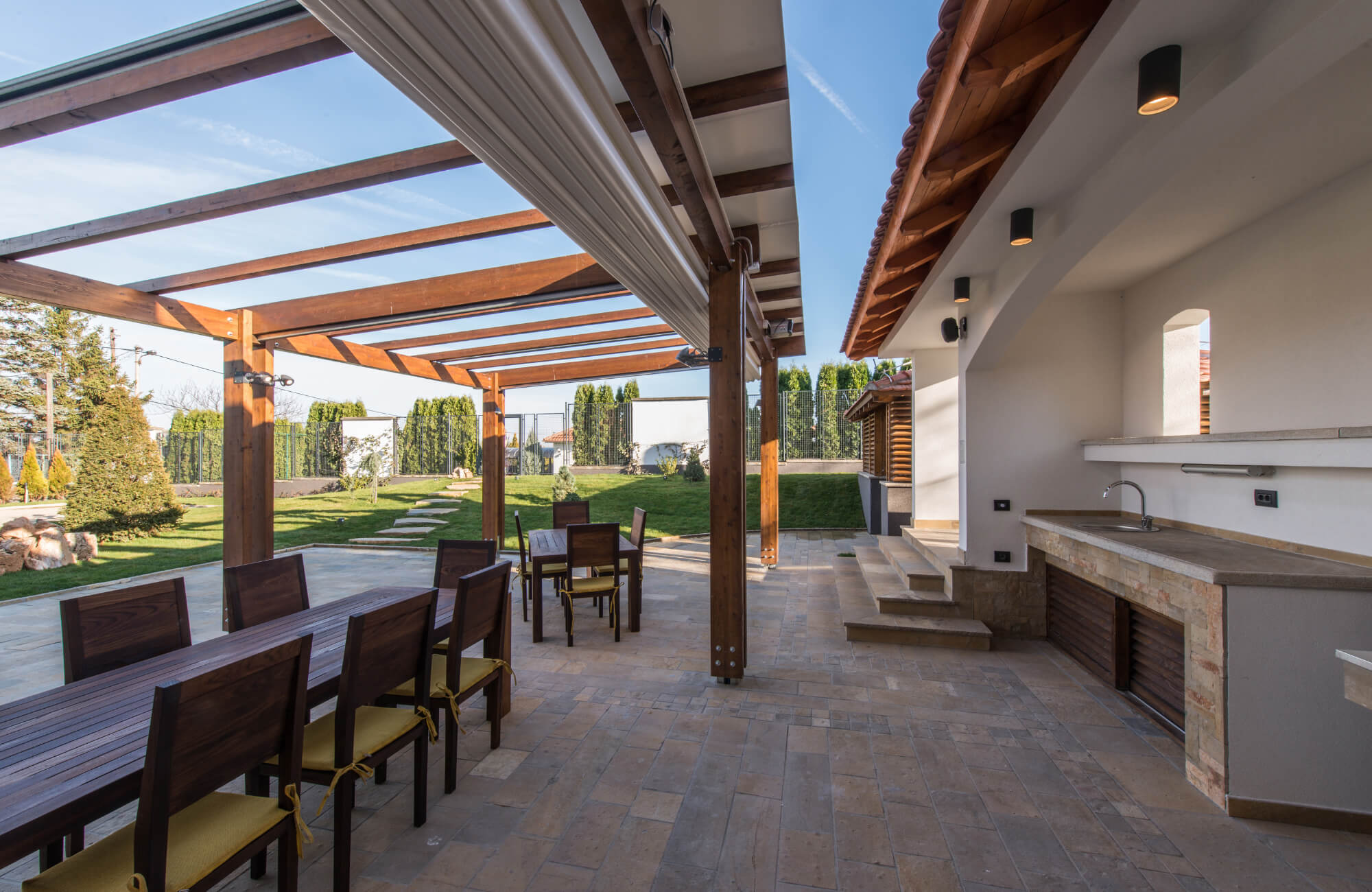
At a glance, indoor and outdoor tiles can look nearly identical, which is why the difference between them is often underestimated. The real separation shows up once tiles are exposed to daily use, moisture, temperature changes, and long-term wear. Some tiles are built for controlled interiors, while others are engineered to handle far less predictable conditions. In this blog, we’ll break down how indoor and outdoor tiles differ in manufacturing, surface design, durability, and real-world performance.

How Indoor And Outdoor Tiles Are Manufactured Differently
At first glance, indoor and outdoor tiles may look similar, but the way they are made sets them apart in important ways. Manufacturing choices such as material composition, firing temperature, and overall density directly influence how each tile performs once it is installed. Below, we’ll take a closer look at the key production differences that explain why tiles designed for outdoor use behave very differently over time than those made for interior spaces.
Material Composition And Core Density
Indoor and outdoor tiles start with different material priorities, especially when it comes to core density. Outdoor tiles are typically made from denser clay bodies or porcelain blends designed to withstand environmental exposure. This denser composition helps reduce internal gaps that could allow moisture to penetrate. Indoor tiles, by contrast, can rely on lighter compositions because they are not exposed to the same stresses. While both may appear similar on the surface, the internal structure tells a different story. That difference becomes important once temperature changes and moisture come into play.
Firing Temperatures And Production Methods
One of the most meaningful differences in tile manufacturing comes down to firing temperature and how the tile is produced. Outdoor tiles are typically fired at higher temperatures, which allows the materials to vitrify more completely. This process creates a denser, harder tile that is less reactive to moisture and temperature changes over time. Indoor tiles, on the other hand, are often fired at slightly lower temperatures because they do not need the same level of environmental resistance. This approach still produces a durable surface for interior spaces, just without the added reinforcement required outdoors. These production decisions are intentional and directly reflect the conditions each tile is designed to handle.
Porosity Levels And Moisture Absorption
Porosity is another key factor shaped during manufacturing, and it plays a major role in how tiles interact with water. Outdoor tiles are engineered with very low porosity, which limits how much moisture can enter the body of the tile. This helps protect against cracking, surface wear, and internal stress when exposed to rain, humidity, or temperature shifts. Indoor tiles may allow slightly higher absorption since moisture exposure is more controlled inside the home. While this difference is not always visible on the surface, it becomes important over time. Lower porosity generally leads to better long-term performance in spaces where conditions are less predictable.
Why Outdoor Tiles Are Built To Be Less Forgiving
Outdoor tiles are intentionally designed to be less forgiving because they need to perform reliably in environments that are constantly changing. From the start, manufacturing choices favor strength, stability, and resistance rather than visual softness or delicate surface detail. As a result, outdoor tiles often feel harder, denser, or more rigid when compared to indoor options. Those characteristics help them withstand cracking, shifting, and surface breakdown caused by moisture, temperature swings, and daily exposure. Indoor tiles, by contrast, can allow for more flexibility in design because their surroundings are controlled. The difference comes down to function and purpose, not a difference in overall quality.
How Manufacturing Impacts Long-Term Performance
Manufacturing decisions have a direct and lasting impact on how a tile performs over time. Higher density, elevated firing temperatures, and lower porosity all work together to support durability in demanding environments. Outdoor tiles hold up because they are engineered with environmental stress in mind from the very beginning. Indoor tiles perform just as reliably in stable spaces because they are optimized for consistency and everyday comfort. Issues usually appear only when tiles are pushed beyond the conditions they were designed for. In the end, manufacturing sets the foundation for long-term performance and reliability.

Slip Resistance And Surface Texture In Different Environments
Slip resistance plays a very different role indoors than it does outdoors, largely because the conditions underfoot are rarely the same. Moisture, temperature changes, and everyday exposure all influence how safe a surface needs to feel in each setting. Below, we’ll look at how texture and traction are designed differently for indoor and outdoor tiles, and why those differences matter in real use.
Why Grip Matters More In Outdoor Settings
In outdoor environments, traction becomes especially important because surfaces are constantly exposed to conditions that reduce friction. Rain, humidity, and even everyday buildup like dust or fallen leaves can quickly make smoother tiles unsafe. Because of this, outdoor tiles are intentionally designed with more pronounced texture to help maintain secure footing in unpredictable situations. That added texture creates resistance where water would otherwise pool or linger on the surface. Rather than prioritizing softness or refined appearance, outdoor tile surfaces are built around reliability. The goal is to support confident movement without forcing people to think about every step.
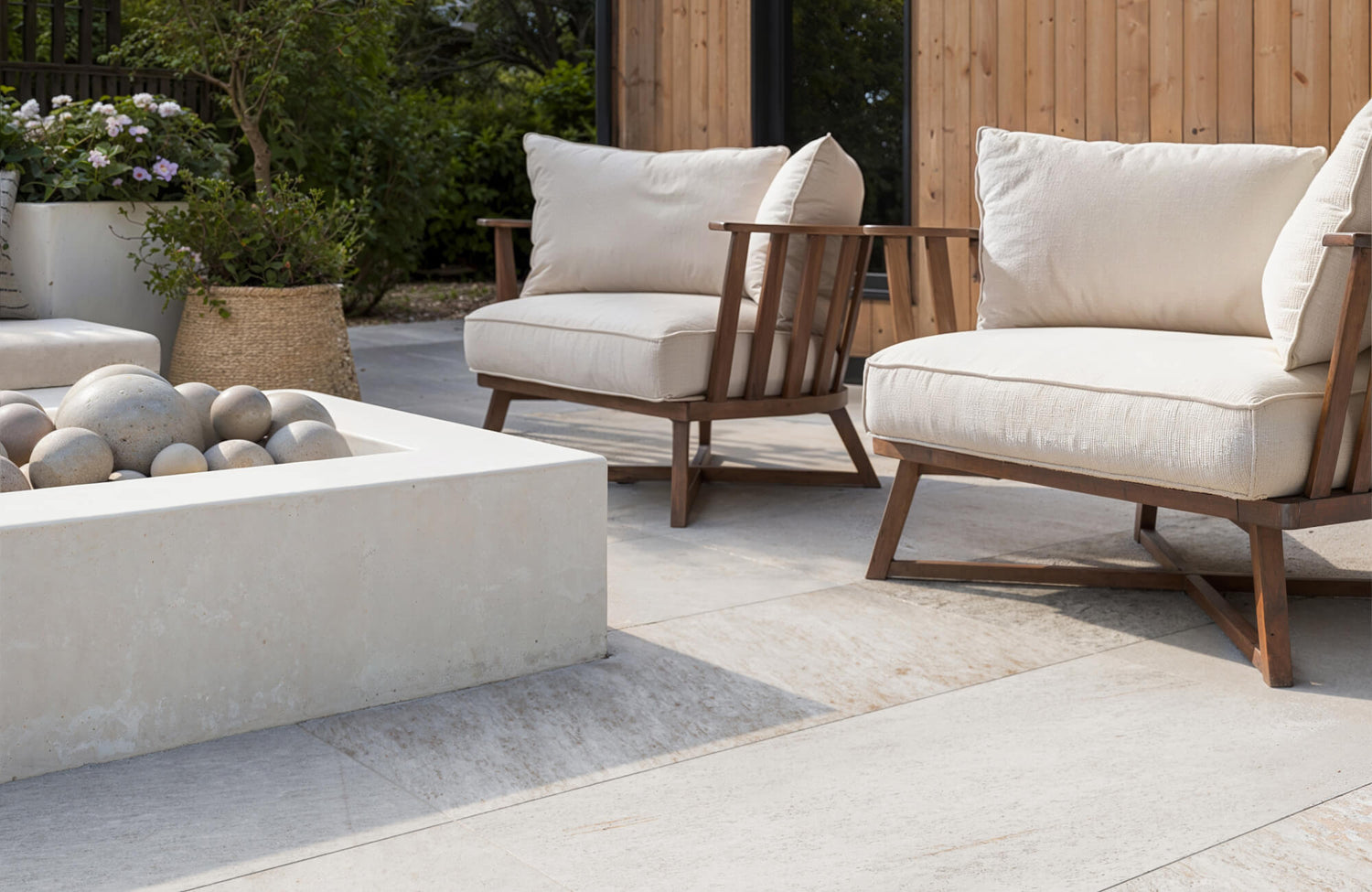
A good example of this approach is our Bowden 24x24 Grip Porcelain 2cm Paver Tile in Oat, seen above, inspired by the raw beauty of the Dolomites in Italy’s Trentino region. Its fine-grained surface and dynamic warm beige tones reflect natural geological contrast while maintaining a reliable anti-slip finish. The textured grip is intentional, helping the tile perform confidently across patios, pool surrounds, and open-air seating areas. This balance of visual depth and secure footing is exactly why grip matters more outdoors than refined smoothness ever could.
How Textured Surfaces Perform Indoors
Indoors, texture is handled more subtly because moisture exposure is typically limited and easier to control. Instead of an aggressive grip, indoor tiles use gentle surface variation to provide traction while still feeling comfortable underfoot. This balance matters in areas where people walk barefoot or spend long periods standing, such as kitchens and bathrooms. Too much texture inside can feel rough over time and make the space look visually busy. For that reason, indoor tiles are designed to support everyday movement without drawing attention to themselves. The result is a surface that feels calm, familiar, and easy to live with.
Slip Ratings And What They Actually Indicate
Slip ratings can be useful as a reference point, but they rarely capture how a tile performs in everyday settings. These ratings are measured under specific testing conditions that may not reflect real household use. Factors like cleaning habits, surface wear, and the type of moisture present all influence how slippery a tile feels over time. A tile with a strong rating may still feel slick in certain environments, while another may feel secure despite a modest rating. This is why slip ratings work best when viewed as general guidance rather than a final answer. Real-world context always plays a larger role.
Wet Conditions And Daily Safety Considerations
Moisture changes how people move through a space, whether it shows up occasionally or is part of daily routines. Outdoors, water exposure is expected and often unavoidable, with rain or humidity lingering on surfaces long after it appears. Indoors, wet conditions are usually limited to specific areas, although they occur more frequently through everyday use. Tile surfaces are designed with these patterns in mind, taking into account how water behaves in each environment. When the surface aligns with those conditions, movement feels intuitive rather than cautious. That natural ease is what ultimately supports daily safety.
Balancing Comfort Underfoot With Traction
Selecting the right tile surface always comes down to finding the right balance between traction and comfort. Outdoor tiles lean toward a stronger texture to maintain safety, even if the surface feels more structured underfoot. Indoor tiles place comfort first, adding just enough texture to support grip without becoming abrasive. Issues tend to arise when a surface leans too far in either direction. When traction feels appropriate rather than aggressive, the tile becomes easier to live with over time. That balance allows the surface to feel supportive without feeling harsh or demanding.

Weather Exposure And How It Affects Tile Performance
Weather exposure introduces variables that indoor tiles are not designed to handle on a daily basis. Temperature changes, moisture, and sunlight place ongoing stress on exterior surfaces, shaping how tiles age and perform over time. Here, we’ll take a closer look at how these conditions affect tile behavior and why outdoor environments demand a different level of durability.
Temperature Changes And Expansion Stress
Outdoor tiles are constantly reacting to temperature shifts throughout the day and across seasons. As surfaces warm up and cool down, materials naturally expand and contract in response. Outdoor tiles are engineered to handle this movement without cracking, warping, or loosening over time. Indoor tiles, on the other hand, are made for stable, climate-controlled environments where expansion stress is minimal. When indoor tiles are exposed to repeated temperature swings, that stress can build unevenly within the material. Over time, this often leads to damage that would not occur indoors.
Freeze-Thaw Cycles And Tile Integrity
In colder environments, freeze-thaw cycles place even greater strain on tile surfaces. Moisture that enters the tile can freeze, expand, and then thaw repeatedly, creating internal pressure with each cycle. Outdoor tiles are designed with very low absorption rates to limit how much water can penetrate in the first place. Indoor tiles are typically more porous, which allows moisture to seep in more easily. Once trapped water begins freezing and thawing, the tile’s internal structure gradually weakens. This is one of the most common reasons indoor tiles fail when used outside.
Sun Exposure And Color Stability
Sunlight affects tile surfaces in ways that indoor environments rarely replicate. Prolonged exposure to UV rays can gradually lead to fading, discoloration, or uneven shifts in tone. Outdoor tiles are formulated to resist these changes, helping colors and finishes stay consistent even under direct sunlight. Indoor tiles typically assume indirect or filtered light, which places far less stress on pigments and surface treatments. When used outside, indoor tiles can begin showing color changes much sooner than expected. In many cases, these visual shifts appear long before any structural issues become visible.
A good example of this durability is our Wren 12x24 Grip Porcelain 2cm Paver Tile in Dune above, inspired by the timeless textures of natural limestone. Its soft, finely speckled brown tone is designed to hold steady under prolonged sun exposure, avoiding the uneven fading that can affect indoor tiles outdoors. The surface responds well to changing light throughout the day, allowing the color to shift subtly without losing consistency. This kind of stability helps outdoor spaces feel cohesive season after season, even as conditions change.
Moisture Penetration Over Time
Outdoor spaces introduce moisture in more persistent and unpredictable ways, from rain and humidity to runoff that lingers after storms. Even when water is not visibly pooling, it can slowly work its way into tile surfaces over time. Outdoor tiles are designed to resist this ongoing exposure, limiting how deeply moisture can penetrate. Indoor tiles are not built for prolonged contact with water and tend to absorb it more easily. As moisture accumulates, it can affect both the surface and the tile’s internal structure. Because this process happens gradually, early signs of damage are often easy to miss.
Why Indoor Tiles Struggle Outdoors
Indoor tiles struggle outdoors because they are designed for stable, predictable conditions rather than constant exposure. They assume consistent temperatures, limited moisture, and indirect light, which define most interior environments. Once those assumptions no longer apply, the tile is pushed beyond what it was built to handle. Expansion stress, moisture absorption, and surface wear begin to compound rather than occur in isolation. At first, the tile may appear unaffected, giving a false sense of suitability. Over time, however, these hidden pressures surface as damage that is difficult or impossible to fix without full replacement.

Thickness, Density, And Structural Strength Compared
Thickness and density quietly influence how tiles handle stress, weight, and daily wear. These physical differences help explain why some tiles are built to perform outdoors, while others are better suited for interior spaces. Below, we’ll look at how structural design choices affect strength, stability, and long-term performance in different environments.
Why Outdoor Tiles Are Often Thicker
Outdoor tiles are usually made thicker because exterior spaces place more physical demands on the surface. That extra thickness helps the tile absorb stress from uneven substrates, shifting temperatures, and constant exposure to the elements. It also gives the tile greater stability when moisture and temperature changes cause subtle movement beneath it. Indoors, tiles sit on more predictable, controlled surfaces, so this level of reinforcement is rarely needed. When thinner tiles are used outside, they struggle to spread stress evenly across the surface. Over time, that imbalance increases the risk of cracking and structural wear.
Load-Bearing Expectations Indoors vs Outdoors
Indoor tiles are designed with consistent, everyday loads in mind, such as walking and standard furniture placement. Outdoor tiles, on the other hand, must handle heavier and far less predictable pressure. Furniture, planters, and environmental debris can all concentrate weight in uneven ways. Because of this, outdoor tiles are built to tolerate greater load variation without losing integrity. Indoor tiles may hold up briefly in exterior conditions, but they are not engineered for sustained stress. As time passes, those limits tend to show in high-exposure outdoor areas.
Substrate Requirements For Each Tile Type
What sits beneath the tile matters just as much as the tile itself, especially when thickness and density come into play. Outdoor substrates tend to shift over time due to moisture, temperature changes, and natural ground movement. Thicker tiles help bridge these subtle inconsistencies by providing added rigidity and structural support. Indoors, substrates are generally more stable, allowing thinner tiles to perform without extra reinforcement. When tile strength does not align with substrate conditions, stress transfers directly to the surface. Over time, that mismatch can lead to cracking, loosening, or bond failure.
How Thickness Influences Installation Choices
Tile thickness affects more than durability, as it also shapes how easily the tile works with the rest of the space. Thicker outdoor tiles often call for additional planning so transitions to nearby surfaces feel intentional rather than abrupt. Indoors, thinner tiles tend to integrate more smoothly with adjacent flooring, trim, or door thresholds. While thickness alone does not determine where a tile can be used, it does influence how flexible the installation process feels. Choosing a tile with an appropriate thickness helps limit adjustments during installation. It also supports cleaner results that hold up better over time.

Design, Finish, And Visual Differences You’ll Notice
Beyond performance, indoor and outdoor tiles are designed to look and feel right in the spaces they’re used. Finish, texture, and surface detail are chosen to support function while still shaping the overall visual character of a room or outdoor area. These differences often become clearer once tiles are installed and interacting with light, surrounding materials, and daily use.
Finish Types Commonly Used Indoors
Indoor tiles often feature smoother finishes because they are designed for controlled environments with minimal exposure to moisture. Polished and satin finishes are more common indoors, where slip resistance is less critical and visual clarity matters more. These finishes reflect light more evenly, which helps interiors feel brighter and more refined. Because indoor spaces experience less grit and debris, smoother surfaces are easier to maintain without becoming unsafe. The finish is often chosen to complement furniture, cabinetry, and wall treatments rather than withstand environmental stress. This allows indoor tiles to prioritize visual softness and surface consistency.
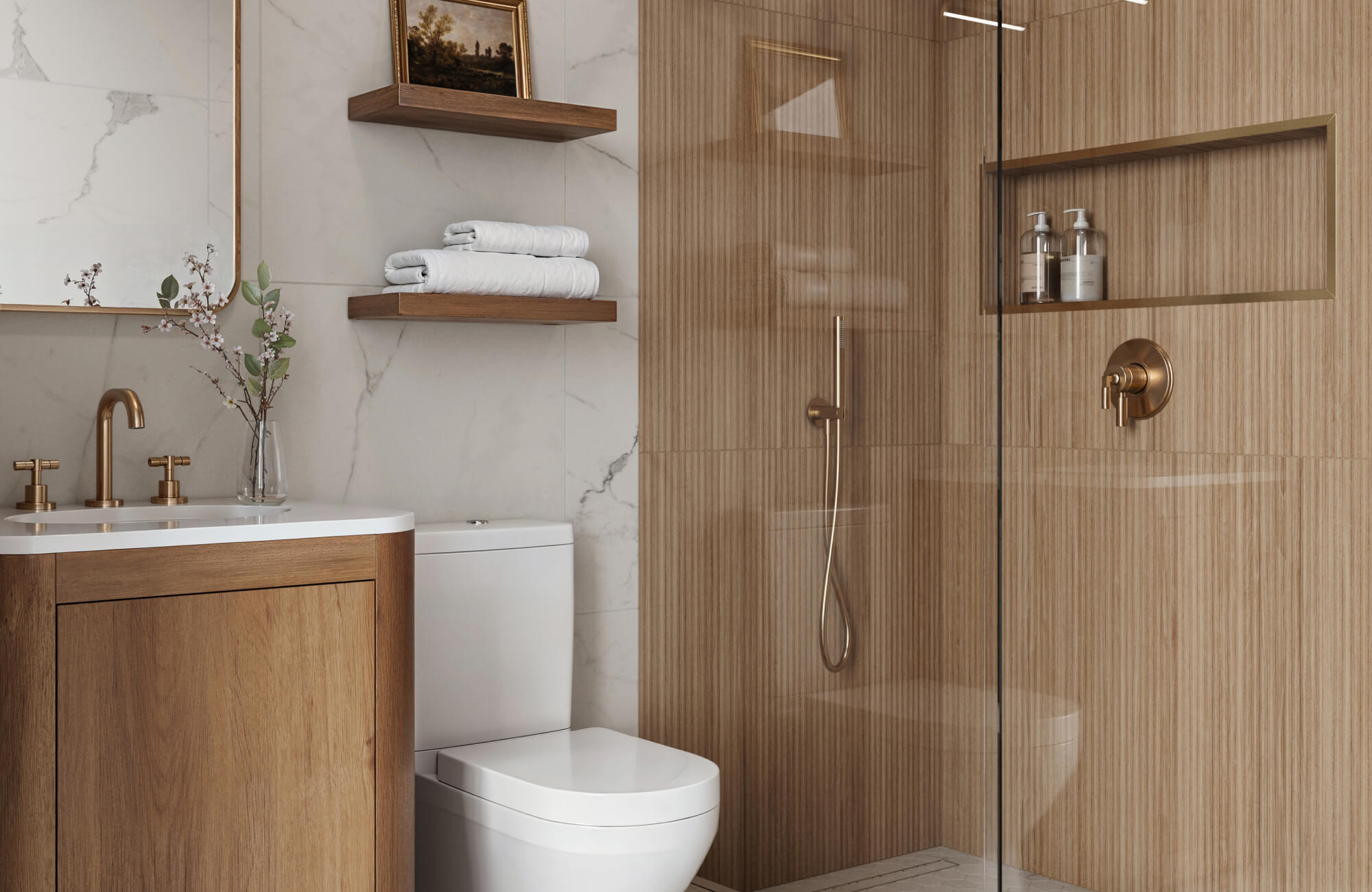
A good example of this indoor-focused approach is our Adrian 7x8.25 Matte Porcelain Tile in Frost above, presented in its signature honeycomb format. Its concrete-inspired off-white tones shift subtly from piece to piece, creating a surface that feels visually soft rather than stark. The gently textured matte finish diffuses light instead of reflecting it sharply, which helps interiors feel warm and balanced. This kind of finish supports everyday use while prioritizing comfort, consistency, and a modern yet timeless atmosphere.
Why Outdoor Tiles Favor Matte And Textured Looks
Outdoor tiles tend to favor matte or textured finishes because these surfaces handle exposure more reliably over time. Added texture helps improve traction underfoot while also cutting down on glare caused by direct sunlight. Matte finishes, in particular, do a better job of disguising dust, water spots, and everyday debris that naturally collect outdoors. This makes exterior spaces feel more forgiving and less demanding to maintain. Visually, these finishes read as more grounded and natural, which aligns well with outdoor surroundings. The choice is deliberate, balancing safety, performance, and an appearance that feels right for exterior use.
Color Variation And Natural Visual Movement
Outdoor tiles often include gentle color variation to help soften the visual impact of wear and environmental exposure. Small shifts in tone can mask dirt, moisture marks, and minor surface changes as time passes. Indoors, tile color is usually more uniform, supporting a cleaner and more controlled look under consistent lighting. That consistency works well in spaces where surfaces are viewed up close every day. Outdoors, variation feels more natural because light, shadow, and surrounding elements are constantly changing. This difference helps each tile type age in a way that suits its environment rather than fighting against it.
Matching Tile Appearance To Surrounding Materials
Tiles rarely stand on their own, so how they relate to nearby materials plays a big role in how a space comes together. Indoors, tile finishes are often chosen to complement cabinetry, wood flooring, or wall colors, helping the room feel cohesive rather than pieced together. Outdoors, tiles usually take cues from natural elements like stone, concrete, or wood decking to feel more at home in their setting. This connection keeps exterior spaces from feeling overly designed or visually disconnected. When tile appearance responds to what surrounds it, the result feels balanced instead of forced. That sense of alignment helps the space read as intentional and comfortable to spend time in.

Where Indoor And Outdoor Tiles Can (And Can’t) Be Used Interchangeably
Although indoor and outdoor tiles are made with different conditions in mind, real spaces do not always fit neatly into one category. Some areas blur the line, making tile selection less about labels and more about how the space actually behaves. Below, we’ll look at where crossover can work and where it often leads to avoidable issues.
Using Outdoor Tile Inside The Home
Outdoor tile can often work successfully indoors because it is built to handle more demanding conditions. Its higher density and lower porosity make it well-suited for areas that see moisture, temperature variation, or heavier wear. Spaces like mudrooms, entryways, laundry rooms, or even basements can benefit from the added durability outdoor tile provides. While the surface texture may feel more substantial underfoot, many homeowners appreciate the sense of resilience it brings. The key is ensuring the finish still feels comfortable for indoor use. When chosen thoughtfully, outdoor tile indoors can feel practical rather than overbuilt.
Why Indoor Tile Rarely Works Outside
Indoor tile is rarely a good fit for outdoor use because it is designed for stable, predictable environments. Once exposed to changing temperatures, moisture, and direct sunlight, its limitations become more apparent. Over time, these conditions can lead to cracking, fading, or moisture absorption that weakens the tile from within. Even in relatively mild climates, repeated wet and dry cycles place stress on materials not built for exposure. The issue is usually gradual rather than immediate, which makes early damage easy to overlook. In most outdoor applications, the long-term risk outweighs any short-term visual appeal.
Covered Outdoor Areas And Gray Zones
Covered outdoor spaces often sit in a gray zone where tile selection feels less straightforward. Areas like patios, porches, and balconies may avoid direct rain or constant sun, which can make indoor tile seem like a possible option at first. However, humidity, temperature shifts, and wind-driven moisture still reach these spaces over time. Because of this, outdoor-rated tile is often the safer choice, even when overhead protection is present. That said, not all covered areas behave the same way, and exposure can vary widely. Taking a closer look at how protected the space truly is helps prevent premature wear and unexpected issues.
Performance Trade-Offs When Crossing Use Cases
Any time tile is used outside its intended environment, there are trade-offs to consider. Outdoor tile placed indoors may feel firmer or more textured than the space really needs, while indoor tile used outdoors carries a higher risk of long-term performance issues. These compromises are not always obvious right away, which is why they are easy to underestimate during planning. As time passes, differences in durability, moisture response, and surface wear tend to surface. What initially seemed like a small adjustment can slowly affect how the space functions and looks. Understanding both the benefits and limitations helps ensure the choice feels deliberate rather than experimental.
How To Decide Based On Real Conditions, Not Labels
Instead of relying only on whether a tile is labeled for indoor or outdoor use, it is more useful to look at how the space actually behaves. Factors like moisture exposure, temperature shifts, sunlight, and daily use patterns often matter more than the room name itself. A space that experiences exterior-like conditions should be treated accordingly, even if it feels partially protected. Looking at these realities helps prevent mismatches between performance and environment. When tile selection is based on real conditions, the result tends to hold up better over time. This approach supports decisions that feel confident and well considered rather than uncertain.
How Proper Tile Selection Prevents Costly Issues Over Time
Indoor and outdoor tiles may look similar on the surface, but they are built to respond to very different conditions once installed. Differences in manufacturing, surface texture, thickness, and exposure explain why some tiles thrive in certain spaces while others slowly fail. When tile choices align with moisture, temperature, and daily use patterns, performance issues are far less likely to appear over time. Most problems come from asking a tile to behave outside the environment it was designed for.
If you’re weighing tile options and want clearer direction before committing, our personalized design consultation can help bring those details together. By looking at layout, exposure, surrounding materials, and how the space is used day to day, tile selection feels more confident and less driven by guesswork. This kind of guidance helps ensure the tile performs well long after installation, not just on day one.