Color is a powerful tool, capable of shifting a room’s entire mood and temperature, at least how it feels to us. It can make a space seem more inviting, vibrant, or expansive. Among the many tools designers use to transform a room, the area rug stands out for its ability to ground the layout and influence the ambiance. A well-chosen rug can define zones, anchor furnishings, and most notably, add warmth, both visually and emotionally.
This article explores how rug color can warm up a room, guiding you through color psychology, design strategies, and practical applications to help you make the right choice for your space.

Understanding Warmth in Interior Design
In design, “warmth” goes beyond temperature—it's about atmosphere. A warm room feels welcoming, intimate, and comfortable, encouraging people to settle in and relax.
Color Psychology and Warmth
The psychological impact of color is profound, directly influencing our perceptions and emotions. Warm colors, such as reds, oranges, and yellows, are inherently energizing and stimulating, but they also evoke feelings of intimacy, comfort, and security. A rich terracotta rug, for instance, offers a grounded, earthy vibe, while golden tones and deep burgundy add richness and intimacy. These colors are often linked to nature, firelight, and sunset tones—elements we instinctively associate with warmth.
The Role of Undertones
Even neutral colors can feel warm or cool depending on their undertones. A beige with golden undertones will feel much warmer than one with gray-blue notes. Warm grays, often called “greige,” strike a balance between cool sophistication and cozy softness. Recognizing undertones helps in selecting a rug that visually enhances warmth without disrupting your existing palette.
Light, Texture, and Context
Warmth is not only about hue; it’s also about how color is perceived in context. A thick wool rug will look and feel warmer than a flat synthetic one. Natural light, artificial lighting, and nearby decor all influence how a rug’s color appears. For instance, warm-toned lighting will enhance the cozy quality of a mustard rug, while cool lighting may neutralize its glow.

Top Rug Colors That Naturally Warm Up a Room
Some rug colors consistently bring warmth into interiors, both emotionally and visually. These tones evoke nature, fire, and earth—elements that naturally create comfort.
Terracotta and Earthy Reds
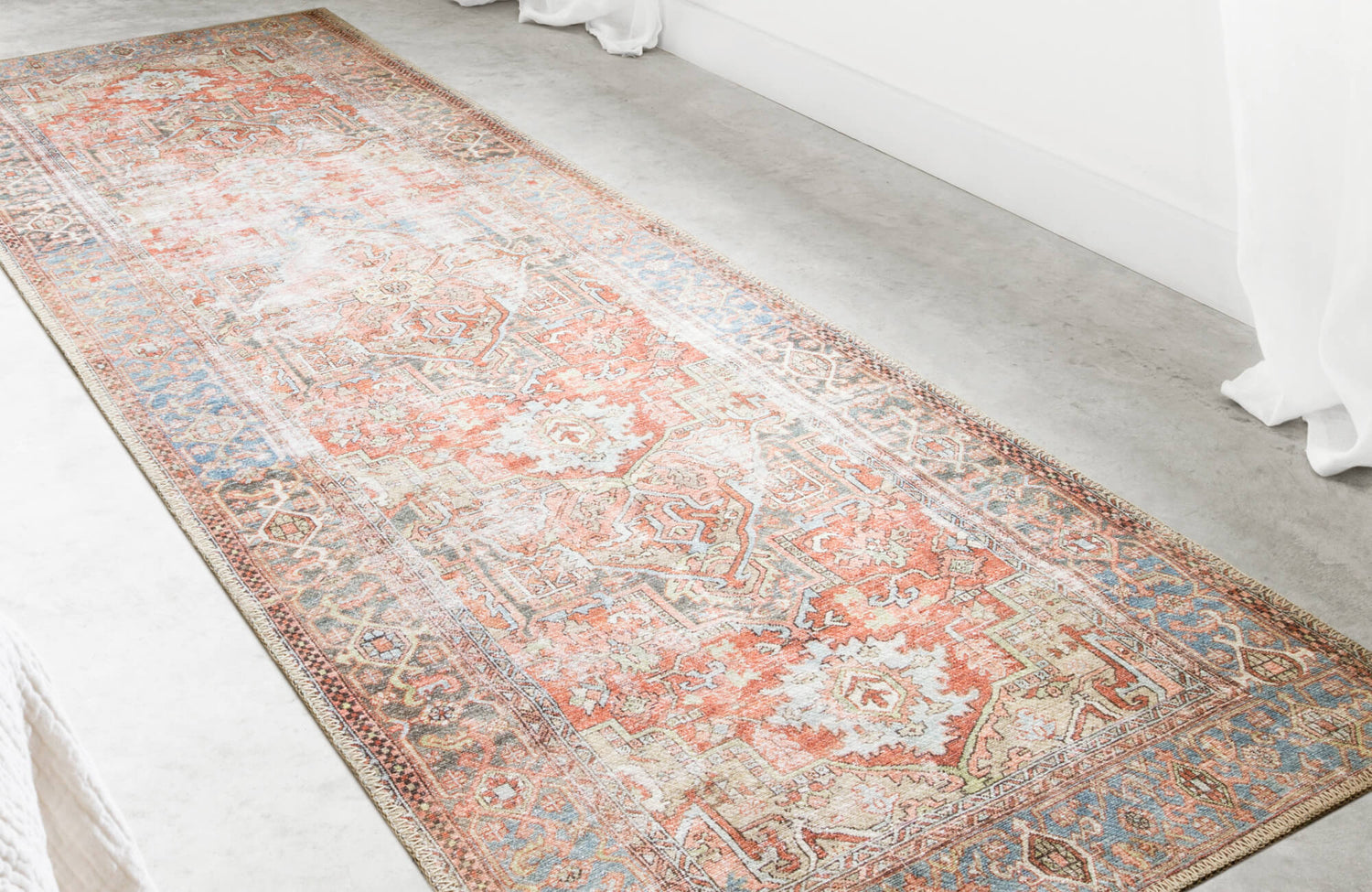
Inspired by natural clay and sunbaked earth, terracotta and rust-colored rugs offer rich, grounded warmth. A terracotta rug can transform a minimalist room into a cozy haven or complement a bohemian aesthetic with its inherent warmth and connection to nature. They are particularly effective in rooms with natural wood elements or exposed brick, enhancing an already rustic charm. Edward Martin’s Hutchinson Polyester Face Rug in Sand / Terracotta, as shown in the photo above, captures this beautifully. Its blend of sandy neutrals and deep terracotta tones delivers a lived-in look that feels organic, versatile, and effortlessly welcoming.
Burnt Orange and Ochre
For those seeking a more vibrant yet still grounded warmth, burnt orange and ochre rugs are superb choices. Burnt orange provides autumnal richness, while ochre, such as a dusty yellow-orange, offers warmth with a vintage, lived-in feel without being overwhelming. Both colors add a dynamic energy that is both stimulating and comforting, making them ideal for living areas or studies where a balance of vibrancy and relaxation is desired.
Warm Beige and Caramel
Warm beige and caramel rugs are versatile choices that add softness and comfort to a space. Unlike cooler neutrals like gray or stark white, these tones have subtle yellow or red undertones that create a more inviting feel. A beige rug, for example, can act as a neutral base, bringing balance to a room while supporting other colors and textures. Caramel tones, which are slightly deeper, also help make larger spaces feel cozier. They work well with a wide range of decor styles, from traditional to modern, offering both warmth and flexibility.
Mustard Yellow and Golden Tones
Mustard yellow and golden-toned rugs are ideal for adding warmth and brightness to a space. These colors can energize a room, especially those with limited natural light. A mustard yellow rug can become a vibrant accent in a neutral room, adding interest without overwhelming the space. Golden tones, whether soft and matte or slightly reflective, bring a subtle glow and a sense of richness. Both hues work well in modern, bohemian, or eclectic interiors, adding personality while maintaining a welcoming atmosphere.

Choosing the Right Warm Color for Your Style
Selecting a warm-colored rug isn't just about picking a nice hue; it's about finding the perfect shade that harmonizes with your existing decor or the aesthetic you're aiming for.
Traditional and Rustic Rooms
For traditional and rustic rooms, warmth should enhance the timeless feel of rich wood finishes, antique furniture, and classic patterns. Deep burgundy rug works well with dark hardwood floors and vintage decor, adding a sense of elegance and age. Our Hutchinson Polyester Face Rug in Burgundy / Khaki, as seen in the photo above, beautifully illustrates this blend, combining rich, earthy hues with a soft, durable texture that enhances the character of well-worn furniture and heirloom pieces. Burnt orange, commonly found in oriental or Persian rugs, also introduces color that feels grounded yet vibrant, especially when paired with natural materials. Additionally, faded gold offers a more subdued warmth and pairs beautifully with brass accents, classic drapery, and aged textiles. These tones reinforce the cozy, established charm typical of traditional spaces.
Bohemian and Eclectic Spaces
Bohemian and eclectic styles embrace variety, texture, and bold expression. Warm colors in this context are often rich and layered. For instance, spicy reds and rust shades bring an earthy, well-traveled feel that reflects the global inspiration often found in these interiors. Edward Martin’s Pascal Polyester Face Rug in Spice / Cobalt captures this dynamic spirit perfectly. Its rich blend of warm spice and deep cobalt creates a dramatic foundation that anchors the room with boldness and character. Marigold also adds a playful yet balanced brightness that works well with mixed prints and patterns. These tones help create a cozy and visually stimulating space, where the rug often serves as a focal point that ties together diverse elements.
Modern and Minimalist Homes
In modern and minimalist spaces, warm tones serve to soften stark lines and neutral palettes. A warm gray or “greige” rug, for example, (a blend of gray and beige) provides subtle warmth without compromising the room’s clean aesthetic. These shades add depth while maintaining a neutral, sophisticated look. Muted blush tones also offer a gentle pop of warmth, introducing color in a way that remains refined and understated. These subtle choices keep minimalist spaces from feeling cold, proving that warmth doesn’t require bold color, just thoughtful balance.

Seasonal Strategies for Using Warm Rugs
Warm-colored rugs offer more than visual appeal—they’re a practical way to adjust your home’s atmosphere with the changing seasons.
Winter Coziness
During the colder months, a warm rug adds both visual and physical comfort. Rich tones like burgundy, cranberry, or deep chocolate help create a cozy retreat from chilly weather. These colors also absorb light and give the room a more intimate feel, especially when paired with layered textures like knits, flannel, or faux fur. Whether placed near a fireplace or underfoot in a living room, these rugs contribute to a snug and inviting winter setting.
Fall Transitions
Warm rugs in rust, pumpkin, and burnt orange tones reflect the changing foliage and help move your decor from summer brightness to autumn coziness. These nature-inspired hues bring a grounded, inviting warmth to your space without the heaviness of winter tones. They also work especially well with seasonal elements like wooden accents, candles, and harvest-themed décor, creating a cohesive atmosphere that feels both relaxed and seasonally appropriate.
Year-Round Versatility
Some warm rugs can adapt seamlessly throughout the year. Options with neutral warm bases, such as warm gray, muted beige, or soft gold, offer flexibility across seasons. Our Broderick Polypropylene Pile Rug in Natural / Bone, as featured in the picture above, is a perfect example. Its gentle, earthy palette complements both cozy winter textures and breezy summer accents. In colder months, pair it with darker tones and layered fabrics for depth; when spring and summer arrive, lighten the space with airy textiles and fresh hues like white, green, or pale blue. The rug remains a stable, comforting foundation while your decor naturally shifts with the seasons.

How Rug Color Interacts with Flooring and Walls
The impact of a warm-colored rug goes beyond its hue alone. Its effectiveness depends on how well it interacts with surrounding elements, particularly the flooring beneath and the wall colors around it.
Pairing with Light or White Floors
Light and white floors often give a room an open, airy feel, but can sometimes come across as cool or sparse. A warm-toned rug can add contrast and visual depth to it, grounding the space while introducing comfort. Rich tones like terracotta, burnt orange, or cranberry can also define seating areas and make the space feel more welcoming. These deeper colors stand out against pale flooring and help soften the overall look without overwhelming it.
Complementing Dark Wood Floors
Dark wood floors, like mahogany or walnut, inherently bring a sense of richness and warmth to a room. The key with rug selection is to complement that depth without introducing too much visual weight. Muted warm tones, like soft clay, amber, or faded gold, offer just enough contrast to highlight the floor’s natural elegance without overpowering it. A rug like the Georgette Polyester Pile Rug in Clay / Navy, as displayed in the photo above, subtly layers in texture and tone, blending earthy warmth with a touch of classic depth through its navy detailing. This balance preserves the room’s harmony while adding a sophisticated accent beneathfoot.
Coordinating with Wall Paint
Wall color plays a significant role in how a rug’s warmth is perceived. For cool-toned walls, such as soft blues or grays, a warm rug can introduce balance and help the room feel more inviting. For example, a mustard yellow or rust rug can warm up a space with pale gray walls. In rooms with warm-toned walls, like creams, warm taupes, or earthy greens, choose rugs that either match the tone or add depth through a slightly darker variation. The goal is harmony, ensuring the rug supports the room’s color palette without clashing or feeling out of place.

Textiles, Patterns, and Layering Techniques
While color plays a key role in creating warmth, the overall feel of a rug also depends on its texture, design, and how it’s styled within a space.
Choosing Textured Fabrics
A rug’s material and construction greatly influence how warm and inviting it feels. Wool rugs, known for their dense fibers and natural insulation, provide excellent underfoot warmth and softness. On the other hand, shag rugs, with their longer pile, add a plush, cozy touch ideal for relaxation areas. Handwoven options that combine natural fibers, such as jute and wool, introduce a varied texture that feels both organic and comforting. These fabric choices not only offer physical warmth but also help soften the visual tone of a room, making it feel more relaxed and welcoming.
Patterns that Enhance Warmth
Patterned rugs can amplify a sense of warmth through both color and design. Traditional oriental rugs, with rich tones and intricate motifs, bring a timeless, layered look that instantly adds depth and coziness. Tribal designs, featuring geometric shapes and earthy colors, also contribute a rustic warmth suited for Bohemian or eclectic interiors. Ikat patterns, with their blurred edges and dynamic forms, offer a softer, more artistic take on warmth. In each case, the combination of warm tones and visually engaging patterns helps create a space that feels lived-in and inviting.
Layering for Depth and Comfort
Layering rugs is an effective way to introduce texture, warmth, and dimension to a space. A common approach involves placing a smaller, warm-toned or plush rug over a larger neutral base, such as a wool runner atop a jute or sisal rug. This method not only enhances comfort underfoot but also adds visual interest without overwhelming the room. Layering allows for creative combinations of color, texture, and pattern, helping to personalize your space while reinforcing a cozy, collected look.

Common Mistakes to Avoid with Warm-Colored Rugs
While warm-colored rugs are fantastic for creating a cozy atmosphere, a few missteps can undermine their impact. Being mindful of these potential pitfalls will help you make confident, effective design choices.
Choosing Overly Intense Colors
One frequent mistake is choosing an overly saturated warm hue that ends up overpowering the entire room. A rug in an intensely bright red or a scorching orange can dominate the space, making it feel smaller, more chaotic, or even aggressive rather than warmly inviting. Instead, consider the overall scale of your room and the existing furniture. Often, a muted terracotta, a burnt orange, or a subtle goldenrod can achieve the desired warmth without overwhelming the senses, allowing for a more balanced and harmonious design.
Overlooking Natural Light
The amount and quality of natural light a room receives dramatically alter how a rug's color is perceived. A rug that looks perfectly warm and inviting in a brightly lit showroom might appear darker and less vibrant in a north-facing room with limited natural light. Conversely, a deep, warm rug might feel too intense in a room flooded with direct, strong sunlight. Always consider your room's unique lighting conditions throughout the day. It's also often helpful to test a rug sample in your home to see how its warmth truly translates under varying light.
Lacking Visual Balance
A room designed solely with warm colors can feel one-dimensional or even stifling. The key to successful interior design, especially with warm-colored rugs, is balance. Don't forget to complement your warm rug with thoughtful touches of neutrals or cool-toned accessories. A soft gray sofa, crisp white trim, or cool-toned blue throw pillows can provide a refreshing contrast to a warm-toned rug, preventing the space from feeling overwhelmed. This interplay creates visual interest and ensures that the warmth of the rug enhances, rather than dominates, the overall harmony of your room.

Using Warm-Colored Rugs in Small or Dark Rooms
Warm-colored rugs can be especially useful in small or low-light spaces, where they not only add comfort but also help make the room feel brighter and more open.
Expanding with Light Warm Shades
In compact or dim rooms, darker or highly saturated colors may absorb light and make the space feel more confined. Instead, lighter warm tones can visually open up the area. Shades like pale terracotta, soft amber, or buttery beige reflect light and create a gentle, sunlit effect. These hues contribute to warmth without adding visual weight, helping the room feel larger and more breathable. They strike a balance between coziness and spaciousness, ideal for areas where natural light is limited.
Brightening Dark Corners
Light, warm rugs can also be used strategically to brighten darker areas within a room. Placing a rug in tones like light cream, goldenrod, or muted apricot in corners or under furniture helps reflect light and draw attention to underutilized spaces. These rugs act as visual anchors, adding both warmth and brightness. As a result, dim areas become more integrated and inviting, enhancing the overall flow and comfort of the room.
Finding Your Room's Warmth
The color of an area rug is more than a decorative choice—it plays a key role in shaping the mood and comfort of a space. Warm-colored rugs, from earthy terracotta to cheerful mustard yellow, have the power to turn a room from cool and uninviting into one that feels welcoming and cozy. Their effect stems from a combination of color psychology, texture, and how they interact with surrounding elements like flooring, wall colors, and lighting.
Choosing the right warm rug involves more than just selecting a pleasing shade. It requires consideration of your room’s size, natural light, and existing decor. Your personal style also matters; whether you prefer rustic charm, eclectic energy, or minimalist calm, there’s a warm tone that can enhance your vision. By thoughtfully integrating color, texture, and placement, you can create a space that feels balanced, expressive, and truly inviting.
If you need personalized guidance in selecting the perfect rug for your home, feel free to contact us. Our team is here to help you find a rug that complements your space and brings lasting warmth to your interiors!