

)
)
)
)
)
)
)
)
What Light Fixture Gives The Most Light?
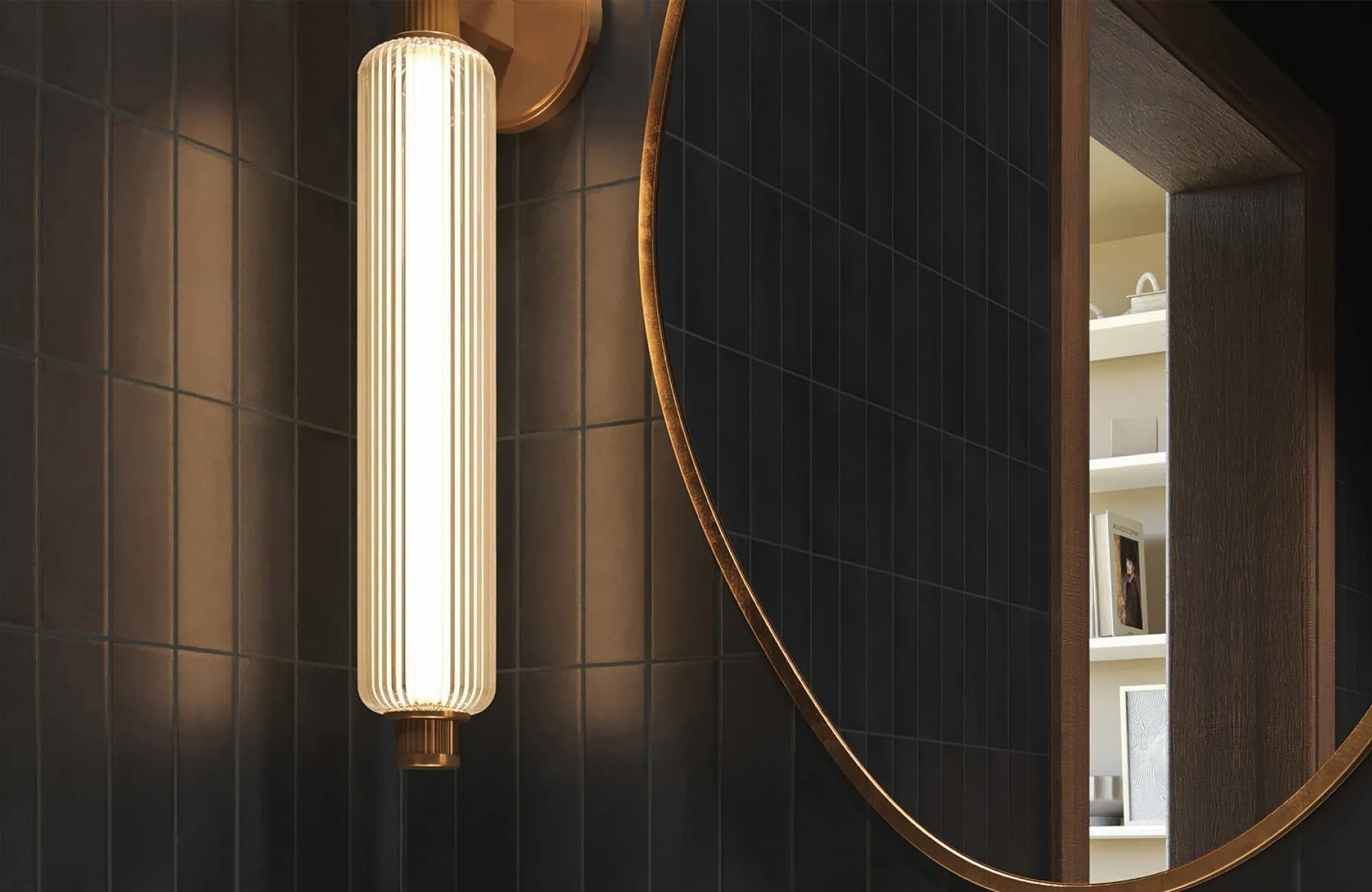
Choosing the right light fixture does more than complete a room; it also shapes how bright, open, and comfortable that space feels. Whether you're lighting a kitchen, home office, or entryway, the fixture you pick influences both function and atmosphere far beyond style alone.
Though it’s easy to focus on bulbs, there’s more at play than wattage or color temperature. Fixture design, materials, placement, and even the surrounding finishes all affect how light moves through a room. In this article, we’ll explore the key factors that influence brightness and what to look for when you're aiming to light your space as effectively as possible.
Getting the Brightest Output from Modern Fixtures
Modern fixtures aren’t just stylish; they’re also designed to perform. If you’re looking for the highest light output, certain materials, shapes, and technologies make a noticeable difference. Let’s examine what distinguishes these high-performing fixtures.
What Lumens Measure
To start, it’s important to understand what lumens measure. Lumens indicate the amount of visible light a fixture emits, not the amount of energy it uses. This distinction matters. Two fixtures with the same wattage can produce very different levels of brightness, depending on their design and technology.
That’s why lumens are the more reliable way to gauge how bright a fixture will be. For instance, a 10-watt LED can put out over 1,000 lumens, while a 60-watt incandescent may only produce around 800. So, if brightness is your priority, don’t rely on wattage alone; focus on fixtures clearly labeled with high lumen ratings.
Fixtures That Maximize Lumen Delivery
Some fixtures are purpose-built to deliver high levels of brightness across large areas. Take high-bay LED fixtures, for example, they’re ideal for expansive spaces like warehouses or workshops and can emit over 20,000 lumens, providing uniform, high-intensity light.
Similarly, linear fluorescent panels are known for their ability to distribute consistent illumination with minimal shadows, making them a practical choice in commercial settings. For residential use, large-format LED ceiling panels and multi-arm LED chandeliers are also excellent options. These fixtures are designed to disperse light widely, helping to brighten broad surfaces and eliminate dim zones throughout the room.
Transparent and Reflective Fixture Designs
The materials used in a fixture can significantly affect how light spreads throughout a space. Fixtures with clear glass or translucent shades allow light to travel farther, helping to brighten the room more evenly. To take it a step further, opt for open designs with reflective interiors, such as polished metal, mirrored finishes, or glossy materials, which also enhance distribution and minimize light loss.
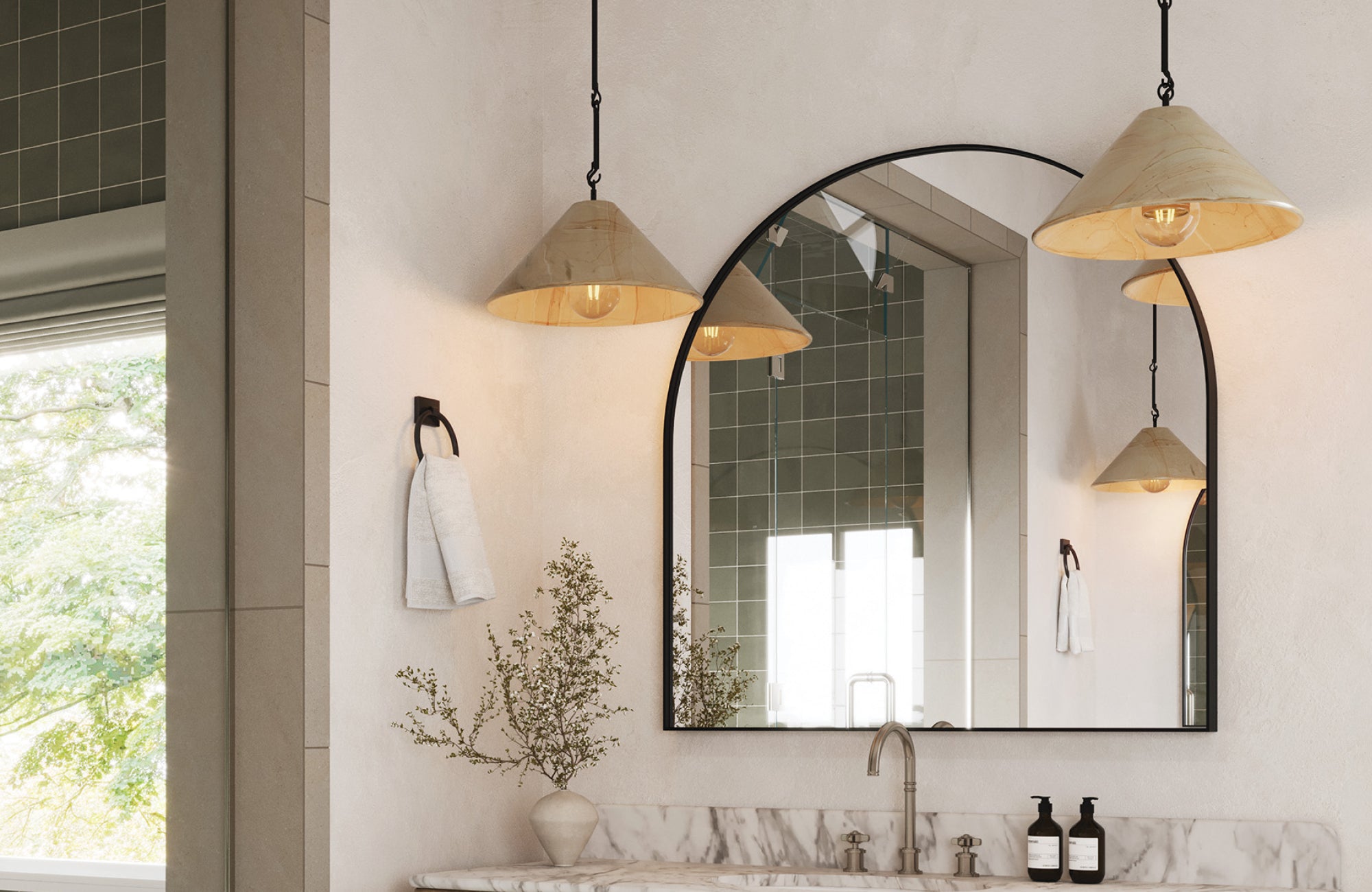
A great example is Edward Martin’s Alma Pendant in Ecru Marble Solid, featured in the photo above. Its soft, natural stone exterior is paired with a subtly reflective interior that bounces light downward and outward, improving coverage while adding warmth. Additionally, thoughtful details like these elevate the look of the fixture and make a noticeable difference in how effectively the light fills the room, especially in areas where maximizing output matters.
The Role of Ceiling Height and Fixture Placement
Where you place a light fixture and how high it’s installed can make a big difference in how well it lights a space. Even the brightest fixture can fall short if it’s positioned poorly or not matched to the room’s layout.
High vs. Low Ceiling Considerations
In rooms with high ceilings, we also need to think of distance and diffusion. Fixtures that cast light directly downward, like pendant lights with wide shades or hanging chandeliers with multiple arms, work especially well here. They focus illumination where it’s needed most, filling the space below with bright, usable light while adding vertical visual interest.
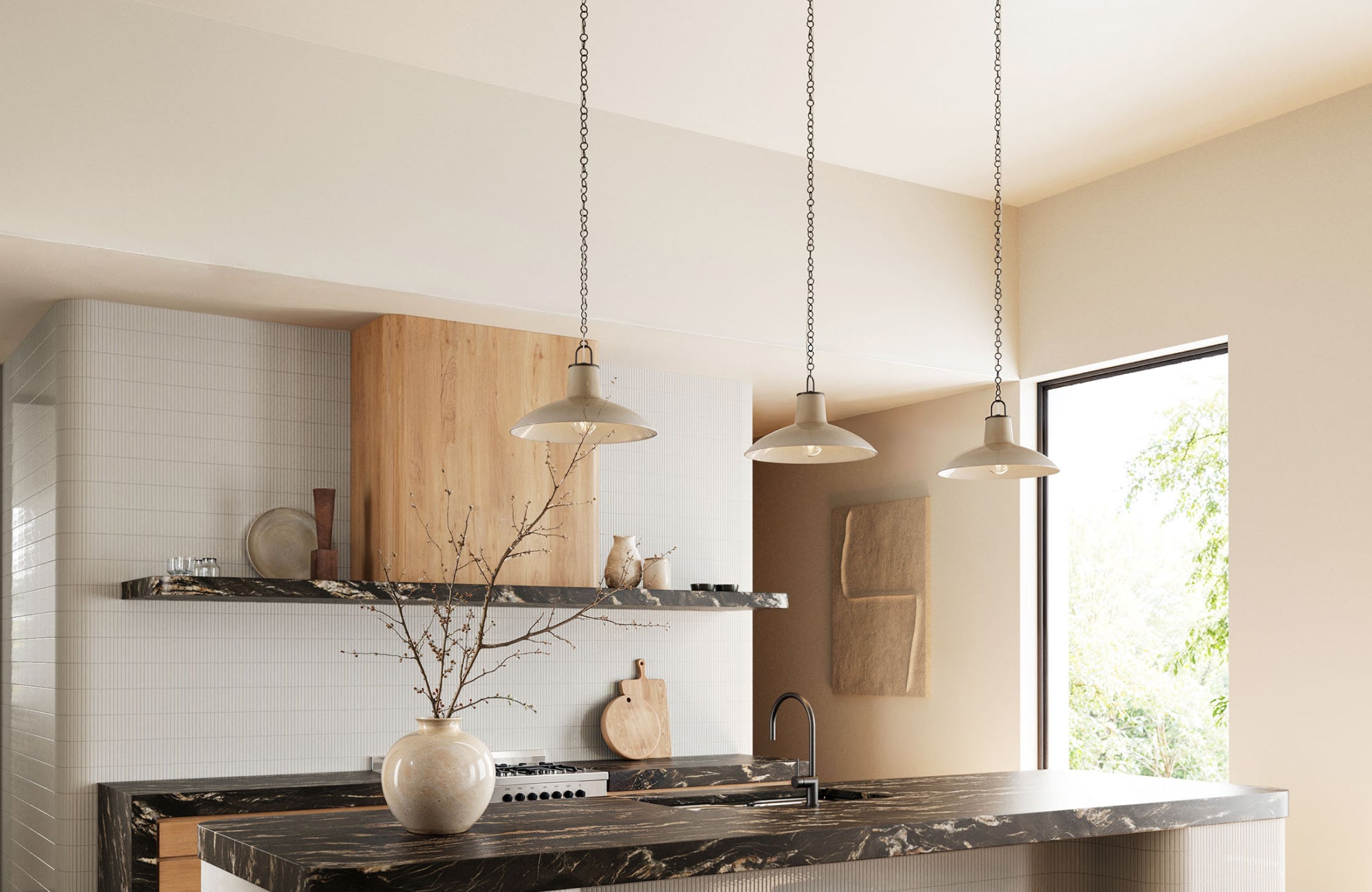
For example, the pendant setup in the photo above features Edward Martin’s Sable Pendant in Distressed Bronze/Ceramic Ivory Crackle. Its generous shade and drop height are ideal for higher ceilings, allowing the fixture to create a warm, concentrated glow over the island without losing intensity as it travels downward. This type of pendant combines effective lighting with timeless design, making it as functional as it is visually striking.
By contrast, in rooms with lower ceilings, flush-mount or semi-flush fixtures are often the better choice. These styles stay closer to the ceiling but are designed to spread light outward, delivering broad coverage without overwhelming the space. The goal is to maintain even lighting while preserving openness and headroom.
Surface-Mounted vs. Recessed Options
When comparing fixture types, surface-mounted options often provide better light diffusion than recessed lighting, which tends to be more focused and directional. This makes surface-mounted fixtures especially effective in busy spaces like kitchens, hallways, or entryways where broad, even coverage is essential. With their larger lenses or built-in diffusers, they can also illuminate wider areas without creating harsh contrasts.
By comparison, recessed lighting offers a clean, minimal look but may fall short in terms of coverage unless carefully mapped out. To achieve similar brightness levels, you'll typically need more recessed fixtures spaced closer together; otherwise, you risk creating dim zones or uneven lighting. Balancing form and function becomes key, especially in rooms where consistent visibility matters.
Optimizing Placement for Maximum Impact
Thoughtful fixture placement can significantly boost how effectively light fills a space. Positioning lights near glossy or satin surfaces, such as polished countertops, tile backsplashes, or painted walls, helps reflect illumination more deeply, enhancing overall brightness without adding more fixtures.
In longer rooms or open-concept layouts, spacing fixtures evenly is key to avoiding dim zones and maintaining consistent coverage. To further improve flow, we often suggest staggering installations slightly. This subtle adjustment also helps overlap light distribution and create a smoother, more cohesive lighting experience throughout the room.
How Surface Materials Affect Light Reflection
The surfaces around your fixture can influence brightness just as much as the fixture itself. Elements like walls, ceilings, and floors all play a role in how light travels through a space and how much of it you see.
The Reflective Power of White Tiles
White tile bounces light back into the room, amplifying brightness naturally. It’s an efficient way to extend illumination without adding fixtures or rewiring your setup. If you’re aiming to make the most out of a single fixture, glossy white tile in kitchens or bathrooms does more work than it gets credit for.
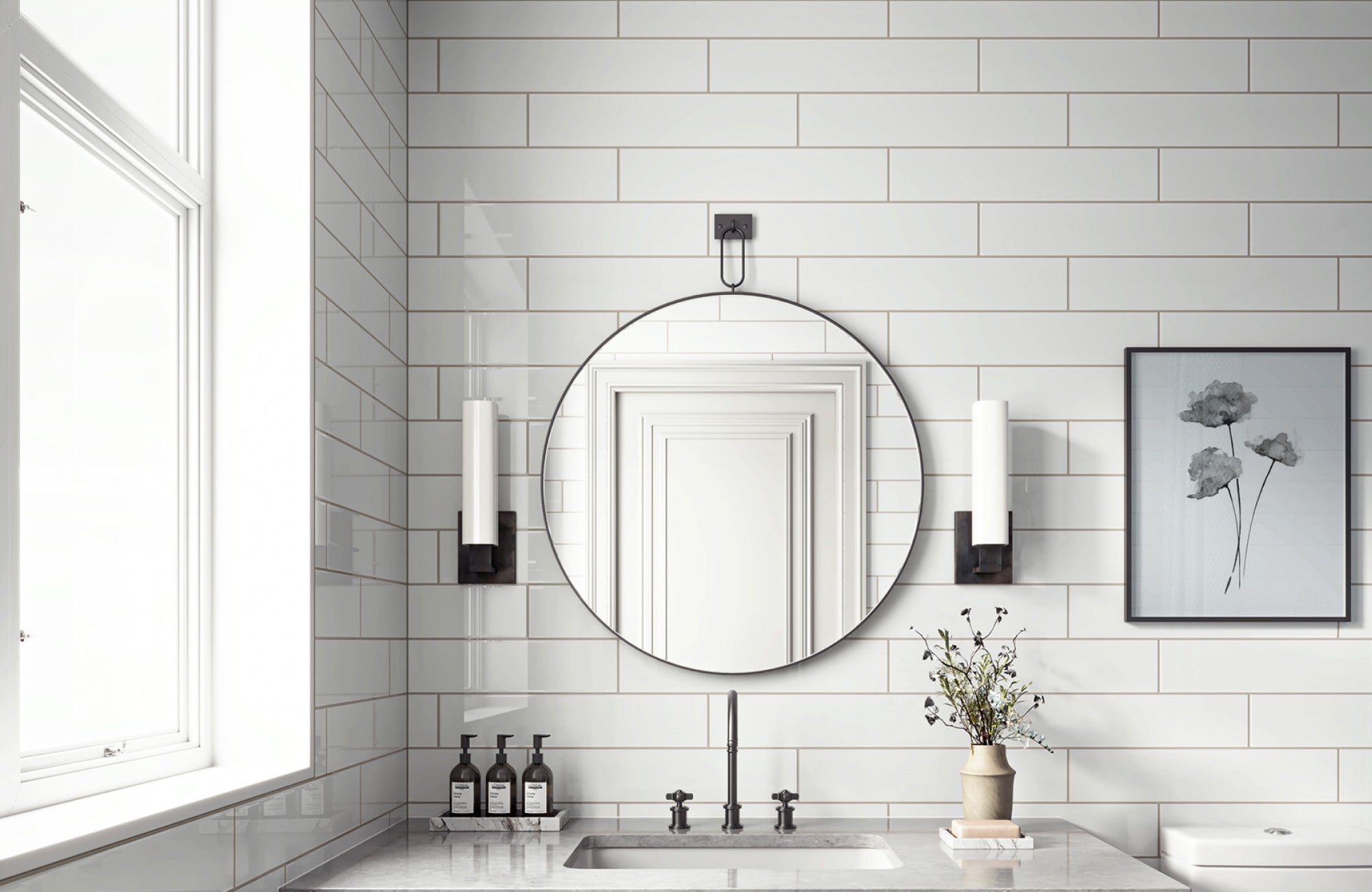
A perfect example is Edward Martin’s Jaxson 4x21 Glossy Ceramic Tile in White, featured in the photo above. Its clean, reflective surface helps bounce both natural daylight and artificial lighting deeper into the room, enhancing the visual brightness. Paired with our Asha Wall Sconce in Old Bronze, the tile amplifies the fixture’s warm glow, making the most of every lumen in a simple, elegant way. In smaller spaces, this combination also creates a light-filled environment without overwhelming the design.
Checkerboard Patterns and Visual Brightness
Checkerboard patterns add visual interest by introducing movement and contrast to a space. However, when darker tiles dominate, they tend to absorb more light than they reflect, dampening the overall brightness in the room. To maximize your fixture’s impact, it’s better to lean the pattern toward lighter tones, such as white or pale gray.
A 70:30 ratio of light to dark tiles still creates contrast without sacrificing brightness. Additionally, using light-colored grout can subtly reflect more light, helping prevent the floor from becoming a visual low point in an otherwise well-lit space.
Wall Paint, Ceilings, and Gloss Levels
Wall and ceiling finishes can play a surprisingly big role in how well your lighting performs. Flat or matte paint tends to absorb light, which can dull the effect of even your brightest fixtures. For a more reflective surface, it's better to choose eggshell or satin finishes in lighter shades; they can help bounce light around the room without introducing glare.
Ceilings, in particular, offer an opportunity to enhance brightness even further. A glossy white ceiling acts like a large reflector, redirecting light back into the space and making it feel more open. That’s why we often suggest thinking of the ceiling as part of your lighting strategy. Unless you're going for a deliberately dramatic or moody look, it's best to avoid dark, matte finishes overhead. Even a subtle off-white or soft cream can also elevate the brightness while keeping the room feeling warm and balanced.
Comparing Light Fixture Designs by Room Type
Every room has its purpose, and that means it has different lighting demands. Choosing the right fixture isn’t about picking the brightest one overall, but the one that delivers the most effective light for the room’s use.
Kitchen and Task Areas
In kitchens, clarity is key; good lighting isn’t just about looks, it’s about making the space safer and easier to work in. You need light that cuts through shadows and keeps your countertops visible. Under-cabinet LED strips are one of the most effective ways to do this, casting focused light right where you’re chopping, reading recipes, or preparing meals.
Another excellent task lighting option is a pendant fixture placed directly over an island or prep counter. These provide concentrated, downward-facing light that adds both function and style, especially in open-concept kitchens where under-cabinet options may be limited.
To support your task lighting, we often recommend pairing it with flush-mount LED ceiling panels. These fixtures provide broad, even coverage that also helps reduce eye strain and maintains consistent brightness throughout the space. Together, they can create a layered setup that’s both practical and visually comfortable.
Living Rooms and Gathering Spaces
Living rooms call for flexibility, as they’re often used for a variety of activities throughout the day. You need sufficient brightness for reading, working, or entertaining, but also the ability to soften the light for a cozy, relaxed atmosphere in the evening. Fixtures like multi-arm chandeliers and arc lamps are excellent choices; they can distribute light evenly and, when paired with LEDs, they stay cool and energy-efficient. By adjusting the height and direction of your lighting, you can easily shape both the mood and the coverage without overwhelming the room’s design.
Bathrooms and Vanities
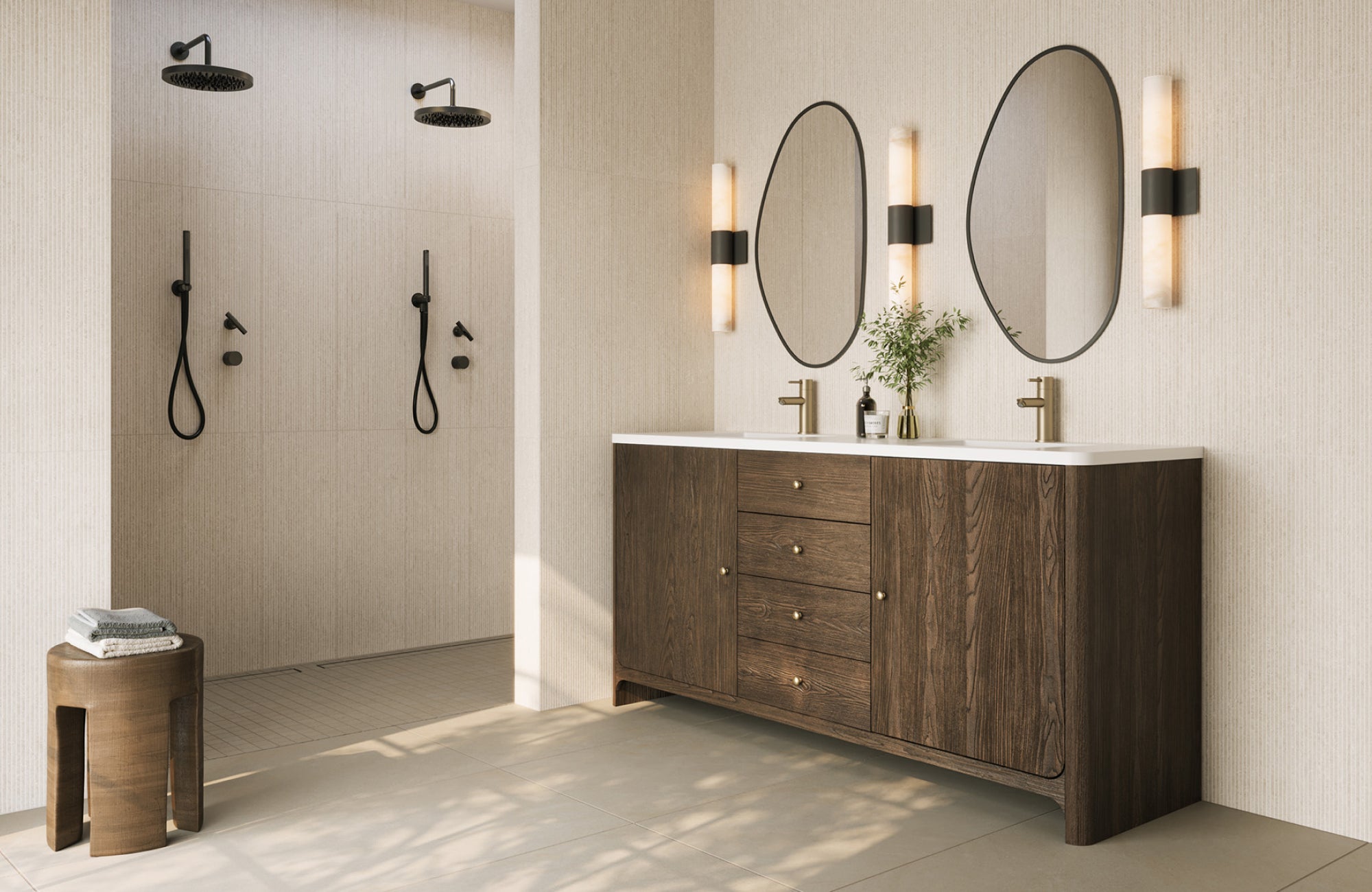
Good light in a bathroom is all about precision, especially around the mirror, where clarity matters most. This is where thoughtful design meets everyday function. We recommend bar lights installed above mirrors for wide, even coverage, and vertical sconces on either side to eliminate facial shadows and improve visibility.
Edward Martin’s Ryder Wall Sconce in Old Bronze, featured beside the mirrors in the photo above, is a perfect example. Its vertical orientation and warm glow mimic natural daylight, making grooming tasks or applying makeup more accurate and comfortable. To avoid harsh contrasts and unflattering angles, we also advise steering clear of single overhead bulbs in smaller bathrooms. They often cast uneven light and flatten facial features; something well-placed sconces easily prevent.
Enhancing Light with Layered Lighting Plans
One light source often isn’t enough to fully light a space, especially if you want it to feel both functional and inviting. That’s where layered lighting comes in, combining different types of fixtures to serve their purposes. It’s not just about making a room brighter; it’s about creating flexibility, comfort, and the right mood at the right time.
Ambient, Task, and Accent Light Defined
Ambient lighting forms the foundation of a room’s illumination; the soft, overall glow that sets the tone. This usually comes from ceiling fixtures or wall-mounted panels that spread light broadly without focusing on any one area. Task lighting, on the other hand, is more focused and functional, designed to support specific activities like reading, cooking, or working at a desk.
Then there’s accent lighting, which plays a more decorative role. It draws attention to features like shelving, artwork, or architectural details, adding depth and visual interest. When these three types of lighting work together, they can also create a space that feels layered, balanced, and adaptable to different needs and moods.
Mixing Fixture Types Strategically
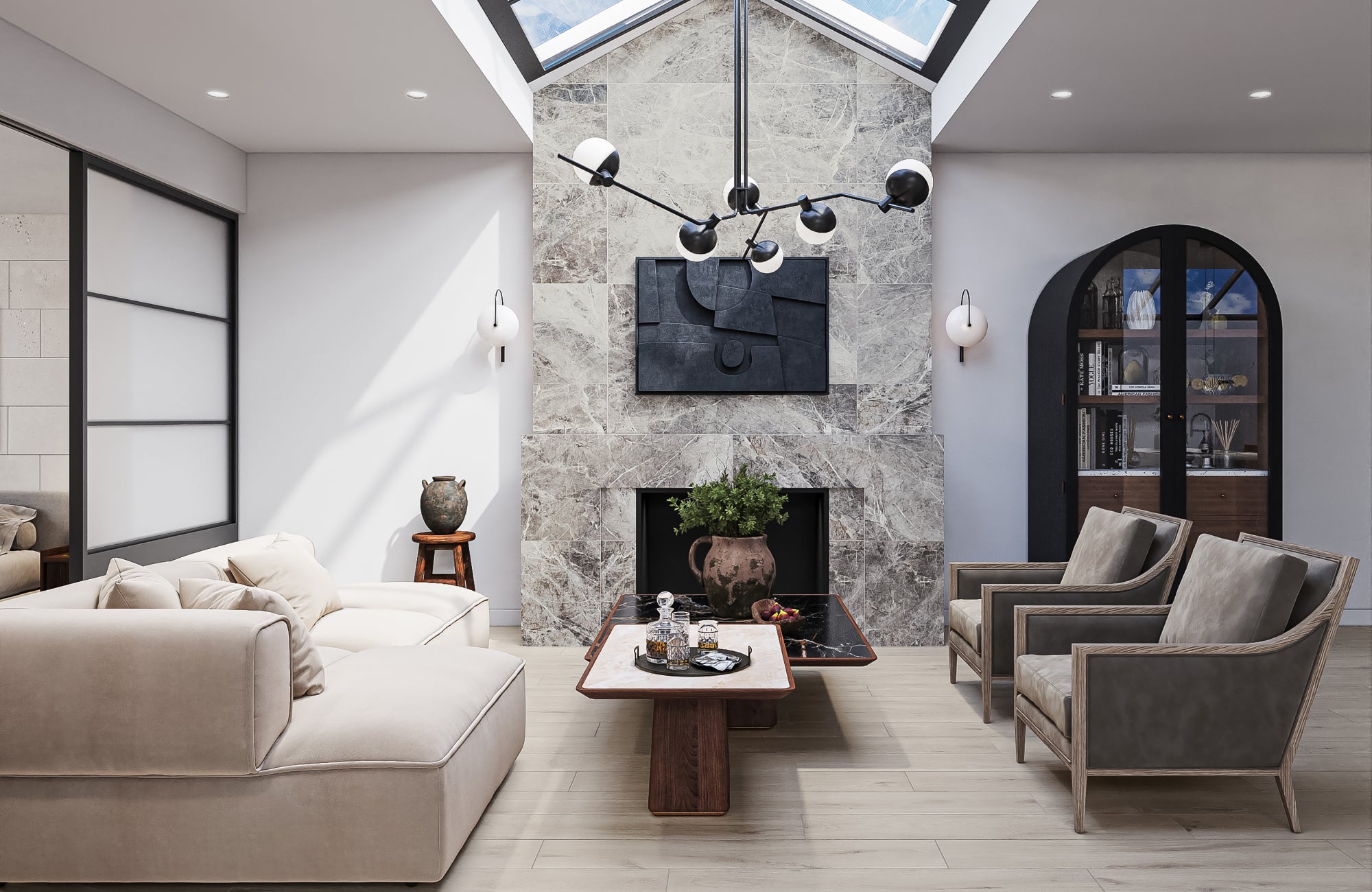
A well-balanced room typically blends multiple types of lighting to adapt to different needs throughout the day. You might pair recessed ceiling lights with directional wall sconces and a sculptural pendant or floor lamp. This layered approach gives you flexibility; ambient light can take center stage during the day, while task or accent lighting can soften the mood in the evening.
In the living room shown above, the mix of recessed ceiling fixtures, sculptural chandelier, and wall sconces around the fireplace showcases this concept beautifully. Starting with a central fixture and building outward based on how the space is used also helps ensure your lighting setup feels both intentional and adaptable.
Smart Lighting for Adaptive Control
Smart lighting makes it easier than ever to tailor your environment to match the time of day, your activities, or your mood. With dimmable LED systems or app-controlled bulbs, you can brighten the space for focused work or soften the glow for a more relaxed atmosphere. Many setups let you adjust the color temperature, shifting from cooler daylight tones in the morning to warmer hues in the evening.
This level of control not only enhances comfort but also helps reduce energy use over time. It’s a simple, modern way to make your lighting work harder, without making your space feel overlit or underlit.
Choosing the Right Fixture for Maximum Light
So what’s the light fixture that gives the most light? The real answer lies in how well your fixtures work together with the room’s design. Placement, surrounding surfaces, and layering all play a role. Even the brightest fixture can fall flat if paired with the wrong materials or setup.
If you’re planning a refresh or starting from scratch, we’re here to help. Contact us to schedule a design consultation, and we’ll guide you to fixtures that can brighten and elevate your space the way it feels and functions.
Follow us on Instagram
@EDWARD.MARTIN
)
)
)
)
)
)
)
)
)
)
)
)
)
)
)
)