The bathroom vanity is more than just a storage cabinet. It is a central piece that influences how your bathroom looks, feels, and functions every day. Choosing the right depth may seem like a small detail, but it determines whether your bathroom feels open and inviting or cramped and impractical.
As you plan your remodel or new build, understanding standard bathroom vanity depths will help you strike the perfect balance between style and usability. From compact options that save precious inches in tight powder rooms to deeper, more luxurious models that anchor a spacious master bath, depth plays a defining role. This article explores how industry standards, layout, ergonomics, and design preferences come together to help you find the ideal fit.

Understanding the Industry Standard Dimensions
A standard bathroom vanity typically measures between 20 and 21 inches deep, a range carefully established to balance comfort, storage, and function. This depth allows you to use the sink without overreaching, provides enough cabinet space, and leaves room behind for plumbing connections. In smaller bathrooms, you may find compact designs starting at 18 inches, which preserve valuable floor space while still offering essential functionality. These measurements exist to keep the vanity from projecting too far into the room, ensuring a layout that feels both efficient and visually balanced.
When reviewing specifications, it’s important to remember that the listed depth includes more than just the cabinet box. It accounts for door and drawer fronts, countertop overhang, and the placement of the sink basin itself. Manufacturers design with precision so plumbing fits neatly inside the cabinet without interfering with storage. Depth also differs from width and height, which measure wall coverage and countertop elevation. Confusing these can lead to costly mistakes, such as installing a vanity that blocks a door or feels awkward to use. By understanding the nuances of standard dimensions, you can confidently choose a vanity that fits seamlessly into your bathroom and enhances both function and style.

Variations Across Vanity Types
Not all bathroom vanities share the same depth. The type of vanity you choose and its intended function will influence how much space it occupies in your bathroom. Understanding these variations helps you match the right design to your needs without sacrificing comfort or style.
Single Sink Vanities
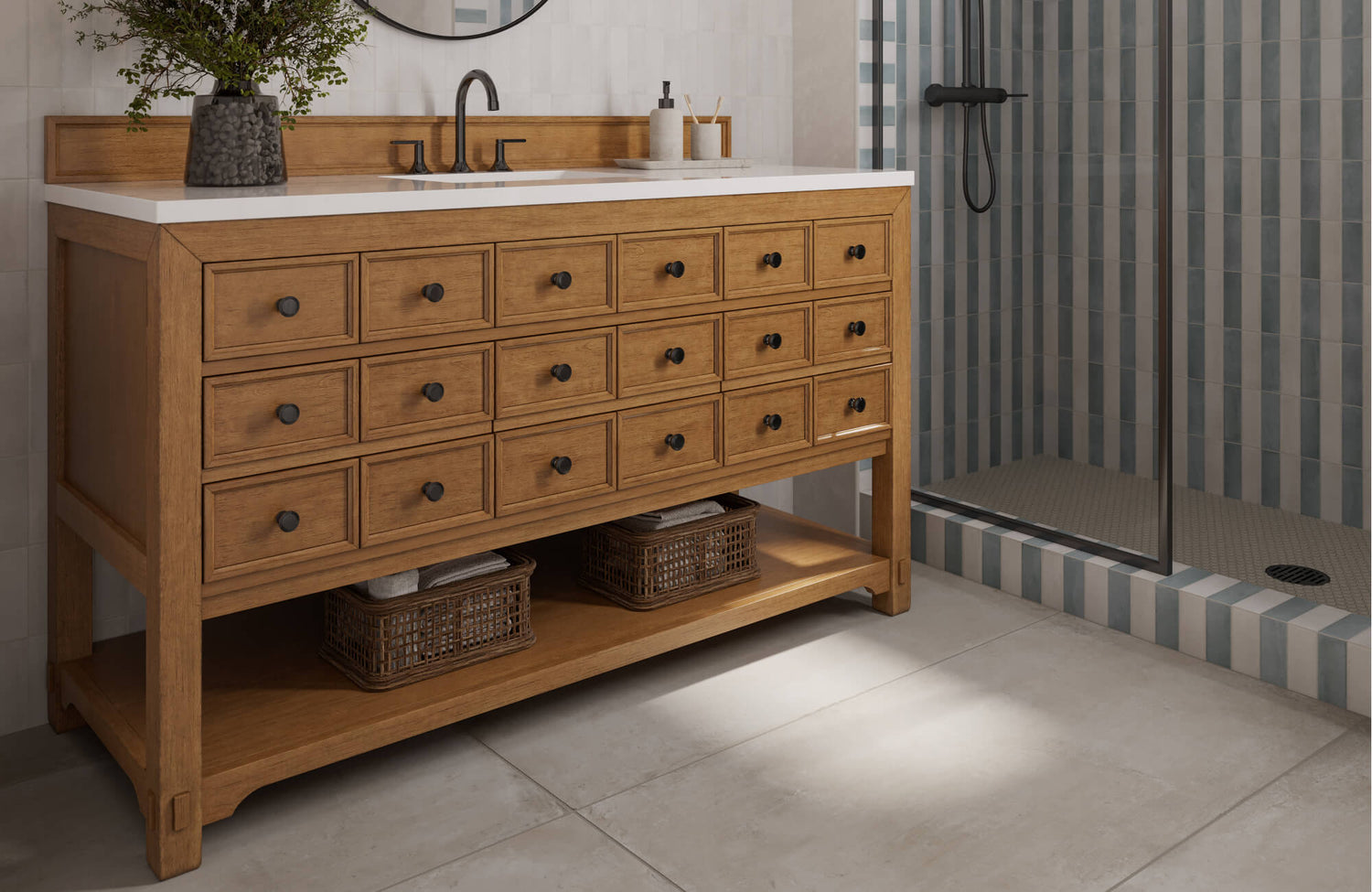
Single sink vanities are the most common choice and often appear in smaller spaces such as powder rooms or guest baths. Although the standard depth of around 21 inches is ideal for storage and usability, many models are designed to scale down. Compact versions may also start at 18 inches in depth, providing just enough room for a modest sink and plumbing while ensuring you still have essential counter space. A standout example is our Paxton 36" Single Vanity in Pebble Oak with 3 cm White Zeus Quartz Top, which combines a space-conscious profile with the warmth of brown shade and the clean contrast of white quartz. This adjustment allows you to make the most of limited square footage without crowding the room.
Although the shallower profile means you’ll work with smaller sinks and slimmer plumbing setups, it doesn’t take away from the vanity’s core functionality. In fact, these streamlined designs can make a bathroom feel larger and more inviting. Choosing a reduced-depth single vanity can be the difference between a cramped layout and one that feels comfortably balanced.
Double Sink Vanities
At first glance, it might seem that double sink vanities would require greater depth, but that isn’t usually the case. Most models maintain the same 21-inch standard depth because the plumbing for each sink is similar to that of a single vanity. The difference lies in width, as the expanded cabinet provides enough horizontal room to accommodate two basins and separate plumbing lines without affecting how far the unit projects into the bathroom.
By keeping the depth consistent, double vanities strike a practical balance. They deliver the convenience of two sinks while preserving clearance for walkways and doors. Designs like our Abigail 72" Double Vanity in Light Natural Oak with 3 cm White Zeus Quartz Top highlight how wider proportions can still feel airy and refined. The light brown finish brings warmth and texture, while the white quartz countertop elevates the look with a crisp, modern touch. Whether installed in a shared master bath or a large family bathroom, this style ensures functionality is maximized without overwhelming the space.
Floating and Wall Mounted Vanities
Floating vanities, a staple of contemporary design, often deviate from traditional standards by offering shallower depths ranging from 18 to 20 inches. Their wall-mounted design creates visual lightness, making your bathroom feel larger and more open by exposing more floor area. The reduced depth not only complements the minimalist aesthetic but also adds to the stability of the installation, since a shallower projection exerts less strain on the wall’s mounting points.
What makes these vanities particularly appealing is how they blend modern style with practical benefits. By taking up less physical and visual space, they’re an excellent choice for both small bathrooms and those aiming for a sleek, airy atmosphere. Choosing a floating vanity also lets you enjoy the balance of streamlined function and bold, contemporary character.
A perfect example of this approach is our Royce 72" Double Vanity in Chestnut with 3 cm White Zeus Quartz Top. The warm brown finish, paired with the crisp white quartz countertop, captures the balance between modern sophistication and natural warmth. As shown in the image above, its floating design enhances the sense of openness, while the geometric wood detailing provides depth and texture. By taking up less physical and visual space, this vanity delivers both streamlined function and bold, contemporary character, making it an excellent choice for today’s bathrooms.

Impact of Bathroom Size and Layout
Vanity depth must be considered in relation to the overall layout of your bathroom. The size of the room, usage patterns, and door clearances all play a role in determining which depth works best for you.
Small Bathrooms and Powder Rooms
When space is tight, every inch becomes valuable. In small bathrooms and powder rooms, shallow vanities that measure between 16 and 18 inches deep are often the most practical choice. These slim designs give you enough surface area for essentials while leaving the floor plan open and easy to navigate. Building codes also usually require at least 21 inches of clear space in front of the vanity, and shallower units make it easier to meet this standard without crowding the room.
To achieve this balance, you might consider a vanity designed specifically for compact layouts, such as our Colton 48" Single Vanity in Coastal Driftwood with 3 cm White Zeus Quartz Top. Its coastal brown tone introduces warmth while the crisp quartz countertop adds brightness, helping smaller rooms feel more open. With the right design choice, a shallow vanity can transform a tight space into one that feels airy, functional, and inviting.
Master Bathrooms and Large Layouts
In larger bathrooms, you have more freedom to experiment with deeper vanities. Models that extend 22 to 24 inches from the wall can be used without affecting walkways or creating bottlenecks. This extra depth opens up new possibilities, such as wider countertops, oversized sinks, or luxury fixtures like integrated makeup stations. It also adds valuable storage, with drawers and shelves that can handle bulkier items.
Furthermore, deeper vanities carry aesthetic weight in a large space. They anchor the room visually, providing symmetry and balance in proportion to the expanded floor area. A piece like our Elodie 60" Double Vanity in Light Natural Oak with 3 cm White Zeus Quartz Top, as seen in the photo above, shows how elegant design and thoughtful proportions can elevate a master bathroom. With its light brown finish and crisp quartz surface, it embodies the sense of refinement and balance that makes a larger space feel truly luxurious without sacrificing comfort.
Door Swings and Clearance
Clearance issues are one of the most common mistakes when choosing vanity depth. A vanity that looks perfect on paper can easily become an obstacle if it interferes with door swings or restricts access to adjacent fixtures. Entry doors, shower enclosures, and even linen closets can all be affected by a vanity that projects too far into the room.
To avoid these conflicts, it’s recommended to maintain at least 30 inches of clear space in front of the vanity for comfortable use. One simple technique is to outline the footprint of the vanity on your bathroom floor with painter’s tape. This visual guide allows you to test how doors open and how usage flows before you commit to a particular size. Taking this step also ensures your vanity feels like a natural part of the room instead of an obstruction.

Style and Design Influence on Depth
The look you want for your bathroom has a strong impact on the vanity depth you choose. Depth is not just a measurement. It’s a design tool that shapes how your bathroom feels, from light and airy minimalism to bold, traditional elegance.
Modern Minimalist
If your vision leans toward modern simplicity, shallower vanities are often the best match. Floating or wall-mounted vanities with depths of 18 inches or less instantly reduce visual weight, opening up the floor and giving your bathroom a more expansive feel. These slimmer profiles also align with minimalist principles by keeping lines clean and uncluttered.
Many modern vanities are designed to embrace this streamlined aesthetic while still providing warmth and balance. Our Royce 48-Inch Single Vanity in Chestnut with 3 CM White Zeus Quartz Top does exactly that, pairing a minimalist silhouette with rich brown tones and a crisp white quartz surface. It demonstrates how a vanity can maintain a pared-back, functional design while still adding texture and elegance to a contemporary bathroom.
Traditional and Luxury Styles
Traditional and luxury bathrooms call for a very different approach. Here, vanities are designed to feel substantial, often resembling custom furniture with rich detailing, raised panels, or ornate finishes. Depths typically range between 21 and 24 inches, which creates room for broad countertops, larger drawers, and expansive cabinetry.
This extra depth doesn’t just add storage; it amplifies the sense of grandeur. In larger spaces, deeper vanities bring balance and symmetry, anchoring the design and giving the room a timeless, well-appointed character. For a refined option that embodies this look, our Trisha 60" Single Vanity in Whitewashed Walnut with 3 cm White Zeus Quartz Top, featured above, combines classic proportions with a brown finish that feels warm and elegant. Its thoughtful design also shows how a vanity can act as both a functional piece and a statement of luxury.
Countertop and Sink Pairings
Your choice of sink has a direct effect on how much depth your vanity requires. Undermount and drop-in sinks generally need at least 21 inches of cabinet depth, ensuring there is enough room for the basin and faucet placement. Vessel sinks, however, sit on top of the counter and require less cabinet space, which allows for more flexibility in choosing shallower vanity depths.
It’s also important to account for countertop overhang. Most countertops extend about one to one and a half inches beyond the cabinet, meaning a 21-inch-deep vanity will finish closer to 22 or 22.5 inches once installed. This subtle addition makes a visual difference, ensuring that the sink feels properly positioned and the design looks intentional.
Finding the Right Fit for Form and Function
The standard bathroom vanity depth of around 21 inches remains a reliable guideline, but the right choice ultimately depends on your space, style, and daily needs. Shallow designs bring freedom of movement to smaller bathrooms, while deeper vanities enhance storage and presence in larger layouts. By weighing function alongside aesthetics and comfort, you can select a vanity depth that feels intentional, elevates your bathroom’s design, and supports effortless use for years to come.
Selecting the right vanity goes beyond storage and utility. It also shapes the character of your bathroom and brings your design vision together. Whether you’re drawn to clean, modern lines or timeless, traditional styles, the right vanity creates a balance of beauty and everyday function. To get started, you can reach out through our Contact Us page, where our team is ready to offer personalized guidance and help you choose a piece that perfectly suits your space.