When planning a bathroom renovation, one question consistently arises: what is the most common bathroom tile used today? While design trends continue to evolve, porcelain tile remains the most widely used material in modern bathrooms. Its durability, low water absorption rate, and broad design versatility make it the preferred choice for floors, shower walls, and high-moisture areas.
That said, ceramic tile continues to be a popular and affordable alternative, and natural stone still holds its place in luxury interiors. In this guide, we’ll explore why porcelain dominates, compare it with other materials, and share bathroom tile ideas that balance performance with style.

The Most Common Bathroom Tile Material Today
Porcelain tile is currently the most common bathroom tile material in both residential and commercial spaces. Its density and extremely low porosity make it exceptionally resistant to moisture, stains, and everyday wear. In an environment constantly exposed to humidity and splashes, this level of durability is essential.
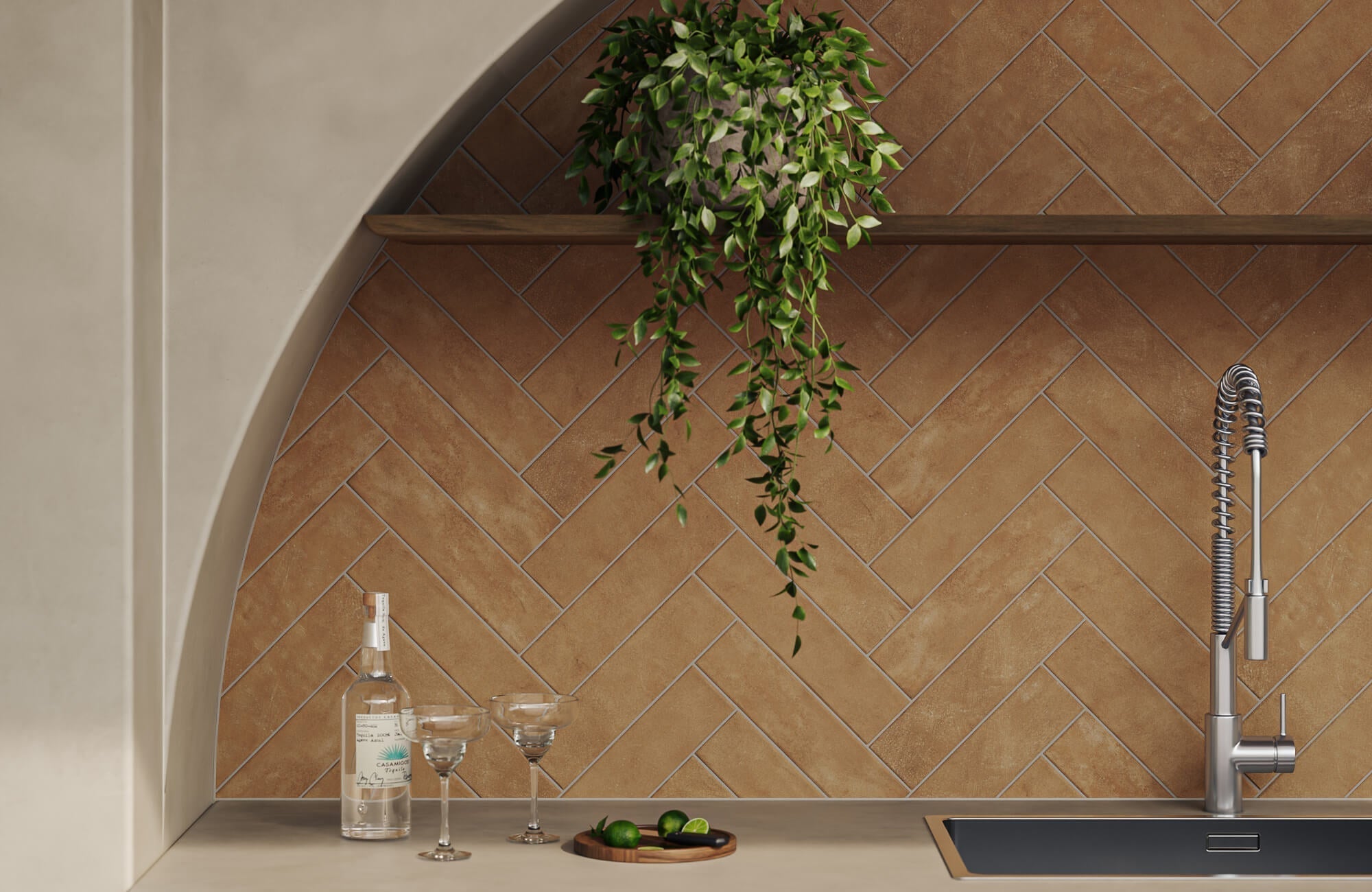
Beyond performance, porcelain offers remarkable design flexibility. Advanced manufacturing allows it to achieve refined textures and nuanced tones, supporting a wide range of bathroom tile ideas, from warm transitional spaces to minimalist modern designs. A beautiful example is Edward Martin’s Isabel 2.5x12 Matte Porcelain Tile in Cream, shown in the image above. Its slim proportions and soft matte finish create subtle movement when installed in a herringbone pattern, adding visual interest without overwhelming the room.
Ceramic tile follows closely behind in popularity, particularly for wall applications. While slightly more porous than porcelain, glazed ceramic tiles provide dependable water resistance and decorative versatility at a more accessible price point.

Ceramic vs Porcelain Bathroom Tiles
Although they share similarities, ceramic and porcelain tiles differ in composition, density, and ideal usage.
Ceramic Tile: Affordable and Decorative
Ceramic tile is crafted from natural clay and fired at high temperatures. It is lightweight and easier to cut, making it especially suitable for bathroom walls, backsplashes, and accent areas. A glazed surface enhances moisture resistance while simplifying routine cleaning.
Edward Martin’s Claire 3x12 Glossy Ceramic Tile in Eggshell demonstrates how ceramic can elevate a bathroom wall with understated elegance. Its elongated format feels contemporary, while the glossy finish reflects light softly across the surface, brightening the space without appearing overly polished. This balance makes it ideal for shower surrounds or full-height installations where subtle dimension enhances the overall design.
Because ceramic is typically more budget-conscious, it remains a practical option for homeowners seeking expressive yet cost-effective bathroom tile ideas.
Porcelain Tile: Dense, Durable, and Moisture Resistant
Porcelain tile is made from refined clay and fired at high temperatures, creating a dense, low-porosity surface. This makes it especially resistant to moisture, stains, and everyday wear, qualities that are essential in bathroom floors and walk-in showers.
Its durability allows it to handle heavy use without compromising appearance, while larger formats can help reduce grout lines for a cleaner look. For bathrooms that demand both reliability and design flexibility, porcelain remains one of the most practical material choices.

Natural Stone Bathroom Tiles
While porcelain remains the most common bathroom tile material, natural stone continues to define luxury interiors. Materials such as marble, travertine, and granite offer depth, variation, and authenticity that cannot be fully replicated.
Marble is admired for its dramatic veining and timeless appeal. Travertine introduces warmth and organic texture, while granite provides exceptional durability. For those drawn to darker, grounded aesthetics, Edward Martin’s Adeline 24x24 Matte Porcelain Tile in Midnight, featured in the image above, captures the rich character of stone in a large-format design. Its deep tone and expansive scale create a seamless foundation that enhances both modern and classic bathrooms.
That said, genuine natural stone requires regular sealing and attentive maintenance to prevent staining or etching. Installation costs are generally higher, and long-term upkeep demands greater care compared to ceramic or porcelain. Still, for those committed to authenticity, stone delivers an undeniably sophisticated presence.

Bathroom Tile Ideas That Never Go Out of Style
Choosing the right material is only the beginning. The true transformation happens through design. The following bathroom tile ideas remain consistently popular across styles and generations.
Subway Tile Bathroom Ideas
Subway tiles remain a cornerstone of bathroom tile ideas due to their versatility and enduring appeal. Their clean lines and rectangular shape adapt effortlessly to both traditional and contemporary spaces. Vertical stacking can elongate walls, while staggered layouts introduce subtle movement.
Edward Martin’s Catalina 2x16 Matte Porcelain Tile in Mushroom offers a refined interpretation of this classic format. Its elongated profile and soft neutral tone introduce modern restraint while maintaining warmth. Installed vertically, it emphasizes ceiling height; arranged horizontally, it reinforces architectural symmetry. The matte finish further enhances its understated elegance, making it well suited for shower walls and vanity backdrops.
Subway tile bathroom ideas are particularly effective in shower walls and alcoves where simplicity enhances architectural features.
Marble Look Bathroom Tile Ideas
Marble look tiles provide the elegance of natural stone with the durability of porcelain or ceramic. These tiles mimic intricate veining while eliminating the need for sealing and specialized care.
Large-format marble look tiles work beautifully for shower walls, creating a spa-like continuity. They are also ideal for bathroom floor tile ideas where luxury and practicality must coexist.
Checkerboard Bathroom Floors
Checkerboard layouts bring personality and graphic interest to bathroom floors. Traditionally black and white, this pattern also works in softer combinations such as beige and taupe for a more subtle statement.
For small bathroom tile ideas, muted checkerboard tones can add movement without overwhelming the space. This style blends especially well with vintage-inspired fixtures or contemporary minimalist designs.
Wood Look Bathroom Tile Ideas
Wood look tiles combine the warmth of natural wood with the resilience of porcelain. They are particularly effective in creating calming, organic environments without the risk of warping or moisture damage.
In rustic bathrooms, deeper wood tones laid in staggered plank patterns evoke cabin-inspired comfort. In modern settings, pale wood look tiles with minimal grout lines contribute to an airy, Scandinavian aesthetic. These bathroom tile ideas work seamlessly on floors and can extend into shower areas for a cohesive finish.

Bathroom Tile Layout Ideas That Transform the Space
Tile layout plays a significant role in shaping the perception of scale and movement within a bathroom.
Straight Set and Staggered Layouts
Layout plays a defining role in how bathroom tiles are perceived. A straight-set grid delivers order and clarity, ideal for minimalist interiors. In contrast, a staggered layout echoes traditional brickwork, introducing gentle movement across the surface.
Edward Martin’s Graham 3x6 Glossy Ceramic Tile in Mushroom works beautifully in both applications. Its softly variegated surface adds depth when installed in a classic offset pattern, while a clean stacked configuration highlights its refined proportions. The glossy finish subtly reflects light, enhancing texture and dimension without overwhelming the space. Even the simplest bathroom tile ideas can feel dynamic when thoughtful layout decisions are applied.
Herringbone and Diagonal Patterns
Herringbone layouts add sophistication and visual interest, particularly when used with subway or wood look tiles. Diagonal patterns can make smaller bathrooms feel more expansive by guiding the eye outward.
Grout, Scale, and Proportion
Tile size and grout color significantly influence the final aesthetic. Larger tiles minimize grout lines and feel more contemporary, while smaller formats like hexagon or penny tiles add texture. Contrasting grout highlights geometry; matching grout enhances cohesion.

How to Choose the Right Bathroom Tile for Your Space
Selecting the most common bathroom tile material is a strong starting point, but the right choice ultimately depends on your lifestyle, maintenance preferences, and design goals.
Consider moisture exposure, slip resistance, foot traffic, and the overall atmosphere you want to create. Larger formats can reduce grout lines and establish visual continuity, particularly in open or spa-inspired bathrooms. Edward Martin’s Marlow 24x48 Matte Porcelain Tile in Titanium, as seen in the image above, illustrates how expansive dimensions and natural stone-inspired movement can anchor a space with warmth and cohesion.
Smaller tiles, on the other hand, introduce pattern and texture. Budget considerations may guide the choice between ceramic, porcelain, and natural stone, but long-term durability should remain a priority.
Balancing performance, aesthetics, and cost ensures your bathroom remains functional and visually compelling for years to come. Thoughtful material selection, paired with intentional layout, transforms a practical surface into a defining design element.
Designing with Confidence
Understanding what makes porcelain the most common bathroom tile provides clarity, but visualizing your design is just as important. Edward Martin’s Augmented Reality (AR) Visualization Tool allows you to explore different bathroom tile ideas directly within your own space, helping you assess scale, color, and layout before committing.
Pairing digital visualization with physical tile samples offers even greater assurance. Seeing texture and tone in your lighting conditions ensures the final result aligns perfectly with your expectations. By combining informed material selection with thoughtful design exploration, you can create a bathroom that reflects both practicality and personal style—timeless in performance and refined in appearance.