
)
)
)
)
)
)
)
)
What Is The Best Size For A Double Vanity?
A double vanity can completely change the way you experience your bathroom. It adds convenience, balance, and structure, especially in shared spaces. But finding the right size goes beyond fitting two sinks on one countertop. It’s also about creating harmony between proportion, layout, and everyday function. The ideal dimensions depend on how you use the space, the room’s design, and the style you want to create. In this article, we’ll explore everything that influences the best double vanity size, from standard measurements and layout planning to storage, design balance, and customization, so you can make a confident choice that feels both practical and perfectly suited to your home.
Standard Double Vanity Dimensions
Before choosing finishes or styles, it’s essential to understand the standard dimensions that define double vanity design. These guidelines help you visualize how various sizes will fit within your bathroom and ensure the vanity functions comfortably in your day-to-day routine.
Common Width Ranges
Most double vanities measure between 60 and 72 inches wide, providing ample space for two sinks and a shared countertop. A 60-inch vanity is ideal for medium-sized bathrooms, offering a practical balance of comfort and efficiency, while a 72-inch model adds extra storage and greater freedom of movement. For expansive primary suites, custom widths of up to 84 inches can create a seamless, built-in appearance.
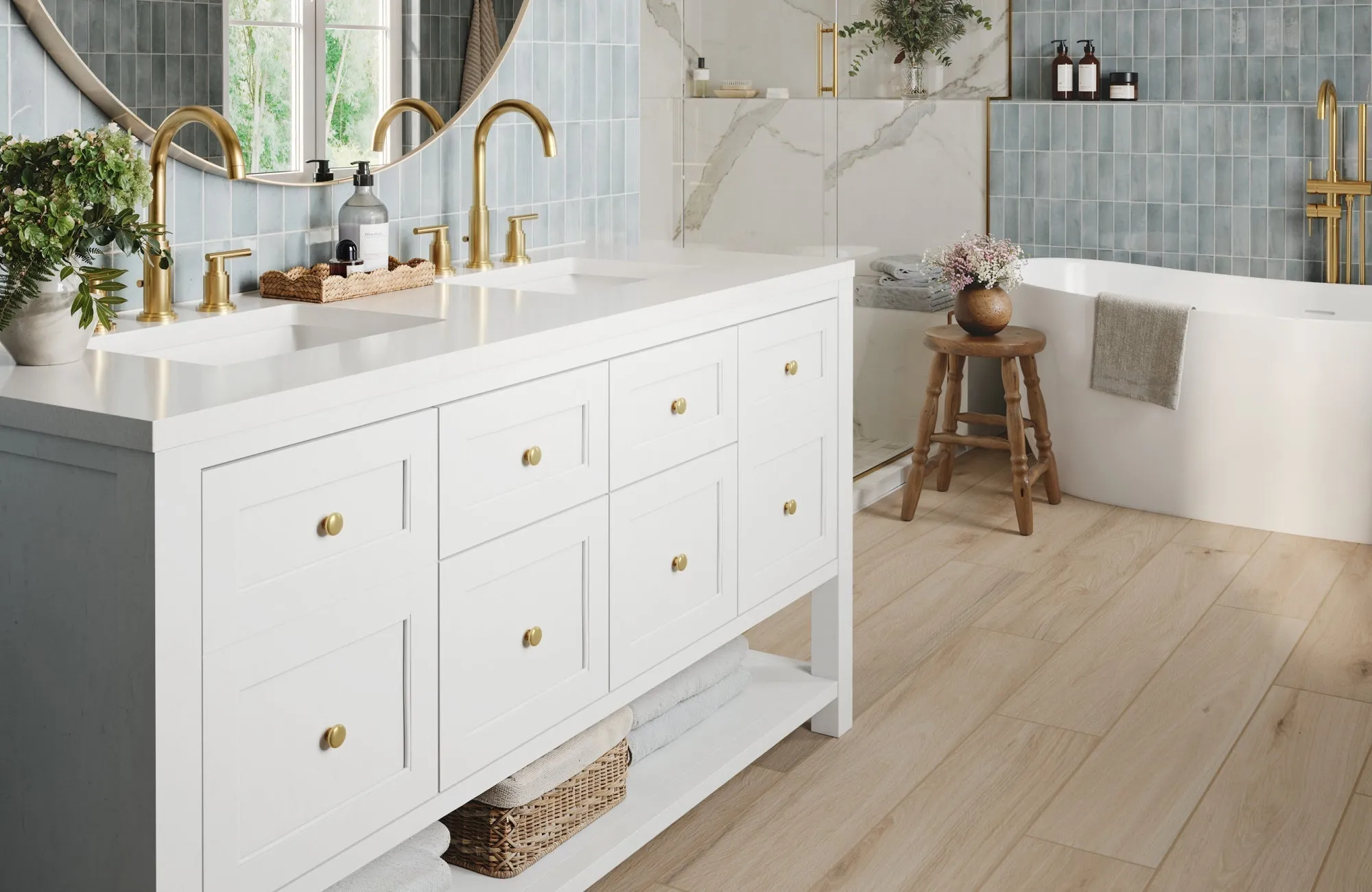
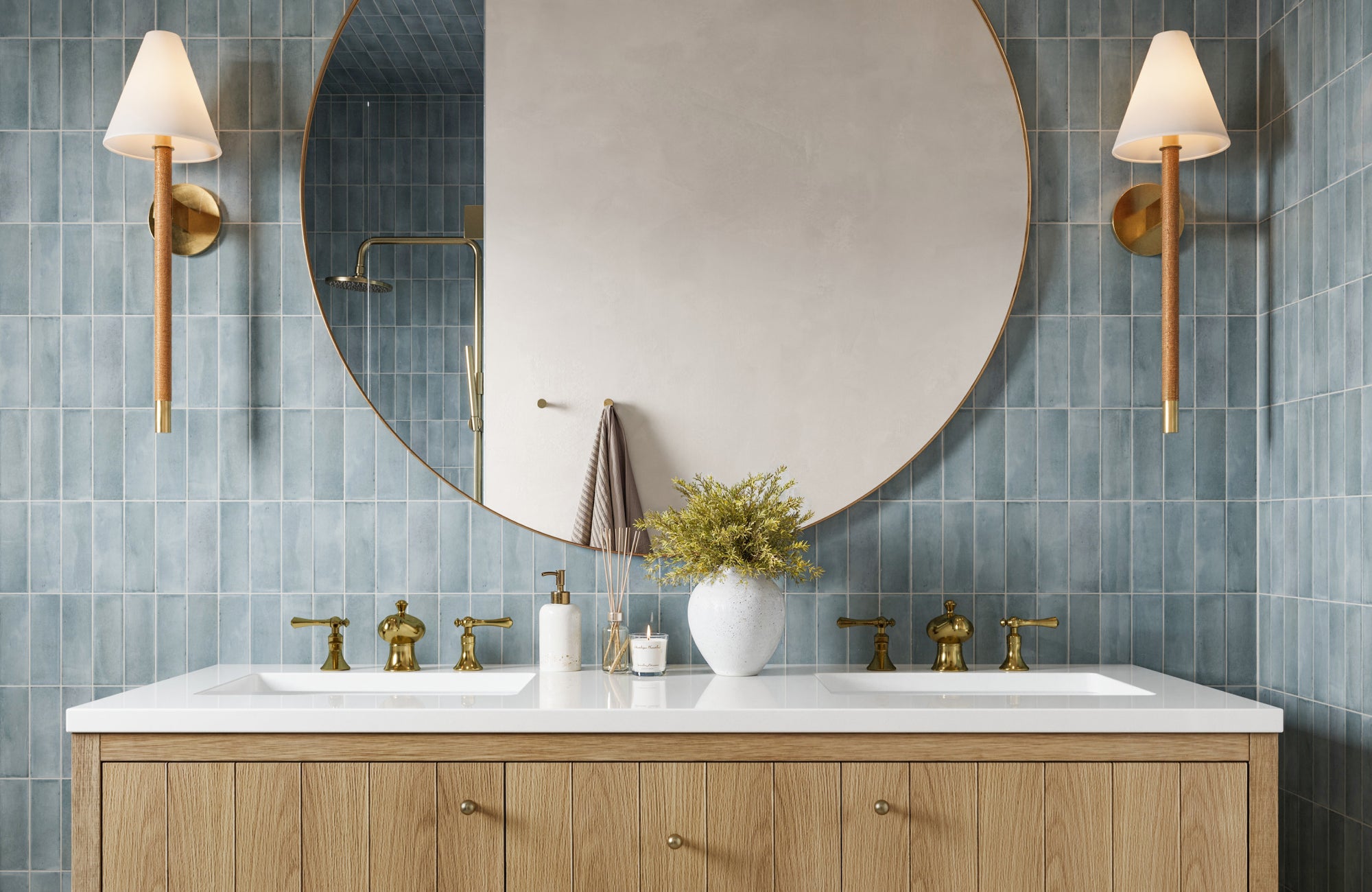
A perfect example of this balance can be seen in the photo displayed above, featuring Edward Martin’s Maxine 72" Double Vanity in Washed Natural Veneer with Carrara Marble Top, which demonstrates how a wider vanity provides generous countertop space and organized storage while maintaining a clean, open look. Its proportions illustrate how thoughtful sizing enhances both comfort and visual harmony, helping the bathroom feel spacious and well-proportioned.
Ideal Height and Depth
Standard double vanities typically stand between 32 and 36 inches high. Lower heights are ideal for family bathrooms or spaces used by children, while taller designs offer better ergonomics for adults. The average depth is around 21 inches—deep enough for comfortable sink installation while leaving sufficient room to move with ease. Even small adjustments in height or depth can make a noticeable difference in comfort and function; for instance, a deeper countertop can accommodate larger sinks, while a shallower design helps smaller bathrooms feel more open and spacious.
Variations for Compact or Large Bathrooms
In smaller bathrooms, a 48-inch double vanity can be an efficient choice, providing two compact sinks and essential counter space without overwhelming the room. This size is ideal for couples who want practicality in a modest footprint. In contrast, larger primary suites can comfortably accommodate wider vanities, up to 84 inches or more, offering space for custom drawers, towel storage, and personalized sections. Understanding these size variations helps you choose a vanity that suits both your layout and your lifestyle, rather than adapting your space to fit a standard design.
Balancing Vanity Size With Bathroom Layout
After understanding standard measurements, the next step is to ensure your vanity integrates seamlessly with your bathroom’s layout. Proper placement enhances comfort, accessibility, and visual balance, creating a space that feels cohesive, intentional, and effortless to use.
Measuring for Clearances and Walkways
When planning placement, allow at least 36 inches of open space in front of the vanity to ensure comfortable movement. Ensure nearby doors—whether for the shower, closet, or entry—can open fully without any obstruction. Creating a quick floor plan sketch can help you visualize the layout and prevent issues during the installation. If space feels limited, opting for a shallower vanity or a floating design can also help the room feel more open and easy to move around.
Placement of Plumbing and Fixtures
Your existing plumbing layout greatly influences the size and positioning of your vanity. Since sinks are typically centered over the drain and water lines, expanding or repositioning the vanity may require plumbing adjustments. While this can add to installation costs, it often enhances the room’s symmetry and overall functionality. Properly aligned fixtures ensure both sinks operate efficiently and that drawers or internal storage open smoothly without obstruction.
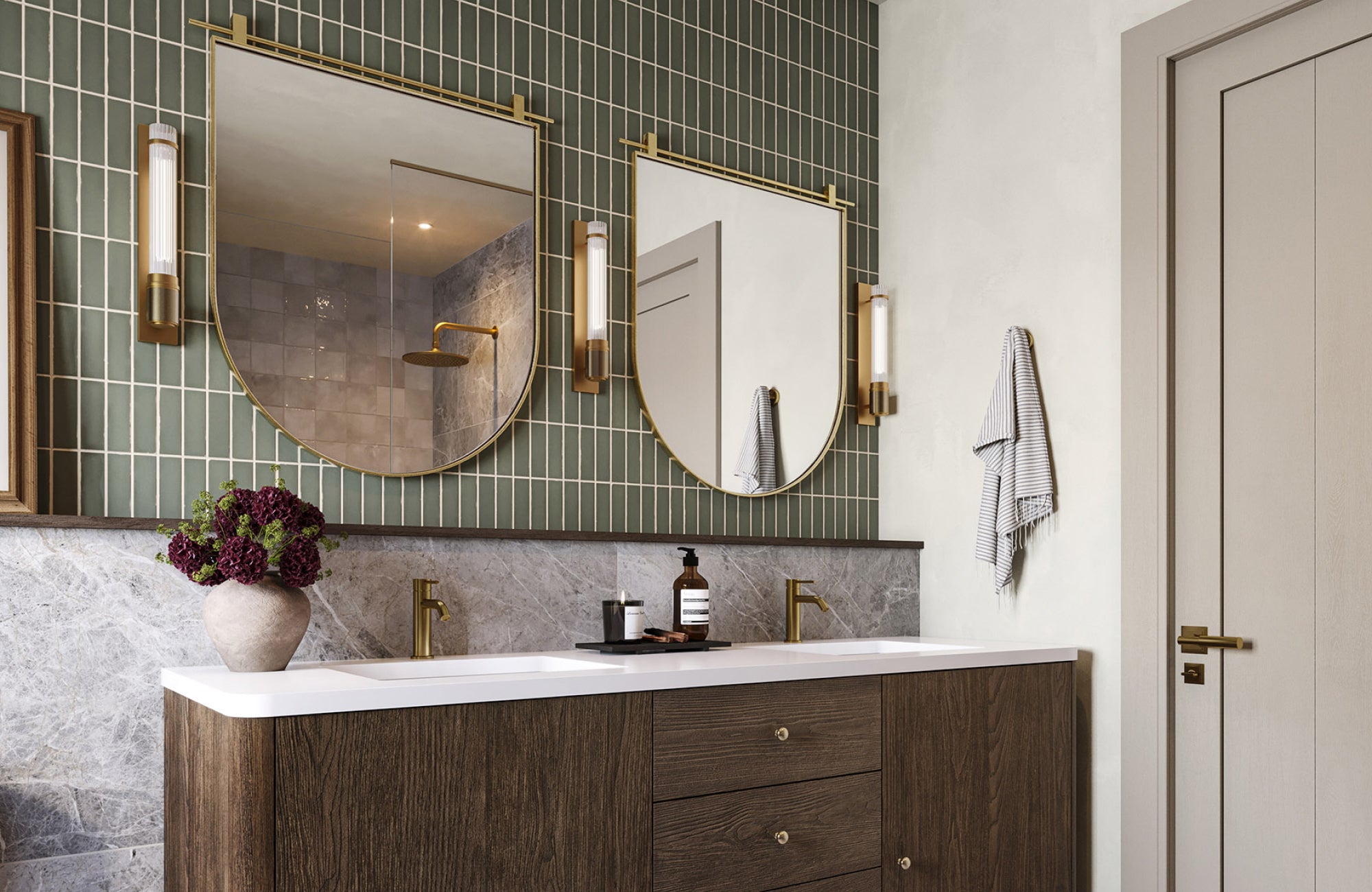
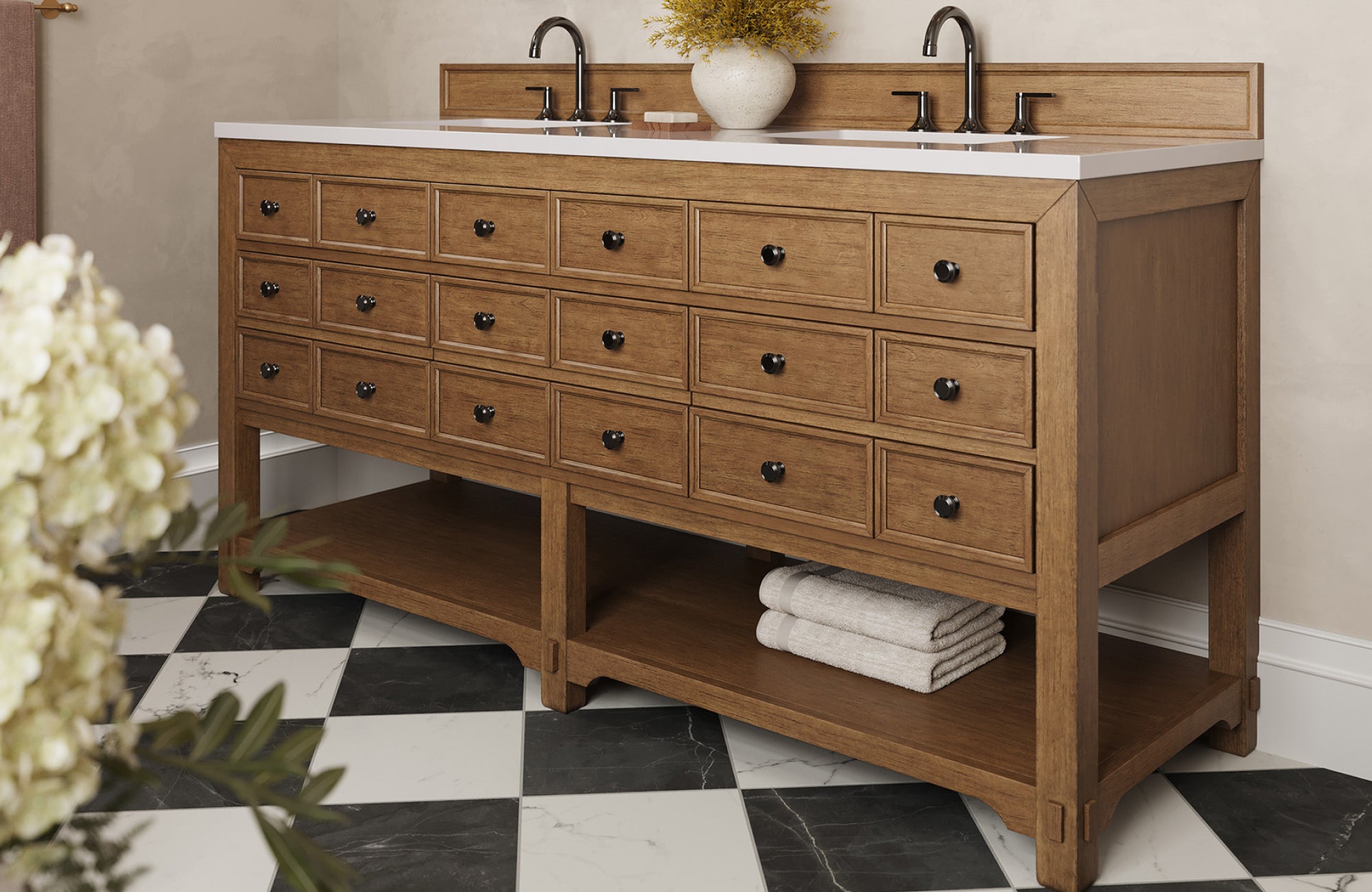
A great example is shown in the photo above, where Edward Martin’s Tyson Wall Sconce in Aged Brass is perfectly aligned with the mirrors and the Colton 72" Double Vanity in Sable with 3 cm White Zeus Quartz Top. The placement demonstrates how careful coordination between plumbing, lighting, and fixtures enhances both symmetry and usability. Each element feels intentional, creating a balanced layout that supports efficient function and cohesive design.
Wall-Mounted vs Freestanding Impact
Wall-mounted vanities can make smaller bathrooms feel more spacious by exposing the floor and adding visual depth. Freestanding designs, meanwhile, offer a sense of substance and permanence that complements larger rooms. Choosing between the two depends on the atmosphere you want to create: floating styles feel open and contemporary, while freestanding options provide structure and a grounded, classic look.
Sink Spacing and Countertop Considerations
Even when your vanity fits the room well, poor sink placement or countertop proportions can diminish comfort and efficiency. Careful attention to spacing and measurements ensures a setup that feels natural, functional, and comfortable for everyday use.
Minimum Distance Between Sinks
For comfortable use, the centers of two sinks should be spaced at least 36 inches apart. This distance allows both users to move freely without feeling cramped or encroaching on each other’s space. In narrower vanities, you can slightly offset the sinks or choose smaller basins to maintain functionality. Ensure the remaining countertop still provides space for daily essentials such as soap dispensers and toiletries.
Countertop Depth and Edge Allowance
Countertop depth also plays a key role in how comfortable and functional your vanity feels. A depth of around 21 inches provides a comfortable reach from front to back, while deeper countertops are ideal for larger vanities with additional storage. The edge style also influences both appearance and practicality; rounded profiles help prevent water spills, while flat edges lend a clean, modern look. Adding a low backsplash not only protects your walls but also ties the entire design together.
Faucet and Mirror Alignment
After finalizing your sink and countertop dimensions, ensure your faucets and mirrors align properly. Faucets should be positioned comfortably above the basin, with enough clearance for easy use. Mirrors can either be centered over each sink for symmetry or span the full width of the vanity for a seamless look. Proper alignment ensures balanced lighting, prevents awkward spacing, and creates a polished, cohesive appearance.
Storage and Organization Needs
A well-proportioned vanity should enhance your daily routine as much as it elevates the room’s design. Aside from aesthetics, an organized storage layout is what keeps your bathroom functional, tidy, and effortless to use.
Drawer vs Cabinet Distribution
Drawers provide convenient access to everyday essentials such as cosmetics, brushes, and grooming tools, while cabinets are better suited for storing taller or bulkier items. When deciding on a layout, consider what you reach for most often. Well-designed deep drawers can also hold hair tools or cleaning products with ease. A balanced combination of drawers and cabinets keeps everything organized, accessible, and neatly arranged.
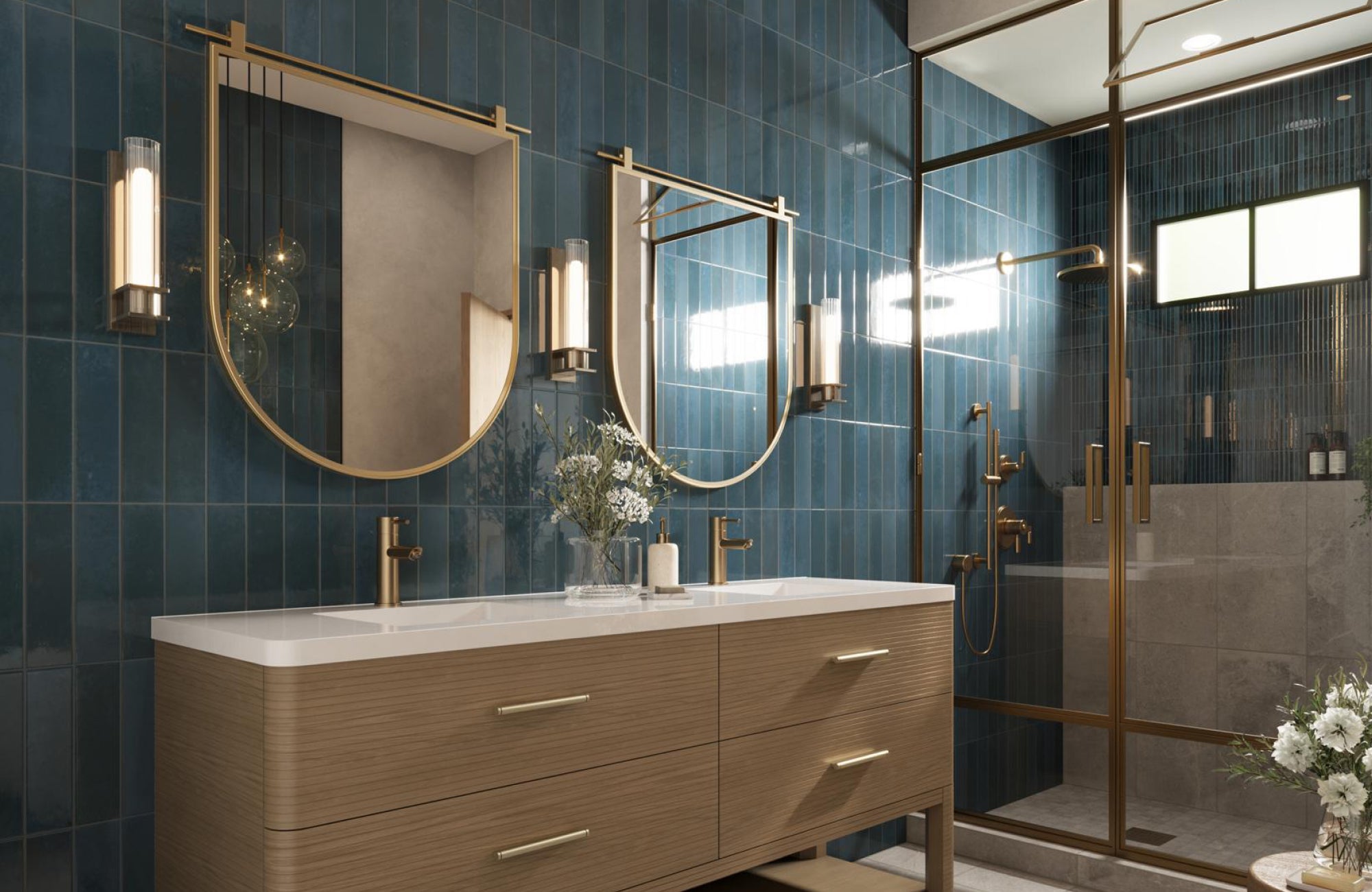
A beautiful example of thoughtful organization can be seen in Edward Martin’s Rosalie 72" Double Vanity in Amber Birch with 3 cm White Zeus Quartz Top, as shown in the photo above. Inside, there's space for more than just the everyday: clever compartments, two tip-out drawers, five standard drawers, and an open lower shelf that offers room to store or style, depending on what the day calls for. This mix of storage options showcases how practical design can blend seamlessly with timeless aesthetics.
Shared Storage Solutions
In shared bathrooms, defined storage zones help maintain order and prevent mix-ups. Divided drawers or a central tower can neatly separate personal items, keeping everything easy to find. Installing dual medicine cabinets above each sink adds valuable vertical storage without reducing counter space. These thoughtful solutions streamline daily routines and keep the area organized, even in the busiest households.
Maximizing Vertical Space
When floor space is limited, think vertically. Tall side cabinets or shelves above the vanity can offer extra space for towels, toiletries, and other essentials. These additions not only enhance storage but also frame the vanity, giving it a more defined and elegant presence. Using vertical space effectively also keeps smaller bathrooms organized and open while making the most of every inch.
Design Proportion and Visual Balance
The size of your vanity influences more than just functionality—it defines the overall look and feel of the bathroom. Achieving proper proportion and balance is essential to creating a cohesive design that feels both visually pleasing and well-structured.
Matching Vanity Size to Wall Proportion
Your vanity should align naturally with the wall it sits against, leaving a few inches of open space on each side to maintain balance and prevent a crowded look. When properly proportioned, the vanity enhances the room’s architecture, creating a sense of structure and visual harmony. Centering the vanity beneath lighting or mirrors further strengthens this balance, helping the entire wall feel cohesive and intentionally designed.
Coordinating With Mirrors and Lighting
The size and placement of mirrors can enhance the vanity’s width and symmetry. Two separate mirrors create individual zones for each user, while one wide mirror visually enlarges the space and offers a unified look. Complement your mirrors with well-positioned lighting, such as sconces or integrated LEDs, to provide even, flattering illumination across both sinks and enhance the overall balance of the design.
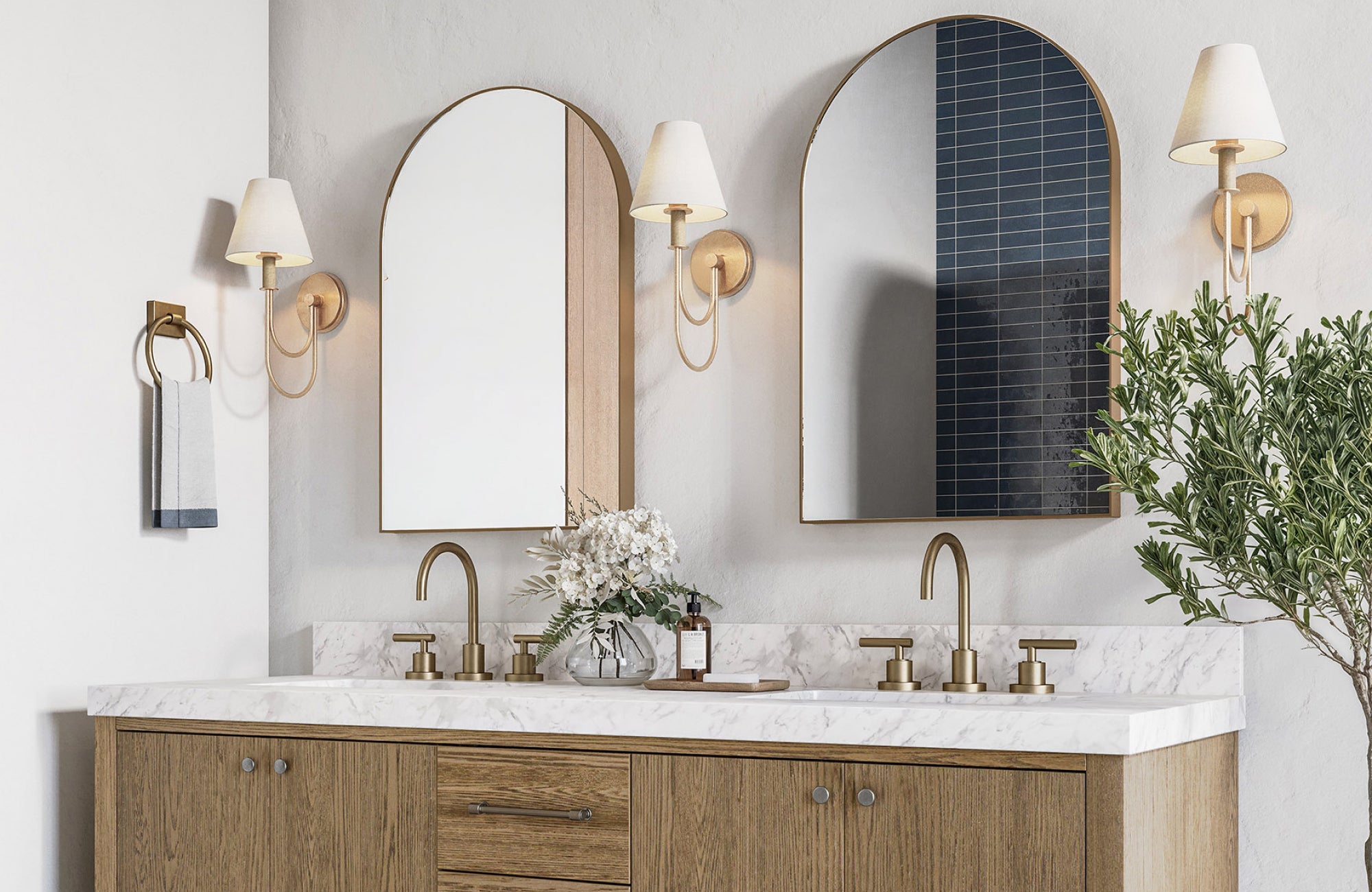
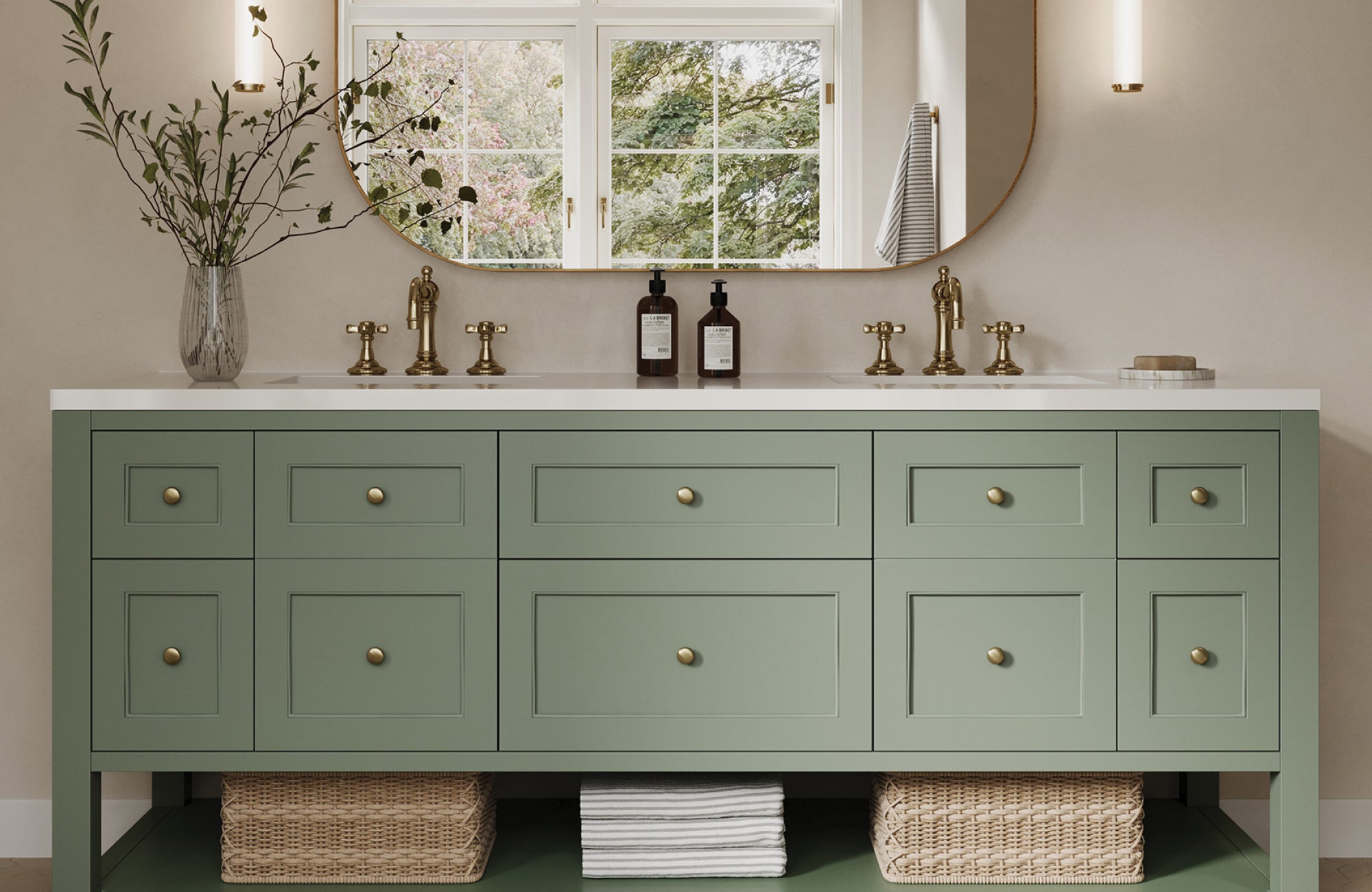
A beautiful example of this harmony can be seen in the photo above, where Edward Martin’s Clancy Small Arch Mirror in Antique Brass is paired with the Paxton 72" Double Vanity in Pebble Oak with 3 cm White Zeus Quartz Top. The coordinated alignment of mirrors, lighting, and fixtures highlights how symmetry and thoughtful placement create a polished, cohesive aesthetic that feels both functional and inviting.
Material and Color Influence
The materials and colors you choose for your vanity can dramatically influence how the space feels. Light finishes such as white oak or soft gray make smaller bathrooms appear brighter and more open, while darker tones add richness and depth to larger rooms. Matte textures can create a calm, understated look by softening light, whereas glossy finishes enhance brightness and give a sleek, polished feel. Selecting the right combination helps balance scale and atmosphere, tying the entire design together.
Customization and Lifestyle Factors
Standard sizes don’t always suit every household. A custom vanity allows you to adjust dimensions, storage, and features to match your daily routines and design preferences, creating a setup that feels tailored to the way you live.
Tailoring to User Height and Daily Habits
When your household includes people of varying heights, adjusting the vanity height or opting for dual-height countertops can make the space more comfortable for everyone. Families with young children may prefer lower vanities for now, with the flexibility to modify them later as needs change. Customizing dimensions this way ensures long-term comfort and practicality for every user.
Integrating Modern Features
Modern vanities often incorporate smart features, such as integrated lighting, built-in outlets, and concealed charging stations. Planning for these upgrades early ensures there’s enough clearance and proper support for installation. For example, vessel sinks sit higher on the countertop and may require lowering the vanity base to maintain comfortable, ergonomic use. Careful planning ensures these modern features remain both practical and visually cohesive within the overall design.
Planning for Longevity and Resale
While personalization enhances comfort and usability, it’s also important to think about long-term appeal. Choosing neutral finishes, standard widths, and flexible storage layouts helps your vanity design stay timeless and attractive to future buyers. This thoughtful approach maintains functionality today while preserving value for years to come.
Finding the Perfect Fit for Your Bathroom
Choosing the right size for a double vanity comes down to balancing function, proportion, and personal preference. When every element, from sink spacing to wall alignment, works together seamlessly, the bathroom transforms from a purely functional space into one that feels intentional and inviting. By carefully considering your room’s dimensions, storage needs, and design style, you can find a vanity size that elevates both practicality and aesthetic appeal. Whether you opt for a classic 60-inch model or a custom 84-inch centerpiece, the best choice is one that feels natural, balanced, and perfectly suited to your space.
If you’re unsure where to begin, contact us for guidance or explore our design consultation service. Our team can help you visualize the right vanity size and style for your bathroom, ensuring every detail aligns beautifully with your needs and design goals.
Follow us on Instagram
@EDWARD.MARTIN
)
)
)
)
)
)
)
)
)
)
)
)
)
)
)
)