

)
)
)
)
)
)
)
)
What Is The Best Placement For Sconces Next To A Bathroom Mirror?
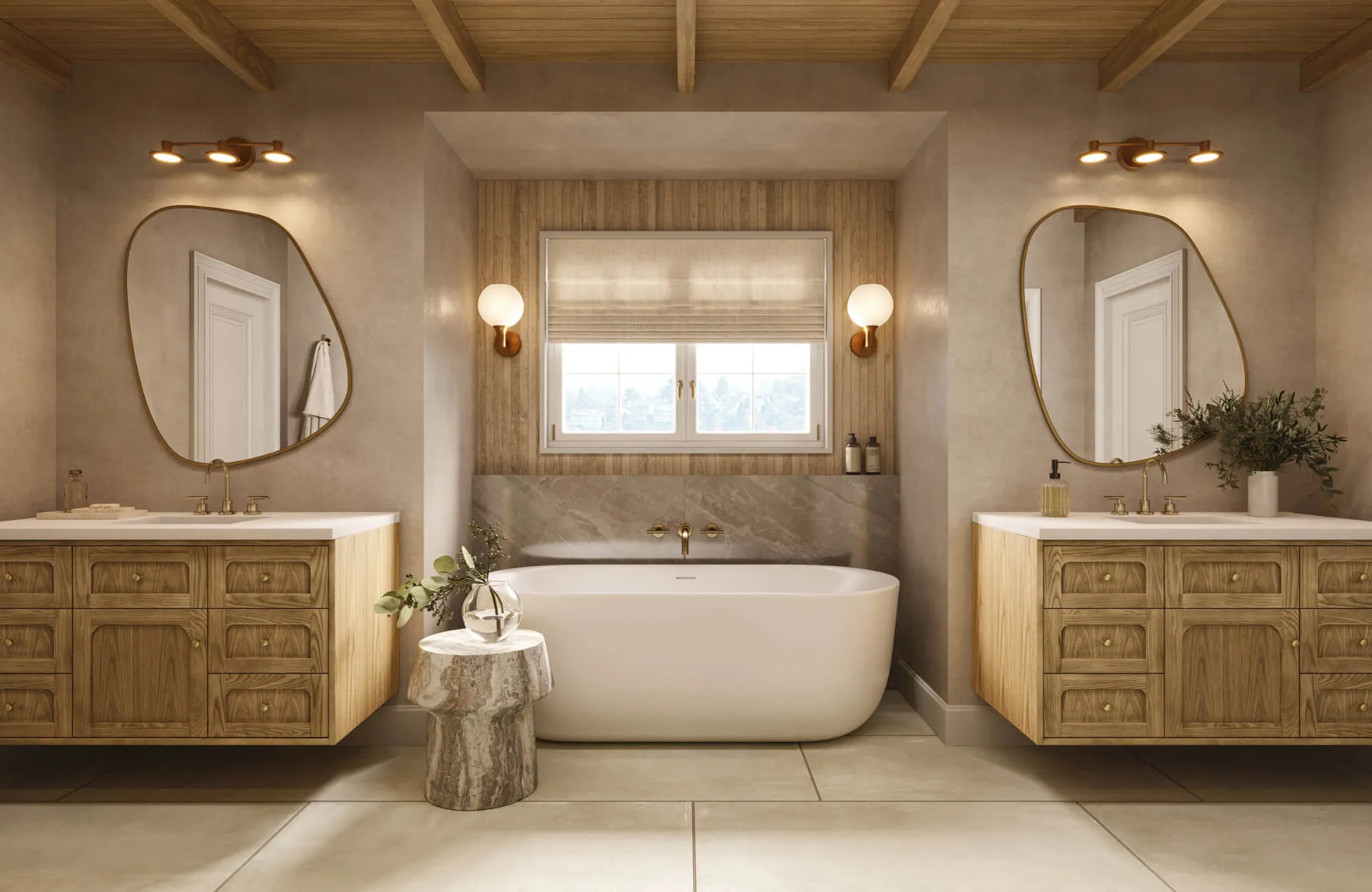
Lighting can make or break the functionality and ambiance of a bathroom. The right fixture placement doesn’t just enhance visibility, it elevates how you experience the space every day. Among all bathroom lighting decisions, few are as pivotal as where you place your sconces next to the vanity mirror. Done correctly, sconce placement creates balanced, flattering illumination that supports daily grooming while lending the space a sense of intentional design.
This guide breaks down the essential rules and expert insights for perfect sconce placement, covering height, spacing, mirror size adjustments, and style considerations, so you can confidently create a lighting layout that’s both beautiful and functional.
Understanding the Core Principles of Vanity Lighting
Before diving into measurements and layouts, it’s essential to understand what makes great vanity lighting work. The foundation of perfect sconce placement lies in mastering how light interacts with your face, your mirror, and the room around them.
The Goal Is Flattering Cross Illumination
The most flattering lighting for grooming, skincare, and makeup is cross illumination, light that hits the face evenly from both sides. Side-mounted sconces achieve this by eliminating shadows that overhead lighting alone can create. When sconces are installed at roughly eye level, light spreads horizontally across the face, highlighting features naturally and evenly.
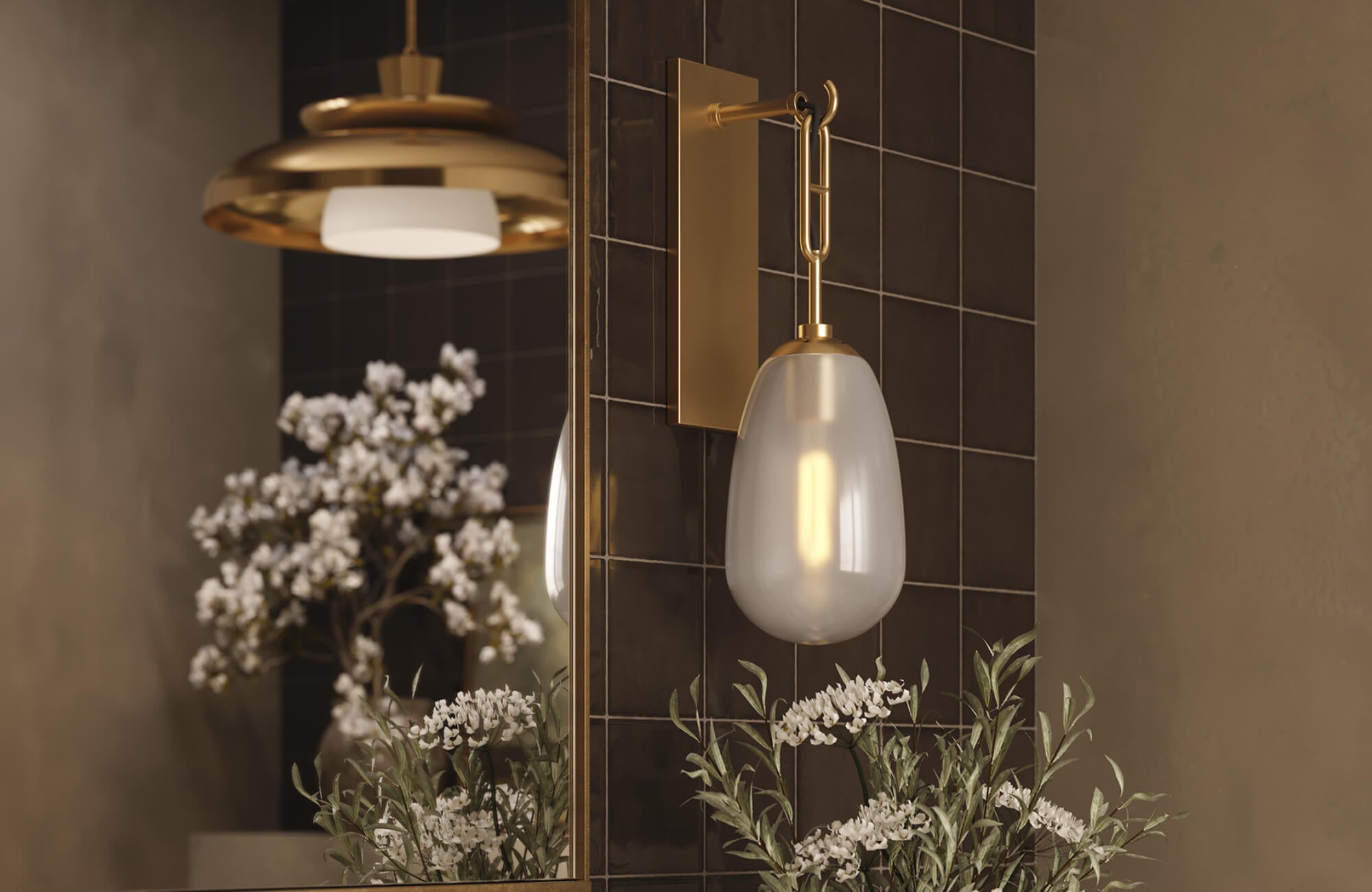
As shown above with Edward Martin’s Runa Wall Sconce in Aged Brass, fixtures that diffuse light through a softly frosted glass shade help create this balanced effect. The gentle glow emitted on both sides of the mirror enhances depth and dimension, preventing harsh contrasts and delivering a calm, natural radiance ideal for daily routines.
This even wash of light prevents the “top-down shadow” effect that makes eyes look hollow or accentuates lines. Instead, it mimics natural daylight, the gold standard for accurate color rendering and flattering tone.
Why an Overhead Light Alone Is Never Enough
Ceiling-mounted lights, whether recessed or flush-mounted, tend to throw light downward. While they’re excellent for general illumination, they fail to provide the facial clarity required for grooming. Overhead fixtures alone can cast unflattering shadows beneath the eyes, nose, and chin, creating a harsh or uneven look even in a well-lit space.
The best bathroom lighting design layers multiple sources: an ambient overhead light, side sconces for task lighting, and, optionally, accent lighting for atmosphere. The sconces’ role in this trio is critical: they bring the light down to the level where it matters most, your face.
The Importance of Centering Light on the Face
In lighting design, the human face is the focal point of task lighting. The ideal sconce height centers the bulb or main light output around eye level, typically between 60 to 65 inches from the floor. This ensures light falls across the face without glare or harshness.
When sconces are too high, light angles down sharply, exaggerating shadows. When too low, it flattens features and can even create glare in the mirror. Centering light at face level creates a soft, balanced glow that works for all ages, heights, and bathroom sizes.
The Definitive Rules for Vertical and Horizontal Placement
Once you understand the principles behind effective illumination, it’s time to apply them with precision. This section outlines the key measurements, height, spacing, and positioning, that bring balanced, flattering light to life.
The Golden Rule for Sconce Height
The standard sconce height for most adults is approximately 65 inches from the finished floor to the center of the light source. This places the light roughly at or slightly above eye level, providing even illumination across the face.
However, this isn’t a rigid number. Consider the following adjustments:
For taller individuals or high ceilings Raise sconces up to 68 inches to maintain visual balance. For shorter ceilings or compact vanities Lower them slightly to around 60–62 inches. When using tall mirrors Align the sconce center with the mirror’s midpoint or slightly above it for cohesive proportion.
Ultimately, the goal is not the exact measurement, but the light’s interaction with the mirror and user. Stand at the vanity and ensure the illumination hits the center of your face without glare.
How to Determine the Perfect Sconce Width
The sconce’s width impacts not just aesthetics but also the spread of light. For most bathrooms, small to medium sconces (4"–6" wide) suit compact mirrors and narrow vanities, while medium to large sconces (6"–8" wide) work best for standard 30"–36" mirrors. Lastly, extra-wide fixtures (8"+) are ideal for large mirrors or double vanities where broader illumination is needed.
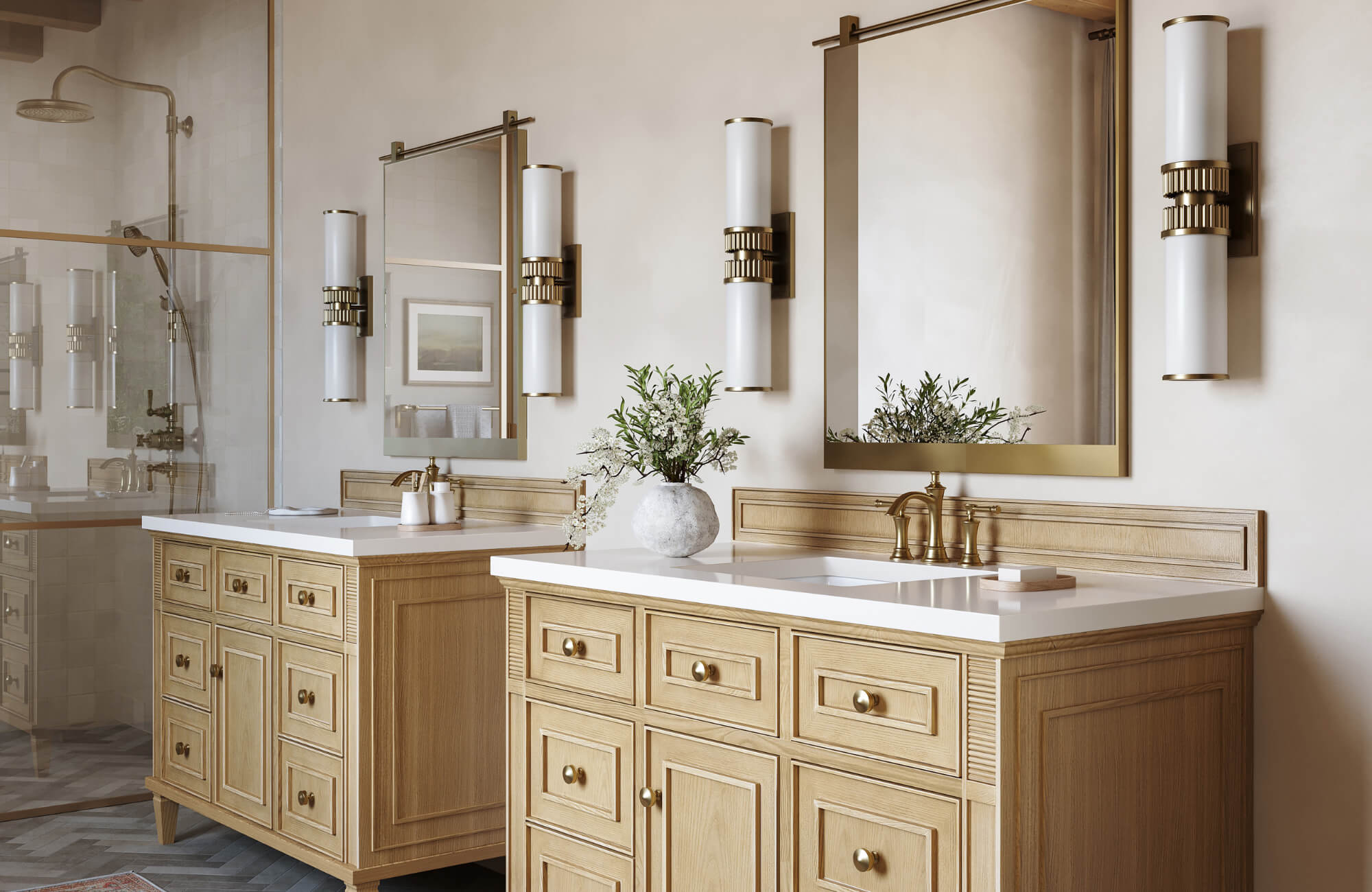
As seen above with Edward Martin’s Rycroft Wall Sconce in Aged Brass, wide vertical fixtures can beautifully frame mirrors while delivering ample, even light coverage. Its elongated form and ribbed center detailing provide both function and sculptural presence, perfect for dual-sink setups or vanities that benefit from greater light diffusion.
Spacing also has a significant impact. Aim for 28 to 34 inches between sconces (measured from bulb center to bulb center). This allows for symmetrical coverage that centers light evenly across the face and mirror. If your mirror is wider or narrower than average, prioritize visual balance over strict spacing, the sconces should frame the mirror without feeling cramped or adrift.
Adjusting the Rules for Your Mirror Size
Mirror size dictates sconce spacing more than any other factor.
For narrow mirrors (under 24 inches wide) Mount sconces close to the mirror edges, around 2–3 inches away. For standard mirrors (24–36 inches wide) Position sconces roughly 4–6 inches from the mirror edges. For wide mirrors (over 48 inches) Treat each sink area independently, mount sconces around each basin or opt for multiple fixtures spaced symmetrically.
When using an oversized mirror, sconces can also be mounted directly on the mirror surface using mirror-mounted backplates. This technique, common in luxury interiors, maintains symmetry while adding a seamless, built-in appearance.
Adapting Placement for Different Vanity Configurations
Of course, not every bathroom follows the same blueprint. Building on the core rules, this section shows how to tailor sconce placement for double vanities, large mirrors, and compact powder rooms without sacrificing function or beauty.
Placement for a Double Vanity with Two Mirrors
For a double vanity with two separate mirrors, treat each mirror as its own lighting zone. Mount a pair of sconces beside each, one on the left and one on the right, so each user receives balanced light.
The spacing and height rules remain consistent:
Height 60–65 inches from floor to bulb center. Distance from mirror edge 3–6 inches.
This arrangement creates symmetrical lighting for both sides of the vanity and a cohesive visual rhythm across the wall.
Placement for a Double Vanity with One Large Mirror
When using a single, continuous mirror, side sconces alone may not provide sufficient balance across the entire width. In this case, install a pair of sconces evenly spaced across the mirror’s midpoint, aligning each fixture with the center of each sink. If the vanity is extra wide (over 72 inches), consider adding a third sconce centered between the two basins for even light distribution and symmetry.
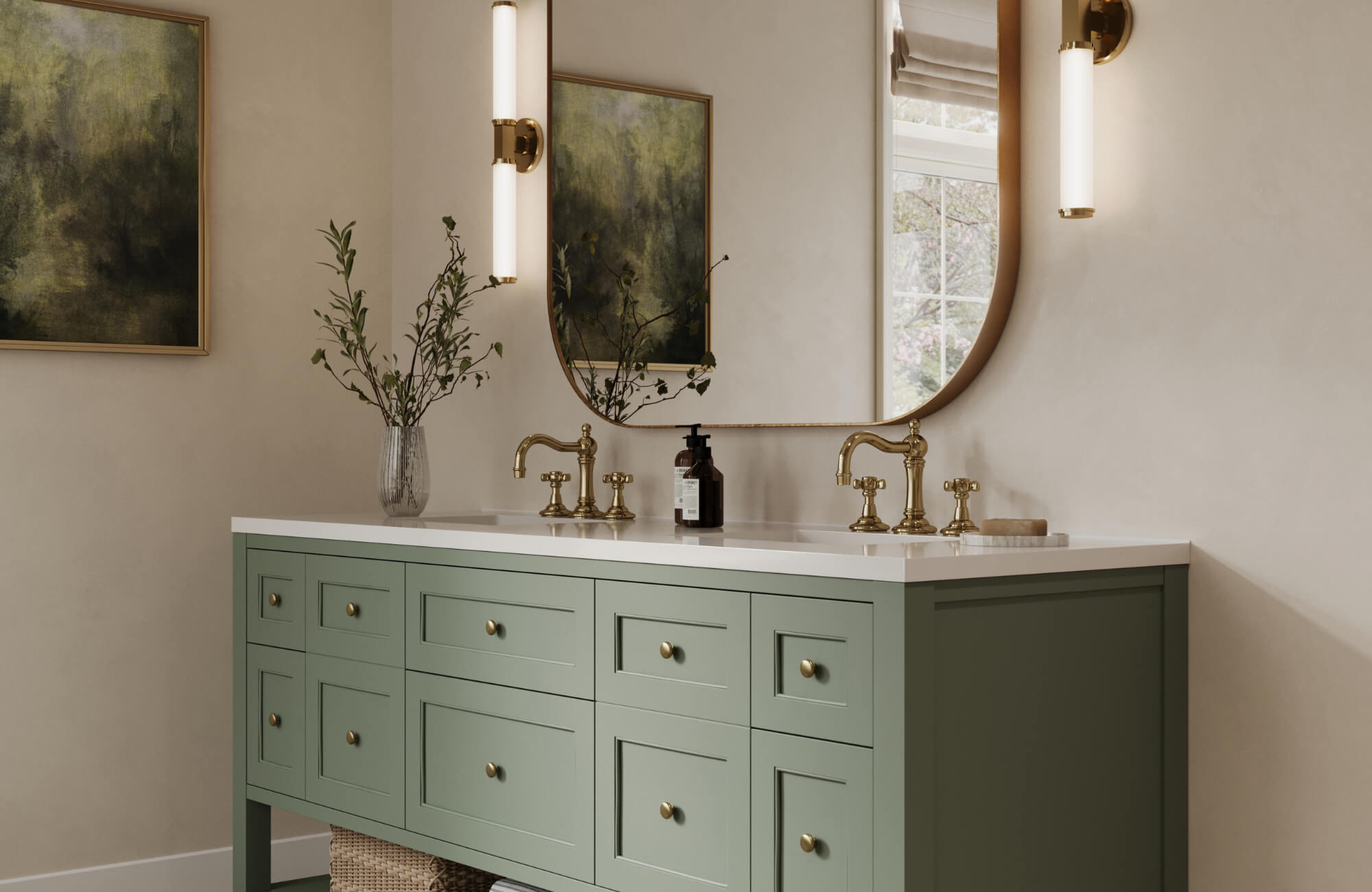
As illustrated above by Edward Martin’s Maguire Wall Sconce in Aged Brass, vertically oriented fixtures with elongated frosted diffusers create balanced illumination across wide mirrors while maintaining a clean, architectural look. Their slim profile and refined brass finish make them ideal for mirror-mounted applications, enhancing the sense of continuity and sophistication.
For a cleaner, more integrated look, many designers opt for mirror-mounted sconces, where fixtures are attached directly through the mirror with concealed wiring. This approach eliminates awkward spacing and delivers a custom, high-end finish that feels cohesive and intentional.
What to Do in a Small Bathroom or Powder Room
Compact spaces often limit wall real estate, but that doesn’t mean you need to compromise on lighting quality. If side sconces can’t fit beside the mirror:
Choose slim-profile sconces that project less from the wall. You can also mount vertical bar sconces directly on the mirror for seamless integration. Or, use a pair of narrow sconces above the mirror, angled slightly downward for better face illumination. Most importantly, avoid relying on a single ceiling light, it will cast downward shadows and flatten features. Instead, choose fixtures that bring light to face level even in limited space.
For powder rooms, where lighting leans more toward ambiance than precision, you can explore decorative sconces with diffused or shaded glass for a soft, flattering glow that complements the mirror’s focal point.
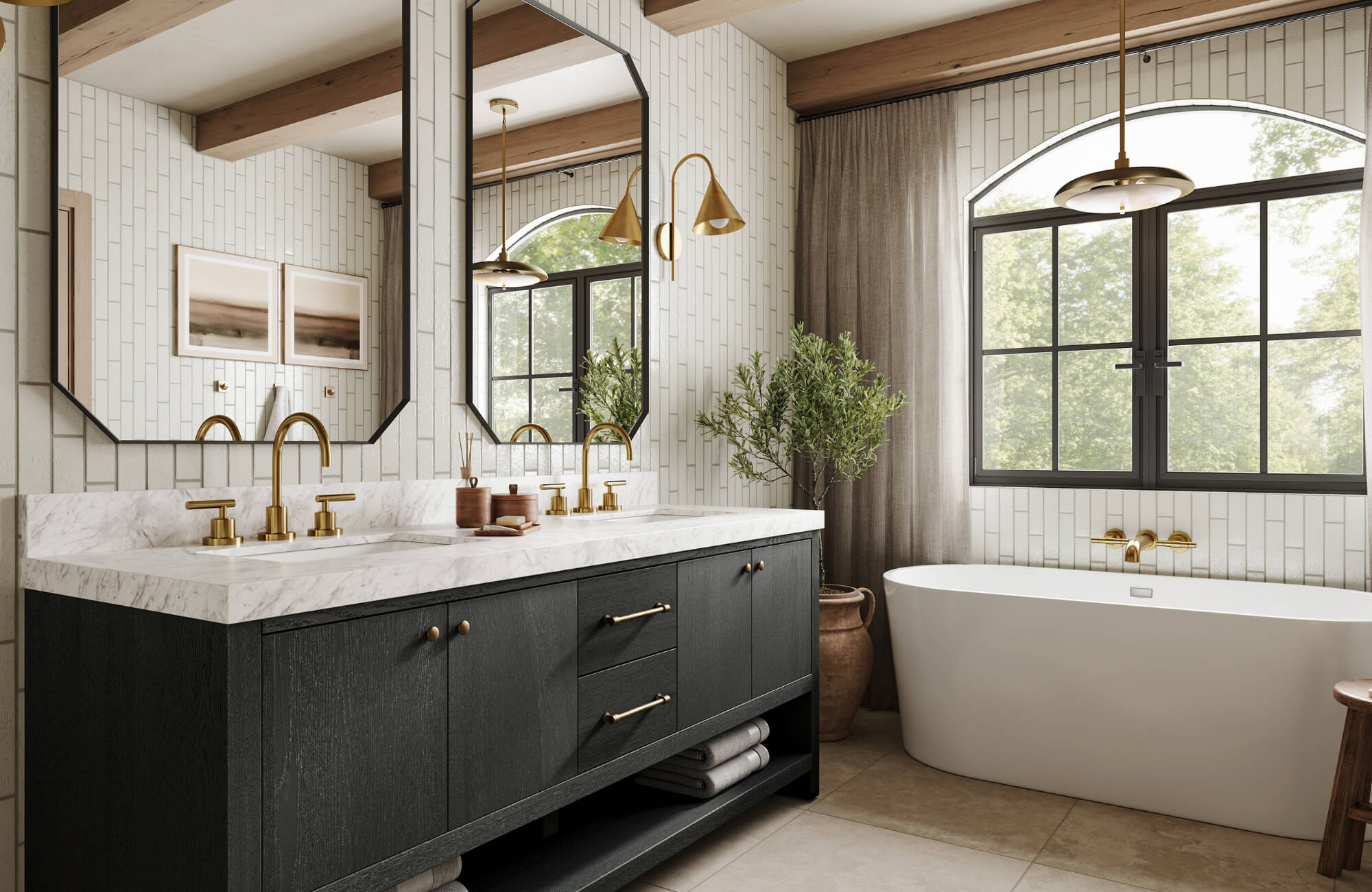
How Sconce Style and Shape Influence Placement
After learning where sconces should go, the final step is understanding how their design affects light and proportion. Here, we’ll explore how fixture style, shape, and direction refine both the look and performance of your bathroom lighting.
Placing Vertical Sconces vs Shaded Sconces
Vertical sconces, often tubular or linear, emit light evenly along their length. They should be mounted so that the center of the fixture aligns with eye level, with the top and bottom extending above and below. This creates a tall column of illumination that flatters the face from multiple angles and enhances overall brightness without harshness.
Shaded sconces, by contrast, direct light primarily upward and downward. These require slightly more careful placement, positioning them so the lamp shade’s midpoint sits near eye level and allows enough clearance from the mirror edge to prevent glare or reflections.
As seen above with Edward Martin’s Fenton Wall Sconce in Light Antique Brass, shaded designs can beautifully blend form and function. Its conical shape and warm metallic finish focus light precisely where it’s needed while adding sculptural elegance to the space. Before final installation, it’s best to test the fixture’s beam spread to ensure the light reaches the full height of the face, maintaining a soft yet effective glow.
The Difference Between Up-Lighting and Down-Lighting
The direction your sconce emits light drastically changes the mood and function of the space.
Up-lighting (light cast upward) creates soft ambient glow and enhances architectural height, ideal for powder rooms or decorative mirrors. While down-lighting (light cast downward) provides stronger task illumination, better for grooming or makeup application. On the other hand, dual-direction sconces, with open tops and bottoms, offer the best of both worlds, creating depth and balanced brightness.
When installing, make sure the sconce direction aligns with its purpose. For example, a shaded fixture meant for down-lighting should never sit above eye level, as it could create glare and uneven light on the face.
Considering Scale and Visual Weight
Aesthetically, sconces should feel proportionate to the mirror and vanity, neither overwhelming nor underwhelming the visual balance.
For small mirrors (under 24"), choose slim or compact sconces that align closely with the mirror’s height, while medium to large mirrors (30–40") pair best with fixtures that span roughly one-third to one-half the mirror’s height. For grand or statement mirrors, oversized sconces with bold shapes or finishes can beautifully anchor the composition and create a striking focal point.
Also, pay attention to visual weight, the perceived heaviness of the fixture. Brass, dark bronze, or sculptural sconces draw the eye more strongly than glass or acrylic ones. When in doubt, visualize how the sconces frame the mirror: they should complement its scale and style, not compete with it.
Your Blueprint for Perfect Bathroom Sconce Placement
Perfect sconce placement is both a science and an art. The science lies in measurements, mounting height, spacing, and beam angle, to ensure functional, shadow-free illumination. The art lies in balance, how the fixtures interact with your mirror, vanity, and overall bathroom aesthetic.
For those seeking expert direction, Edward Martin’s design consultation service offers personalized guidance to help you make confident style choices. If you’d like personalized recommendations, have questions about products, or need assistance bringing your entire design together, simply contact Edward Martin. Our team is ready to guide you through every detail, from fixture selection to cohesive room styling, so your bathroom lighting feels effortlessly refined and beautifully your own.
Follow us on Instagram
@EDWARD.MARTIN
)
)
)
)
)
)
)
)
)
)
)
)
)
)
)
)