There is a quiet artistry in placing a mirror, a piece so modest in form yet profound in its influence on a well-crafted bathroom. More than a surface for reflection, the mirror shapes light, guides the rhythm of daily rituals, and anchors the visual balance of the room. When thoughtfully positioned, it enhances both function and atmosphere, transforming ordinary routines into moments of quiet elegance. Its relationship with architectural lines, soft illumination, and material finishes turns practicality into purposeful design.
With every detail considered, the mirror becomes a bridge between clarity and comfort, offering both aesthetic presence and lasting performance. This article explores how precision, proportion, and environmental awareness come together to determine the most effective and beautiful placement for a bathroom mirror.

Ergonomic Positioning and Visual Accessibility
A well-placed mirror begins with thoughtful attention to human scale, particularly the average eye level and posture during everyday use. When centered above the vanity and adjusted to proper height, it ensures comfortable, intuitive reflection for most users.
Eye-Level Optimization
Mirrors that reflect the user’s face and upper torso at a natural height make personal care tasks easier and more intuitive. A central mounting range of 57 to 65 inches off the floor typically works well, accounting for a wide range of user heights without making the mirror feel too low or too high. For the best visual comfort, the reflective area should sit entirely within the viewer’s forward gaze rather than requiring neck adjustments.
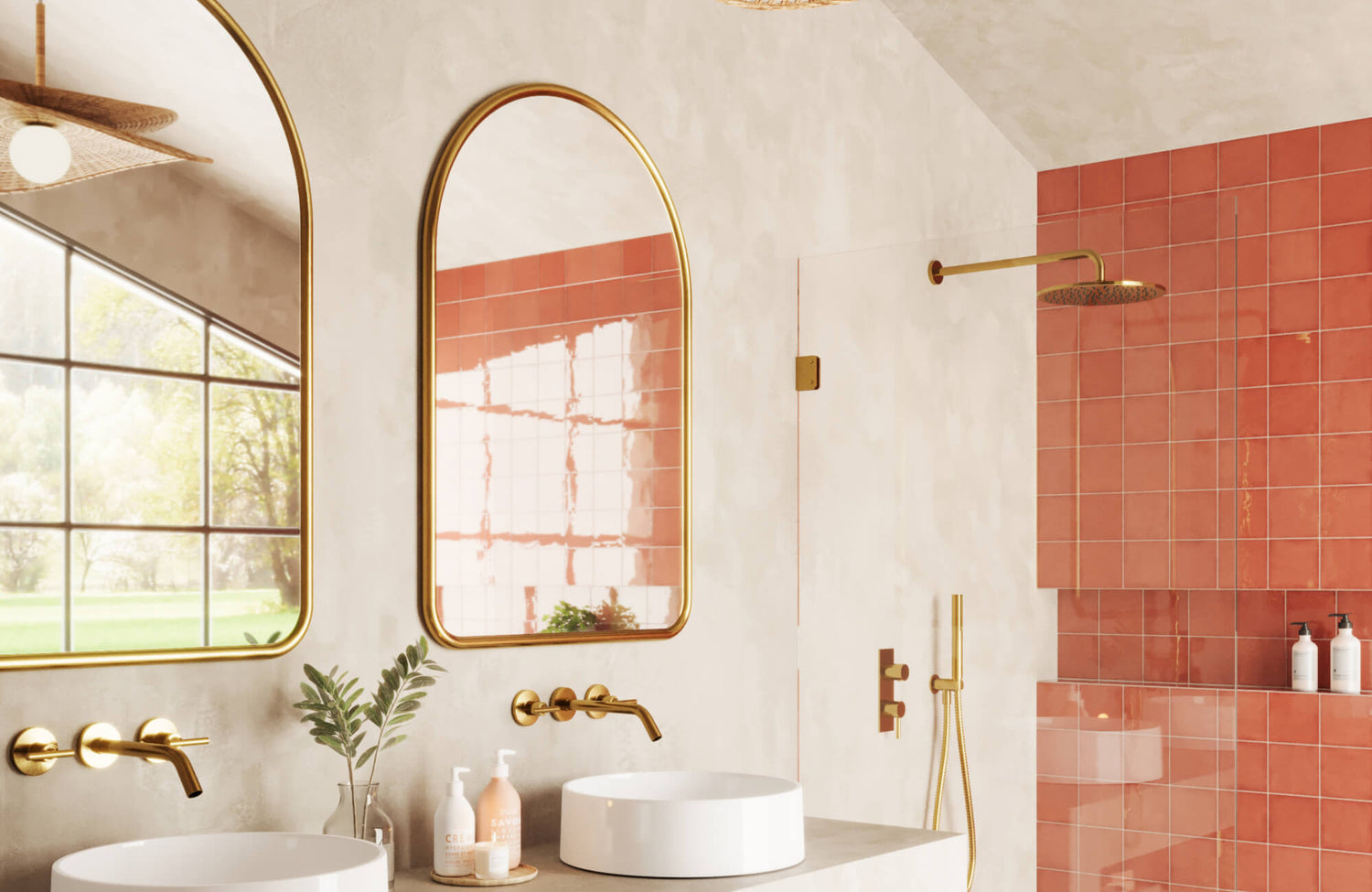
When positioned over a vanity, the mirror should also be tall enough to provide a complete view without cutting off parts of the head. At the same time, it should avoid extending too low, which can lead to water splashes or visual clutter. Establishing this alignment creates an ergonomic experience that feels both natural and visually pleasing. A perfect example is Edward Martin’s Esmeralda Wide Mirror in Polished Brass, as shown in the image, which demonstrates ideal vertical placement and proportion with its gently arched form and slender frame that aligns gracefully with eye level while adding warmth and elegance to the bathroom's ceramic tile backdrop.
Vanity and Fixture Alignment
A mirror should sit in visual harmony with the vanity and fixtures below it, aligning with both the sink and faucet for a centered, polished look. This balance not only enhances the room’s symmetry but also supports efficient use of space, especially when multiple users are present. When mounted 5 to 10 inches above the faucet, the mirror avoids water damage while remaining comfortably accessible.
In dual-vanity setups, separate mirrors for each sink maintain individual usability and preserve spatial order. With proper alignment, the lighting remains evenly distributed across the face, avoiding awkward shadows or uneven reflection. Mirrors also integrate effortlessly with the surrounding layout and reinforce a clean, cohesive aesthetic with thoughtful coordination.
Consideration for Integrated Features
When mirrors double as storage units or include elements like lighting or shelving, their placement must accommodate functionality as well as aesthetics. These added features often require additional clearance from faucets or countertops to ensure full usability without interference. Recessed medicine cabinets must be installed with precision to avoid clashing with plumbing or lighting elements, which can otherwise restrict motion or visual access.
Mounting hardware and wall cavities should also be prepared in advance to accommodate weight and wiring requirements. Any obstruction, whether physical or visual, undermines the mirror’s role as a functional and focal component. With proper spacing and foresight, integrated mirrors add sophistication without sacrificing usability.

Lighting Coordination and Reflective Performance
Proper lighting transforms the mirror from a passive surface into an active visual aid, especially in bathrooms with high grooming demands. Placement should complement both natural and artificial lighting to avoid glare and uneven illumination.
Front-Facing Lighting Integration
Lighting positioned to the sides of a mirror, such as vertical sconces, provides the most consistent and flattering illumination for the face. When mounted at roughly eye level and spaced about 36 to 40 inches apart, these fixtures eliminate shadows that overhead lights often create. This balanced lighting is particularly helpful for applying makeup, shaving, or other grooming tasks that require precision.
Top-mounted fixtures can still work well when they project downward and evenly spread light across the entire mirror surface. To add flexibility, dimmers can be installed to adjust light levels for different tasks and times of day. When lighting and mirrors are thoughtfully paired, the result is a space that looks great and works even better.
LED Mirror Compatibility
Modern LED mirrors combine sleek design with advanced lighting technology, but their installation must be carefully planned to ensure safety and performance. These mirrors typically offer adjustable brightness and color temperature settings, making them adaptable to various needs and preferences.
To support this functionality, mirrors must be placed near concealed wiring paths and installed in areas that remain dry and well-ventilated. Backlit LED mirrors should lie flush against the wall, which requires precise preparation of mounting surfaces and electrical outlets. Heat and moisture resistance are critical to preserving the longevity of the integrated electronics. When installed correctly, LED mirrors offer an all-in-one lighting and reflective solution that is both elegant and efficient.
Natural Light Synergy
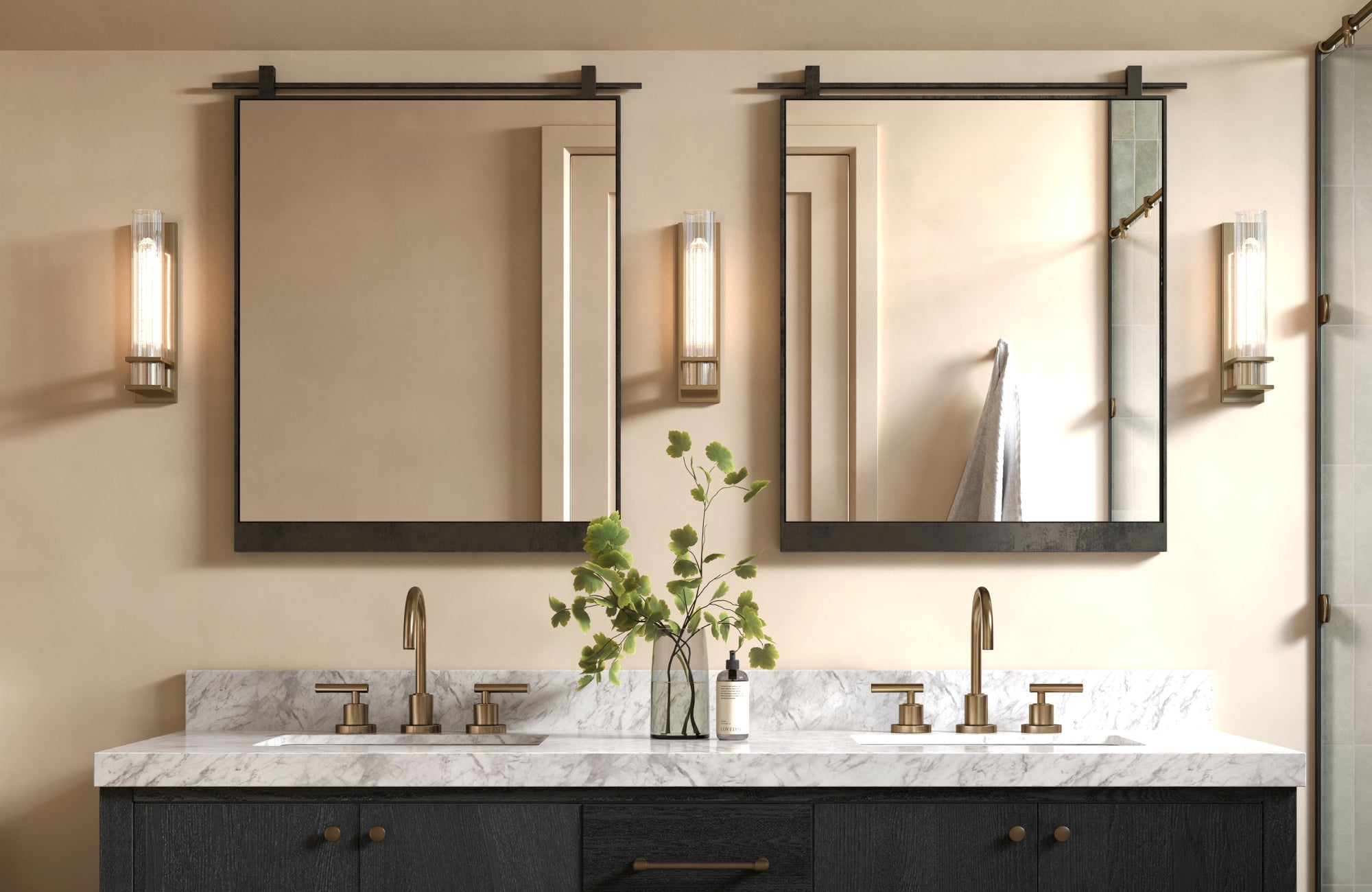
Natural light adds softness and warmth to any space, and when used effectively, it can enhance the functionality of a bathroom mirror. Placing the mirror adjacent to a window, rather than directly opposite, captures light from the side, avoiding harsh glare or silhouette effects. This orientation also allows the mirror to reflect the incoming light into other parts of the room, creating a brighter, more open feel. A fitting example is the Fitz Mirror in Antiqued Iron, as shown in the picture above, where its placement next to a window perfectly captures lateral natural light, enhancing the room’s clarity and ambiance without overwhelming the space.
In bathrooms with limited daylight, positioning the mirror to catch even minimal window light can still provide noticeable benefits. If window glare is a concern, using frosted or filtered glass can help diffuse the light while maintaining its brightness.

Infrastructure Awareness and Environmental Protection
Behind-the-wall systems and humidity exposure must be factored in to ensure safe and lasting mirror placement. Secure mounting and proper ventilation prevent damage to both the mirror and surrounding surfaces.
Avoiding Steam Pathways
Exposure to direct steam from showers or bathtubs can compromise a mirror’s reflective quality and structural integrity. Moisture can seep into the backing, leading to silvering—a process where the mirror loses its reflective coating and begins to deteriorate. Placing the mirror in a location with good airflow, ideally near an exhaust fan, helps dissipate moisture before it settles.
Even anti-fog treatments and heated pads, while helpful, cannot fully counteract poor placement in steam-heavy zones. Instead, mirrors should be installed away from moisture sources and positioned where temperature fluctuations are minimal. With these precautions in place, the mirror retains its clarity and finish for years.
Anchoring Over Plumbing Walls
Bathroom walls often conceal essential piping, which makes drilling or mounting a risky endeavor if not approached with care. Using a stud finder or wall scanner helps identify safe zones for anchors without compromising plumbing lines. For heavier mirrors or units with integrated lighting or storage, toggle bolts or moisture-resistant wall anchors offer the best support.
If the wall is tiled or surfaced with cement board, diamond-tipped drill bits should be used to preserve material integrity. Placing the mirror in a structurally sound location ensures it stays firmly mounted, even in a high-humidity environment. These technical details protect both the mirror and the infrastructure behind it.
Ventilation and Dehumidification Access
Mirrors benefit from placement that supports air circulation and minimizes moisture retention. When located within range of an exhaust fan or near an operable window, condensation clears more quickly, preserving the mirror's surface. Placement should also avoid blocking air vents or creating zones where moisture lingers, especially near corners or ceilings.
Automated ventilation systems with humidity sensors can further enhance air exchange and keep conditions stable. If a demister pad is used, it should be positioned in a way that does not overheat or compromise surrounding wall materials. Together, these factors support a clean, fog-free mirror that holds up to daily use.

Material Pairings and Ceramic Advantages
The wall finish behind the mirror contributes to the installation’s longevity and visual appeal. Ceramic tile offers exceptional durability, moisture resistance, and design versatility in bathroom environments.
Resistance to Moisture and Humidity
Ceramic’s non-porous surface resists moisture absorption, which protects both the wall and mirror from water damage. In humid environments like bathrooms, this quality is especially important in preventing mold growth and adhesive failure. Unlike painted drywall, ceramic remains unaffected by condensation, splashes, or temperature swings. Its smooth finish also allows for easy cleaning without abrasive wear, making maintenance more manageable. Over time, this durability reduces the need for costly repairs or frequent reinstallations. When used as a backdrop, ceramic offers both a functional barrier and a polished finish that enhances the mirror's presence.
Aesthetic Customization
With countless design options, ceramic tiles provide endless possibilities for framing or accenting a mirror. Whether using bold patterns, subtle textures, or reflective glazes, ceramics can enhance a bathroom’s style without overpowering it. Coordinating tile choices with cabinetry or fixtures creates a cohesive design narrative throughout the space. From contemporary to traditional, ceramic tile’s adaptability makes it a reliable material in any aesthetic direction.
Patterned arrangements or mosaic inlays also add visual interest around the mirror, turning it into a focal feature. A perfect example is our Clancy Small Mirror in Antique Brass, as displayed in the photo above. It is framed by the Jojo 2x6.3 Glossy Ceramic Tile in Ivory, whose softly reflective surface and off-white tone echo the richness of the mirror’s brass frame.
Together, they create a layered, luxurious pairing that feels both refined and balanced, demonstrating how ceramic tile and mirror can elevate one another when thoughtfully combined. This harmony of texture and tone also brings subtle elegance to the space while highlighting the adaptability of ceramic tile in decorative applications. The ability to mix practicality with creativity is what sets ceramic tile apart in mirror-related installations.
Structural and Thermal Stability
Ceramic offers exceptional resistance to the expansion and contraction that occurs with daily temperature changes in a bathroom. Unlike laminate or painted finishes, ceramic won’t crack, peel, or deform over time, even when exposed to heat from lighting or mirror defoggers. This stability ensures the mirror remains securely attached and undistorted in its frame.
For installations with integrated lighting or heating elements, ceramic acts as a protective substrate that disperses heat safely. Additionally, its rigid form supports heavier mirrors without the risk of wall deterioration. These traits make ceramic a technically sound and visually sophisticated solution for mirror placement.

Spatial Enhancement and Optical Strategy
A strategically placed mirror can reshape the perception of a room by amplifying light, depth, and architectural lines. Its reflective quality becomes a visual tool to open and brighten compact spaces.
Depth and Light Amplification
A large mirror can visually double a bathroom’s width or length by reflecting space and extending sight lines. When installed near a window or lighting source, it disperses brightness across the room, reducing dark corners and shadows. This creates a sense of openness that’s especially effective in narrow or enclosed layouts. Mirrors also soften visual transitions between surfaces, making the overall layout feel more continuous and inviting. The illusion of depth adds both practical and psychological comfort. In this way, mirror placement becomes a subtle but powerful architectural tool.
Perpendicular vs. Opposing Wall Placement
Mounting a mirror perpendicular to a window avoids harsh glare while still benefiting from soft, indirect lighting. This approach prevents users from facing direct sunlight, which can obscure their reflection and cause eye strain. Opposing wall placement, when used intentionally, can highlight decorative elements such as tile features or artwork. However, care must be taken not to reflect cluttered areas or doorways, which can disrupt visual harmony. Each wall position changes the way light and space are perceived, and should be selected based on the room’s layout and function. The key is to use reflection as a design amplifier rather than a distraction.
Frameless and Bevelled Design Benefits
Frameless mirrors offer a minimalist look that blends seamlessly into modern and transitional bathrooms, letting surrounding textures and materials shine. The absence of a frame allows the mirror to visually float, which adds lightness and simplicity to the design. For added refinement, beveled edges provide subtle detail and catch light in elegant ways, offering sophistication without bulk. These styles are especially effective in spaces aiming for a clean, spa-like atmosphere. Without visual borders, frameless mirrors can also appear larger and less confined, making them ideal for compact rooms. Thoughtfully selected, these design details elevate the mirror from a utility piece to a central design element.
Refining Function and Elegance Through Mirror Placement
The placement of a bathroom mirror reflects more than just the person standing before it—it reflects the care taken in balancing utility with design. When aligned thoughtfully with lighting, materials, and spatial flow, the mirror becomes an essential component of both daily function and visual harmony. Each decision, from height to orientation, contributes to a seamless and lasting experience. By treating placement as a deliberate design act, the mirror evolves from a background element into a subtle centerpiece. The result is a bathroom that feels intuitive, refined, and beautifully complete.
At Edward Martin, our design services are tailored to transform these details into timeless interiors that reflect your lifestyle and aesthetic vision. To explore how we can bring refined functionality to your space, contact us today and begin your design journey!