Finding the ideal height for a wall sconce can feel challenging when you’re trying to balance comfort, design, and functionality. Once you understand how sconce placement affects light quality and the overall atmosphere of a room, choosing the right height becomes much more straightforward. In this article, we’ll explore the key considerations from several angles to help you choose a height that feels comfortable, practical, and well-suited to your home.

Standard Sconce Heights in Interior Design
Understanding common sconce heights offers a reliable starting point before you factor in room layouts or fixture styles. These standard measurements aren’t strict rules, but they provide helpful guidance when determining what feels balanced and comfortable in most homes.
Typical Mounting Range
A general installation range works well for most sconces because it supports comfort and visual balance. Mounting the fixture at a center height of about 60 to 66 inches usually aligns with adult eye level, allowing the light to rest comfortably on the wall without creating glare. Keeping within this range also establishes a consistent visual rhythm, helping different areas of your home feel more connected.
Eye-Level Alignment
Glare is one of the first issues you may notice when a sconce sits too high or too low. Positioning the fixture so the bulb or light source falls just above or slightly below your natural line of sight helps prevent this and keeps the light comfortable to view. In a setup like the one shown in the photo above, where a pair of Edward Martin’s Russell Wall Sconce in Aged Brass is placed beside the mirror, the positioning helps create even illumination without directing brightness into your eyes. If you walk past the sconce and the light meets your eyes directly, it’s a sign the height needs adjusting. When the fixture aligns with a typical standing eye level, it creates a softer and more welcoming atmosphere.
Design Proportion Basics
The size of the sconce influences placement more than many people realize. Smaller fixtures can sit a bit higher without feeling out of place, while larger or taller designs often look more balanced at a slightly lower height. Thinking in terms of proportion helps the fixture feel integrated rather than overwhelming or disconnected. When you let scale guide your placement, each sconce supports the room’s design instead of competing with it.

How Purpose and Light Output Influence Sconce Height
After establishing the general height range, it’s important to consider the purpose of the sconce. The type of lighting you need—task, ambient, or accent—will guide how high the fixture should be placed for the best effect.
Task Lighting Placement
Task lighting depends on precise placement because the beam needs to fall exactly where you’ll use it. If you’re installing sconces for reading beside a bed or comfortable chair, a slightly lower height than a standard hallway sconce helps the light reach your book without creating shadows. Articulating designs give you extra control, but even fixed fixtures can also feel practical and comfortable when you adjust the center height thoughtfully.
Ambient Lighting Placement
Ambient lighting is about creating an even, comfortable glow rather than illuminating a specific area. When sconces serve this purpose, raising them slightly within the standard range helps the light spread more evenly across the wall and throughout the room. In a setup like the one shown in the photo above, where fixtures such as Edward Martin’s Jodie Wall Sconce in Antique Brass Iron frame the window, their placement allows the light to wash gently across the surrounding surfaces and blend seamlessly with other light sources. Upward-facing fixtures often work better when positioned lower so their glow can reach the ceiling. In contrast, downward-facing designs benefit from sitting slightly higher to prevent the beam from feeling too concentrated.
Accent Lighting Placement
Accent sconces focus on highlighting specific features rather than providing general illumination. When you have lighting artwork or a feature wall, the height should relate to the object itself rather than the typical eye level. Position the sconce at a height where the light falls naturally on the focal point, leaving enough space to prevent harsh brightness or shadows while still highlighting the feature you want to emphasize.

Room-Specific Height Considerations
Different rooms have different needs, so the ideal sconce height varies depending on how the space is used. Thinking about how people move and interact in each area helps you choose a height that feels both comfortable and visually balanced.
Hallways and Transitional Spaces
Hallways benefit from sconces placed at a height that lights the walking area without shining directly into your eyes. Since people often move close to the walls in narrow corridors, the fixtures should sit high enough to avoid accidental bumps. When installed at a consistent height, a row of sconces creates a steady visual rhythm that feels intentional and supports the flow of the space.
Bathrooms and Vanity Zones
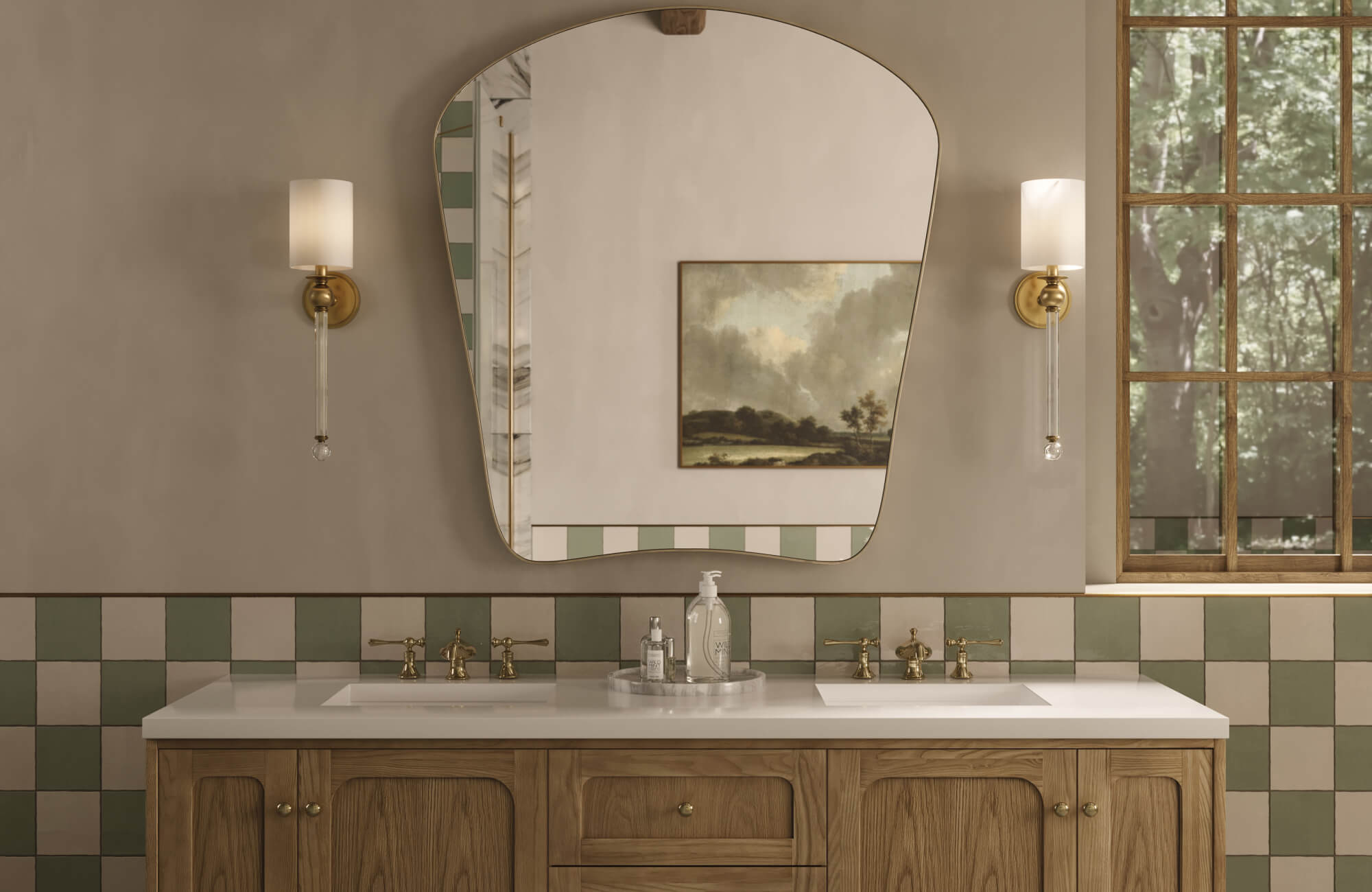
Bathroom sconces play a specific role because they provide light for grooming and everyday tasks. When placed beside a mirror, they should align with your face rather than follow a standard room height. A great example of this can be seen in the photo displayed above, where Edward Martin’s Larson Wall Sconce in Aged Brass is positioned on either side of the mirror to achieve balanced, face-level illumination. Mounting them around 60 to 65 inches from the floor, or roughly at eye level, helps reduce the shadows that overhead lighting can create and gives you a clearer, more natural reflection.
Bedrooms and Living Spaces
In bedrooms and living areas, sconces often relate more to seated activities than standing ones. When placed above a sofa, bed, or reading nook, lowering the height slightly keeps the light comfortable from a sitting position. These spaces also allow for more creative arrangements, such as framing a fireplace or highlighting a feature wall, so any height adjustments should support the design while still maintaining ease and comfort.

Architectural and Spatial Factors That Change Ideal Height
A room’s architecture can significantly influence where sconces feel most natural. Considering elements like ceiling height and wall proportions helps you choose a placement that suits the space rather than relying solely on general guidelines.
Ceiling Height Adjustments
Rooms with low ceilings can feel crowded if sconces are placed too high, while tall ceilings may make standard heights seem out of proportion. Adjusting the sconce height to suit the ceiling helps maintain visual balance. In a space with a ten-foot ceiling, for instance, raising the sconces slightly can help them from appearing too low on the wall.
Wall Size and Visual Weight
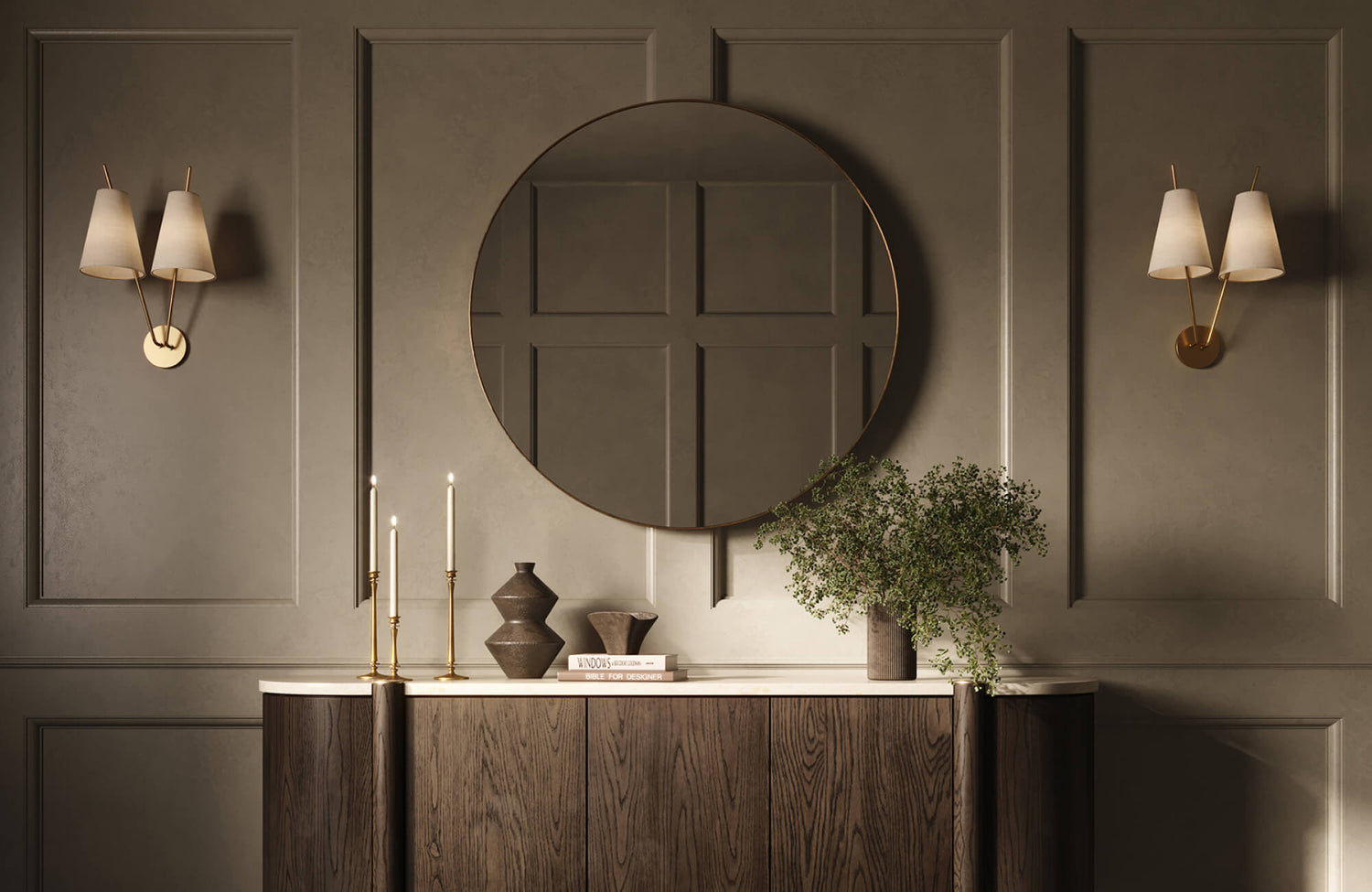
Large walls may require sconces placed slightly higher or lower, depending on the surrounding details. A wide, open wall often feels more balanced when the sconces sit a bit higher to break up the vertical space, while walls with paneling or trim benefit from aligning the fixture with a horizontal element. An example of this idea can be seen in the photo displayed above, where vertical fixtures like Edward Martin’s Esme 26" Wall Sconce in Aged Brass help anchor the height of the artwork and bring structure to the broad wall. These subtle adjustments also help the sconce feel naturally integrated into the architecture rather than simply being added to the wall.
Furniture and Sightline Integration
Nearby furniture strongly influences sconce height, especially in living rooms and bedrooms. If a sconce sits too high above a nightstand or too close to a tall headboard, the proportions feel off. By aligning the fixture with the height of surrounding furniture, you create a visual connection that improves the room’s balance. This also helps the light fall where it’s most useful, supporting the activities that take place in that area.

Fixture Design, Shade Direction, and Bulb Type
A sconce’s design can influence the height at which it works best, since each fixture interacts with the wall and surrounding space differently. Considering elements like shade direction and bulb type helps you place the light where it performs comfortably and effectively.
Shade, Shape and Light Spread
Shades also play a key role in shaping both the direction and quality of the light. Globe shades can spread illumination evenly, giving you more flexibility with height, while cone or tapered designs can create focused beams that may require slight adjustments to avoid overly concentrated brightness. In the photo displayed above, the globe-style design of Edward Martin’s Garner Wall Sconce in Soft Black demonstrates how a rounded shade diffuses light gently across the wall, offering generous coverage without harshness. Understanding how your shade directs light makes it easier to fine-tune placement for a comfortable, balanced effect.
Upward vs. Downward Facing Fixtures
Upward-facing sconces direct light toward the ceiling, which softens the room and helps it feel more open. Because of this upward spread, they often work best at a slightly lower height, where the glow has room to expand. In contrast, downward-facing sconces highlight the wall below and provide a more focused, intimate effect. Placing them a bit higher further helps prevent glare and keeps the light from shining directly into your eyes when you’re standing.
Bulb Brightness and Color Temperature
Bulb brightness influences how the light feels in a space. Brighter LEDs may benefit from a slightly higher mounting height to avoid discomfort, while gentler bulbs give you more flexibility in placement. Color temperature matters too, because cooler light can feel more direct if the fixture sits too close to eye level. By matching the bulb type with an appropriate height, you create lighting that feels comfortable and visually clear.

Safety, Installation Constraints, and Code-Related Factors
Practical limitations also play a role in where sconces can be installed. Factors such as existing wiring, clearance needs, and accessibility guidelines help you make decisions that support both safety and long-term performance. Keeping these considerations in mind can prevent complications during installation and ensure the fixture functions as intended.
Electrical Rough-In Requirements
In many homes, the electrical box is already in place, and its height may be difficult to change without additional work. In these situations, it’s often easier to choose a sconce that suits the existing placement rather than modifying the wall. Taking the current wiring into account helps you maintain a balanced look while avoiding unnecessary renovation.
Clearance and Accessibility Needs
In tight areas, such as narrow hallways or compact rooms, sconces should be placed with enough clearance to avoid obstructing movement. Accessibility guidelines can also guide height decisions by ensuring the fixture remains easy and safe to use. Considering these factors further helps create a comfortable, functional environment for everyone.
Heat, Moisture, and Durability Concerns
Bathrooms, kitchens, and outdoor areas expose fixtures to moisture and temperature changes, which can affect their performance. In these spaces, adjusting the sconce height based on how well the fixture handles heat or humidity helps protect it from premature wear. Thoughtful placement ensures the light remains reliable and functions as intended over time.
Choosing Sconce Height That Works for Your Space
Finding the right sconce height becomes easier when you combine general guidelines with an understanding of how your room functions. Every space has its own needs, and each fixture interacts differently with its surroundings. As you explore your options, try marking potential heights with painter’s tape and checking how the light looks throughout the day. This simple step helps you see how the fixture interacts with the room and ensures the final height feels natural. If you’re still uncertain, speaking with a professional electrician or designer can offer clarity and confidence.
For personalized guidance, feel free to contact us or take advantage of our design services—we’re here to help you bring your vision to life.