A brown rug represents the perfect balance between visual harmony and functional design. Its earthy tones evoke a sense of warmth and stability, allowing it to integrate effortlessly into diverse interior aesthetics, from modern minimalism to rustic charm. Designers regard brown rugs as foundational elements that establish spatial flow, enhance texture, and provide timeless appeal. The neutrality of brown also allows it to complement evolving color palettes and material compositions, ensuring that it never feels outdated.
This article explores the nuanced design principles, technical considerations, and aesthetic advantages that make a brown rug one of the most adaptable and enduring choices in interior design.

Color Psychology and Visual Harmony
Brown rugs infuse interiors with the grounding qualities of the natural world, creating a sense of stability and warmth. Their earthy hues harmonize with contrasting tones and materials, ensuring visual unity while enhancing spatial comfort and emotional balance.
Warmth and Emotional Balance
Rooted in organic color psychology, brown evokes the reassuring tones of wood, soil, and stone—elements that convey familiarity and permanence. When placed within a living space, a brown rug subtly wraps the room in warmth, softening sharper contrasts and creating a calming rhythm that invites relaxation. Its gentle undertones enhance emotional comfort, especially in spaces dominated by cooler or metallic finishes.
Edward Martin’s Quinton Wool Blend Rug in Ash exemplifies this effect beautifully. As displayed in the photo above, its soft, woven texture and muted taupe-brown harmonize with bold patterns and natural materials, featuring a deep blue floral sofa and organic wooden accents. The rug’s tactile richness also absorbs light gracefully, grounding the composition and maintaining equilibrium amid vibrant contrasts. Through this union of texture and tone, this Quinton rug transforms visual warmth into emotional balance, enriching the atmosphere with timeless comfort and understated sophistication.
Neutral Bridge Between Design Elements
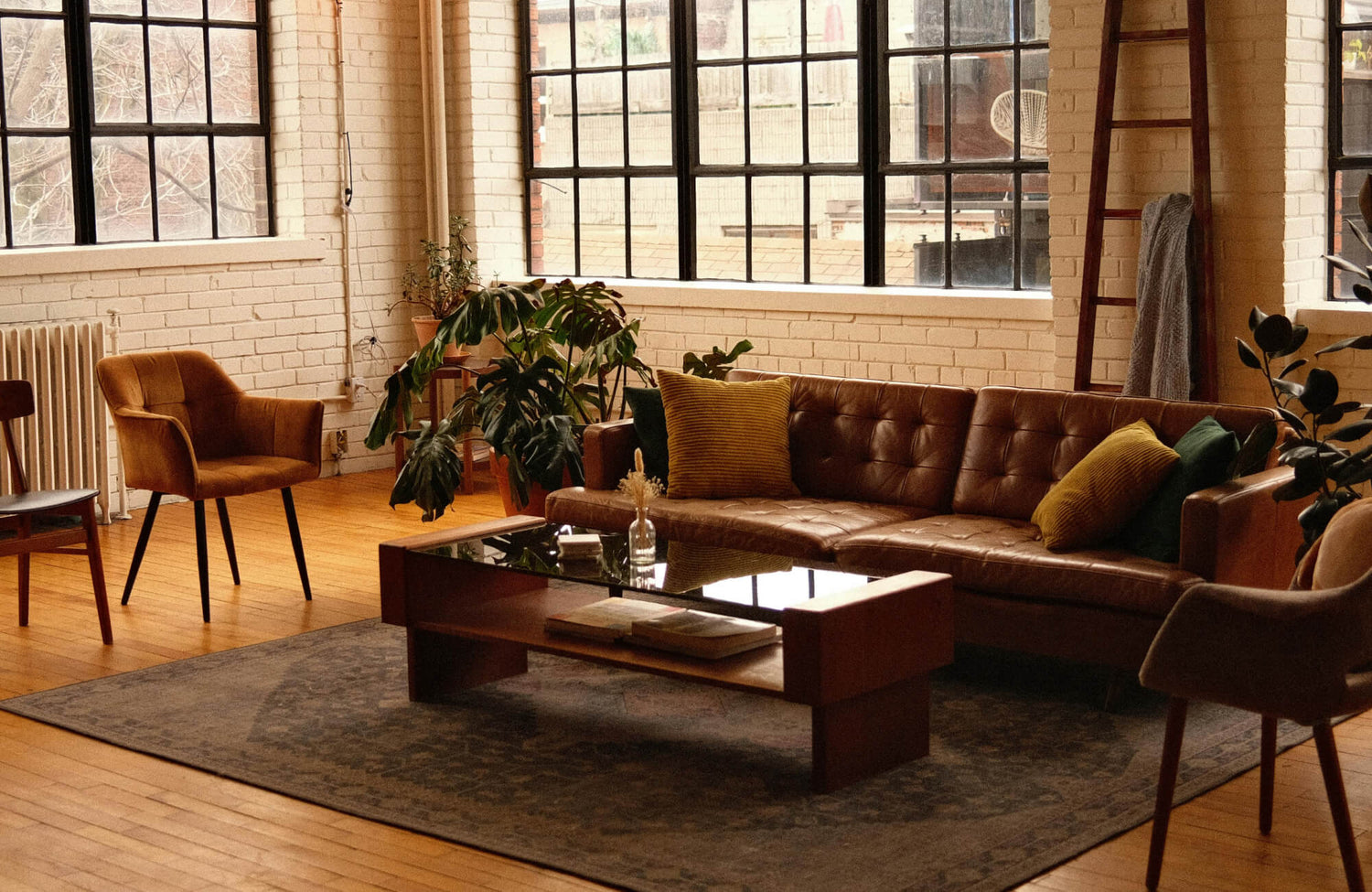
A brown rug’s true strength lies in its ability to unify diverse materials and finishes through tonal harmony. Acting as a neutral bridge, it balances cold surfaces like glass or steel with the organic warmth of wood or linen. This cohesion also reduces visual fragmentation, allowing each design element to retain its individuality without disrupting the overall flow. Designers often leverage brown’s mid-spectrum neutrality to transition smoothly between flooring textures or architectural zones. In addition, its understated hue neither dominates nor recedes, ensuring consistent proportional balance. As a result, a brown rug reinforces design continuity, blending seamlessly into both structured and fluid layouts with natural elegance.

Material Composition and Functional Performance
The versatility of a brown rug is also a function of its material composition and fiber technology. Each fiber type, whether natural or synthetic, affects its durability, texture, and maintenance, offering unique performance benefits for different environments.
Natural Fibers
Natural fibers such as wool, jute, and sisal define the authentic character of brown rugs through their tactile depth and resilience. Wool, with its naturally crimped structure, provides elasticity and pile recovery, enabling the rug to retain shape under daily use. Its lanolin coating also offers inherent resistance to moisture and dirt, supporting both longevity and ease of care. Jute, by contrast, delivers a raw, coastal charm with visible fiber texture that complements organic-modern and Scandinavian interiors. Meanwhile, sisal enhances structural precision through its firmness, lending architectural clarity to minimalist spaces. Together, these fibers create a refined textural narrative—rich, durable, and sustainably sourced—that reflects the intersection of comfort, craftsmanship, and performance.
Synthetic Alternatives
Advancements in synthetic fiber technology have redefined the practicality of brown rugs, merging resilience with refined aesthetics. Polypropylene and nylon, for instance, are engineered for stain resistance, abrasion control, and long-term color retention. Their fibers are also heat-set to maintain pile integrity while preventing static buildup. Polypropylene, in particular, resists fading under sunlight, ensuring that deep chocolate or espresso tones remain vivid over time.
As shown in the photo above, the Broderick Polypropylene Pile Rug in Coffee / Bronze perfectly embodies these qualities. Its rich brown base, interwoven with bronze undertones, creates a subtle sheen that enhances depth and sophistication while offering exceptional durability. Ideal for busy areas, its textured pile also maintains form and color even under continuous use, balancing functionality with modern elegance. Through such material innovations, synthetic brown rugs deliver a contemporary harmony of endurance, easy maintenance, and enduring visual allure.

Textural Depth and Layering Versatility
Texture determines how a brown rug interacts with light, shadow, and space, influencing both visual rhythm and tactile comfort. Its textural versatility allows designers to experiment with layering, dimension, and spatial zoning to create cohesive yet dynamic interiors.
Pile Variation and Tactile Impact
The construction of a rug—its pile height, density, and weave—directly affects the sensory experience of a room. A high-pile brown rug, for instance, evokes luxury and comfort, diffusing light softly to create a cocooning atmosphere ideal for lounges or bedrooms. Conversely, a flatweave or loop-pile rug introduces sleek definition and architectural precision, enhancing contemporary or transitional layouts. The interplay between matte and slightly lustrous textures also builds visual intrigue without overwhelming the composition. As the eye moves across the surface, the nuanced variations in tone and texture enrich the perception of depth. This balance between softness and structure transforms the rug from a surface covering into an integral spatial design element.
Layering Techniques and Spatial Definition
Layering rugs of varying textures and tones is a sophisticated design strategy that enhances dimension and hierarchy within open spaces. A patterned brown rug over a natural jute base, for instance, creates visual contrast while maintaining tonal unity. This layering technique also defines specific zones, such as seating or dining areas, without the need for physical partitions. Moreover, the combination of textures and patterns generates rhythm and continuity, allowing the eye to move fluidly throughout the space. The brown base tone ensures that the composition feels grounded rather than fragmented. Over time, this interplay of tactile and visual depth strengthens the spatial identity, giving the interior a curated yet cohesive aesthetic.

Adaptability Across Interior Design Styles
A brown rug’s tonal spectrum and organic character make it remarkably adaptable to virtually any design style. Whether anchoring a sleek modern space or enhancing a vintage-inspired interior, it provides the visual continuity that unites contrasting themes with natural ease.
Modern and Minimalist Interiors
Within contemporary and minimalist spaces, brown rugs temper the austerity of hard surfaces with organic warmth. Their understated tones complement polished concrete, glass, and metal finishes while preventing the environment from feeling sterile. For example, a deep espresso or cocoa-brown rug can define furniture arrangements and ground the composition without drawing attention away from architectural forms. Low-pile or woven textures also emphasize structure and precision, reinforcing the geometry central to modern design.
Our Leticia Wool Blend Rug in Ash captures this balance perfectly. Its chunky wool texture and soft ash-brown hue infuse tactile warmth into clean, minimalist settings, as seen in the photo above, with a simple wooden sofa, neutral upholstery, and a matte black wood-burning stove. The rug’s sculpted loops also subtly diffuse light and soften the surrounding angular lines, grounding the space in comfort while maintaining clarity. Through this textural harmony, it transforms minimalist design from austere to inviting, achieving a balance between restraint and warmth.
Bohemian, Rustic, and Transitional Aesthetics
In contrast, brown rugs in rustic, Bohemian, or transitional settings emphasize craftsmanship and organic authenticity. Handwoven patterns, distressed finishes, or tribal motifs enrich the narrative with artisanal depth. Moreover, lighter shades of walnut and sand-brown harmonize beautifully with natural materials such as wood, rattan, and leather. Their irregular textures and color variations also enhance the tactile story of the space, evoking an atmosphere of timeless ease. In transitional designs, brown serves as a neutral mediator, balancing classic forms with contemporary restraint. This chameleon-like adaptability ensures that the brown rug not only endures but evolves with changing interior trends.
Coastal, Scandinavian, and Organic Modern Spaces
Brown rugs bring grounded elegance to light-filled interiors defined by natural simplicity and textural contrast. In coastal or Scandinavian designs, sandy taupe and driftwood browns harmonize beautifully with pale woods, linen textiles, and whitewashed finishes, reinforcing the airy yet cozy ambiance. Their subtle tonal warmth also prevents these minimalist palettes from feeling cold or sterile, while woven or hand-loomed textures enhance tactile richness. In organic modern spaces, brown rugs complement stone, rattan, and neutral ceramics, amplifying the connection between interior and nature. In addition, the gentle gradation of brown tones introduces depth without visual heaviness, maintaining spatial clarity and calm. Together, these qualities make the brown rug an essential grounding element for interiors that celebrate light, texture, and natural balance.

Spatial Dynamics, Light Interaction, and Balance
A brown rug subtly shapes spatial perception by influencing light absorption and reflection. Its tonal range, from deep mocha to pale taupe, enables designers to control spatial proportions and visual movement through a nuanced color strategy.
Light Absorption and Visual Grounding
Darker brown rugs absorb light, establishing a sense of intimacy that grounds open spaces. Their rich pigmentation enhances depth and contrast, reducing visual flatness in rooms with expansive layouts. In smaller spaces, lighter brown tones reflect diffused light, maintaining openness while preserving tactile warmth. This adaptability also allows the designer to manipulate spatial mood through controlled luminance. The rug’s finish—matte or low-sheen—further refines light distribution, ensuring visual comfort throughout the day. Through this interplay, brown rugs maintain equilibrium between brightness, shadow, and depth, resulting in interiors that feel balanced and naturally composed.
Proportional Definition and Flow
Beyond light modulation, brown rugs define spatial zones without interrupting flow. Their neutral tones mark transitions between living, dining, or circulation areas, fostering cohesion in open-plan environments. The subtle contrast between rug and flooring also creates boundaries that feel integrated rather than imposed. When paired with complementary textiles, such as linen drapery or woven upholstery, the rug reinforces continuity through repetition of texture and tone. Its unobtrusive warmth ensures that spatial delineation appears effortless, guiding movement organically. This spatial intelligence transforms the rug into a silent architectural element that enhances both function and aesthetic coherence.

Sustainability, Craftsmanship, and Long-Term Value
A brown rug’s appeal extends beyond aesthetics as it embodies sustainable craftsmanship and enduring design. Its organic coloration and material diversity align with environmentally responsible design philosophies focused on longevity and lifecycle efficiency.
Eco-Conscious Materials and Ethical Production
Rugs crafted from undyed wool, jute, or bamboo fiber exemplify eco-friendly production by minimizing chemical intervention. Their natural brown hues eliminate synthetic dyes, preserving both environmental integrity and fiber strength. Handwoven techniques further reduce energy consumption while supporting local artisanal economies. Each irregular fiber variation also adds authenticity, turning imperfections into hallmarks of craftsmanship.
As featured in the picture above, our Sweeney Wool Pile Rug in Graphite embodies these sustainable ideals. Its dense wool pile and deep graphite-brown tone highlight the natural luster and resilience of pure wool, produced with minimal processing to maintain its organic quality. The rug’s tactile richness and subtle tonal depth also bring an earthy sophistication to eco-conscious interiors, balancing refined design with environmental mindfulness. Beyond aesthetics, its durable, ethically sourced composition stands as a testament to responsible craftsmanship and long-term value.
Timeless Appeal and Lifecycle Efficiency
The neutral palette of brown ensures enduring relevance, adapting effortlessly as interior trends evolve. Unlike trend-specific colors that fade from fashion, brown maintains harmony across decades of style shifts. Its chromatic depth also conceals wear gracefully, while natural patina adds character over time. This inherent resilience reduces replacement cycles, supporting sustainable consumption practices. As design narratives move toward longevity and minimal waste, the brown rug’s durability aligns perfectly with future-focused interiors. Its ability to mature gracefully makes it not merely a decorative element but a lasting investment in both style and sustainability.
The Enduring Role of Brown Rugs in Interior Design
A brown rug encapsulates the essence of enduring design—uniting visual balance, material intelligence, and emotional warmth. Its versatility lies not in neutrality alone but in its ability to bridge contrasting elements with effortless cohesion. Whether grounding a minimalist studio or enriching a heritage-inspired home, it maintains equilibrium between texture, tone, and atmosphere. Its sustainable nature, coupled with timeless visual depth, also ensures it remains an integral design foundation for generations. More than a surface layer, a brown rug is the silent orchestrator of harmony, connecting spaces, materials, and moods with natural sophistication.
At Edward Martin, our expert design services help you translate this harmony into personalized interiors that reflect your aesthetic vision. From tailored rug selections to comprehensive styling guidance, our team ensures every space achieves balance and sophistication. To experience how a brown rug can transform your home with enduring elegance, contact us and discover the art of refined design made effortless!