A well-chosen rug is more than a floor covering—it is a foundation of design that brings balance, warmth, and sophistication into every room. The size of a rug determines how furniture interacts within the space, whether it frames a living room, anchors a dining area, or adds comfort to a bedroom retreat. Selecting the wrong scale can disrupt harmony, while the right dimensions elevate the architecture and create a seamless sense of proportion.
This rug size guide reveals how standard measurements, thoughtful placement, and tailored layouts can transform interiors with both elegance and practicality. With careful attention to detail, you can discover the perfect rug size for every room and achieve a timeless, curated look.

Standard Rug Dimensions and Proportions
A solid understanding of rug dimensions is essential for creating well-balanced interiors. By selecting sizes that respect both architecture and furniture scale, rugs can unify spaces instead of making them feel awkward or incomplete.
Common Rug Sizes
Industry-standard rug sizes such as 5x8, 8x10, and 9x12 feet act as reliable starting points for residential spaces of varying scales. To start, a 5x8 rug often fits comfortably in smaller settings, such as studio apartments or cozy seating areas, where its modest footprint still provides definition. The 8x10 rug, on the other hand, adapts seamlessly to mid-sized living rooms, under six-seat dining tables, or beneath a queen bed, offering both coverage and proportion. Larger 9x12 rugs are best reserved for spacious living rooms or king-sized beds, where they anchor expansive layouts with cohesion. Choosing among these dimensions allows you to balance scale with functionality.
Proportional Spacing
Leaving 12 to 18 inches of visible flooring around a rug introduces a border that frames the space with subtle sophistication. This spacing keeps the rug from overwhelming the room while still connecting with the architecture. At the same time, it highlights flooring details such as wood planks or decorative tiles, which deserve to remain visible. In long or narrow rooms, proportionally adjusting the margin also ensures the rug maintains visual harmony without disrupting flow. Oversized rugs that crowd walls can feel heavy, while undersized rugs leave the arrangement looking unfinished. By maintaining proportional spacing, rugs achieve balance, elegance, and integration with their surroundings.
Avoiding the Floating Rug Effect
One of the most common mistakes in rug placement is selecting a piece that feels too small for the furniture grouping. When a rug floats in the middle of the floor without connecting to key seating, it creates a fragmented and disconnected look. To avoid this, at least the front legs of sofas, chairs, or tables should make contact with the rug’s surface. This simple adjustment unifies the furniture arrangement, eliminating gaps and reinforcing cohesion. Even in compact rooms, extending the rug slightly beneath furnishings also creates continuity and flow.
As displayed in the picture above, Edward Martin’s Lafferty Wool Blend Rug in Ocean beautifully demonstrates this principle. Its size and placement allow both the sofa and accent chair to anchor naturally within the seating zone, avoiding the floating effect while adding a layer of artisanal texture and coastal-inspired color. By addressing this issue directly, the design feels intentional, connected, and free from the floating rug effect.

Living Room Rug Placement Strategies
The living room often sets the tone for the entire home, and rug placement determines whether the space feels grounded, open, or disconnected. When selected with care, rugs not only enhance comfort but also define zones and unify furniture.
All Legs on the Rug
Placing all furniture legs on the rug is the most immersive and cohesive method, particularly in expansive living rooms. For instance, a 9x12 rug or larger can comfortably accommodate sofas, accent chairs, and tables in one unified zone. This approach removes visual gaps, making the entire seating arrangement feel like a single, intentional composition. The uninterrupted surface also enlarges the perception of space, lending sophistication to the room. In open-concept homes, this technique works especially well, clearly delineating the living area from adjoining zones. It remains one of the most reliable strategies in any living room rug size guide.
Front Legs on the Rug
For mid-sized living rooms, placing only the front legs of sofas and chairs on the rug creates balance without overwhelming the floor plan. An 8x10 rug is typically the right fit here, offering continuity while keeping circulation pathways free. This arrangement also connects the furniture visually, yet still allows the flooring to remain part of the composition. The technique is especially effective in long rectangular layouts, where full coverage might feel excessive. By bridging furniture with partial contact, the rug ties the arrangement together in a refined way. This method provides versatility, making it a practical choice for many households.
Centerpiece Rug
In compact living rooms, a smaller rug positioned beneath the coffee table can still create a sense of balance when scaled correctly. A 5x8 rug works well for this purpose, provided it extends slightly beneath surrounding seating to avoid appearing too decorative. This approach also draws the eye to the center of the arrangement, creating intimacy and focus without monopolizing floor space. When paired with minimalist or modern décor, the centerpiece rug becomes a stylish focal element.
A perfect example, as shown in the photo above, is the Micah Wool Blend Rug in Cream / Dove, which combines a soft neutral palette with subtle textural patterns to ground the coffee table while complementing light, airy interiors. It illustrates how the right rug can anchor the room gracefully without overwhelming the design. This method is particularly effective in small apartments, lofts, or secondary seating areas where scale must remain modest. With thoughtful proportions, this technique maintains comfort and cohesion.
Shape and Geometry
The shape of a rug influences how a living room feels, both visually and spatially. Rectangular rugs reinforce linear sofa arrangements and emphasize architectural lines, while round rugs soften edges and create intimacy in symmetrical layouts. In eclectic interiors, layering shapes, such as a round rug over a rectangular base, can also introduce texture and dimension. The choice of geometry should either echo existing forms or intentionally contrast them to achieve harmony. In open spaces, these subtle decisions bring depth and visual rhythm. Considering shape as carefully as size ensures that a rug functions as both a design feature and a practical foundation.

Dining Room Rug Sizing for Functionality and Aesthetics
Dining rooms require rugs that balance beauty with everyday functionality. By providing enough clearance and proper geometry, rugs ensure comfort while highlighting the dining table as the room’s centerpiece.
Matching Table Shapes
Aligning rug shape with the dining table creates harmony and proportional rhythm. Rectangular tables, for instance, are best paired with rectangular rugs, while round tables achieve visual continuity with round rugs that mirror their curves. Oval tables, on the other hand, benefit from elongated rugs that echo their form without overwhelming the layout. Choosing complementary shapes also prevents mismatches that disrupt balance and symmetry. When rug and table geometry align, the dining area feels cohesive, intentional, and polished. This subtle relationship underscores the importance of proportion in design.
Chair Clearance
For optimal comfort, rugs should extend 24 to 30 inches beyond the dining table on all sides. This extra coverage allows chairs to slide back naturally without catching on the rug’s edge. Without sufficient clearance, seating feels cramped and movement becomes awkward, diminishing the experience of the space. An 8x10 rug typically works for a six-chair table, while a 9x12 rug accommodates larger eight-chair settings. Following this guideline ensures symmetry and usability while reinforcing balance.
Material and Pile Height
Because dining rooms experience frequent chair movement and the occasional spill, material and pile height become vital considerations. Flatweave and low-pile rugs provide ease of cleaning while allowing chairs to glide smoothly. Wool is also a strong option for durability and natural stain resistance, while polypropylene offers affordability and moisture resilience. High-pile rugs, though visually appealing, can hinder functionality in this setting. Choosing the right material and texture ensures the rug enhances the space both practically and aesthetically. With this balance, dining rugs maintain elegance while standing up to daily use.

Bedroom Rug Layouts for Comfort and Balance
In the bedroom, rugs add a layer of comfort and luxury while visually grounding the bed. By selecting the right size and placement, the room feels restful, inviting, and proportionally balanced.
Rug Size by Bed Type
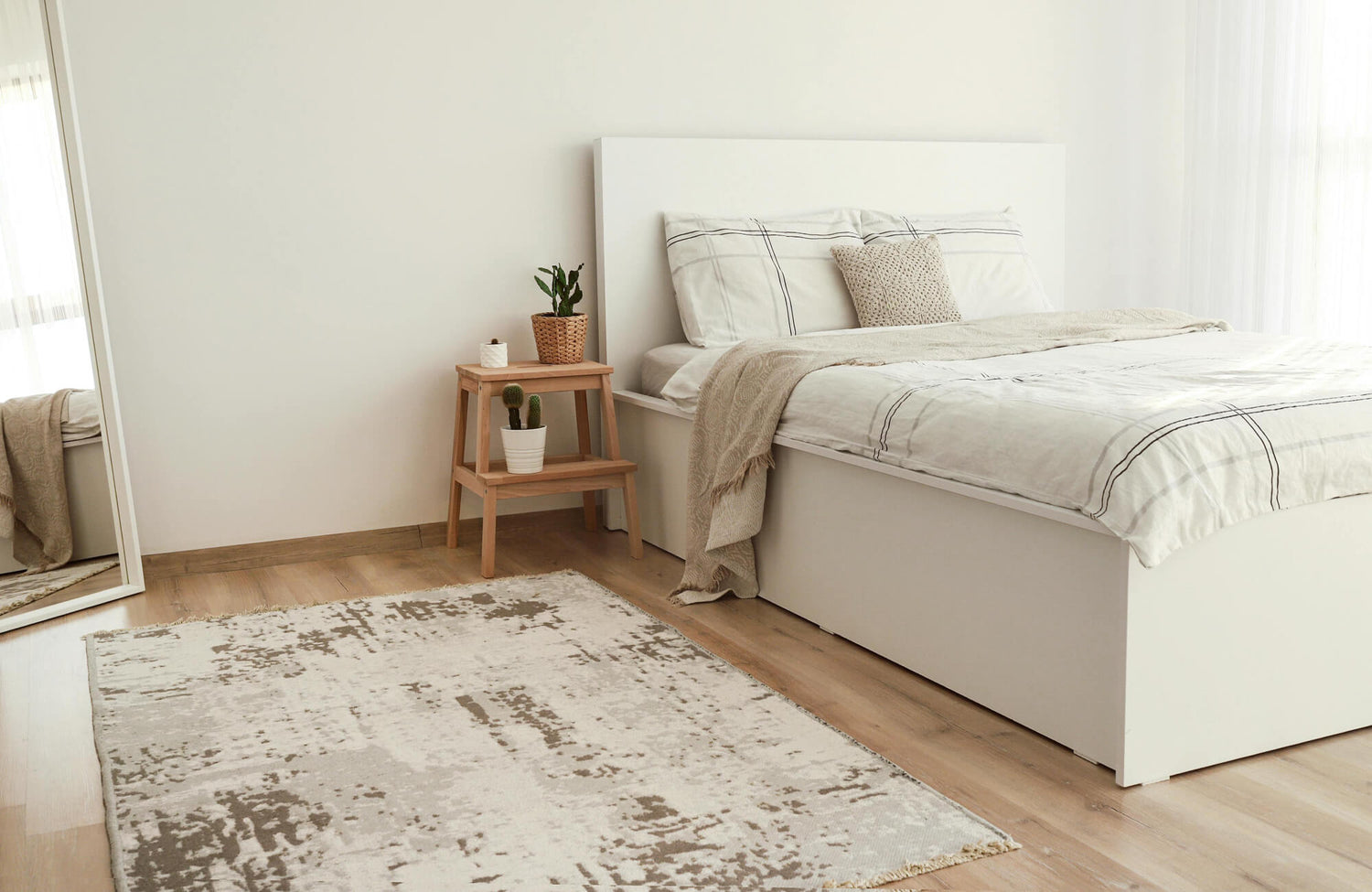
The scale of the bed largely determines the appropriate rug size for balance. A queen bed usually pairs with an 8x10 rug, offering enough walkway space on either side. For king beds, a 9x12 rug delivers generous coverage that enhances both symmetry and comfort. Full beds can also be paired with 6x9 rugs, grounding the arrangement without overpowering the layout. Matching rug dimensions to the bed scale ensures the space feels cohesive and intentional.
A beautiful example of this principle is the Rollins Polyester Pile Rug in Cream / Rust, as featured in the photo above. Its generous size not only frames the bed with balanced proportions but also adds warmth and subtle patterning that elevate the bedroom into a restful, curated retreat. This alignment between rug scale and bed type is a cornerstone of every bedroom rug size guide.
Placement Methods
There are multiple effective approaches to rug placement in bedrooms, each with its own design impact. A full-coverage placement, in particular, extends the rug beneath both the bed and nightstands, creating a symmetrical and luxurious foundation. Similarly, a two-thirds placement, starting just below the nightstands, highlights the bed as the focal point while leaving floor visibility near the headboard. For smaller rooms, bedside runners are also an excellent option, offering softness underfoot without requiring a large rug. Each placement method caters to different spatial needs and design priorities. With thoughtful planning, these variations maintain balance while enhancing comfort.
Pile and Texture Considerations
Texture and pile height play a vital role in shaping the atmosphere of a bedroom. High-pile rugs add plushness and luxury, making them ideal for creating cozy retreats. Low-pile rugs, by contrast, are easier to maintain and better suited for allergy-conscious households. Wool rugs also deliver warmth and softness, while silk blends introduce elegance and a subtle sheen. In addition, synthetic fibers are valued for their affordability and resilience in everyday living. By aligning texture with lifestyle, the rug becomes both a functional and aesthetic asset to the bedroom.

Hallways, Entryways, and Open Concept Layouts
In transitional or multi-purpose areas, rugs help guide circulation and define boundaries. Correct sizing and thoughtful placement prevent clutter while ensuring smooth architectural flow.
Hallways and Runners
Runners are the most effective way to add softness and direction to hallways. Standard widths range from 2 to 3 feet, while lengths often extend between 6 and 14 feet, depending on the space. Leaving 4 to 6 inches of exposed flooring along the edges frames the rug neatly and preserves proportion. Without this margin, runners may appear cramped against walls or undersized within the corridor. The right size not only enhances circulation but also adds rhythm to an otherwise overlooked area.
A refined example, as displayed in the picture above, is our Charlise Polypropylene & Polyester Pile Rug in Bone / Denim, which showcases how a runner can bring pattern, warmth, and balance to transitional zones. Its elongated form guides movement naturally while its soft tones complement surrounding architectural elements. Properly scaled runners like Charlise bring both comfort and elegance to hallways.
Entryways
The entryway rug serves as a first impression, combining durability with style. Since this area is exposed to heavy use, materials like wool blends or polypropylene provide resilience against dirt and moisture. Low-pile designs are preferred because they reduce tripping hazards and allow doors to open freely. The rug’s size should also balance coverage with open circulation, avoiding both overcrowding and underrepresentation. When chosen thoughtfully, an entryway rug elevates the space while standing up to daily demands. This balance of durability and proportion makes it a vital design element.
Open Concept Zoning
In open layouts, rugs are indispensable tools for defining distinct functional areas. Large rugs anchor living zones, while complementary medium rugs delineate dining or office spaces. Maintaining consistency in scale across these rugs also prevents a disjointed or mismatched appearance. At the same time, varying textures or shapes can introduce subtle distinctions that clarify each zone’s purpose. Coordinating color palettes ensures that all areas remain visually cohesive within the broader design. With these strategies, rugs transform open spaces into organized, intentional, and harmonious environments.
Creating Harmony Through the Right Rug Size
The size of a rug shapes how a room feels, guiding the eye, grounding furniture, and enhancing the natural rhythm of the space. When chosen thoughtfully, the right dimensions create harmony between architecture and décor, allowing each element to complement the other effortlessly. This rug size guide also demonstrates how proportion, placement, and material work together to transform everyday rooms into inviting, balanced interiors. By embracing these principles, every rug becomes not just a functional piece but a cornerstone of timeless design.
For those seeking tailored guidance, Edward Martin’s design services offer expert advice to ensure every rug selection enhances your home with timeless style and practical function. Whether you’re reimagining a single room or curating an entire home, our team can help you achieve the perfect balance of proportion and design detail. To begin your journey toward a beautifully cohesive space, feel free to contact us and discover how the right rug can become a cornerstone of your interior design!