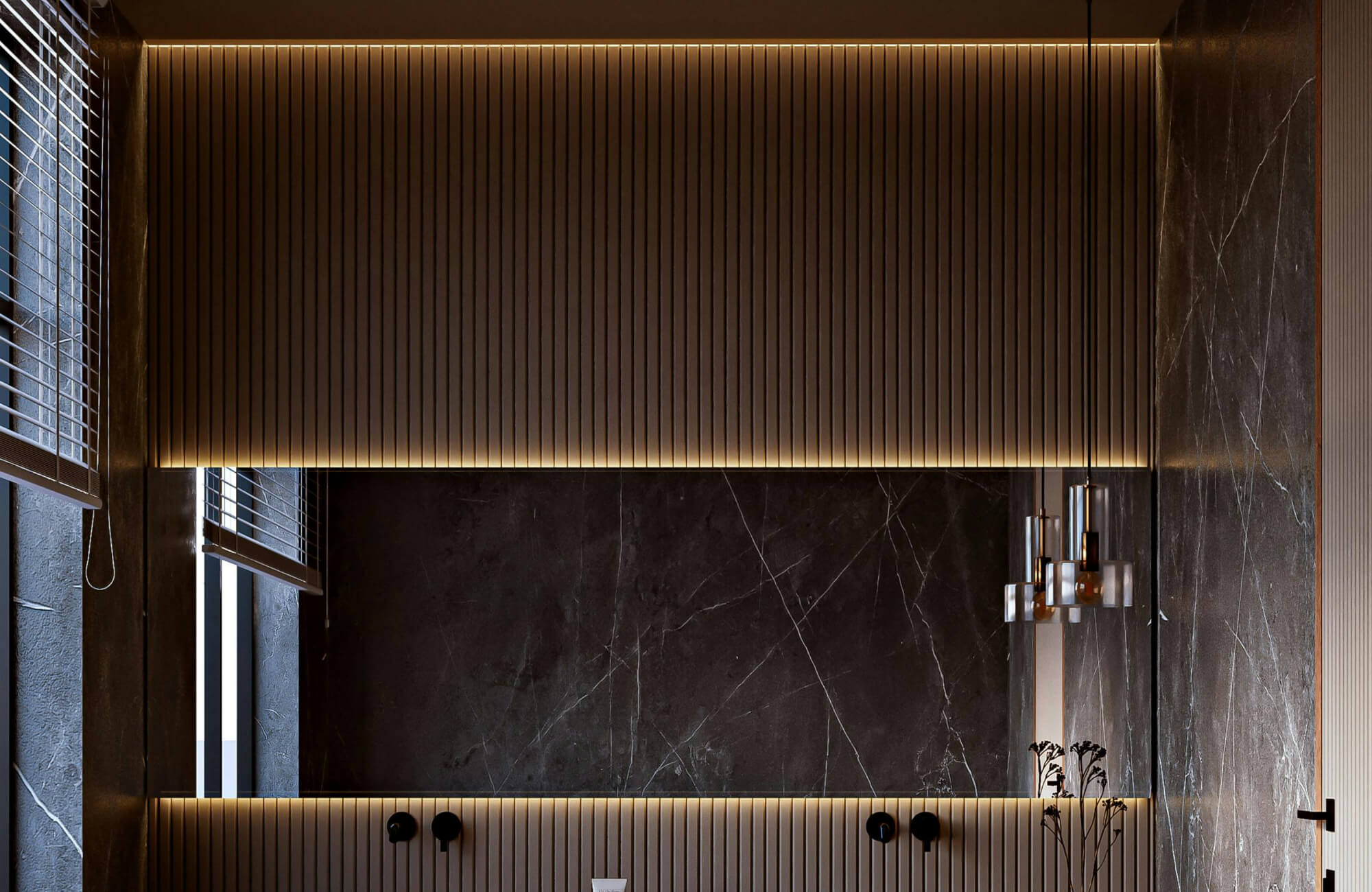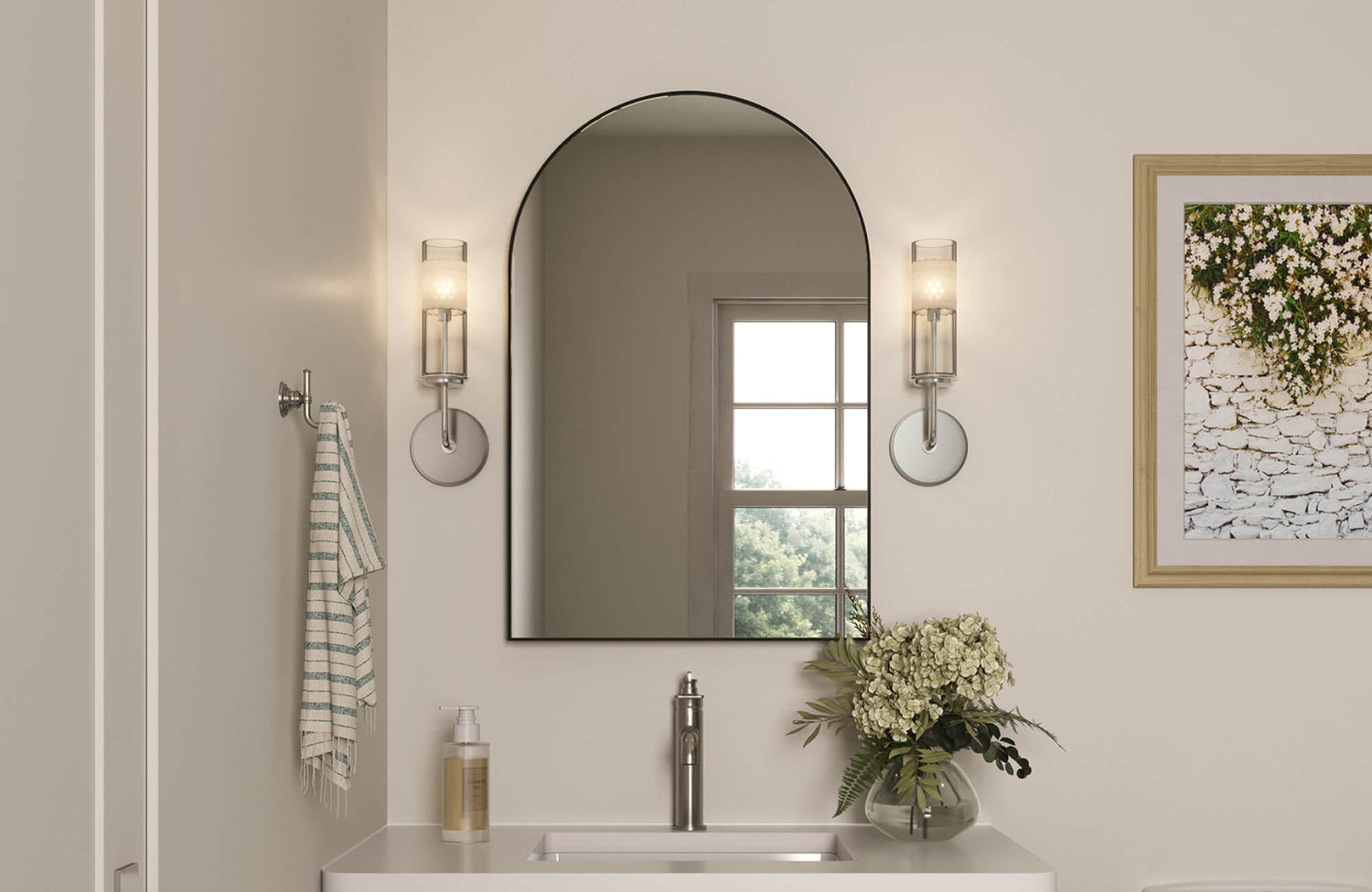
Vanity lights and bathroom mirrors are often installed side by side, yet their relationship is one of the most overlooked design decisions in a bathroom. A choice that seems purely aesthetic can influence how the space feels, how effectively it functions, and how comfortable it is to use over time. In this article, we take a closer look at the role vanity lights and mirrors play together and the key considerations that shape whether they should visually align or intentionally stand apart.

Design Harmony and Visual Balance in Bathrooms
Visual balance is essential in bathroom design, particularly in spaces where fixtures are viewed up close and details naturally stand out. When vanity lights and mirrors relate to one another visually, the bathroom feels intentional and cohesive rather than assembled as separate parts.
Coordinating Finishes Without Exact Matching
When considering whether vanity lights should match bathroom mirrors, it helps to move away from the idea that coordination requires identical finishes. A more flexible approach focuses on how materials and tones relate to one another rather than duplicating the same look. For example, a mirror with a warm wood frame can feel well balanced alongside vanity lights in brushed brass or soft bronze, creating cohesion without the rigidity of a matched set. This method allows the design to feel intentional while still visually relaxed.
That approach is evident in the photo featured above, where Edward Martin’s Irene 6" 1 Light Wall/Vanity Light in Polished Nickel/Prismatic Glass is paired with a mirror that does not share the same finish. Instead of matching directly, the polished nickel introduces a subtle contrast that remains visually compatible with the surrounding materials. This pairing demonstrates how vanity lights do not need to match the mirror exactly to feel connected within the space.
Finish sheen further reinforces this relationship. A polished or prismatic light can work successfully with a mirror frame in a different finish when the overall palette remains consistent. What ultimately matters is that the finishes feel deliberate and well considered, supporting the idea that coordination, rather than exact matching, leads to a more balanced and cohesive bathroom design.
Using Shape to Create Visual Flow
Shape is often an overlooked element in bathroom design, yet it plays a powerful role in how a space is experienced. When mirrors and vanity lights share similar geometry, the eye moves through the room more naturally and comfortably. A round mirror paired with globe or softly curved lights tends to create a sense of balance, which is especially effective in smaller bathrooms where sharp angles can feel visually heavy.
Rectangular mirrors, by contrast, typically work best with linear vanity lights or fixtures that emphasize horizontal lines. Repeating shapes without being overly rigid helps establish visual rhythm and a sense of order. When shapes compete without clear intent, the space can feel unsettled, even if the finishes themselves are well coordinated.
When Contrast Enhances the Design
There are times when matching too closely can limit the overall design, while thoughtful contrast adds depth and helps balance the space. For example, a sleek, frameless mirror paired with more traditional vanity lights can soften a modern bathroom and prevent it from feeling overly stark. Similarly, a bold mirror frame can stand out in a controlled way when paired with simpler, understated lighting.
What ultimately separates successful contrast from visual tension is intention. When contrast is planned, it feels considered and cohesive; when it happens by chance, it can feel unresolved. Asking whether the contrast supports the desired mood of the bathroom helps clarify whether it enhances the design or detracts from it.

Functional Lighting Needs vs. Decorative Choices
While appearance plays an important role, vanity lighting must first meet practical needs. The effectiveness of your bathroom lighting ultimately depends on how well it supports daily routines.
Task Lighting for Grooming and Makeup
When you stand in front of the mirror, the lighting should illuminate your face evenly and comfortably. Vanity lights that are positioned too high or too far away often cast shadows under the eyes and chin, making everyday grooming more difficult. Ideally, the light source sits at or slightly above eye level, distributing light across the face rather than directing it straight downward.
That principle is illustrated in the photo featured above, where Edward Martin’s Hailey 20" 2 Lights Wall/Vanity Light in Matte Black/Opal Matte Glass is installed vertically alongside the mirror. This placement allows light to reach both sides of the face evenly, reducing harsh shadows and supporting daily grooming tasks. The opal matte glass further softens the light output, helping maintain comfort without sacrificing visibility.
Color temperature also plays a key role. Neutral-to-warm white light helps preserve accurate skin tones for grooming and detailed tasks, while poor lighting can undermine the usefulness of even the best-designed mirror. Together, proper placement and diffused light quality ensure that vanity lighting remains both functional and comfortable for everyday use.
Balancing Style With Light Output
Decorative fixtures sometimes place greater emphasis on appearance than on performance. As you consider whether vanity lights should match the mirror, it is important to ensure the fixture provides adequate brightness for the space. A well-designed light loses its appeal quickly if it does not deliver the illumination needed for everyday use.
In many cases, style and output can work together. Fixtures that diffuse light effectively can conceal strong light sources while maintaining a clean, refined look. Coordinating with the mirror should always support visibility, not compromise it.
Mirror Size and Light Coverage
The size of the mirror directly affects the amount of light required. Wider mirrors typically call for longer vanity lights or multiple fixtures to provide even illumination across the surface. Smaller mirrors allow for more flexibility, but thoughtful placement is still necessary to prevent uneven lighting or harsh shadows.
Ultimately, the focus should be on proportion. Fixtures that are too small can feel visually lost against a large mirror, while oversized lights may overwhelm the space. In many cases, well-matched proportions have a greater impact than perfectly matched finishes.

Bathroom Size and Layout Considerations
Bathroom scale and layout play a major role in whether matching elements feel cohesive or overly dominant. Design choices that work well in a compact powder room do not always translate seamlessly to a primary bathroom.
Small Bathrooms and Visual Simplicity
In smaller bathrooms, visual simplicity often takes priority. Matching vanity lights and mirrors can reduce visual clutter and help the space feel more open. When finishes and shapes align, the bathroom reads as cohesive rather than crowded. Clean, streamlined designs with minimal detailing are particularly well-suited to these environments. Because tight spaces draw attention to every element, even small mismatches can stand out, making thoughtful coordination especially effective at creating a calm, balanced feel.
Large Bathrooms and Layered Design
Larger bathrooms offer greater design flexibility. Rather than matching vanity lights and mirrors exactly, you can use intentional variation to create layers and define different areas within the space. In some cases, vanity lighting may coordinate more closely with other fixtures in the room than with the mirror itself. This approach is especially effective in bathrooms with multiple zones, such as a dedicated makeup area separate from the main sink.
That layered strategy is illustrated in the photo featured above, where Edward Martin’s Emmery 29" LED Vanity Light in Brushed Gold/Opal Glass contributes to the overall composition without directly matching the mirror. The linear form and warm finish relate to surrounding fixtures and architectural details, allowing the lighting to support the space as a whole rather than compete for attention. This reinforces how vanity lights in larger bathrooms often play a broader role beyond simply framing the mirror.
In expansive bathrooms, strict matching can flatten the design, while well-considered contrast brings clarity and purpose. By allowing lighting, mirrors, and other elements to connect through proportion, finish, or placement instead of exact duplication, the space feels layered, intentional, and visually engaging.
Single vs. Double Vanity Setups
With double vanities, symmetry plays a more prominent role in the overall design. Matching mirrors and vanity lights across both sinks helps establish balance and visual order. If the mirrors vary slightly, using the same lighting on each side can still anchor the space and maintain cohesion.
When exact matching is not possible, consistency in placement becomes especially important. Aligning fixtures at the same height and maintaining even spacing often has a greater impact than identical styles, helping the layout feel intentional and well-organized.

Style Direction and Interior Design Themes
Different design styles approach coordination in distinct ways. Whether vanity lights should match mirrors often depends on the broader aesthetic guiding the space.
Modern and Minimalist Bathrooms
Modern bathrooms often benefit from coordinated finishes and clean, simple lines. When vanity lights and mirrors share similar materials and shapes, the space feels intentional and uncluttered. Subtle variations, such as pairing matte and satin finishes, can add interest without making the design feel overly rigid.
That approach is reflected in the photo featured above, where Edward Martin’s Ryder Wall Sconce in Old Bronze frames the mirrors without competing for attention. The streamlined silhouette and warm, restrained finish relate quietly to the mirror shape and surrounding materials, reinforcing a cohesive look while preserving the simplicity central to modern design.
In these spaces, restraint also plays an important role. Excessive contrast can disrupt the clarity and calm that define modern and minimalist interiors, making thoughtful coordination between vanity lighting and mirrors especially effective.
Traditional and Transitional Spaces
In traditional or transitional bathrooms, coordination tends to matter more than exact matching. Pairing a classic mirror frame with complementary lighting shapes helps create a timeless, balanced look. The emphasis is on harmony rather than strict uniformity. Soft curves, familiar materials, and well-balanced proportions allow these elements to work together gracefully without feeling dated.
Eclectic and Personalized Bathrooms
Eclectic bathrooms thrive on intentional contrast rather than strict matching. In these spaces, cohesion often comes from shared color tones, balanced scale, or complementary materials. Pairing a bold mirror with more understated lighting can express personality while keeping the room visually balanced. What keeps eclectic design from feeling chaotic is repetition. Even when styles vary, repeating one or two key elements helps ground the space and create a sense of continuity.

Budget Flexibility and Long-Term Planning
Budget constraints and future renovation plans often influence design decisions. Matching vanity lights and mirrors is not always practical or necessary to achieve a well-balanced and successful design.
Upgrading One Element at a Time
When updating vanity lighting while keeping an existing mirror, versatility becomes especially important. Neutral finishes and classic shapes pair easily with a wide range of mirror styles, making it possible to refresh the space without committing to a full renovation. Planning with the future in mind can help prevent mismatches later. Selecting adaptable designs gives you the flexibility to evolve the bathroom over time without starting from scratch.
Cost-Effective Coordination Strategies
You don’t need matching sets to create a coordinated look. Alignment, consistent spacing, and thoughtful placement often have a greater impact than exact matches. When fixtures are installed evenly and in proportion, the design feels intentional regardless of whether the styles are identical. Prioritizing quality lighting ensures the space functions well from the start, even if aesthetic upgrades are introduced gradually over time.
Resale Value and Broad Appeal
Overly specific matching choices can narrow a bathroom’s appeal as preferences evolve. Spaces that feel balanced, functional, and thoughtfully coordinated tend to resonate with a broader audience. Subtle coordination often ages more gracefully than bold, tightly matched designs. Taking a flexible approach helps protect long-term value while still leaving room for personal expression.
Finding the Right Balance Between Vanity Lights and Mirrors
There is no single rule that dictates whether vanity lights must match bathroom mirrors. The right approach depends on functional needs, design goals, spatial considerations, and how you want the space to feel in everyday use. Prioritizing lighting performance first allows visual coordination to act as a supportive design element rather than a rigid requirement. When decisions are guided by intention instead of strict matching, the result is a bathroom that feels comfortable, functional, and thoughtfully composed.
If you are weighing different options and want guidance tailored to your space, our design services can help you evaluate lighting placement, finishes, and proportions with confidence. Feel free to contact us to explore solutions that balance performance and aesthetics, ensuring your vanity lighting and mirrors work together seamlessly within your overall design plan.