Whether you’re revamping a tired powder room or planning your dream spa-style ensuite, one design decision can reshape the entire space: tile size. It's more than just a visual choice. Tile dimensions also influence how large your bathroom feels, how easily it can be cleaned, and even how safe it is underfoot. With the variety of options available today, from tiny mosaics to sleek, oversized slabs, it’s easy to feel overwhelmed by the decision.
This article breaks down everything you need to know to make a confident and informed choice. From installation demands and slip resistance to design character and architectural fit, each section explores a distinct angle to help you match tile size with your bathroom’s unique needs. Whether you lean traditional or modern, detailed or minimal, understanding how tile size impacts both form and function will also guide you toward a solution that’s as smart as it is stylish.

Visual Impact and Perception of Space
Tile size plays a critical role in shaping how a bathroom feels, whether open and airy or closed and compact. In smaller spaces, small format bathroom tiles such as mosaics or penny rounds can easily overwhelm due to their dense grout lines, which break up the surface and create visual clutter. However, by carefully choosing coordinating grout colors and opting for rectified edges, you can minimize these interruptions and maintain a more cohesive, calm appearance. Finishes also matter—matte tiles, for instance, diffuse light softly across surfaces, helping the room feel more unified and less segmented.
On the other hand, large format tiles can dramatically open up a room by reducing grout lines and allowing the eye to glide across uninterrupted expanses. This effect makes the bathroom appear larger than it actually is, especially in tight layouts like powder rooms. Tiles with polished finishes or those that mimic natural materials, such as marble veining, further enhance the sense of openness by adding subtle depth and brightness. Their clean, expansive visuals also promote a refined, modern ambiance that elevates the space.
The soft beige floor tile featured in the bathroom image above is a good example. Edward Martin’s Tatum 24x48 Matte Porcelain Tile in Cross Cut Straw, a sand-hued neutral, reflects natural light beautifully and visually expands the floor plane. Its large format minimizes grout lines, creating a clean, seamless surface that helps the room feel more open and airy, while its subtle tone anchors the space and allows the blue wall tile (Makenna 6x6 Glossy Porcelain Tile in Ice) to stand out as a distinctive focal feature.
In addition to size, tile orientation influences spatial perception. For example, vertically laid rectangular tiles naturally draw the eye upward, visually raising the ceiling, an ideal technique for bathrooms with limited height. Conversely, horizontal placement widens narrow rooms, especially when combined with light tones and reflective surfaces. Altogether, both the dimensions and layout of your tiles become valuable tools in manipulating how your bathroom is experienced, giving you greater control over the room’s scale and atmosphere.

Installation, Labor, and Cost Efficiency
Although aesthetics are vital, practicality matters too. This section compares how small and large bathroom tiles impact installation time, tools, and overall cost. For installation projects that involve intricate patterns, large tile formats, or precise alignment, working with a professional is highly recommended. Their expertise helps ensure lasting durability, a safe layout, and a clean, high-quality finish that’s difficult to achieve without the right tools and experience.
Small Tile Installation and Associated Labor Costs
Working with small bathroom tiles is a meticulous process that demands patience and a steady hand. Because of their size, each tile must be placed with precision to ensure consistent spacing and alignment across the surface. This becomes even more complex when you incorporate borders, patterns, or curves. Although the material cost of small tiles may seem appealing at first glance, the time it takes to lay them properly often pushes labor expenses significantly higher.
The increased number of grout lines also adds another layer of complexity. Each joint must be filled, cleaned, and finished evenly, which is a time-consuming task. If you're considering a mosaic or a detailed layout, it's worth accounting for the extra hours required to achieve a clean, professional finish. What initially appears to be a budget-friendly tile can quickly lead to elevated costs once installation labor is factored in.
Large Format Tile Installation and Substrate Demands
Large format bathroom tiles present a different set of challenges. Their expansive dimensions make them great for covering broad surfaces quickly, but they also require a flawless substrate underneath. Any bumps or depressions can cause "lippage," where one edge of a tile sits higher than the adjacent one, something that's visually distracting and a tripping hazard. Because of this, surface preparation becomes a critical step before installation begins.
Moreover, you’ll likely need tools designed specifically for handling large tiles, including tile leveling systems, extended trowels, and suction lifters to move heavy pieces safely. Wet saws capable of cutting larger formats also become essential. Although the prep work might take longer than with small tiles, the installation itself moves faster since fewer individual pieces are required. In many cases, this helps offset the cost of specialized tools or materials, especially if you're aiming for a clean, modern result with fewer grout lines.
Waste Generation and Cutting Implications for Tile Formats
Tile waste is an often-overlooked factor that can influence your project's overall efficiency. Large bathroom tiles may look seamless once installed, but cutting them to fit around plumbing, cabinetry, or corners can be inefficient. Any breakage can lead to significant material loss, and because each tile covers a larger area, replacement pieces are more expensive to source and store. In irregularly shaped bathrooms, this leads to more off-cuts and potentially higher material wastage.
In contrast, small bathroom tiles offer much more flexibility in difficult areas. Their compact size makes it easier to fit them around tight curves, uneven walls, or design features like niches and insets. They also conform more readily to surfaces with subtle variations, reducing the need for aggressive cutting or reshaping. As a result, they often generate less waste and adapt better to complex layouts, making them ideal when customization is a priority.

Slip Resistance and Safety Considerations
In wet environments like bathrooms, safety should never be an afterthought. Tile size directly influences traction, especially in areas exposed to water.
Traction Benefits of Smaller Tiles
When it comes to reducing slip risk, small bathroom tiles have a built-in advantage: grout. The increased number of grout lines breaks up the surface, adding texture that helps prevent slipping, particularly when the floor is wet. This makes small format tiles especially practical for shower floors, wet rooms, or areas frequently used by children or elderly individuals, where extra footing stability is a must. The network of grout joints also creates just enough surface interruption to catch your footfall and provide a reliable grip underfoot.
Moreover, you don’t need to rely solely on surface treatments or specialty coatings to achieve a safe bathroom floor when using small tiles. The layout itself does a lot of the work. Because the smaller tiles naturally conform to slopes and changes in elevation like those found in shower pans or near drains, they ensure a more even, slip-resistant surface that performs well under a variety of conditions.
Mitigating Slip Risks with Large Format Tiles
Although large bathroom tiles contribute to a sleek, minimal look, they can pose a safety risk if not properly selected for wet environments. Their wide surface area and limited grout lines result in fewer breaks on the floor, making it easier for water to pool and increasing the likelihood of slipping. However, that doesn’t mean you have to rule them out for bathroom use. With the right finish, large tiles can still be a safe and stylish option.
To enhance traction, look for tiles that feature anti-slip finishes or are specifically rated for safety under wet conditions. Options like matte surfaces or tiles embedded with subtle texture or grit provide more underfoot grip without sacrificing the clean lines large tiles are known for. Checking for a high DCOF rating is another smart step, as it indicates the tile’s ability to resist slips in water-prone areas. By paying attention to surface finish, you can confidently use large tiles even in spaces where safety is a top concern.
Strategic Zone-Based Tiling
Not all areas of the bathroom face the same exposure to moisture, which allows you to be strategic with tile size. By tailoring your tile choices to specific zones, you can achieve both safety and style. For example, installing small, slip-resistant tiles in high-risk areas such as inside the shower or directly in front of the tub ensures secure footing where it matters most. These tiles handle water runoff and sloped surfaces more effectively, enhancing both drainage and grip.
In drier sections of the bathroom, such as around the vanity or on the main floor, large format tiles can be used to create a clean, expansive feel. This contrast in tile scale not only improves safety but also introduces visual interest and texture variation. The transition between tile sizes becomes a thoughtful design element, blending function with aesthetic appeal. By segmenting the bathroom into practical zones, you maintain a cohesive look while adapting the flooring to suit real-world needs.
A perfect example of this approach is displayed in the image above. The shower floor features the Wren 2x2 Matte Porcelain Mosaic Tile in Dune, a soft, beige-colored mosaic that provides both slip resistance and flexibility over the sloped surface. Just outside the shower, the larger format tile—Wren 24x48 Matte Porcelain Tile in Dune—extends across the main floor, creating a smooth, open feel. Both tiles share the same neutral tone, allowing for a seamless visual transition while meeting the unique performance needs of each zone.

Cleaning and Long-Term Maintenance
When it comes to daily upkeep, tile size has a surprisingly strong influence on how much cleaning effort your bathroom demands. Small format tiles, while visually appealing and design-flexible, come with a trade-off: more grout lines. These joints create additional surfaces where grime, mildew, and soap scum can accumulate, especially in damp environments like showers. To keep your bathroom looking fresh, small tiles often require more frequent, detailed cleaning. However, by using materials like epoxy grout or selecting darker grout tones, you can significantly reduce visible buildup and cleaning frequency. Although these upgrades cost more initially, they can ease long-term maintenance demands.
On the flip side, large format tiles simplify your cleaning routine by reducing the number of grout lines that need attention. With more tile and less grout, wiping down surfaces becomes faster and more efficient. Larger tiles are particularly practical in busy households, where convenience matters just as much as aesthetics. That said, they do require larger cleaning tools to be effective, like wide-head mops or microfiber pads, to ensure even coverage and reach. Despite the tool adjustment, the time savings and reduced mold risk make them an attractive choice for low-maintenance living.
Additionally, the need for sealing varies significantly depending on tile size and grout type. Smaller tiles with traditional grout typically require more frequent sealing to prevent water penetration and staining. In contrast, large tiles, especially when paired with epoxy grout, greatly reduce the sealing workload, offering a nearly maintenance-free surface. This long-term durability makes large format tiles particularly appealing in bathrooms with constant moisture exposure, where reliable performance and ease of care are essential.
For best results, always refer to the manufacturer's cleaning and maintenance recommendations specific to your tile and grout type. Following these guidelines ensures you protect your investment and maintain the intended look, safety, and performance of your surfaces over time.

Design Aesthetics and Visual Character
Tile size plays a major role in defining the mood, style, and texture of your bathroom. This section explores how tile scale contributes to your overall design language.
Small Tiles
Small bathroom tiles are a natural fit when you want to evoke charm, craftsmanship, or a vintage-inspired ambiance. Formats like penny rounds, hexagons, or traditional subway tiles bring with them a sense of history and detail that instantly adds character. Their compact size also allows for intricate layouts, making them ideal for spaces where you want to create a decorative focal point, such as a bold backsplash, a shower niche framed in contrast, or an ornate floor pattern that echoes early 20th-century design.
Their tactile quality also enhances the room’s texture, especially when paired with glossy or crackled finishes that reflect light in unexpected ways. If you’re aiming for a bathroom that feels personal and handcrafted, small tiles provide a canvas for storytelling. Whether you're restoring a period-style home or adding personality to a modern layout, these tiles help bridge design and narrative through detail-rich surfaces.
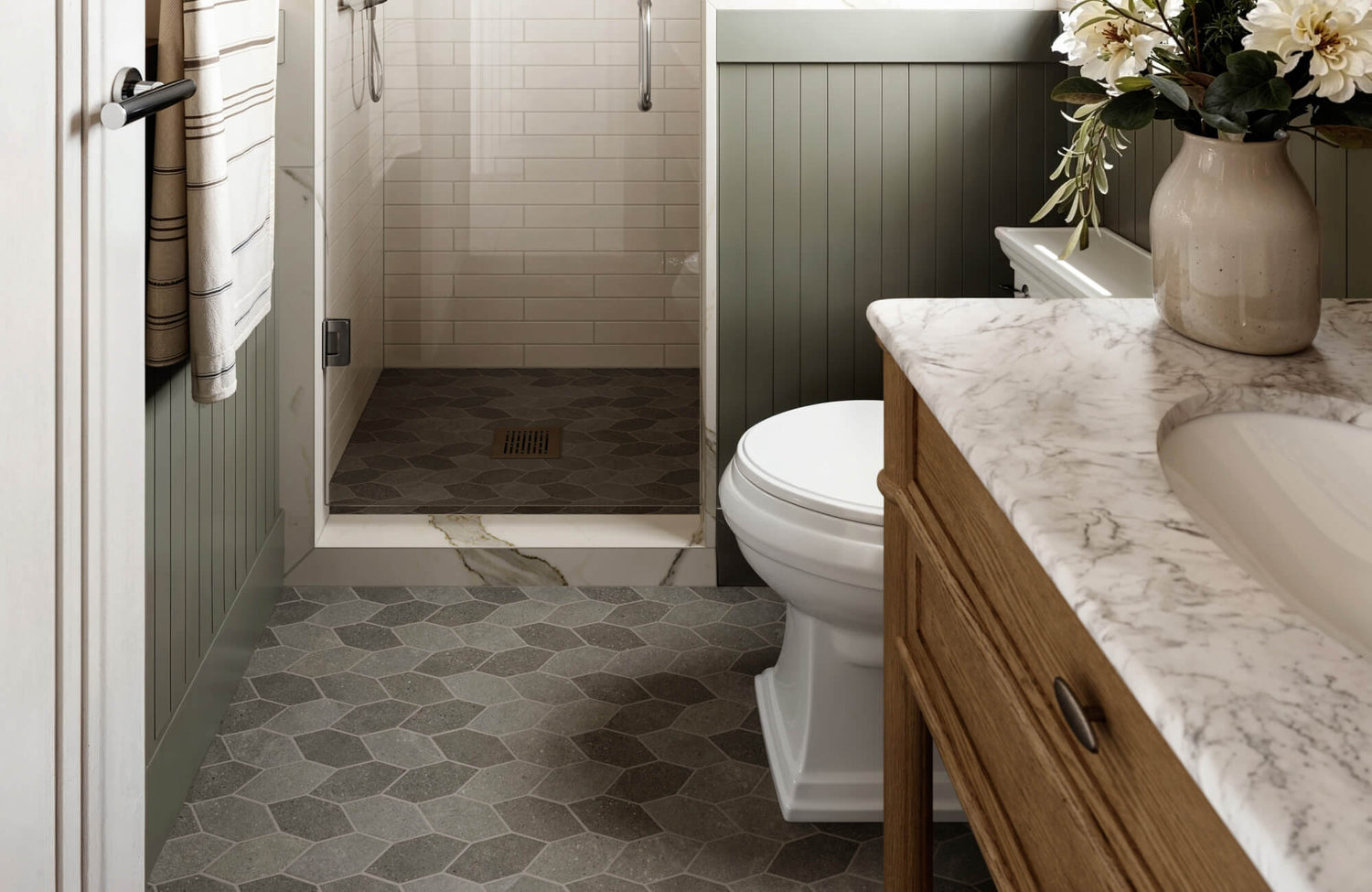
In the picture shown above, the floor showcases a refined use of hexagonal tiling that ties the space together with softness and shape. This is the Catalina 7x8 Hexagon Matte Porcelain Tile in Mushroom, finished in a warm beige tone that harmonizes beautifully with the surrounding natural textures. Its subtle geometry adds just the right amount of visual interest without overwhelming the space, proving how small tiles can be both understated and impactful.
Large Format Tiles
Large format bathroom tiles deliver an entirely different aesthetic, one centered on openness, calm, and cohesion. With minimal grout lines and broad, uninterrupted surfaces, they offer a smooth visual flow that immediately creates a more tranquil atmosphere. This quality is also especially powerful in bathrooms designed as wellness retreats, where visual noise is kept to a minimum and every design element is chosen to enhance serenity.
Pairing large tiles with minimalist fixtures like floating vanities, wall-mounted faucets, and frameless shower glass further amplifies their clean look. The tile surface acts almost like a canvas, allowing subtle natural patterns or soft finishes to shine without distraction. This understated approach feels luxurious but not loud, making large format tiles a staple in modern and spa-inspired designs that prioritize clarity and light.
In spaces aiming for this kind of calm, expansive feel, a tile like the Leona 24x24 Matte Porcelain Tile in Amani Grey fits seamlessly. Its soft tone offers a neutral, stone-like appearance that anchors the room while still allowing light to flow naturally. The balanced square format also reduces visual interruptions, helping to create a soothing, cohesive surface that complements contemporary and wellness-focused interiors alike.
Strategic Scale Play
Combining different tile sizes within one bathroom is a powerful way to guide the eye and establish visual layers. Large tiles set the foundation by creating a cohesive backdrop across floors or major walls, while smaller tiles can be introduced in accent areas to draw attention or add dimension. This contrast helps you establish focal points intentionally, like using a mosaic in the shower niche or behind the vanity to break up the space and add personality.
The key is balance. Scale variation works best when it serves the overall flow of the room rather than competing for attention. For example, using large tiles in a neutral palette allows smaller, more detailed tiles to shine in key locations without overwhelming the design. This thoughtful layering also creates visual hierarchy, adding both depth and structure to your bathroom without sacrificing harmony.
To help you confidently explore these combinations, our augmented reality (AR) technology lets you visualize selected tiles directly in your space. Whether you're testing a bold accent or adjusting scale across zones, this tool empowers you to experiment and refine your layout before installation begins.
Contemporary Market Directions
Design trends are leaning toward large tiles with nuanced textures such as subtle ridges, stone-like finishes, and even fabric-inspired patterns that deliver character without clutter. These modern surfaces strike a balance between simplicity and detail, offering tactile richness that elevates the room while still feeling streamlined. As demand grows for bathrooms that feel both functional and indulgent, these tiles meet the moment with their ability to look bespoke and refined.
What makes this trend especially appealing is its versatility. Textured large format tiles can suit a variety of palettes, from earthy tones to industrial grays, and adapt seamlessly to minimalist or transitional styles. Their oversized scale also helps maintain continuity, while the texture introduces visual interest without overwhelming the space. If you're aiming for a design that feels high-end yet subtle, this new wave of tile options gives you the tools to do just that.
Balancing Aesthetics and Function in Tile Size Choices
In the end, the best tile size for your bathroom depends on how you want the space to look, feel, and perform. Small tiles bring character, contour, and grip to safety-sensitive or architecturally complex areas, while large format tiles offer a sleek, low-maintenance surface ideal for open layouts and modern designs. By weighing your priorities, whether that’s visual spaciousness, long-term maintenance, installation ease, or detailed style, you can choose a tile size that fills your space and enhances it. With a thoughtful approach, your bathroom will not only look great but also function effortlessly for years to come.
If you’re unsure where to start or need help translating your vision into a cohesive design, our design services can guide you every step of the way. Our team specializes in balancing aesthetic goals with functional needs, ensuring your tile selections, whether small, large, or a combination of both, fit seamlessly within your space and lifestyle. With expert insights and personalized support, you can confidently bring your bathroom design to life, knowing every detail has been considered for beauty, performance, and longevity.