In bathroom design, every detail plays a part in shaping atmosphere and flow, yet few choices make as strong a visual impact as how your mirror relates to your vanity. These two elements anchor the space, defining its tone, rhythm, and sense of cohesion. A mirror that matches the vanity can create a seamless, tailored look, while a contrasting finish introduces depth, texture, and individuality. The relationship between these finishes also sets the mood and influences how light, proportion, and color interact within the room.
This article explores how to find the right balance between harmony and contrast, guiding you through the nuances of materials, lighting, texture, and longevity. Whether you’re drawn to a minimalist, spa-like retreat or a bold, eclectic composition, understanding how these elements work together helps you design a bathroom that feels intentional, balanced, and enduring.

Understanding Design Harmony in Bathroom Spaces
Before you decide whether your mirror should match or contrast your vanity, it’s crucial to understand how balance, proportion, and cohesion shape the mood and flow of a bathroom. True harmony in design isn’t about making everything identical. It’s about ensuring every finish, texture, and surface works together in conversation. When the mirror and vanity relate through tone, material, or form, the space feels intentional rather than accidental. This interplay also creates a visual rhythm that guides the eye naturally, giving the room both structure and personality. Whether you lean toward a sleek, contemporary look or a softer, organic aesthetic, the secret lies in finding a relationship between elements that supports both the architecture and the atmosphere of the space.
Moreover, how you balance visual weight and texture can completely change how your bathroom feels. A dark vanity paired with a lighter mirror frame introduces contrast and depth, while similar tones merge seamlessly to produce calm unity. Beyond tone pairing, the brightness of each finish also affects how the space feels. Light finishes can open up smaller bathrooms, whereas darker ones lend warmth and grounding in larger rooms. Likewise, texture and sheen—matte versus glossy, smooth versus rough—play powerful roles in shaping mood. Adding a subtle accent like our Everdale Small Mirror in Gunmetal, seen in the image above, can further bridge these elements beautifully. Its soft black finish brings warmth and sophistication, complementing both wood and neutral palettes while enhancing how light interacts with surrounding surfaces.

When Matching Finishes Strengthens the Design
Matching your mirror and vanity finishes can create a polished, intentional look especially in spaces where cohesion and simplicity take center stage. This approach works beautifully in modern, minimalist, or custom-built bathrooms that rely on unity and clarity to achieve a timeless aesthetic. When done well, matching finishes can transform everyday fixtures into a single, harmonious design feature that feels effortless and refined.
Minimalist Bathrooms
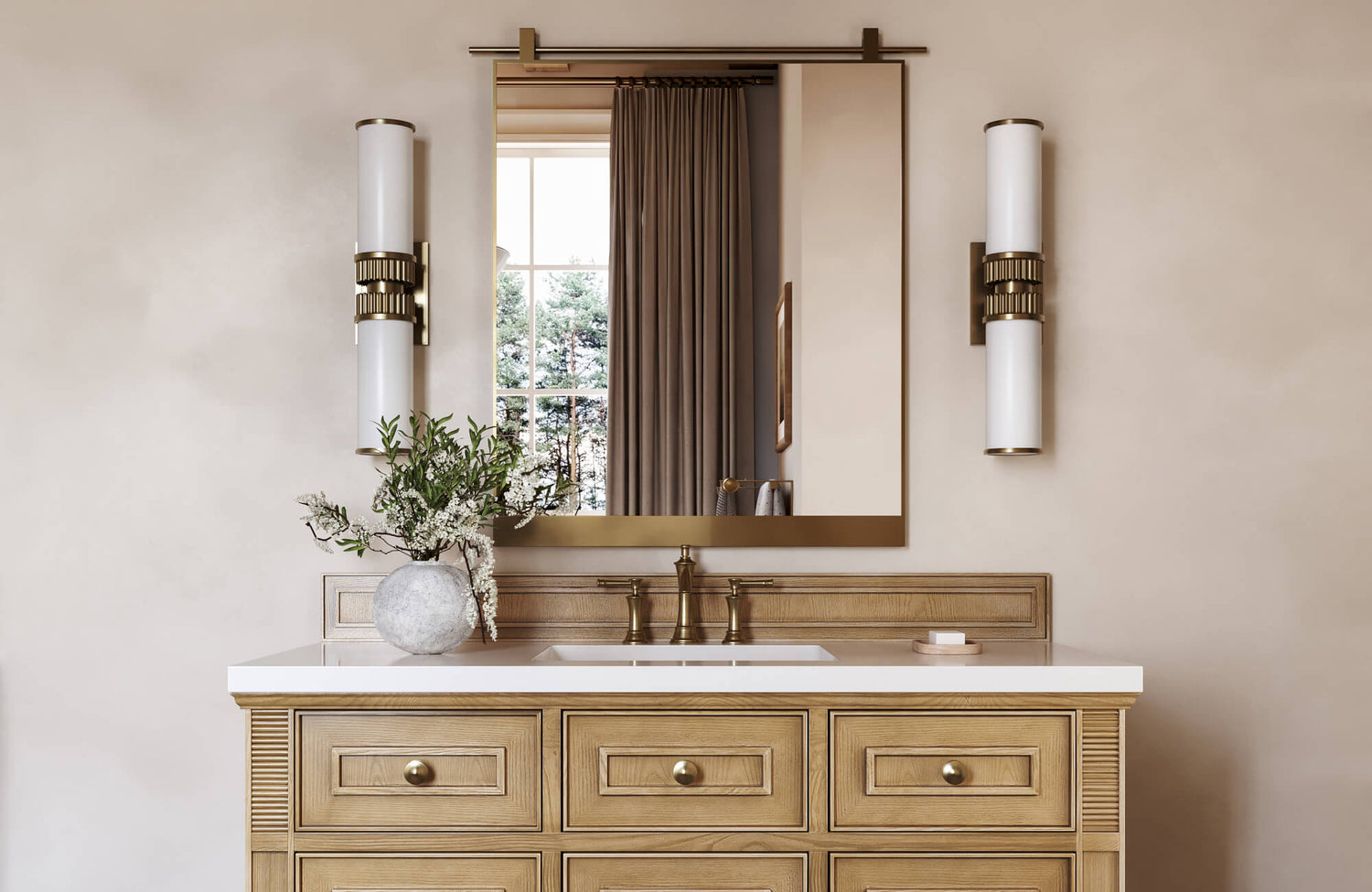
In minimalist bathrooms, matching finishes provide visual calm by reducing unnecessary contrast and visual noise. When your mirror and vanity share the same tone or material, they appear as one cohesive structure that blends naturally into the architecture. Our Esmeralda Wide Mirror in Polished Brass, as shown in the photo above, perfectly illustrates this effect. Its warm brass frame echoes the natural tones of the vanity, creating a soft, seamless connection that enhances both warmth and symmetry. This visual continuity also highlights the clean lines, proportions, and geometry of the room, allowing the design to feel quiet yet deeply intentional.
Matching finishes enhance the perception of openness as well. By eliminating sharp visual breaks, your eye moves smoothly across the surface, making even compact bathrooms feel more expansive and organized. This unified approach creates a sense of quiet sophistication where every element serves the design purposefully, proving that simplicity can be both functional and elegant.
High-End or Built-In Appeal
In luxury settings, matching finishes elevate the design by creating a built-in, custom-crafted appearance. When the mirror frame and vanity share the same fine wood grain, lacquer, or metal finish, they read as a single piece of furniture, streamlined and intentional. Our Tristan Square Mirror in Shiny Steel is a perfect example of this refined approach. Its polished steel frame mirrors the sleek sophistication of high-end vanities, giving the bathroom a cohesive, tailored feel that communicates quality and permanence.
This cohesive pairing also allows you to highlight other design features without competition. Decorative lighting, textured tiles, or statement fixtures can stand out more vividly when the primary surfaces (mirror and vanity) provide a unified visual foundation. Matching finishes, in this sense, don’t just add harmony; they create a backdrop that supports sophistication and balance throughout the entire bathroom.

When Contrast Adds Depth and Character
Contrast breathes energy and movement into a bathroom, giving it personality and visual depth. When executed with purpose, a mix of finishes doesn’t clash but creates balance through difference. Pairing a dark mirror frame with a light vanity, or vice versa, for instance, instantly draws the eye, defining the vanity wall as a focal point. This play of tones acts like architectural framing, emphasizing details such as textured walls, tile patterns, or unique lighting. The contrast also shapes mood and perception: lighter mirrors can lift a dark vanity, while darker frames add grounding and sophistication to lighter cabinetry. Even introducing an asymmetrical mirror can enhance this dynamic, breaking away from predictable symmetry and adding an artistic focal point that reinforces the sense of movement within the design. When contrast is chosen intentionally, it lends structure and rhythm, transforming the space into one that feels both dynamic and cohesive.
You can also introduce contrast through a thoughtful mix of materials. Combining brushed brass with deep walnut infuses warmth and refinement, while matte black accents paired with pale oak create a crisp, modern balance. The secret lies in aligning undertones, pairing warm with warm or cool with cool, so that differences feel harmonious rather than harsh. Varying the sheen of finishes adds further interest: a matte vanity beneath a polished mirror frame subtly plays with light, adding texture without clutter. Through these deliberate contrasts, your bathroom becomes a reflection of your style, layered with depth, balance, and individuality.
A perfect example of this approach is our Shirley Small Mirror in Antique Brass Iron, displayed in the picture above. Its organic-shaped form and soft antique brass tone provide a striking yet balanced contrast against the light natural oak vanity. The combination introduces a touch of warmth and artistry, softening the clean lines of the cabinetry while enhancing the overall visual rhythm. This thoughtful blend of shape, tone, and texture shows how contrast, when applied with intention, can elevate a bathroom from simple to sophisticated.

Coordinating with the Broader Bathroom Palette
The finishes on your vanity and mirror should do more than complement each other. They should align with the entire visual story of your bathroom. Every element, from tile and wall color to fixtures and décor, contributes to the overall palette. When these components share a consistent tone or mood, your bathroom feels cohesive, balanced, and effortlessly well-designed.
Finding a Common Tone or Accent Element
Creating harmony doesn’t always require a perfect match. Instead, focus on finding a shared tone or recurring accent that connects the mirror and vanity to the rest of the room. A warm oak vanity, for instance, can pair beautifully with a brushed brass round mirror if both share golden undertones. Similarly, a black-framed mirror that echoes the finish of your faucet or hardware can tie the entire palette together even when the vanity contrasts in color or texture.
This method of subtle repetition creates a thread of consistency throughout the space. It gives you the freedom to mix materials such as wood, metal, or stone without losing cohesion. When executed thoughtfully, this layering feels intentional rather than overly coordinated, giving your bathroom a sense of personality while maintaining a unified aesthetic.
Using Neutrals and Transitional Finishes
Neutral finishes like matte white, greige, or champagne metal serve as elegant bridges between more distinctive materials. They soften transitions between bold contrasts and help unify different styles within one space. A matte white vanity, for example, can pair gracefully with nearly any mirror finish, from rustic wood to sleek chrome, while still feeling consistent and timeless.
Our Fitz Mirror in Antique Silver, featured in the image above, demonstrates how transitional tones can bring cohesion to a layered palette. Its subtle silver sheen complements the whitewashed oak vanity beneath it, striking a balance between warmth and coolness. The pairing also feels sophisticated yet versatile, allowing other design elements like blue herringbone tile and polished fixtures to shine without overwhelming the space. By connecting neutral wood tones with soft metallic finishes, the look remains grounded while introducing a hint of modern refinement.
These versatile tones also make your design adaptable for the long term. As styles and preferences evolve, neutral or transitional finishes provide a steady foundation that can easily accommodate new color accents or accessories. Beyond aesthetics, they add practicality by ensuring your bathroom remains cohesive and appealing, whether you’re refreshing the décor or considering future resale.

Practical Considerations for Maintenance and Longevity
Although design choices set the tone of your bathroom, durability determines how long that beauty lasts. Because bathrooms experience constant humidity, changing temperatures, and regular cleaning, the finishes you choose must stand up to daily use. Wood vanities, for example, should be protected with moisture-resistant sealants to prevent swelling or fading, while mirror frames need corrosion-resistant finishes such as powder-coated metal or treated wood. These resilient materials retain their color and structure even after years of exposure to steam and water. Investing in high-quality finishes not only ensures long-term performance but also protects your bathroom’s appearance from early wear, saving you from costly repairs or replacements down the line.
Equally important is designing for adaptability. Selecting complementary rather than perfectly matching finishes gives your bathroom flexibility to evolve with time and style changes. A neutral vanity paired with a distinctive mirror finish, for instance, can transition easily through new color palettes, updated lighting, or hardware replacements without needing a full redesign. This forward-thinking approach also enhances resale value since buyers are naturally drawn to bathrooms that feel timeless and easy to personalize. By balancing aesthetic appeal with practical durability, you create a space that remains functional, stylish, and investment-worthy for years to come.
A great example of this balance between endurance and elegance is our Shirley Large Mirror in Antique Brass Iron, portrayed in the photo above. Its sturdy iron frame with an antique brass finish is designed to resist corrosion while maintaining its sophisticated patina over time. When paired with the mid-century walnut vanity, it creates a warm, enduring combination that feels both refined and resilient. Together, they embody the idea that practicality and beauty can coexist seamlessly, ensuring your bathroom remains timeless in both style and strength.
Designing with Intention
Ultimately, the choice between matching or contrasting your mirror and vanity finishes comes down to thoughtful intention. Both approaches can be stunning when guided by balance, proportion, and consistency with the rest of the space. Matching finishes create calm and cohesion, while contrast introduces depth and individuality. The key lies in ensuring every element, from lighting to texture, supports the feeling you want your bathroom to evoke. When your decisions align with your vision and lifestyle, the result is a space that feels complete, expressive, and timeless.
If you’re ready to bring your bathroom vision to life or need guidance in choosing finishes that suit your space, our team is here to help. Whether you’re exploring design options or seeking expert advice on materials, our specialists can provide personalized support to make your project seamless from concept to completion. We’d love to help you design a bathroom that reflects your taste, balances function and style, and feels truly one of a kind!