The direction you choose for your backsplash tiles can reshape how a room feels, functions, and even how it's perceived by future buyers. Although it might seem like a small design choice, tile orientation can influence everything from how light travels through your kitchen or bathroom to how spacious, cohesive, or customized the space appears.
This article unpacks the many layers of that decision. From practical installation to interior design alignment and resale value, each section offers clear, focused guidance to help you choose the direction that best supports your space and style. Whether you're refreshing a single wall or planning a full renovation, understanding tile orientation can also elevate your design from functional to exceptional.

Practical Installation and Maintenance Factors
The visual appeal of backsplash tile orientation must be weighed against installation complexity, maintenance needs, and how well the tile shape complements your layout. The direction you choose can impact the overall cost, ease of upkeep, and how seamlessly your tiles blend with the room’s functional framework.
Labor and Cost Differences
When it comes to installation, horizontal tile layouts are typically the path of least resistance. Their alignment often mirrors key architectural features like countertops and base cabinets, which makes measuring, spacing, and cutting more efficient. This simplicity also translates into lower labor costs and faster turnaround times, making horizontal tiling an accessible option if you're working within a budget or a tight renovation schedule. In the image shown above, the horizontally stacked Natasha 2x6 Glossy Porcelain Tile in Army brings a rich, olive-toned warmth and a sleek finish that blends effortlessly with the natural wood vanity, showcasing how efficient layout and elevated style can go hand in hand.
Vertical installations, however, require a more meticulous approach. Because ceilings, especially in older spaces, may not be perfectly level, tiling upward demands extra planning to maintain alignment and symmetry. You may also face more frequent tile cuts to accommodate irregular wall features or fixture placements. If you’re choosing a layout like stacked vertical subway tiles or a vertical herringbone, prepare for increased installation time and cost. These layouts are visually striking, but they often belong in the category of premium finishes due to the additional labor and precision they require.
Grout Line Visibility and Cleaning Ease
Another important consideration is how the backsplash tile direction influences grout line visibility and, consequently, the appearance of cleanliness over time. Vertical tile layouts often create long, unbroken grout lines that naturally catch the eye, especially when a contrasting grout is used. Although this can be an intentional design choice, it also means that smudges, soap residue, or grease can become more noticeable along those vertical seams, particularly in busy areas like behind a stove or vanity.
In contrast, horizontal layouts, especially in staggered patterns, tend to distribute grime less obviously. Because of the way natural and artificial light typically hit kitchen and bathroom walls, the shadows fall in a way that softens the look of grout lines running side to side. As a result, stains and minor discoloration are easier to overlook. That said, regardless of direction, sealing your grout and choosing a practical grout color can make a significant difference in how easily you can maintain a fresh, clean appearance.
Tile Shape and Orientation Compatibility
The shape of your tile plays a key role in determining which orientation will look and function best in your space. Rectangular or elongated tiles, such as the ever-popular subway tile, generally feel more natural when installed along their longer axis. For example, laying a narrow tile horizontally can create a calm, expansive effect, especially in a compact room. That same tile installed vertically might feel too busy or even overpowering if the room lacks the height to balance it visually.
Alternatively, if you're working with square tiles or uniquely shaped mosaics, you may find greater flexibility in orientation without disrupting the room’s proportions. But when working with directional tiles, letting their shape lead your decision helps avoid awkward visuals or disjointed patterns. By aligning tile orientation with the tile’s native proportions, you create a look that feels cohesive and intentional, one that works with the architecture instead of against it.

Tile Orientation and Interior Design Styles
The choice between vertical and horizontal tiles should align with your overall design aesthetic. Each orientation naturally supports certain interior design styles, helping you reinforce the visual language and mood of the space.
Traditional and Transitional Interiors
Horizontal tiles have long been a cornerstone of traditional and transitional interiors. Their clean, steady lines create a sense of order that complements the structured, symmetrical look often found in these design styles. If your kitchen features shaker cabinets, crown molding, or beadboard paneling, a horizontal tile layout will feel like a seamless extension of that classic detailing. The orientation also mirrors the room’s foundational lines, such as countertops, shelving, and cabinetry, bringing harmony to the space without overwhelming it.
Building on that foundation, subway tiles, when laid horizontally, offer one of the most reliable ways to evoke timelessness. Their subtle presence doesn’t distract from other features, allowing wood tones, stone surfaces, and antique hardware to shine. One great example is the Olivia 4x16 Glossy Ceramic Tile in Fog, which adds a refined gray tone with a soft sheen that complements both classic and transitional palettes. If you're designing a farmhouse kitchen or a traditional bath, this type of backsplash tile in a horizontal layout offers a grounded aesthetic that feels inviting, familiar, and enduring. It’s a style choice that stands the test of time while remaining open to modern interpretations through grout color, tile finish, or slight variations in size.
Modern, Japandi, and Industrial Styles
For modern and minimalist interiors, vertical backsplash tiles contribute structure and clarity. Their upright orientation introduces a clean, architectural feel that’s especially effective when you're trying to build upward momentum in the room. In modern designs, this can highlight sleek lines and create a gallery-like backdrop that allows furniture and lighting to take center stage. The visual direction also adds a subtle sense of elevation and crispness that aligns with uncluttered, contemporary design principles.
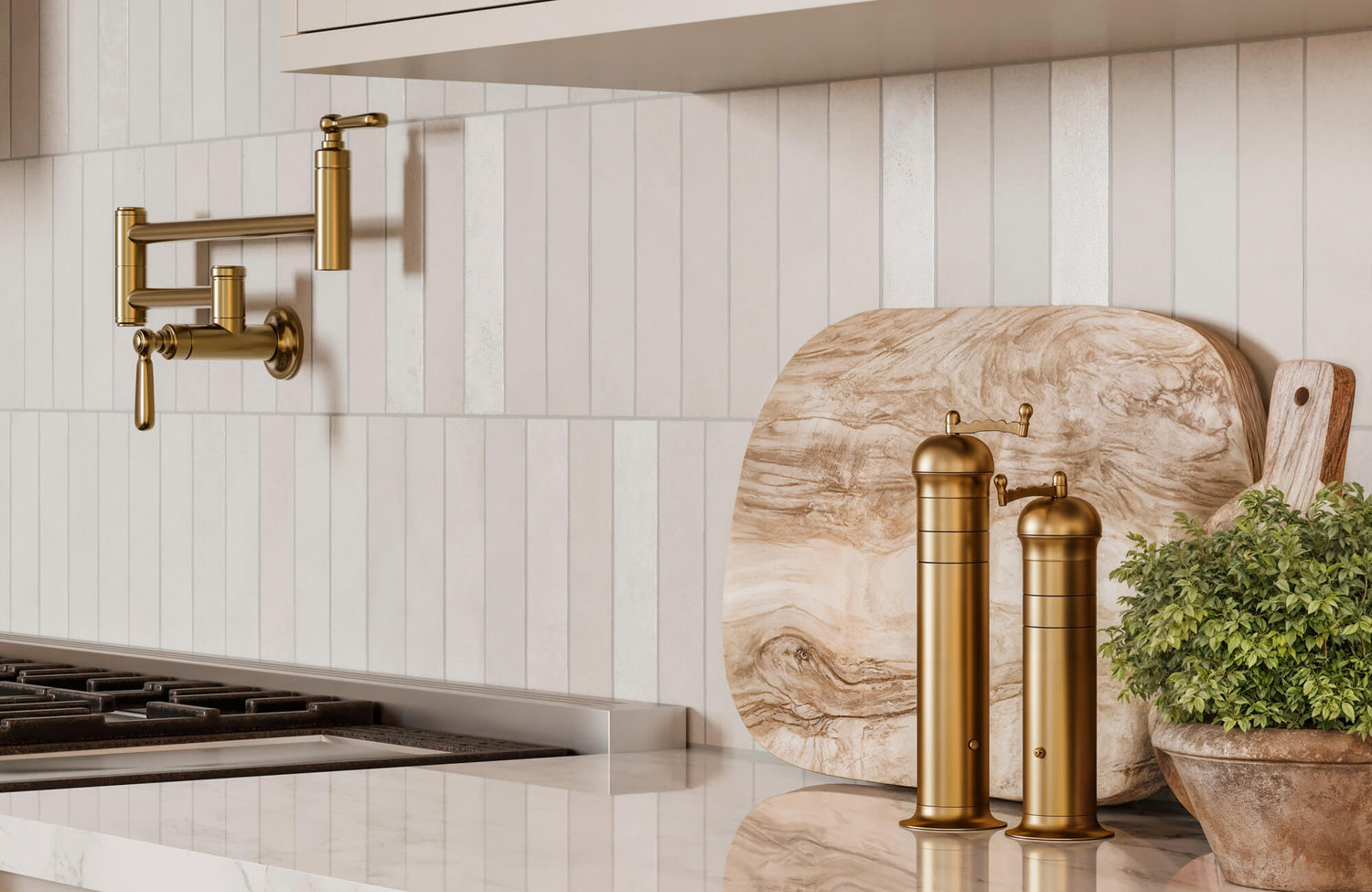
In Japandi interiors, where Scandinavian simplicity meets Japanese naturalism, vertical tiles mimic the vertical rhythm of wood slats or shoji screens. They echo natural forms like trees, reeds, or bamboo, reinforcing a grounded, meditative ambiance. Industrial spaces also benefit from vertical orientation, especially when you want to accentuate raw structural elements. Tiles running upward can play off metal beams, concrete surfaces, or exposed plumbing, enhancing the rugged, textural feel while injecting a dose of order and sophistication. A perfect example is the Jaden 2.5x16 Glossy Ceramic Tile in Eggshell, as shown in the photo above, with its elongated form and soft white tone that adds vertical lift and a polished, luminous finish to the space.
To help visualize how different orientations work in your own space, you can now use our augmented reality (AR) tool to preview tile layouts directly on your walls, making it easier than ever to choose confidently and creatively. With this technology, you can move from inspiration to decision with clarity, knowing exactly how your design will come to life.
Combining Directions for Creative Impact
If you're drawn to more adventurous or personalized aesthetics, mixing tile orientations can be a powerful tool. By using vertical tiles to frame a focal point such as a range hood, open shelving, or vanity mirror, you instantly create contrast and draw attention to that area. Flanking this with horizontal tiles on the adjacent walls also keeps the overall design grounded while adding depth and intrigue to the space.
This approach works best when the transitions between orientations are thoughtfully placed. You want the shift in direction to feel intentional, not jarring. Using the same tile color or finish across both directions can further unify the look, even as the lines move differently. This layering of texture and movement adds character without clutter, giving your backsplash or accent wall a curated, designer-quality feel. When done right, mixing orientations doesn't disrupt the room; it elevates it.

Optimizing Functionality by Room Type
Your choice of tile direction should consider how a room functions and where your backsplash is located. Each orientation supports different workflows and visual strategies depending on how the space is used, whether in a compact bathroom or a busy kitchen.
Kitchen Work Zones
Kitchens naturally lend themselves to horizontal tile layouts due to the dominance of side-to-side elements. From countertops and open shelving to drawer fronts and hood lines, the kitchen operates on a horizontal axis. By continuing this direction with your backsplash tiles, you also reinforce that visual rhythm and create a seamless transition across different zones. This sense of alignment enhances the functionality of the space, especially when you're moving along the counter during meal prep or cleanup.
In layouts like galley or U-shaped kitchens, maximizing lateral space is essential, and horizontal tiles help accomplish just that. They visually stretch the walls and tie work zones together, giving the kitchen a unified and structured appearance. A standout example is the Juliet 2.5x10 Matte Porcelain Tile in Charcoal, which brings a bold, modern sensibility while maintaining the understated texture of a matte finish. Whether you're aiming for a contemporary industrial look or balancing dark accents with warm wood or brass, this tile in gray tone supports a smooth workflow and avoids visual fragmentation, making your kitchen feel both efficient and well-balanced.
Bathroom Vanities and Small Spaces
Bathrooms often benefit from the elongating effect of vertical tiles, particularly around vanities and mirrors where visual compression is common. In tight spaces, vertical lines help draw the eye upward, making ceilings feel taller and the entire room more spacious. If you're working with a narrow powder room or a bathroom with low natural light, this orientation can counteract those limitations and introduce a sense of vertical lift that opens up the space.
A beautiful example of this approach is the Maisie 2.5x16 Glossy Ceramic Tile in Pistachio, which brings a soft, refreshing green to the walls while emphasizing verticality through its elongated shape and glossy finish. Beyond perception, vertical tiles like these also play a functional role in managing visual clutter. Toiletries, wall-mounted hardware, and other bathroom essentials often crowd the eye, especially around the sink. Vertical lines provide an organized, calming backdrop that guides the gaze in a single direction rather than scattering it across various elements. When paired with tall cabinets or elongated mirrors, the vertical orientation supports a more cohesive and serene design language that complements the room’s structure.
Aligning Tiles with Fixtures and Features
To get the most out of your tile orientation, it’s important to consider how it interacts with dominant features in the room. Your backsplash should work in harmony with architectural elements like windows, range hoods, shelving, and built-ins. When you align the tile direction with these fixtures, you create continuity that makes the space feel intentionally designed rather than pieced together. For example, horizontal tiles beneath a wide window can visually extend its breadth, reinforcing the sense of openness and symmetry.
In the kitchen photo shown above, the backsplash showcases the Catalina 2x16 Matte Porcelain Tile in Clay, laid in a herringbone pattern that artfully guides the eye toward the centered range hood. The tile’s warm, earthy brown tone and elongated shape draw out the linear rhythm of the open shelving, while the angled layout introduces a layer of visual interest that complements the surrounding features. Choosing orientation based on these fixed elements ensures that the tile feels integrated, not imposed, and strengthens the visual architecture of the space as a whole.

Light Shadow and Tile Orientation
Lighting has a powerful influence on how tile orientation is perceived, often transforming a backsplash from a passive backdrop into an active design feature. Depending on your lighting setup, the direction you lay your tiles can either soften the room through even illumination or introduce texture and drama through shadow play. Recognizing how these elements interact can help you craft a space that feels intentional, balanced, and full of depth.
When backsplash tiles are laid horizontally, they distribute both natural and artificial light across the wall in a smooth, lateral flow. This setup is especially effective in kitchens or bathrooms where under-cabinet lighting is common, as the horizontal lines reflect and disperse light evenly. That effect also minimizes harsh contrasts, reduces glare, and creates a unified glow that brightens smaller or enclosed rooms. It’s a subtle design choice that significantly enhances both aesthetics and functionality, making the backsplash feel cohesive and clean while improving overall visibility.
In contrast, vertical backsplash tiles respond to directional lighting by creating long, sculpted shadows that emphasize surface texture and form. With pendants or sconces casting light at an angle, vertical lines interact dynamically, adding visual movement and dimensionality to the wall. This technique is also ideal for spotlighting specific areas like a stove backsplash or statement wall, especially when the tiles have distinctive finishes. The result is a backsplash that evolves throughout the day as light shifts, lending a layered, atmospheric quality to the room.

Resale Potential and Buyer Preferences
Your backsplash may seem like a minor detail, but when it comes to resale, it can have a surprisingly strong influence on how buyers perceive your space. Tile orientation, in particular, communicates subtle messages about style, upkeep, and how recently the space has been updated. Choosing between vertical and horizontal layouts can also affect whether a room feels timeless or trend-driven, and that impression carries weight when buyers are making comparisons and forming emotional responses to your space.
Horizontal tile layouts, especially in the form of classic subway tiles, tend to be the safest and most widely accepted choice. Their linear design blends easily with a range of cabinetry and countertop styles, offering a clean, understated look that doesn’t demand attention but still reads as fresh and current. This kind of visual neutrality is also an asset during open houses or photo listings, where buyers often prefer spaces they can imagine personalizing without the need for immediate changes. If you're looking to appeal to the broadest possible audience and boost resale confidence, horizontal orientation provides both timeless appeal and market-tested reliability.
That said, vertical tiles can serve as a high-impact differentiator, especially in spaces where you want to showcase a curated or upscale design. When used sparingly and strategically, such as around a focal wall or key feature like a range hood, vertical tiles create visual interest that sets your space apart. This approach signals a higher level of design intention and can attract buyers who value custom touches. However, vertical orientation carries more stylistic weight, so it works best when the rest of the room maintains balance and cohesion. Used thoughtfully, it can add architectural flair that elevates your space above others in the market.
Making the Right Decision for Your Space
Choosing between vertical and horizontal backsplash tiles is not just about looks; it’s about shaping how your room feels, flows, and functions. Vertical layouts lift the eye and energize tight spaces, while horizontal lines ground and widen a room with calm clarity. Your decision should also reflect the room’s proportions, lighting, surrounding features, and your overall design intent. When thoughtfully chosen, tile orientation becomes a purposeful design element that enhances both your everyday experience and your space’s lasting value.
To ensure your tile orientation and every design decision work in harmony with your space, it helps to have expert guidance rooted in both creativity and craftsmanship. Our design services provide tailored support at every stage, from concept to execution, helping you refine ideas, visualize options, and achieve a space that reflects your unique lifestyle. With access to curated materials and experienced consultants, you can confidently make choices that elevate your space’s beauty and function with lasting impact.