A decorative bowl may seem like a small finishing detail, yet the material behind it determines how gracefully it will age across years of styling, handling, cleaning, and seasonal change. Marble and wood both carry the appeal of natural materiality, but they endure the home in very different ways. One is dense, cool, and mineral-based; the other is organic, tactile, and responsive to its environment.
When comparing marble vs wooden decorative bowls, longevity is not measured by strength alone. A bowl that lasts well must preserve its structure, surface beauty, and visual relevance over time. Marble often has the advantage in hardness and permanence, while wood offers resilience, warmth, and a softer form of aging when properly cared for. The better choice depends on where the bowl will live, how it will be used, and how much upkeep the owner is willing to accept.

The Arlian Marble Bowl brings soft sculptural movement to a clean surface, highlighting the quiet elegance of white natural stone.
The Short Answer on Decorative Bowl Longevity
Marble decorative bowls generally last longer as display objects because natural stone is dense, structurally stable, and less vulnerable to gradual deformation. When kept away from acidic substances, harsh cleaners, and accidental impact, a marble bowl can remain visually refined for decades. Its weight, cool surface, and stone veining also give it a sense of permanence that aligns well with luxury interiors, sculptural tablescapes, and formal console styling. Edward Martin’s Arlian Marble Bowl reflects this kind of quiet permanence, with its pale stone surface and softened scalloped edge giving the material a decorative presence that still feels restrained.
Wooden decorative bowls can also last for many years, especially when crafted from durable hardwood and maintained with appropriate conditioning. Their longevity depends more directly on environment and care. Wood expands and contracts with humidity, absorbs moisture if left unprotected, and may split or warp when exposed to dryness, heat, or repeated washing. Unlike marble, though, wood often wears in a softer and more forgiving way. Minor marks can blend into the grain, and a well-maintained patina may enhance the character of the piece rather than diminish it.
The simplest answer is this: marble usually wins for long-term structural durability, while wood can last beautifully when its organic nature is respected. For a purely decorative centerpiece, marble is often the more enduring option. For a warmer, lighter, high-touch accent, wood remains a strong choice if upkeep is part of the expectation.

The Denwick Rosa Marble Large Bowl uses rose-toned veining to create a warm, expressive focal point with refined stone presence.
The Material Science of Premium Marble Decor
Marble begins as limestone transformed by heat and pressure, creating a crystalline stone valued for its veining, luminosity, and substantial presence. In decorative bowls, this mineral structure provides impressive density and compressive strength. Its durability, though, is not the same as invincibility. Marble is primarily composed of calcite, a mineral that is hard enough for long-term decorative use but chemically sensitive compared with some other stones. Yet the same mineral composition that gives marble its elegance also defines the care boundaries that determine how long it remains pristine.
Understanding the Mohs Hardness Scale for Calcite Minerals
On the Mohs hardness scale, calcite sits around 3, which means marble is softer than granite, quartzite, and many engineered stone surfaces. This can surprise buyers who associate stone with universal toughness. Marble is certainly durable enough for a decorative bowl, but it can still scratch when exposed to harder materials such as metal keys, abrasive ceramics, gritty dust, or rough cleaning pads.
For this reason, marble performs best when treated as a refined decorative material rather than a utility vessel for everything a household may drop into it. Used as a centerpiece, sculptural accent, or display bowl for dry objects, it can retain its beauty for an exceptionally long time. Used as a catchall for coins, keys, cosmetics, and metal accessories, it may develop visible surface marks sooner.
The key distinction is that marble resists time better than it resists careless contact. A bowl displayed on a coffee table or console may look nearly unchanged after years, while one placed near an entryway with daily hard-object use may show wear more quickly. In rooms where daylight, artificial lighting, and surrounding finishes affect the appearance of stone, evaluating tone and finish in context becomes important. Edward Martin’s design services can help refine these material decisions, particularly when a bowl needs to coordinate with stone surfaces, wood furniture, metal accents, or layered decorative palettes. For personalized sourcing questions or finish guidance, the contact page offers a practical route to connect with the design team without interrupting the selection process.
The Structural Reality of Stone Porosity and Microfractures
Marble is a porous natural stone, meaning its surface can absorb liquids if unsealed, poorly sealed, or exposed long enough. Porosity affects visual longevity more than structural life. A marble bowl may remain physically intact while still developing stains, dull spots, or discoloration that alter its appearance. Oils, pigmented liquids, water rings, and acidic residues are common culprits. The pronounced rose veining seen in Edward Martin’s Denwick Rosa Marble Large Bowl makes this point visually clear, since natural movement, color variation, and mineral patterning are part of marble’s appeal as well as part of what requires thoughtful care.
Natural stone can also contain veining, fissures, and microfractures. In premium decor, these characteristics are usually part of the visual richness rather than immediate defects. They do, though, influence how the bowl responds to impact, temperature variation, and handling. A sharp blow along a vulnerable edge may chip the stone, while a drop onto tile or concrete can cause cracking. This is why marble’s longevity is best understood as conditional permanence. In stable interior environments, it can outlast many decorative materials. Under impact, acidic exposure, or poor maintenance, its refined finish may decline faster than its substantial appearance suggests.

The Avirel Small Wooden Bowl adds organic warmth through its rounded profile, pronounced grain, and natural wood variation.
The Lifespan Dynamics of Artisan Hardwood Bowls
Wooden decorative bowls age according to an entirely different logic. Rather than relying on mineral density, wood depends on grain structure, species hardness, moisture balance, and finish quality. A dense walnut, maple, teak, or acacia bowl finished properly will behave very differently from a softer or poorly dried wood bowl. Construction quality matters as much as species. Bowls carved from stable, well-seasoned wood are less likely to crack, cup, or split over time.
Species Selection and the Impact of Janka Hardness Ratings
The Janka hardness rating measures a wood species’ resistance to denting and wear. In decorative bowls, this rating helps explain why some woods withstand handling better than others. Hardwoods such as maple, walnut, oak, teak, and acacia generally offer better longevity than softer woods because their fibers resist compression and surface damage more effectively. Edward Martin’s Avirel Small Wooden Bowl illustrates the appeal of visible grain in this category, where the rounded form and tonal variation make the material’s natural structure part of the design language.
Still, hardness is only part of the story. Grain pattern, oil content, drying method, and finish all influence durability. Teak, for example, contains natural oils that improve moisture resistance, while walnut offers a rich grain and moderate hardness prized in artisan decor. Maple can be dense and durable, but it may show staining or dryness if not cared for properly. Wooden bowls with open grain may absorb more moisture or residue than tightly grained species. A smooth, well-sealed interior helps extend life, especially if the bowl is used to hold fruit, wrapped goods, or decorative objects. For buyers seeking a long-lasting wood piece, species transparency and finish information are important indicators of quality.
How Moisture and Relative Humidity Alter Wood Cell Integrity
Wood contains cellular structures that expand and contract as moisture levels change. Even when sealed, it remains sensitive to relative humidity. In a damp environment, wood can swell or develop surface unevenness. In very dry rooms, it may shrink, check, or split. These changes can be subtle at first, but over years they influence both structure and appearance.
This is the central vulnerability of wooden decorative bowls. A bowl placed near a sunny window, heater, fireplace, or air-conditioning vent may dry unevenly. One used in a kitchen or bathroom may absorb moisture if its finish is compromised. Repeated exposure to wet fruit, standing water, or damp cloths can accelerate warping and discoloration. Properly cared for, wood can maintain its integrity for a long time. It should generally be wiped clean rather than soaked, kept out of the dishwasher unless explicitly labeled otherwise, and conditioned when the finish requires it. Since manufacturer finishes vary widely, care instructions should always be checked before applying oils, waxes, soaps, or cleaning products.

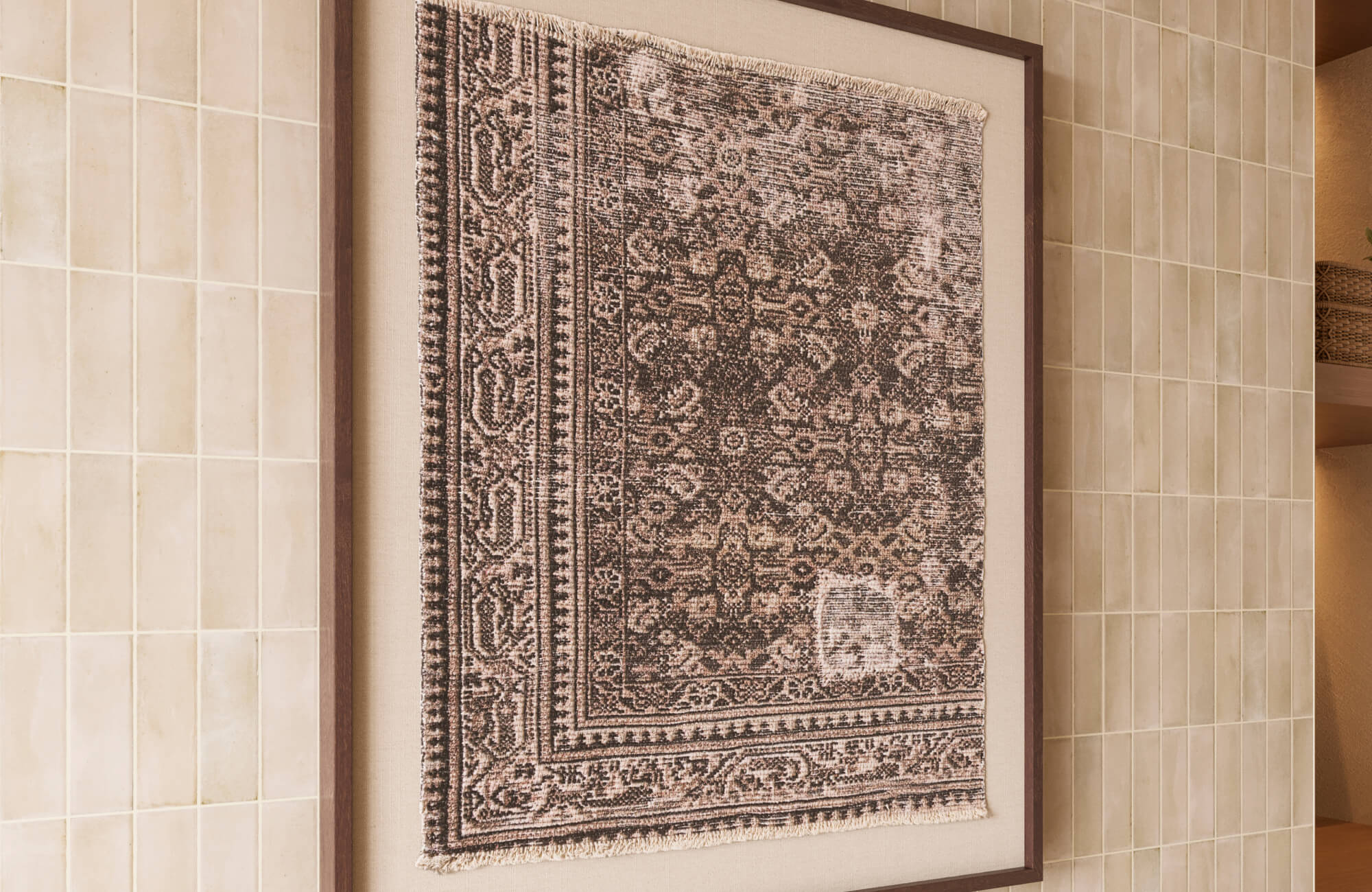
Catalina 2 x 16 Matte Porcelain Tile in Clay, open wood shelving, woven accents, and the Hilda 12" Pendant in Distressed Bronze create a layered, welcoming kitchen composition.
Environmental Threats and Wear Testing in Shared Living Spaces
Material longevity becomes clearer when marble and wood are considered in the places where decorative bowls are actually used. Coffee tables, dining tables, vanities, shelves, kitchen islands, and entry consoles all present different risks. Some expose bowls to sunlight. Others invite frequent handling. Some encourage dry display, while others make contact with fruit, water, cosmetics, or small metal objects more likely. The right comparison is not simply which material is stronger. It is which material is better suited to the conditions it will face.
Impact Resistance and Vulnerability to Shattering or Cracking
Marble has excellent compressive strength but limited forgiveness under sudden impact. A thick marble bowl may feel nearly indestructible in the hand, yet a fall onto a hard floor can chip an edge, crack the vessel, or break it entirely. Its weight also increases the risk of damage to the surface below if dropped or dragged.
Wood behaves differently. It may dent, scratch, or bruise from impact, but it is less likely to shatter. A wooden bowl dropped from a table may survive with a visible mark rather than a structural break. This makes wood more practical in rooms where objects are moved frequently, children handle decor, or the piece is used as a casual catchall. For display-only use, marble’s rigidity is an advantage. For high-touch use, wood’s resilience can be more forgiving. Longevity, in this case, depends less on the material’s prestige and more on the likelihood of accidents.
Surface Degradation From Sunlight and Ultraviolet Exposure
Sunlight affects both materials, but in different ways. Marble may experience subtle fading, yellowing, or finish dulling over long periods if exposed to strong direct light, particularly if the stone has been treated with certain sealers. The change is usually gradual and less dramatic indoors, but a marble bowl placed permanently in intense sunlight may not retain the same surface clarity indefinitely.
Wood is more visibly responsive to ultraviolet exposure. Some species darken, while others lighten or develop uneven coloration where objects rest against the surface. Sunlight can also contribute to drying, which increases the risk of checking or fine cracks. Bowls displayed near large windows should be rotated occasionally to encourage even aging. Neither material is ideal for prolonged outdoor exposure unless specifically designed and finished for that setting. Marble can stain and weather, while wood can swell, split, or lose finish integrity. Decorative bowls intended for patios, covered terraces, or garden rooms should be evaluated according to the manufacturer’s material and care guidance.

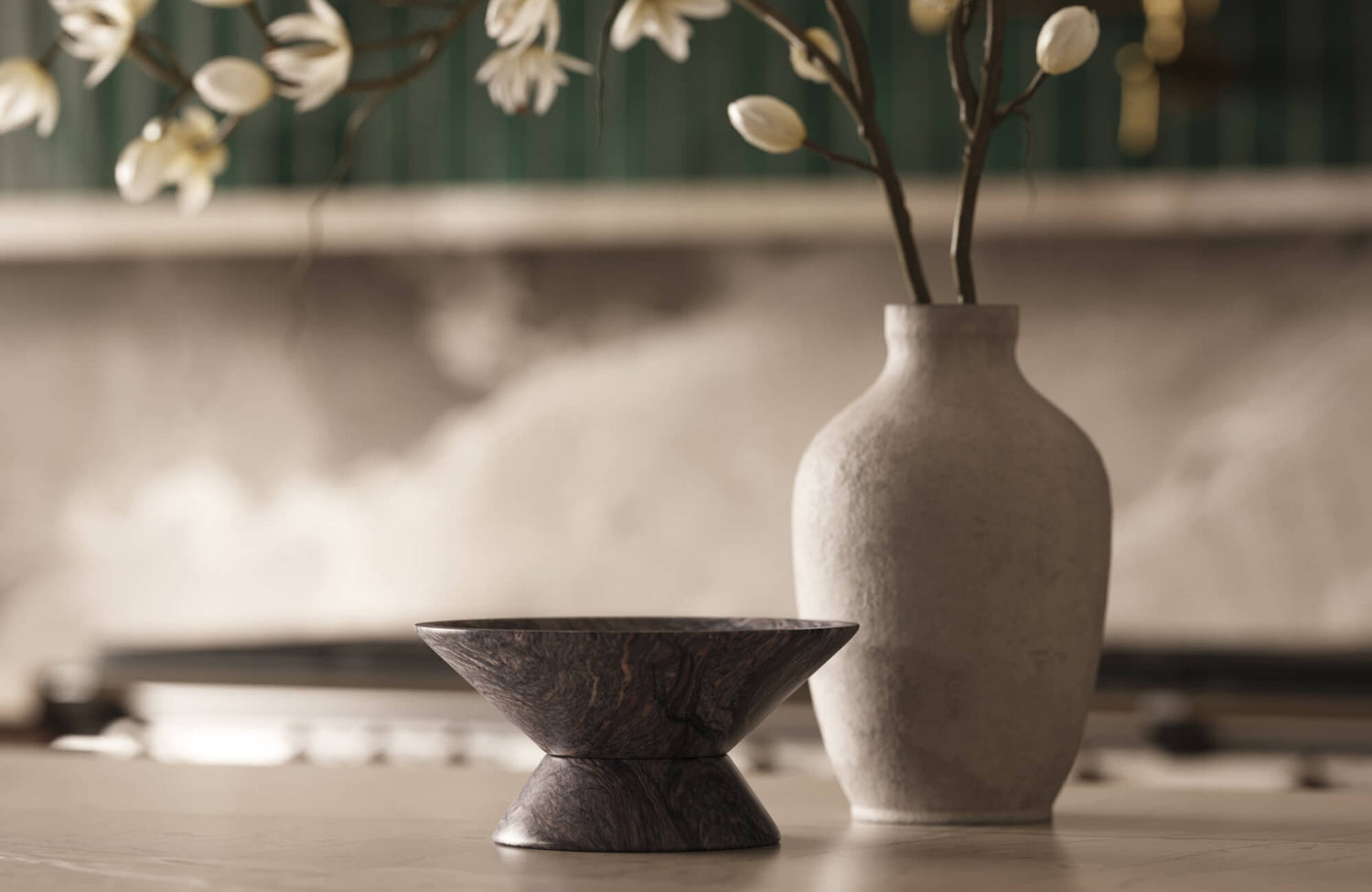
Jaden 2.5 x 16 Glossy Ceramic Tile in Tender Gray, green cabinetry, brass fixtures, and a fluted bowl create a balanced kitchen palette of softness, texture, and polish.
Staining Etching and Patina Over Decades of Display
Visual longevity often matters as much as structural endurance. A decorative bowl may remain intact while looking tired, stained, or incompatible with the room’s evolving design. Marble and wood diverge sharply here. Marble tends to look best when preserved close to its original finish. Wood often gains depth through gradual aging, provided that wear is even and well-managed. Marble’s risks are stain absorption and chemical etching. Wood’s risks are discoloration, drying, and uneven surface wear. These distinctions are central to choosing between them.
Acid Sensitivity and the Permanent Etching of Polished Stone
Marble is vulnerable to acids because calcite reacts chemically with acidic substances. Citrus, vinegar, wine, certain cleaners, and even some fragranced botanical blends can dull or etch the surface. Etching is not the same as staining. A stain alters color through absorption, while an etch changes the surface sheen by chemically wearing away the finish.
This matters especially when decorative bowls are used for fruit, potpourri, cosmetics, or entertaining. Wet fruit, acidic peels, and liquid residue can leave marks on marble if the surface is not properly protected. Decorative marble vessels should not be used for wet fruits, acidic foods, or unpackaged edible items unless the product is specifically certified as food-safe or treated with a specialized food-grade topical sealer. Even then, the manufacturer’s care and use guidelines should take priority over general advice. For dry display, marble remains highly durable. For acidic contact, it requires caution. A marble bowl can last for generations and still lose its polished elegance quickly if used in the wrong way.
The Development of a Rich Hardwood Grain Patina
Wood ages through patina, a gradual deepening of color, sheen, and surface character. On a high-quality hardwood bowl, this can be desirable. Walnut may become richer, teak may grow warmer, and hand-carved surfaces may develop a softness that feels collected rather than worn out.
Patina becomes a problem when it turns uneven, sticky, dry, or stained. Water rings, fruit residue, oil buildup, and harsh cleaning products can create blotchy surfaces that feel neglected rather than naturally aged. A bowl used for dry decorative objects will usually age more gracefully than one exposed to repeated moisture or food contact without proper finish protection. Wood’s advantage is that some surface wear can be improved. Depending on the finish, a wooden bowl may be reconditioned with mineral oil, beeswax-based conditioner, or professional refinishing. Marble can also be professionally restored, but polishing out etching or chips is typically more specialized and less casual. In daily life, wood often offers a more forgiving path to visible renewal.
Selecting the Right Decorative Material for Your Lifestyle
Marble decorative bowls usually last longer from a structural standpoint. They resist warping, shrinking, and environmental movement, making them especially strong candidates for long-term display. Their vulnerabilities are more specific: acidic substances, staining, scratching from harder objects, and impact along edges or veining.
Wooden decorative bowls require more environmental awareness, but they offer a different form of longevity. A well-crafted hardwood bowl can age beautifully, develop patina, and remain useful for years when kept dry, conditioned appropriately, and protected from harsh conditions. Its softer resilience may even make it more practical in rooms where objects are handled frequently. For the longest-lasting decorative statement with minimal upkeep, marble is typically the better choice. For warmth, lighter handling, and an organic surface that can mature gracefully, wood remains a timeless alternative. The strongest decision comes from matching the material not only to the design of the room, but to the way the object will live within it.