Choosing the right flooring for a home with pets is a major decision for any homeowner. The ideal option needs to be not only beautiful and durable but also resistant to scratches, spills, and the general wear and tear that comes with a furry family member. When considering long-lasting, stylish options, two contenders often rise to the top of the list: tile and vinyl flooring.
This blog post is designed to help you make an informed decision by weighing the pros and cons of both materials. We will cover critical factors like durability, maintenance, comfort, and more. Our goal is to provide a comprehensive analysis so you can confidently select the best flooring to create a beautiful and pet-friendly environment for years to come.

Durability Against Claws and Play
Pets bring energy and joy to a home, but their claws and playtime activities can put flooring to the test. When evaluating tile versus vinyl, it’s important to consider how each surface performs under the stress of scratching, impact, and long-term wear.
Scratch and Scuff Resistance
Tile flooring, particularly porcelain and glazed ceramic, ranks high in hardness on the Mohs scale, making it naturally resistant to scratches from pet claws. Its dense, non-porous surface also stands up well to scuff marks in busy areas.
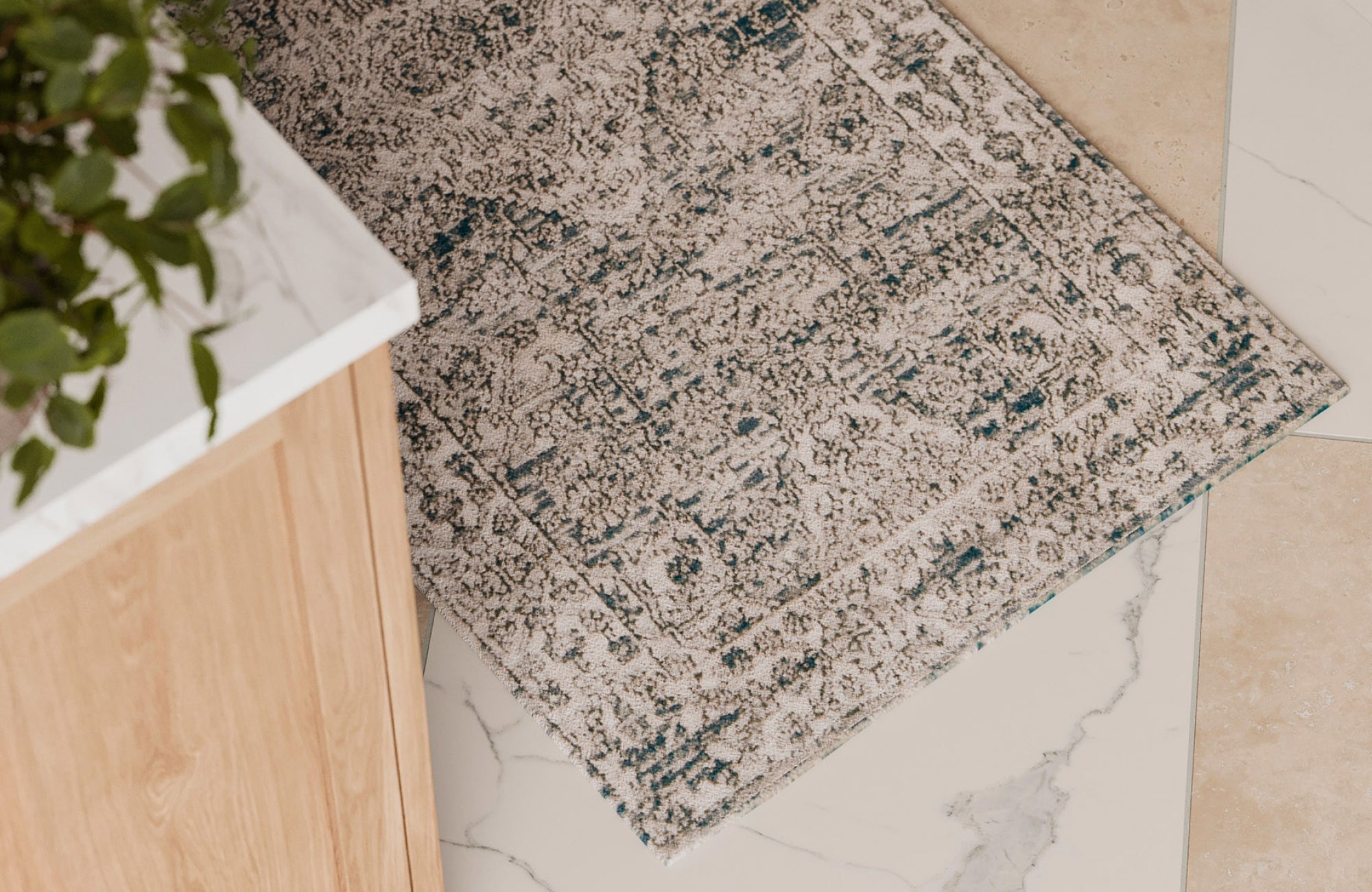
A strong example is Edward Martin’s Leona 12x12 Matte Porcelain Tile in Amani Grey, pictured above, which balances durability with a refined stone-like aesthetic, ideal for active, pet-friendly households. Vinyl, while softer by nature, relies on protective wear layers, typically 12–20 mils in residential products, to defend against claw marks. Even so, lower-grade options may show surface wear more quickly over time.
Impact and Dent Resistance
While tile resists scratching exceptionally well, its rigid structure can occasionally be vulnerable to chips or cracks under heavy impact, such as dropped toys or shifting furniture. Vinyl performs differently, with flexible core layers that absorb shocks and prevent denting. This makes vinyl more forgiving in households where pets play vigorously or where pet furniture and accessories are frequently moved.
Long-Term Wear and Tear
Over decades, tile maintains both its finish and structural integrity, requiring only periodic grout sealing to keep surfaces protected against stains. This longevity makes it one of the most durable flooring options available. Vinyl also performs strongly over time, particularly with modern rigid core (SPC/WPC) technologies that improve stability and resistance. However, its wear layer can eventually dull under repeated abrasion, and unlike tile, vinyl cannot be refinished once worn through.

Spills and Stain Management
For pet owners, flooring must withstand frequent accidents, water spills, and the occasional mess without compromising appearance or hygiene. Tile and vinyl both offer strong performance in this area, though their methods of protection and maintenance differ.
Waterproof Properties
Porcelain and ceramic tile are inherently water-resistant, making them a reliable solution for managing spills and pet accidents. When paired with properly sealed grout, tile installations offer near-complete moisture protection while retaining their timeless style. Vinyl, particularly rigid core options such as SPC and WPC, is fully waterproof across its surface and seams, providing added reassurance in spaces with high pet activity.
Stain Resistance and Ease of Cleaning
Tile’s dense surface naturally resists most staining agents, and with epoxy or sealed grout, it can maintain a clean, fresh appearance for decades. Regular maintenance preserves both performance and aesthetics, and following manufacturer guidelines ensures the best long-term results.
A great example is Edward Martin’s Preston 8x48 Matte Porcelain Tile in Pine, shown above, which pairs the inviting warmth of wood tones with porcelain’s non-porous resilience for easy stain management without sacrificing style. Vinyl also protects effectively with UV-cured wear layers and smooth surfaces that simplify day-to-day cleaning.
Managing Odors
When grout is properly sealed, tile remains highly effective at blocking liquid absorption, helping prevent odors from developing over time. Routine cleaning further supports a hygienic environment for both pets and owners. Vinyl, being fully non-porous, also resists odor buildup and provides a practical solution for multi-pet households. With the right care, both materials can contribute to a fresh, clean home environment.

Comfort and Safety for Pets
Beyond durability and maintenance, flooring must also support the everyday comfort and safety of pets. Surface temperature, traction, and cushioning all serve as key factors in creating an environment where animals can move, rest, and play without risk.
Surface Temperature
Tile naturally feels cooler underfoot due to its thermal conductivity, giving pets a refreshing surface to rest on during warmer months. This cooling effect is especially valuable in hot climates or for breeds that are prone to overheating. In colder seasons, people often balance this with area rugs or radiant heating systems, ensuring year-round comfort for both pets and people. Vinyl, with its layered construction, typically retains a slightly warmer feel, making it a versatile option in regions with more moderate conditions.
Providing Traction
In addition to comfort, safety underfoot is essential for pets. Modern tile collections feature matte, textured, and slip-resistant finishes that provide strong traction, helping reduce the risk of slipping on smooth surfaces. Edward Martin’s slip-rated porcelain offerings are a good example, blending safety with sophisticated design. Vinyl also addresses traction needs through embossed textures on luxury vinyl planks, giving you flexibility in selecting pet-friendly surfaces that complement your design goals.
Overall Pet Comfort
Tile’s firm, stable surface supports pets as they move and play, while its non-porous composition helps maintain cleaner indoor air by minimizing allergens and dander. A warm-toned option like Edward Martin’s Catalina 2x16 Matte Porcelain Tile in Cotto, displayed above, shows how tile can provide both dependable performance and inviting character in mudrooms or entryways. Vinyl, on the other hand, introduces additional cushioning through its layered core structure, softening impact and reducing claw noise, a quality that can be especially appreciated in lively, multi-pet households.

Installation and Repair Considerations
When selecting flooring for a pet-friendly home, it’s important to weigh not only performance but also the practical aspects of installation, maintenance, and long-term repair. Tile and vinyl each present distinct requirements and costs that influence their suitability for different households.
Installation Process
Tile installation is a more involved process, requiring careful subfloor preparation, mortar setting, precise spacing, and grout application. The craftsmanship ensures lasting strength and alignment, but because of the complexity, professional installation is strongly recommended. Vinyl, particularly click-lock luxury vinyl planks (LVP) or tiles (LVT), offers a simpler alternative. It can be installed quickly with minimal tools and no adhesives, making it appealing for DIY projects or fast remodels. However, larger spaces or intricate layouts may still benefit from expert handling.
Repairability
While tile delivers impressive longevity, repairing damage can be labor-intensive. A cracked tile must be carefully removed, the grout replaced, and a new tile reset, often requiring professional assistance for the best results. Vinyl, especially in floating systems, is easier to repair. Individual planks or tiles can be swapped out without disturbing the surrounding surface, minimizing both disruption and cost when addressing pet-related accidents or wear.
Cost of Installation and Materials
Tile, particularly premium porcelain or natural stone, generally carries a higher price point per square foot, and the professional labor required for installation increases overall investment. Vinyl, including high-quality rigid core products, is more budget-friendly upfront and less costly to install. That said, tile often delivers greater value over time, as its durability and longevity can extend for decades, while vinyl may need replacement sooner depending on wear.

Aesthetic Appeal and Style Options
While performance and durability are crucial, flooring also contributes significantly to a home’s overall design character. Tile and vinyl each provide unique aesthetic benefits, offering you enough flexibility in achieving a desired look.
Design Versatility
Tile offers virtually endless design possibilities, from timeless ceramic mosaics to large-format porcelain slabs that replicate the appearance of natural stone, marble, or concrete. Available in finishes ranging from glossy to matte, today’s porcelain also benefits from advanced digital printing that produces highly realistic colors, veining, and surface textures.
A striking example is Edward Martin’s Brody 24x24 Checkerboard Matte Porcelain Tile in Sand and Smoke, shown above, which creates a bold geometric statement that balances modern appeal with vintage character. Vinyl has also advanced considerably, with luxury vinyl planks (LVP) and tiles (LVT) offering convincing wood, stone, and textured looks in a wide range of sizes, providing affordable design flexibility.
Grout and Seams
The way flooring handles seams and joints also affects its overall appearance. Tile installations incorporate grout lines, which can enhance a design with complementary tones or, if not maintained, may discolor. Modern grout formulas and sealants, however, make it easier than ever to preserve clean lines and vibrant color. Vinyl, particularly click-lock floating systems, creates a nearly seamless surface with tight joints, lending a continuous, modern look across larger spaces.
Final Appearance and Resale Value
Tile remains one of the most premium finishes available, valued for both its timeless aesthetics and long-term durability. High-quality porcelain and natural stone elevate key areas such as kitchens, bathrooms, and entryways while also contributing to higher resale appeal. With modern porcelain technology, owners can select from matte, polished, textured, and embossed finishes that authentically replicate the look and feel of natural materials like wood, stone, or concrete. This range allows for both classic elegance and contemporary style, without sacrificing performance.
To make these design choices easier, Edward Martin’s Augmented Reality (AR) Visualization Tool allows you to preview tiles at scale in your own rooms, test layout patterns, adjust grout colors and joint widths, and even evaluate sheen and LRV in real lighting conditions. From there, you can seamlessly order tile samples to confirm details such as color accuracy, texture, edge profile, and slip resistance. Together, these tools empower confident decision-making and highlight tile’s ability to deliver lasting beauty and added value.
A Pet-Owner's Guide to Choosing the Right Flooring
In the end, deciding between tile and vinyl flooring ultimately depends on your household’s needs, budget, and lifestyle. Both offer pet-friendly benef1its that outperform carpet or unsealed wood. For those seeking a premium, long-term investment that can withstand daily wear from pets while enhancing resale value, high-quality tile remains the superior choice.
If ease of installation, added cushioning, and day-to-day practicality are higher priorities, luxury vinyl is a strong alternative. Ultimately, both materials provide a durable and stylish foundation, ensuring that you and your pets can enjoy a comfortable, functional, and beautiful home together!