In the curated world of interiors, where every element tells a story, the choice between rug and carpet becomes more than a matter of function—it’s a reflection of lifestyle, aesthetics, and intention. Textiles underfoot define how a space feels, both visually and tactilely, weaving comfort and character into the architecture of daily life. Whether grounded in the quiet luxury of a hand-knotted rug or the seamless continuity of a wall-to-wall carpet, flooring creates the stage on which design unfolds.
This article explores how these two elements differ in structure, practicality, and long-term value, offering clarity for homeowners, designers, and renovators alike. Each section unveils fresh dimensions, from how they perform underfoot to how they influence acoustics, energy, and air. With precision and care, we guide you through the details, so you can step confidently into a space that feels as beautiful as it is intentional.

Structural Composition and Installation
Rugs and carpets differ significantly in how they are made, applied, and integrated into a space. These differences affect flexibility, permanence, and the overall user experience.
Construction Techniques and Material Architecture
Rugs are crafted using methods like hand-knotting, hand-weaving, hand-tufting, or machine weaving, allowing for intricate detailing and textural diversity. They often feature natural fibers such as wool, cotton, or silk, which offer both visual richness and tactile comfort. Conversely, carpets, usually broadloom, rely on synthetic blends like nylon or polyester, tufted into a backing layer to cover entire floor surfaces.
The structural goal of carpets is uniformity and coverage, optimized for consistent footfall and spatial continuity. While carpets are engineered for durability over large areas, rugs prioritize design flexibility and portability. This architectural contrast plays a critical role in how each performs over time and under varying use conditions.
Installation Requirements and Labor Intensity
Carpet installation involves stretching, adhesive application, and seam joining, all requiring professional labor and tools. It also demands floor preparation to ensure uniformity, often adding layers like underpadding and vapor barriers. Rugs, on the other hand, bypass all of these processes, needing only placement and optional rug pads to remain secure. This simplicity allows rugs to be easily repositioned or removed without structural disruption.
For those remodeling frequently or living in temporary residences, the absence of installation complexity makes rugs a superior choice. Carpets, once installed, become semi-permanent fixtures that require demolition-level work to replace.
Portability and Spatial Adaptability
Rugs can be transferred between rooms, stored seasonally, or relocated to new homes, offering high adaptability. This mobility allows users to redesign interiors without structural changes, promoting a dynamic approach to space planning. Rugs also adapt well to layered designs, placed over hardwood, tile, or even low-pile carpet to create visual zoning or tactile variation. Their modular nature encourages room-by-room experimentation with layouts and themes. In contrast, carpets, bound to their dimensions and adhesives, are immobile and fixed. Carpeted spaces lack versatility and must conform to one enduring floor plan.

Maintenance and Longevity
Ease of care and product lifespan determine how practical a floor covering remains over the years of use. Maintenance routines, wear patterns, and cleaning capabilities vary dramatically between rugs and carpets.
Cleaning Protocols and Ease of Upkeep
Rugs can be lifted and cleaned externally using immersion washing, pressure cleaning, or mechanical dust removal. Their smaller size makes them more accessible for vacuuming, spot cleaning, and rotating to mitigate wear. On the flip side, carpets are immobile and require in-place treatments like steam extraction or encapsulation cleaning, which are less effective for deep soil removal.
Stains on rugs can be isolated and treated without affecting the surrounding floor, unlike carpets, where damage tends to spread or set permanently. Because rugs are not affixed, airflow beneath them reduces dust buildup and microbial risk. Overall, rugs accommodate more thorough and effective maintenance strategies with less effort and cost.
Durability and Wear Resistance
High-quality rugs, especially hand-knotted varieties, can last over 50 years with basic care, retaining both form and color. Carpets, even when made with resilient fibers like nylon, begin to show wear in busy areas within 8–12 years. The localized nature of rug placement also allows for proactive preservation; users can rotate or relocate them to reduce concentrated wear.
Carpeted surfaces, by nature, receive uniform foot flow and are more susceptible to matting, especially under furniture or along walkways. Rugs with dense pile or reinforced edges are better equipped to resist fraying and fiber compression, offering superior durability. As a result, rugs are a more suitable choice for both residential spaces and high-use commercial environments where longevity is a key consideration.
Cost of Repair and Replacement
Rug damage, such as fraying edges or faded motifs, can often be addressed through re-binding or reweaving—restorative techniques that preserve the original piece without requiring full replacement. In contrast, carpet damage is usually more widespread and often necessitates replacing the entire room, resulting in higher labor and material costs.
Rug repairs also tend to be more discreet, maintaining the overall integrity and aesthetic of the design. Additionally, rugs retain residual resale value, even when partially worn or aged, whereas used carpets are difficult to resell and can diminish a room’s value if visible wear is present. From a long-term cost-efficiency perspective, rugs typically offer a better return on maintenance investment.

Design Versatility and Aesthetic Impact
Flooring plays a critical role in the visual composition of a room. Rugs and carpets offer different design capabilities based on pattern options, placement flexibility, and visual weight.
Style Range and Artistic Expression
Rugs offer unmatched diversity in color, pattern, and material, ranging from Persian to minimalist Scandinavian styles. They serve as both functional and decorative elements, allowing homeowners to make bold or subtle design statements. Carpets, while available in a range of textures and tones, often favor uniformity and are less expressive.
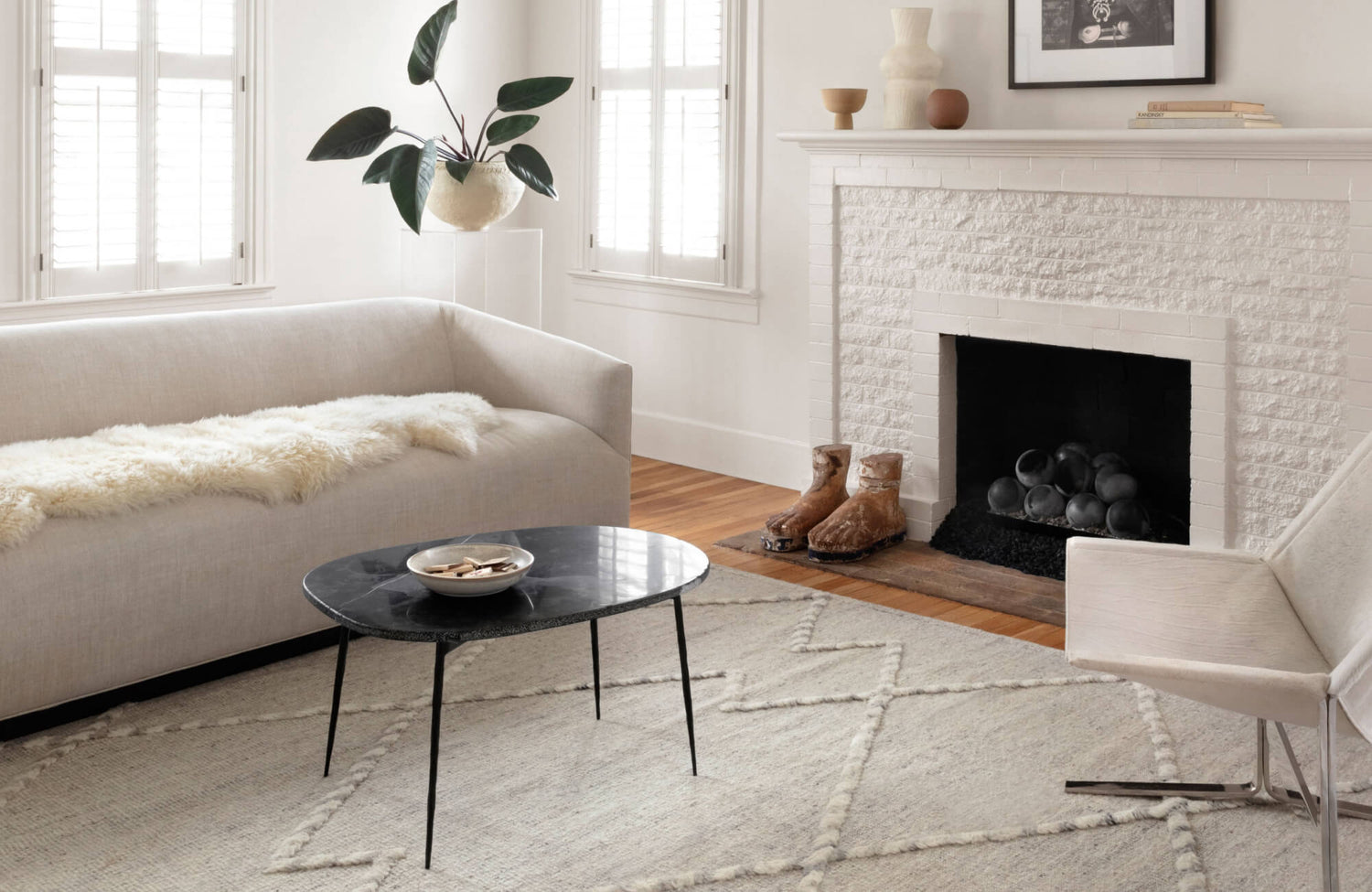
Designers often use rugs as visual anchors, drawing attention to seating areas, beds, or tables with distinct contrast. For instance, Edward Martin’s Micah Wool Blend Rug in Cream / Graphite exemplifies this duality in the photo shown above. It merges soft off-white with grounding dark gray tones, making it ideal for both monochromatic palettes and spaces that benefit from gentle contrast. Its understated pattern and wool blend composition also bring refined texture and depth, fitting effortlessly into both contemporary and transitional aesthetics.
Many rugs are one-of-a-kind artisanal products that elevate interior aesthetics far beyond standard carpet options. In contrast, carpets tend to fade into the background, focusing more on function than artistic contribution.
Spatial Definition and Layering Techniques
Rugs are ideal for defining space within open layouts, offering clear zoning between living, dining, and sleeping areas. Their defined borders and varied dimensions support layering, a technique increasingly popular in modern and bohemian design. Carpets, by nature of their seamless expanse, cannot create such segmentation and offer a continuous but visually homogenous field. Rugs can also be layered with different textures, such as a jute base topped with a plush wool piece, to add dimension. This versatility enables more advanced and dynamic interior compositions. Carpet installations, though consistent, limit the opportunity for design experimentation within a single room.
Seasonal and Trend Adaptability
Rugs can be changed with the seasons—light cotton or flatweave styles for summer, dense wool or shag for winter. This allows homeowners to adjust the visual and tactile ambiance of their space throughout the year. However, carpets do not accommodate such variation and remain fixed regardless of seasonal needs or stylistic shifts. For trend-driven decorators, rugs offer an affordable way to reflect current design movements without permanent investment. A rug’s modularity also allows for more frequent replacements without altering other room elements. Carpets, once outdated or worn, require full-scale renovation to update.
For those seeking expert guidance in curating these elements, Edward Martin's design services offer personalized solutions that bring your vision to life. Whether you’re layering textures, defining zones, or selecting a hero rug for a focal point, our team can help you harmonize your selections with precision and style. From consultation to execution, our design experts are equipped to help you craft interiors that are both expressive and enduring.

Acoustic and Thermal Performance
Floor coverings influence how a space feels and sounds, particularly in multi-level homes, offices, or colder climates. The materials and surface coverage of rugs and carpets impact insulation and noise control differently.
Sound Absorption and Noise Control
Carpets provide superior acoustic dampening across large areas due to their full coverage and underlying padding. They are especially beneficial in busy environments where noise reduction enhances comfort and functionality. Rugs also reduce noise, particularly when paired with high-density rug pads, though their effect is more localized. In media rooms, bedrooms, or offices, area rugs significantly minimize echo and impact sound. While rugs are effective in specific zones, carpets create a more enveloping acoustic barrier. The choice depends on whether localized or room-wide sound control is prioritized.
Thermal Insulation and Energy Retention
Carpets deliver consistent insulation by covering the floor entirely, contributing to lower heat loss and improved room comfort. They are often recommended in colder climates for their energy-saving benefits and foot-warming qualities. Rugs, on the other hand, provide thermal benefits in targeted zones, like under a sofa or beside the bed, offering a more focused solution. Material plays a key role—wool rugs, for instance, naturally retain heat and resist moisture. While rugs can be strategically placed for thermal efficiency, they don’t offer the continuous protection of wall-to-wall carpeting. Therefore, rugs suit various climates or rooms with diverse heating needs.
Underlayment Options and Material Enhancements
Both rugs and carpets benefit from underlays, though their purposes differ. Carpet padding is primarily used to enhance lifespan and add softness underfoot, while rug pads focus on providing grip and promoting air circulation. Rug underlays are generally easier to install, adjust, and replace, making them a more user-friendly solution for residential settings.
Advances in material technology, such as memory foam, recycled rubber, and felt, have further improved both comfort and performance. These layers can help reduce moisture buildup and support better indoor air quality by encouraging ventilation beneath rugs. In contrast, carpets often demand more extensive subfloor preparation, which adds to both installation complexity and cost. For those seeking modular comfort and easy upgrades, rugs offer greater flexibility when it comes to underlayment customization.

Cost Efficiency and Return on Investment
Flooring choices carry financial implications over time. Initial pricing, repair frequency, and resale value all play into the economic logic of choosing rugs over carpets.
Initial Purchase and Installation Costs
Rugs, especially machine-made or synthetic varieties, generally cost less per square foot and do not require professional installation. While carpets may appear cost-effective at first glance, they often come with hidden expenses related to labor, padding, and subfloor preparation.
Rugs, on the other hand, can be implemented immediately, without construction delays or the need for specialized equipment. Though high-end rugs can rival premium carpets in price, they offer the added benefit of resale value, which carpets typically do not. In remodeling scenarios, rugs help eliminate demolition waste and shorten turnaround times. For budget-conscious projects or phased renovations, rugs deliver both cost transparency and implementation speed.
Lifespan and Usage Value
Hand-knotted rugs and premium wool blends can remain functional and visually appealing for several decades. Carpets, even with protective coatings, usually decline in texture and tone after a decade of regular use. Rugs allow redistribution; moving from high-use zones to guest rooms or secondary spaces to extend their life. Carpets, by contrast, age uniformly and must be fully replaced once degraded.
A strong example of enduring quality is the Lafferty Wool Blend Rug in Natural, as displayed in the picture above. Composed of a durable wool and cotton blend and crafted using a hand-loomed technique, it combines longevity with artisanal character. The natural materials also contribute to excellent fiber retention and softness, while the handcrafted construction ensures structural integrity over time. Its neutral palette complements a wide range of interiors, making it a timeless addition that adapts as spaces evolve.
Quality rugs become long-term assets with cumulative utility, while carpets are depreciating fixtures. As such, rugs better align with both sustainable living and value preservation.
Resale and Asset Reutilization
Unlike carpets, rugs can be resold, gifted, or repurposed for different uses, such as wall hangings or stair runners. Vintage and antique rugs often appreciate in value, especially those made with natural dyes and traditional techniques. In contrast, carpets are typically viewed as consumables and rarely add to property value unless newly installed. Rugs, on the other hand, can be passed down as heirlooms or featured in estate sales, retaining both cultural and economic significance. The existence of a robust secondary market also enables rug owners to monetize pieces through consignment shops or online platforms. By comparison, carpets become non-liquid assets the moment they are installed.

Environmental and Health Considerations
Flooring plays a role in indoor air quality, material sustainability, and end-of-life recyclability. Choosing between rugs and carpets has measurable consequences for personal health and ecological footprint.
Volatile Organic Compounds (VOCs) and Air Quality
Synthetic carpets commonly release VOCs from adhesives, backing materials, and flame retardants, particularly in the first few months after installation. Rugs, especially those made from natural fibers, emit fewer VOCs and are often untreated with harmful chemicals. This distinction is vital in closed or poorly ventilated environments like bedrooms or nurseries.
Edward Martin’s Quinton Wool Blend Rug in Ash, as shown in the photo above, exemplifies this cleaner approach to flooring. Made with a substantial wool component, it naturally resists chemical treatment and supports healthier indoor air quality. Wool’s inherent breathability and low off-gassing properties make it an ideal material for environments where air purity is a priority. This rug’s soft, smoky hue also adds visual calm without introducing synthetic dyes or finishes that often contribute to indoor pollutants.
Certification programs such as OEKO-TEX and Green Label Plus further validate the low-emission profile of quality rugs. By reducing airborne pollutants, rugs contribute to better respiratory health, especially for children, allergy sufferers, or anyone sensitive to indoor air contaminants. As such, rugs offer a cleaner, healthier interior environment right from the start.
Allergen and Microbial Control
Wall-to-wall carpeting creates a broad surface area that tends to trap dust, pet dander, and pollen deep within its fibers. In comparison, rugs are smaller, more accessible, and can be removed for thorough cleaning, helping to reduce long-term allergen buildup. The ability to shake out or wash rugs offers greater control over indoor hygiene.
Additionally, the underpadding used in carpets often retains moisture, which can foster mold or bacterial growth over time. Rugs, by contrast, allow airflow beneath them, discouraging microbial colonization and supporting healthier interior environments. For allergy-prone households, rugs present a more sanitary and manageable alternative.
Lifecycle Impact and Disposal
Natural fiber rugs are biodegradable and recyclable, offering a more sustainable alternative to most carpets, which are typically made from synthetic blends that contribute to landfill waste. The modular nature of rugs further extends their lifespan through reuse, resale, or repurposing.
In contrast, carpets are notoriously difficult to recycle due to their mixed materials and adhesive residues, adding to environmental strain. Additionally, rug production, particularly when handmade, requires less water, energy, and chemical input compared to large-scale industrial carpet manufacturing. When rugs do reach the end of their life cycle, they can often be responsibly disposed of or creatively upcycled. This gives rugs a clear advantage in supporting sustainable, circular design practices.
A Thoughtfully Grounded Decision
After exploring every detail from construction to sustainability, it’s clear that rugs offer a unique blend of flexibility, artistry, and long-term value that carpets often cannot match. Their adaptability, ease of maintenance, and design versatility make them especially appealing for dynamic, style-conscious living. While carpets may provide uniform insulation and acoustic benefits, their permanence and limited design agility can feel restrictive over time. Rugs, by contrast, invite movement, creativity, and thoughtful curation in ever-evolving interiors. Whether your space is classic or contemporary, the right rug promises both beauty and function in perfect balance.
To take the next step in refining your space, connect with Edward Martin directly through our Contact Us page, where every conversation begins with your vision in mind!