A bedroom rug can instantly transform the way a space looks and feels, whether it becomes a warm, cocoon-like retreat or an open, airy sanctuary. Choosing between a dark or light rug involves more than just personal taste; it shapes the room’s mood, affects maintenance and lighting, and influences the overall design flow. In this article, we’ll explore how each option performs across six key aspects, helping you make a confident decision that fits both your lifestyle and your space.

How Color Affects Mood and Atmosphere
Color influences how we experience a room. The right tone can make a space feel calm and welcoming, while the wrong one can throw off its balance. By understanding how dark and light rugs shape the overall atmosphere, you can choose a look that feels natural and harmonious in your bedroom.
Warmth and Intimacy with Dark Rugs
Dark rugs in shades such as brown, gray, or blue introduce warmth and intimacy to a bedroom. When you step into a room with darker flooring, it instantly feels grounded and enveloping, setting a relaxed tone from the moment you enter. Because these tones absorb light rather than reflect it, they can create a gentle sense of enclosure that encourages rest and comfort.
Additionally, in larger or more minimally furnished rooms, a dark rug adds visual weight and helps unify the space. As a result, the space feels cohesive and welcoming rather than sparse. If you prefer a bedroom that feels calm, anchored, and serene at the end of the day, a dark rug can help you achieve that inviting atmosphere.
Calm and Spacious Feel with Light Rugs
Light rugs in shades of beige, ivory, or mist gray bring openness and softness to a bedroom. By reflecting light throughout the space, they can create an airy, expansive feel that’s especially effective in smaller or naturally dim rooms. A light rug also introduces a sense of freshness and calm, softening the look of darker furniture or walls for better balance.
The effect is beautifully illustrated by Edward Martin’s Hutchinson Polyester Face Rug in Sage / Graphite, as pictured above. Its muted pattern and subtle tonal variations ground the space while enhancing the room’s bright, tranquil atmosphere. The soft sage and graphite hues add gentle contrast without disrupting the airy palette, creating a balanced and inviting retreat that feels effortlessly composed.
Emotional Balance Through Mid-Tones
If you’re undecided between the cozy feel of dark tones and the airy quality of light ones, mid-tones such as taupe or greige offer the perfect middle ground. These shades pair seamlessly with a wide range of color palettes, making them both adaptable and timeless. Mid-tones add enough depth to anchor a space without making it feel enclosed, maintaining a sense of visual ease. As natural light shifts throughout the day, its undertones subtly change: cooler in the morning, warmer in the evening, bringing a soft, lived-in character that keeps the room feeling balanced and inviting.

The Impact of Lighting and Room Orientation
Even the most beautiful rug can appear completely different depending on the lighting in your space. Both natural sunlight and artificial illumination affect how colors are perceived, so understanding how light moves through your bedroom is key before choosing a rug color.
Natural Light and Color Reflection
In bright bedrooms, light-colored rugs reflect sunlight, enhancing brightness and giving the space a clean, refreshed feel. This effect is especially beneficial in north-facing rooms that tend to appear cooler or dimmer. A perfect example is Edward Martin’s Mallory Wool Pile Rug in Cream, which softens natural light while amplifying a sense of openness and tranquility. Its pale, neutral tone subtly diffuses daylight across the room, creating a calm and airy atmosphere that feels effortlessly balanced.
Conversely, dark rugs absorb light, helping to reduce glare and add depth in south-facing spaces where sunlight is more intense. By paying attention to how natural light moves across your floor throughout the day, you can better understand how each tone will look and choose a color that complements your room’s natural character.
Artificial Lighting and Evening Ambience
Lighting transforms the look of a room once the sun sets. Under warm artificial light, dark rugs often appear deeper and more luxurious, while lighter ones can develop soft cream or golden undertones. In contrast, cool LED lighting keeps light rugs crisp but can make darker tones appear muted. To make the best choice, view rug samples in both natural and artificial light so you can see how the color shifts throughout the day and into the evening.
Balancing Shadows and Highlights
Thoughtful lighting can change the way a rug looks and feels. A dark rug may seem heavy if it sits in deep shadow, but placing a lamp nearby can soften the effect and restore balance. Similarly, a light rug near a bright window can appear overly intense, and adding gentle illumination helps even out the contrast. By layering ambient, accent, and task lighting, you can bring out the texture and depth of both dark and light rugs, allowing each to display its full character throughout the day.

Maintenance, Cleaning, and Longevity
While color and style shape a rug’s visual appeal, its long-term upkeep matters just as much. The choice between dark and light tones can make a noticeable difference in how easily your bedroom stays clean, fresh, and well-maintained over time.
Concealing Dirt and Stains
Dark rugs are excellent at disguising small stains and dust, keeping the room looking tidy with less effort. Their deeper tones make minor spills or footprints less noticeable, which is especially helpful in well-used spaces. However, lighter debris such as pet hair or lint can be more visible on dark surfaces, so regular vacuuming is essential to keep the rug looking clean and polished.
Keeping Light Rugs Fresh and Bright
Light-colored rugs bring brightness and a sense of calm to a bedroom, but they also require a bit more care to stay that way. Dust, makeup, or small spills are more visible on pale fibers, making regular upkeep important. Choosing stain-resistant materials or washable designs helps simplify cleaning while preserving that crisp, inviting look. With routine maintenance and the occasional professional cleaning, a light rug can also retain its freshness and clarity for many years.
Durability and Fiber Choice
A rug’s material plays a major role in how its color and texture age over time. Wool, known for its natural resilience, resists dirt well but may fade when exposed to strong sunlight. Synthetic blends such as polypropylene hold their color longer but often lack the soft, organic feel of natural fibers. Dark tones may fade with prolonged exposure to light, while lighter shades can develop a subtle yellow tint if not properly maintained. Understanding how each fiber reacts to light, moisture, and everyday use will also help your rug maintain its beauty and durability for years to come.

Coordinating with Furniture, Flooring, and Walls
A rug anchors the visual composition of your bedroom, setting the tone for everything around it. To create a balanced and welcoming look, it should work in harmony with nearby colors and textures, whether through subtle coordination or intentional contrast. Thoughtful pairing brings the room together, making the design feel cohesive and inviting.
Contrast for Visual Definition
A light rug beneath darker furniture enhances depth and balance, while a dark rug against pale bedding or flooring adds a grounded sense of definition. This contrast anchors the furniture and clearly defines the room’s overall layout. When used thoughtfully, it further highlights the shapes and materials of your décor, adding visual interest without overwhelming the overall design.
Creating Tonal Harmony
If you’re drawn to a calm, seamless look, choose tones that sit close together on the color spectrum. A warm beige rug paired with cream walls or a soft taupe rug beside oak furniture creates a smooth, balanced flow throughout the space.
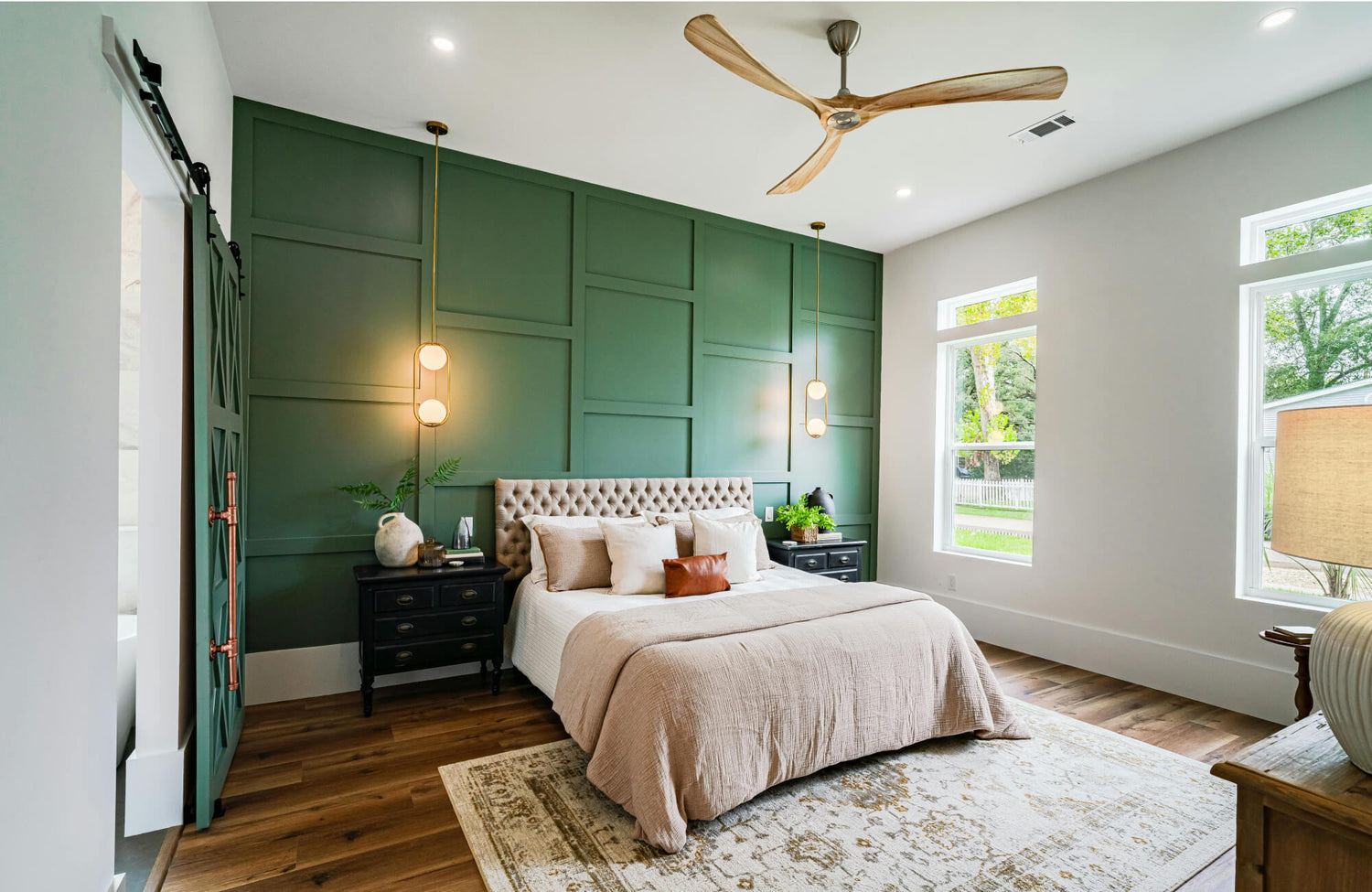
This effect is beautifully captured by Edward Martin’s Hutchinson Polyester Face Rug in Graphite / Olive, as displayed in the photo above. Its muted mix of olive, gray, and beige tones ties the room’s natural wood accents and soft neutral palette together, achieving a cohesive look that feels grounded yet serene. The layered hues enhance the bedroom’s relaxed warmth while maintaining the understated balance that defines tonal harmony.
Layering and Texture Play
Layering rugs adds both dimension and character to a bedroom. Placing a smaller patterned rug over a neutral base helps blend light and dark tones naturally while adding visual interest. In addition, texture makes a noticeable difference; woven wool, natural jute, or low-pile knits can create depth and subtly interact with light throughout the day. This approach also offers flexibility in color combinations while enhancing the tactile comfort and warmth of the space.

Style Expression and Design Intent
A rug often serves as the finishing touch that defines a bedroom’s personality. Its color not only shapes the visual mood but also reinforces the design style you want to express, bringing cohesion and purpose to the entire space.
Dark Rugs in Contemporary and Luxe Spaces
Dark-colored rugs fit seamlessly into modern and refined interiors. They pair beautifully with rich materials like walnut, leather, or velvet, emphasizing structure and depth. Edward Martin’s Georgette Polyester Pile Rug in Spice / Indigo exemplifies this balance with its deep, layered tones and intricate patterning that ground the room while adding subtle visual movement. When placed beneath sleek furniture, its rich color palette creates a deliberate, confident look that enhances the space with elegant warmth and sophistication.
Light Rugs for Coastal and Minimalist Designs
Light rugs reflect the simplicity of natural materials, making them a perfect match for coastal and minimalist interiors. Their soft hues echo sunlight, wood tones, and linen, reinforcing a relaxed and airy aesthetic. A pale rug also allows other textures, like rattan, linen, or oak, to stand out, creating a space that feels pure, open, and effortlessly refined.
Mixing Patterns and Transitional Styles
If your style combines both traditional and modern elements, a rug that blends light and dark tones can beautifully bridge the two. Patterned designs can bring harmony to mixed furniture styles and color palettes without overwhelming the space. Their timeless appeal allows your bedroom to evolve effortlessly, maintaining a cohesive and balanced look through changing décor trends.

Climate, Lifestyle, and Practical Considerations
Your environment and daily routines play an equally important role in choosing the right rug. Comfort and practicality should complement style, ensuring the piece not only looks beautiful but also suits the way you live.
Temperature and Seasonal Comfort
In cooler regions, dark rugs absorb light and warmth, helping rooms feel cozier. In warmer areas, light rugs reflect heat and maintain a fresher, more comfortable atmosphere. Aside from color, pile height also influences comfort; thicker rugs also provide insulation and cushioning, while flatweaves remain cool and breathable. Choosing the right combination of tone and texture ensures your bedroom feels inviting throughout every season.
Family, Pets, and Daily Use
If your bedroom is shared with children or pets, darker tones like brown or gray tend to handle small spills and marks more gracefully. Medium shades such as tan or light gray also offer a practical middle ground, combining durability with simple style. Edward Martin’s Haverford Polyester Pile Rug in Platinum / Bronze is a perfect example; it features a soft, patterned surface in versatile mid-tones that disguise everyday wear while maintaining an elegant appearance. In more gently used rooms, light rugs can safely add a touch of softness and refinement. Choosing a color that fits your daily routine ensures your rug stays beautiful and easy to care for.
Long-Term Versatility
If you enjoy refreshing your décor from time to time, a neutral mid-tone rug offers lasting flexibility. It complements a wide range of wall colors, bedding, and accessories, adapting easily as your style changes. Because it balances both light and dark elements, it also provides a timeless foundation that keeps your bedroom cohesive through every update.
Making the Final Choice
Both dark and light rugs offer distinct advantages, and the best choice depends on how you want your bedroom to look and feel. A dark rug adds depth and coziness, while a light one enhances brightness and openness. Consider your room’s lighting, layout, and daily routine, and test samples under different conditions to see how they interact with your space. Ultimately, the right rug is the one that aligns with your lifestyle and creates a bedroom that feels comfortable, balanced, and inviting.
If you’d like expert help selecting the perfect rug, contact us today or book a complimentary design consultation with our team—we’ll help you create a bedroom that feels effortlessly beautiful and uniquely yours.