Choosing the right mirror for your bathroom is more complex than it seems at first glance. Although it may start as a design detail, the decision between a big or small mirror carries practical, visual, and even financial weight. It affects how you move through your space, how light interacts with the room, and how well your daily routines are supported.
This article goes beyond basic comparisons and dives into the true impact of mirror size. From visual tricks that expand tight quarters to functional details that improve accessibility and lighting, every angle is explored. Whether you're upgrading a cozy powder room or designing a luxurious master bath, understanding these nuances will help you choose a mirror that reflects both your lifestyle and your vision.

Spatial Efficiency and Visual Perception
The size and placement of your bathroom mirror can redefine how you experience the space. From influencing how spacious it feels to guiding the eye across key focal points, the mirror does far more than just reflect your image.
Maximizing Visual Depth in Small Bathrooms
In compact bathrooms, every design decision counts, especially when it comes to visual depth. A big mirror, typically measuring 36 inches wide or more, is effective in making a small room feel more expansive. When positioned thoughtfully, it captures and reflects more than just your reflection. It also picks up on walls, textures, and light sources across the room, creating a visual echo that makes the space feel much larger than it actually is. This technique, often referred to as “specular expansion,” essentially opens up your bathroom without knocking down a single wall.
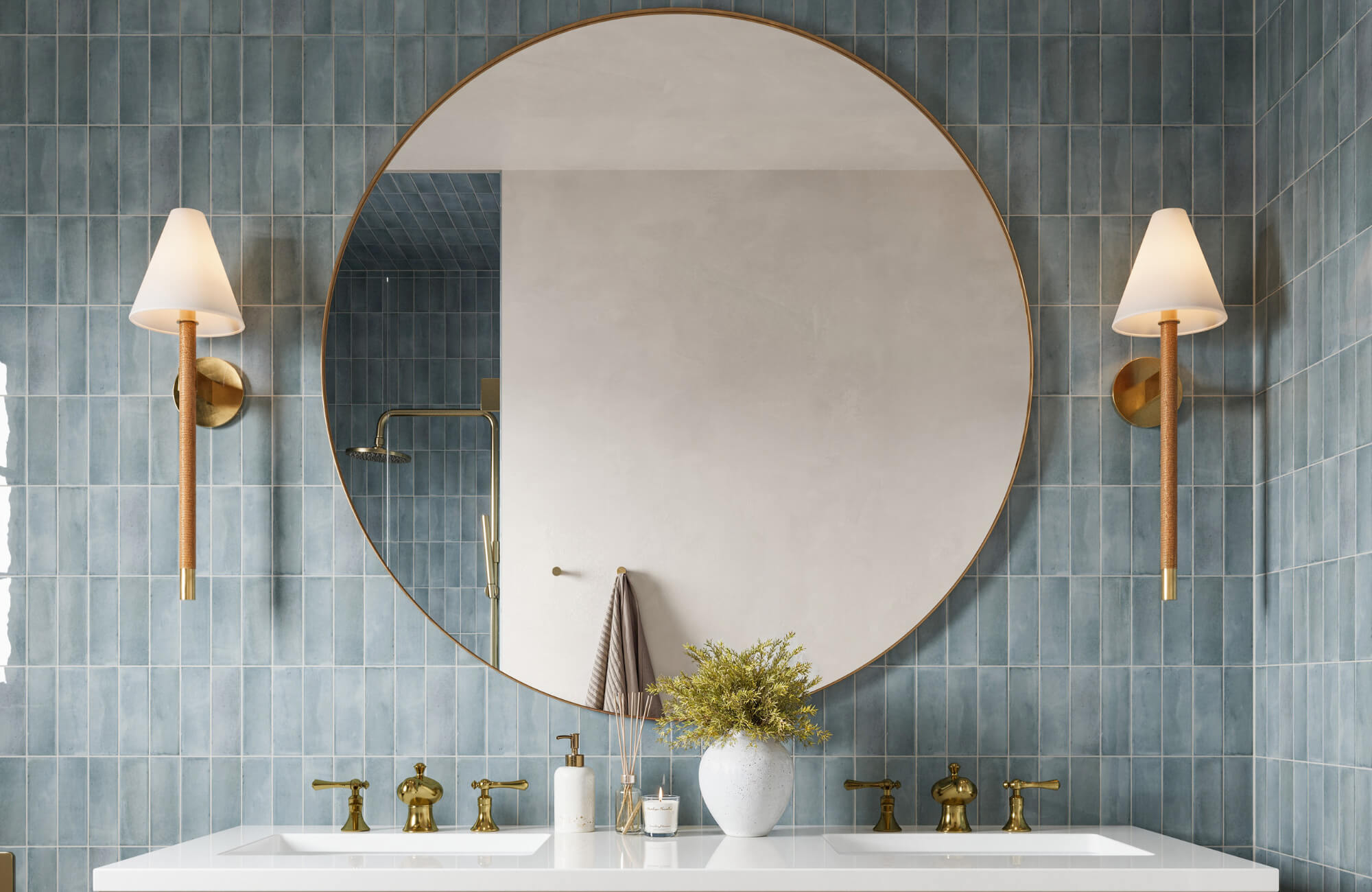
A great example is the Esmeralda Wide Mirror in Polished Brass, featured above. Its golden finish complements natural tones while the arched shape adds softness and vertical lift, perfect for enhancing depth in tighter spaces. With its generous width and refined brass frame, this mirror brings elegance and functionality together.
Creating Intentional Visual Breaks in Larger Bathrooms
In a large bathroom, the challenge isn’t about creating space; it’s about making it feel purposeful and inviting. This is where smaller or strategically placed mirrors come into play. Rather than defaulting to a single, oversized mirror, incorporating more compact or stylized options, such as arched mirrors, helps you define distinct areas within the room. These accents serve as visual punctuation marks, guiding the eye and introducing rhythm and variation across the space.
Small mirrors can also anchor specific functions like a makeup station or a grooming nook, creating pockets of visual interest that add intimacy to an otherwise expansive layout. The effect is similar to curating art within a gallery: each piece tells its own story while contributing to a cohesive whole. With thoughtful positioning, you strike a balance between spaciousness and structure, making the bathroom feel both luxurious and lived-in.
Optimizing Proportional Harmony for Aesthetic Cohesion
Finding the right mirror size is about achieving visual harmony with everything around it. A mirror that’s too large in a smaller space can dominate the room and throw off its balance. Conversely, a mirror that’s too small in a grander setting can feel like an afterthought, diminishing the design impact.
The key lies in what could be called “proportional synergy.” When your mirror aligns well with the scale of your vanity, lighting fixtures, and even the overall architecture of the bathroom, it creates a unified and intentional look. This sense of balance doesn't just elevate the design—it also enhances functionality. With the right proportions, your mirror becomes a seamless part of the space, one that complements rather than competes with its surroundings.

Lighting Dynamics and Mirror Size
The size of your bathroom mirror plays a crucial role in how light moves through the space. It doesn’t just affect how bright the room feels; it shapes the mood, clarity, and overall atmosphere.
Reflective Amplification with Big Mirrors
When you install a big mirror, you're harnessing a powerful tool for amplifying light. A generously sized mirror captures light from both natural and artificial sources and disperses it throughout the room. When positioned across from windows or major light fixtures, this reflective surface acts almost like a secondary light source, eliminating dim zones and creating a well-lit, open ambiance.
This kind of setup is particularly effective in bathrooms that lack abundant natural light. Instead of relying solely on bulbs or fixtures, the mirror helps distribute illumination more evenly, enhancing everything from the room’s brightness to its spatial perception. This results in a bathroom that feels both vibrant and expansive, without the need to install additional lighting.
Focused Lighting Strategies with Small Mirrors
Smaller mirrors, although more modest in scale, can deliver high-impact results when paired with the right lighting. Task lighting, like wall-mounted sconces or integrated LED strips, works beautifully with compact mirrors. This combination creates targeted illumination, ideal for up-close routines such as shaving or applying makeup.
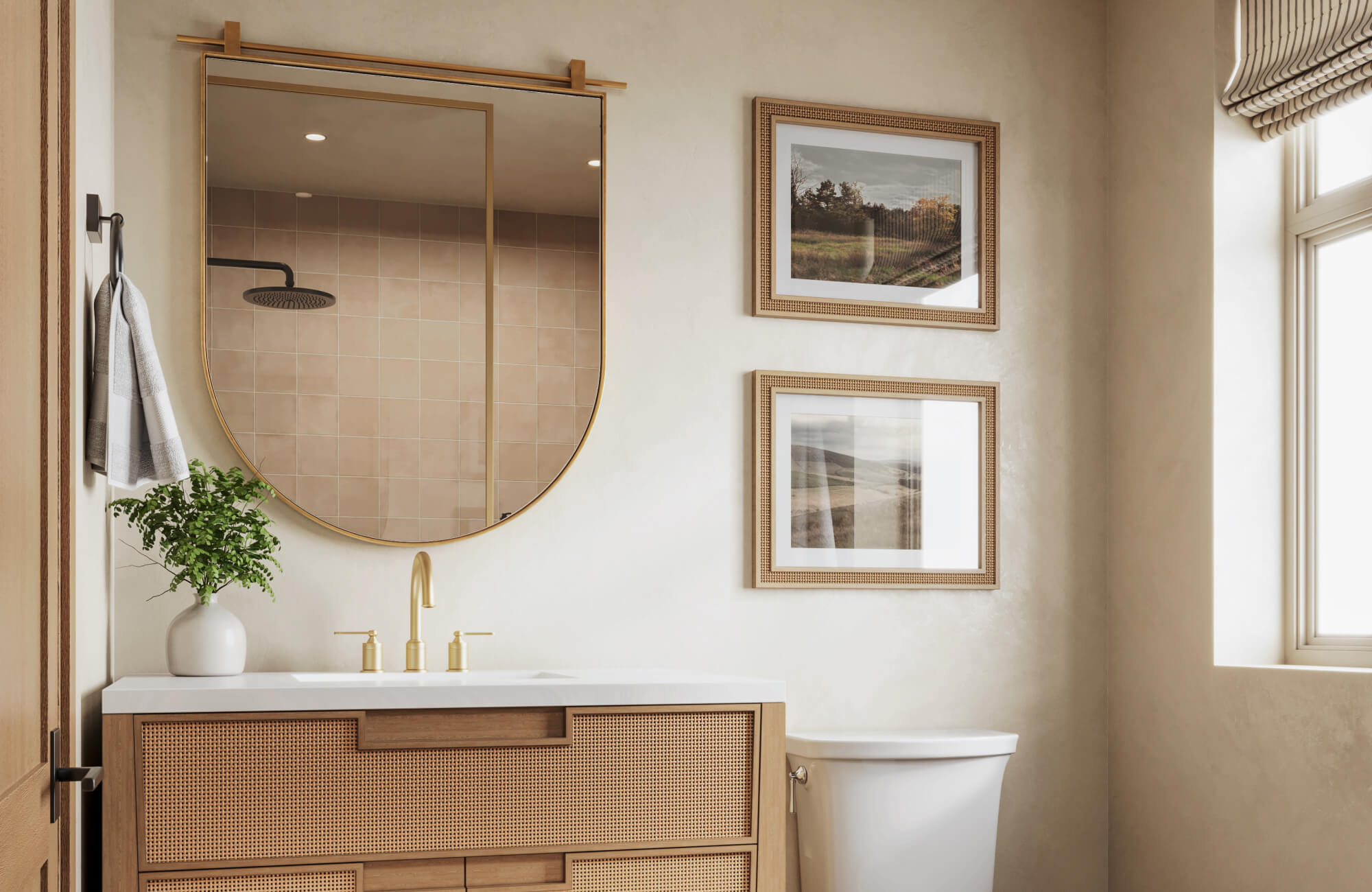
In the picture shown above, a small round mirror framed in antiqued iron demonstrates how subtle styling can elevate a space. Edward Martin’s Fitz Mirror in Antiqued Iron brings a soft industrial touch with its dark-gray tone and minimalist form, blending effortlessly with contemporary fixtures. Framed by vertical sconces, it not only sharpens visibility but also contributes to a more curated, balanced atmosphere—proof that small mirrors can make a bold and functional design statement.
Because the light is concentrated, small mirrors also eliminate unnecessary shadows and enhance precision. You’re able to see fine details without the distraction of glare or uneven brightness. At the same time, the setup allows for a more curated lighting experience, where you can adjust both intensity and direction to suit the moment. It’s an approach that prioritizes function, but with a tailored, personal touch.
Mitigating Glare and Preventing Over-Illumination
Although large mirrors are fantastic for enhancing light, they can sometimes push things too far. Over-reflection, what’s often called “specular overload,” can lead to harsh glare, especially in bathrooms with high-lumen lighting or expansive glass surfaces. In these situations, the environment can shift from bright and welcoming to overstimulating and visually fatiguing.
To counter this, a more restrained approach using small mirrors allows for better lighting control. Instead of scattering light indiscriminately, you can direct it with intention, dialing in the mood you want to create. Whether you're aiming for a relaxing, spa-like retreat or a soft-glow sanctuary for unwinding at night, this setup supports a calmer, more ambient atmosphere. It also gives you the ability to fine-tune your lighting, not just to see better, but to feel better too.

Functionality Based on User Habits
Mirror size isn’t just about design; it’s about daily experience. How you use the bathroom, whether alone or with others, plays a central role in determining what kind of mirror setup will best support your lifestyle.
Daily Routines and Shared Usage
In bathrooms that serve multiple people, especially during busy mornings, mirror space becomes a matter of efficiency. A wide, wall-spanning mirror allows you and others to get ready side by side without jockeying for position. Whether it’s brushing teeth, fixing hair, or applying skincare, everyone has room to perform their routine without waiting in line.
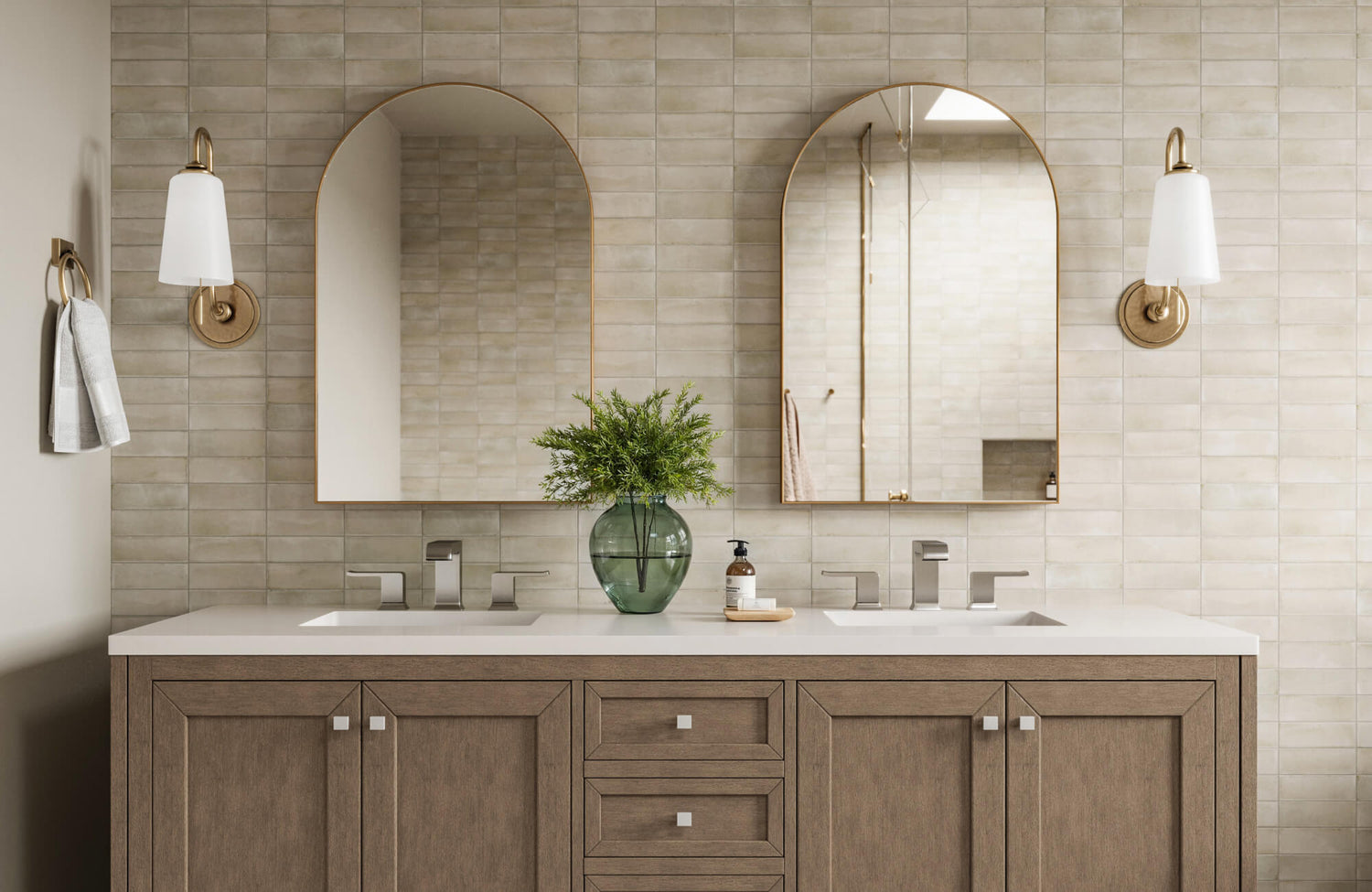
For a more individualized approach, using two mirrors over a double-sink vanity can offer both structure and style. Just like the mirrors used in the bathroom photo above, our Esmeralda Small Mirror in Polished Brass brings a sense of balance and refinement. With their gently arched silhouette and brass finish, they define personal zones while enhancing the overall symmetry of the space. This setup not only supports smoother routines but also adds a thoughtful layer of elegance to shared bathroom design.
Precision Tasks and Magnified Detailing
When your routine calls for accuracy, whether you're perfecting your eyeliner or getting a clean shave, a standard mirror may not cut it. That’s where magnifying mirrors come into play. Compact yet powerful, these mirrors are designed to bring fine details into sharp focus. With features like 5x to 10x magnification and adjustable arms, you can position them exactly where you need them for tasks that demand close-up clarity.
These mirrors also work as a complement to your primary one, adding a layer of functionality without taking up much space. They allow you to zero in on intricate tasks without straining your eyes or compromising comfort. Whether mounted on the wall or freestanding on the counter, they help transform grooming from a daily chore into a streamlined, satisfying process.
Accessibility for Diverse User Needs
Not every user approaches the mirror from the same height or angle. For children, individuals using wheelchairs, or anyone with limited mobility, the standard mirror can feel out of reach, both literally and figuratively. To ensure that everyone in your household can comfortably use the bathroom, consider mirrors that tilt or adjust in height.
These thoughtful details make a major difference. A small, tilt-adjustable mirror provides a more inclusive experience, allowing every user to see themselves clearly and independently. It removes the need for assistance, empowering everyone to carry out their routines with ease.

Design Aesthetics and Bathroom Style
The size of your mirror is a stylistic statement. It directly influences the mood and character of your bathroom, shaping whether the space feels timeless, sleek, or boldly artistic.
Framing and Symmetry in Traditional or Vintage Designs
If your bathroom leans toward a traditional or vintage aesthetic, small framed mirrors are often the perfect match. These mirrors bring structure and charm, echoing the elegance of classic fixtures like clawfoot tubs or brass faucets. Their modest size also allows for carefully composed symmetry, often flanked by wall sconces or decorative tiles that reinforce the room’s period style.
Featured in the bathroom photo above is a mirror that beautifully captures this timeless sensibility. Our Clancy Small Arch Mirror in Antique Brass combines a soft arched profile with a brass finish that complements the surrounding natural tones. Its subtle detailing and graceful shape enhance the traditional atmosphere, making it a fitting accent for vintage-inspired interiors.
Moreover, the frames themselves offer a chance to reinforce your design theme, be it ornate gilding for a Victorian feel or distressed wood for a rustic cottage look. Because they don’t dominate the visual landscape, these mirrors blend seamlessly with other vintage elements, preserving the integrity of the design while adding depth and warmth.
Sleek Expansiveness in Modern or Minimalist Bathrooms
For a more modern or minimalist vibe, large frameless mirrors are a defining feature. Their clean, unembellished surfaces allow architecture and materials to take center stage, reflecting not just light but also the intentional simplicity of the room. These mirrors amplify the feeling of openness, helping the space breathe without visual clutter.
Placed above streamlined vanities or floating sinks, they serve both form and function, enhancing sightlines and emphasizing horizontal flow. Because there’s no frame to interrupt the surface, the mirror becomes almost invisible—just a pure, reflective plane that extends the room’s dimensions and aligns with the minimalist principle of “less is more.”
Artistic Expression with Asymmetry or Layered Design
If your bathroom is more of a creative retreat than a utilitarian space, you can treat mirrors as art pieces. Mixing small mirrors of various shapes, finishes, and placements lets you build a layered, gallery-style arrangement that feels personal and expressive. Instead of one dominant mirror, you curate a collection that turns the wall into a canvas.
This approach works particularly well in eclectic or bohemian designs, where visual play and unexpected elements are embraced. Asymmetry breaks the rigidity of conventional layouts, inviting movement and curiosity into the space. It’s a bold departure from standard design logic, and that’s precisely what makes it so memorable.

Installation, Maintenance, and Longevity
Choosing the right mirror isn’t just about how it looks or functions. It’s also about how it fits into your long-term lifestyle. Installation, ease of upkeep, and durability can all affect whether a mirror is a smart investment for your space.
Installation Challenges and Wall Support
When opting for a large mirror, it’s important to prepare for a more involved installation process. These mirrors can be surprisingly heavy, and their size often demands reinforced wall anchors or brackets to ensure safety and stability. In many cases, professional help is recommended to avoid misalignment or damage to your walls. This adds time and cost to the project but ensures a secure, polished finish.
On the other hand, small mirrors are far more flexible. You can usually mount or reposition them yourself with minimal tools and effort, which makes them ideal for quick upgrades or renters looking for non-permanent solutions. Whether you're adjusting placement or experimenting with layouts, smaller mirrors give you more freedom without the logistical hassle.
Cleaning and Maintenance Efficiency
Big mirrors certainly create a stunning visual effect, but they do require more maintenance to stay pristine. The broader surface area means more opportunities for smudges, water spots, or dust to accumulate. Keeping them streak-free takes regular effort, especially in high-humidity environments like bathrooms.
Smaller mirrors, although easier and faster to clean, can come with their own quirks. Because they’re often mounted on adjustable arms or hung with lightweight supports, even a small shift in position can become noticeable. You might find yourself realigning them more frequently to maintain the perfect angle or visual symmetry. Still, their manageable size means these quick fixes are rarely a chore.
Durability and Replacement Considerations
When accidents happen, whether it’s a crack from impact or corrosion from moisture, the size of the mirror often determines the scale of the setback. Replacing a large mirror can be costly and inconvenient, particularly if it’s custom-cut or integrated into cabinetry or tilework. The effort to uninstall and replace it can rival the original installation.
Smaller mirrors offer a much simpler path forward. They’re typically easier and less expensive to replace, allowing you to update styles, switch finishes, or make repairs without a major commitment. If your design tastes evolve or your needs change, smaller mirrors give you the flexibility to adapt without starting from scratch.

Cost Implications and Value Impact
Mirror size plays a role not only in how your bathroom looks and works but also in how much you spend initially and how much value it may add to your space later.
Upfront Costs and Material Factors
Bigger mirrors typically come with a higher price tag, and it’s not just about their size. Materials like high-quality glass, custom framing, or specialty finishes add to the overall cost. Installation also becomes more labor-intensive, often requiring professional support due to the mirror’s weight and dimensions. If you’re customizing a fit for an irregular wall or adding integrated lighting, those extras push the budget even further.
Smaller mirrors, in contrast, tend to be more cost-effective. They’re easier to transport, mount, and replace, which makes them a great option if you're working within a budget. Whether you’re outfitting a guest bath or doing a quick style refresh, they offer flexibility without requiring a major financial commitment. This makes them ideal for balancing aesthetics with affordability.
Perceived Value in Resale or Staging
When it's time to sell or stage your space, big mirrors can make a meaningful impact. Their expansive reflection enhances natural light and opens up visual space, creating a brighter, more luxurious atmosphere. This can be especially useful in bathrooms that lack square footage or architectural interest, where a mirror becomes a strategic tool to elevate appeal.
Buyers and renters often respond to spaces that feel generous and well-lit. A big mirror, thoughtfully placed, can amplify those impressions without altering the actual layout. It’s a subtle yet powerful way to make your bathroom feel like a more valuable part, which can translate into a stronger offer or faster sale.
Long-Term Value Versus Trends
Trendy mirrors, often smaller and uniquely shaped, can inject personality into a space, but they sometimes lose relevance as design trends evolve. What feels fresh and edgy today might seem dated just a few years from now. That’s not to say you can’t enjoy bold choices, but it’s worth considering how they’ll age alongside the rest of your space.
On the other hand, large minimalist mirrors offer enduring appeal. Their clean lines and neutral presence make them a design staple that adapts easily to shifting tastes. Because they complement rather than compete with other elements, they remain visually relevant over time. In terms of both style and financial value, this timeless quality helps protect your investment well into the future.
Making the Right Choice for Your Bathroom
Rather than asking whether a big or small mirror is objectively better, the real question is what serves your space and lifestyle best. Your ideal mirror size depends on how you use your bathroom, what atmosphere you want to create, and how you balance aesthetics with function. When you align these factors—space, lighting, habits, and style—you don’t just hang a mirror, you elevate the experience of the room it lives in.
If you're unsure where to start or need guidance tailoring your mirror choice to your specific layout, our team is here to help. Whether you're designing a cozy guest bath or planning a complete renovation, our experts can offer personalized recommendations based on your space, style, and goals. With the right insight, you can turn everyday functionality into a refined design statement that adds lasting value to your space.