A white backsplash can feel crisp, timeless, and effortlessly stylish, but choosing it is not always as simple as it seems. It’s one of those design decisions that looks safe at first, but quickly raises questions once you start considering materials, upkeep, and style compatibility. In this article, we’ll walk you through every angle: what works, what to watch out for, and what genuinely fits your lifestyle, so you can confidently decide if a white backsplash belongs in your home.

How a White Backsplash Shapes the Look of Your Space
A white backsplash is more than just a neutral fallback; it can completely transform the look and feel of your kitchen. Whether you're refreshing a cozy cooking nook or planning a full renovation, this single design choice has a big impact on how light moves through the room and how the overall design comes together.
Brightens and Enlarges the Space
When we bring white tiles into a kitchen, we immediately notice how they reflect both natural and artificial light. This effect is useful in smaller layouts, such as galley kitchens or spaces with limited windows, where added brightness can make the area feel more open. The light-bouncing surface of white tile contributes to a sense of airiness and visual expansion, even in rooms that receive minimal daylight.
That’s why a tile like Edward Martin’s Maisie 4x4 Glossy Ceramic Tile in Canvas, as featured in the photo above, is such a thoughtful choice. Its soft white hue and reflective glaze enhance light without dominating the design, allowing the kitchen to feel fresh and welcoming. Paired with warm wood beams and muted green cabinetry, the backsplash quietly elevates the space, bringing a sense of brightness and balance that feels both refined and relaxed.
If you’re curious how it will look in your space, try our AR tool to preview the tile on your wall using your phone or tablet. It’s an easy, stress-free way to feel confident about your choice before installation begins.
Elevates Clean, Modern Lines
A white backsplash does more than just brighten a kitchen; it also brings clarity and definition to the overall design, especially in modern spaces that thrive on clean, purposeful lines. If you’re drawn to a streamlined aesthetic with minimal visual noise, glossy white ceramic tiles are a natural fit. Their smooth surface and uniform shape highlight architectural elements, drawing attention to the crisp edges of cabinetry, shelving, and countertops. As a result, the space feels more structured and intentional. What makes ceramic particularly effective in this context is its ability to deliver a polished, refined look without adding bulk, allowing the focus to remain on the form, flow, and function of the kitchen.
Creates a Soft Canvas for Contrast
The beauty of a white ceramic backsplash lies in its ability to support rather than dominate the design. In kitchens where bold elements such as navy cabinets, patterned floors, or sculptural lighting fixtures take center stage, a white backsplash plays a quieter yet essential role. Its clean, neutral surface creates a visual pause, allowing those standout features to shine without competing for attention. Ceramic works particularly well in this setting, as it offers just enough texture and finish to keep the background interesting while remaining understated.
What makes this approach so effective is the sense of balance it brings to the space. A white ceramic backsplash grounds the room, offering your eye a place to rest while allowing bold design elements to stand out with greater intention. Rather than dulling the look, it frames it, adding structure without distraction. The result is a kitchen that feels layered, cohesive, and thoughtfully designed, where contrast isn’t just present but elevated by the clean, calming backdrop behind it.

Maintenance Realities You Should Know
There’s no denying the clean, fresh look of a white backsplash, but it’s equally important to consider what daily upkeep looks like. Compared to darker surfaces, white can be less forgiving when it comes to stains and buildup. So let’s walk through how you can keep it looking its best without turning maintenance into a full-time job.
Grout Discoloration Happens
One of the most common challenges with a white backsplash is keeping the grout looking fresh. Light-colored grout tends to absorb grease, food splatters, and water stains, especially around the stove or sink, where daily messes are hard to avoid. These stains can build up quicker than expected and, over time, leave the grout looking dingy, even if the tiles themselves remain spotless.
To help prevent this, it’s wise to choose a high-quality, stain-resistant grout or opt for epoxy grout, which is less porous and much easier to maintain. Epoxy, in particular, offers a durable, low-maintenance solution that handles moisture and daily wear with ease. For a softer, more forgiving look that still keeps your kitchen bright and cohesive, consider using off-white or pale grey grout. These subtle tones can also help mask light discoloration while maintaining the clean, fresh aesthetic of a white backsplash.
Smudges and Splatter Are Noticeable
White tiles, while beautiful, tend to reveal every little mark, especially in frequently used areas like behind the stove or around the sink. Grease splashes, water spots, and even fingerprints become more noticeable on light, glossy surfaces. What might fade into the background on a darker or matte tile often stands out on white, making the backsplash look less pristine between cleanings.
To maintain that crisp appearance, choosing the right material is key. Smooth, non-porous finishes such as ceramic or porcelain are a practical choice, as they’re easy to wipe clean with minimal effort. A quick pass with a damp cloth is often enough to remove smudges and keep buildup from setting in. On the other hand, if low maintenance is a top priority, it’s best to avoid heavily textured tiles. Their grooves can trap grime and residue, turning what should be a simple clean-up into a more time-consuming chore.
Finishes Make a Difference
When it comes to everyday upkeep, the finish of your tile also has a direct impact on how easy or involved your cleaning routine will be. Glossy finishes are especially helpful in active kitchens due to their smooth, non-porous surface, which naturally resists splashes, grease, and stains. They’re easy to wipe clean with just a damp cloth, making them ideal for a backsplash that looks fresh with minimal effort. A great example is Edward Martin’s Madilyn 3x12 Glossy Ceramic Tile in Pearl, as featured in the photo above. Its sleek, luminous surface not only enhances light and brightness in the space but also pairs beautifully with wood accents and open shelving, striking a balance between polish and practicality.
In contrast, matte finishes offer a more subtle, textured surface that brings a softer, more natural feel to the kitchen. One of their standout advantages is the ability to hide fingerprints, smudges, and light messes between cleanings. While they might need a little more attention when it comes to deep cleaning, particularly after heavier cooking sessions, the warmth and character they bring to the space also make them a popular choice for those who value a cozy, relaxed aesthetic.
Ultimately, your tile’s finish isn’t just about appearance; it also influences how your kitchen functions. Whether you prefer the easy wipe-down convenience of gloss or the soft, low-fuss look of matte, choosing the right finish also ensures your backsplash complements both your design preferences and the way you live. And as you consider care routines, it’s always a good idea to follow the tile and grout manufacturer’s recommendations for cleaning products and sealing; those small steps can make a big difference in preserving the finish over time.

Matching White Backsplash with Your Style
At first glance, a white backsplash might seem like a one-size-fits-all solution, but in reality, it’s incredibly versatile. Depending on how you style it, this simple element can take on a range of personalities and help tie your entire kitchen together. Let’s take a closer look at how it can reflect your unique aesthetic and bring balance to your space.
Works with Farmhouse Warmth
If you’re drawn to the inviting charm of a farmhouse kitchen, a white backsplash can be the perfect finishing touch. To capture that warm, lived-in feel, consider using white subway tiles with slight surface variations or a soft crackled finish. These subtle imperfections introduce texture and character, giving the backsplash a handcrafted look that feels far from mass-produced.
Paired with open wood shelving, vintage-inspired faucets, or rustic lighting, white subway tile also creates a layered, welcoming environment that feels both timeless and personal. Together, these elements can strike a balance between clean and cozy, transforming the white backsplash from something potentially stark into something genuinely comforting.
Complements Industrial and Urban Designs
In urban or loft-inspired kitchens, a white backsplash provides the perfect contrast to the raw textures and bold finishes that define the style. Pairing bright white tiles with dark grout lines creates a strong visual definition, which complements industrial elements like metal fixtures, concrete surfaces, or exposed brick. This contrast not only highlights the tile pattern but also adds dimension without introducing additional color.
To reinforce the structured look, consider tiles with clean-cut edges and a precise layout. These details can also give the backsplash a crisp, architectural quality that feels right at home in an industrial setting. Altogether, the sharp lines, minimal palette, and graphic impact of a white backsplash bring clarity and balance to a space built on bold, deliberate design.
Anchors Scandinavian Simplicity
Scandinavian kitchens embrace minimalism while still feeling warm and lived-in. A white backsplash also plays a key role in balance, helping to keep the space feeling clean, open, and visually calm, especially when combined with pale wood cabinetry, soft tones, and natural light. The goal is to maintain simplicity without crossing into sterility, and that often comes down to the tile you choose.
To achieve that quiet sophistication, matte finishes are a great fit. They soften the look and add subtle texture without disrupting the room’s airy feel. A great example is Edward Martin’s Dani 1.6x5 Matte Ceramic Tile in Cream, as featured in the photo above. Its slim shape and gentle matte surface introduce visual rhythm while blending seamlessly with natural materials and open shelving. The result is a space that feels intentionally balanced, bright, and modern, yet undeniably welcoming.

Choosing the Right Tile Shape and Layout
Just because you’re working with white doesn’t mean your backsplash has to feel plain or expected. The shape, size, and arrangement of your tiles can completely transform the look and feel of your space. Let’s take a closer look at how thoughtful tile design can bring personality, movement, and depth to your kitchen.
Beyond Basic Subway
Subway tile is a classic for good reason, but that doesn’t mean it has to look predictable. With a few thoughtful layout choices, you can give this familiar tile a fresh, updated feel. For example, arranging tiles in a herringbone pattern instantly adds movement and energy, making the white backsplash feel more dynamic and layered.
If you’re looking to elongate the space, try stacking the tiles vertically. This draws the eye upward and subtly adds a sense of height to the room, which is especially useful in kitchens with lower ceilings. For a more refined, tailored look, consider using a longer, slimmer white subway tile. It shifts the proportions just enough to create a more modern rhythm without losing the timeless appeal. These simple layout changes may seem minor, but they can also have a big impact on the overall feel of your kitchen.
Consider Large Format for a Clean Finish
If your goal is a kitchen that feels streamlined and visually calm, large-format tiles are well worth considering. With fewer grout lines, these tiles can create a smooth, uninterrupted surface that contributes to a more seamless, expansive look. This subtle detail can also make a noticeable difference, especially in spaces where simplicity is key.
Large tiles are particularly effective in modern or minimalist kitchens, where you want the backsplash to enhance the design without drawing too much attention. Their scale allows the focus to remain on the overall flow of the space rather than the individual tile lines. As a bonus, fewer grout joints mean less cleaning, making large-format tiles as practical as they are beautiful.
Mix Materials for Dimension
White doesn’t have to feel one-dimensional; there are plenty of ways to keep it visually engaging while staying within a neutral palette. One approach is to mix finishes, like pairing glossy and matte white tiles. The subtle contrast between textures creates depth and catches the light differently throughout the day, adding quiet movement to your backsplash without overwhelming the space.
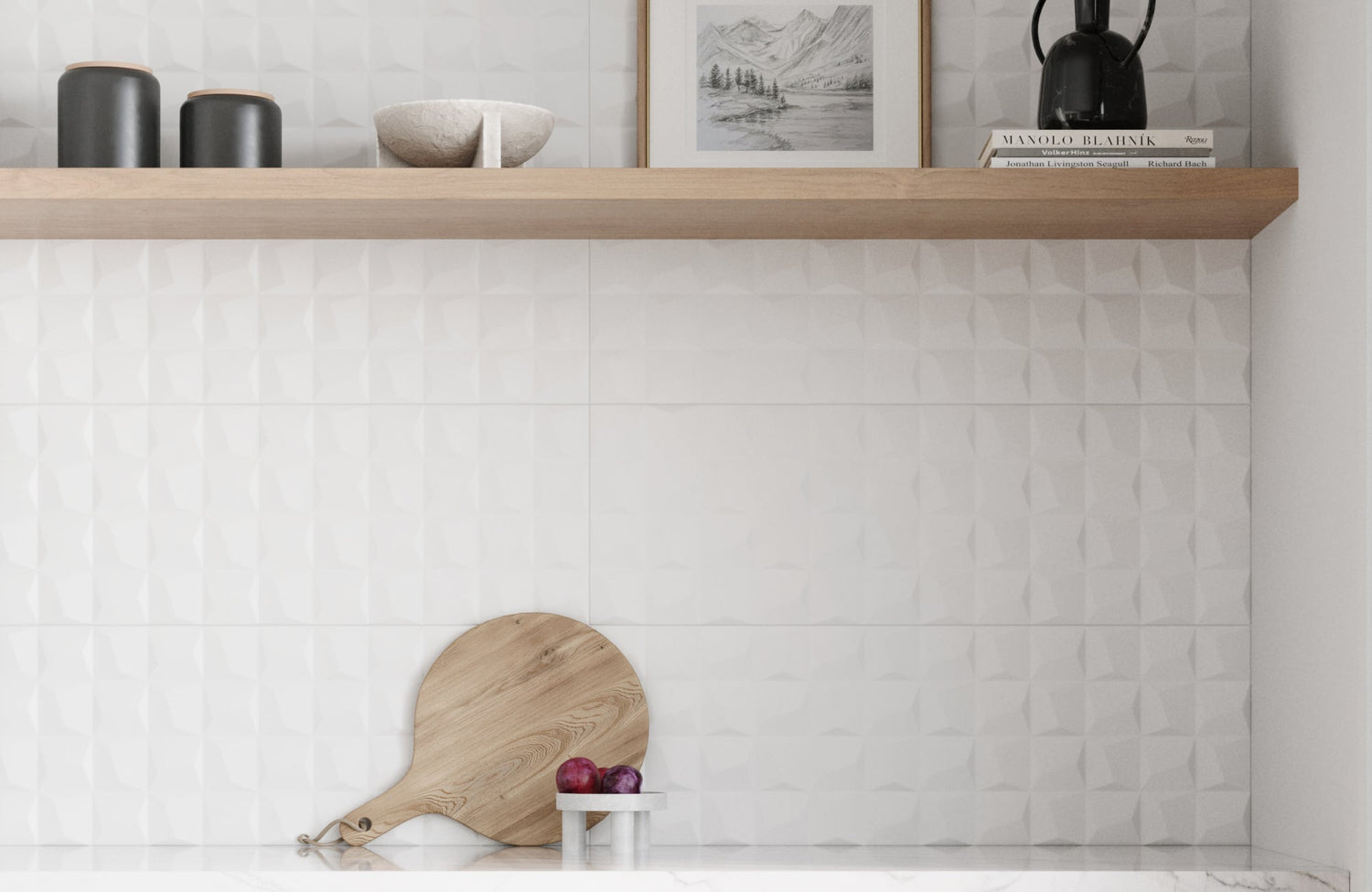
Additionally, you can bring in variation by incorporating textured or patterned surfaces. A great example is Edward Martin’s Zayne 12x36 Matte Ceramic Tile in Blocks, as featured in the photo above. Its sculpted surface adds a modern, architectural quality while keeping with the clean, white theme. These thoughtful details, whether it’s a textured inset, a touch of white marble, or a combination of tile sheens, can also ensure your backsplash feels layered and intentional, never flat or overly plain.

Practical Design Benefits Beyond Looks
White backsplashes are often chosen for their clean, timeless look, but their advantages don’t stop at appearance. They can also help solve subtle design challenges and bring added versatility to your space in ways that are both functional and easy to overlook.
Unifies Mismatched Elements
When updating a kitchen, not every detail always comes from the same era or design language, and that’s okay. A white backsplash can serve as a visual anchor, quietly tying together elements like countertops, cabinetry, shelving, and flooring that might not otherwise feel cohesive. Instead of allowing contrast to feel disjointed, a well-chosen white surface creates a sense of harmony and flow, smoothing the transition between different tones, materials, and finishes.
Take Edward Martin’s Julianna 4x12 Glossy Ceramic Tile in Carrara, as featured in the photo above. Its soft veining and polished finish provide just enough detail to complement both wood and painted cabinetry, while the subtle marble effect adds sophistication without overwhelming the space. In mixed-material kitchens, a backsplash like Julianna helps bridge the gap, making the design feel thoughtful and pulled together rather than pieced together.
Supports Future Design Flexibility
One of the biggest advantages of a white backsplash is how effortlessly it adapts to change. Whether you like to update your kitchen with the seasons or gradually evolve your style over time, white provides a neutral foundation that won’t limit your choices. You can swap out cabinet hardware, introduce bold accessories, or repaint the walls, all without worrying about clashing tones or starting from scratch.
In addition, this built-in versatility makes a white backsplash a smart, long-term investment. It allows you to experiment with trends in lighting, countertops, or decor without needing to redo your tilework. In other words, it gives your kitchen the freedom to grow with your style, not just hold it back.
Keeps Resale Value Strong
If you’re planning with resale in mind, a white backsplash is a strategic design choice that tends to resonate with a broad range of buyers. Its fresh, neutral appearance complements nearly any kitchen style, from traditional to modern, making the space feel universally appealing.
Apart from aesthetics, a clean, well-maintained white backsplash signals that the kitchen has been cared for, which also adds to that desirable move-in-ready impression. Buyers are drawn to spaces that feel bright, versatile, and easy to personalize, and a white backsplash helps deliver exactly that.

Budget and Installation Considerations
Choosing a white backsplash involves more than just picking a tile you love; the costs and installation process can vary depending on your selections. Taking time to understand these details early on will also help you make confident, informed choices that align with both your design goals and your budget.
Material Costs Can Vary Widely
When you’re shopping for white backsplash tiles, the price range can vary more than you might expect. Ceramic tiles are typically the most budget-friendly option, offering a clean, timeless look without a higher cost. If you're after something more elevated, such as handcrafted zellige, designer glass, or natural marble, you’ll notice a significantly higher price. Additionally, these premium materials offer distinctive character and craftsmanship, but they often come with higher costs due to specialized finishes, irregular shapes, or imported sourcing.
For a stylish middle ground, our Maisie 2.5x16 Glossy Ceramic Tile in Canvas, as featured in the photo above, strikes a perfect balance between quality and value. Priced at $18.53 per square foot, it delivers a refined, polished look with subtle tone variation and a long, elegant format that feels modern yet approachable. It’s a smart option for those who want something visually elevated without stepping into luxury pricing. Ultimately, weighing cost against durability and aesthetic impact will also help you find the right tile for both your design and your budget.
Labor Adds Up for Intricate Patterns
Keep in mind that installation costs aren’t based on size; the complexity of your tile layout also plays a big role. A straightforward pattern, such as a classic straight lay, is usually the most affordable option since it’s quicker to install and doesn’t require as much precision. For this type of layout, labor typically ranges from $8 to $15 per square foot, depending on the installer and your location.
However, if you’re drawn to more intricate patterns like herringbone, chevron, or a mixed-material layout, expect to pay more. These styles require careful planning, tight alignment, and additional time, which can push labor rates closer to $20 to $35 per square foot. Choosing a skilled installer becomes especially important when working with complex layouts or more delicate materials like marble or glass, where precision and experience make all the difference. The added cost is often worth it, though, as expert craftsmanship ensures the final look feels intentional, polished, and built to last.
Making an Informed Decision
So, is a white backsplash a good idea? For many spaces, the answer is a confident yes, especially when it comes to ceramic. A white ceramic backsplash offers a clean, timeless look that’s easy to maintain, versatile enough to evolve with your style, and adaptable to a range of budgets and layouts. Whether you’re aiming for a sleek modern design, a cozy farmhouse feel, or something in between, ceramic tiles provide the durability and aesthetic flexibility to bring your vision to life.
By now, you’ve seen how white backsplashes can enhance light, create balance, and even solve design challenges, all while remaining approachable and practical. If you’re ready to explore options or need help selecting the right tile for your space, we’re here to help. Reach out today, and let’s find the ceramic backsplash that feels just right for your kitchen!