A master bathroom should be a sanctuary, a space that blends luxury, comfort, and unparalleled functionality. When designing or renovating this critical space, one of the most defining decisions is the size of the vanity, which acts as the room's functional centerpiece and dictates much of the layout. The magnificent 72-inch vanity represents the epitome of bathroom luxury, promising abundant counter space and storage, but its size also raises a vital question for many homeowners: is it truly the right fit, or will it overwhelm the space you have available?
This guide will break down the essential factors beyond simple width to help you confidently determine if a 72-inch vanity is the perfect foundation for your dream master bathroom, ensuring your investment enhances both form and function.

Defining Your Master Bathroom Space Requirements
Designing a functional and visually balanced master bathroom begins with accurately assessing space requirements. Proper planning ensures that every fixture, including the vanity, fits comfortably while allowing for safe movement, efficient use, and lasting value.
Standard Clearance Guidelines You Must Follow
The National Kitchen & Bath Association (NKBA) recommends a minimum of 30 inches of clear floor space in front of bathroom fixtures to allow for unobstructed movement. For vanities specifically, you should plan at least 21 inches of clearance between the vanity edge and any opposing wall, tub, or shower enclosure, with 30–36 inches being ideal for busy master bathrooms. Door swings and drawer extensions must also be accounted for, ensuring that cabinetry remains functional without colliding with other elements.
The Critical Role of Bathroom Depth
While homeowners often focus on vanity width, depth is equally critical to overall usability. Most vanities fall between 20–24 inches deep, with double-sink models on the larger end. If your bathroom is narrower, a shallower vanity, sometimes as slim as 18 inches, may be required to maintain comfortable circulation paths. Proper depth planning prevents the room from feeling cramped while ensuring that plumbing rough-ins and countertop overhangs are accommodated without encroaching on walkways or adjacent fixtures.
Using Scale and Proportion to Determine Fit
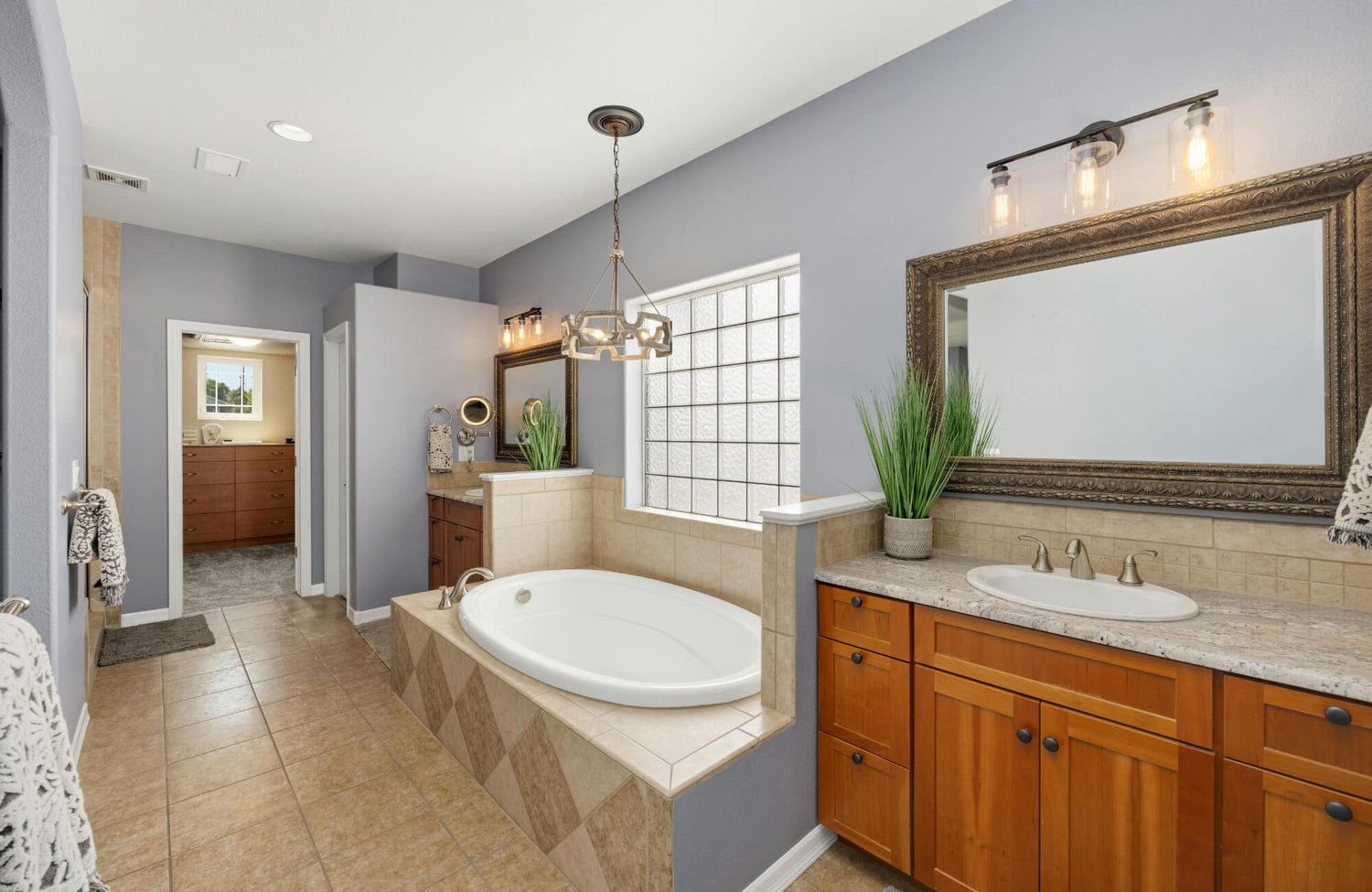
Beyond raw measurements, visual balance is essential in luxury bathroom design. A 72-inch vanity may feel harmonious in a bathroom of 120–150 square feet or more but can dominate smaller layouts. Designers often apply proportional guidelines, such as ensuring the vanity occupies no more than one-third of the longest wall, to keep the space feeling open. Mirror dimensions, lighting placement, and ceiling height also play into proportion, helping to create a well-scaled focal point rather than an oversized obstruction.

Assessing Lifestyle and Functional Needs
When selecting a master bathroom vanity, size alone does not determine success, your daily routines, storage demands, and long-term goals must guide the decision. A well-chosen vanity supports both immediate functionality and future value, ensuring that the space meets personal and market expectations.
The Necessity of Dual Sinks
For couples or households where multiple users share the master bathroom, a dual-sink vanity can significantly reduce congestion during peak times. A 72-inch vanity is often required to accommodate two basins while still providing sufficient counter space between them. NKBA guidelines suggest a minimum of 36 inches center-to-center spacing between sinks to maintain usability. This setup not only increases efficiency but also minimizes wear on a single basin, improving long-term durability.
Storage Requirements for Your Routines
Vanity cabinetry should be tailored to the specific needs of your household. Deep drawers for hair tools, shallow drawers for cosmetics, and pull-out organizers for cleaning products help streamline routines. Larger vanities often provide both base cabinets and additional drawer stacks, offering flexibility for diverse storage categories.
A prime example is Edward Martin’s Maxine 72" Double Vanity in Washed Natural Veneer with Carrara Marble Top, shown above, which combines spacious cabinetry with refined finishes to balance function and style. For bathrooms that double as dressing areas, integrated linen storage or tower cabinets can further enhance usability. Properly designed storage reduces countertop clutter, creating a more hygienic and visually appealing environment.
Future Proofing and Resale Value
Investing in a vanity that aligns with future needs adds both personal and financial benefits. For growing families, a dual-sink vanity prevents the need for costly remodels down the line. From a resale perspective, homes with spacious, well-equipped master bathrooms typically hold higher appeal, as buyers view them as luxury features. According to the Remodeling Cost vs. Value Report, bathroom upgrades consistently rank among the top projects for return on investment. Choosing a vanity that balances functionality, durability, and timeless style ensures your bathroom remains attractive to potential buyers while serving your evolving lifestyle.

Mastering Aesthetics and Visual Balance
Beyond function, the design of a master bathroom vanity significantly influences the overall ambiance of the space. Achieving visual balance requires thoughtful attention to color, finish, fixture placement, and form, ensuring the vanity feels integrated rather than overpowering.
The Visual Impact of Color and Finish
Color and surface finish set the tone for the bathroom’s aesthetic identity. Dark wood stains or matte black finishes create a dramatic focal point, best suited to larger rooms where they won’t overpower surrounding elements. Light-toned vanities, such as painted whites or natural oak, visually expand the space and reflect more ambient light, making them ideal for smaller master bathrooms. Gloss, matte, or textured finishes also affect perception, high-gloss surfaces amplify brightness, while matte finishes offer a modern, understated elegance. Coordinating the vanity finish with flooring, wall tile, or countertop materials establishes cohesion across the design palette.
Coordinating Mirror and Lighting Placement
The relationship between the vanity, mirror, and lighting determines both functionality and aesthetics. Oversized mirrors can visually widen the room, while vertically oriented mirrors emphasize ceiling height. NKBA standards recommend placing vanity lighting at eye level, typically 65–70 inches from the floor, to minimize shadows. Wall sconces flanking the mirror provide balanced illumination, while overhead fixtures highlight countertops but must be positioned to avoid glare. In the example shown above, Edward Martin’s Elodie 72" Double Vanity in Light Natural Oak with 3 cm White Zeus Quartz Top pairs seamlessly with the Esmeralda Small Mirror in Iron Matte Black and Perkins Wall Sconce in Old Bronze, creating a cohesive arrangement that reinforces symmetry and elevates the overall design. Proper alignment of these elements not only enhances grooming tasks but also establishes a polished, luxury bathroom atmosphere.
Choosing Between Furniture Style and Floating Design
The vanity’s structural style has a direct impact on spatial perception. Furniture-style vanities, often with decorative legs and detailed millwork, ground the space and evoke traditional or transitional aesthetics. These designs add visual weight and are well-suited to expansive master bathrooms. Floating vanities, by contrast, are wall-mounted with open space beneath, creating the illusion of a larger floor area and offering a sleek, contemporary look. They also improve accessibility for cleaning and can be paired with under-cabinet lighting to further enhance the sense of spaciousness. Selecting between these styles depends on whether the design goal is to emphasize architectural richness or modern minimalism.

Maximizing the Organization and Utility Potential
A well-designed vanity extends beyond aesthetics by serving as the command center of the master bathroom. To maximize its utility, thoughtful planning of zones, surfaces, and integrated features ensures both efficiency and long-term usability for single or multiple users.
Dedicated Zoning for Shared Users
When a vanity is shared, clearly defined zones help minimize daily conflicts. Dual-sink configurations naturally create separation, but zoning can be further reinforced through individual drawer stacks, cabinet divisions, or pull-out trays. This structure allows each user to maintain personal storage, reducing clutter and preventing overlap. Designers often recommend at least 36 inches of sink spacing to provide adequate elbow room, ensuring that the vanity supports simultaneous use without compromising comfort.
Strategic Countertop Utilization and Styling
Countertop space is prime real estate in a master bathroom. Materials such as quartz and granite not only deliver durability but also resist staining from cosmetics and grooming products. A wide surface should balance functional zones, such as designated areas for daily toiletries, with styled vignettes that showcase decorative elements. Our Gwen 72" Double Vanity in Pebble Oak with 3 cm White Zeus Quartz Top from Edward Martin, shown above, demonstrates how a generous quartz surface provides both resilience and elegance. Incorporating trays or low-profile organizers maintains a clean aesthetic while preventing items from spreading haphazardly across the surface. Keeping frequently used essentials within reach while relegating bulkier items to storage below improves both efficiency and visual order.
Incorporating Built-In Organizational Features
Modern vanity designs increasingly integrate built-in solutions that elevate organization. Soft-close drawer inserts for cosmetics, appliance garages with heat-resistant liners for hair tools, and hidden outlets within cabinetry all streamline routines while maintaining safety standards. Vertical pull-outs for tall items, adjustable shelving, and drawer dividers enhance adaptability, allowing the vanity to evolve with changing storage needs. These built-in features reduce countertop clutter, extend the longevity of the cabinetry, and reflect a higher level of craftsmanship that appeals to both homeowners and prospective buyers.

Installation and Long Term Maintenance Considerations
Selecting a 72-inch vanity is only the first step; ensuring proper installation and long-term upkeep determines its performance, safety, and value. From logistics during delivery to the ongoing care of finishes and fixtures, attention to detail protects both functionality and investment.
Delivery and Access Logistics
Due to its size and weight, a 72-inch vanity presents logistical challenges during delivery and installation. Narrow hallways, tight stairwells, and door clearances must be measured in advance to confirm accessibility. Many manufacturers ship large vanities in modular sections, such as separate base units and countertops, to facilitate transport. Proper staging within the bathroom is critical, as excessive maneuvering increases the risk of damage to cabinetry, hardware, or flooring.
Complexities of Plumbing and Wall Reinforcement
Accommodating a double-sink vanity requires precise plumbing coordination. Supply lines and drain locations must be aligned with the vanity’s configuration, often necessitating adjustments to rough-in plumbing. For wall-mounted floating vanities, structural reinforcement is essential: blocking or additional wall studs should be installed to carry the load of both the cabinet and the countertop, which can weigh several hundred pounds when fabricated from stone. Failing to address these structural needs compromises safety and may void manufacturer warranties. For these reasons, it is always best to hire licensed professionals to ensure installation meets both safety standards and long-term performance requirements.
Long-Term Cleaning and Care of Expansive Surfaces
With a larger vanity comes increased surface area for both countertops and cabinetry, which requires a consistent maintenance routine. Non-porous materials like quartz resist staining and etching, while natural stone such as marble or granite demands periodic sealing to prevent moisture penetration.
Cabinet finishes also require attention, lacquered or painted surfaces benefit from gentle, non-abrasive cleaners to maintain luster and prevent discoloration. Hardware, including hinges and drawer slides, should be inspected and lubricated periodically to preserve smooth operation. Proactive care not only extends the vanity’s lifespan but also sustains its showroom-quality appearance for years, and for the best results, it’s always advisable to consult the manufacturer’s care and maintenance guidelines.
The Final Verdict on Vanity Size
A 72-inch vanity can be the perfect fit for your master bathroom when the space allows 30 to 36 inches of clearance, your routines benefit from dual sinks, and your design balances its substantial presence with thoughtful choices in color, finish, or installation style. Beyond aesthetics, it offers enhanced organization, expanded storage, and long-term resale appeal, making it a true luxury investment.
However, such a feature requires careful planning around plumbing, delivery access, and proportional harmony within the room. With so many variables, the right guidance can make all the difference. Edward Martin’s design consultation service helps homeowners and designers refine style decisions with confidence, ensuring selections align with both practical and aesthetic goals. For personalized recommendations, detailed product insights, or expert support with vanities, tile, rugs, or furnishings, don’t hesitate to contact Edward Martin.