

)
)
)
)
)
)
)
)
How To Layer Vanity Lights For Bathroom Style And Function
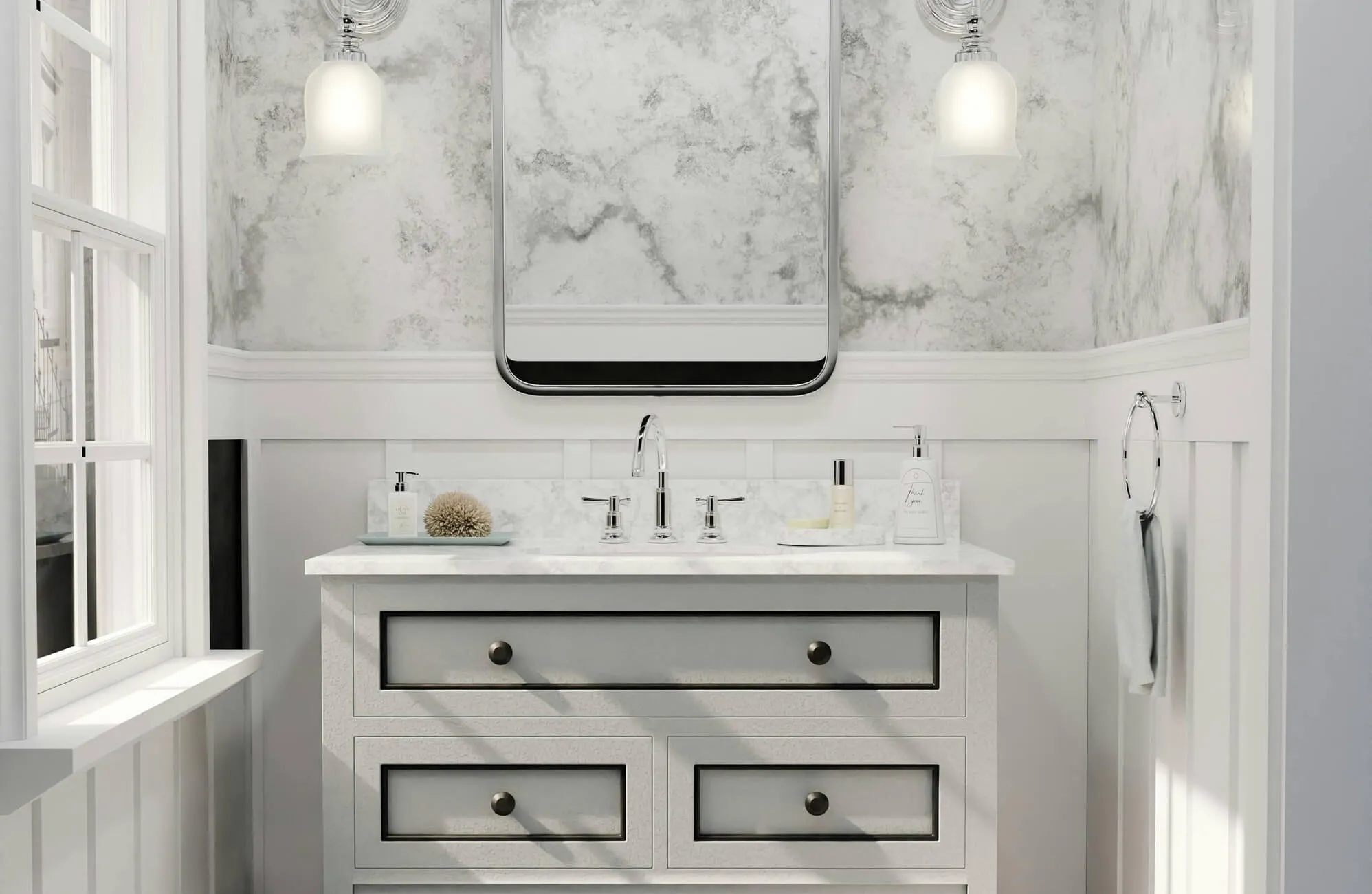
The bathroom vanity is the heart of a well-designed space where function meets personal style. And lighting plays a vital supporting role, enhancing not just visibility but the vanity’s textures, finishes, and architectural details. When lighting is layered intentionally, it brings the entire vanity zone to life—sculpting reflections, spotlighting design elements, and elevating the everyday routine.
By combining lighting function with design sensibility, you create not only visual clarity but also a deeply personal atmosphere around the vanity. From ambient layers to decorative accents, every element works together to craft a lighting experience that feels considered and complete. In this article, we will explore how to layer vanity lights for bathroom design that is not only elegant, but purposeful and enduring.
Lighting Layers That Elevate Your Bathroom Vanity Design
Creating a successful vanity lighting plan begins with understanding the three core lighting layers—ambient, task, and accent—each with its own role in shaping the experience around the vanity. When these lighting types are thoughtfully layered, they enhance both the functionality and sophistication of the vanity area.
Ambient Lighting
Ambient lighting provides the overall glow that fills the bathroom and ensures base-level visibility throughout the space. This foundational layer softens shadows, defines the room’s dimensions, and creates the mood that supports the more focused layers. Common ambient solutions include recessed ceiling fixtures, surface-mount LED panels, and flush-mounted chandeliers, each contributing to a clean canvas of light.
While it does not target the vanity directly, ambient lighting also allows the form and material of your vanity, such as woodgrain, finishes, or stone, to stand out within a cohesive room environment. Using ambient lighting in harmony with vanity lights for bathroom applications allows the vanity zone to stand out while still feeling integrated within the room. It's this balance that sets the groundwork for functional lighting without overwhelming visual detail.
Task Lighting
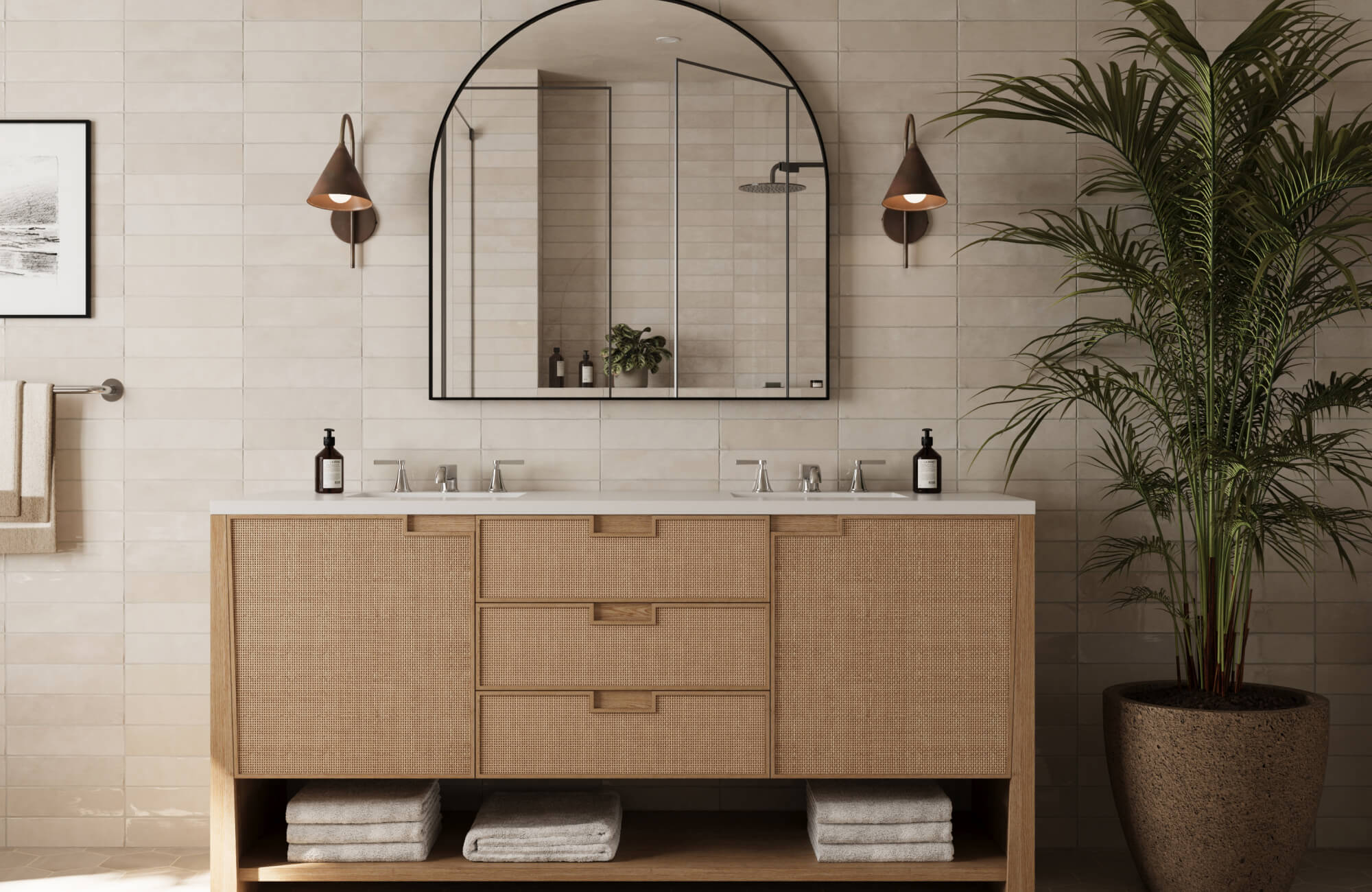
Task lighting is what brings clarity to personal grooming and transforms the vanity into a performance zone. The most effective setup includes vertical sconces flanking the mirror or integrated LED panels built into the mirror frame itself. These fixtures are also typically mounted at eye level, around 65 to 70 inches from the floor, and provide even facial illumination free from harsh shadows. A high-quality vanity light for bathroom use will deliver 800 to 1,200 lumens per fixture and feature a color rendering index (CRI) of 90 or above for natural skin tones. Frosted or opal glass shades are ideal for softening brightness while preserving focus.
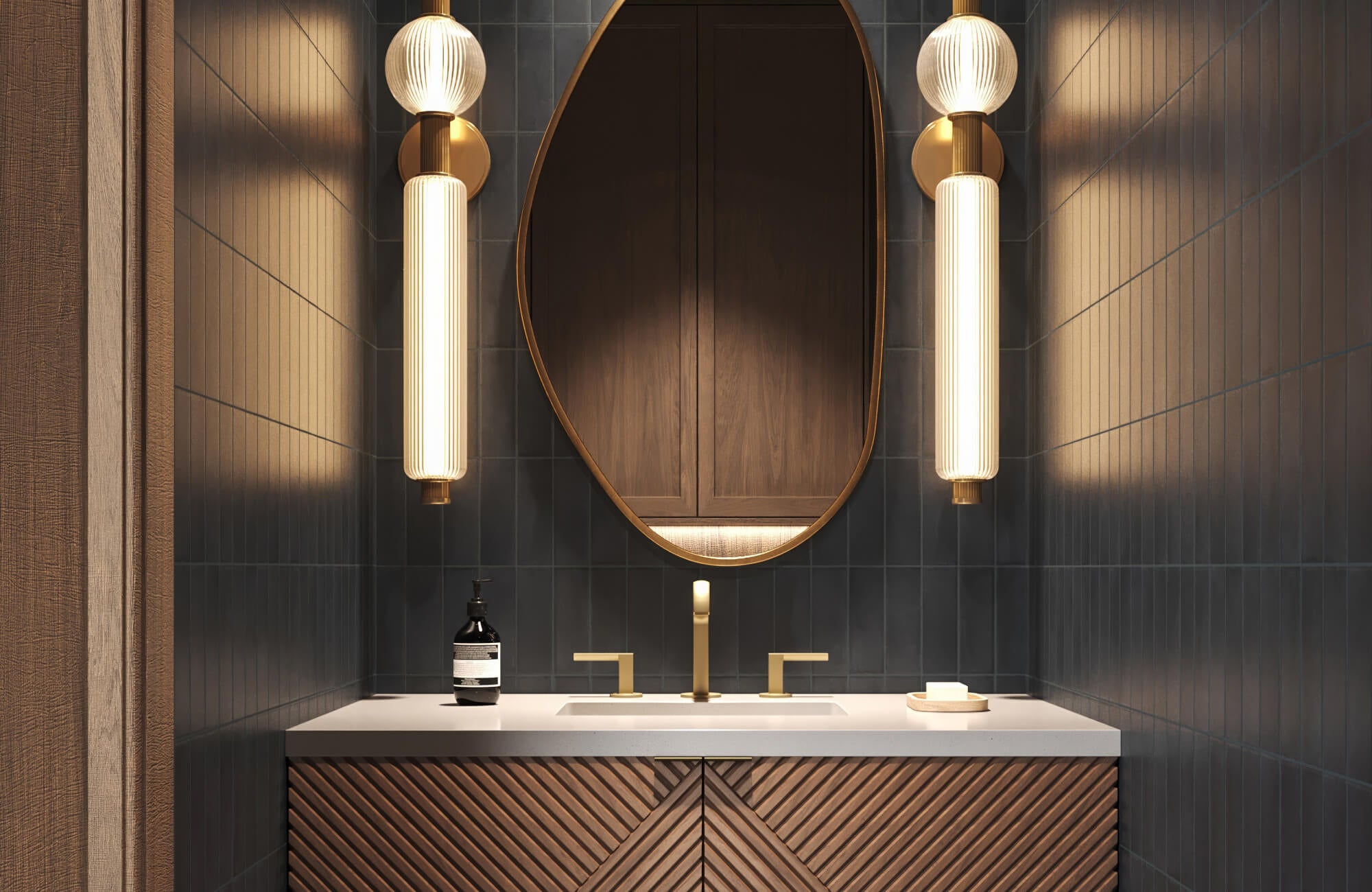
In the photo displayed above, Edward Martin’s Delilah 72" Double Vanity in Seaside Oak with a 3 cm White Zeus Quartz Top is paired with Fenton Wall Sconces in Iridescent Acid Wash, a stunning example of how thoughtful task lighting complements natural textures and modern craftsmanship. This kind of lighting doesn’t just ensure grooming clarity—it draws the eye to your vanity’s most beautiful details, like textured cabinetry, elegant hardware, and quartz surfaces.
Accent Lighting
Accent lighting introduces subtle depth, highlighting details that give the vanity area its distinctive character. This may include under-cabinet LED tape lighting, directional mini-spots to highlight textured walls, or backlit mirrors that add a soft halo effect. While not the primary light source, accent lighting enhances the visual layering and elevates the perceived luxury of the space.
These low-lumen fixtures, often between 50 and 300 lumens, are meant to complement, not compete, with your main vanity lights for bathroom ambiance. Accent lighting can also emphasize finishes like stone countertops or metallic faucets, reinforcing material richness. These light touches highlight the craftsmanship and styling decisions of the vanity itself, turning it into a statement feature. When woven into the overall design, it transforms the vanity zone from strictly utilitarian to architecturally compelling.
How Lighting Placement Enhances Vanity Functionality
Where and how you position lighting around the vanity dramatically affects both its functionality and its visual presence. Smart placement strategies ensure that the vanity lights for bathroom use provide flattering illumination while maintaining balance with the surrounding architecture.
Sconce and Vanity Light Positioning
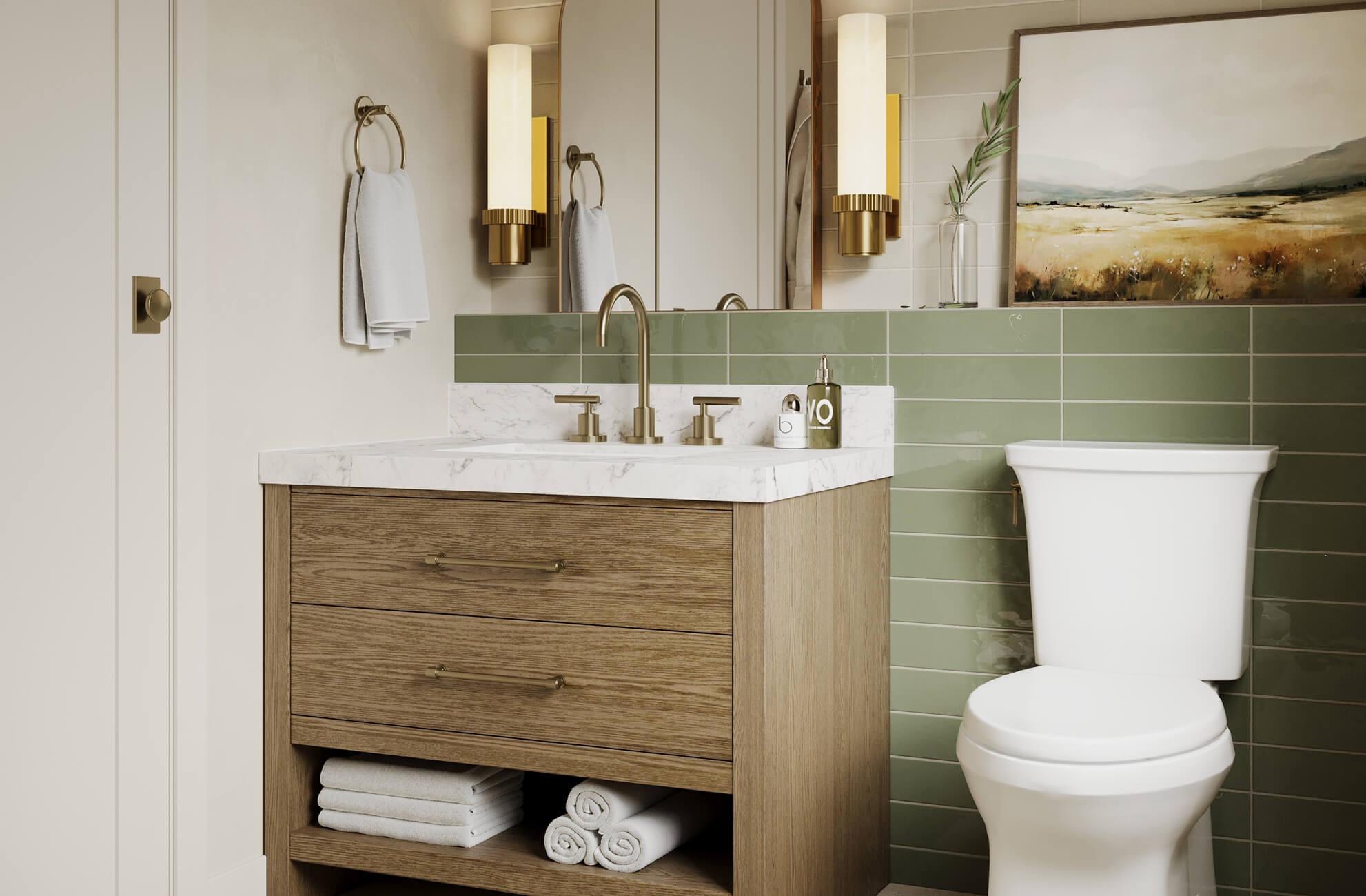
Vertical wall sconces installed on either side of the mirror offer the most flattering light for the face. These should be spaced 36 to 40 inches apart and mounted at roughly eye level, typically around 66 inches from the floor, to prevent uneven shadows. When fixtures are aligned with the user's facial height, they provide even brightness across both cheeks, chin, and forehead.
This approach is especially important in bathrooms where personal grooming is a daily priority. High-quality sconces with frosted shades diffuse light gently, enhancing comfort during extended use. The pairing of the Maxine 36" Single Vanity in Washed Natural Veneer with Carrara Marble Top and the elegantly vertical Asha Wall Sconce in Aged Brass, as shown in the photo above, exemplifies how balanced sconce placement not only enhances lighting performance but also creates a visually cohesive and elevated vanity area, ensuring the vanity remains the focal point, beautifully lit and effortlessly functional.
Recessed Lighting Placement and Beam Spread
While recessed lighting can effectively illuminate the broader bathroom, its placement near the vanity should be calculated with care. Lights placed directly above the mirror often cast unflattering shadows on the face, defeating the purpose of task-specific illumination. Instead, position recessed fixtures 12 to 18 inches in front of the vanity mirror, angling them slightly toward the user for improved visibility.
Beam spreads of 40 to 60 degrees are ideal for general lighting, while narrower angles can highlight design features without washing out the vanity area. These ambient sources should work in harmony with your dedicated vanity lights for bathroom function to prevent overlapping glare. When integrated thoughtfully, recessed lighting frames the vanity rather than overpowering it.
Lighted Mirrors as Space-Saving Solutions
In modern or space-conscious bathrooms, mirrors with built-in LED lighting offer a sleek and effective solution for task lighting. These fixtures provide consistent brightness across the entire face, eliminating the need for additional sconces in tight layouts. Adjustable color temperature and built-in dimming make it easy to adapt lighting levels based on time of day or activity.
Many of these vanity lights for bathroom designs also include features like anti-fog technology and motion activation for added convenience. The clean-lined appearance enhances minimalist aesthetics while delivering high-performance lighting. When paired with a thoughtfully designed vanity, these mirrors elevate compact bathroom design with elegance and purpose. This integrated approach simplifies layout planning while still supporting the functional needs of a busy vanity.
Lighting Specs That Bring Out the Best in Your Vanity
Beyond fixture placement and style, the quality of light, specifically color temperature and lumen output, plays a critical role in creating an effective and inviting vanity area. Choosing vanity lights for bathroom use with the right technical specs ensures comfort, accuracy, and flexibility.
Optimal Color Temperature for Bathrooms
Choosing the right color temperature helps set the mood while also ensuring proper lighting for grooming tasks. For instance, warmer light temperatures in the range of 2700K to 3000K offer a soft, inviting ambiance that works well in residential bathrooms, particularly in the evening. For clearer, more task-oriented visibility, a neutral white between 3500K and 4000K provides a brighter, more energizing effect without distorting natural skin tones.
However, exceeding 4000K can introduce an overly clinical tone, which tends to feel harsh and uninviting in a residential bathroom. To create a more adaptable environment, tunable-white LED fixtures offer a flexible solution, allowing users to adjust color temperature throughout the day based on activity or mood. This level of control not only enhances comfort but also ensures lighting remains consistent across all layers, reinforcing a cohesive visual flow. When color temperature is carefully calibrated and evenly maintained, the result is a well-lit vanity that supports daily routines with ease while highlighting the fine design details that make the space feel intentional and elevated.
Lumen Recommendations for Bathroom Tasks
The brightness of your vanity lights for bathroom use should be thoughtfully matched to the tasks performed in the space. For precision activities like grooming or makeup application, aim for 75 to 100 foot-candles, which typically translates to 800 to 1,200 lumens per fixture. In contrast, ambient lighting should provide a softer range of 20 to 50 foot-candles to ensure overall visibility without overwhelming the room.
Accent fixtures, meanwhile, can remain under 300 lumens to subtly enhance atmosphere without competing with task lighting. For larger setups, such as dual vanities or extended countertops, scaling the total lumen output proportionally across multiple fixtures is essential for balanced coverage. When paired with dimmable lighting solutions, this approach also allows users to fine-tune brightness throughout the day, resulting in a vanity space that is both visually comfortable and highly functional.
High CRI Lighting for Color Accuracy
Color Rendering Index (CRI) measures how accurately a light source reveals true colors, which is essential when evaluating skin tone or applying cosmetics. For this reason, a CRI of 90 or above is recommended for any vanity lights for bathroom application to maintain visual fidelity. Without it, poor CRI can make warm tones look dull or cool tones appear unnatural, affecting everything from makeup accuracy to overall comfort.
To simplify selection, premium LED fixtures often advertise their CRI scores on packaging or in product specs, making it easy to select lighting that won’t compromise color quality. In addition to facial clarity, high-CRI lighting also enhances the richness of surrounding materials, such as natural wood or veined marble. Ultimately, this attention to detail results in a vanity that is both functionally sound and visually luxurious.
Matching Vanity Design with Lighting Styles
The visual appeal of the vanity is shaped not only by the materials and layout but also by the lighting style. By selecting vanity lights for bathroom spaces that reflect the room’s design theme, you add depth and cohesion to the overall aesthetic.
Modern and Minimalist Fixture Designs
Sleek, linear vanity bars and frameless LED mirrors are ideal choices for contemporary bathrooms with minimalist leanings. In addition to their streamlined forms, these fixtures provide clean, bright illumination without introducing visual clutter or excessive ornamentation.
Complementing this aesthetic, common finishes like matte black, polished chrome, or brushed nickel also align well with modern vanities featuring flat-panel cabinetry and solid surface countertops. Many of these fixtures include integrated LEDs for a seamless appearance and long-lasting performance. By choosing fixtures that merge performance with subtlety, you reinforce the simplicity and clarity of your bathroom design. As a result, modern lighting helps frame the vanity as a sculptural, refined centerpiece.
Traditional and Transitional Lighting Styles
For classic or transitional designs, vanity lighting with decorative flourishes can reinforce the warmth and timeless charm of the space. Fixtures like bell-glass sconces, candelabra-style vanity lights, or fabric-shaded lamps introduce softness and a sense of tradition. To further support this aesthetic, materials such as aged brass, oil-rubbed bronze, and antique pewter pair beautifully with marble counters, framed mirrors, and shaker cabinetry.
These traditional styles not only provide functional brightness but also enrich the vanity with a sense of craftsmanship. In addition, frosted or fluted glass helps diffuse light evenly, enhancing comfort without sacrificing style. When selected thoughtfully, traditional vanity lights for bathroom layouts create a mood of elegance and familiarity.
Material and Finish Coordination Across the Space
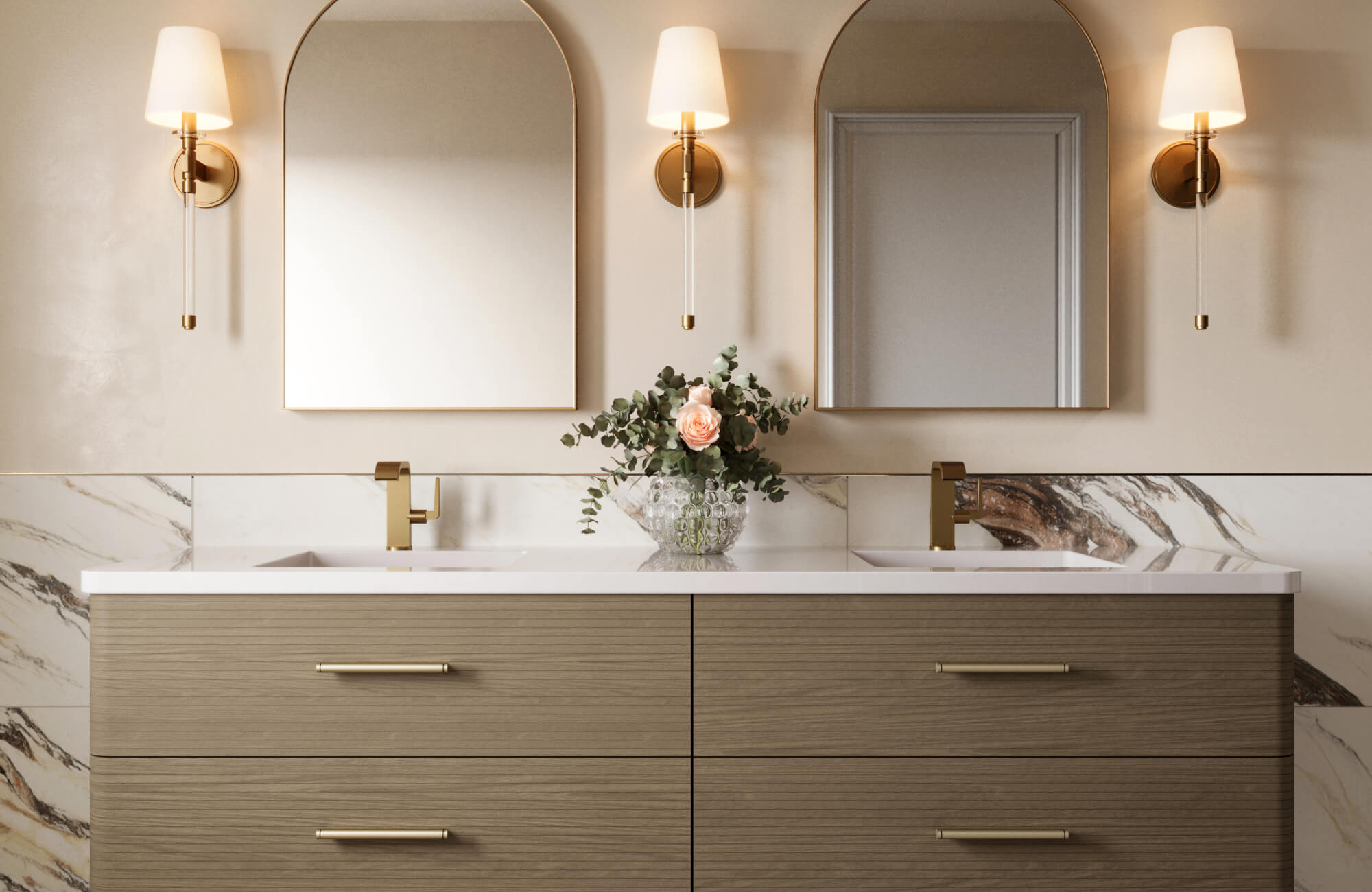
Consistency in material and finish is essential for a cohesive bathroom design. To achieve this, matching the metal finish of vanity lights with faucets, drawer pulls, and mirror frames ensures a unified visual language throughout the space. Popular pairings like brushed brass with warm woods or matte black with white marble can be repeated across lighting, hardware, and accessories for balance. In mixed-finish schemes, it’s best to limit yourself to two finishes and distribute them evenly to avoid visual confusion.
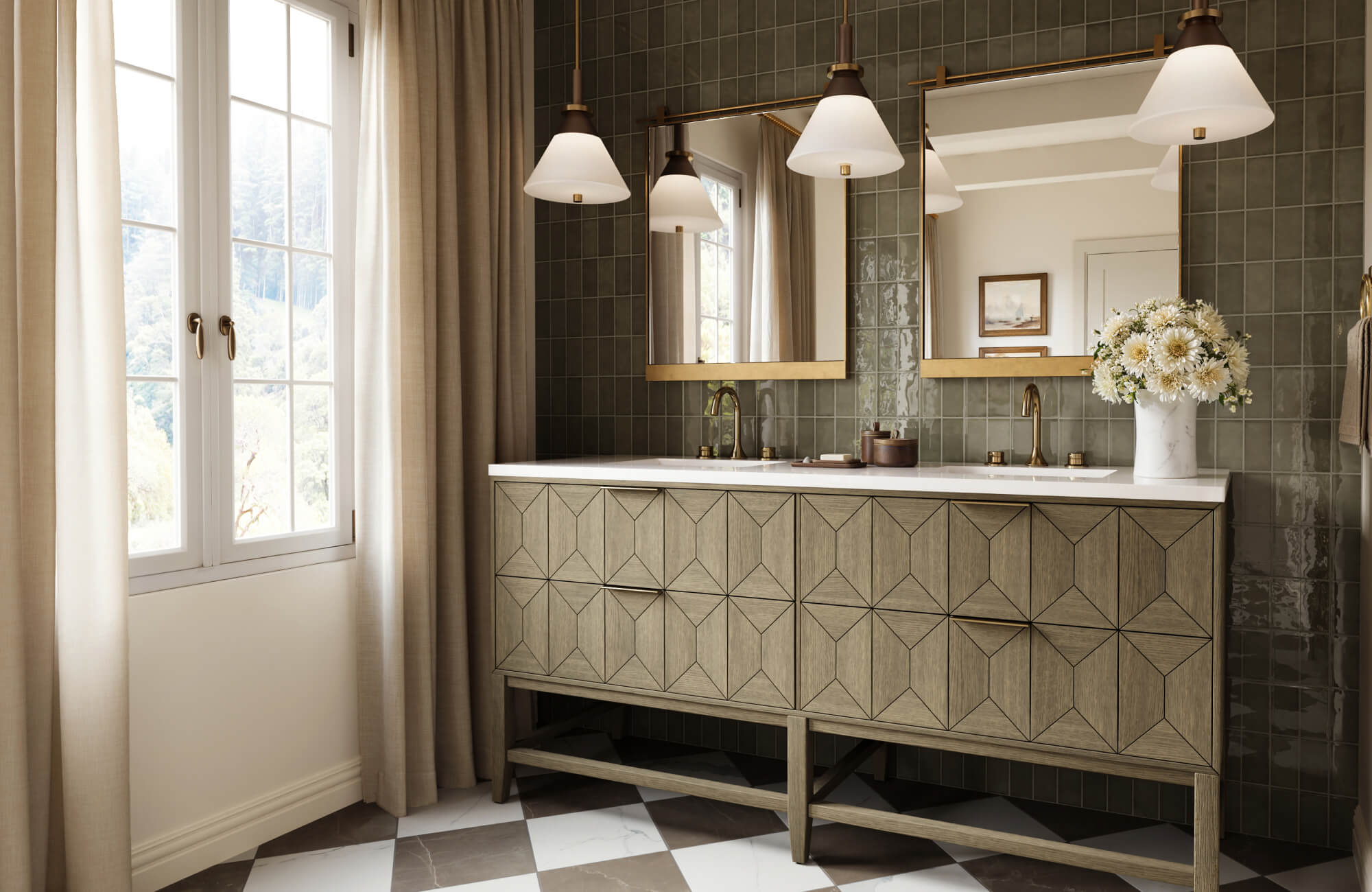
Equally important, damp-rated materials are a must for moisture-prone environments, especially around the vanity sink. A perfect example of this harmony is shown in the photo above, featuring our Gwen 72" Double Vanity in Pebble Oak with a 3 cm White Zeus Quartz Top, seamlessly paired with the warm, sculptural form of the Lennie 12" Pendant in Patina Brass/Bronze. When finish, form, and light come together in sync, your vanity becomes a unified design story—practical, beautiful, and personal.
Integrating Smart Controls and Energy-Efficient Technologies
Today’s lighting innovations bring convenience, personalization, and energy savings to the bathroom. With modern smart controls and efficient technology, your vanity lighting becomes an adaptable tool that supports both style and lifestyle.
Smart Lighting Controls and Voice Integration
Smart lighting systems make it easy to tailor vanity light behavior to your daily routines. Through platforms like Lutron Caséta or Leviton, you can set brightness levels, schedules, and even color temperature using mobile apps or voice assistants. This also allows scenes such as "morning prep" or "evening unwind" to be activated with a single command, adding convenience to everyday tasks. For added efficiency, motion sensors can automatically trigger lights upon entry, reducing unnecessary energy use. In addition, dimmable options offer smoother transitions between lighting levels, enhancing both ambiance and functionality. With smart vanity lights for bathroom use, lighting becomes intuitive and tailored to individual needs.
Zoned Lighting for Functional Flexibility
Dividing your bathroom lighting into zones, such as vanity, ambient, and accent, allows for greater control over both intensity and coverage. By organizing these zones, each can be independently operated via separate switches or smart hubs, enabling different lighting moods at different times. For instance, task lighting can remain bright for grooming while ambient lighting dims for a relaxing bath. In addition to convenience, zoning ensures that energy is used only where and when it's needed. This layered flexibility enhances the functionality of vanity lights for bathroom spaces, especially in shared or multi-use layouts. When planned thoughtfully, zoned lighting creates a dynamic and user-responsive environment.
LED Technology for Energy Efficiency
LED vanity lights offer unmatched efficiency, long lifespan, and excellent light quality, making them the preferred choice for modern bathroom design. In terms of energy use, many Energy Star-certified models consume up to 80% less power than traditional bulbs while delivering superior brightness and color accuracy. Most LED fixtures are rated for 50,000+ hours of use, significantly reducing maintenance and long-term costs. Beyond longevity, LEDs also generate less heat, making them safer and more comfortable in compact or enclosed bathroom environments. When paired with smart dimmers and occupancy sensors, LED vanity lights for bathroom applications become both eco-conscious and luxurious. Thanks to their consistent performance, they support a refined experience without compromising sustainability.
Elevating Your Vanity with Beautiful, Layered Lighting
A thoughtfully lit vanity transforms the bathroom into a place of clarity, comfort, and quiet luxury. When ambient, task, and accent lights are harmoniously layered around the vanity, the result is not only practical but profoundly beautiful. With smart controls, stylish fixture choices, and precise placement, vanity lights for bathroom use become a defining element of both form and function. Through careful attention to detail, the vanity becomes more than a utility—it becomes a signature of personalized design.
At Edward Martin, we understand that your bathroom vanity is more than just furniture; it’s a personal statement. With expert lighting strategies and beautifully crafted vanity solutions, we help you create a space that’s both stylish and functional. If you're planning a renovation or seeking professional guidance for a new project, we invite you to explore how our tailored design services can bring your vision to life. Contact us today to begin curating a bathroom experience that’s as refined as it is functional!
Follow us on Instagram
@EDWARD.MARTIN
)
)
)
)
)
)
)
)
)
)
)
)
)
)
)
)