



A well-layered sofa instantly makes a living space feel considered, yet pillow styling is often where rooms fall short. Too many pieces can look crowded, while too few can leave the seating area feeling flat. The difference usually comes down to proportion, contrast, and how the layers interact with one another. When decorative pillows are chosen and placed with intention, they can anchor the sofa, reinforce the room’s color story, and introduce subtle depth. In this blog, we’ll break down how to layer decorative pillows for a designer-finished look that feels balanced, cohesive, and thoughtfully styled.

Define the Visual Role of Pillows in the Room
Before you start layering, pause and ask what the pillows are actually supposed to do. Are they grounding the seating area, softening sharp lines, or adding contrast where the room feels flat? When you decide their role first, the arrangement feels intentional instead of random.
Using Pillows to Reinforce the Room’s Color Story
Pillows are one of the easiest ways to strengthen the color story that already exists in the room. Instead of introducing brand-new tones, you can pull a shade from the rug, artwork, or even a subtle stripe in the drapery and repeat it on the sofa. That repetition helps everything feel connected without looking overly matched. For instance, if your artwork has warm rust accents, echoing that tone in one pillow can quietly tie the seating area back to the wall. You do not need to repeat the exact color everywhere; slight variations in depth usually look more natural. When pillows support the palette instead of competing with it, the room feels layered and complete.
Creating Contrast Against Upholstery
Sometimes the sofa itself needs a little tension to feel interesting. If the upholstery is neutral, adding deeper tones or a subtle pattern can create dimension without overwhelming the space. On the other hand, if the sofa is already bold, softer or lighter pillows can prevent it from feeling too heavy. The contrast should highlight the furniture, not fight it. Even shifting just one tone darker or lighter than the base fabric can make the whole arrangement feel more considered. When contrast is intentional, the sofa becomes the backdrop, and the pillows provide depth.
Echoing Materials From Nearby Elements
Pillows do not have to match everything, but they should acknowledge what is around them. If there is a woven rug, a linen drape, or aged brass lighting nearby, you can subtly reflect that texture or tone in your pillow choices. That might mean introducing a woven fabric, a soft nubby surface, or even a muted metallic thread. These small references create a quiet dialogue between pieces in the room. You may not immediately notice the connection, yet the space feels more cohesive because of it. When pillows respond to nearby materials, they stop feeling like add-ons and start feeling integrated.

Think in Layers, Not Individual Pieces
One of the biggest shifts that makes pillows look designer-styled is thinking of them as one composition instead of separate accents. Designers rarely place pillows one by one; they build a layered arrangement that reads as a whole. When you focus on rhythm and progression from back to front, the sofa feels styled with intention rather than filled with leftovers.
Building a Cohesive Back Layer
The back layer sets the tone for everything in front of it. These pillows usually anchor the arrangement and should feel connected to each other in scale or color so they create a stable visual base. If the back row feels scattered or unrelated, the entire setup can look disorganized, no matter how beautiful the fabrics are. Repeating one tone or pattern across the back helps establish rhythm without making the sofa look overly matched. This layer is not meant to steal attention; it creates structure. Once that foundation feels steady, the rest of the arrangement becomes easier to build.
Adding Mid-Layer Dimension
The middle layer is where depth starts to show. This is often where you introduce a shift in texture, a secondary pattern, or a slightly different tone that adds interest without disrupting cohesion. Think of it as the bridge between the structured back layer and the more expressive front accent. If everything in the middle is too similar, the arrangement can feel flat. If it is too different, the composition loses flow. The goal is to create contrast that still feels related, so the eye moves naturally across the sofa.
Finishing With a Front Accent
The front accent is usually the smallest or most distinctive pillow in the mix. This is where you can introduce something slightly unexpected, whether that is a stronger pattern, a bold color, or a unique shape. Because it sits in front, it does not need to overpower the arrangement; it just needs to complete it. One well-chosen accent often works better than stacking multiple small pieces that compete for attention. When the front layer feels deliberate, the entire grouping reads as thoughtful rather than crowded. It becomes the final detail that pulls the layered look together.

Balance Structure and Softness
The way your pillows are constructed can completely shift how a sofa feels. Shape, fill, and tailoring all influence whether the seating reads polished and architectural or relaxed and inviting. When you pay attention to structure versus softness, the arrangement starts to support the overall mood of the room rather than working against it.
Crisp Tailored Edges vs Relaxed Silhouettes
Crisp, tailored pillows with sharp corners and defined seams tend to give a sofa a more structured presence. They reinforce clean lines and work especially well in spaces that lean modern or architectural. On the other hand, pillows with softened corners and a slightly slouched profile create a more lived-in atmosphere. That subtle looseness can make even a formal sofa feel approachable. The choice between tailored and relaxed should connect back to the tone of the room. If the space already has strong lines and minimal detailing, a touch of softness can prevent it from feeling rigid.
Down Fill vs Structured Inserts
What is inside the pillow matters just as much as the fabric on the outside. Down-filled inserts tend to create a relaxed, sink-in effect that feels casual and comfortable. They allow for a slight chop or natural compression, which adds movement to the arrangement. Structured inserts, by contrast, hold their shape and maintain clean edges throughout the day. That firmness can support a more polished look, especially in spaces where you want the styling to stay precise. Choosing between the two depends on whether comfort or structure is the stronger priority in your layout.
How Shape Changes the Mood of the Sofa
Square pillows are the most common, but they are not the only option. A sofa layered entirely in identical squares can feel predictable, even if the fabrics are beautiful. Introducing a rectangular or slightly elongated form changes the rhythm and creates visual contrast without altering the color story. Rounded edges can soften a rigid frame, while sharper silhouettes can reinforce a contemporary setting. The shape itself becomes part of the styling language. When you vary forms intentionally, the sofa feels curated rather than assembled from a matching set.
For example, our Marisette 12” x 27” Down Pillow in Black above introduces a long, tailored silhouette that instantly shifts the visual rhythm of a seating arrangement. Its dark weave is animated by white looping threads that move in striking linear bands, giving the pillow dimension without overwhelming surrounding layers. The knife-edge finish keeps the form crisp, while the discreet antique bronze zipper adds a subtle warmth that feels intentional rather than decorative. Filled with natural down clusters, it maintains softness without losing its structure, so the elongated shape stays defined throughout the day.
When to Introduce Lumbar or Bolster Forms
Lumbar and bolster pillows are often the detail that makes the arrangement feel complete. A single lumbar placed in front of larger squares can break up repetition and draw the eye horizontally across the seating. Bolsters can work in more relaxed settings, especially when you want to introduce softness without adding visual bulk. These forms are particularly useful on deeper sofas where front-to-back layering benefits from contrast. However, adding too many specialty shapes can crowd the space. One thoughtfully placed piece is usually enough to shift the composition in a meaningful way.

Control Pattern Movement Across the Arrangement
Pattern is often where pillow layering either feels elevated or chaotic. The goal is not to stack multiple prints, but to let them guide the eye in a controlled way. When scale, direction, and spacing are considered together, the arrangement feels intentional instead of crowded.
Scaling Patterns Without Overwhelming the Seating
Mixing patterns works best when there is a clear difference in scale. If every pillow carries a medium-sized print, the sofa can start to look visually noisy because nothing has room to breathe. Pairing a larger statement pattern with a smaller, more restrained motif creates hierarchy. The eye naturally moves from bold to subtle instead of trying to process everything at once. It also helps to leave small areas of solid fabric between busy prints so the arrangement does not feel compressed. When scale shifts are deliberate, the sofa feels layered rather than overloaded.
Letting One Print Lead the Arrangement
Every successful pillow composition benefits from a clear focal print. That might be a bold stripe, an oversized floral, or a geometric design with strong contrast. Once you choose the lead pattern, the remaining pillows should support it rather than compete for attention. This keeps the arrangement from feeling scattered. If two bold prints fight for dominance, the overall look becomes distracting. Letting one design set the tone creates direction and makes the styling feel composed.
Using Subtle Patterns to Support Bolder Ones
Subtle patterns are often the quiet heroes in a layered arrangement. They add depth and movement without pulling focus away from the primary print. A tone-on-tone stripe, a faint woven grid, or a soft abstract can bridge the gap between solids and statement pieces. These quieter elements keep the composition from feeling flat while still maintaining balance. Without them, bold patterns can appear isolated or abrupt. When subtle prints are used strategically, they create cohesion and help the entire grouping feel unified.
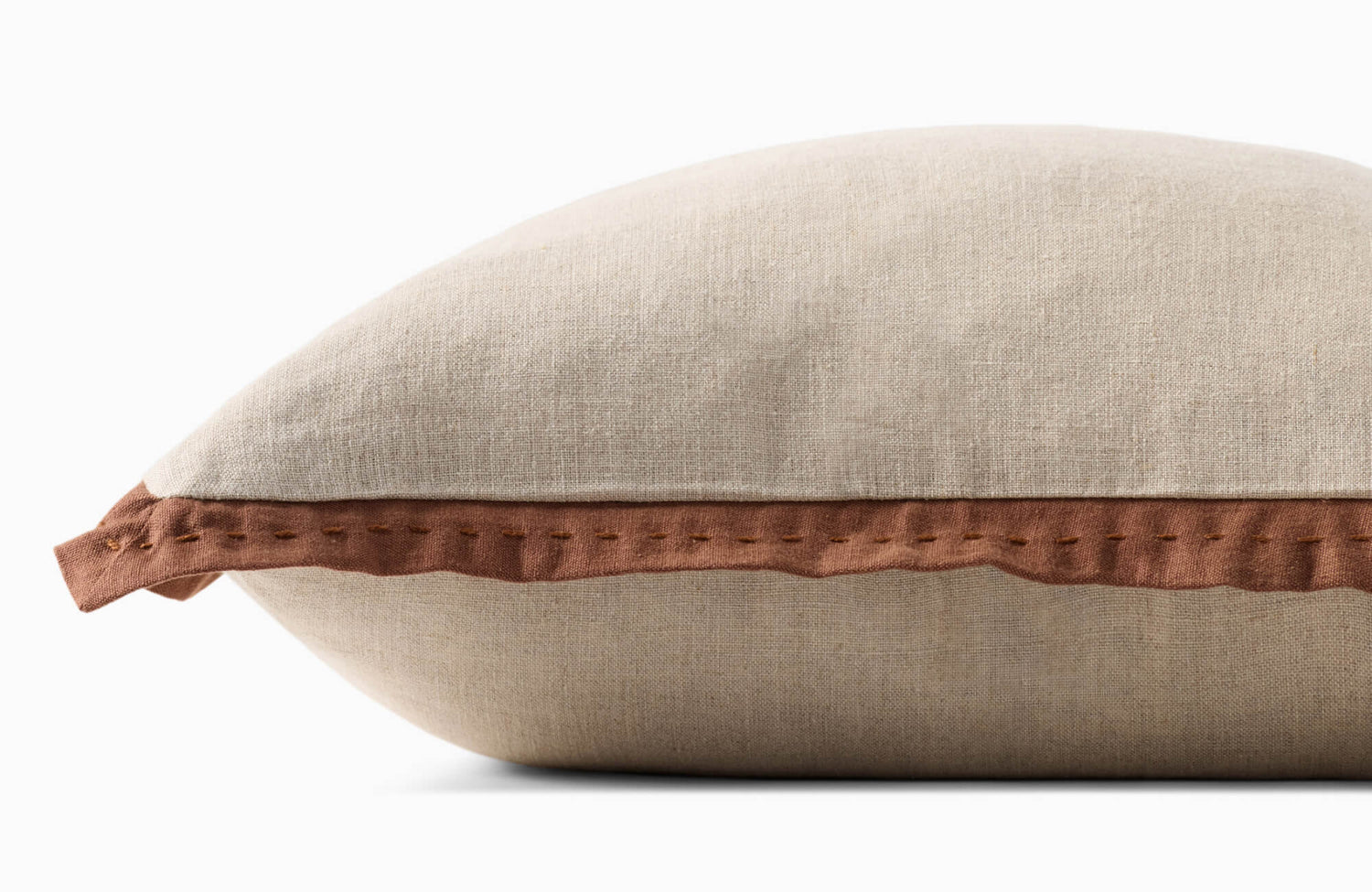
When you need a subtle pattern to support a stronger focal print, our Merelle 13” x 21” Down Pillow in Tan above fits naturally into the composition. Its richly textured taupe weave reads almost like a solid from a distance, yet up close the surface reveals depth and quiet craftsmanship. The white whipstitched flange defines the silhouette without competing with adjacent stripes or geometrics. It stabilizes the arrangement while adding just enough tactile richness to keep the layers feeling intentional.

Refine Spacing and Placement for a Polished Finish
Once the colors, shapes, and patterns are in place, spacing is what determines whether the arrangement feels styled or accidental. Small adjustments in angle, overlap, and distance between pillows can completely change the outcome. Refining placement is less about adding more and more about fine-tuning what is already there.
Symmetry That Feels Intentional, Not Stiff
Symmetry can instantly give a sofa a sense of order, especially in rooms that lean structured or formal. Placing matching pillows at both ends creates visual balance and makes the seating area feel grounded. However, symmetry becomes stiff when every pillow is perfectly upright, evenly spaced, and pressed into identical angles. A slight rotation toward the center or a subtle overlap between layers softens the rigidity without losing balance. Even the smallest shift in tilt can make the arrangement feel styled rather than staged. The goal is controlled symmetry that feels composed, not mechanical.
Relaxed Placement Without Looking Messy
A relaxed pillow arrangement still requires intention behind it. Slightly compressing down-filled inserts, angling a front pillow casually, or allowing a bit of overlap can create a welcoming, lived-in effect. The difference between relaxed and messy often comes down to spacing and alignment. If pillows drift too far apart or collapse unevenly, the sofa begins to look neglected rather than styled. Maintaining a consistent visual rhythm across the seating keeps the layout cohesive, even when it appears effortless. True casual styling is thoughtful, even when it does not look that way at first glance.
Adjusting Corners and Sectionals
Corners can easily become the most crowded part of a sectional if pillows are stacked too tightly together. Allowing a bit more breathing room in that inner angle prevents the arrangement from feeling compressed. On longer sectional runs, repeating a similar layering rhythm at each end can create continuity across the full span of seating. This keeps the eye moving smoothly from one side to the other instead of stopping abruptly in the middle. You may also need to slightly reduce the number of pillows in corner areas so the sofa remains functional. Thoughtful spacing across a sectional ensures the entire piece feels cohesive rather than divided into isolated zones.
Editing Down for Visual Clarity
If the arrangement starts to feel heavy, editing is usually the smartest next step. Removing a single pillow can immediately clarify the composition and allow stronger pieces to stand out. Too many layers can blur the visual hierarchy, especially when multiple patterns compete at once. Stepping back and evaluating the sofa from across the room often reveals where things feel crowded. Designers frequently refine by subtracting rather than adding, because clarity creates impact. A slightly restrained arrangement often reads more elevated than one that tries to do too much.
Knowing When to Stop Adding
It is tempting to keep layering in pursuit of fullness, especially when every pillow feels beautiful on its own. However, once the arrangement achieves depth and balance, additional pieces rarely improve it. Ask whether each pillow contributes something distinct, whether in contrast, texture, or shape. If it does not shift the composition in a meaningful way, it may not be necessary. A well-styled sofa should feel intentional, not overloaded. Knowing when to stop is often what separates a thoughtfully layered arrangement from one that feels overworked.
Finishing the Sofa With Purpose and Balance
Layering decorative pillows is less about following a formula and more about developing an eye for balance. When you define their role, build depth thoughtfully, and refine spacing with care, the sofa begins to feel styled rather than simply filled. Small decisions around contrast, structure, and placement often create the biggest shift in how the seating area reads. A designer-finished look usually comes from editing and intention, not adding more.
If you are unsure whether your arrangement feels balanced or slightly off, an outside perspective can make all the difference. Through our Personalized Design Consultation, we help evaluate proportion, color harmony, and layering strategy based on your exact sofa and layout. With thoughtful guidance, your pillow styling can move from well-decorated to confidently designed.


