
)
)
)
)
)
)
)
)
How To Get A Modern Bathroom Finish With Terrazzo Tile
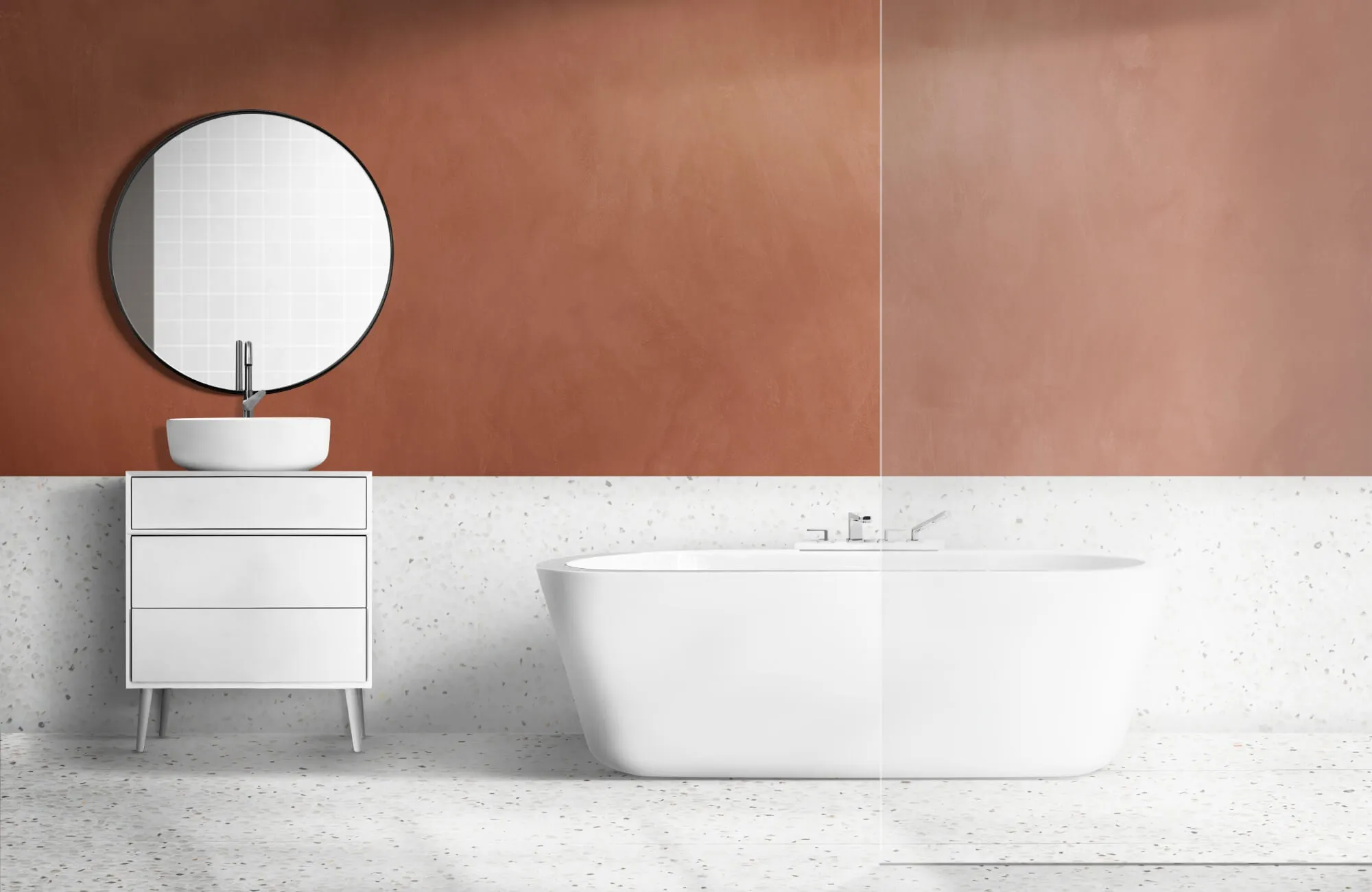
Planning a modern bathroom makeover with terrazzo tile is about more than choosing a pattern you love. Terrazzo brings texture, movement, and personality into a space, but how it’s used makes all the difference in whether the bathroom feels calm and modern or visually overwhelming. From selecting the right tile and deciding where it works best, to pairing it with lighting, mirrors, and vanities, every choice plays a role in the final look. In this guide, we’ll walk through how to use terrazzo thoughtfully, explore low-maintenance alternatives like terrazzo-look porcelain, and help you create a bathroom that feels stylish, practical, and easy to live with.
How Terrazzo Shapes a Modern Bathroom Look
Terrazzo plays a big role in defining how modern a bathroom ultimately feels, depending on how it’s used and what supports it. Whether it takes center stage or works quietly in the background, its placement helps establish visual order and balance.
Using Terrazzo as the Visual Anchor
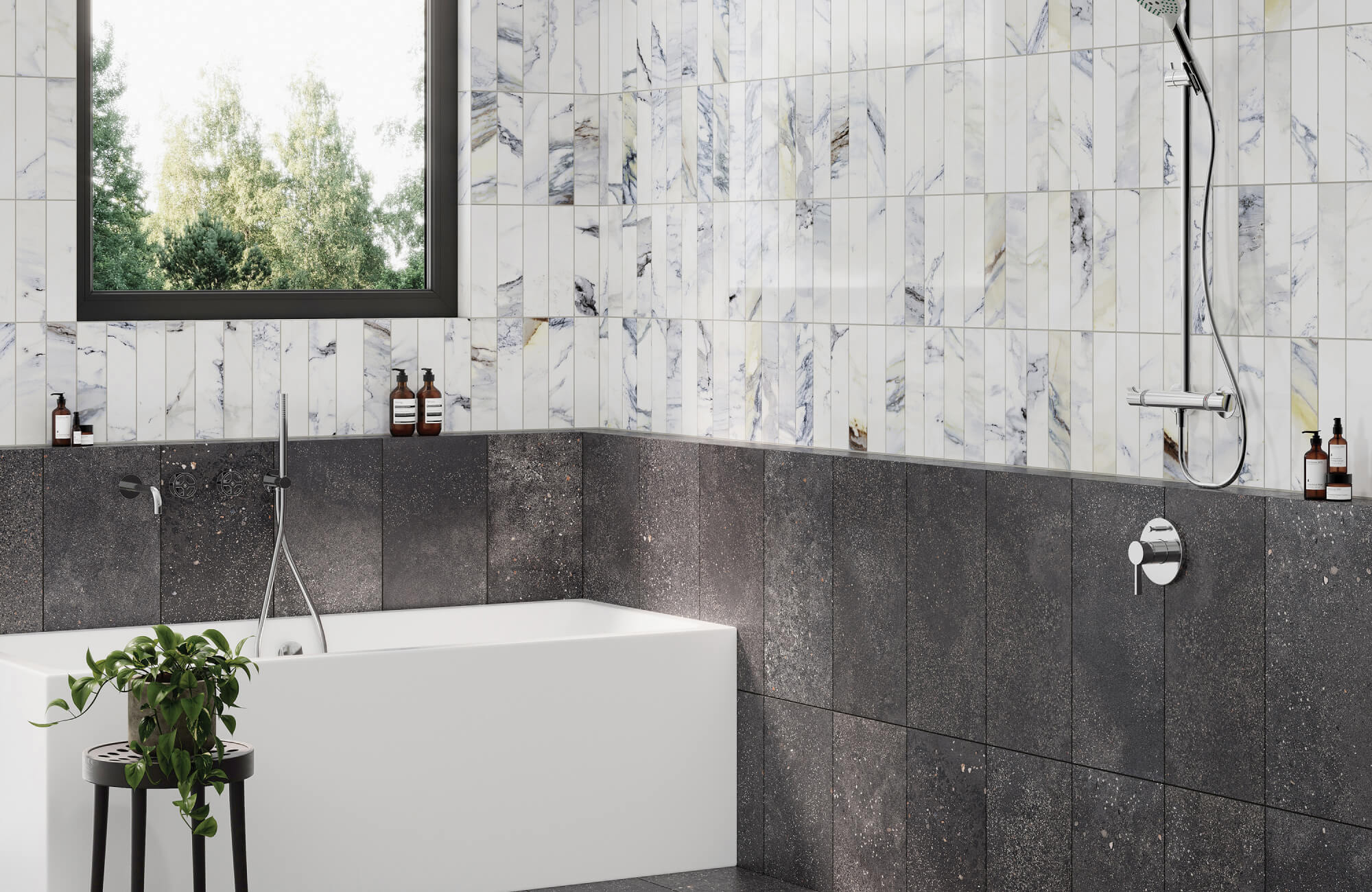
When terrazzo is used as the main surface, such as flooring or a feature wall, it naturally becomes the visual anchor of the bathroom. Because terrazzo already carries movement and texture, it helps ground the space without needing bold colors or heavy details. This works especially well in modern bathrooms where simplicity is key. For instance, a terrazzo floor can quietly define the room while everything else stays restrained. It also gives the design a clear focal point, which prevents the space from feeling scattered. When terrazzo leads, the rest of the bathroom can fall into place more easily.
A space like the one above shows how a terrazzo-inspired surface can confidently anchor a modern bathroom without overwhelming it. Our Sloane 12x24 Matte Porcelain Tile in Charcoal is a great example, grounding the room with a deep, textured base that feels modern, calm, and intentional. Its matte finish keeps reflections soft, which helps balance more expressive surfaces around it. Because it’s porcelain, it delivers the terrazzo look with added durability and easy upkeep, making it especially well suited for everyday bathroom use.
Letting Terrazzo Set a Modern Design Tone
Terrazzo has a way of setting the overall mood of a bathroom, especially in modern designs. Its mix of aggregate and base color introduces subtle contrast, which keeps the space from feeling flat. At the same time, terrazzo still feels clean and structured, making it a natural fit for modern interiors. Because of this balance, it can lean warm, cool, or neutral depending on the palette around it. For example, lighter terrazzo can create an airy, contemporary feel, while darker options add depth. Either way, terrazzo helps establish a modern tone without relying on trends.
Supporting Terrazzo With Calm Surfaces
To keep a bathroom feeling modern, terrazzo often benefits from being paired with calmer surrounding surfaces. Simple walls, understated cabinetry, or smooth finishes allow terrazzo’s texture to stand out without competing for attention. This approach also helps maintain visual hierarchy, which is important in modern design. Too many expressive surfaces can make the space feel busy rather than intentional. By contrast, quiet materials help terrazzo feel considered and balanced. As a result, the bathroom feels cohesive instead of visually overwhelming.
Accent Uses That Stay Clean and Intentional
Terrazzo can also work beautifully in smaller accent applications when a full installation feels like too much. Using it on a backsplash, niche, or vanity surround adds interest while keeping the overall look clean. This approach works well in compact bathrooms or designs that prioritize simplicity. For example, a terrazzo accent can introduce texture without taking over the room. It also allows you to highlight the material while preserving negative space. When used thoughtfully, these accents feel deliberate and modern rather than decorative.
Terrazzo Tile That Supports a Clean, Modern Aesthetic
Choosing the right terrazzo tile is just as important as deciding how it will be used in the space. Color balance, chip size, and overall pattern all influence whether terrazzo feels clean and modern or visually overwhelming.
Light vs Dark Terrazzo for a Modern Feel
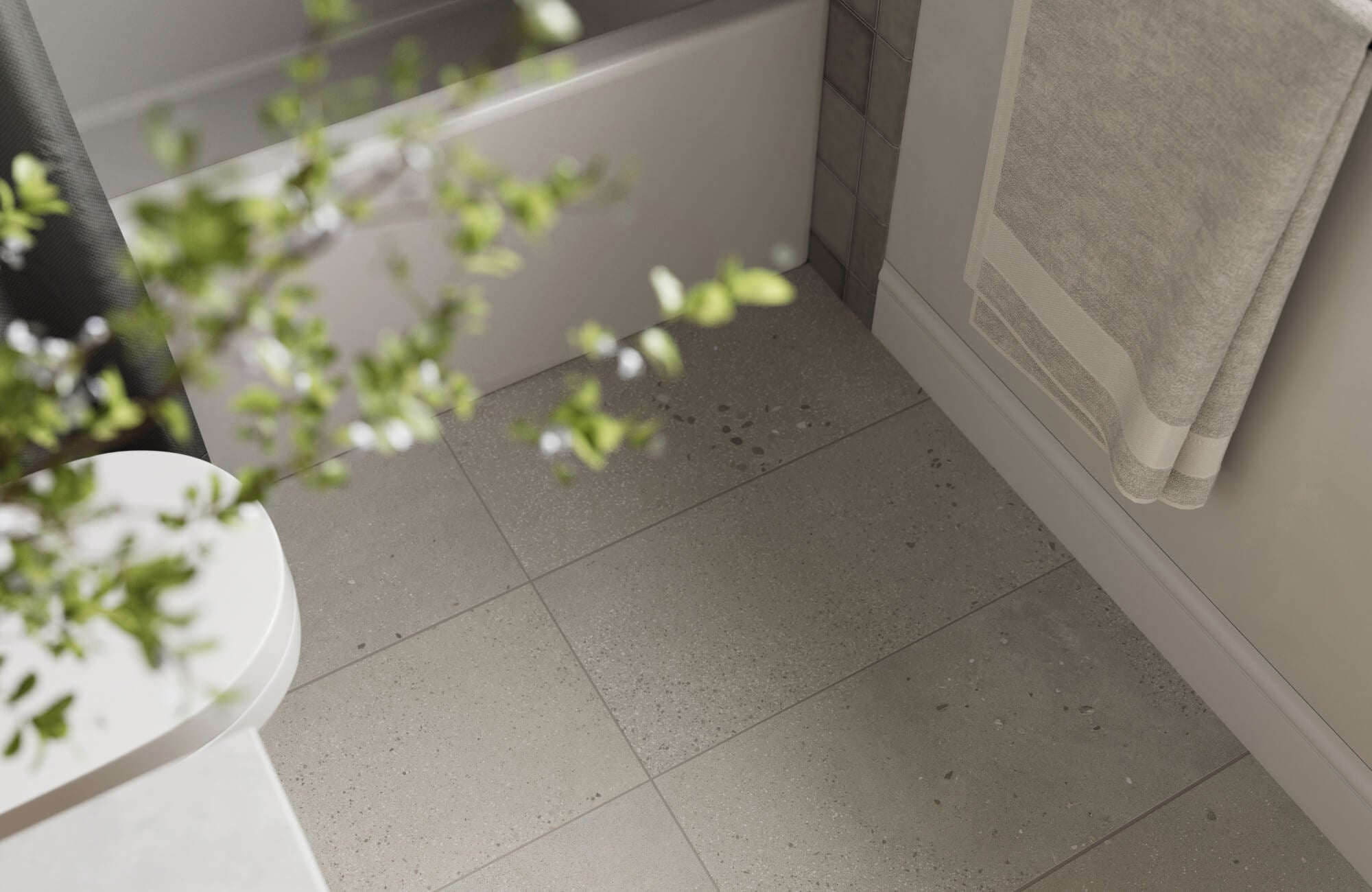
Light terrazzo tiles often help modern bathrooms feel open, fresh, and visually calm. Because lighter bases reflect more light, they work especially well in smaller bathrooms or spaces with limited natural light. Dark terrazzo, on the other hand, adds depth and contrast, which can feel sleek and intentional in more spacious layouts. The key is balance, because darker tones feel most modern when they’re not paired with too many competing elements. For instance, dark terrazzo looks cleaner when surrounded by restrained colors rather than bold accents. Choosing between light and dark should come down to how airy or grounded you want the space to feel.
The bathroom shown above highlights how a lighter terrazzo tone can keep a modern space feeling open and relaxed without losing depth. Our Sloane 12x24 Matte Porcelain Tile in Sandstone is a strong example, offering a soft, neutral base that reflects light gently and keeps the room visually calm. Its subtle speckling adds just enough texture to avoid a flat look, while still supporting a clean, modern aesthetic. Because it’s porcelain, it also brings added durability and easy maintenance, making it a practical choice for everyday bathroom use.
Fine Aggregate vs Bold Chips in Modern Spaces
Chip size plays a big role in how terrazzo reads visually, especially in modern bathrooms. Fine aggregate tends to feel more refined and subtle, which aligns well with clean-lined, minimalist design. Bold chips introduce more movement and personality, but they can also dominate the space if overused. In modern interiors, larger chips often work best when the color palette stays controlled. For example, bold aggregate paired with neutral tones can still feel intentional rather than busy. When in doubt, finer chips usually offer more flexibility for a modern look.
Choosing Colors That Feel Balanced and Current
Color selection can make or break a terrazzo tile in a modern bathroom. Tiles that rely on a limited, cohesive palette tend to feel more current and easier to design around. Soft neutrals, muted tones, or gently contrasting chips help keep the look clean and composed. Too many colors can pull attention in different directions, which works against a modern aesthetic. Instead, balanced color combinations allow terrazzo to feel expressive without becoming distracting. This approach also makes it easier to coordinate with other bathroom elements later on.
When Neutral Terrazzo Feels More Timeless
Neutral terrazzo often feels like the safest choice for modern bathrooms because it ages well visually. Whites, creams, grays, and soft beiges create a foundation that feels calm and adaptable over time. These tones allow terrazzo’s texture to shine without relying on strong color contrast. Neutral options also pair easily with changing finishes or accessories down the line. For instance, you can update hardware or lighting without needing to rethink the tile. This makes neutral terrazzo a smart option for long-term design flexibility.
Avoiding Overly Busy Terrazzo Patterns
While terrazzo is naturally expressive, overly busy patterns can quickly overwhelm a modern bathroom. Dense chip placement or high-contrast color mixes can make the surface feel chaotic rather than intentional. In modern spaces, restraint usually leads to better results. Choosing patterns with breathing room helps the eye rest and keeps the space feeling organized. It also allows other design elements to coexist without competing. When terrazzo feels calm rather than crowded, the bathroom reads cleaner and more modern overall.
Placing Terrazzo Tile for a Balanced, Modern Bathroom
Where you place terrazzo can make just as much of an impact as the tile you choose. Strategic placement helps terrazzo stand out in a way that feels calm, intentional, and aligned with a modern bathroom look. Below, we’ll walk through common applications and how to use them thoughtfully without overwhelming the space.
Terrazzo Flooring as a Grounded Base
Using terrazzo on the floor is one of the easiest ways to anchor a modern bathroom. Because flooring naturally covers a larger surface, terrazzo works well here as a visual foundation that ties the room together. It adds texture and interest without competing with vertical elements like walls or cabinetry. For instance, a terrazzo floor paired with simpler wall finishes keeps the space balanced and easy on the eyes. This approach also allows other features to stay clean and minimal. As a result, the bathroom feels cohesive rather than visually busy.
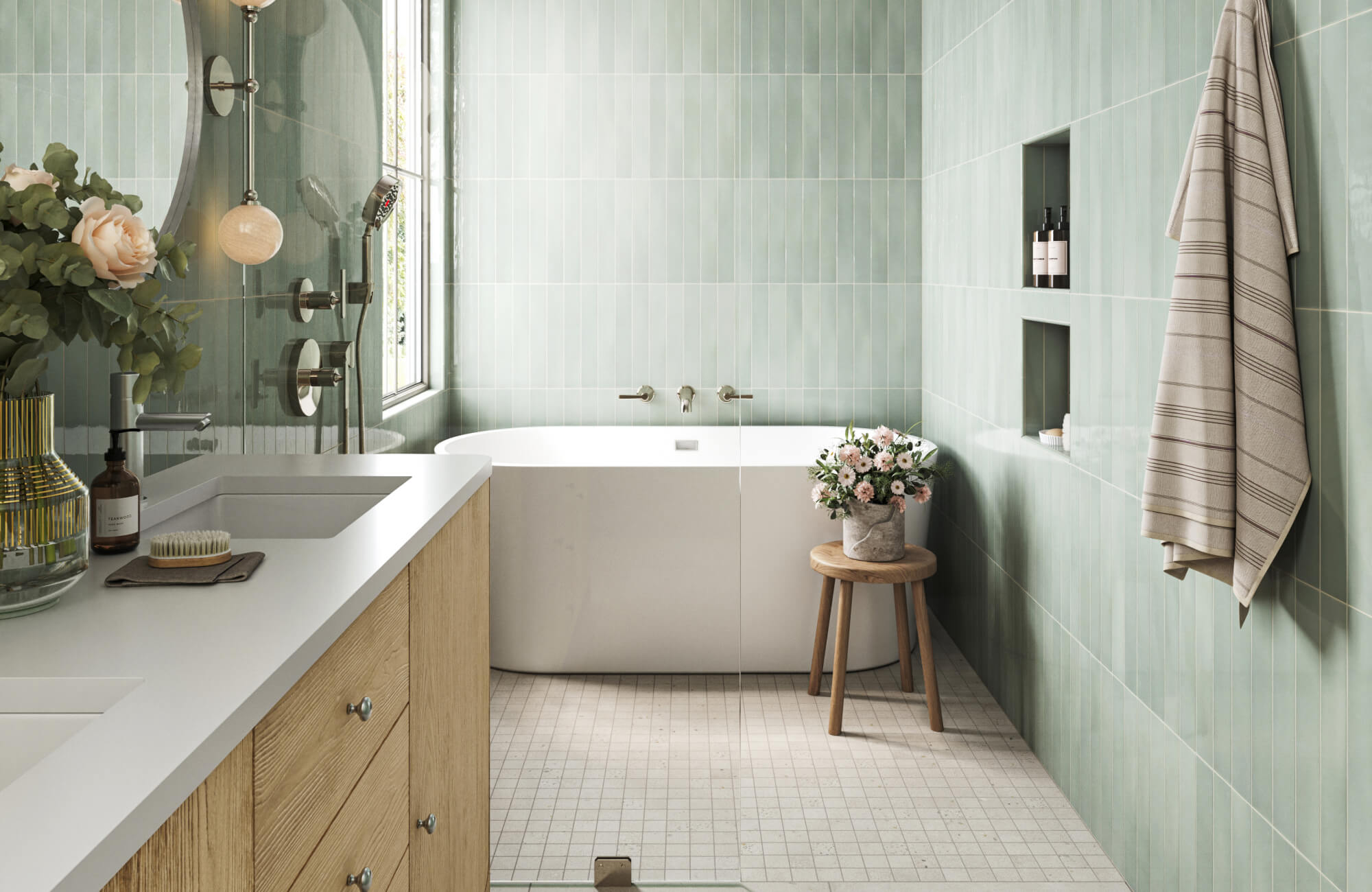
The space above shows how terrazzo flooring can quietly anchor a modern bathroom while allowing softer wall finishes to take the lead. Our Sloane 2x2 Matte Porcelain Mosaic Tile in Pearl works especially well in this role, offering a light beige, terrazzo-inspired surface that feels calm rather than industrial. The small-scale mosaic adds subtle visual texture underfoot without overpowering the room, which is ideal for a balanced bathroom makeover. Its porcelain construction also makes it durable and low maintenance, so the floor stays practical while still delivering a refined, contemporary look.
Shower Walls That Highlight Without Overpowering
Terrazzo can be especially striking on shower walls when it’s used with restraint. Applying it to one main wall or keeping the surrounding surfaces simple helps maintain a modern feel. Because showers are often focal points, terrazzo here naturally draws attention, so balance is key. Pairing terrazzo walls with minimal fixtures and neutral surroundings keeps the look controlled. This way, the tile feels intentional rather than dominant. When done right, terrazzo adds depth without overwhelming the shower area.
Vanity Backsplashes With Subtle Texture
A terrazzo backsplash behind the vanity is a great way to introduce texture in a smaller, more controlled dose. This placement allows terrazzo to add interest without covering large surfaces. It works especially well when paired with clean-lined vanities and simple mirrors. Because the area is compact, even expressive terrazzo patterns tend to feel more contained. For example, a backsplash can echo the flooring or introduce a complementary tone. The result feels layered yet still modern and composed.
Feature Areas That Feel Intentional
Terrazzo works best as a feature when there’s a clear reason for it to be there. Accent walls, niche surrounds, or defined zones can all benefit from terrazzo when they’re thoughtfully chosen. The key is clarity, because feature areas should feel deliberate rather than scattered. Limiting terrazzo to one or two focused spots helps maintain visual calm. This approach also lets those areas stand out without competing with one another. In modern bathrooms, intention always reads stronger than excess.
When Less Terrazzo Creates More Impact
Sometimes, using less terrazzo actually creates a stronger modern statement. Overusing it across multiple surfaces can make the space feel visually noisy, even with a clean color palette. By limiting terrazzo to one primary application, you allow it to breathe and feel more refined. This restraint also gives other materials room to support the design. For instance, simple walls or warm wood accents can help balance the tile. In many modern bathrooms, a lighter touch delivers the most impact.
Bathroom Lighting Choices That Bring Out Terrazzo’s Texture
Lighting plays a big role in how terrazzo looks and feels in a modern bathroom. The right lighting can highlight its depth, soften its texture, and bring out subtle color variations, while the wrong setup can make it appear flat or overly busy.
Warm vs Cool Lighting and Terrazzo Tone
Lighting temperature directly affects how terrazzo’s colors come through. Warm lighting tends to soften the tile’s surface, which works well in modern bathrooms, aiming for a relaxed, welcoming feel. Cooler lighting, on the other hand, can make the aggregate feel sharper and more graphic. This isn’t necessarily bad, but it does shift the mood toward a crisper, more contemporary look. Because terrazzo often includes multiple tones, it’s helpful to test lighting before finalizing your choice. The goal is to support the tile’s color balance rather than overpower it.
Balancing Ambient and Task Lighting
A mix of ambient and task lighting helps terrazzo feel dimensional rather than one-note. Ambient lighting sets the overall mood, while task lighting provides clarity where you need it most. When these layers work together, terrazzo reads as textured and intentional instead of busy. For instance, soft overhead lighting paired with a focused task light creates contrast without harshness. This balance keeps the bathroom functional while preserving a modern aesthetic. Too much of one type can easily throw off the visual rhythm.
Accent Lighting That Reveals Texture
Accent lighting is a subtle but effective way to highlight terrazzo’s surface detail. When placed thoughtfully, it can bring out the tile’s depth and make the aggregate feel more tactile. Low-level lighting or directional fixtures work especially well for this purpose. These touches add interest without pulling focus away from the overall design. Because accent lighting is meant to enhance rather than dominate, restraint is important. When used sparingly, it helps terrazzo feel layered and refined.
Fixture Styles That Complement Terrazzo’s Pattern
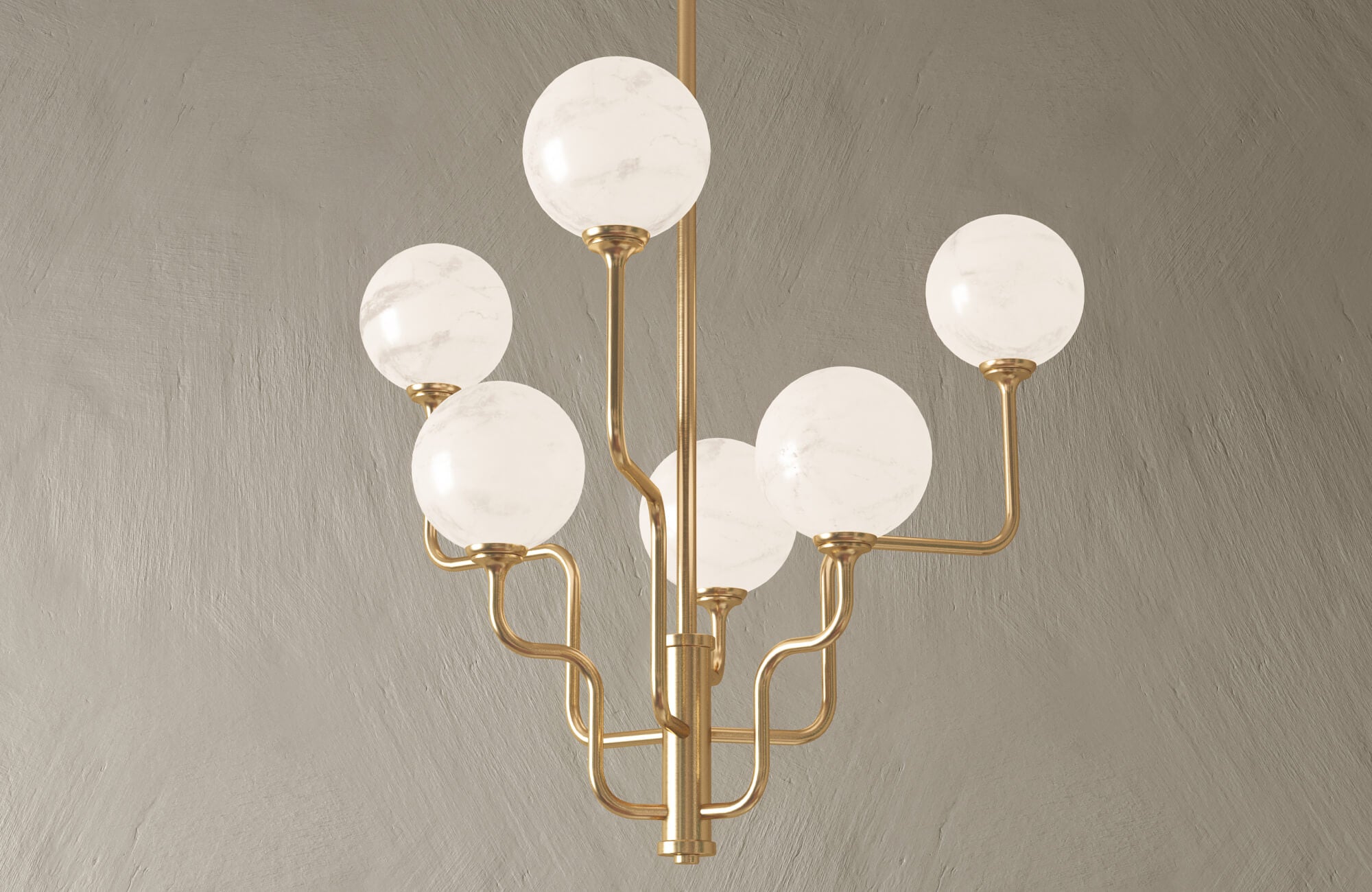
The type of lighting fixture you choose can greatly influence how terrazzo reads in a modern bathroom. Simple silhouettes, such as globe lights, slim sconces, or linear fixtures, tend to work best because they don’t compete with terrazzo’s natural variation. These shapes provide light evenly, allowing the tile’s texture and color chips to remain the visual focus. Fixtures with diffused glass or soft shades help prevent harsh shadows that can break up terrazzo’s rhythm. Because terrazzo already brings movement to the space, understated fixture designs keep the look cohesive. The result feels modern, balanced, and visually calm.
Modern Mirror Styles That Pair Naturally With Terrazzo Tile
Mirrors play a key role in how terrazzo is perceived in a modern bathroom because they sit directly within the tile’s visual field. The right mirror shape and finish can soften terrazzo’s pattern, reinforce clean lines, or add balance without pulling attention away from the tile itself.
Round Mirrors to Soften Terrazzo
Round mirrors pair naturally with terrazzo because they introduce softness against the tile’s scattered, geometric pattern. The curved shape helps break up visual density, especially when terrazzo features bold chips or higher contrast. As a result, the space feels more relaxed and approachable rather than rigid or overly structured. Round mirrors also work well in minimalist bathrooms, since they add interest without relying on extra detail. For example, a simple round mirror can visually calm a terrazzo-heavy wall while still letting the tile stand out. The end result feels balanced and thoughtfully composed.
Rectangular Mirrors for Clean Structure
Rectangular mirrors are a strong choice for reinforcing structure in modern bathrooms, particularly those built around symmetry and clean lines. Their straight edges echo the architectural qualities of terrazzo, which helps the space feel ordered rather than visually busy. This shape works especially well when terrazzo is used more generously, such as across floors or large wall surfaces. Because rectangular mirrors feel familiar and grounded, they help anchor the overall design. They also suit clean, minimal layouts where clarity matters most. When sized and placed correctly, they keep the look modern, composed, and cohesive.
Arched Mirrors for Subtle Interest
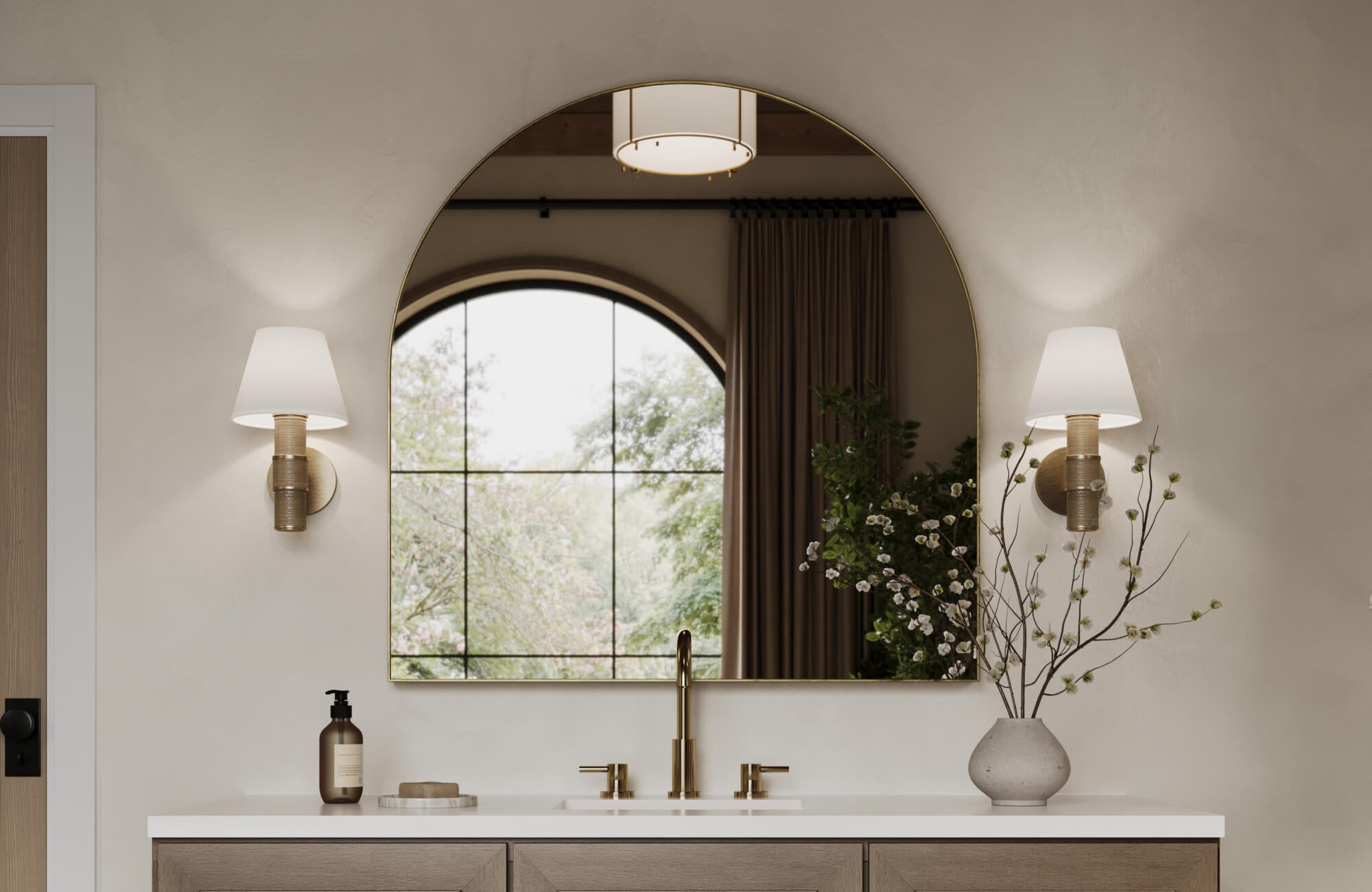
Arched mirrors, such as our Esmeralda Wide Mirror in Polished Brass above, offer a nice middle ground between softness and structure, which makes them especially effective alongside terrazzo tile. The gentle curve introduces movement without fully stepping away from clean, modern lines. This balance works well in bathrooms that want visual interest without feeling busy or decorative. When paired with terrazzo, the arch helps guide the eye and soften the tile’s fragmented pattern. It also brings in a quiet architectural element that feels intentional rather than ornamental. When used thoughtfully, arched mirrors enhance terrazzo’s character without overpowering the space.
Frameless Mirrors for Minimal Impact
Frameless mirrors are ideal when the goal is to let terrazzo take the visual lead. Without a border, the mirror blends seamlessly into the wall, allowing the tile’s texture and color variation to stand out more clearly. This approach works particularly well in ultra-modern or minimalist bathrooms where restraint is key. Frameless designs help the space feel open and uncluttered, which is especially helpful when terrazzo has a bold or active pattern. They also reduce visual breaks, creating a smoother flow across surfaces. For a clean, understated finish, frameless mirrors are often the most effortless option.
Framed Mirrors That Stay Balanced
Framed mirrors can still work beautifully with terrazzo when the frame is kept simple and well-proportioned. Slim profiles and muted finishes help the mirror support the tile instead of competing for attention. In this case, the frame acts more as a subtle outline than a statement feature. This matters because terrazzo already brings visual movement to the space. A restrained frame adds definition without introducing visual noise. When chosen carefully, framed mirrors help tie the bathroom together while keeping terrazzo firmly at the center of the design.
Vanities and Rugs That Ground a Modern Terrazzo Bathroom
Terrazzo brings energy and texture into a bathroom, so vanities and rugs play an important role in grounding the space. The right choices add warmth and comfort while helping the room feel balanced rather than visually busy. Below, we’ll look at vanity and rug options that support terrazzo’s character while keeping a modern, composed feel.
Wood Vanities That Warm Modern Spaces
Wood vanities are an effective way to soften terrazzo’s speckled surface, especially in modern bathrooms built around cooler or neutral tones. The natural grain adds warmth, which helps balance terrazzo’s crisp, graphic quality. Lighter woods tend to keep the space feeling open and airy, while deeper tones can add contrast without weighing the room down. Because terrazzo already brings plenty of visual interest, simpler wood finishes often work best. This combination feels grounded and approachable rather than overly styled. Over time, it also helps the bathroom feel more inviting and comfortable.
Matte, Flat-Front Vanity Styles
Matte, flat-front vanities pair well with terrazzo because they stay visually quiet and restrained. Without extra detailing or shine, these vanities allow the tile to remain the focal point while still anchoring the space. Matte finishes also reduce glare, which helps the room feel calmer and more cohesive overall. This becomes especially important when terrazzo includes bold chips or multiple colors. Flat-front designs reinforce clean lines and modern simplicity. Together, the vanity and tile feel intentional rather than overdesigned.
Floating Vanities for a Lighter Look
Floating vanities help modern terrazzo bathrooms feel more open by reducing visual weight at floor level. By lifting the vanity off the ground, more of the terrazzo floor remains visible, which improves flow and continuity. This approach works particularly well in smaller bathrooms, where openness can make a noticeable difference. Floating designs also reinforce a contemporary, uncluttered aesthetic. Because terrazzo naturally has movement, the open space beneath the vanity gives the eye a place to rest.
Rugs That Add Comfort Without Competing
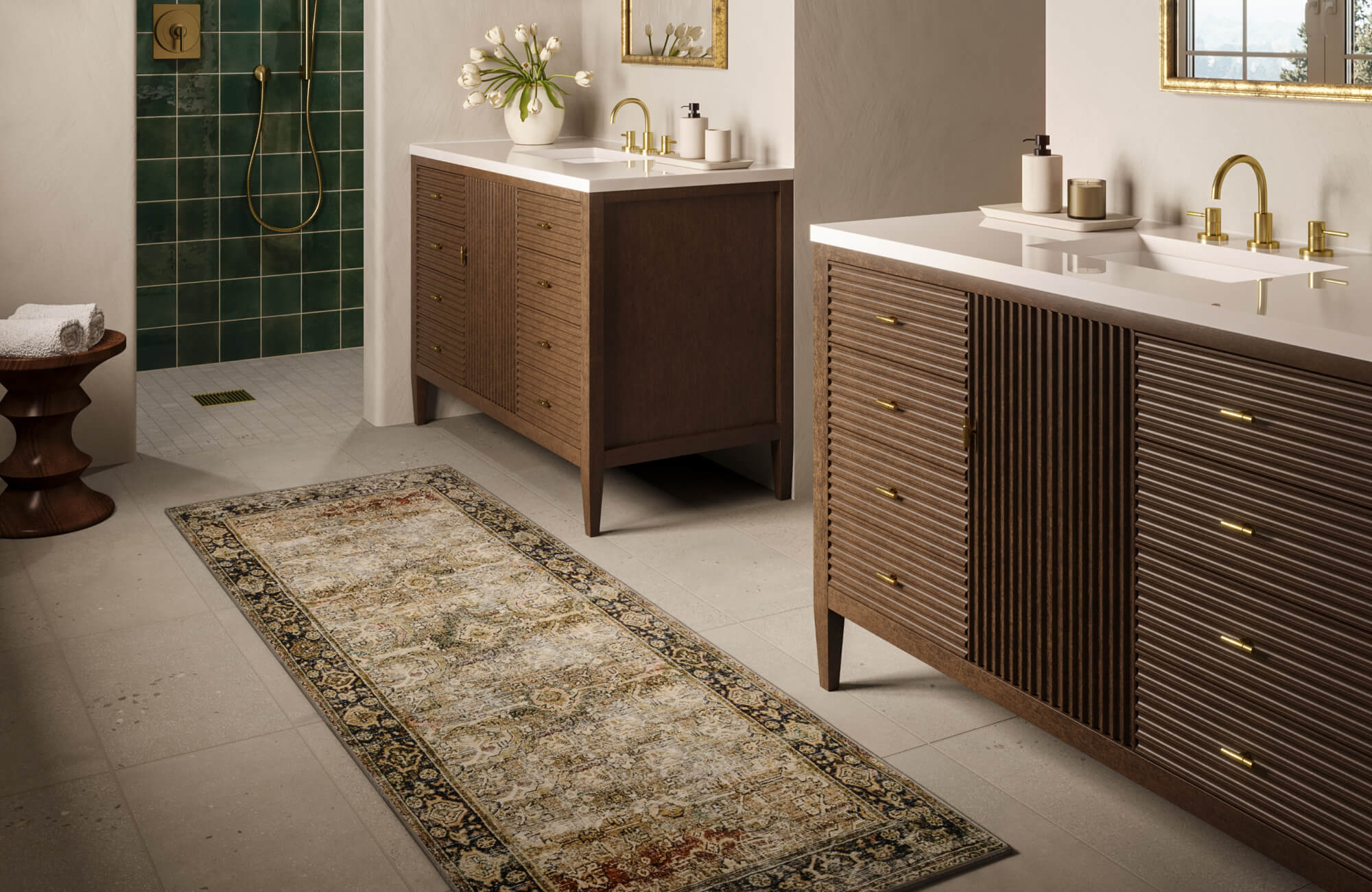
Rugs, like our Hutchinson Rug in Sage / Graphite above, play an important role in adding comfort to terrazzo bathrooms without distracting from the tile. Soft textures help offset terrazzo’s firm surface, especially in areas where you stand for longer periods. Neutral or tonal rugs tend to work best because they support the tile rather than introduce competing patterns. This keeps the floor from feeling overly busy or visually heavy. Simple textures also age well in modern spaces, which makes them a practical choice. When selected carefully, rugs add warmth while preserving a clean, composed look.
Keeping Patterns Calm Around Terrazzo
Since terrazzo already carries a lot of visual movement, surrounding patterns need to stay controlled. This is especially true for rugs and vanity finishes, where too much pattern can quickly overwhelm the space. Solid colors, subtle textures, or very minimal designs help maintain balance and clarity. This approach allows terrazzo to feel intentional rather than chaotic. It also makes the bathroom easier to update or refresh over time. By keeping patterns calm, the overall look stays modern, cohesive, and visually comfortable.
Coordinating Fixtures and Hardware for a Modern Terrazzo Finish
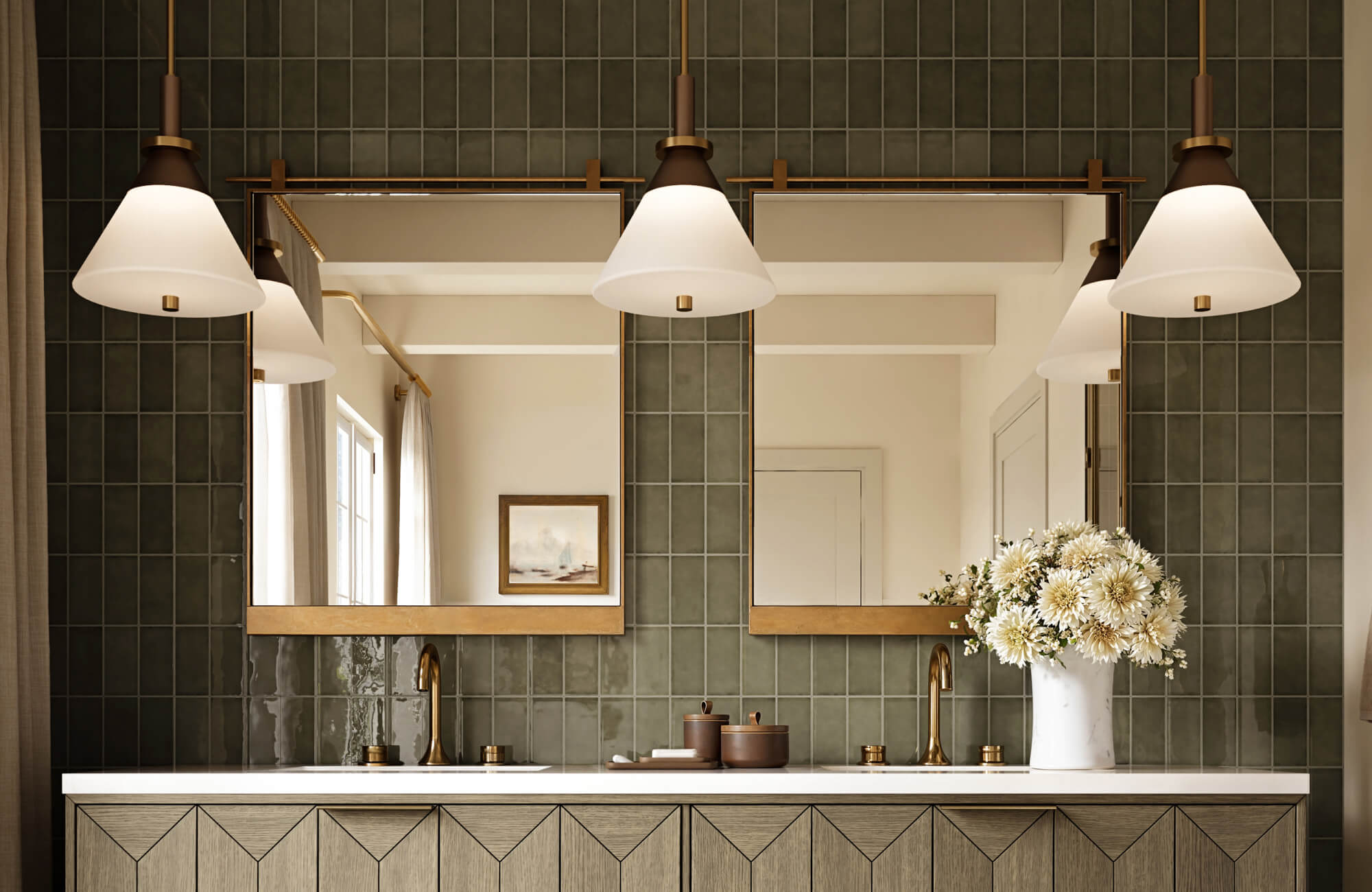
Once terrazzo sets the tone in a modern bathroom, fixtures and hardware should quietly support that rhythm rather than compete with it. The goal is cohesion, where metals, shapes, and finishes feel intentional and restrained. Here, we’ll look at how simple, thoughtful choices help terrazzo remain the visual focus while still creating a polished, modern finish.
Choosing One Primary Metal Finish
Selecting one primary metal finish helps anchor the bathroom and keeps terrazzo from feeling visually scattered. Because terrazzo already introduces color and movement, sticking to a single finish allows the space to breathe a bit more. For instance, brushed brass, matte black, or soft chrome can each work beautifully depending on the terrazzo’s tone. This approach also makes the room feel calmer and more deliberate, especially in smaller bathrooms. When everything shares the same metal language, the overall look reads clean and modern rather than layered or busy. It’s a simple decision that makes a big difference in how cohesive the space feels.
Mixing Metals With Restraint
Mixing metals can still work in a modern terrazzo bathroom, but restraint is what keeps it feeling intentional. Instead of evenly distributing multiple finishes, it helps to let one lead while the other plays a subtle supporting role. For example, you might use one finish for faucets and another for smaller accents like towel bars or hooks. Keeping the secondary metal limited prevents the eye from jumping around too much. This balance allows the terrazzo to stay visually grounded while still adding a bit of depth. When done thoughtfully, mixed metals feel layered rather than chaotic.
Minimal Hardware That Lets Terrazzo Lead
Hardware with clean lines and simple profiles pairs best with terrazzo’s naturally expressive surface. Sleek handles, low-profile pulls, and uncomplicated faucet shapes allow the tile’s texture to remain the star of the space. Overly stylized hardware can pull attention away from terrazzo and disrupt the modern feel you’re trying to create. Minimal designs also tend to age better, which helps the bathroom feel current for longer. Because terrazzo already provides visual interest, hardware doesn’t need to work as hard. Instead, it should quietly support the overall design.

Planning for Longevity and Everyday Use With Terrazzo
A modern terrazzo bathroom should not only look good on day one, but also hold up comfortably to everyday life. Understanding how terrazzo performs over time helps you make informed choices that protect both the surface and the overall design. Below, we’ll focus on practical considerations that ensure your terrazzo stays durable, functional, and easy to live with in a bathroom setting.
Sealing Terrazzo for Bathroom Conditions
Sealing is one of the most important steps in preparing terrazzo for bathroom use because it protects the surface from moisture and staining. Bathrooms naturally expose floors and walls to water, steam, and splashes, which can penetrate unsealed terrazzo over time. A proper sealant creates a barrier that helps maintain the tile’s appearance while reducing absorption. This is especially important in showers, around sinks, and near tubs. Resealing at recommended intervals also helps extend the life of the surface. With the right sealing approach, terrazzo remains both beautiful and resilient.
Cleaning Habits That Preserve the Surface
Every day, cleaning plays a big role in how well terrazzo holds up long-term. Gentle, pH-neutral cleaners are usually the safest option because harsh chemicals can wear down the sealant and dull the surface. Regular light cleaning prevents buildup that can become harder to remove over time. It also helps maintain terrazzo’s natural sheen without aggressive scrubbing. Establishing simple, consistent cleaning habits keeps the tile looking fresh with minimal effort. Over time, this approach protects both the finish and the integrity of the material.
Managing Moisture in Wet Areas
Moisture management is essential in bathrooms where terrazzo is used, especially in high-exposure zones. Even with proper sealing, standing water should not be left on the surface for extended periods. Good ventilation, such as exhaust fans or open airflow, helps reduce humidity and speeds up drying. In shower areas, thoughtful drainage and proper slope prevent water from pooling on the tile. These small details help minimize long-term wear caused by moisture. When water is managed well, terrazzo performs reliably in everyday bathroom use.
Understanding Long-Term Wear
Like many natural and composite materials, terrazzo develops subtle changes over time, especially in frequently used spaces. Light wear patterns or soft variations can appear, but these often add character rather than detract from the surface. Understanding that terrazzo is meant to age gracefully helps set realistic expectations. High-quality terrazzo is designed to withstand regular foot use without losing its structure. With proper care, it maintains its modern appeal for years. This durability is part of what makes terrazzo a smart long-term choice.
Terrazzo-Look Porcelain Tiles as a Low-Maintenance Alternative
For homeowners who love the terrazzo look but want even easier upkeep, terrazzo-look porcelain tiles offer a practical alternative. Porcelain is fully non-porous, which means it does not absorb moisture, require sealing, or risk staining over time. This makes it far better suited for wet areas like showers, floors, and vanity surrounds where water exposure is constant. Unlike real terrazzo, porcelain maintains a uniform appearance without surface wear, patching, or refinishing. It also handles daily use, cleaning products, and temperature changes with far less long-term concern. For modern bathrooms that prioritize durability, ease of care, and longevity, terrazzo-look porcelain is often the more dependable choice.
Modern Terrazzo Bathroom That Still Feels Easy to Live With
A terrazzo bathroom makeover is less about starting from scratch and more about making thoughtful upgrades that truly improve how the space feels. When terrazzo is used with intention and paired with calm surfaces, balanced lighting, and well-chosen mirrors, the bathroom naturally starts to feel more modern and put together. It’s the kind of update that focuses on flow, comfort, and visual clarity rather than dramatic changes. Small, well-considered choices often make the biggest difference in how the room comes together.
If you love the terrazzo look but want something even more practical, terrazzo-look porcelain tiles are a great alternative to consider during a bathroom makeover. They deliver the same speckled, modern appearance while being far easier to maintain in wet, high-use spaces. If you’re weighing terrazzo versus porcelain or deciding how to use it in your space, a design consultation can help clarify those choices. Working with a designer allows you to see how tile, layout, and finishes come together as a whole. It’s an easy way to move forward with confidence and create a bathroom that truly works for your everyday routine.
Follow us on Instagram
@EDWARD.MARTIN
)
)
)
)
)
)
)
)
)
)
)
)
)
)
)
)