A bathroom mirror is more than just a surface for reflection. It is a central design element that can enhance the functionality, style, and spatial perception of your bathroom. Often overlooked, its selection has the power to influence lighting, make small spaces feel larger, and tie together your overall aesthetic. This guide walks you through the key considerations to help you choose a mirror that complements your space and elevates both its form and function.

Understanding the Mirror’s Role Beyond Reflection
Before diving into dimensions and materials, it’s important to understand that a bathroom mirror does more than reflect your image. It plays a critical role in shaping the space around it—visually, functionally, and atmospherically.
The Style Statement Transformer
A bathroom mirror is more than a functional item. It often serves as a central design element that influences the entire look of the space. The choice of frame, or the decision to go without one, can shape the overall style.
A frameless mirror offers a clean, minimalist appearance that works well in modern or contemporary bathrooms, while a mirror with a dark wooden frame adds warmth and can bring in traditional or rustic character. Metal frames, especially in matte black or brushed finishes, introduce an industrial touch. For a more decorative feel, a gilded or ornate frame creates a sense of luxury and sophistication.
Ultimately, your mirror can either blend with existing decor or stand out as a defining statement, helping to reinforce the room’s style or add a contrasting focal point.
Enhancing Light and Visibility
Beyond natural light, mirrors play an important role in boosting both natural and artificial light in the bathroom. When placed near a window or light source, they reflect brightness and help make the space feel larger and more open.
Mirrors with built-in lighting, such as LED backlighting or illuminated edges, provide excellent visibility for daily tasks like shaving or applying makeup. These features reduce shadows and improve clarity. Many modern mirrors also offer adjustable brightness and color temperature settings, allowing you to switch between cool light for precision and warm tones for a softer, more relaxed atmosphere. In addition to its function, integrated lighting enhances the overall ambiance of the bathroom.
Creating the Illusion of Space
For bathrooms, especially smaller ones, a mirror is a master of illusion. Strategically placed, a large mirror can dramatically expand the perceived size of a compact room, making it feel more open and airy. A wall-to-wall mirror, for instance, can visually double the space, creating an impressive sense of depth. Furthermore, mirrors are excellent at reflecting light, whether natural or artificial. Positioning a mirror opposite a window or near a light fixture can amplify the light distribution, effectively brightening a dim bathroom and infusing it with a vibrant, spacious feel.

Size and Shape Considerations
Once the mirror’s functional roles are clear, the next step is choosing dimensions and shapes that harmonize with your space and layout.
Choosing the Right Size
Determining the ideal mirror size begins with a careful assessment of your vanity and the available wall space. A common rule of thumb dictates that the mirror should be slightly narrower than your vanity, typically by 2-4 inches on each side, to create a visually pleasing balance without overwhelming the area.
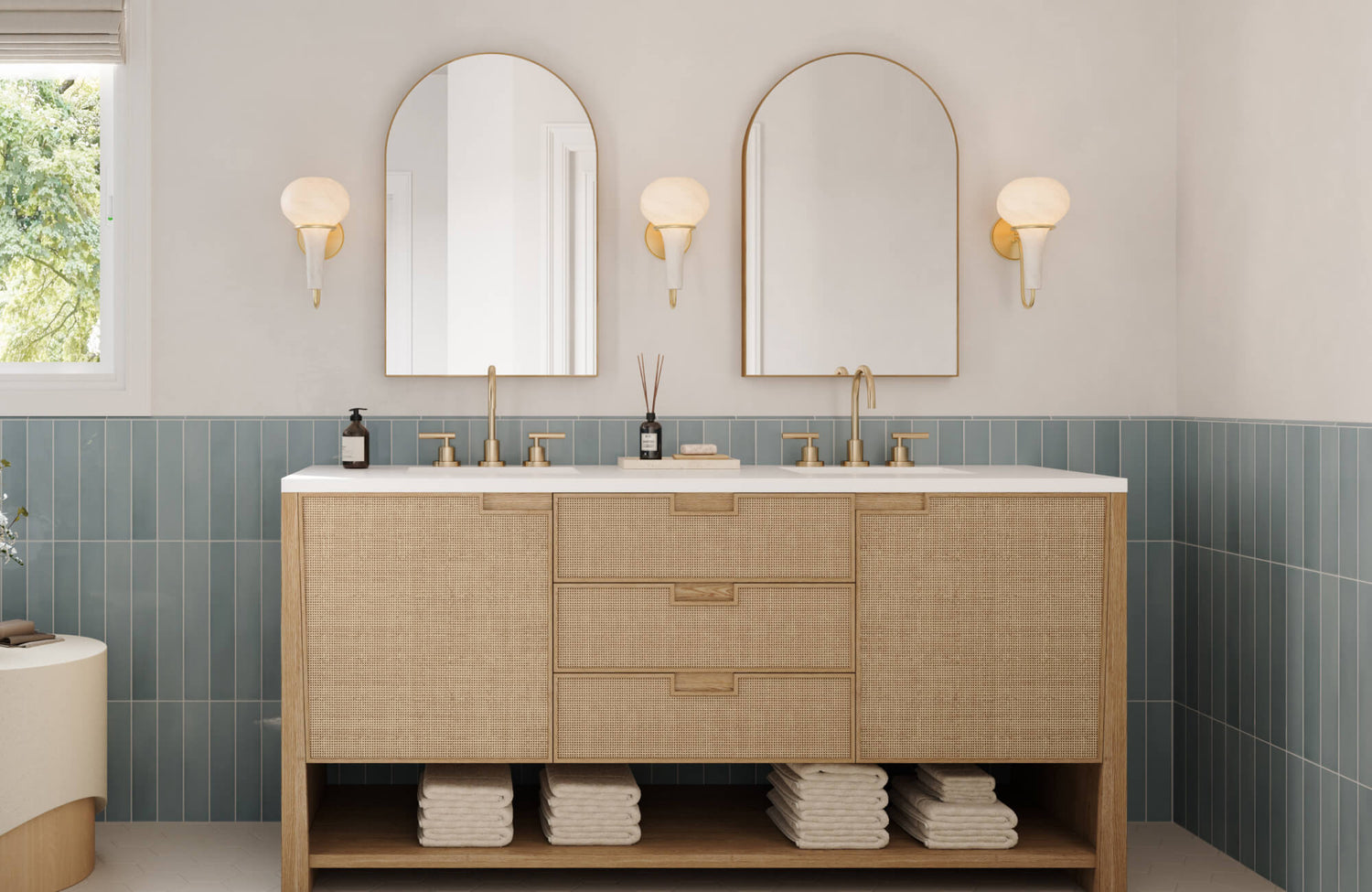
For double vanities, you can either install one large mirror that spans both sinks or opt for two individual mirrors placed above each basin. Choosing distinct mirrors like the Esmeralda Small Mirror in Iron Matte Black from Edward Martin, as seen in the photo above, adds a modern touch while emphasizing symmetry and personal space. Its compact size and bold frame work especially well in contemporary bathrooms that favor clean lines and functional design.
In terms of height, the mirror should allow clear viewing for the tallest user while staying within a comfortable eye level. Typically, the center of the mirror should fall between 58 and 64 inches from the floor. The bottom of the mirror is often placed about 5 to 10 inches above the faucet. Be sure to account for any overhead lighting or wall sconces that may influence placement.
Shape that Complements the Space
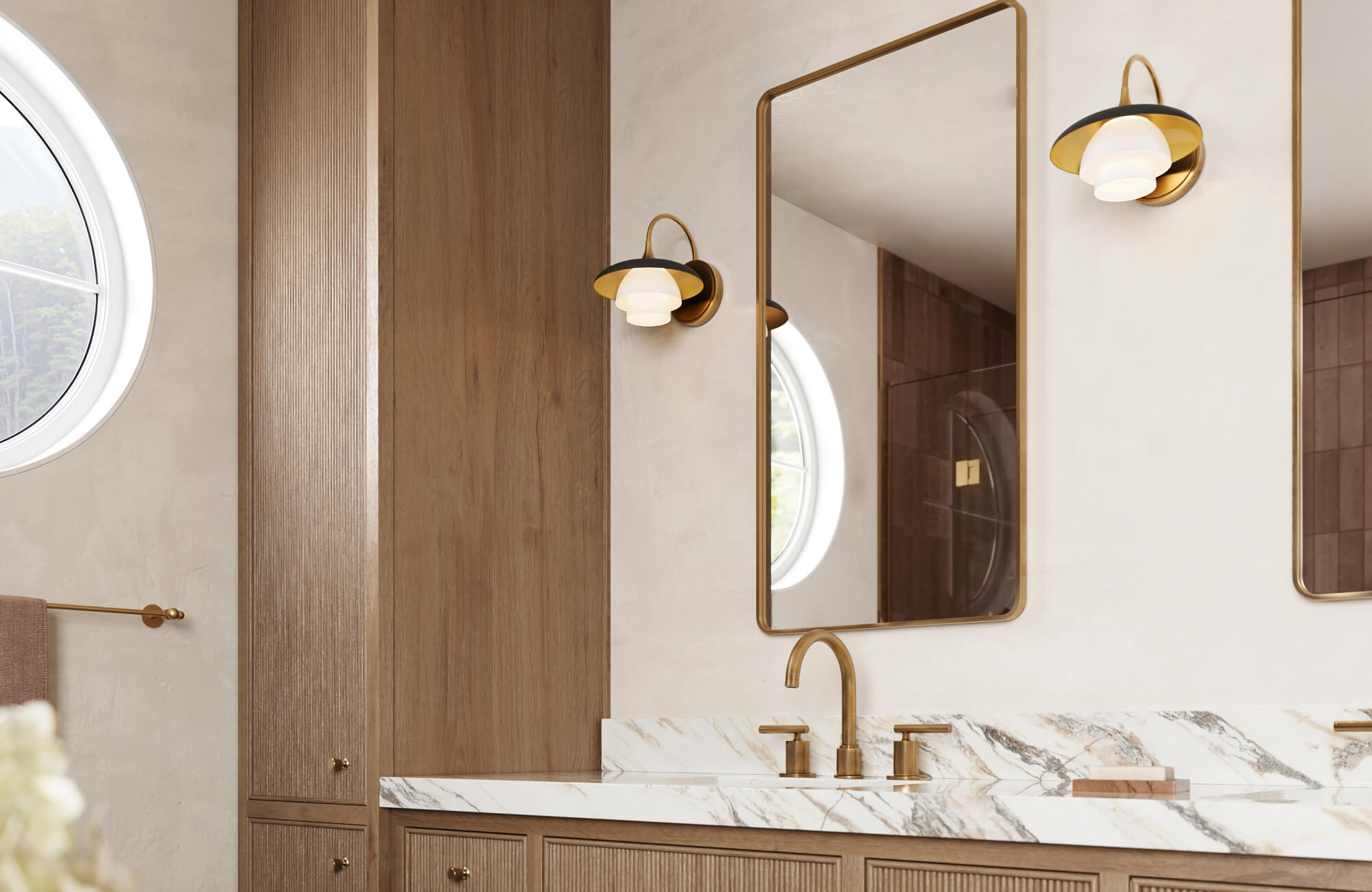
The shape of your mirror can also profoundly impact the bathroom's aesthetic. Rectangular mirrors are classic and versatile, fitting seamlessly into most design schemes, from traditional to modern. For a softer, more organic feel, consider a round or oval mirror, which can beautifully contrast with the sharp lines often found in contemporary bathrooms, such as square tiles or angular vanities. A piece like the Fitz Mirror in Antique Brass offers just that—its elegant round silhouette and warm metallic finish create a graceful contrast against angular vanities or sharp tile layouts.
Arched mirrors, on the other hand, introduce a touch of architectural elegance and can evoke a sense of grandeur or a subtle vintage charm, while irregular or abstract shapes make for a truly unique and artistic statement, particularly in avant-garde or eclectic designs. Each shape carries its own visual weight and can either reinforce or playfully disrupt the existing design language.
Proportional Harmony
Achieving proportional harmony means ensuring your mirror, vanity, lighting, and any other wall elements work together cohesively. An oversized mirror, for instance, can serve as a dramatic focal point in the bathroom, particularly in larger spaces, making the room feel grander. However, in a smaller bathroom, an overly large mirror can overwhelm the space. Conversely, a cluster of smaller, identically framed mirrors can create an intriguing gallery wall effect, adding depth and visual interest while still serving a functional purpose.
Also, pay attention to how your mirror interacts with lighting. Wall-mounted sconces often flank the mirror, while overhead vanity lights are usually centered above it. The mirror's size should align with these fixtures to avoid a cluttered or uneven look. Make sure the layout allows for enough space around each element, supporting symmetry and visual flow.
Keep in mind that the goal is to create a cohesive arrangement where every piece complements the others, contributing to a bathroom that feels both functional and visually balanced.

Mirror Frames and Finishes
The material and finish of your bathroom mirror frame are critical choices, influencing not only the mirror's aesthetic but also its durability and how well it withstands the humid bathroom environment.
Material
Mirror frames come in various materials, each offering different benefits in terms of style and moisture resistance.
Wood
Adds warmth but must be sealed or moisture-resistant to prevent warping. Engineered wood or MDF may offer better humidity tolerance.
Metal
Options like brass, chrome, or brushed nickel are highly durable and corrosion-resistant. Each lends a distinct visual character, from classic to contemporary.
Acrylic and Composite
Lightweight, moisture-proof, and highly versatile, these materials are ideal for playful or modern designs.
Finishes and Their Upkeep
The finish of a mirror frame plays a key role in both its appearance and upkeep. Polished chrome or glossy black finishes add a modern, high-contrast look that reflects light and creates a sleek statement, but tend to show water spots and fingerprints more easily. In contrast, matte black or brushed nickel finishes provide a softer, more refined style and are better at hiding smudges.
Distressed wood and antique brass finishes, on one hand, offer a warm, rustic, or vintage appeal and naturally conceal minor imperfections, while painted frames allow full color customization, making it easy to coordinate with walls, vanities, or other design elements.
For maintenance, use soft cloths and non-abrasive cleaners on metal finishes to avoid scratches. Wood frames, particularly those in humid environments, should be sealed and kept dry to prevent damage. Choosing the right finish not only supports the visual style of the room but also affects how easily the mirror can be kept clean and looking its best.
Innovations in Edging
Moving beyond traditional frames, frameless mirrors offer a minimalist aesthetic that can enhance a modern or contemporary bathroom design. The sophistication here lies in the edge treatment of the glass itself. Beveled edges are a popular choice, where the mirror glass is cut at an angle along the perimeter, creating a subtle, faceted border that catches and refracts light, adding a touch of elegance without a bulky frame. Conversely, polished edges provide a smooth, clean, and seamless look, ideal for a truly minimalist approach.
For a bolder statement, mirrors with unique shapes or decorative cuts can serve as both a functional element and a design feature. These edging techniques allow the mirror to either blend into the wall or stand out as a focal point, proving that visual impact isn’t limited to frames alone.

Smart Mirror Innovations
Technology has transformed bathroom mirrors into interactive tools that offer convenience, lighting control, and seamless integration with smart homes.
Tech Enhanced Reflections
Modern smart mirrors offer advanced features that enhance both convenience and functionality in the bathroom. Touch screens allow you to access news, weather updates, your calendar, or even videos while getting ready. Bluetooth connectivity also enables you to stream music or podcasts through built-in speakers, adding entertainment to your routine.
One of the most practical features is anti-fog technology, where a built-in demister pad keeps the mirror clear after a hot shower, so you always have a clear reflection. Some smart mirrors also support voice control, allowing you to set reminders, check commute updates, or manage other smart home devices without reaching for your phone. These features make smart mirrors more than a reflective surface. They become interactive tools that support your morning routine and overall lifestyle.
Customizable Lighting Solutions
Smart mirrors are transforming bathroom lighting by offering more than just adjustable brightness. Many models feature color temperature control, allowing you to switch between warm light for a relaxed setting or evening makeup, and cool light that mimics daylight for tasks like shaving or applying daytime makeup. This flexibility ensures accurate, task-appropriate lighting at any time of day.
Dimmable LED lights, for instance, give you full control over brightness, making it easy to set the right ambiance, from focused illumination to a soft, ambient glow. Motion-activated lighting, meanwhile, adds efficiency by turning the lights on when you approach and off when you leave, helping conserve energy.
Some smart mirrors also integrate with virtual assistants like Amazon Alexa or Google Assistant. With voice commands, you can adjust lighting, play music, or check your calendar. Advanced models may even sync with fitness trackers or health apps, turning your mirror into a personalized wellness hub that supports both your daily routine and energy efficiency goals.

Placement and Safety
Proper installation and optimal placement are crucial for maximizing both the safety and aesthetic impact of your bathroom mirror. A well-installed mirror seamlessly integrates into your space, enhancing functionality and visual appeal.
Mounting Method
How you mount your bathroom mirror depends on its size, weight, and the overall look you want to achieve. Wall-mounted mirrors are the most common option, secured directly to the wall using basic hardware. For heavier mirrors, a French cleat system provides strong support by evenly distributing the weight. This method uses two interlocking brackets, one on the wall and one on the back of the mirror, for a flush and stable installation.
Recessed mirrors, installed within a wall niche, offer a clean, space-saving look. They work well in modern or minimalist bathrooms and are especially useful in smaller spaces. Leaning mirrors, on one hand, are less common in primary bathrooms but can serve as decorative elements in larger, low-use areas. However, they are not ideal for areas with frequent activity due to safety concerns.
Before choosing a mounting method, check your wall type, whether drywall, tile, or plaster, and select the proper anchors or mount directly into studs for secure support.
Positioning for Comfort and Balance
Proper mirror placement ensures comfort and a balanced look. A good guideline is to place the center of the mirror at eye level, typically between 58 and 64 inches from the floor. Adjust as needed based on the heights of regular users.
For single vanities, the mirror should be centered directly above the sink to maintain balance and symmetry. In the case of double vanities, you have two effective options: use individual mirrors aligned with each basin for a more defined look, or opt for one large mirror that spans the entire width of the vanity, as previously discussed.
If wall sconces are part of the design, make sure there is enough space between the lights and the mirror's edges to avoid a crowded appearance. The goal is to create a cohesive relationship between the mirror, vanity, and fixtures so the setup feels balanced and functional.
Safety First
Safe installation is essential for both the function and longevity of your mirror, so always use hardware that matches your wall type. Toggle bolts or self-drilling anchors are suitable for drywall, while masonry anchors are necessary for tile or concrete walls. For large or heavy mirrors, professional installation is recommended to ensure proper support.
Before drilling, remember to locate studs with a stud finder and check for electrical wiring or plumbing using a non-contact voltage tester. This step helps prevent accidental damage or safety issues.
Finally, avoid placing mirrors in areas where they could be bumped or knocked over, especially in narrow or frequently used spaces. A securely mounted mirror not only improves safety but also contributes to a well-designed and reliable bathroom setup.
Choosing the Perfect Bathroom Mirror
Choosing the perfect bathroom mirror is truly an art, blending practical needs with your unique aesthetic vision and an awareness of cutting-edge innovations. It's much more than just a reflective surface; it's a pivotal design element that impacts lighting, spatial perception, and overall bathroom style. From understanding dimensions and materials to embracing smart features and ensuring secure installation, every decision contributes to the final outcome. By considering these key aspects, you can transform your mirror from a simple fixture into a central piece of your bathroom's design, creating a truly personalized and harmonious sanctuary that reflects both your style and your needs.