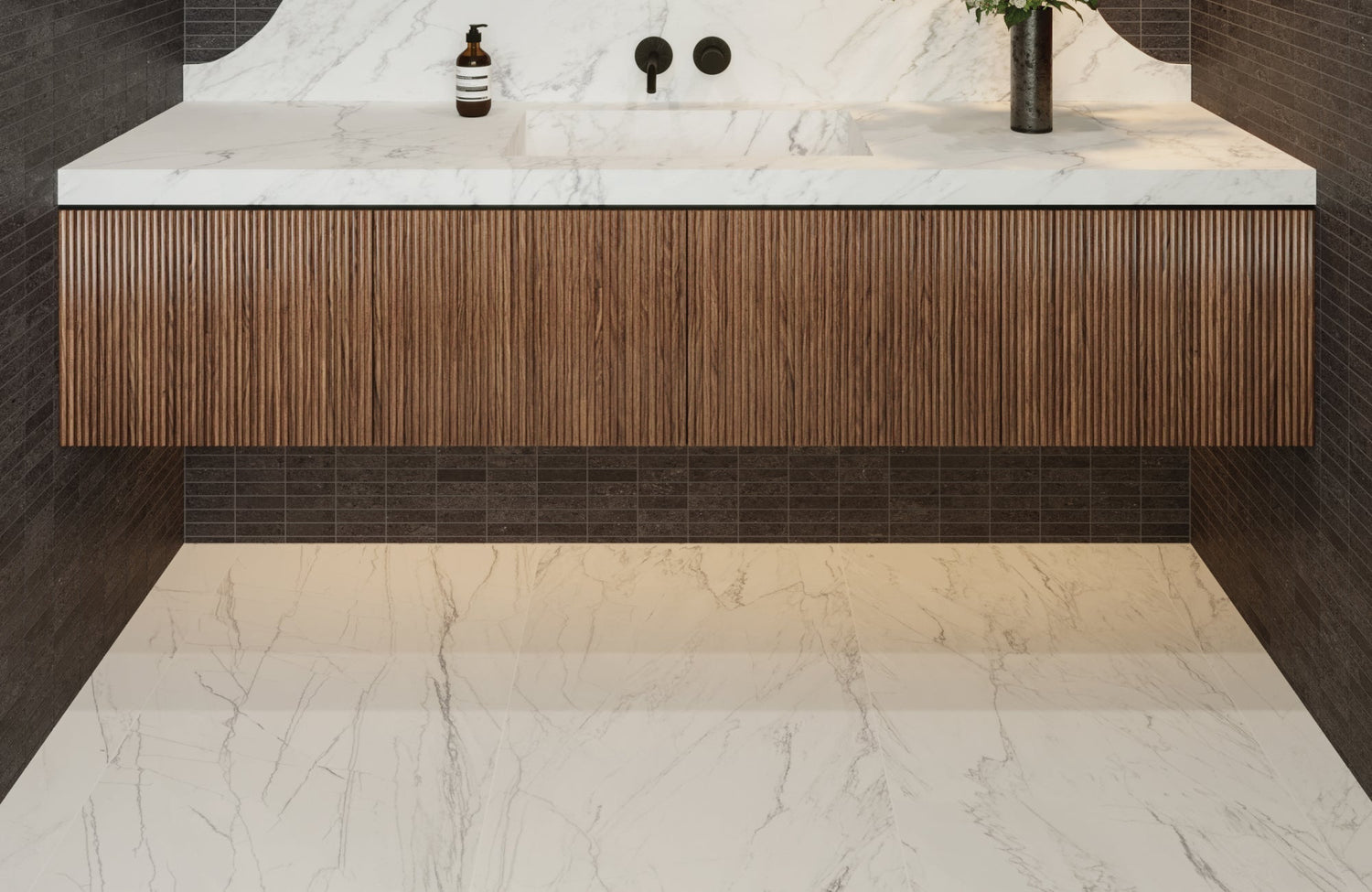
Floating vanities offer a streamlined, contemporary look and provide more flexibility during installation compared to traditional floor-mounted cabinets. However, with that flexibility comes an important consideration: how high should you mount it off the floor? Unlike fixed vanities with standard heights, floating vanity designs give you the freedom to adjust the height based on your layout, preferences, and functional needs. In this article, we’ll break down the essential factors, from recommended standards to plumbing placement and design alignment, so you can confidently determine the right height for your space.

The Ideal Starting Height for Floating Vanities
Before exploring custom options, it’s useful to start with the standard height guidelines that most floating vanities follow. These benchmarks provide a dependable foundation, especially if you’re not yet sure what height will work best in your space.
Bathroom Design Benchmarks
Most floating vanities are commonly installed with the top surface positioned between 30 and 36 inches above the floor. This range has become a widely accepted standard because it accommodates the majority of adults and integrates well into typical bathroom layouts. Lower heights, around 30 inches or less, are often chosen for family-oriented bathrooms, while 36 inches tends to be favored in modern, adult-only spaces that prioritize a sleek, elevated look.
These guidelines offer a reliable starting point when planning your vanity height, especially if you’re working within the constraints of existing plumbing or aiming for a classic setup that supports long-term usability and resale value. For instance, a design like Edward Martin’s Royce 72" Double Vanity in Chestnut with a 3 cm White Zeus Quartz Top, as featured in the photo above, demonstrates how standard height guidelines can be paired with luxurious materials and clean geometry to achieve both comfort and visual balance. Its floating installation also enhances the sense of space while staying true to ergonomic standards, proving that functionality and style can easily coexist.
Why Floating Vanities Differ from Traditional Ones
Traditional vanities are constructed like furniture, with fixed bases that rest directly on the floor. As a result of this built-in structure, the height is predetermined during manufacturing, leaving little flexibility once the unit is in place. Floating vanities, by contrast, are mounted to the wall, giving you the flexibility to choose a height that suits your space and preferences.
This level of flexibility is especially valuable in bathrooms shared by users of different heights or in spaces where layout constraints demand creative solutions. Additionally, since floating vanities leave the floor visible underneath, they help create a more open and spacious feel; something many find especially appealing in compact bathrooms.

Matching Vanity Height to User Needs
While knowing the standard range helps, the ideal height ultimately depends on who’s using the vanity. Every household is different, and tailoring the installation to your specific needs will make the space far more functional in the long run.
Adult and Couple Considerations
When tailoring a vanity for adult use, it’s helpful to think beyond standard ranges and consider your comfort. Rather than defaulting to a preset height, take a moment to measure where the countertop would feel most natural based on your daily routine.
In shared bathrooms, finding a height that works for two users can be tricky. If there’s a significant height difference, you might opt for separate vanities or explore designs with split-height counters. These solutions also prevent one person from having to adjust to an uncomfortable setup and help create a space that works equally well for both.
Kid-Friendly Configurations
In family bathrooms where children are frequent users, mounting the vanity lower, around 30 inches from the floor, can make everyday routines more accessible. This height allows young kids to reach the sink on their own, encouraging independence and easing daily tasks for both children and caregivers.
Since children grow quickly, a more adaptable long-term solution is to install the vanity at a standard adult height and use a sturdy step stool during the early years. This setup also provides safe, immediate access without committing to a permanently low installation that may feel out of place as your child gets older. It’s a practical way to keep the space flexible and functional as your family’s needs change over time.
Accommodating Accessibility Requirements
When accessibility is a key consideration, especially for individuals who use wheelchairs or walkers, vanity height and clearance become essential design factors. According to ADA guidelines, the countertop should be no higher than 34 inches, with at least 27 inches of vertical clearance beneath the sink to provide adequate space for legroom.
Floating vanities can be especially well-suited for accessible bathrooms, as their wall-mounted design makes it easier to create an open space underneath. By selecting a model without center drawers or choosing one specifically designed for accessibility, you can meet these standards without sacrificing function or style. With thoughtful planning, it’s entirely possible to create a vanity setup that is both compliant and genuinely comfortable for every user.

Coordinating with Plumbing and Wall Structure
Once personal comfort is addressed, it’s equally important to look behind the walls; plumbing lines, structural supports, and mounting hardware all play a role in determining how high your floating vanity can be installed.
Wall Stud and Support Needs
Because floating vanities are mounted to the wall rather than supported by the floor, their entire weight, along with the weight of the sink, countertop, and stored items, must be safely carried by the wall structure. To ensure stability, the vanity should be anchored directly into wall studs or solid blocking installed between them. While studs are typically spaced 16 inches apart, they don’t always line up with your ideal mounting location.
When alignment is off, a contractor can install horizontal blocking at the height you've selected. This added reinforcement provides a reliable anchor point and prevents unnecessary strain on the drywall. Skipping this step can also lead to structural issues over time, including loosening of the vanity or even detachment, especially in frequently used bathrooms.
Drain and Supply Line Placement
Plumbing layout is another critical factor that can affect how high your floating vanity can be installed. Drain lines and water supply pipes are typically positioned based on the height of the previous vanity, which may not align with your updated design goals, especially if you're transitioning from a floor-mounted unit to a floating one.
Before finalizing the height, it’s equally important to assess whether the existing plumbing supports your desired placement. In some situations, adjusting the vanity height may require rerouting pipes to ensure proper function and fit. While relocating plumbing involves additional labor and cost, it can also be a worthwhile investment if it allows for a better layout and improved usability. On the other hand, if you're working within the limitations of current plumbing, you may need to select a height that suits the existing pipe configuration.
Hidden Brackets and Support Systems
Many floating vanities rely on concealed mounting systems, such as steel brackets or backplates, which are installed behind the cabinet. While these systems offer a clean, streamlined appearance, they often come with specific installation requirements that can also influence how high the vanity must be mounted.
Some brackets require a minimum clearance from the floor to accommodate baseboards or align with internal supports, while others have fixed mounting points that leave limited room for adjustment. In addition, reviewing these specifications early in the planning process helps ensure your chosen hardware is compatible with your preferred height. Taking the time to confirm these details can prevent alignment issues and make installation far smoother down the line.

How Height Impacts Aesthetics and Function
In addition to function and installation requirements, the height of your floating vanity significantly influences the overall look and feel of your bathroom. Even slight changes in height can influence visual balance, impact how lighting aligns, and affect whether the space feels open or restricted.
Achieving Visual Balance
A vanity doesn’t function alone; it shares visual space with mirrors, lighting, and backsplashes. If it’s mounted too high or too low, it can disrupt the alignment of these surrounding elements and make the room feel visually off-balance. That’s why it’s important to position the vanity in a way that maintains symmetry across the entire wall composition.
Consider the vertical relationship between the vanity, faucet, mirror, and light fixtures. When these components are thoughtfully aligned, the result is a cohesive, well-planned design. If that alignment is overlooked, the room can feel mismatched, even if the vanity itself is installed at a usable height.
A great example of this can be seen in the pairing of Edward Martin’s Royce 36" Single Vanity in Chestnut with a 3 cm White Zeus Quartz Top, complemented by our Rory Mirror in Antique Brass Iron and flanked by the Ezekiel Wall Sconce in Vintage Brass as displayed in the photo above. This combination highlights how proper scale and alignment between design elements, both horizontally and vertically, create a harmonious and polished visual flow, reinforcing the importance of balance in bathroom design.
Perception of Space and Floor Visibility
One of the standout benefits of floating vanities is the open floor space they create beneath the cabinet. Raising the vanity by just a few inches exposes more of the flooring, which can make the bathroom appear more spacious and less confined.
This sense of openness is also particularly beneficial in smaller bathrooms or powder rooms, where maximizing limited space is especially important. On the other hand, mounting the vanity too low can interrupt that flow and create a more closed-in feel. Even a slight height adjustment can have a noticeable impact on the overall sense of space.
Cleaning and Maintenance Benefits
Mounting a vanity higher off the floor not only enhances its appearance but also makes everyday maintenance more manageable. With enough clearance underneath, it’s much easier to sweep or mop the floor without awkward maneuvering or the need to move heavy furniture.
Beyond easier access, the open space beneath a floating vanity allows for better air circulation, which helps reduce moisture buildup. This can also lower the risk of mold, mildew, and water-related damage over time. In bathrooms that see frequent use, these cleaning advantages are essential for maintaining both hygiene and the long-term condition of the space.

Adapting for Sink Type and Counter Thickness
The sink and countertop you choose directly influence how high the vanity cabinet should be mounted. Since each adds height in its way, both need to be considered when determining the final installation height.
Vessel Sinks vs. Undermount Sinks
Vessel sinks sit entirely on top of the countertop, so the vanity cabinet typically needs to be mounted lower to keep the sink rim at a practical height. If the vanity is set too high, a tall vessel bowl can place the sink edge uncomfortably high, making everyday use less convenient.
Undermount sinks, on the other hand, are installed beneath the countertop, which allows the vanity to remain at a standard height. This keeps the sink surface closer to the top of the vanity, offering a more familiar and often more ergonomic setup for most users. Deciding between the two involves considering both visual preferences and how much total vertical height you're comfortable working with.
Countertop Thickness Considerations
Countertops are available in a range of materials, such as stone, concrete, and quartz, and their thickness can add anywhere from one to three inches to the total height of your vanity. While that may seem minimal, it can noticeably affect how the vanity feels during everyday use.
To avoid misalignment, it’s equally important to factor in countertop thickness early in the planning stage. Doing so allows you to adjust the mounting height as needed, ensuring the finished setup feels balanced and comfortable once installed.
Faucet Reach and Splash Control
The height of your sink also affects how far the faucet needs to reach to direct water efficiently into the basin. Taller sinks, such as vessel styles, often require higher or wall-mounted faucets with extended spouts. If the vanity is mounted too high, the faucet may overshoot the bowl, leading to splashing or reduced usability.
To prevent this, it's equally important to match your sink and faucet, then use that pairing to guide the final cabinet height. Taking this step also helps ensure water flows cleanly into the basin, minimizing mess and maximizing functionality.

Custom Designs and Modern Trends to Consider
Lastly, it’s worth considering how current trends and personal design preferences can shape your decision. Floating vanities offer more than just functionality; they also provide a chance to reflect your style and incorporate contemporary elements into your space.
Trend Toward Higher Mounting
In many modern bathrooms, vanities are now being installed slightly higher than in the past, often around 36 inches or even a bit more. This elevated placement creates a clean, tailored appearance that feels more like custom furniture than standard cabinetry.
The look pairs especially well with minimalist or spa-inspired designs, where the vanity is meant to stand out as a focal point. It’s also a practical choice for adult-only households, where there’s no need to adjust for younger or shorter users.
Floating Double Vanities and Storage Goals
When designing a floating vanity for two users, the mounting height can be influenced by storage priorities. Raising the vanity slightly can create space for deeper drawers or open shelving underneath, adding valuable storage without disrupting the overall visual balance.
This strategy is also especially effective in primary bathrooms, where keeping countertops clear is often a priority. With a modest height adjustment, you can increase functionality while still maintaining a clean, comfortable design that suits both users.
Lighting Integration and Mirror Placement
Many modern vanities feature integrated lighting or are designed to align precisely with backlit mirrors and wall sconces. In these situations, it’s equally important to coordinate the vanity height with lighting placement to maintain a balanced and intentional overall design.
Even a slight height adjustment can also help align the vanity with existing fixtures or surrounding cabinetry. Coordinating these elements from the beginning contributes to a clean, cohesive design that feels both functional and thoughtfully executed.
Getting the Floating Vanity Height Right
Choosing the right height for your floating vanity involves more than following a standard measurement; it also requires an understanding of your space, your household’s needs, and how you want your bathroom to function. By considering factors such as comfort, structural constraints, visual alignment, and practicality, you can determine a height that works and enhances your experience. With thoughtful planning, your vanity can become a well-integrated feature that supports both your routine and your design goals.
If you’re unsure where to start or want expert guidance, we’re here to help. Contact us today to schedule a design consultation and explore floating vanity options tailored to your space, style, and daily needs. Let’s create a bathroom that works beautifully for you!