Styling a long rectangular dining table for everyday use can feel deceptively challenging. Its generous proportions offer opportunity, but without intention, that same length can quickly become visually monotonous or impractical for daily living. For those who value quality, comfort, and aesthetics, the goal is not to create a showroom display, but a table that feels curated, welcoming, and functional from morning coffee to weeknight dinners and impromptu gatherings.
A well-styled dining table should support real life while enhancing the room’s overall design narrative. The key lies in thoughtful composition, layered textures, and décor choices that serve both form and function. When approached strategically, a long rectangular dining table becomes a design anchor rather than an awkward expanse.

Breaking The Visual Runway Effect With Smart Composition
One of the most common issues with long rectangular dining tables is what designers often refer to as the “runway effect.” The eye travels straight down the length of the table with nothing to slow it, creating a stark, linear look that can feel cold or unfinished. Smart composition helps interrupt that visual tunnel and introduces rhythm, balance, and intention.
The Power Of The Rule Of Three
The rule of three is a foundational design principle that works exceptionally well on long dining tables. Groupings of three objects, whether similar or complementary, naturally feel balanced and visually pleasing to the human eye. When applied thoughtfully, this approach breaks up the table’s length into digestible segments without making it feel overcrowded.
On a rectangular table, three coordinated elements placed along the center line can create a subtle cadence. The key is variation within cohesion. Differences in height, shape, or material prevent the arrangement from feeling static, while a shared color palette or theme maintains harmony. This technique works especially well for everyday styling because it feels intentional without appearing overly formal.
Centering Versus Asymmetrical Styling
Many homeowners default to perfectly centering one large object on the table, which can work in formal dining rooms but often feels stiff for daily use. Long rectangular tables, in particular, benefit from exploring asymmetrical styling that introduces movement and a more relaxed energy.
Asymmetry allows decorative elements to shift slightly off-center, creating a sense of organic flow. This approach feels more lived-in and approachable, especially in open-plan homes where the dining area is visible from multiple angles. Centering still has its place, but softening it with subtle offsets or layered elements can make the table feel more dynamic and less staged.
Leaving Negative Space For Breathing Room
Negative space is just as important as the objects you choose to display. On a long dining table, leaving intentional areas of openness prevents visual overload and ensures the table remains functional for everyday meals. Negative space gives the eye a place to rest and allows each decorative element to stand out more clearly.
This breathing room is especially important for households that use their dining table frequently. When décor is spaced thoughtfully, there is less need to constantly move items out of the way. The table feels ready for use at any moment, which reinforces the idea that beauty and practicality can coexist seamlessly.

Layering Height And Texture To Create Visual Interest
A flat arrangement on a long table can quickly feel dull, no matter how beautiful the individual pieces are. Layering height and texture adds dimension, depth, and warmth, transforming the table from a simple surface into a visually engaging focal point.
Anchoring With A Substantial Centerpiece
A substantial centerpiece acts as a visual anchor for a long rectangular dining table. This does not mean oversized or overwhelming, but rather something with enough presence to ground the space. A well-chosen centerpiece establishes the table’s design direction and provides a starting point for additional layers.
For everyday use, the most successful centerpieces are those that feel sculptural yet approachable. They should be low enough to allow conversation across the table while still offering visual weight. When proportioned correctly, a substantial centerpiece prevents the table from feeling empty without dominating it.
Introducing Organic Elements And Greenery
Organic elements are essential for bringing life and softness to a dining table. Greenery, whether real or high-quality faux, introduces movement, color variation, and a connection to nature that instantly warms the space. On a long rectangular table like Edward Martin’s Kyla 94.5" Dining Table, organic arrangements soften the table’s clean lines, as seen in the image above, creating a more relaxed and welcoming feel.
Greenery also adapts beautifully to seasonal changes, making it an ideal choice for everyday styling. Subtle shifts in foliage or floral accents can refresh the table’s look throughout the year without requiring a complete redesign. This adaptability makes organic elements both aesthetically pleasing and practical, especially when paired with a streamlined table silhouette.
Using Sculptural Objects As Conversation Starters
Sculptural objects add personality and intrigue to a dining table, especially when chosen with intention. These pieces act as visual punctuation marks along the table’s length, drawing interest without overwhelming the overall composition.
For everyday use, sculptural décor works best when it feels tactile and meaningful rather than overly precious. Objects with interesting forms, artisanal craftsmanship, or subtle cultural references invite curiosity and conversation. They elevate the table’s design while still feeling approachable and personal.

Designing For Real Life Utility Using Functional Decor
A dining table styled only for looks quickly becomes frustrating in a real home. Everyday use demands décor that not only enhances the table’s appearance but also supports daily routines. Functional décor bridges the gap between beauty and practicality, ensuring the table remains a useful and enjoyable part of the home.
Corraling Clutter With Decorative Trays
Decorative trays are one of the most effective tools for styling a long rectangular dining table for everyday use. They provide structure and containment, preventing small items from feeling scattered while still keeping essentials within reach.
A well-chosen tray creates a visual boundary that organizes the table’s surface. It also makes it easy to clear space quickly when needed, which is invaluable for daily meals or larger gatherings. When the tray itself is beautiful, it becomes a design feature rather than just a practical accessory.
The Practical Beauty Of Fruit Bowls
Fruit bowls are a classic example of functional décor that never feels out of place. On a dining table, they introduce color, organic form, and a sense of abundance while serving a clear purpose. For everyday styling, a fruit bowl strikes the perfect balance between utility and visual appeal.
The key is selecting a bowl that complements the table’s scale and aesthetic. A thoughtfully designed fruit bowl feels intentional rather than incidental, reinforcing the idea that practical items can also be beautiful. As the contents change, the table gains a subtle, ever-evolving visual rhythm.
Setting A Casual Mood With Candlelight
Candlelight has a unique ability to transform the atmosphere of a dining space. Even during the day, candles add warmth and softness, while in the evening they create an inviting, intimate glow. On a richly toned surface like Edward Martin’s Dominic 95" Dining Table in Dark Mango, candlelight enhances the depth of the wood finish, as reflected naturally in the image above, making everyday dining feel more intentional without becoming formal.
Choosing simple, understated candle holders ensures they blend seamlessly into daily life. The soft flicker of candlelight adds visual depth and warmth, elevating ordinary meals while maintaining a relaxed, lived-in aesthetic.

Softening The Hard Edges With Strategic Linens
Long rectangular dining tables often feature strong lines and solid materials, which can feel imposing without softening elements. Strategic use of linens introduces texture, warmth, and a sense of comfort that makes the table more inviting for everyday use.
Choosing The Right Runner Length
A table runner is one of the most effective ways to style a long rectangular dining table. The right runner length visually elongates the table while adding texture and color. For everyday use, the runner should feel integrated rather than overly formal.
A well-proportioned runner breaks up the expanse of the table and provides a foundation for centerpieces and décor. It softens the surface while still allowing the beauty of the table itself to show through, creating a balanced and versatile look.
Layering Placemats For Daily Texture
Placemats add an additional layer of texture and practicality to everyday dining. On a long table, they help define individual place settings while contributing to the overall design. When layered with a runner or used on their own, placemats create visual interest without requiring a full formal setting.
Materials and finishes matter greatly here. Textured placemats introduce warmth and tactility, making daily meals feel more considered and comfortable. They also protect the table’s surface, reinforcing the idea that good design supports longevity.
Coordinating With Chair Upholstery
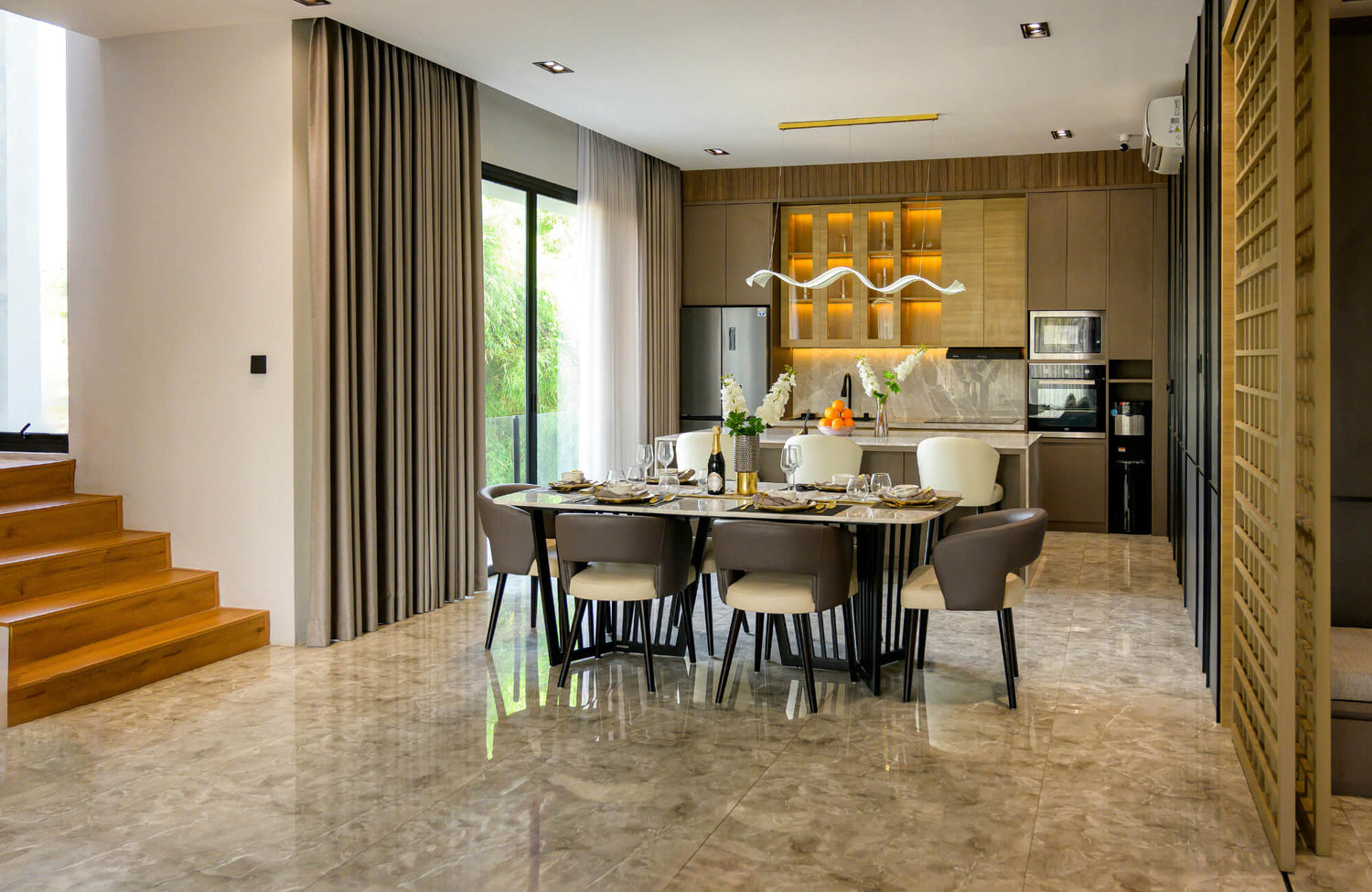
The relationship between the table and its chairs is often overlooked, but it has a major impact on the overall aesthetic. Coordinating linens with chair upholstery creates a cohesive look that feels intentional and polished. With Edward Martin’s Rebecca 86" to 120" Dining Table in Greige paired alongside the Gideon Dining Chair in Black, subtle contrasts in tone and texture, shown clearly in the image above, create balance without visual heaviness.
This coordination does not require exact matching. Instead, it’s about echoing tones, textures, or patterns to create visual harmony. When the table and chairs speak the same design language, the entire dining area feels more unified, comfortable, and thoughtfully styled for everyday living.
Curating A Table That Lives With You
Styling a long rectangular dining table for everyday use is ultimately about creating a space that reflects how you live. The most successful tables are not static displays, but evolving surfaces that adapt to daily routines, changing seasons, and meaningful moments shared with family and friends. When questions arise about proportion, materials, or styling direction, Edward Martin’s design consultation offers personalized guidance to help you make confident, well-informed choices that suit your home and lifestyle.
Whether you need expert input on furniture pairings or assistance selecting coordinating tile or rugs, you can contact Edward Martin for tailored recommendations that align with your overall design vision. When your dining table is curated with intention, it becomes more than just a place to eat. It becomes a living part of your home, supporting everyday life while quietly elevating it through thoughtful design, backed by expert support whenever you need it.