A beautiful kitchen runner adds warmth, texture, and style to one of the home’s busiest spaces. Whether it’s defining a galley kitchen, softening hard flooring, or providing a comfortable surface underfoot during meal prep, a runner serves both function and flair. Yet there’s one frustrating problem that nearly every homeowner faces: slippage.
So how do you keep your runner secure without compromising style? The solution starts from the ground up, with proper padding, smart materials, and strategic placement. In this guide, we’ll walk you through proven, design-friendly ways to keep your kitchen runner in place while maintaining the aesthetic integrity of your space.

The Ultimate Foundation: A High-Quality Rug Pad
Every long-lasting solution starts from the ground up, and when it comes to keeping your kitchen runner in place, nothing beats a high-quality rug pad. It’s the unseen layer that delivers both safety and comfort, setting the stage for a runner that stays perfectly in position while protecting your floors.
Why Natural Rubber Outperforms Other Materials
When it comes to grip, natural rubber stands above synthetic alternatives like PVC or plastic. Natural rubber offers superior traction because it maintains flexibility without leaving residue or sticking to the floor finish.
PVC or plastic-based pads, while inexpensive, can degrade over time, hardening or even fusing to certain flooring finishes. This chemical reaction can lead to discoloration, especially on hardwood or vinyl. In contrast, natural rubber creates friction through micro-suction, holding the rug securely without adhesives.
Rubber also works across flooring types, ceramic, stone, hardwood, laminate, and vinyl, making it the most versatile and floor-safe option. For kitchens, where spills and humidity can affect materials, natural rubber’s durability and non-slip performance make it a top-tier choice.
Pro Tip: Avoid synthetic “rubber-like” pads that often contain fillers. Look for pads specifically labeled 100% natural rubber for true grip and longevity.
Choosing a Solid Pad for Maximum Grip and Protection
Not all rug pads are created equal. Many homeowners default to a waffle-style pad because it’s thin and inexpensive, but that open weave design often fails to provide consistent grip. The best choice for a kitchen runner is a solid natural rubber pad or a felt-rubber combination pad.
A solid rubber pad offers complete contact with both floor and rug, maximizing friction across the entire surface. This even distribution prevents those dreaded “curl-and-slide” moments where corners start to lift.
If you prefer extra cushioning, consider a felt-rubber hybrid, felt on top for comfort and insulation, rubber underneath for traction. The felt fibers also help your runner lie flat, enhancing stability without adding unnecessary thickness that could create tripping hazards near cabinet bases.
How to Perfectly Size Your Rug Pad for an Invisible Fit
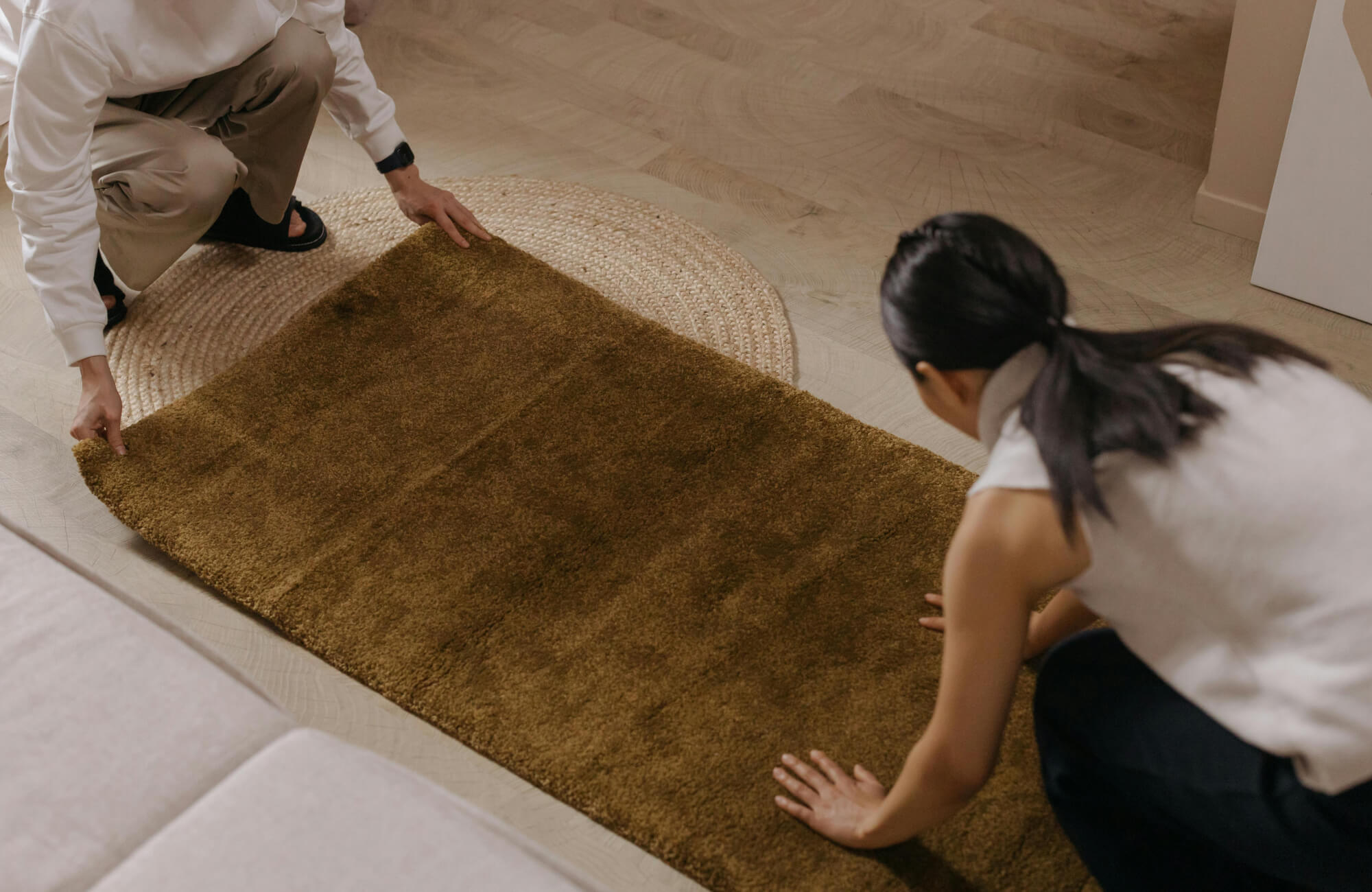
Proper sizing is crucial. A rug pad should never peek out from under your runner. Instead, trim it about 1 to 2 inches shorter than the rug on all sides. This ensures a seamless, invisible appearance and prevents the pad’s edge from collecting dirt or moisture.
As seen in the elegant kitchen above featuring Edward Martin’s Mallory Wool Pile Rug in Aloe, precise rug pad sizing enhances both stability and presentation. The rug’s refined texture and soft green hue sit perfectly balanced within the space, its edges clean and uninterrupted. To achieve this professional finish, unroll both your rug and pad on a flat surface, position the pad beneath the rug, and mark where trimming is needed. Using sharp scissors or a utility knife, make clean, even cuts for a tailored fit.
The goal is to let the rug’s edge grip the floor slightly while the pad stabilizes the center. When properly installed, your rug pad remains invisible, yet, as demonstrated by the Mallory Wool Pile Rug, the result is a beautifully grounded and comfortable foundation that enhances the design integrity of your kitchen.

Exploring Gripper Tapes and Targeted Adhesives
Once you’ve built a solid foundation with a rug pad, you can fine-tune your setup with a little extra hold. Gripper tapes and adhesives offer flexible, easy-to-apply solutions that keep lightweight or busy runners steady, without compromising your floor’s finish.
The Pros and Cons of Double-Sided Rug Tape
Double-sided rug tape is a quick, budget-friendly fix to keep corners and edges in place. Its pressure-sensitive adhesive grips both the rug and the floor, minimizing lateral movement.
However, there’s a catch: not all tapes are floor-safe. Some adhesives can damage delicate finishes or leave sticky residue. To avoid this, select tape labeled as residue-free and safe for hardwood or laminate floors.
|
Pros |
Cons |
|
Simple to apply and reposition |
May lose stickiness with humidity or cleaning |
|
Ideal for temporary setups or seasonal rugs |
Can pull up floor finish if not designed for sensitive surfaces |
|
Works well under thin runners |
Needs reapplication every few months |
If you entertain often or refresh your décor seasonally, rug tape is a convenient short-term option. But for lasting hold, you’ll want to explore more durable solutions.
Using Rug Gripper Corners for Targeted Hold
Rug gripper corners, or “corner pads”, are small triangular silicone or rubber pieces that attach to the underside of your rug’s corners. They’re particularly useful for runners that tend to curl or lift at the ends.
These grippers work by creating localized suction, keeping corners anchored without adhesives or residue. They’re invisible once installed and allow you to easily reposition or clean your rug when needed.
For best results, clean and dry your floor before applying. If your kitchen floor is often subject to moisture, opt for washable silicone versions that maintain grip even after a quick mop-up or spill.
A More Permanent Solution with Silicone Caulk
For those seeking a long-term, low-maintenance fix, silicone caulk offers a discreet and durable alternative.
To apply it, simply flip your runner upside down and run thin zigzag or dotted lines of clear silicone caulk every few inches across the back. Allow the caulk to dry completely before placing the rug back down.
Once cured, the silicone forms subtle grip ridges that prevent sliding while remaining flexible and washable. This method mimics built-in rubber backing and is ideal for rugs that don’t come with non-slip materials.
It’s a favorite among DIY enthusiasts because it’s invisible, inexpensive, and long-lasting. Just remember to use clear 100% silicone (not latex) to prevent staining or chemical reactions with natural fibers.

Leveraging Strategic Anchoring and Placement
Beyond materials and adhesives, the way you position your runner can make a huge difference. By using the natural layout of your kitchen, along with furniture and design flow, you can anchor your rug strategically for both function and visual harmony.
Using Heavy Furniture as a Natural Anchor
Strategic placement under furniture can help keep your runner firmly grounded without the need for adhesives or pads. In kitchens, this often means tucking the ends slightly beneath heavier pieces such as a kitchen island, a breakfast cart, a rolling butcher block, or even the front legs of a console or sideboard.
By anchoring part of the rug under these stable elements, you effectively minimize movement and curling while also creating a more cohesive, built-in look within the space. This approach not only enhances functionality but also visually ties the runner into the overall design of your kitchen.
However, avoid placing the entire runner beneath furniture, you want to maintain its natural flow and ensure comfortable cushioning where you stand most often, like in front of the sink or stove.
The Galley Kitchen “Containment” Method
For long, narrow galley kitchens, the layout itself can naturally help keep your runner in place. By positioning the rug between two fixed cabinet runs, you create a containment zone where the runner stays neatly centered and less likely to shift, a layout that beautifully complements both form and function.
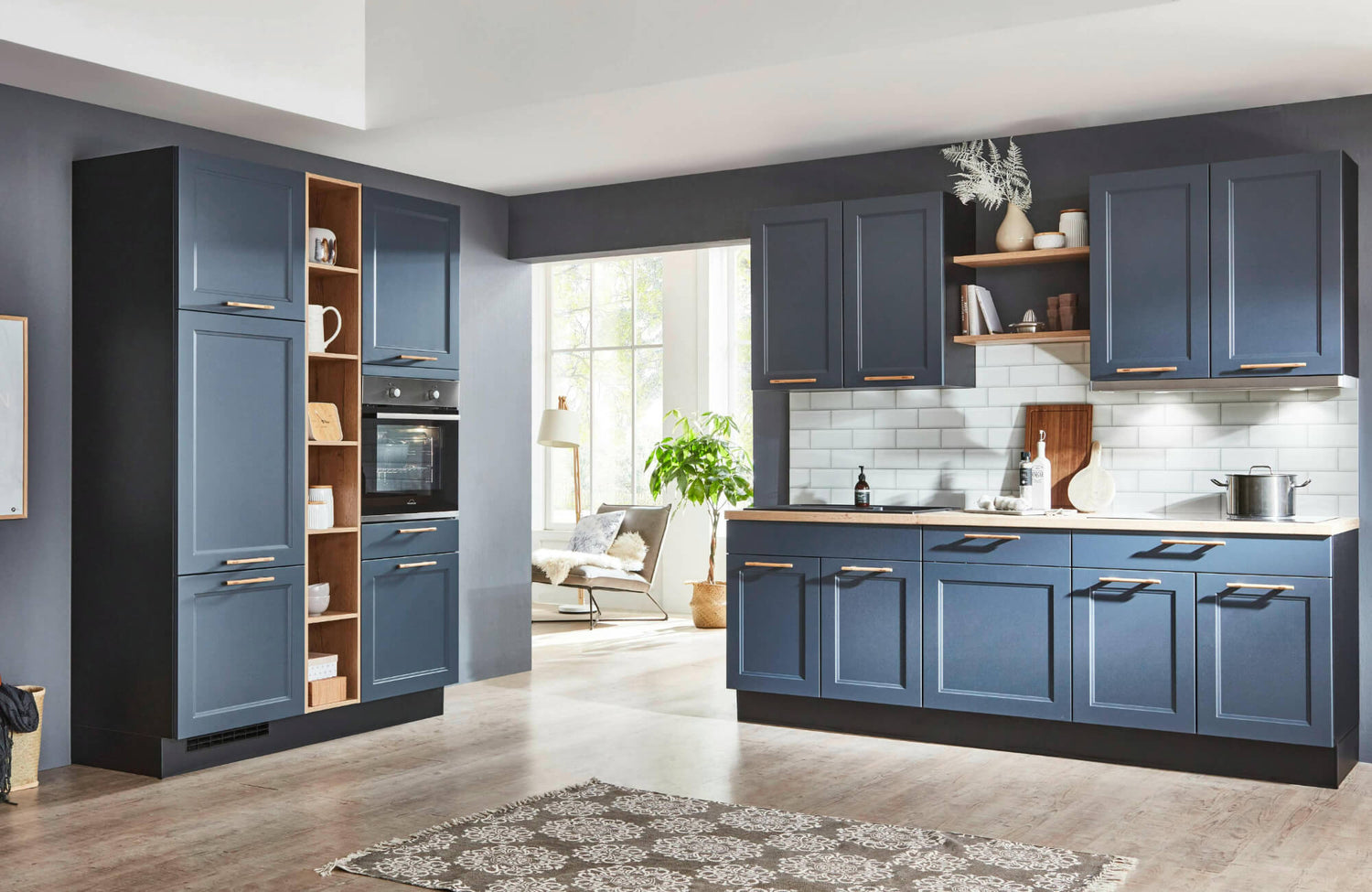
In spaces like the one shown above featuring Edward Martin’s Georgette Polyester Pile Rug in Navy / Rose, the runner’s intricate pattern and subdued color palette emphasize the kitchen’s clean lines while staying perfectly aligned within the cabinetry. Choosing a runner that fits the walkway width, leaving two to three inches of visible flooring on each side, enhances balance and proportion. When paired with a solid rubber pad underneath, this setup prevents end-to-end drift while keeping the rug parallel to cabinet edges for a crisp, professional finish.
This simple yet strategic approach not only improves stability but also gives your kitchen a refined, cohesive appearance. The Georgette Rug exemplifies how a well-placed runner can anchor the space, bringing both elegance and everyday practicality to a galley-style kitchen.
Layering Your Runner Over a Larger Rug
For those with open-concept kitchens that flow into dining or living spaces, layering can add both visual and functional appeal. Placing your runner over a larger flat-weave rug creates friction between the two layers, reducing slippage while adding textural depth.
This design-forward approach works beautifully in transitional spaces or farmhouse-style kitchens, where mixed patterns and materials contribute to warmth and personality. Just ensure that both rugs are low-pile to prevent tripping hazards and that the base rug has a non-slip backing or pad underneath.

How to Choose a Runner That Won’t Slip in the First Place
Of course, the smartest way to prevent slipping starts before you even bring a rug home. Choosing a runner designed with built-in traction, balanced weight, and durable materials ensures long-term stability, and saves you from constant adjustments later on.
The Value of a High-Quality Built-In Rubber Backing
Many modern kitchen runners now come with integrated non-slip backings, typically made from natural or thermoplastic rubber. Unlike separate pads, these backings are bonded directly to the rug’s underside during manufacturing, creating a seamless, low-profile fit that stays securely in place.
When shopping, look for runners specifically marketed as non-slip kitchen rugs or rubber-backed runners, as they’re designed to withstand high foot flow, occasional spills, and frequent cleaning cycles. A well-constructed rubber backing maintains its elasticity over time without hardening, cracking, or leaving marks on your flooring, making it an excellent choice for busy family kitchens where both safety and durability matter.
How a Runner’s Weight and Weave Contribute to Stability
The structure of your runner greatly influences how well it stays in place. Lightweight synthetic weaves tend to shift easily, especially on smooth flooring, while heavier, denser rugs, like Edward Martin’s Marcela Cotton Blend Rug in Natural / Opal, naturally resist movement thanks to their balanced weight and textured composition. The Marcela Rug, shown here, demonstrates how a cotton blend construction adds both visual softness and dependable traction, making it an excellent choice for kitchens and other busy areas.
Pile height and density also influence grip and performance. Flat-weave or low-pile rugs, such as the Marcela, provide better stability and are easier to clean, while thicker, plush options may feel luxurious but are more prone to sliding and absorbing spills. For those who prefer lighter weaves or finer textures, pairing the rug with a high-quality pad or built-in non-slip backing ensures consistent traction, long-term comfort, and a secure, elegant foundation underfoot.
The Hidden Benefit of Washable Kitchen Runners
Washable runners, made popular by machine-washable brands, offer not just convenience but also long-term stability. Many washable rugs feature a two-part system: a removable cover and a non-slip base layer designed to grip the floor.
These systems are perfect for kitchens, where spills, crumbs, and stains are inevitable. The base stays put while the cover can be removed for washing, ensuring a consistently flat, secure surface even after multiple washes.
Plus, the technology behind washable rugs often includes silicone or thermoplastic backing that maintains traction without adhesives, giving you a clean, safe, and beautiful runner year-round.
A Safe and Secure Runner for a Stylish Kitchen
A sliding runner may seem like a small inconvenience, but solving it transforms your kitchen experience, from frustrating to effortless, from unsafe to serene. By starting with the right foundation, such as a natural rubber pad, and supplementing it with smart adhesives or strategic placement, you ensure both beauty and function coexist in harmony.
Your kitchen deserves more than a quick fix, it deserves thoughtful design that endures daily life. That’s where Edward Martin’s design consultation service comes in. With personalized guidance from design professionals, you can make confident style choices that complement your space. For personalized recommendations, product questions, or expert assistance, contact Edward Martin today. Our knowledgeable team is ready to help you create a kitchen that’s as secure and functional as it is beautifully designed.