How you choose tiles, lighting, and furniture during a kitchen remodel determines far more than how the space looks when it is finished. The kitchen is the most active room, and every surface, fixture, and furnishing is tested daily by movement, moisture, heat, and human interaction. For that reason, successful design begins with understanding how materials perform, how light shapes perception, and how furniture supports real patterns of use, rather than treating each decision as a purely aesthetic one.
At the same time, cohesion is what transforms good individual choices into a great kitchen. When flooring, lighting, and furnishings are selected with a shared logic, the space feels intuitive, balanced, and comfortable over time. By approaching your remodel through performance, ergonomics, and sensory harmony, you create a kitchen that not only looks refined but also works effortlessly through every task, gathering, and moment of daily life.

Tile Selection
Kitchen tiles are exposed to daily wear that few other surfaces experience, from temperature swings to constant moisture and impact. Because of this, selecting the right tile is as much a technical decision as a design one, requiring you to balance safety, durability, and long-term performance alongside visual appeal.
The Friction Coefficient for Safe Flooring
Slip resistance plays a central role in how safe your kitchen feels underfoot, especially during busy moments when spills are unavoidable. The Dynamic Coefficient of Friction, or DCOF, measures how well a tile maintains grip when a liquid is present, making it a critical metric for kitchen floors. To reduce the risk of slipping, you should prioritize tiles with a DCOF rating of 0.42 or higher, as this threshold is designed to support stable movement even on wet surfaces.
Beyond the rating itself, surface texture directly influences how that friction is experienced in real life. Matte porcelain and lightly textured tiles strike an effective balance by providing traction without feeling abrasive. In contrast, polished or glossy finishes reflect light beautifully but lose grip when moisture is introduced, which is why they are better reserved for vertical applications where safety is not compromised.
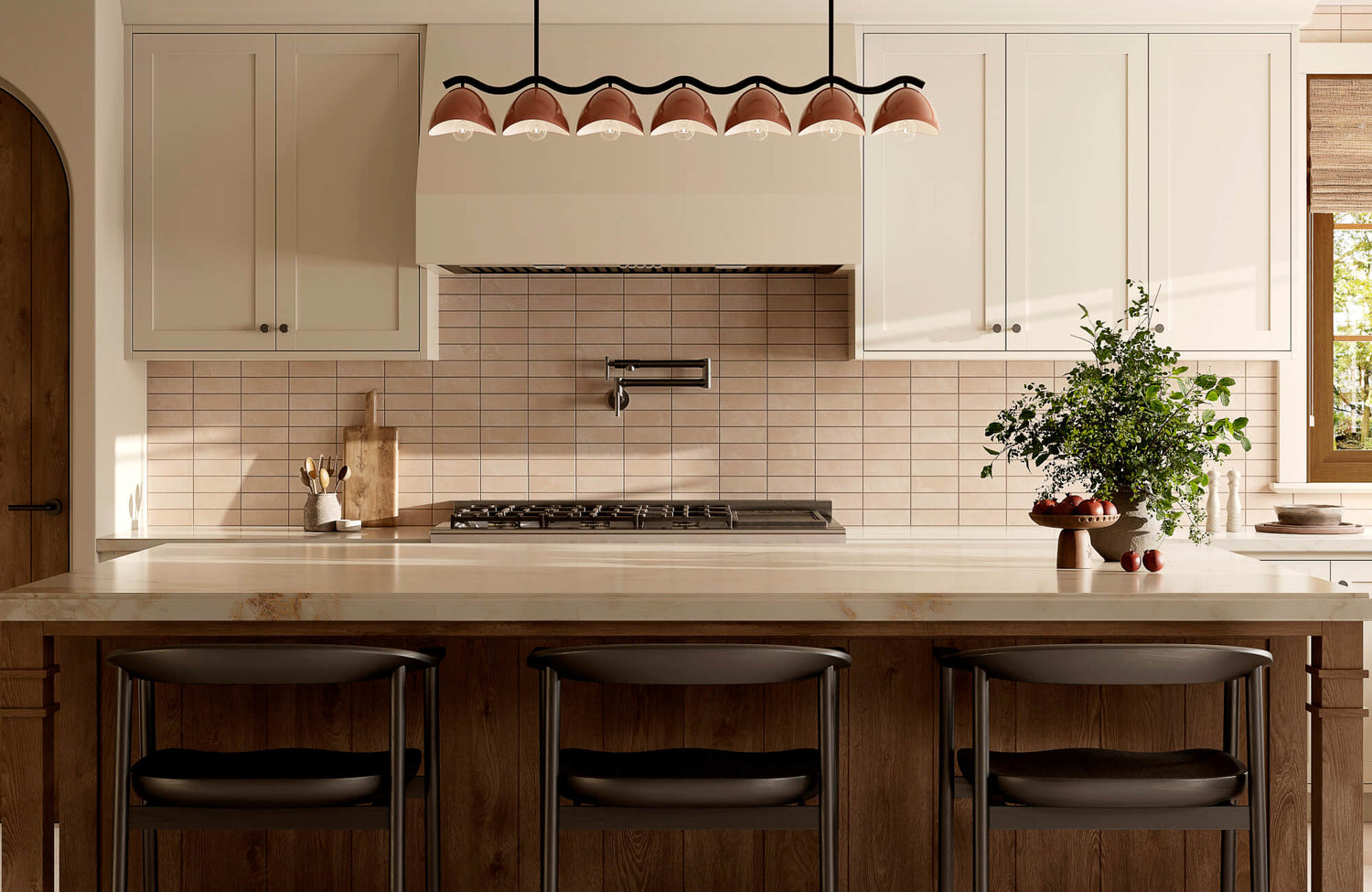
Flooring that mimics natural materials can achieve this balance without sacrificing visual warmth. Wood look porcelain options, such as our Preston 8x48 Matte Porcelain Tile in White Oak, offer the appearance of grayish beige oak flooring while maintaining a matte, slip-resistant surface well-suited for kitchens. For complementary vertical surfaces, tiles like our Shea 3x12 Matte Porcelain Tile in Sand introduce a gray tone that pairs naturally with wood finishes, reinforcing cohesion while allowing each surface to perform according to its functional demands, as shown in the image above.
Pore Density and Stain Resistance in Backsplashes
Although floors must resist slipping, backsplashes must resist absorption. Cooking oils, sauces, and steam constantly hit vertical surfaces, and tiles with high porosity can trap stains and bacteria beneath the surface. Porcelain tiles perform exceptionally well here because their dense structure limits water absorption, preventing contaminants from penetrating and making routine cleaning far more effective.
Natural stone also introduces a different dynamic. Materials like marble or limestone offer organic beauty, but their open pore structure demands regular sealing and careful maintenance to avoid discoloration. If you want a backsplash that supports an active kitchen without extra upkeep, dense ceramic or porcelain tiles allow you to enjoy the space freely, focusing on cooking and gathering rather than long-term surface preservation.
Because backsplash tile also plays a strong visual role, seeing how a material behaves in your own space can help confirm the right choice. Visualizing scale, color, and finish in real time reduces uncertainty and ensures performance-driven decisions still align with your design goals. Using an augmented reality (AR) tool allows you to preview selected ceramic or porcelain tiles directly in your kitchen before installation, creating confidence that the surface will perform well and feel right once it becomes part of your daily routine.

Layered Illumination and Optical Functionality
Lighting determines how well your kitchen functions and how inviting it feels at any time of day. By layering different types of light, you ensure that each zone is supported visually while avoiding glare, shadows, or a flat, one-dimensional atmosphere.
Task Lighting and the Color Rendering Index
In busy areas such as prep counters, sinks, and cooktops, light quality directly affects accuracy and comfort. The Color Rendering Index, or CRI, measures how faithfully a light source reveals true colors, and in a kitchen setting, a CRI of 90 or higher is critical. When colors are rendered accurately, you can judge food freshness more easily, avoid mistakes during prep, and achieve better visual clarity overall.
Placement also reinforces this performance. When under-cabinet lights are positioned closer to the front edge, illumination falls directly onto the work surface instead of behind you. This forward placement minimizes shadows created by your body and ensures consistent light coverage, making detailed tasks feel easier and less fatiguing over time.
Volumetric Interest through Decorative Pendants
Decorative pendants serve a different but equally important role by shaping the vertical dimension of the kitchen. Suspended between the ceiling and the counter, they visually anchor islands and dining areas, helping these zones feel intentional rather than floating within the space. This added depth introduces character and breaks up large open volumes.
Proportion and height also determine whether pendants enhance or overwhelm the room. When scaled appropriately to the island and spaced evenly, they create warmth and intimacy without blocking sightlines. Hung too high, they lose presence; too low, they interrupt conversation. When balanced correctly, pendants provide both functional glow and visual rhythm, enriching the kitchen without competing with it.
Pendant selection further influences how light is perceived through material and finish. As seen in the photo above, sculptural fixtures such as our Lumira 18" LED Pendant in Vintage Brass/Glossy Opal introduce a warm gold tone paired with soft white diffusion, creating a refined focal point over islands or dining tables. For wider surfaces, linear options like our Hailey 48" 4 Lights Linear Pendant in Aged Gold/Opal Matte Glass, shown in the same image, distribute illumination evenly while reinforcing a cohesive visual line. Together, warm metallic finishes and softly diffused white glass enhance depth, highlight architectural features, and contribute to a balanced, inviting atmosphere.

Furniture Design
Kitchen furniture must do more than look good; it has to work in constant motion. When seating and tables are chosen with ergonomics in mind, the kitchen supports natural movement, reduces physical strain, and remains comfortable whether you are grabbing a quick bite or hosting for hours.
Clearance Zones and Movement Flow
Smooth circulation is the foundation of a functional kitchen. To avoid congestion, you should preserve 42 to 48 inches of clear walkway in main paths, allowing multiple people to pass without interruption. Around islands and tables, this clearance becomes even more important, as seated guests need room to slide stools or chairs back without colliding with appliances or cabinetry. When these spatial relationships are carefully planned, the kitchen feels intuitive rather than restrictive. Additionally, doors, drawers, and seating can all operate at the same time, which prevents bottlenecks and keeps daily routines from feeling cramped or chaotic.
Support Structures and Material Longevity
Kitchen seating endures heavier use than furniture in most other rooms, making structural integrity essential. Frames made from solid hardwood or powder-coated metal resist loosening and warping, even in an environment where humidity and temperature fluctuate throughout the day. Material choice also affects long-term comfort and appearance. Performance upholstery that resists stains and moisture, for instance, holds up better against spills and frequent cleaning. By choosing durable materials, you ensure your seating remains supportive and visually polished without demanding constant maintenance.
Well-designed counter seating combines these qualities without sacrificing visual warmth. Options like our Crawford Counter Stool in Brown, featured above, pair a sturdy metal frame with rich brown upholstery, creating a balance of strength and comfort suited for daily use. The warm brown tone also adds depth and contrast to the island, while durable construction ensures the stool remains supportive and polished over time. By choosing seating built for longevity, the kitchen stays welcoming and functional without requiring constant upkeep.

Color Temperature and Texture
Light and surface finishes are interpreted by the brain as a single sensory experience rather than separate elements. When color temperature and texture are intentionally aligned, the kitchen feels cohesive and emotionally comfortable instead of visually fragmented.
Calibrating the Kelvin Scale for Surface Tones
Color temperature, measured in Kelvins, determines how warm or cool light appears and directly influences how materials are perceived. Warm lighting in the 2700K to 3000K range brings out the richness of wood cabinetry and earthy tile tones, making the kitchen feel inviting and grounded. In contrast, cooler light between 3500K and 4000K enhances crisp materials like stone, metal, and high-contrast finishes, reinforcing a clean and contemporary atmosphere.
When lighting temperature conflicts with surface tones, colors can appear dull, yellowed, or overly blue. By matching the Kelvin range to your material palette, you maintain visual harmony, ensuring that finishes look intentional and consistent throughout the space rather than distorted under artificial light.
Specular Reflection versus Matte Diffusion
Surface texture controls how light moves once it hits a material. Glossy tiles and polished countertops create specular reflection, bouncing light back into the room and increasing brightness. This effect can visually expand a smaller kitchen by amplifying light and creating highlights that add energy and depth.
Matte finishes, on the other hand, diffuse light by scattering it in multiple directions. This softens the overall look, reduces glare, and hides fingerprints or water marks, but it also absorbs more light. By combining reflective and matte surfaces strategically, you create a balanced environment where brightness, comfort, and texture work together rather than compete.
This balance is often most effective when different textures are assigned to different planes like the kitchen above. Large format matte flooring, such as our Dawson 24x48 Matte Porcelain Tile in Dune introduces a weathered beige tone that grounds the space while minimizing glare under natural and artificial light. In contrast, glossy wall applications like our Colby 2x10 Glossy Porcelain Subway Tile in Cream reflect light softly across vertical surfaces, enhancing brightness without overwhelming the room. Together, matte floors and glossy backsplashes create a layered visual experience that feels both luminous and comfortable.

Integrating Smart Technology and Adaptive Elements
Integrating smart technology and adaptive elements allows the modern kitchen to move beyond a single, static function and become a space that responds intuitively to daily life. Thoughtfully designed smart systems, particularly lighting, play a central role in this transformation by aligning the kitchen’s atmosphere with natural rhythms and changing needs. Adjustable brightness and color temperature support alert, task-driven moments in the morning while gradually shifting toward warmer, calmer tones in the evening, helping the space feel both efficient and restorative. At the same time, preset scenes simplify transitions throughout the day, enabling the kitchen to effortlessly move from focused work mode to relaxed social settings with minimal effort and improved energy efficiency.
Equally important, adaptable furniture ensures the physical layout of the kitchen remains as flexible as its technology. Modular and adjustable elements such as height-variable islands, extendable work surfaces, and integrated power access allow a single zone to serve multiple purposes without visual clutter. This flexibility is especially valuable in open-plan homes, where the kitchen often functions as a hub for cooking, working, and gathering. Together, smart systems and modular design create a kitchen that evolves alongside your routines, offering a responsive, future-ready environment that supports both productivity and connection throughout the day.

Sustainable Sourcing and Lifecycle Assessment
Sustainable sourcing and lifecycle assessment shift the focus of a kitchen remodel from short-term aesthetics to long-term performance and responsibility. Rather than evaluating materials only at installation, this approach considers durability, health impact, and efficiency over years of daily use. Low-VOC materials, for example, play a critical role in maintaining healthy indoor air quality, especially in kitchens where heat, moisture, and frequent cleaning can intensify chemical exposure.
At the same time, recycled content and energy-conscious design extend sustainability beyond air quality. Surfaces made with reclaimed or recycled materials deliver the same strength and reliability as conventional options while reducing reliance on new raw resources. Energy-efficient lighting and fixtures further lower environmental impact, particularly when designed with replaceable parts and recyclable metals that prevent premature disposal. Together, these choices create a kitchen that not only performs beautifully over time but also reflects a thoughtful commitment to reduced waste, responsible manufacturing, and long-term environmental stewardship.
Designing a Kitchen That Works and Endures
Designing a kitchen that truly lasts comes down to intentional alignment across every decision you make. When tiles are chosen for safety and durability, lighting is layered for accuracy and atmosphere, and furniture is selected to support movement and comfort, the space naturally adapts to both everyday routines and long-term change. As a result, the kitchen becomes more than a collection of finishes and fixtures. It also evolves into a cohesive, resilient environment that supports how you live today while remaining flexible for how you will live tomorrow.
To bring this level of alignment together with confidence, expert guidance can make the process far more intuitive and efficient. Working with a professional design service helps translate performance goals, spatial constraints, and personal style into a cohesive plan, ensuring that every tile, fixture, and furnishing works in harmony rather than in isolation. By collaborating with experienced designers, you gain clarity at each decision point and avoid costly missteps, resulting in a kitchen that not only endures but also feels intentionally crafted around the way you live.