Lighting is often described as the finishing touch in interior design, but in reality, it functions more like a connective tissue that ties every surface and furnishing together. Flooring and furniture establish the foundation of a space, defining its tone, texture, and visual weight, while lighting determines how those elements are perceived throughout the day and night.
The wrong lighting can flatten rich wood grain, cast unflattering hues across upholstery, or create visual imbalance that makes even high-quality furnishings feel disconnected. When thoughtfully selected, however, lighting enhances materials, reinforces proportions, and elevates the overall experience of a room. By approaching lighting as an integrated design layer rather than a final add-on, you can create interiors that feel balanced, comfortable, and visually compelling.

Matching Color Temperature to Your Material Palette
Color temperature is one of the most influential yet misunderstood aspects of lighting design. Measured in kelvins, it determines whether light reads as warm, neutral, or cool, and it has a direct impact on how flooring materials and furniture finishes appear. Selecting the right temperature ensures that natural materials look authentic and that colors remain true rather than distorted.
Why Warm Woods Need Warm Light
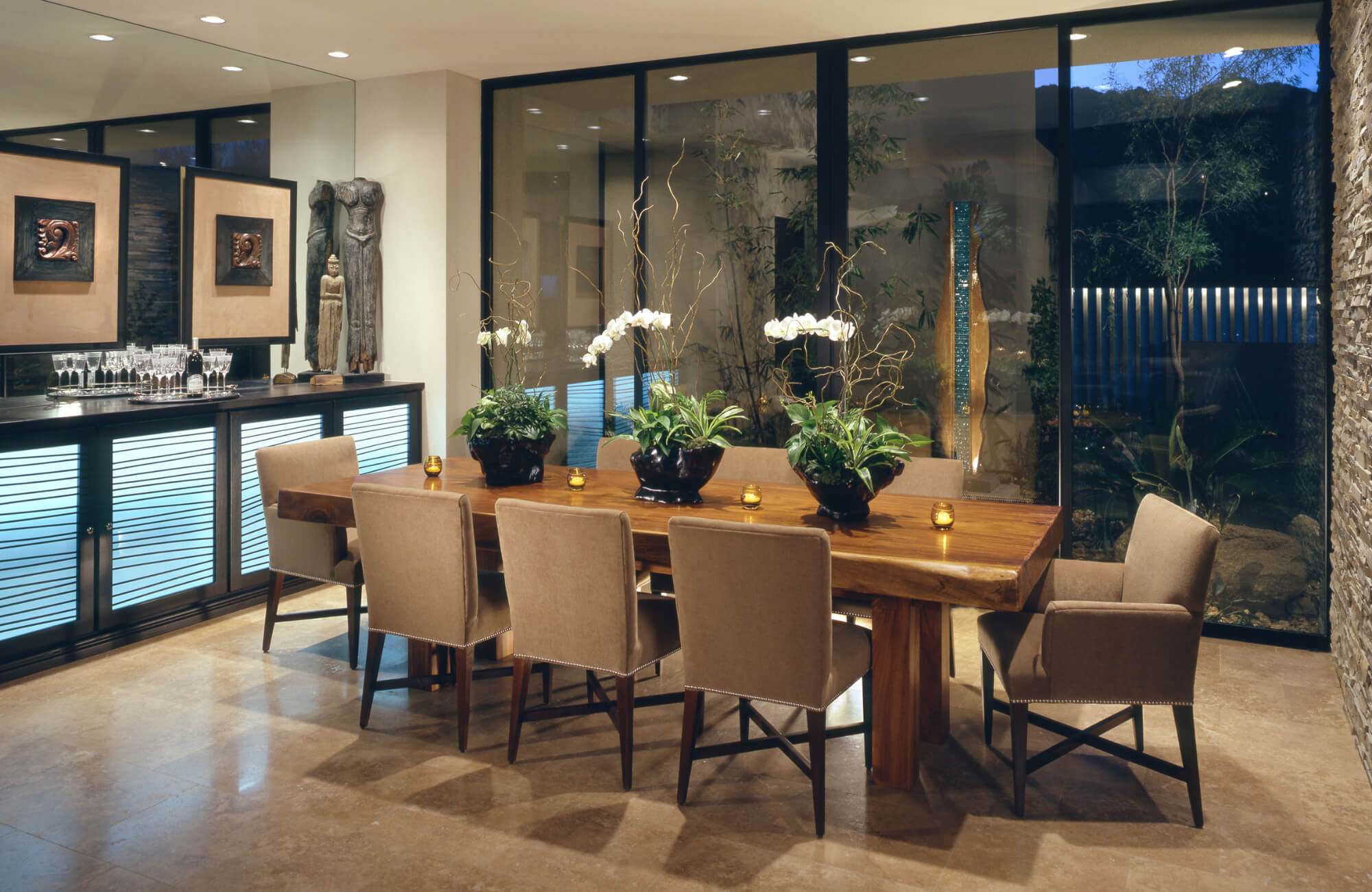
Warm-toned woods such as oak, walnut, cherry, and maple carry natural undertones that range from honeyed gold to deep amber. These woods are often chosen for their warmth and depth, qualities that can be diminished or altered under the wrong lighting. Warm light temperatures, typically in the 2700K to 3000K range, enhance the richness of these woods by emphasizing their natural grain and tonal variation. This relationship is especially effective when a statement fixture like Edward Martin’s Cressida 32" Chandelier in Vintage Gold Leaf is paired with solid wood furnishings such as the Carla 68" Dining Table in Rustic Oak, as seen in the image above, reinforcing a cohesive and inviting atmosphere.
Cool lighting can strip warmth from wood, making it appear flat or even slightly gray. This effect is particularly noticeable on wide-plank hardwood floors or substantial wood dining tables, where large surface areas amplify any tonal imbalance. Warm lighting softens transitions between floor and furniture, allowing wood elements to relate to one another instead of competing visually. In spaces where wood is a dominant feature, such as great rooms or open-plan kitchens with wood cabinetry, warm lighting acts as a unifying force that keeps the environment cohesive.
Lighting Cool Tones like Marble and Grey Velvet
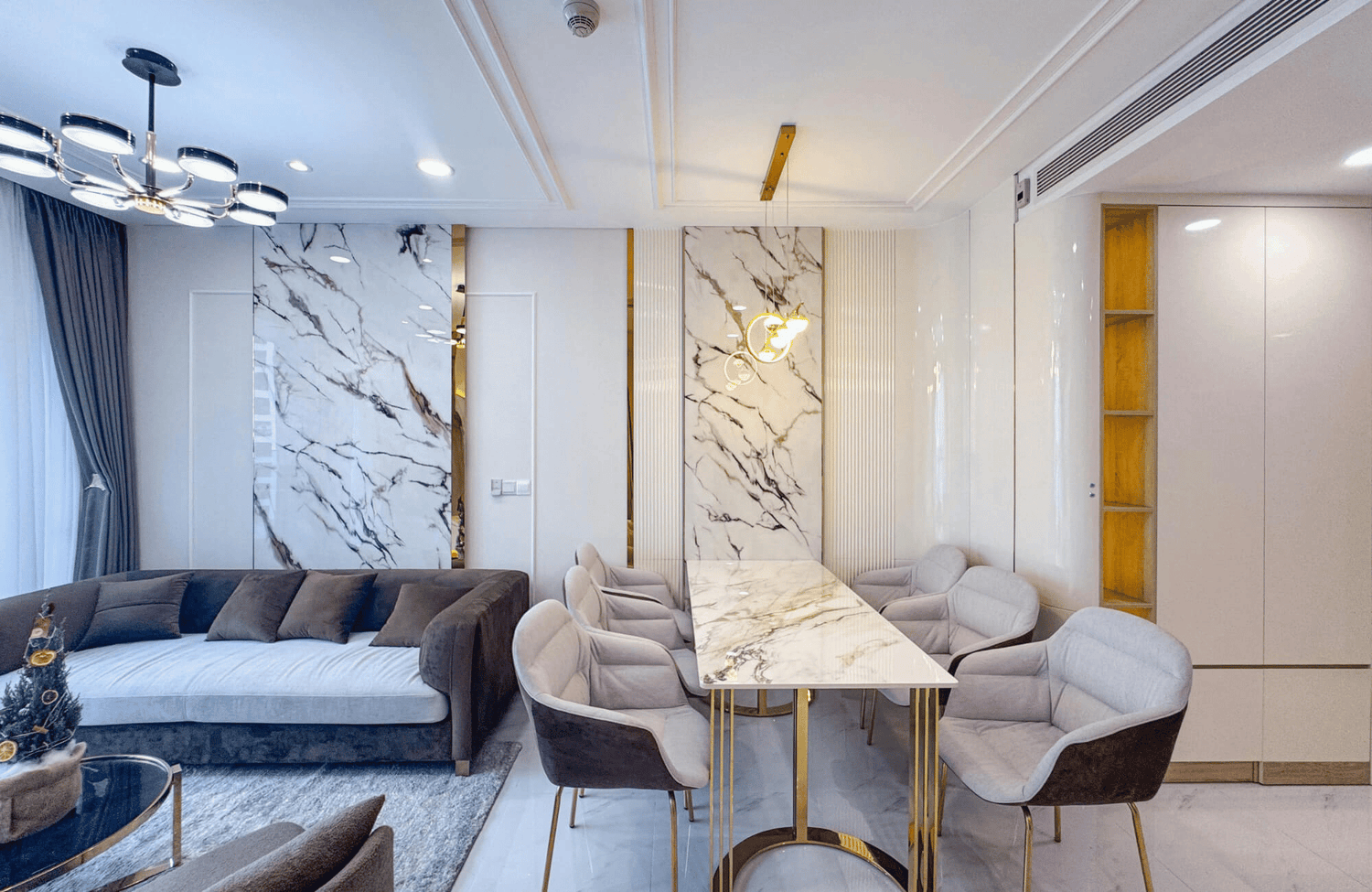
Cool-toned materials such as marble, concrete, porcelain tile, and gray or blue upholstery respond differently to light. These surfaces often benefit from neutral to slightly cool lighting, generally in the 3000K to 3500K range, which preserves their crispness without making them feel sterile. Marble flooring, for example, can lose its veining detail under overly warm light, while excessively cool light can exaggerate hardness and make the space feel uninviting.
Furniture upholstered in gray velvet or cool-toned leather also requires careful consideration. Neutral lighting allows the fabric’s texture and depth to emerge without shifting its color. When lighting is too warm, gray textiles can take on an unintended beige cast, while overly cool light can make them appear bluish and harsh. Striking the right balance ensures that cool materials feel refined and intentional, supporting a sophisticated aesthetic rather than overpowering it.
The Danger of Color Distortion on Textiles
Textiles are particularly sensitive to lighting, as their fibers absorb and reflect light differently depending on color temperature. Rugs, upholstered chairs, curtains, and accent pillows can all appear dramatically different under various lighting conditions. This is especially important in rooms where flooring and furniture rely on fabric to soften harder surfaces. Incorrect lighting can distort colors, making whites look yellow, neutrals appear muddy, and bold hues feel off-key.
To avoid color distortion, lighting should be tested against actual materials rather than imagined palettes. A fabric that looks perfect in daylight may shift noticeably under artificial light. Choosing bulbs with high color rendering indexes ensures that textiles maintain their true color and richness. When lighting complements rather than alters fabrics, the relationship between flooring and furniture feels seamless, and the room retains its intended character throughout the day.

Coordinating Metal Finishes and Hardware Details
Metal finishes act as visual punctuation in a space, appearing in light fixtures, furniture legs, cabinet hardware, and decorative accents. Coordinating these finishes with flooring and furniture details creates continuity and prevents the room from feeling fragmented.
Echoing Vanity and Sideboard Hardware
One of the most effective ways to integrate lighting is by echoing the metal finishes already present in furniture hardware. A chandelier or pendant that mirrors the finish of a sideboard’s pulls or a vanity’s faucet creates an immediate visual connection. This repetition feels deliberate and refined, particularly when the warm tones of Edward Martin’s Freeman Wall Sconce in Aged Brass complement the detailing and hardware of the Leonardo Sideboard in Brown, as illustrated in the image above.
In spaces with wood floors and furniture, metal accents often provide contrast. Brushed brass lighting can warm up darker woods, while polished nickel or chrome can sharpen lighter finishes. The key is consistency in tone rather than exact matching. When lighting fixtures subtly reference existing hardware, they enhance cohesion without appearing overly coordinated.
Grounding Light Floors with Dark Fixtures
Light-colored floors, such as white oak, limestone, or pale tile, can sometimes feel visually weightless if paired exclusively with similarly light fixtures. Introducing darker lighting finishes, such as oil-rubbed bronze or matte black, grounds the space and provides contrast that anchors furniture groupings. Dark fixtures draw the eye upward and outward, balancing the expansiveness of light floors.
This approach is particularly effective in rooms with high ceilings or open layouts, where visual grounding is essential. Dark metal fixtures create definition and structure, ensuring that furniture arrangements feel intentional rather than floating. When thoughtfully chosen, these fixtures enhance the architectural presence of the space without overwhelming lighter materials.
Mixing Metals for a Layered Aesthetic
Mixing metal finishes has become a hallmark of sophisticated interiors, but it requires restraint and purpose. Lighting is integral to this layering, as fixtures often occupy prominent visual positions. When mixing metals, lighting should either act as a bridge between finishes or serve as a neutral anchor.
For example, a space with brass furniture accents and black-framed windows might benefit from lighting that incorporates both tones or leans toward one while complementing the other. The goal is to create a sense of depth and evolution rather than chaos. When metals are layered thoughtfully, lighting reinforces the richness of flooring and furniture, adding nuance instead of distraction.

Balancing Visual Weight and Scale of Furnishings
Scale and proportion are critical considerations when selecting lighting, as fixtures must relate not only to the size of the room but also to the visual weight of the furniture and flooring. An imbalance can make even well-designed spaces feel awkward or unfinished.
Pairing Substantial Tables with Solid Fixtures
Large dining tables, kitchen islands, and coffee tables carry significant visual weight, especially when crafted from solid wood or stone. These pieces require lighting fixtures that can hold their own visually. A robust pairing, such as Edward Martin’s McKay Chandelier in Burnished Brass suspended above the Dominic 95" Dining Table in Dark Mango, shown in the image above, creates balance by matching the scale and presence of the furniture below.
When lighting is too delicate or undersized, it can appear lost above a substantial table, diminishing the impact of both elements. Conversely, appropriately scaled fixtures reinforce the importance of key furniture pieces, drawing attention to them while maintaining balance. This relationship is particularly important in dining rooms, where the table often serves as the focal point.
Creating Airiness Above Streamlined Furniture
In contrast, streamlined furniture with slender profiles benefits from lighter, more open lighting designs. Glass, wire, or minimal metal fixtures maintain an airy quality that complements contemporary furnishings and prevents visual overcrowding. This approach works especially well with light flooring materials, as it preserves a sense of openness and flow.
Lighting that mirrors the lightness of furniture allows flooring textures to remain visible and appreciated. Rather than dominating the room, fixtures become part of a cohesive backdrop that enhances comfort and usability. The result is a space that feels thoughtfully curated rather than visually heavy.
Using Floor Lamps to Anchor Floating Zones
Floor lamps are often underestimated as design tools, but they are key to anchoring furniture arrangements, particularly in open-plan spaces. When seating areas lack clear boundaries, a well-placed floor lamp can define a zone and provide visual grounding. The base of the lamp connects to the floor, while its height relates to surrounding furniture, creating a vertical line that ties the composition together.
Choosing floor lamps that echo the finishes or tones of nearby furniture ensures continuity. When lighting anchors floating zones effectively, flooring and furniture feel purposefully arranged rather than scattered.

Defining Zones in Open Concept Layouts Using Light
Open concept layouts offer flexibility and spaciousness, but they also present challenges in maintaining clarity and cohesion. Lighting is one of the most powerful tools for defining zones without relying on walls or abrupt changes in flooring.
Centering Chandeliers to Anchor Dining Sets
A chandelier centered over a dining table instantly establishes the dining area as a distinct zone within an open space. This visual anchor draws attention downward to the table and upward to the ceiling, creating a sense of enclosure without physical barriers. The chandelier’s style and finish should complement both the dining furniture and the surrounding flooring to maintain continuity.
When properly scaled and positioned, chandeliers reinforce the importance of the dining area while allowing adjacent spaces to coexist harmoniously. This approach is especially effective in homes where dining areas share space with living rooms or kitchens.
Task Lighting for Functional Surfaces
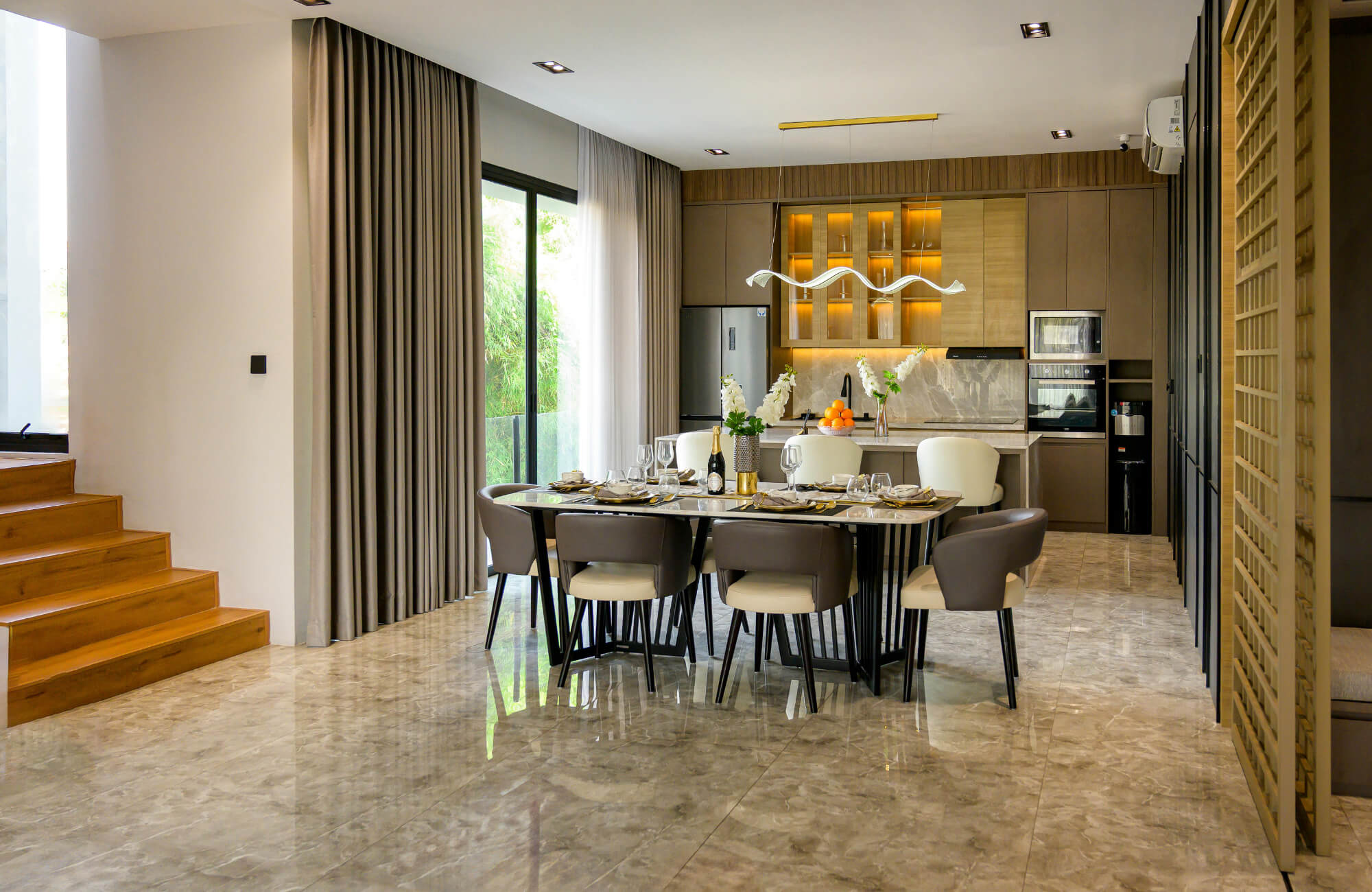
Task lighting serves a practical purpose, but it also contributes to visual organization. Under-cabinet lighting, desk lamps, and focused pendants highlight functional surfaces and differentiate them from surrounding areas. A linear fixture like Edward Martin’s Hailey 48" 4 Lights Linear Pendant in Aged Gold/Clear Glass works seamlessly above a kitchen island, especially when paired with tailored seating such as the Grant Counter Stool in Black, as seen in the image above, to clearly define the workspace.
When task lighting aligns with the finishes and tones of nearby furniture and flooring, it feels integrated rather than utilitarian. This alignment ensures that functional areas support the overall design narrative rather than interrupt it, reinforcing both usability and visual cohesion.
Creating Flow with Consistent Dimmers
Dimmers provide flexibility and control, allowing lighting levels to shift throughout the day while maintaining a consistent atmosphere. In open layouts, using dimmers across multiple fixtures ensures that transitions between zones feel smooth and intentional. Rather than abrupt changes in brightness, dimmers create a cohesive flow that adapts to different activities.
Consistent dimming capabilities also protect the integrity of materials, as lighting can be adjusted to highlight textures and finishes appropriately. This adaptability reinforces the relationship between lighting, flooring, and furniture, ensuring that the space remains balanced in all conditions.
The Final Layer of Design
Lighting is more than an accessory; it is the final layer that brings flooring and furniture into harmony. When thoughtfully chosen, it enhances material authenticity, reinforces scale, and creates visual continuity across spaces. By considering color temperature, metal finishes, proportion, and placement, homeowners can select lighting that feels both functional and refined, with added confidence through Edward Martin’s design consultation service, which offers personalized recommendations tailored to each project’s materials, layout, and aesthetic goals.
The most successful interiors are those where lighting does not call attention to itself but quietly elevates everything around it. Floors feel richer, furniture feels more intentional, and the space as a whole feels cohesive and inviting. For questions about lighting, tile, rugs, or furniture selections, or for guidance in refining your overall design approach, you can contact Edward Martin to receive expert support that helps bring every element together with clarity and purpose.