Open floor plans are prized for their sense of space, light, and flexibility, but they also present one of the most common design challenges: how to make a large, continuous area feel intentional rather than undefined. Without walls to guide the eye, furniture and décor must do the heavy lifting, and few elements are as influential as a well-chosen, properly anchored rug.
Understanding how to anchor a large rug means thinking beyond size alone. Placement, proportion, alignment, and material all play a role in whether the rug grounds the space or feels like an afterthought. With that in mind, we will explore how thoughtful rug anchoring transforms open floor plans into refined, livable interiors that balance openness with structure.

Establishing Boundaries Through Furniture Placement
Furniture placement is the primary tool for defining space in an open floor plan, and the rug acts as the unifying surface that pulls those pieces together. When furniture and rug placement work in harmony, the room feels deliberate and balanced. When they do not, even the most beautiful rug can feel disconnected.
The Luxury Of Having All Legs On The Rug
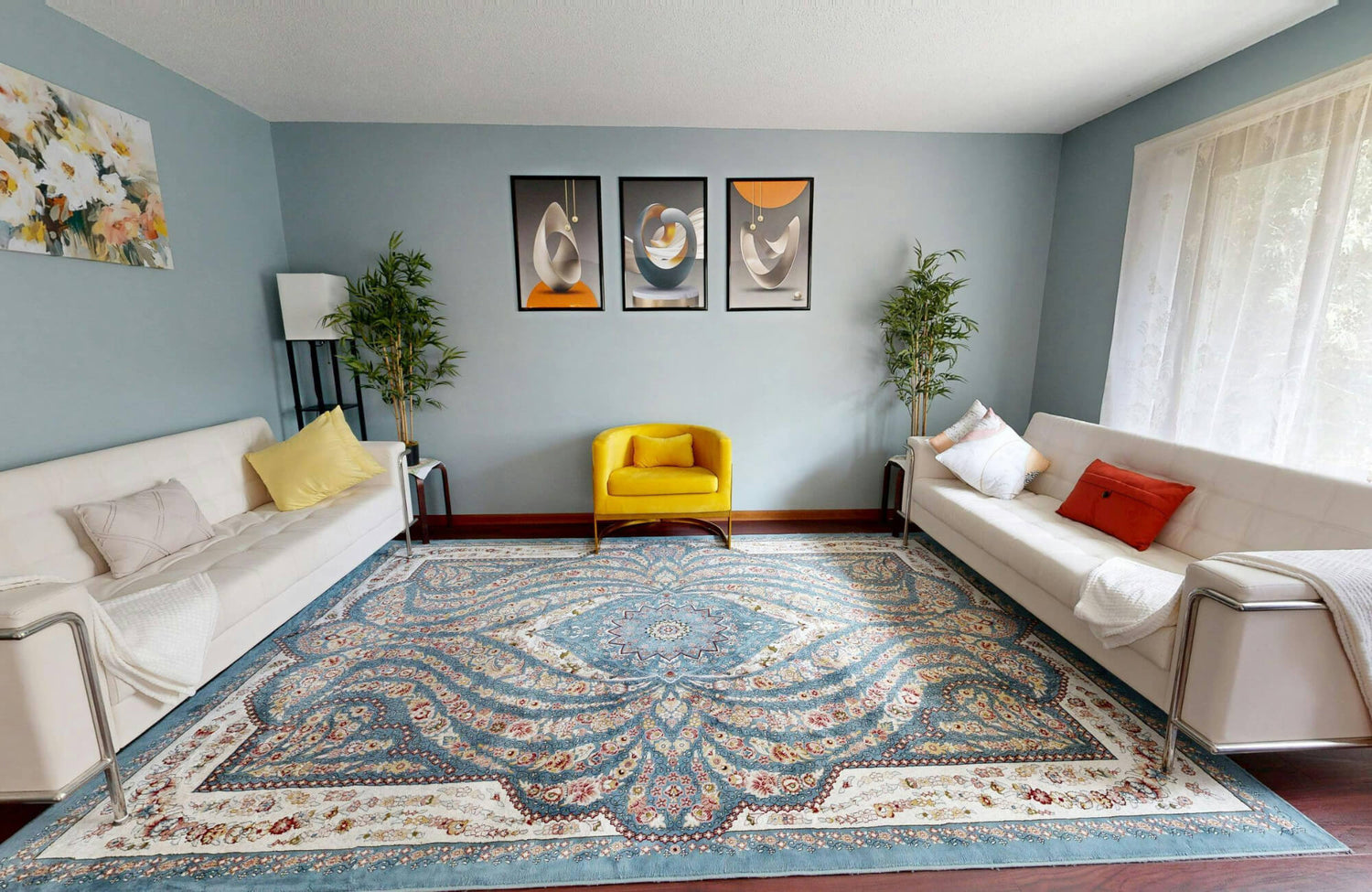
Placing all major furniture legs fully on the rug is widely considered the gold standard for anchoring a space, particularly in a main living area. This approach creates a sense of luxury and generosity because it visually enlarges the seating arrangement and makes the rug feel purpose-built for the room. Sofas, chairs, and coffee tables appear grounded and cohesive, as though they belong together rather than being loosely arranged, a quality that transitional rugs are especially known for, as they effortlessly bridge classic structure with modern comfort.
In open floor plans, this method is especially effective because it establishes a clear boundary without interrupting the flow of the space. The rug becomes a visual island that defines the living area while still allowing sightlines to remain open. For those who value quality and long-term design impact, choosing a rug large enough to accommodate all legs, particularly in a refined transitional style, signals intention, balance, and confidence in the overall layout.
When To Use The Front Legs Only Rule
While having all legs on the rug is ideal, it is not always practical. In some open floor plans, architectural constraints or furniture proportions make this difficult. In these cases, placing only the front legs of seating on the rug can still provide structure, as long as the rug is large enough to extend well beyond the coffee table and seating edges.
This approach works best when executed consistently. The front legs of the sofa and chairs should align evenly on the rug, creating a unified plane that visually connects the pieces. The rug should still feel substantial, anchoring the grouping rather than merely touching it, a balance that Edward Martin’s Haverford Rug in Platinum / Bronze achieves through its refined pattern and grounding tones. When done correctly, this method offers a tailored look that balances comfort with spatial efficiency.
Why Floating Rugs Kill The Design
A floating rug, one that sits entirely in the center of the furniture arrangement without touching any major pieces, undermines the purpose of using a rug in the first place. In an open floor plan, this mistake is amplified. Instead of grounding the space, the rug appears isolated, making the furniture feel disconnected and the room feel unfinished.
Floating rugs often result from choosing a size that is too small or placing the rug without considering furniture scale. The visual effect is a lack of cohesion, as if each element is competing for attention rather than working together. Avoiding this pitfall is essential for homeowners who want their open floor plan to feel polished and thoughtfully designed.

Creating Distinct Zones Without Walls
One of the defining characteristics of an open floor plan is the absence of physical barriers between functional areas. Rugs play a crucial role in creating distinct zones that support daily living while maintaining a sense of flow.
Carving Out A Living Room Sanctuary
The living room is often the emotional center of the home, even within an open layout that includes dining and kitchen areas. Anchoring this zone with a large rug helps carve out a sense of intimacy and comfort. The rug acts as a visual anchor that signals where the living area begins and ends, encouraging relaxation and conversation.
Texture and pattern are particularly important here. A plush or richly woven rug adds warmth and contrast against harder surfaces like wood or tile, reinforcing the idea of the living room as a retreat. When properly anchored, the rug supports the furniture arrangement and gives the space a grounded, inviting presence, qualities that Edward Martin’s Hutchinson Rug in Burgundy / Denim naturally brings through its layered color and tactile depth.
Anchoring The Dining Table Within The Flow
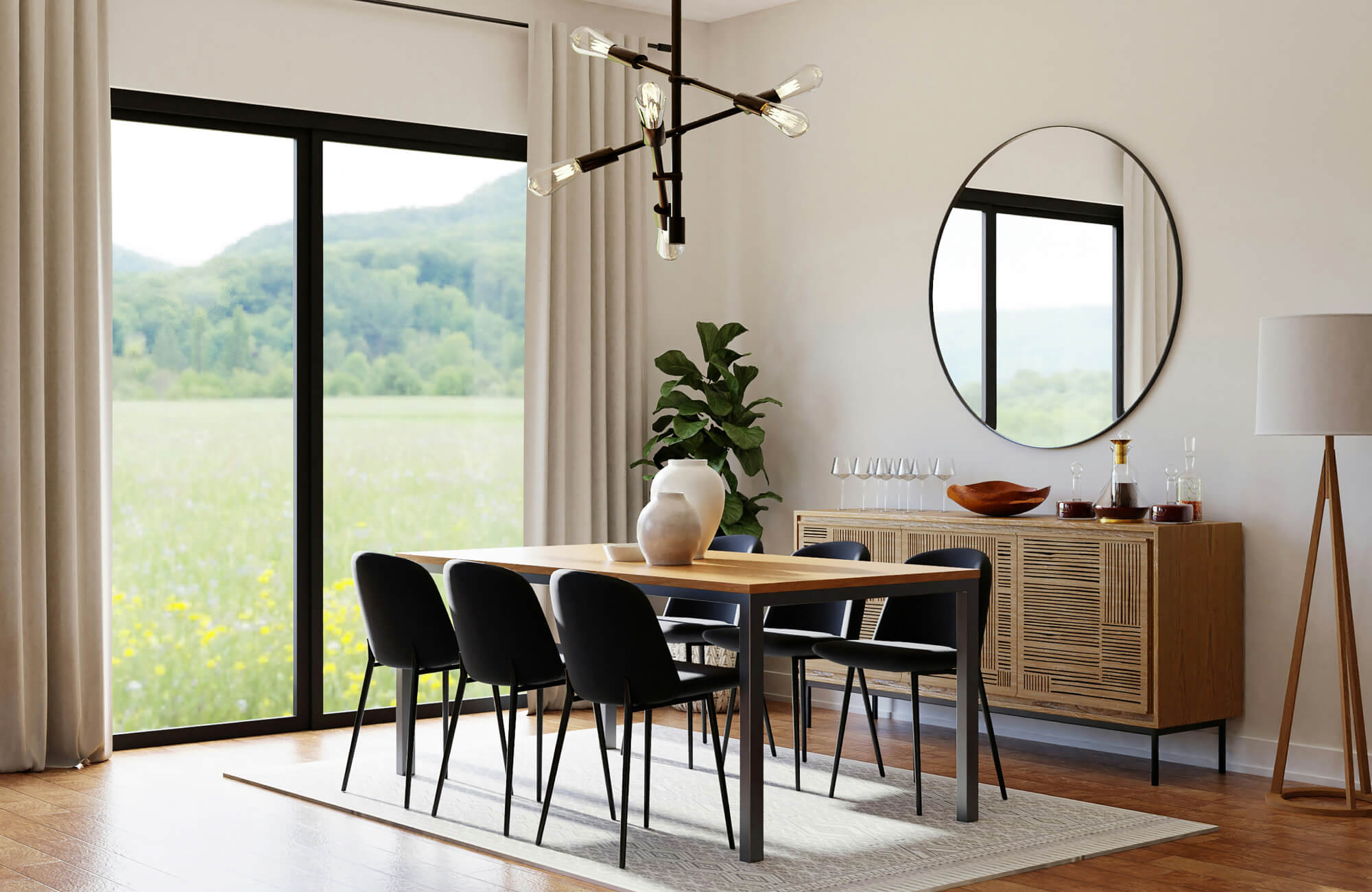
Dining areas in open floor plans benefit greatly from a well-anchored rug, as it provides structure and protects flooring while visually defining the space. The key is ensuring the rug is large enough to accommodate the table and chairs, even when the chairs are pulled out. This creates a sense of permanence and ease, preventing the dining area from feeling temporary or cramped.
The rug should align with the table’s shape and orientation, reinforcing symmetry and balance. In doing so, it establishes the dining zone as an intentional part of the overall design rather than an afterthought tucked into the open space.
Utilizing Runners To Define Circulation Paths
Beyond seating and dining areas, circulation paths are an often-overlooked aspect of open floor plan design. Runners can subtly guide movement through the space, connecting zones while maintaining visual order. When placed thoughtfully, they help organize foot flow and prevent the open layout from feeling chaotic.
Runners should align with architectural lines such as hallways, kitchen islands, or long stretches of wall. Their role is not to dominate but to support the overall design, providing continuity and rhythm as one moves through the home.

Coordinating Multiple Rugs In One Sightline
In large open floor plans, it is common to use more than one rug within a single visual field. Coordinating these rugs requires a careful balance of harmony and distinction.
The Art Of The Sister Rug Strategy
The sister rug strategy involves selecting rugs that share a common design language without being identical. This might mean similar color palettes, complementary patterns, or consistent textures. The goal is to create visual continuity while allowing each zone to maintain its own identity.
When executed well, sister rugs create a layered, sophisticated look that feels curated rather than matchy. They help the eye move comfortably from one area to another, reinforcing the overall cohesion of the open floor plan.
Grounding The Space With Neutral Textures
Neutral rugs are a powerful tool in open layouts, particularly when multiple zones are visible at once. Rather than relying on bold patterns everywhere, grounding the space with neutral textures allows architectural features and furnishings to shine.
Subtle variations in weave, pile, or material add depth without overwhelming the design. Neutral rugs also offer flexibility over time, accommodating changes in furniture or décor without requiring a complete redesign. For those who value longevity and versatility, Edward Martin’s Sweeney Rug in Khaki provides both aesthetic restraint and practical durability within a cohesive open floor plan.
Repeating Accent Colors For Visual Flow
While neutrality provides balance, repeating accent colors across rugs can enhance visual flow. This does not mean matching colors exactly, but rather echoing tones in a way that feels intentional. A hint of blue or warm earth tones repeated across different rugs can tie the entire space together.
This repetition creates a sense of rhythm, guiding the eye naturally through the open floor plan. It reinforces the idea that each zone is part of a larger, cohesive design narrative.

Aligning With Architecture And Structural Elements
Anchoring a rug successfully also requires sensitivity to the home’s architecture. Structural elements provide natural cues for placement and orientation.
Orienting The Rug To The Longest Wall
In open floor plans, orienting the rug parallel to the longest wall helps establish visual order. This alignment creates a sense of stability and proportion, preventing the rug from feeling arbitrarily placed. It also reinforces the room’s geometry, making the space feel more intentional and balanced.
This principle is particularly useful in irregularly shaped rooms, where a well-oriented rug can bring clarity and structure, something Edward Martin’s Davies Rug in Ash / Sand accomplishes through its elongated form and softly contrasting tones.
Centering On Fireplaces And Focal Points
Fireplaces, large windows, or architectural features often serve as natural focal points in open layouts. Centering the rug in relation to these elements strengthens their impact and anchors the surrounding furniture. The rug becomes a supporting actor, framing the focal point and enhancing its presence.
When the rug and focal point are aligned, the entire space feels more cohesive and thoughtfully designed.
The Necessity Of Rug Pads For Physical Stability
Beyond visual considerations, physical stability is essential for anchoring a rug. A high-quality rug pad prevents slipping, reduces wear, and enhances comfort underfoot. In open floor plans with heavy foot movement, a rug pad ensures the rug stays in place, maintaining its alignment and function over time.
Rug pads also protect flooring and extend the life of the rug, making them a practical investment for homeowners who prioritize quality and durability.
The Rug Is The Foundation Of The Room
Anchoring a large rug in an open floor plan is ultimately about recognizing its role as the foundation of the room. More than a decorative accessory, the rug defines space, supports furniture placement, and brings cohesion to expansive layouts. When chosen and placed with intention, it transforms openness from a challenge into an asset, allowing each zone to feel distinct yet connected. For those seeking added confidence in their decisions, Edward Martin’s design consultation service offers personalized guidance, helping refine rug placement and style choices to suit the specific scale and function of each space.
By aligning rugs with furniture, architecture, and lifestyle needs, an open floor plan becomes not just visually appealing, but truly livable. When questions arise or additional support is needed, customers can contact Edward Martin for expert assistance with product selection, design coordination, or broader tile, rug, and furniture considerations tailored to their project.