
)
)
)
)
)
)
)
)
How Can You Style A Bathroom With Hexagon Tiles?
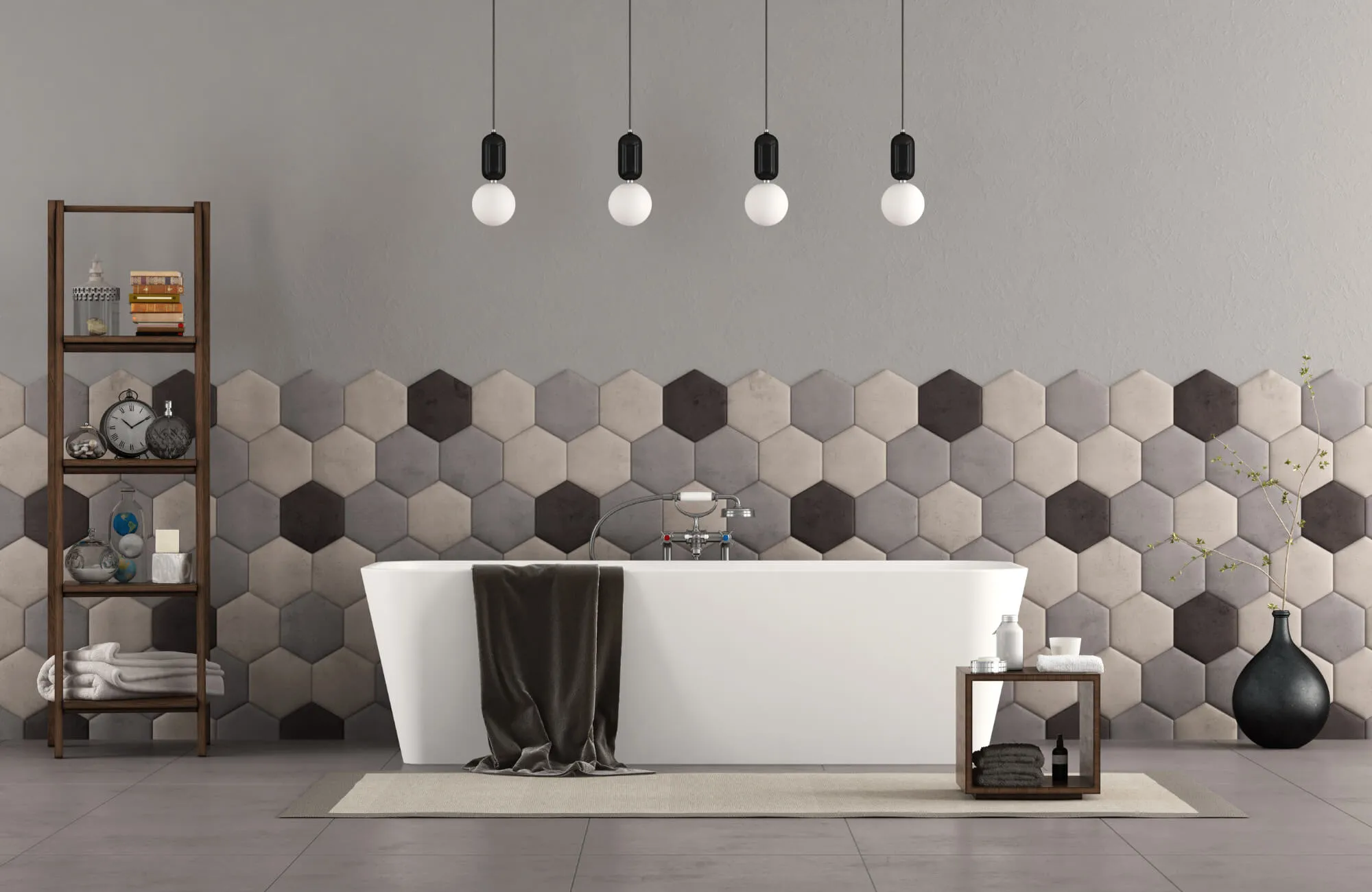
Hexagon tiles are a timeless choice in bathroom design, offering both visual interest and geometric precision. Their six-sided shape allows for creative layouts that can complement modern minimalism or highlight classic elegance. Available in ceramic, porcelain, or natural stone, hex tiles provide durability and versatility across floors, walls, and shower surrounds.
Designers often experiment with contrasting grout colors, bold accent walls, or mixed finishes to emphasize their unique structure. Whether used in subtle neutrals or striking patterns, they add depth and sophistication. In this guide, we’ll discuss expert ways to style your bathroom with hexagon tiles.
Discovering the Power of Pattern and Scale
Hexagon tiles stand out for their versatility, and how you arrange them strongly influences the overall look and feel of your bathroom. Exploring pattern and scale is the first step to unlocking their full design potential.
The Classic Full Floor Layout
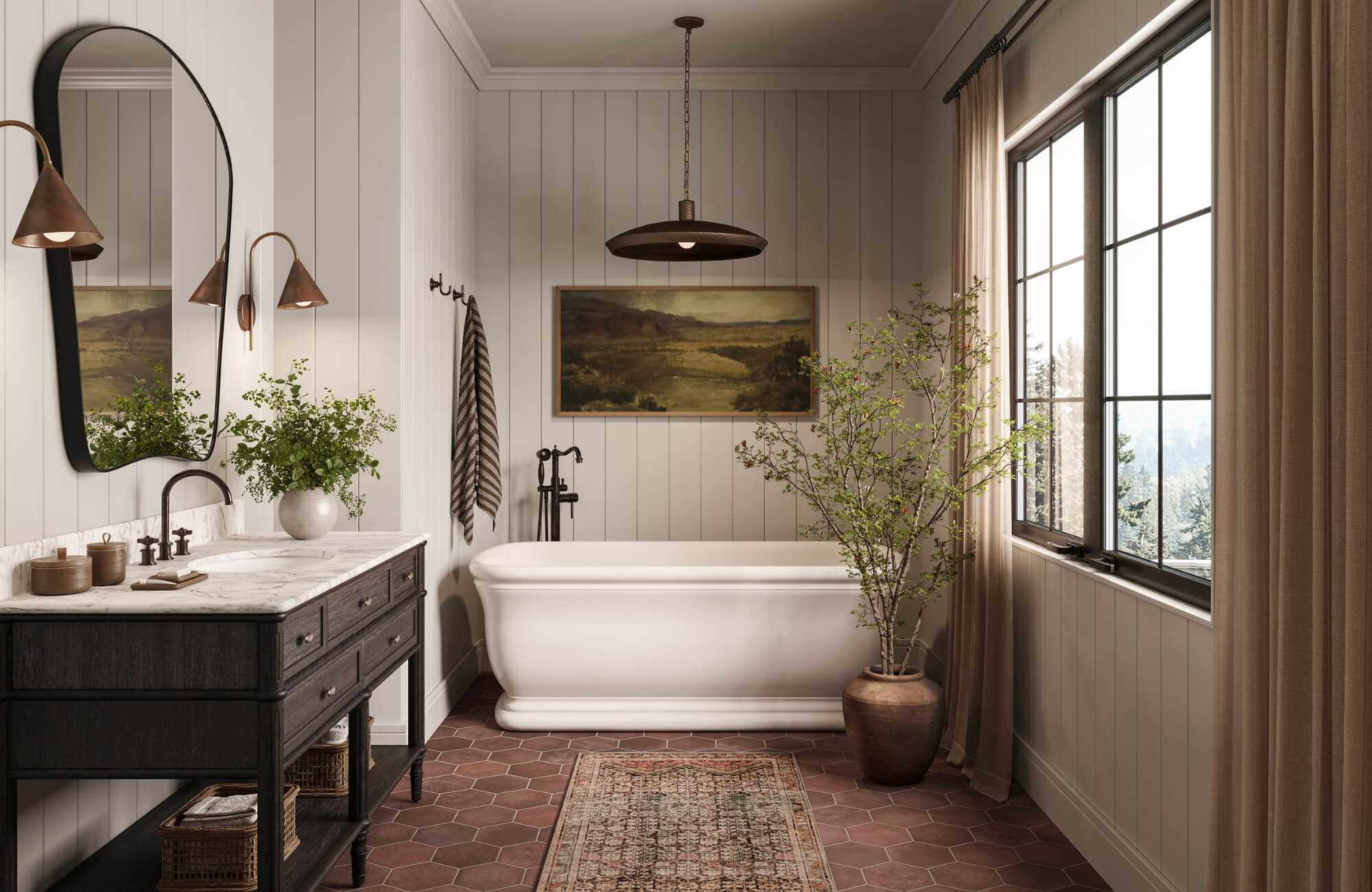
A full hexagon-tiled floor creates a seamless, continuous surface that emphasizes balance and symmetry. The repetition of the six-sided form draws the eye across the room, making smaller spaces appear more structured and expansive. Pairing larger-format hex tiles with a minimal grout joint reduces visual clutter and enhances flow, while high-contrast grout lines can amplify the geometry for a bolder effect.
In the example shown above, Edward Martin’s Juliet 7x8 Hexagon Matte Porcelain Tile in Rust demonstrates how a warm, earthy tone can ground the space while adding character and depth. This layout is especially effective in powder rooms and master baths where a unified foundation sets the tone for the entire design.
Creative Feature Walls and Accents
Hexagon tiles excel in vertical applications, offering an alternative to standard subway or mosaic formats. A tiled feature wall behind a vanity or within a shower niche can function as a focal point, providing texture and depth. Designers often utilize glazed finishes, metallic accents, or gradient color arrangements to highlight the dimensional quality of the pattern. By isolating hexagon tilework to targeted areas, the design feels intentional and artistic rather than overwhelming, allowing the geometry to stand out against smoother adjacent surfaces.
Mixing Tile Sizes for Dynamic Impact
Combining small and large-scale hex tiles introduces visual rhythm and layering, transforming a flat plane into a more dynamic composition. Micro-hex mosaics can be paired with oversized formats to delineate zones within the same space, for example, outlining a shower pan or creating a framed inlay on the floor. This interplay of scale also helps establish hierarchy, guiding the eye naturally to areas of emphasis. The technique is particularly effective when blending matte and glossy finishes, as the variations in size and surface sheen reinforce depth and tactile richness.
Using Grout to Elevate Your Design
Once you’ve established your layout, grout becomes the detail that defines or softens the geometry of your tiles. The right choice can shift your bathroom’s style from bold and graphic to seamless and serene.
High Contrast Grout for Graphic Pop
Pairing a dark grout with light tiles, or vice versa, creates a bold, graphic effect that emphasizes the tile’s geometry. With hexagon tiles, this approach sharpens the six-sided outline, producing a striking honeycomb pattern that adds energy and rhythm to the space. High-contrast grout is especially effective in contemporary or industrial-inspired designs, where visual structure and dramatic definition are desired. It also provides practical benefits, such as masking minor stains or discoloration in busy areas.
Matching Grout for a Seamless Flow
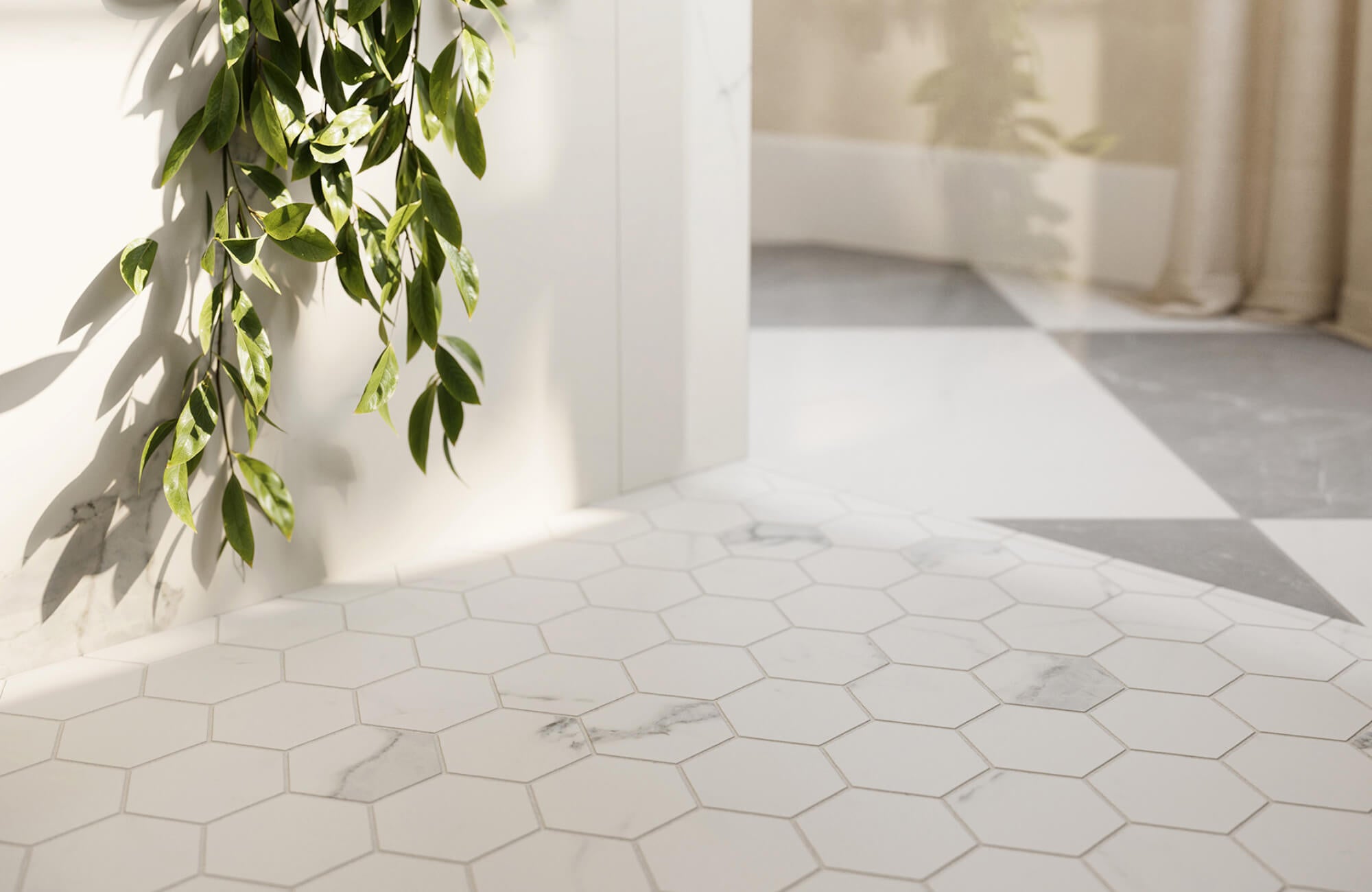
Using a grout color that closely matches the tile surface minimizes the visibility of joints, allowing the tile material itself to take center stage. This technique is particularly effective with natural stone or large-format porcelain hex tiles, where uninterrupted expanses create a sense of fluidity and sophistication.
As shown above, Edward Martin’s Leona 3x3 Matte Porcelain Hexagon Mosaic Tile in Calacatta demonstrates how subtle veining combined with a matching grout line creates a spa-like atmosphere that feels both clean and expansive. Seamless grout blending not only enhances tranquility but also reduces visual segmentation, making compact bathrooms appear larger and more open.
Using Grout to Guide the Eye
Grout can also be strategically applied to direct visual movement across a room. Aligning grout joints with architectural features, such as shower lines, window frames, or vanity edges, reinforces spatial order and draws attention to focal points. Designers sometimes vary grout tone subtly across different zones, using lighter shades to soften transitions and darker shades to anchor the floor. This nuanced technique transforms grout from a background element into a design tool that shapes flow, hierarchy, and balance within the space.
Integrating Texture and Complementary Finishes
After setting the foundation with tile and grout, it’s the surrounding textures and finishes that bring depth and balance. Layering natural elements and surface variations ensures the space feels complete and inviting.
Pairing Hexagons with Natural Stone and Wood
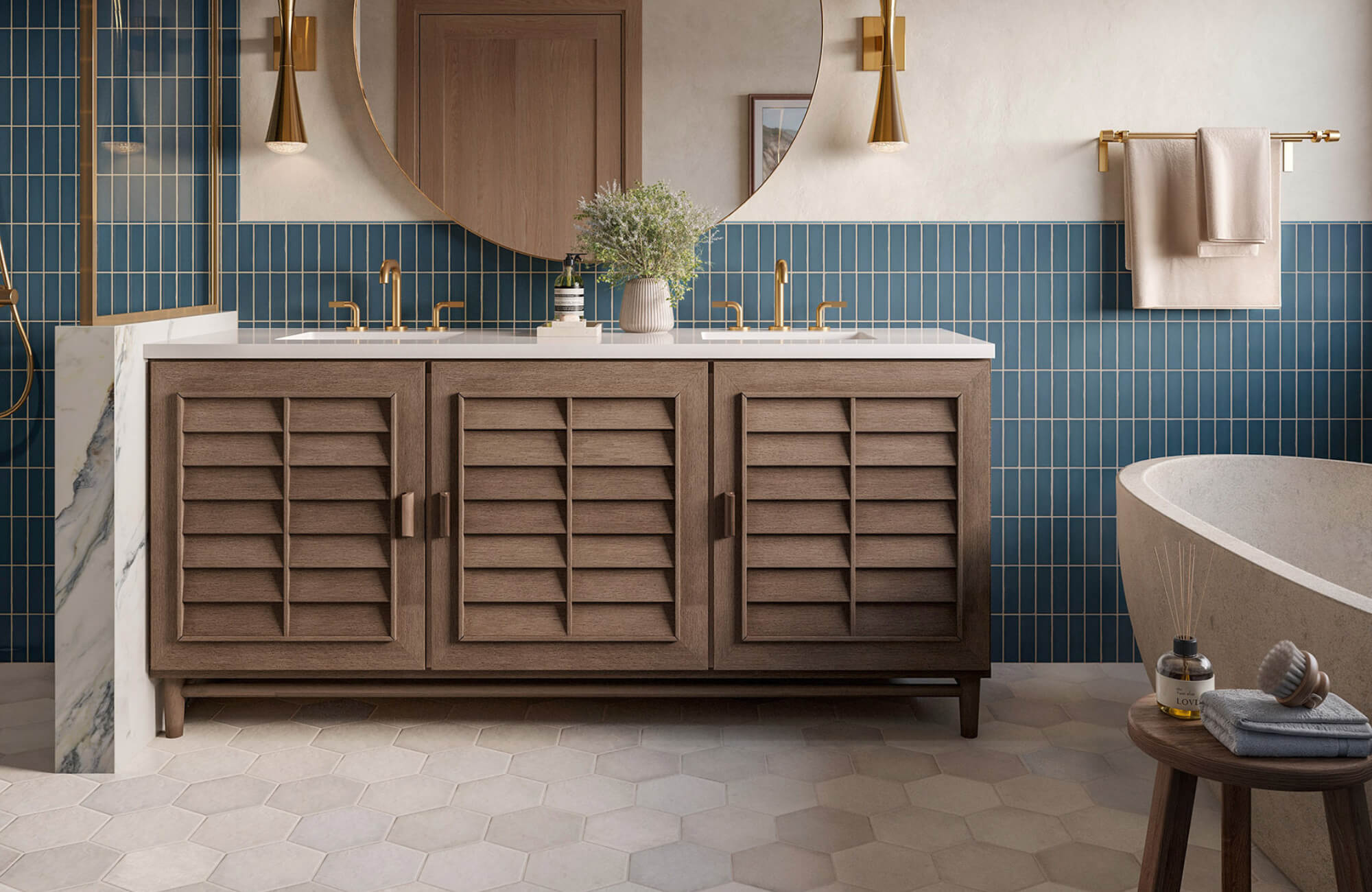
Hexagon tiles pair seamlessly with natural stone and wood to create depth and warmth. For example, matte porcelain hex tiles on the floor can be offset by a marble vanity top, allowing the subtle veining of the stone to complement the tile’s geometry. In the design shown above, Edward Martin’s Juliet 7x8 Hexagon Matte Porcelain Tile in Pearl provides a soft, neutral foundation that balances beautifully with natural wood cabinetry and stone accents.
Incorporating wood cabinetry or furnishings introduces an organic counterpoint, softening the precision of the hexagons with tactile warmth. This combination works especially well in transitional and Scandinavian-inspired interiors, where contrast between sleek geometry and natural materials enhances balance.
Mixing Finishes and Metallics
Combining gloss, matte, and metallic finishes within a hexagon tile scheme adds dimensionality and light play. Glossy hex tiles reflect light, enhancing brightness in smaller bathrooms, while matte finishes create a grounded, contemporary base. Metallic inlays, such as brass or copper hex mosaics, can be integrated as borders, accents, or niche details to introduce a touch of luxury. The interplay between reflective and non-reflective surfaces enriches the overall palette, ensuring the space feels dynamic rather than flat.
The Role of Wall Texture and Paint
Beyond tiles, wall treatments, and paint choices significantly shape how hexagon tilework is complemented. Textured plaster, beadboard paneling, or even a subtle limewash finish can provide a backdrop that contrasts or harmonizes with the tile’s surface. Selecting paint with the right sheen, matte for a soft, understated effect or satin for light reflection, ensures balance with the tile’s finish. Coordinating undertones between tile, paint, and texture prevents visual discord, while purposeful contrast can highlight focal areas such as a feature wall or vanity surround.
Enhancing the Space with Thoughtful Lighting and Fixtures
Texture alone won’t shine without the right lighting and fixtures to highlight it. Thoughtful illumination and well-chosen hardware make every design decision, from tile to finish, stand out with intention.
Layering Light to Highlight Tile Details
A layered lighting plan ensures that hexagon tiles are appreciated to their fullest potential. Ambient lighting provides general illumination, while task lighting, such as integrated LED strips around mirrors, offers precision for daily routines. Accent lighting, including recessed directional fixtures, can be aimed to graze across tiled surfaces, enhancing shadows and emphasizing geometric relief. Warm LED color temperatures (2700K–3000K) bring out the richness of natural stone or wood pairings, while cooler tones highlight glossy or high-contrast finishes for a crisp, modern look.
Selecting Fixtures to Complement Your Style
The finish and form of bathroom fixtures should align with both the tile design and overall aesthetic direction. For example, matte black faucets pair seamlessly with monochrome hex floors in contemporary settings, while brushed nickel or chrome enhances the clean lines of minimalist designs. In more traditional or transitional spaces, oil-rubbed bronze or polished brass can add warmth and character.
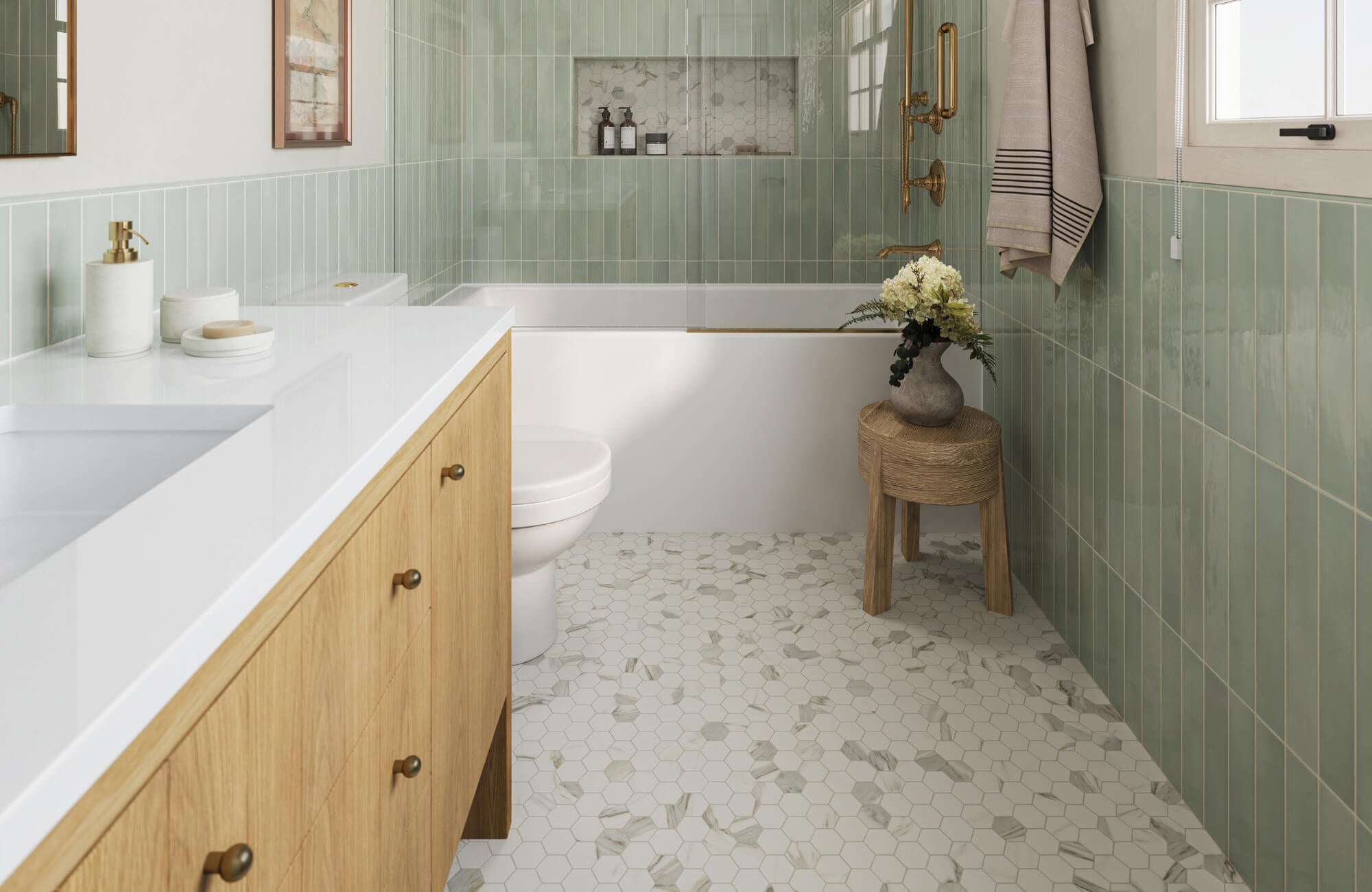
As seen above, Edward Martin’s Aniston 2x2 Matte Porcelain Hexagon Mosaic Tile in Calacatta Top provides a refined foundation where the natural veining of the tile complements brass fixtures, creating a sophisticated balance of elegance and durability. Proportionality also matters; streamlined fixtures help maintain balance in compact bathrooms, while larger statement pieces can ground expansive spaces without overwhelming the tilework.
Sconces and Pendants as Focal Points
Wall sconces and pendant lights serve as both functional sources of illumination and decorative features that anchor the design. Positioned alongside a mirror, sconces eliminate shadows on the face while highlighting adjacent tile details. Pendants, when suspended over a vanity or freestanding tub, create vertical emphasis and draw the eye toward key areas of the room. Designers often use fixtures with diffused glass, perforated metal, or sculptural silhouettes to introduce texture that complements the tile geometry. These elements not only provide necessary light but also act as jewelry within the space, tying together finishes and enhancing visual interest.
Adding the Final Touches with Decor and Furniture
With the core design elements in place, the finishing layer comes from décor and furniture. These details soften the geometry, introduce warmth, and tie the entire bathroom together as a personal retreat.
Curating Towels and Textiles for Softness
Textiles introduce softness and tactile comfort into a room defined by hard surfaces like tile, stone, and glass. Layering plush cotton or Turkish towels in complementary tones reinforces the bathroom’s color scheme, while textured bath mats or woven rugs add visual depth. Subtle patterns, such as herringbone or ribbed weaves, can echo the geometric rhythm of hex tiles without competing for attention. Coordinating textiles across hand towels, shower curtains, and window treatments enhances cohesion and elevates the overall sense of luxury.
Adding Greenery and Natural Elements
Plants and organic materials infuse freshness and biophilic appeal into tiled environments, softening their architectural lines. Low-maintenance greenery like snake plants, pothos, or ferns thrives in humid conditions and adds vertical contrast against tiled walls.
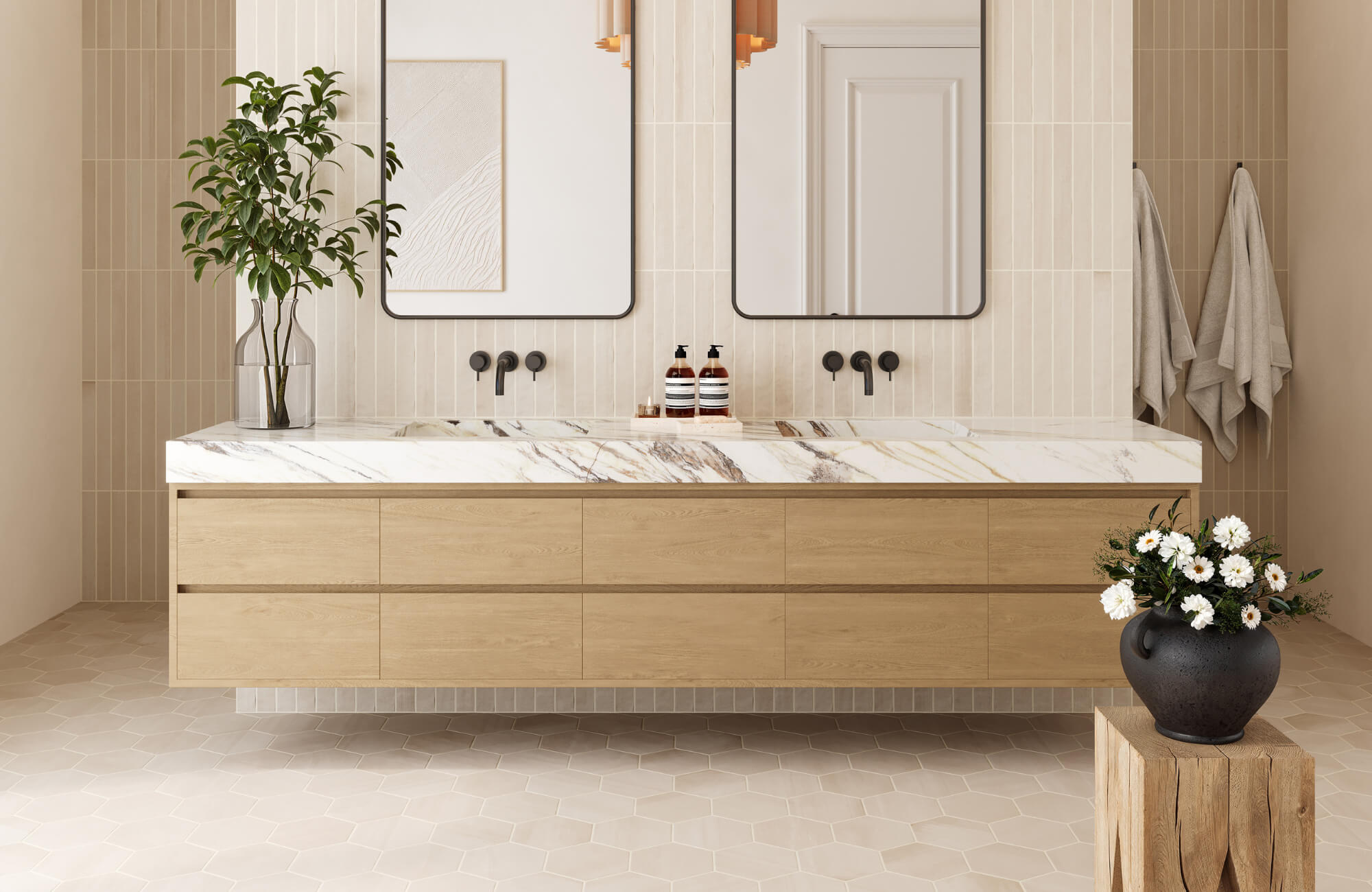
As illustrated above, Edward Martin’s Catalina 7x8 Hexagon Matte Porcelain Tile in Cream provides a soft, neutral base that pairs beautifully with natural wood furniture and potted greenery, enhancing the sense of balance between structure and nature. Complementary elements such as rattan baskets, wooden stools, or stone trays further enrich the palette, ensuring the geometry of hexagons is warmed by organic texture. These additions not only improve aesthetics but can also enhance air quality and contribute to a spa-like atmosphere.
Choosing Furniture and Accessories to Complete the Look
Furniture and accessories serve as functional anchors that tie the bathroom together. A freestanding vanity with clean lines can frame hexagon flooring, while a vintage-inspired cabinet adds warmth to a modern tile scheme. Accessories such as framed mirrors, metallic trays, or sculptural soap dispensers provide finishing touches that reinforce the design’s material palette.
Proportion is also critical as slimline furniture helps maintain openness in smaller bathrooms, while statement pieces like a bold chair or decorative ladder can serve as focal points in larger spaces. By carefully balancing scale, finish, and placement, these elements transform the bathroom into a cohesive and personalized retreat.
The Versatility of Hexagon Tiles
Styling a bathroom with hexagon tiles is an exciting journey that offers endless creative possibilities. By carefully considering the fundamental elements of pattern and scale, and making intentional choices about grout color, you set the stage for your entire design. Edward Martin enhances this process even more with innovative tools designed to bridge inspiration and decision-making. Our Augmented Reality (AR) Visualization Tool allows you to preview different hexagon tile layouts, finishes, and grout combinations in your actual bathroom space, helping you evaluate scale, contrast, and harmony with existing features.
Once you’ve narrowed down your vision, our tile sample ordering feature makes it easy to request physical samples, ensuring the color, texture, and material meet your expectations before installation. Together, these resources empower you to confidently transform concepts into reality.
Follow us on Instagram
@EDWARD.MARTIN
)
)
)
)
)
)
)
)
)
)
)
)
)
)
)
)