



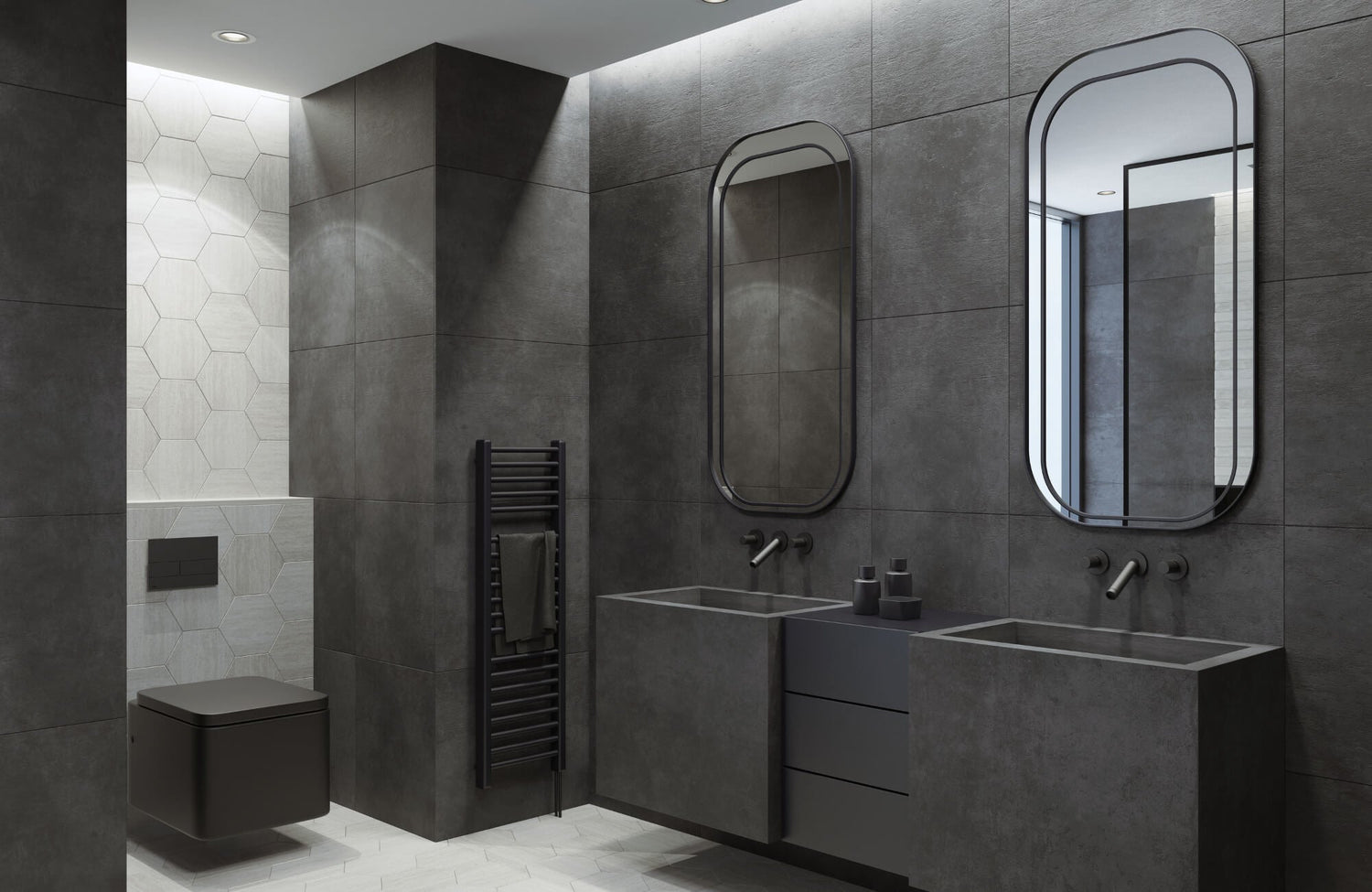
Black tiles bring more than drama to a bathroom; they establish a design-forward foundation that invites bold choices and refined detailing. With their rich, neutral tone, black tiles can anchor a range of styles, from minimalist and contemporary to vintage or Art Deco-inspired.
What sets black tiles apart is their versatility: they can recede or take center stage depending on how they're paired with fixtures, materials, and decor. Whether you're curating a sleek urban retreat or a warm, tactile escape, black tiles offer the creative flexibility to make it your own. In this blog, we’ll explore how to personalize a black tile bathroom through thoughtful combinations of form, function, and finish.

The Allure of Black Tiles
To truly appreciate the appeal of black tiles in bathroom design, it’s important to look beyond their visual impact. From the emotions they evoke to their unmatched versatility, black tiles offer more than just style; they create a canvas for thoughtful, personalized spaces.
The Psychology of Black in Design
At the core of its appeal, understanding the emotional resonance of black is key. In interior design, color psychology reveals that black conveys sophistication, privacy, and groundedness. In bathrooms, its light-absorbing quality fosters a cocooning atmosphere, ideal for spaces meant to feel restorative and serene. Moreover, designers often use black strategically to add drama, reduce visual clutter, and establish a clear visual hierarchy through feature walls, floors, or shower surrounds.
Versatility Across Styles
Moving from mood to style, black tiles adapt seamlessly across design aesthetics, from minimalist to vintage, industrial to transitional. Matte black porcelain suits contemporary spaces with clean lines, while glossy subway tiles or mosaics evoke a more classic feel. Their neutrality allows them to support both stark contrasts and richly layered palettes.
For instance, Edward Martin’s Adeline 24x24 Matte Porcelain Tile in Midnight showcases this versatility. As featured above, its subtle tonal shifts and stone-inspired texture ground the space while pairing effortlessly with finishes like wood cabinetry or brushed brass. As a result, it strikes a balance between modern edge and natural warmth, making it ideal for hybrid design schemes.
Creating a Foundation for Personal Expression
Beyond their stylistic range, black tiles also serve as a flexible foundation for personal expression. Their visual depth supports the layering of eclectic elements, bold accent colors, mixed metals, and artisanal décor, without overwhelming the space. For example, hexagonal floor tiles can set the stage for a bohemian look, while black tiled walls paired with wood vanities and stone countertops blend organic and modern influences. Thanks to their durability and low maintenance, black tiles also invite experimentation with features like sculptural lighting or oversized mirrors, reinforcing their role as both design anchor and creative platform.

Strategic Lighting for Black Tile Bathrooms
Because black tiles absorb rather than reflect light, thoughtful lighting design becomes essential to keep the space feeling balanced and inviting. From practical illumination to atmospheric touches, the right mix of lighting can dramatically enhance both function and mood.
Ambient and Task Lighting Integration
At the foundation of any lighting plan, ambient and task lighting must work in harmony to offset the absorptive nature of black tiles. Recessed LED downlights or flush-mount ceiling fixtures are ideal for general illumination; however, due to the darker finishes, a higher lumen output, typically 70–100 lumens per square foot, is often needed to maintain adequate brightness without glare.
In tandem with ambient lighting, task lighting provides focused visibility for grooming and daily routines. Vertical LED sconces placed on either side of a vanity mirror offer cross-illumination that reduces shadows, while backlit mirrors deliver even lighting with a clean, integrated appearance. Additionally, selecting a color temperature between 3000K and 3500K ensures a soft white glow that flatters both the space and the skin.
Accent Lighting to Highlight Features
Beyond essential illumination, accent lighting introduces visual depth by spotlighting architectural and decorative elements. For example, LED strips installed in recessed niches, beneath floating vanities, or along baseboards can create subtle floating effects that give the room dimension. Directional spotlights are also useful for emphasizing grout lines or unique tile textures, showcasing the craftsmanship behind the material.
Moreover, pendant lights and sculptural fixtures suspended over a tub or vanity provide layered illumination and double as decorative features. For maximum flexibility, dimmable systems allow the ambiance to shift seamlessly, from bright and functional in the morning to warm and relaxing at night, making them especially valuable in spa-inspired or luxury environments.
Natural Light Maximization
Equally important, natural light is essential for balancing the visual weight of black tile. Well-positioned windows, skylights, or solar tubes can flood the space with diffuse daylight, enhancing perceived volume and reducing dependency on artificial light. For privacy, frosted glass or clerestory windows allow illumination without compromising discretion.
In bathrooms with limited natural light, incorporating reflective materials can help optimize what is available. High-gloss tiles, chrome fixtures, mirrors, and glass enclosures all contribute to light dispersion, brightening the space naturally. Additionally, transom windows between rooms can further distribute daylight across enclosed areas.
To take this a step further, tile selection can reinforce the effects of natural lighting. Edward Martin’s Sloane 12x24 Matte Porcelain Tile in Charcoal features a speckled texture and soft matte finish that subtly diffuses light without glare. As seen above, this creates a balanced contrast that makes the room feel both grounded and visually expansive, an ideal solution for compact or low-light bathrooms.

Incorporating Contrasting Materials and Textures
While black tiles create a bold and polished foundation, layering in contrasting materials is key to softening the overall look and adding depth. By blending natural warmth, reflective surfaces, and tactile comfort, you can strike a thoughtful balance between sophistication and livability.
Warm Woods and Natural Elements
As a foundational contrast, warm wood tones like walnut, oak, and teak introduce natural balance that tempers the cool edge of black tile. Commonly used for vanities, open shelving, or wall cladding, these materials bring biophilic comfort and visual depth through grain patterns and warm hues. Moreover, when properly sealed, hardwoods are well-suited to high-moisture environments, offering a balance of durability and beauty.
Expanding beyond wood, other organic elements, such as stone, bamboo, and rattan, can enrich both texture and tone. For example, a travertine countertop or pebble-tiled shower floor introduces tactile variation and soft light reflectivity, cultivating a calm, spa-like ambiance. Together, these earthy additions prevent visual monotony while complementing the strong presence of black tile.
Metallic Accents and Fixtures
To introduce contrast with a touch of polish, metallic finishes offer a sleek counterpoint to the grounded nature of black tiles. Fixtures in brushed brass, polished nickel, or oil-rubbed bronze can either warm up the palette or reflect light for added brightness, depending on the tone and surface finish. When combining multiple metals, it’s important to maintain consistency in sheen (e.g., all brushed) and temperature (warm vs. cool) to achieve a cohesive look.
Furthermore, metals can be repeated through hardware elements such as drawer pulls, towel bars, or shower door frames to create a sense of continuity. For instance, Edward Martin’s Mikayla 5x5 Glossy Ceramic Tile in Espresso above features a handcrafted, high-gloss surface that pairs beautifully with gold-toned accents. Its reflective quality enhances the brightness and sophistication of metallic fixtures, reinforcing their role as key visual features.
Plush Textiles and Soft Furnishings
Finally, textiles are instrumental in balancing out the harder, more formal surfaces found in a black tile bathroom. High-pile cotton towels, woven rugs, and upholstered stools introduce tactile softness and physical comfort. Neutrals such as ivory or taupe offer gentle contrast, while deeper jewel tones, like emerald, sapphire, or burgundy, enhance the moodiness of the palette.
In addition, fabric window treatments in linen or cotton help diffuse natural light and soften architectural lines. Layering a variety of textiles, such as waffle-weave towels, velvet cushions, and wool throws, adds richness and seasonal versatility. These furnishings not only elevate day-to-day comfort but also provide an easy path for personalization without requiring structural changes.

Adding Pops of Color and Art
Even in the most refined black tile bathrooms, a touch of color or creative expression can shift the entire mood of the space. Whether subtle or bold, these personal additions bring warmth, energy, and individuality to an otherwise grounded palette.
Bold Color Choices for Impact
As a first step toward energizing the space, bold color infusions create deliberate contrast and prevent black tile spaces from feeling flat or one-dimensional. Accent colors like mustard yellow, emerald green, or cobalt blue work especially well in matte or satin finishes, which pair naturally with the soft texture of black tiles. Whether applied to cabinetry, painted walls, or accessories, these tones can define focal zones without overwhelming the room.
For a more architectural approach, a freestanding tub in deep plum or forest green can become a dramatic centerpiece that enhances the room’s richness. Additionally, colored tile inserts or decorative ceramics add layered depth to otherwise monochromatic walls. To maintain cohesion, it’s important to consider the undertones of your black tile; cool blacks harmonize with silvers and blues, while warm blacks are elevated by rusts and golds.
If pattern offers the desired level of visual intrigue, Edward Martin’s Leona 24x24 Checkerboard Matte Porcelain Tile in Calacatta and Nero Marquina provides striking impact. As displayed in the floor installation above, its bold geometry and marble-inspired veining energize the floor while anchoring warm or neutral accents with timeless elegance.
Artwork and Wall Decor
In addition to color, artwork offers another powerful medium for personalization. Large-format pieces can balance the visual weight of black tile, while grouped prints or mixed-media works add an eclectic, gallery-like feel. Materials and framing choices, whether matte black, metallic, or natural wood, can either contrast with or subtly echo the surrounding finishes.
Moreover, artwork introduces not just visuals but story and atmosphere. From abstract compositions to typographic prints and handcrafted wall hangings, each piece contributes a layer of texture and emotion. For bathrooms prone to humidity, waterproof options such as resin-sealed canvases or glass-mounted prints are ideal. These additions help soften hard surfaces and reinforce a curated, lived-in ambiance.
Greenery and Living Elements
Finally, botanical décor brings both vitality and softness to black tile bathrooms. Plants like ferns, pothos, or peace lilies offer fresh contrast to dark finishes while also improving air quality and fostering a calming, biophilic environment. Especially when paired with matte or stone-look tiles, greenery introduces organic texture and warmth.
For even greater design alignment, planters can be tailored to the room’s style, metallic or concrete vessels suit modern aesthetics, while terracotta or woven baskets feel more natural and relaxed. Vertical gardens, wall-mounted planters, and preserved moss installations also make great use of limited space, particularly in spa-inspired or wellness-oriented bathrooms.
To support these design decisions, Edward Martin’s Augmented Reality (AR) Visualization Tool allows you to preview how specific tiles will appear in your actual bathroom, alongside your greenery, finishes, and fixtures. With a simple tap of the “View in Your Space” button, tiles can be virtually overlaid into your room. Once you’ve found the perfect match, real samples can be ordered and delivered to ensure both visual and tactile confidence in your final selection.

Personalizing with Fixtures and Hardware
Personalization doesn’t stop at tile choice; it's often the smaller details, like fixtures and hardware, that bring a space to life. Thoughtfully chosen elements not only enhance function but also add character, making even the most minimalist black tile bathroom feel distinctly yours.
Faucets and Shower Systems
As a first layer of personalization, faucets and showers serve as both functional necessities and visual focal points. Finishes like brushed brass, polished chrome, matte black, and oil-rubbed bronze can either complement surrounding tile or create intentional contrast. In a monochrome setting, for instance, a matte black faucet on glossy black tile delivers sleek cohesion, while warm-toned fixtures add depth and visual variation.
Moreover, the form of each fixture contributes to the room’s personality. Wall-mounted faucets and waterfall spouts lend a clean, modern feel, whereas bridge or cross-handle designs suggest a more traditional or transitional aesthetic. Thermostatic shower systems with rainfall heads and hand showers elevate both luxury and precision, while concealed controls help maintain a streamlined look. Additionally, eco-conscious designers should prioritize flow rate, aerators, and fixtures that meet sustainability benchmarks such as LEED certification.
To amplify their effect, pairing standout fixtures with equally compelling tile creates a layered and dynamic space. For example, Edward Martin’s Kira 12x12 Satin Ceramic Tile in Striped Dots Black, featured behind the sink, combines subtle texture with graphic punch. Its satin finish reflects ambient light softly, drawing attention to surrounding metallic fixtures without overwhelming the space.
Vanity and Storage Solutions
In addition to fixtures, vanities significantly shape the bathroom’s character. Floating designs are ideal for smaller spaces, creating visual openness while often incorporating under-cabinet lighting for added utility. Meanwhile, natural wood tones such as walnut or white oak bring warmth to black tile’s cool sophistication, while bold hues like navy or burgundy introduce personalized contrast.
For a more traditional look, freestanding vanities with furniture-like detailing and stone countertops, such as Carrara marble or veined quartz, introduce both elegance and durability. Just as important as aesthetics, however, are the internal storage solutions that promote organization. Integrated features like pull-out trays, recessed medicine cabinets, and drawer organizers maintain a clutter-free space, ensuring that form and function work hand in hand. When juxtaposed with dark tile, these elements help balance the bathroom’s visual and practical needs.
Unique Hardware and Accessories
Rounding out the personalization process, even the smallest details, such as drawer pulls, towel bars, and toilet paper holders, carry considerable influence in a black tile setting. Mixed metals, like pairing matte black towel hooks with brushed nickel pulls, add subtle complexity and dimension. Meanwhile, artisanal hardware options, like iron handles, ceramic knobs, or leather-wrapped pulls, introduce texture and individuality.
Furthermore, maintaining a consistent finish and silhouette across fixtures helps create a cohesive look, while selective variation in scale or shape adds rhythm and visual interest. Accessories like acrylic trays, wall-mounted baskets, and custom shelving provide opportunities to tailor the space without committing to permanent architectural changes. This flexibility is ideal for evolving tastes or seasonal updates, allowing the bathroom to adapt over time.
The Art of Personalizing with Black Tile
In the end, personalizing a black tile bathroom goes far beyond aesthetics. It involves a thoughtful layering of light, texture, and material to transform a strong visual statement into a fully functional, expressive space. From warm wood finishes and sculptural fixtures to calibrated lighting and vibrant accents, every element contributes to shaping mood and purpose.
Ultimately, when technical precision meets creative vision, black tiles evolve from a simple backdrop into the centerpiece of a cohesive design. For those looking to craft a bathroom that reflects both elegance and individuality, Edward Martin offers the inspiration, tools, and materials to bring that vision to life.


