Choosing the right mirror size isn’t just about looks; it’s about creating a space that feels balanced, functions well, and supports your everyday routine. Whether you're into a full renovation or just refreshing your bathroom, getting the mirror proportions right can instantly elevate the space. We’re here to guide you through six practical, easy-to-follow angles to help you pick the mirror that fits both your vanity and your lifestyle.

Matching Mirror Size to Vanity Dimensions
When it comes to choosing the right mirror, it all starts with your vanity. The mirror should feel like a natural extension of it; balanced, well-proportioned, and thoughtfully placed. Getting this pairing right sets the tone for a bathroom that feels cohesive and works beautifully for your everyday use.
Width Guidelines
When choosing your mirror, think of it as your vanity’s visual companion. Ideally, it should span about 70 to 90 percent of the vanity’s width. This range creates a sense of balance and keeps the mirror aligned without overwhelming the vanity or getting lost on the wall. If the mirror is too wide, it can crowd the space and make the area feel tighter, especially in a smaller bathroom.
On the other hand, a mirror that's too narrow might seem disconnected and won’t offer enough reflective surface for everyday use. What you’re aiming for is a size that complements the vanity, enhances the wall, and feels just right. That’s where we come in, to help you find that comfortable middle ground where form meets function.
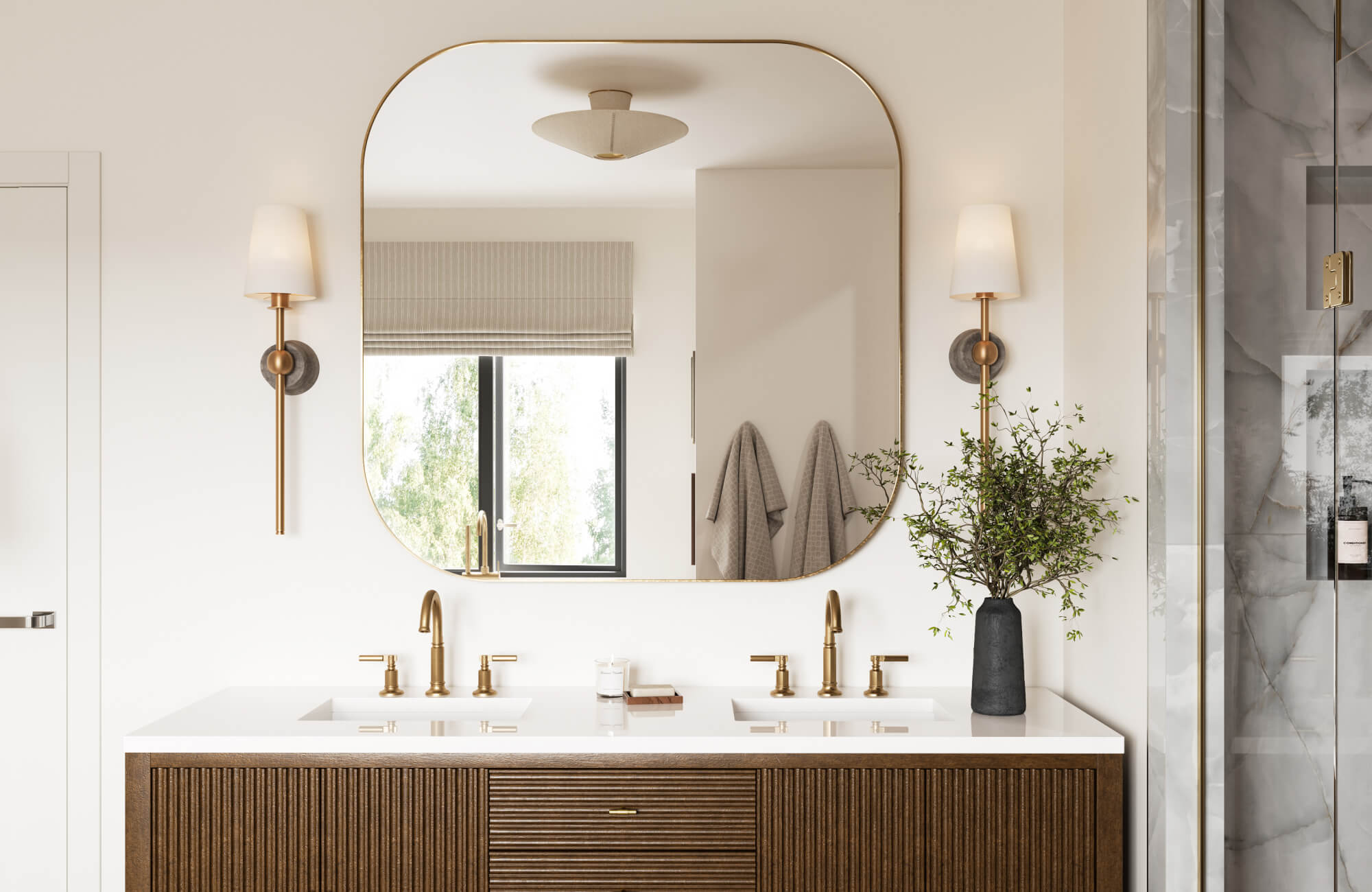
A great example is Edward Martin’s Tristan Square Mirror in Polished Brass, as featured in the photo above. Its width is perfectly scaled to the double-sink vanity, occupying enough horizontal space to create harmony without overwhelming the design. The mirror extends just wide enough to feel integrated while still allowing room for sconces on either side, preserving balance and giving each element space to shine. It’s a clear example of how the right mirror width can pull a bathroom together with intention and ease.
Mirror Height and Vertical Balance
When deciding how tall your mirror should be, it’s about more than just visual harmony; it also needs to suit the layout of your space. In bathrooms with high ceilings, a short mirror can make the wall feel unfinished, while in rooms with lower ceilings, a tall mirror might feel overwhelming or out of place. The ideal height gives a clear view of your upper body while still leaving comfortable space above the faucet and below any lighting. Striking that balance can make the mirror feel well-proportioned, practical, and thoughtfully placed.
Framed vs. Frameless Impact
Framed and frameless mirrors don’t just differ in appearance; they also affect how the mirror fits within your space. A frame adds more visual weight and occupies more wall space than many people realize; it’s an easy detail to overlook during the planning. As you calculate the right dimensions, it’s important to factor in the additional width and height that a frame brings.
A framed mirror should have enough breathing room on all sides to avoid feeling cramped, especially if it’s placed near cabinets, sconces, or shelving. In contrast, frameless mirrors offer a cleaner, more minimal look and can often be sized slightly wider without overwhelming the wall. This makes them a smart choice if you’re working with limited space or want a more streamlined finish. Ultimately, whether you choose a framed or frameless design, the goal is to find a mirror that fits your space effortlessly, both in terms of size and overall style.

How Mirror Size Affects Light and Reflection
The size of your mirror also impacts how light moves through your bathroom. A well-proportioned mirror can brighten the space, improve visibility, and make the entire room feel more open and inviting. Choosing the right size helps you make the most of both natural and artificial light.
Mirror Size and Light Distribution
One of the key benefits of a larger mirror is its ability to reflect light more effectively across the entire room. In bathrooms with limited natural light, a wider mirror can bounce illumination from overhead fixtures or nearby windows, helping the space feel more open and refreshed. It also reduces shadowy corners and helps diffuse light evenly across the room.
On the other hand, a smaller mirror limits that reach, often concentrating light in a narrow zone that can feel dim or uneven. If you're aiming to brighten your vanity area without adding more fixtures, increasing your mirror size can be an easy and impactful fix that instantly improves both lighting and overall comfort. Still, in compact spaces, a well-placed smaller mirror, like Edward Martin’s Esmeralda Small Mirror in Polished Brass, as displayed in the photo above, can also make a meaningful difference. Its refined silhouette and strategic positioning help reflect both natural and artificial light, subtly enhancing brightness without overwhelming the wall.
Coordinating with Light Fixtures
Your mirror and lighting fixtures should work in harmony, not compete for space. If your mirror is flanked by sconces or positioned near pendant lights, selecting the right size is also key to maintaining a balanced, uncluttered look. Ideally, leave about three to five inches of space between the edge of the mirror and any adjacent lighting. This small buffer helps the wall feel open and ensures each piece has room to stand out.
When a mirror is too large, it can crowd nearby fixtures and disrupt the visual balance of the wall. To avoid that, choose dimensions that allow the mirror to sit comfortably within its space, giving your lighting room to function effectively while keeping the entire wall polished and well-proportioned.
Mirror Shape and Light Flow
The shape of your mirror also plays an important role in how light moves through the room. Rounded and oval mirrors tend to diffuse light more softly, reducing glare and easing the intensity of strong overhead fixtures. This creates a gentle, even glow that can make the bathroom feel calm and more inviting.
In contrast, rectangular mirrors produce a more direct, focused reflection, which is ideal if your space requires sharper visibility or a brightness boost. Ultimately, the shape you choose should complement not only your design preferences but also the kind of lighting effect you want to create, helping your mirror feel both purposeful and perfectly placed.

Considering Bathroom Layout and Wall Space
It’s easy to focus solely on the vanity when choosing a mirror, but the mirror needs to fit the entire bathroom, not just the counter below it. That’s why we always take a step back and look at the bigger picture. How your mirror sits on the wall and interacts with the rest of the room can dramatically affect how the space looks and feels.
Wall Width Constraints
When choosing a mirror, it’s not just about matching the vanity; it’s also about how the mirror fits the wall around it. Sometimes, even if a mirror technically suits your vanity size, the wall might not offer enough breathing room. Narrow walls, door frames, or nearby fixtures can make a mirror feel crammed, even when the width is proportionate to the vanity itself. In these cases, selecting a slightly narrower mirror also helps the room feel more open and prevents the layout from looking forced.
A great example is Edward Martin’s Clancy Small Arch Mirror in Antique Brass, as shown in the photo above. Its modest width and elegant arched shape make it an ideal fit for narrower wall areas, like the one shown here. The mirror leaves just enough space between the door, vanity, and surrounding fixtures to keep the layout feeling open and visually balanced—proof that sometimes, sizing down can elevate the entire room.
Fixed Architectural Boundaries
In some cases, your bathroom’s layout sets clear limits on where a mirror can be placed. Backsplashes, wall trim, tile borders, or decorative paneling often define the visual boundaries of the wall. If the mirror overlaps these details, it can look awkward or feel like an afterthought, even if it technically fits the space.
To keep a clean and cohesive design, the mirror should align neatly above or within these fixed features. Taking these architectural elements into account also ensures your mirror placement feels intentional, not accidental, bringing a sense of structure and purpose to the entire wall.
Adjacent Elements
Your mirror doesn’t exist in a vacuum; it needs to work in harmony with everything else on the wall. Nearby shelves, towel bars, windows, or cabinetry can all influence the space you have to work with. When a mirror is too wide or tall, it can encroach on these features, making the layout feel crowded or visually off balance.
Instead, it’s important to leave enough space so that each element has room to breathe and function comfortably. Thoughtful spacing brings clarity to the design and also makes the whole bathroom feel more intentional, ensuring your mirror looks integrated, not improvised.

Balancing Style with Practicality
When choosing how big a mirror should be over your vanity, it’s not just about how it looks; it’s also about how well it works for you. The right size should support your daily routine, suit the practical needs of your bathroom, and feel like a natural fit for the space you use every day.
Minimalist vs. Statement Mirrors
If your vanity has a clean, understated design, a large mirror with simple lines can amplify the minimalist look without distraction. It extends the openness of the space and adds visual clarity. But in a bathroom with bold patterns, strong textures, or vibrant colors, a massive mirror might compete rather than complement. In cases like these, a slightly smaller mirror with a subtler profile can bring visual balance. The right size also helps the mirror blend into the design or stand out, whichever your space truly calls for.
Edward Martin’s Tristan Round Mirror in Polished Brass, as pictured above, is a perfect example. Its generous size and sleek silhouette pair effortlessly with the minimalist vanity, expanding the visual width while keeping a clean and cohesive look. It makes a subtle statement without overpowering the design, showing how the right size and shape can beautifully elevate a simple space.
Mirror Pairing with Vanity Style
The size of your mirror should reflect the personality of your vanity. A sleek, modern vanity usually looks best with a wider, frameless mirror, which elevates its streamlined, minimalist vibe. On the other hand, a traditional or vintage-style vanity often pairs more naturally with a slightly smaller mirror that features curves, detailing, or a decorative frame. Choosing a mirror that aligns with your vanity’s style, not just its dimensions, also helps create a cohesive and visually satisfying setup.
Functionality in Shared Vanity Spaces
Mirror size matters even more when you’re working with a double vanity or sharing the bathroom with someone else. In setups like these, the mirror, or mirrors, need to give both users enough space and visibility without making the area feel crowded. One large mirror can create a seamless, unified look across both sinks, while two separate mirrors add symmetry and give each person their own space, especially when paired with individual lighting. What counts is ensuring the mirrors line up well with the sinks and offer enough reflection for your daily routines.

Getting the Right Fit and Placement
Choosing the right mirror size is important, but how you position it can make just as much of a difference. Even a perfectly sized mirror can feel off if it’s hung too high, sits too low, or doesn’t suit the layout of your space. From standard setups to double vanities and custom wall conditions, getting the placement right ensures your mirror not only works with the space but feels like it truly belongs there.
Mirror Placement Tips
Positioning your mirror correctly makes all the difference. Hanging it five to ten inches above the sink gives you room to prevent water splashes and keeps the faucet area comfortably clear. The center of the mirror should be about sixty inches from the floor, which is typically eye level for most adults. A mirror placed at the right height feels natural, provides good visibility, and keeps the entire wall looking balanced.
Edward Martin’s Esmeralda Wide Mirror in Iron Matte Black, as featured in the photo above, is a great example of thoughtful placement. Its arched design sits comfortably above the double vanity, leaving just enough space above the faucets while aligning beautifully with the surrounding sconces. The result is a mirror that feels centered, proportionate, and seamlessly integrated into the room’s overall layout.
Adjusting for Double Vanities
When it comes to double vanities, two main mirror setups work well. One option is to install a single-wide mirror that spans both sinks, creating a seamless and unified look across the entire vanity. The other approach is to hang two separate mirrors, which can introduce more character and give each user a defined, personal space. Both layouts can look great, but they also require different measurements and spacing to feel balanced and function comfortably in daily use.
Custom-Cut Options
Sometimes, a standard mirror size just isn’t the right fit, especially in bathrooms with unusual layouts. If your space includes sloped ceilings, built-in shelves, or off-center lighting, a custom-cut mirror can also offer the flexibility you need. These mirrors are made to precise dimensions, allowing you to work around outlets, backsplashes, and architectural details that standard sizes simply can’t accommodate.

How Shape and Frame Influence the Perception of Mirror Size
Shape and frame might seem like simple design choices, but they can dramatically change how large or small a mirror feels over your vanity. Two mirrors with identical dimensions can appear completely different based on their silhouette or frame thickness. That’s why the shape and frame you choose aren’t just about style; they can also influence how the mirror is visually read within the space.
How Shape Affects the Look of Size
Mirror shape changes the way size is perceived above your vanity. A tall, narrow mirror naturally draws the eye upward, making ceilings seem higher and the mirror feel larger vertically, even if it isn’t wide. A wide mirror, by contrast, expands the view side to side and makes the vanity area feel more spacious. Choosing a shape that suits your room’s proportions can also make the mirror appear larger than its actual size, or keep it feeling understated when that’s what the space calls for.
Edward Martin’s Rory Mirror in Matte Black, as displayed in the photo above, is a perfect example of how an organic shape can shift perception. Its soft, asymmetrical curves give a sense of openness without overpowering the wall, making the vanity feel more spacious and relaxed. This kind of silhouette is ideal when you want a mirror that feels thoughtfully sized while still adding personality to the room.
What Frame Thickness Does to Scale
Frame thickness can also impact how large or small a mirror feels over your vanity. A thick, bold frame adds visual weight, which can make the mirror seem smaller than it is, especially in a tighter space where every inch counts. In contrast, a thin frame or a frameless design keeps things light and open, allowing the reflective surface to take center stage. So if you're trying to maximize visual size without overwhelming the wall, a lighter frame is often the smarter choice.
Choosing a Frame Finish That Fits In
The finish may not impact the actual size of your mirror, but it plays a role in how naturally the mirror fits into your bathroom’s overall design. When the frame echoes the tones of your faucet, cabinet hardware, or lighting, it creates a sense of cohesion that makes the mirror feel connected. A finish that clashes, however, can make even a well-sized mirror feel out of place. Choosing the right frame finish ties the whole space together and helps your mirror feel effortlessly integrated.
Choosing the Right Mirror Size for Your Vanity
Deciding how big a mirror should be over your vanity involves more than just measurements; it’s about finding the right balance, proportion, and how well the mirror fits within the flow of your space. By considering layout, lighting, style, and placement, you can confidently choose a mirror that enhances both function and design. Now that you know what to look for, you’re ready to pick a mirror that not only fits the wall but also pulls your bathroom together with purpose.
If you’d like a second opinion or help narrowing down your options, we’d love to hear from you. Contact us anytime or book a design consultation, and we’re here to help you find a mirror that’s the perfect fit in every way!