A bathroom vanity is more than a utilitarian fixture—it is the centerpiece that defines both style and daily functionality. Whether you choose a single vanity for its streamlined elegance or a double sink vanity for its convenience and luxury, the right design transforms the way you interact with the space. For instance, a thoughtfully scaled vanity enhances flow, optimizes storage, and sets the aesthetic tone of the entire bathroom. In addition, details such as countertop usability, cabinetry design, and plumbing configuration influence not only how the vanity looks but also how it performs over time. Ultimately, the decision between a single and double sink vanity shapes both the character of your bathroom and the comfort of your everyday routine.

Space Efficiency and Layout Planning
A vanity’s size dictates how comfortably a bathroom can be used and how well it maintains balance. Therefore, considering clearance, circulation, and proportion is essential to ensure the vanity enhances the space rather than restricts it.
Standard Dimension
A single sink vanity typically measures 24 and 48 inches wide, making it highly effective for compact bathrooms and powder rooms. In contrast, double sink vanities usually range from 60 to 84 inches wide, requiring more generous wall space to accommodate proper installation. As a result, choosing the correct width ensures accessibility while preventing awkward gaps that disrupt proportion.
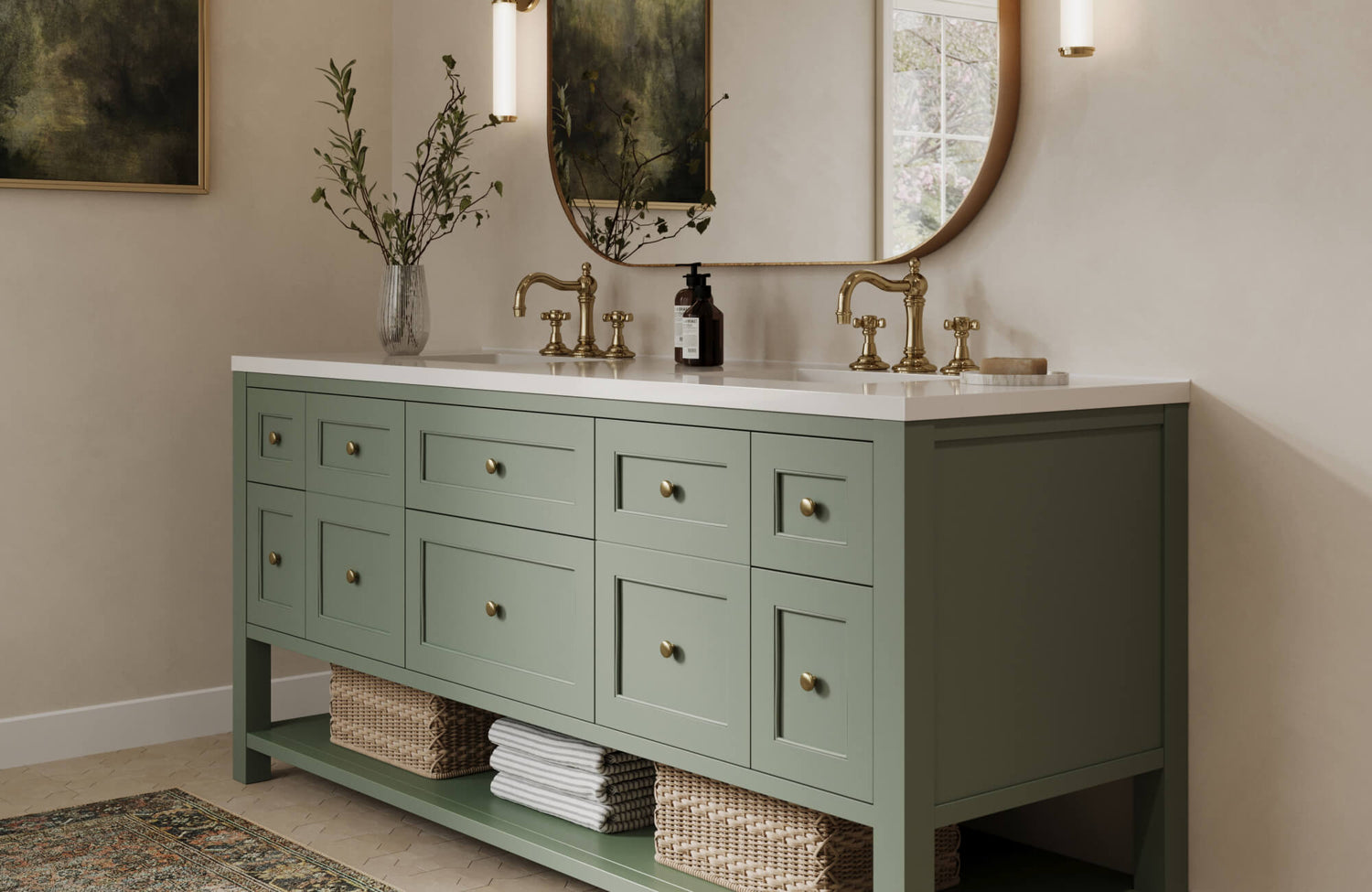
For example, a few additional inches can enhance the openness and balance within the layout in a spacious bathroom. A great illustration of this balance, as displayed in the picture above, is Edward Martin’s Trisha 72" Double Vanity in Whitewashed Walnut with 3 cm White Zeus Quartz Top, which offers expansive dual-sink functionality while maintaining elegant proportions suited for larger bathrooms. When properly scaled, the vanity visually anchors the space without overwhelming it. Ultimately, proportional width contributes to both functionality and overall design harmony.
Circulation and Flow
The National Kitchen & Bath Association (NKBA) recommends maintaining at least 30 inches of clearance in front of a vanity to ensure ease of movement. In practice, this means single vanities often work better in compact bathrooms since they leave more floor space open. Double vanities, however, must be carefully positioned to avoid congestion and movement bottlenecks. Without adequate clearance, even large bathrooms can feel restrictive, which diminishes comfort and usability. In addition, sufficient space around the vanity helps create a more ergonomic environment for daily routines. Consequently, thoughtful circulation planning not only improves function but also enhances the user experience.
Proportional Design
The scale of the vanity should complement the overall size of the bathroom for both comfort and aesthetics. For instance, a large single sink vanity in a small space can dominate the room and reduce openness. Conversely, a small vanity in a spacious master suite may look undersized and fail to anchor the layout. Therefore, aligning vanity size with ceiling height, wall length, and placement of fixtures ensures visual balance. Moreover, double sink vanities can add a sense of luxury, but should be scaled back if the wall dimensions are too limited. When proportions are well-balanced, the vanity integrates seamlessly into the bathroom’s design.

Plumbing and Installation Requirements
While style often takes center stage, plumbing and installation are the technical backbone of vanity choice. Considering drainage systems, water supply lines, and installation logistics ensures the vanity is both functional and sustainable.
Plumbing Complexity
A single sink vanity requires just one drain line, one trap, and one pair of supply lines, which makes installation straightforward and cost-effective. By contrast, a double sink vanity requires two drains, two traps, and expanded supply lines, which inevitably increases labor complexity. In addition, some building codes mandate extra venting when adding a second sink. These technical demands not only raise costs but also extend project timelines. For example, a simple remodel may become significantly more complex if plumbing must be relocated. As a result, homeowners often find single vanities to be the more budget-friendly and practical choice.
Retrofit vs. New Construction
Converting a single sink vanity into a double during a remodel often means opening walls, rerouting pipes, and adding shut-off valves. This process can be time-consuming and expensive, which is why many homeowners hesitate to retrofit. In new construction, however, plumbing is frequently pre-planned to support a double vanity from the start. As a result, builders can install dual drains and supply lines efficiently without dramatically increasing costs. For remodels, it is important to weigh whether the added benefits justify the additional work. By contrast, in new builds, a double vanity installation is generally seamless and cost-effective.
Maintenance Considerations
With more fixtures comes greater maintenance responsibility. For example, a double vanity doubles potential problem points with two drains, two traps, and two faucets. This often results in more frequent clogs and additional upkeep in busy households. A single vanity, however, remains simpler to maintain and easier to troubleshoot. Moreover, fewer fixtures typically translate into lower long-term costs and less frequent repairs. Therefore, evaluating maintenance demands in advance ensures that the vanity remains both practical and reliable over time.

Storage Capacity and Countertop Functionality
A vanity is not only a sink base—it is also a critical storage hub and work surface. Therefore, how sinks are integrated into the cabinetry and countertop directly determines organization and usability.
Cabinetry and Drawer Systems
Single sink vanities generally offer modest storage space, often limited by central plumbing cutouts. Double sink vanities, however, provide wider cabinetry with room for pull-out organizers, drawer inserts, or shelving systems. As a result, households benefit from expanded and customizable storage solutions.
For example, the Colton 48" Single Vanity in Sable with 3 cm White Zeus Quartz Top demonstrates how thoughtful design can maximize storage in a compact footprint, with a mix of drawers, compartments, and hidden sections that keep essentials neatly organized (as shown in the image). In addition, the ability to designate compartments to different users also reduces clutter and conflict. For families or couples, this separation is often invaluable in keeping routines efficient. Ultimately, well-designed cabinetry transforms the vanity into a highly functional storage center.
Countertop Usability
Countertop space is one of the most important aspects of bathroom convenience. With a single sink vanity, more surface area remains available since only one sink disrupts the counter. This leaves ample room for toiletries, grooming tools, or decorative accessories. In contrast, a double sink vanity sacrifices significant counter real estate to accommodate the second basin. As a result, households prioritizing countertop usability may prefer a single vanity. Balancing the need for dual sinks with counter functionality ensures a vanity that fully supports daily use.
Personalized Organization
A double sink vanity excels in shared bathrooms by giving each user their own sink and storage area. For example, couples with overlapping routines can avoid conflicts by having individualized zones. In addition, this setup helps streamline organization, since each side can be arranged according to personal preferences. Single sink vanities, while more compact, encourage creative solutions such as vertical shelving or countertop trays. These methods make a shared organization effective, even in smaller spaces. Ultimately, the decision reflects whether a household values individualized convenience or collective efficiency.

Cost, Resale Value, and Long-Term Investment
The choice between a single or double vanity carries implications beyond initial purchase. Considering both immediate expenses and future property value ensures the decision remains financially sound.
Initial Costs
Single sink vanities are generally more affordable due to smaller cabinetry, fewer fixtures, and simpler plumbing requirements. In addition, smaller countertop slabs are less expensive compared to the expansive surfaces required for double vanities. By contrast, double sink vanities involve higher material and labor costs due to dual sinks and faucets. Retrofitting plumbing for a second basin can further inflate expenses in remodel scenarios. Even when luxury finishes are added, single vanities remain more budget-conscious. For cost-sensitive projects, this makes them a highly attractive choice.
Return on Investment
In many real estate markets, double sink vanities are perceived as a desirable upgrade, particularly in master bathrooms. Buyers often view them as a symbol of convenience and luxury, which increases a home’s appeal. As a result, homes featuring double vanities frequently attract more interest and stronger offers. By comparison, a single sink vanity may seem limiting in larger or high-end homes. The presence of a double vanity can also differentiate a listing in competitive neighborhoods. Therefore, resale-focused homeowners often find double vanities a worthwhile investment.
Long-Term Value
While single sink vanities reduce initial costs, they may not always meet long-term household demands. In busy homes, the convenience of dual sinks often outweighs the higher installation expense.
For example, families with multiple users benefit from minimized morning congestion. A strong example of this balance between style and long-term practicality is the Sasha 60" Double Vanity in Mid Century Walnut with 3 cm White Zeus Quartz Top, as shown in the photo above, which combines timeless design with durable functionality, making it a valuable centerpiece for years to come.
In addition, the ongoing satisfaction of having separate sink access can contribute to daily comfort. This functional equity makes double vanities particularly valuable over time. Ultimately, the right investment balances immediate budget constraints with future lifestyle needs.

Design Aesthetics and Lifestyle Fit
A vanity defines the bathroom’s character, influencing both style and usability. Aligning vanity design with household routines and aesthetic goals ensures the space feels both practical and visually cohesive.
Visual Impact
Single sink vanities often embody simplicity and balance, which makes them ideal for minimalist or transitional designs. Their compact size also shifts attention to mirrors, wall treatments, and lighting.
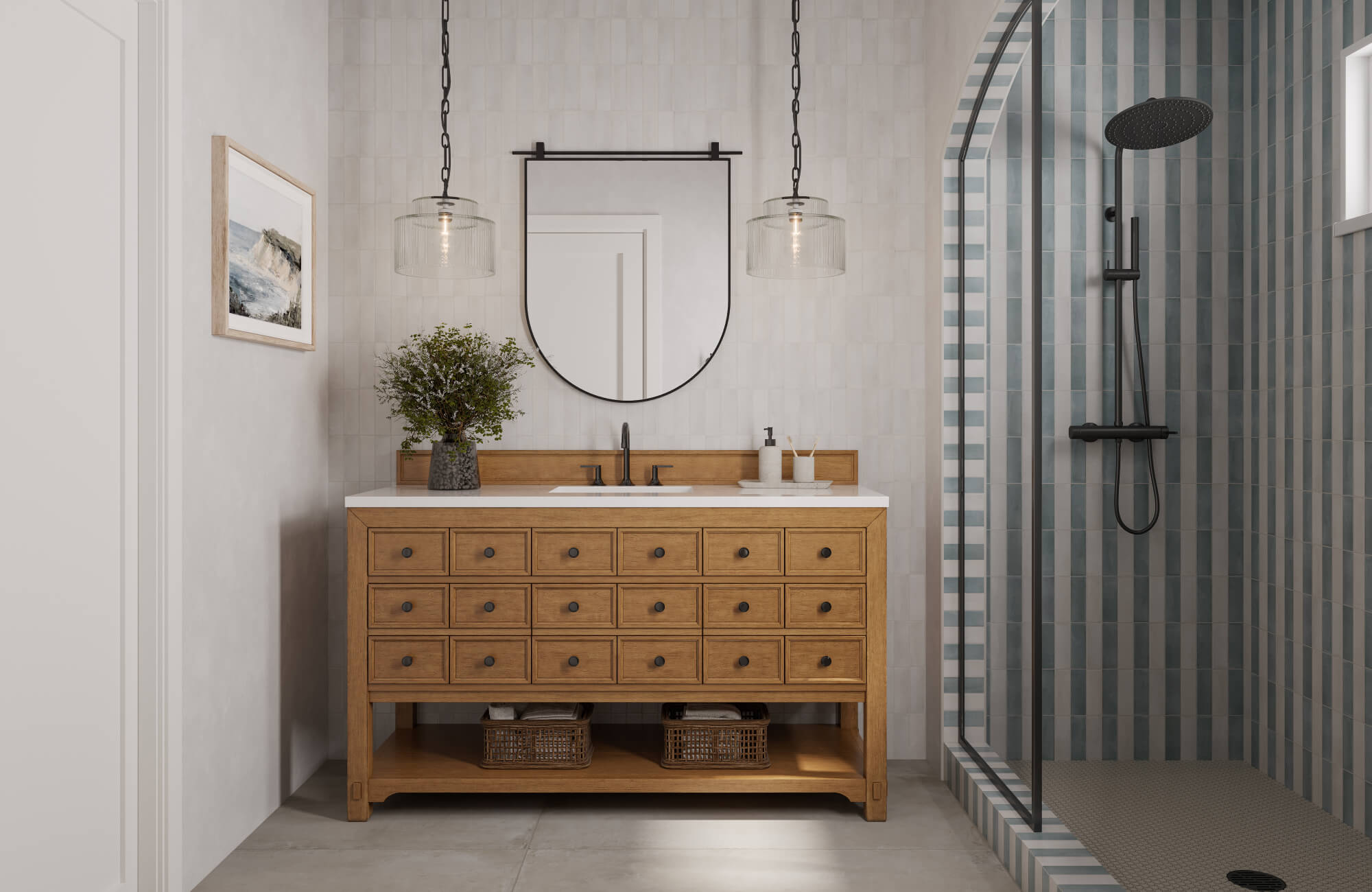
Double sink vanities, however, introduce grandeur and symmetry that elevate the bathroom’s presence. For example, the Bridgette 60" Double Vanity in Light Natural Oak with 3 cm White Zeus Quartz Top, as featured in the picture above, demonstrates how natural wood tones, paired with clean drawer symmetry, can anchor a bathroom with both warmth and sophistication, as seen in the image.
When paired with dual mirrors or statement lighting, this type of vanity creates a spa-like aesthetic while serving as the room’s centerpiece. The chosen vanity should therefore enhance the room’s style rather than overwhelm it.
Lifestyle Considerations
The right vanity must suit not just the bathroom’s dimensions but also its daily use. Couples with overlapping schedules, for instance, benefit greatly from the efficiency of dual sinks. In smaller households, however, a single sink vanity provides adequate convenience without excess. Evaluating household routines ensures the vanity choice genuinely enhances functionality. In addition, considering whether routines overlap or stagger helps clarify which option is most practical. As a result, the vanity becomes a seamless fit for both lifestyle and space.
Cohesion with Bathroom Style
The vanity should tie into the bathroom’s overall design narrative. For example, floating single vanities contribute to a modern, airy look by creating a sense of openness. By contrast, freestanding double vanities add structure and gravitas in larger suites. Premium surfaces such as quartz or marble tops elevate luxury regardless of configuration. In addition, coordinating finishes with faucets, tile, and hardware ensures visual unity. When harmonized effectively, the vanity becomes a natural extension of the bathroom’s aesthetic.
Choosing the Vanity That Complements Your Home
The decision between a single sink vanity and a double sink vanity is ultimately a balance of space, function, and design. A well-chosen vanity not only streamlines daily routines but also elevates the bathroom into a refined and inviting environment. In addition, the right configuration enhances storage, optimizes flow, and harmonizes with your interior style. When thoughtfully selected, a vanity becomes more than furniture—it becomes a lasting expression of comfort and sophistication.
To make the process effortless, Edward Martin’s expert design services can help you explore tailored solutions that align with both your lifestyle and aesthetic vision. When thoughtfully selected, a vanity becomes more than furniture—it becomes a lasting expression of comfort and sophistication. For personalized guidance and to begin creating your ideal bathroom, we invite you to contact us!