
)
)
)
)
)
)
)
)
Does Calacatta Marble Tile Work With Brass Or Gold Accents?
Calacatta marble tile has long been associated with refined luxury, architectural heritage, and timeless interiors. Its crisp white background and dramatic veining instantly elevate a space, whether used on floors, walls, or backsplashes. As more people lean toward warmer, layered interiors, a common design question emerges: does Calacatta marble tile work with brass or gold accents? The short answer is yes, but the long answer is where the design magic lives.
When thoughtfully paired, Calacatta marble and gold-toned metals create an interior that feels intentional, high-end, and enduring rather than trendy. With all that in mind, this article explores how and why Calacatta marble tile and brass or gold accents work so beautifully together, breaking down the color science, finish choices, placement strategies, and styling decisions that lead to a cohesive and polished result.
The Color Science Behind the Calacatta and Gold Pairing
At its core, the relationship between Calacatta marble tile and gold accents is rooted in color theory. Understanding how these elements interact visually allows you to make confident choices that feel balanced rather than overwhelming.
Identifying the Warm Veining Unique to Calacatta
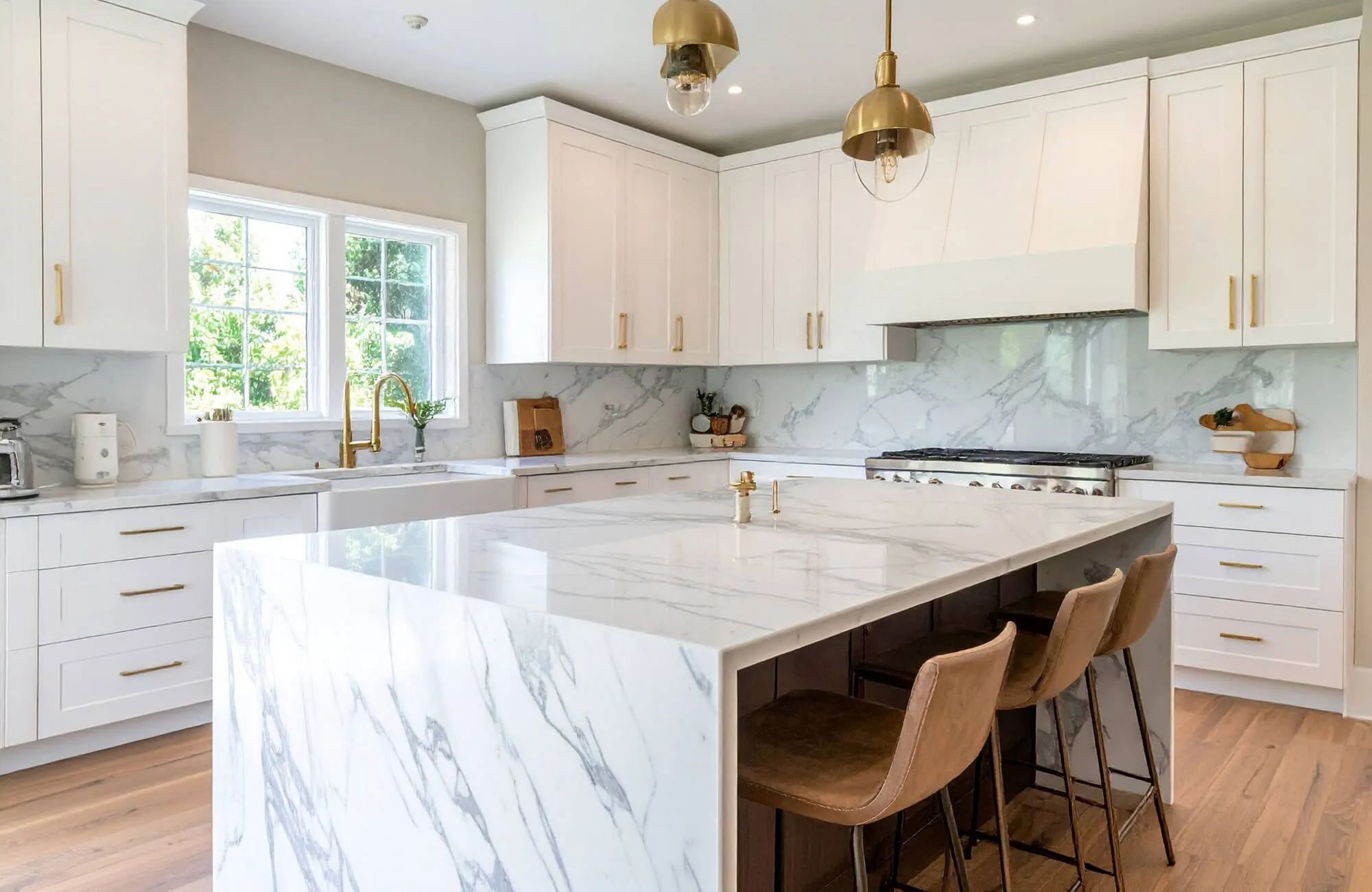
Unlike Carrara marble, which typically features cooler gray veining, Calacatta marble is known for its bolder, more expressive patterns. Many Calacatta varieties include subtle undertones of beige, taupe, or even soft gold within the veining, as seen in Edward Martin’s Aniston 24x48 Matte Porcelain Tile in Calacatta Top in the image above. These warm notes are what make Calacatta marble tile particularly compatible with brass and gold finishes.
When gold accents are introduced, they visually echo the warmth already present in the stone’s veining. This creates a sense of continuity rather than contrast for contrast’s sake. The eye naturally connects the metallic elements to the stone, making the space feel cohesive and thoughtfully designed. This is why Calacatta marble tile often feels more forgiving and versatile when paired with warm metals than cooler white stones.
Creating High Contrast with the Bright White Background
Calacatta marble tile is prized for its luminous white base, which acts as a neutral canvas. Gold and brass finishes stand out beautifully against this background, offering a level of contrast that feels luxurious rather than stark. The brightness of the marble allows metallic accents to shine without overpowering the space.
This contrast is particularly effective in kitchens and bathrooms, where reflective surfaces help amplify light. Brass fixtures against Calacatta marble walls or backsplashes create visual depth and dimension, preventing the room from feeling flat. The white marble keeps the overall palette clean and sophisticated, while the gold accents introduce warmth and personality.
Balancing Temperature for a Transitional Look
One of the reasons this pairing resonates so strongly with today’s homeowners is its ability to bridge design styles. Calacatta marble tile often reads as classic or even traditional, while gold and brass accents can skew modern depending on their finish and form. Together, they strike a balance that feels transitional.
This temperature balance is key to creating interiors that don’t feel locked into a single trend. The coolness of the marble’s white base is gently warmed by metallic tones, resulting in a space that feels inviting but still refined. For those who want longevity in their design choices, this balance ensures the space will age gracefully rather than feeling dated.
Selecting the Correct Gold Finish for Your Aesthetic
Not all gold finishes are created equal, and the specific tone and texture you choose can dramatically influence the final look of your space. Calacatta marble tile is versatile enough to work with a range of gold finishes, but each one tells a slightly different design story.
The Classic Appeal of Unlacquered or Antique Brass
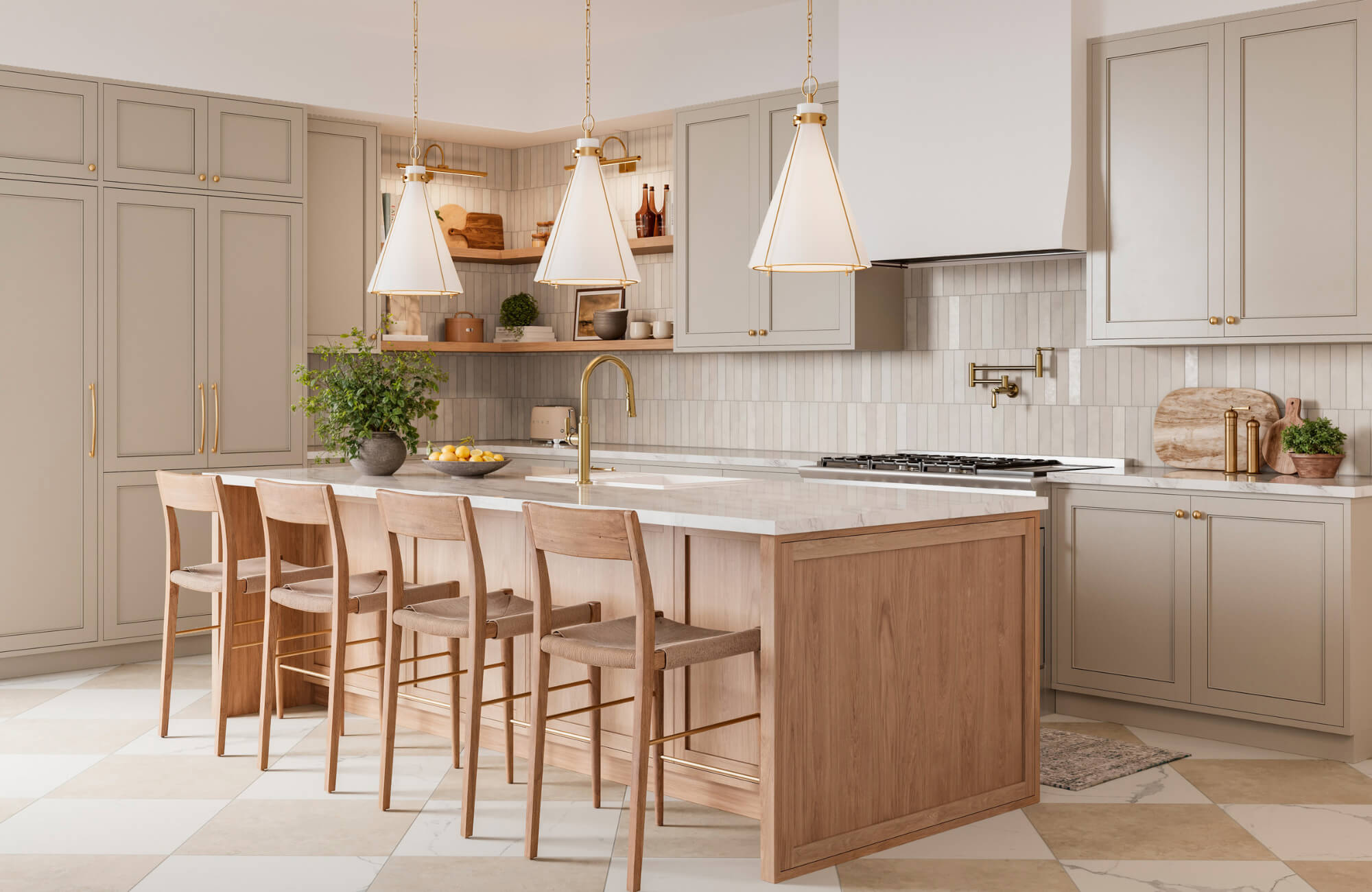
Unlacquered and antique brass finishes bring depth and character to interiors featuring Calacatta marble tile. These finishes tend to have a softer, more muted glow that evolves over time, developing a natural patina, which pairs beautifully with surfaces like Edward Martin’s Leona 24x24 Checkerboard Matte Porcelain Tile in Calacatta and Marfil shown in the image above. This aging process adds richness and authenticity, making the space feel lived-in rather than overly polished.
When paired with Calacatta marble, antique brass enhances the stone’s classic appeal, especially when echoed through details such as the Rosa Triangular Pendant in Aged Brass. This combination works particularly well in traditional or European-inspired interiors, where craftsmanship and material integrity are central to the design. The subtle warmth of aged brass complements the marble’s veining without competing for attention, allowing both elements to coexist harmoniously.
The Modern Edge of Brushed Gold and Champagne Bronze
For homeowners drawn to contemporary or minimalist design, brushed gold and champagne bronze finishes offer a refined alternative. These finishes are less reflective than polished brass, resulting in a softer, more understated look. When paired with Calacatta marble tile, they create a sense of modern elegance that feels curated rather than ornate.
Brushed gold tones work particularly well in spaces with clean lines and simple silhouettes. The texture of the finish adds visual interest without introducing shine that could overwhelm the marble. Champagne bronze, with its slightly muted and warm hue, is especially effective for those who want the warmth of gold without the boldness traditionally associated with it.
When to Use Polished Brass for High Glamour
Polished brass is undeniably striking and can elevate Calacatta marble tile to a truly glamorous level when used thoughtfully. This high-shine finish reflects light beautifully, making it ideal for statement areas such as powder rooms, feature walls, or kitchen islands.
The key to success with polished brass lies in restraint. Because both Calacatta marble and polished brass are visually commanding, balance is essential. When used sparingly, polished brass can highlight architectural details and focal points without overpowering the stone. In these moments, the pairing feels intentional and luxurious rather than excessive.
Strategic Placement of Metals to Enhance the Stone
How and where you introduce brass or gold accents is just as important as the finish you choose. Strategic placement ensures that metallic elements enhance the beauty of Calacatta marble tile rather than distracting from it.
Using Metal Schluter Strips as Grout Lines
One of the most refined ways to integrate gold accents with Calacatta marble tile is through metal Schluter strips. These thin metal profiles replace traditional grout lines at edges and transitions, offering a clean and contemporary detail.
When finished in brass or gold, Schluter strips subtly frame the marble, drawing attention to its veining and craftsmanship. This approach works particularly well in showers, backsplashes, and feature walls, where precision and detail matter. The result is a seamless integration of metal and stone that feels architectural and intentional.
Elevating the Vanity Area with Hardware
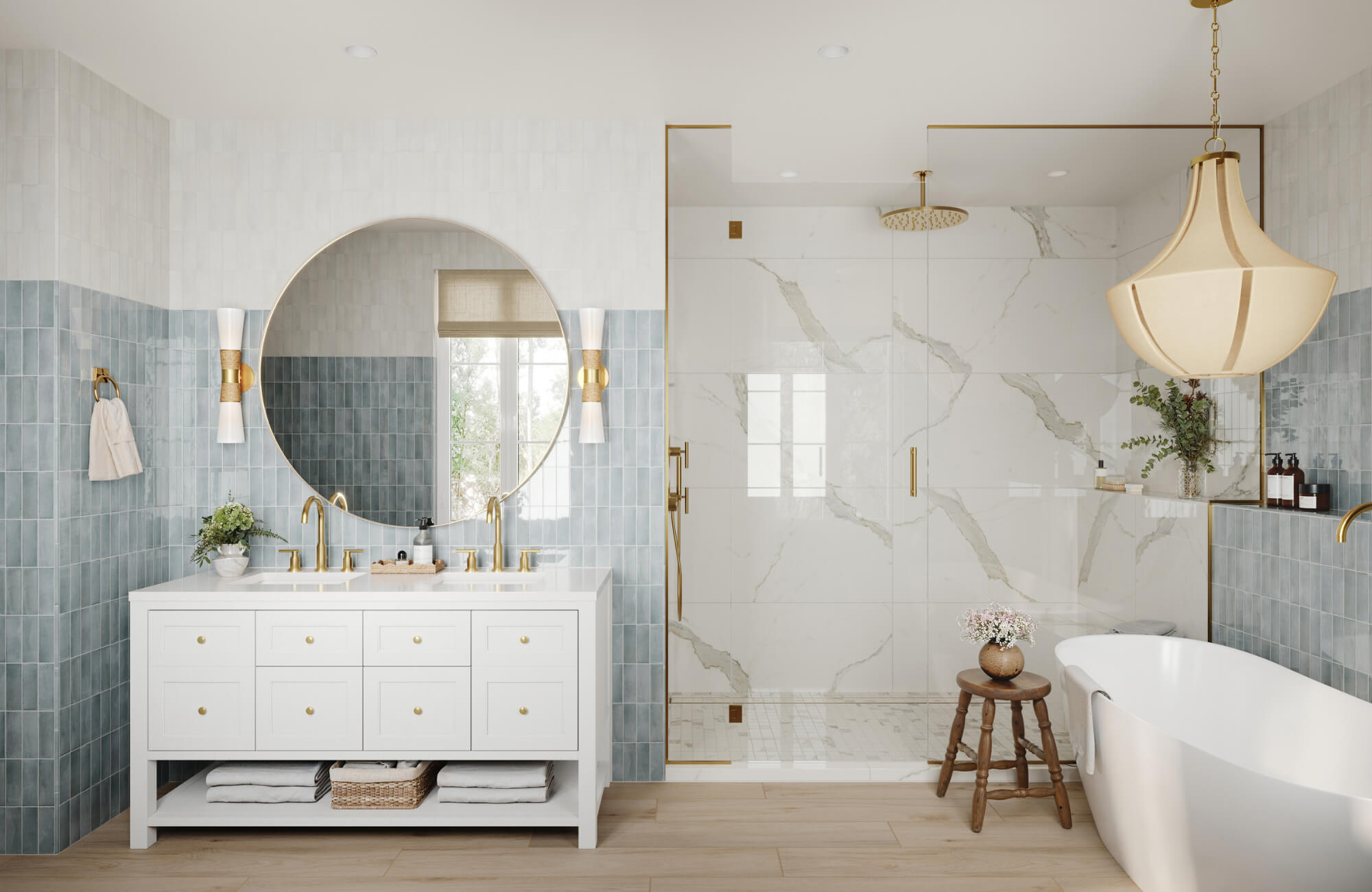
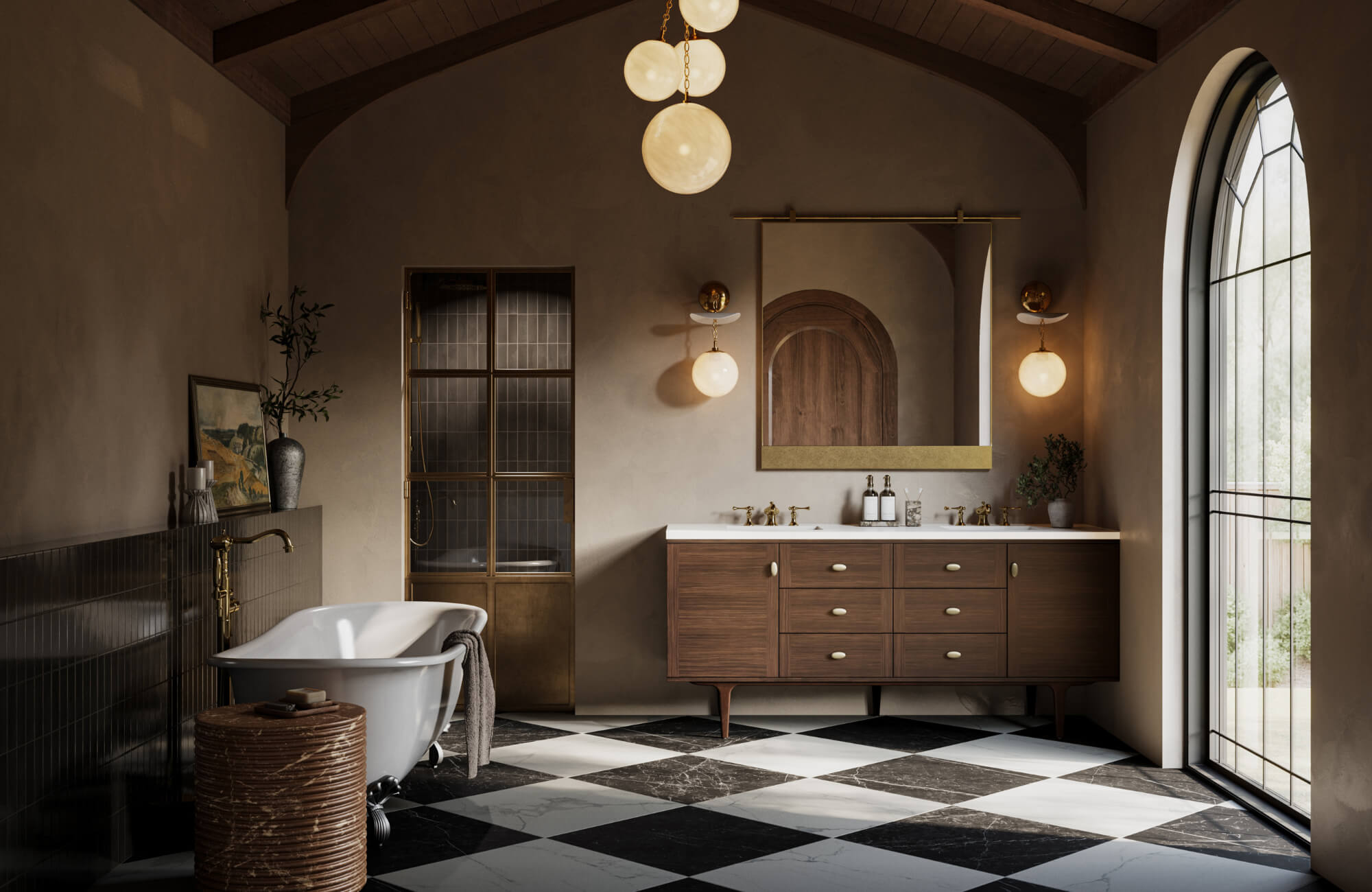
Vanity hardware provides a natural opportunity to introduce brass or gold accents in bathrooms featuring Calacatta marble tile. In the image above, Edward Martin’s Leona 24x24 Checkerboard Matte Porcelain Tile in Calacatta and Nero Marquina sets a striking foundation, while the Clancy Mirror in Antique Brass reinforces warmth through reflective detail. Drawer pulls, faucets, and towel bars in warm metallic finishes create visual continuity and elevate the overall design.
Because the vanity area is often a focal point, these elements should complement rather than compete with the marble. Anchoring the space with a piece like Edward Martin’s Demi 72" Double Vanity in Mid-Century Walnut with a 3 cm White Zeus Quartz Top allows the stone to remain the star while still benefiting from the warmth and elegance of gold tones. This balance creates a polished and cohesive look that feels both functional and luxurious.
Lighting Fixtures as the Final Layer
Lighting has a significant influence on how materials are perceived, and gold or brass fixtures can serve as the final layer that ties the space together. Pendant lights, sconces, and chandeliers in warm metallic finishes reflect light onto Calacatta marble surfaces, enhancing their natural luminosity.
When thoughtfully selected, lighting fixtures act as jewelry for the room. They add warmth and depth without overwhelming the marble’s beauty. This layered approach ensures that the space feels complete and intentional, with each element supporting the overall design narrative.
Styling and Accessorizing to Avoid Overkill
While Calacatta marble tile and gold accents are a powerful combination, thoughtful styling is essential to prevent the space from feeling overly ornate. Supporting materials and finishes help ground the design and maintain balance.
Grounding the Space with Natural Wood
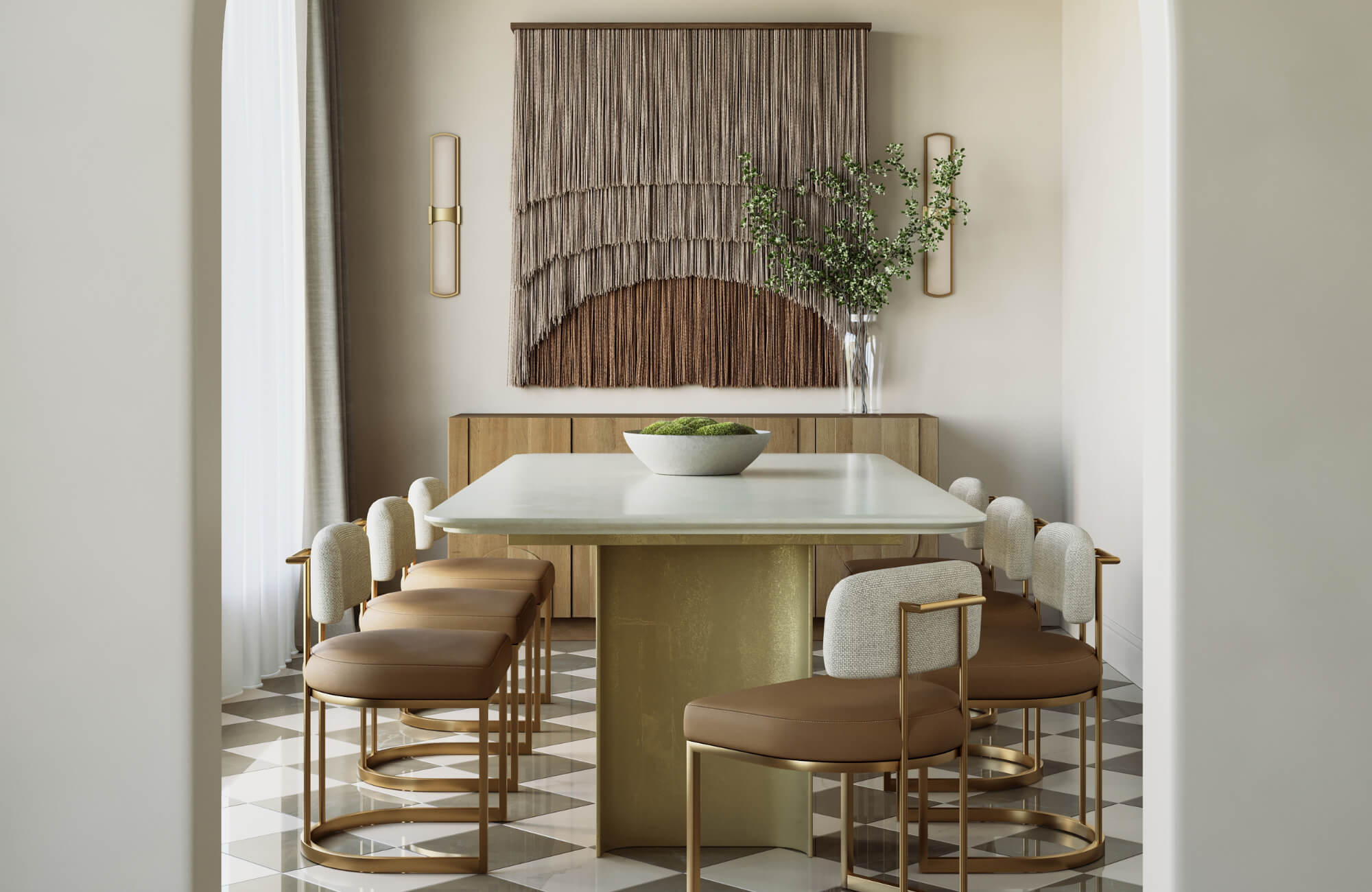
Natural wood introduces an organic element that beautifully offsets the elegance of Calacatta marble and gold accents. In the image above, Edward Martin’s Leona 12x12 Checkerboard Polished Porcelain Tile in Calacatta and Amani Bronze is grounded by the warmth of the Brooke Sideboard in Rustic Oak, creating visual balance. Wood tones add warmth and texture, preventing the space from feeling cold or overly formal.
Whether incorporated through cabinetry, shelving, or furniture, wood creates a visual bridge between the cool stone and warm metals. Accents like the Esme 26" Wall Sconce in Aged Brass reinforce this connection without overpowering the materials. This grounding effect is especially important in larger spaces, where too much marble and metal can feel imposing, resulting in an interior that feels welcoming and well-rounded.
Softening with Plush Textiles and Rugs
Textiles introduce a soft layer that balances the presence of hard surfaces. Plush rugs, upholstered seating, and soft window treatments help soften the visual impact of marble and metal.
When paired with Calacatta marble tile and gold accents, textiles introduce comfort and livability. Neutral tones with warm undertones work best, as they support the overall palette without introducing competing colors. This softness ensures the space feels like a home rather than a showroom.
Choosing the Right Wall Paint Color
Wall color is often overlooked, but it has a significant impact on how Calacatta marble tile and gold accents are perceived. Soft whites, warm off-whites, and light greiges provide a subtle backdrop that enhances both materials, and using Edward Martin’s Augmented Reality (AR) Visualization Tool can help preview how these tones interact with tile selections directly in your space before committing.
Avoid overly cool or stark whites, as they can clash with the warmth of gold finishes. Instead, opt for colors that echo the undertones in the marble’s veining, then follow up by ordering tile samples to see the finish and color in real lighting conditions. Together, these tools help confirm a choice that feels cohesive, confident, and intentionally designed.
The Ultimate Power Couple of Design
Calacatta marble tile and brass or gold accents truly are a design power couple when approached with intention and care. Their compatibility is rooted in color science, balanced temperature, and a shared sense of timeless elegance. When the right finishes are selected and strategically placed, this pairing delivers interiors that feel luxurious yet approachable.
For those who value quality and aesthetics, combining Calacatta marble with gold accents offers the best of both worlds. Together, they create spaces that are visually striking, enduring, and deeply satisfying to live in. When designed thoughtfully, Calacatta marble tile and gold accents don’t just work together, they elevate each other, resulting in interiors that feel cohesive, confident, and unmistakably refined.
Follow us on Instagram
@EDWARD.MARTIN
)
)
)
)
)
)
)
)
)
)
)
)
)
)
)
)