
)
)
)
)
)
)
)
)
Do Large Mirrors Make A Bathroom Look Bigger?
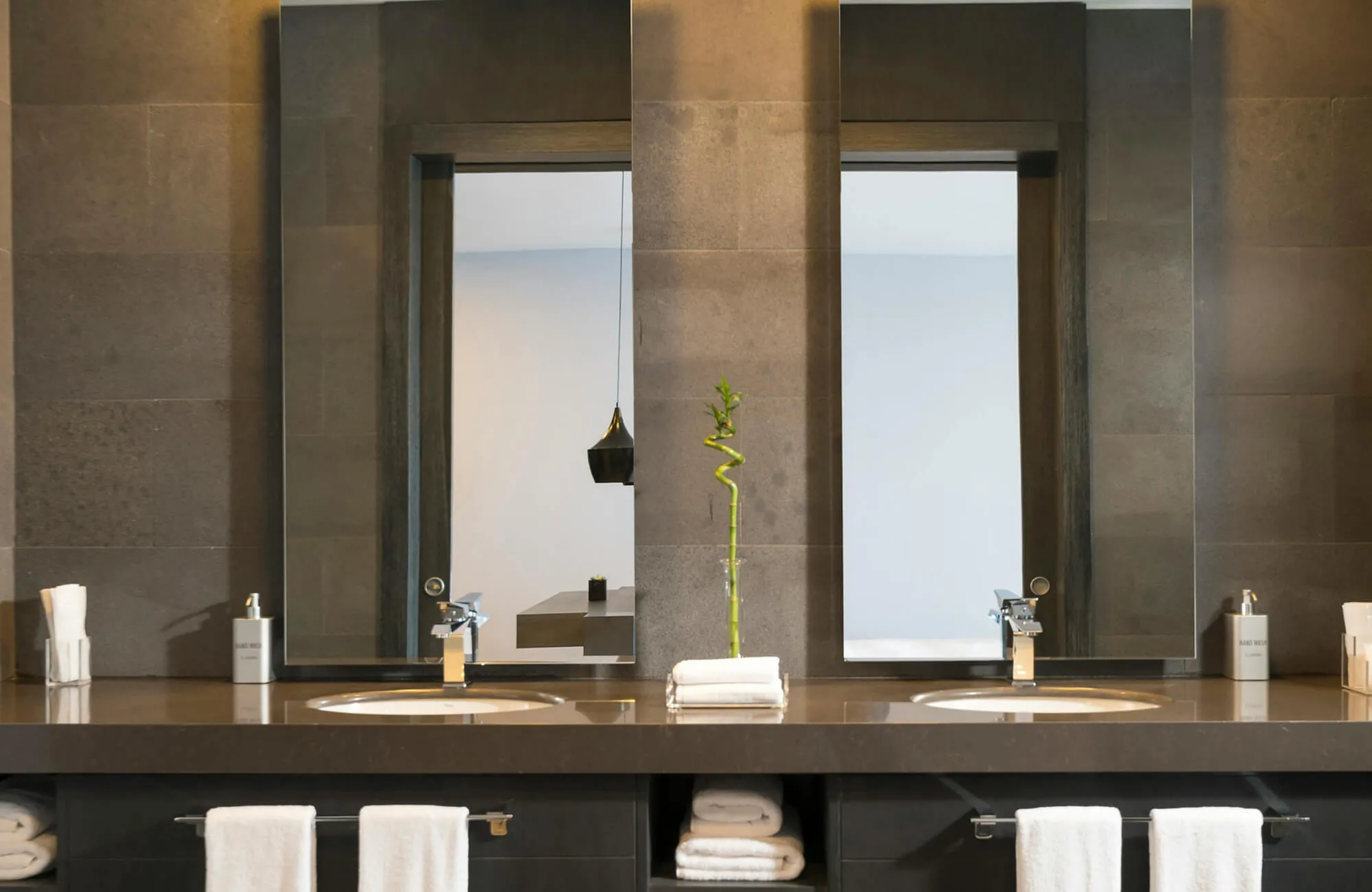
A mirror in a bathroom serves a purpose far beyond reflection—it has the power to transform the atmosphere of the entire space. Large mirrors create the impression of a more open layout, amplifying natural and artificial light while visually extending walls. Their reflective surfaces also act as architectural accents, blending functionality with design to redefine how scale and proportion are perceived. Whether used in compact powder rooms, narrow en-suites, or modern spa-inspired bathrooms, they enhance both utility and timeless elegance. By mastering placement and style, homeowners and designers alike can elevate bathrooms into brighter, more expansive, and beautifully balanced environments.
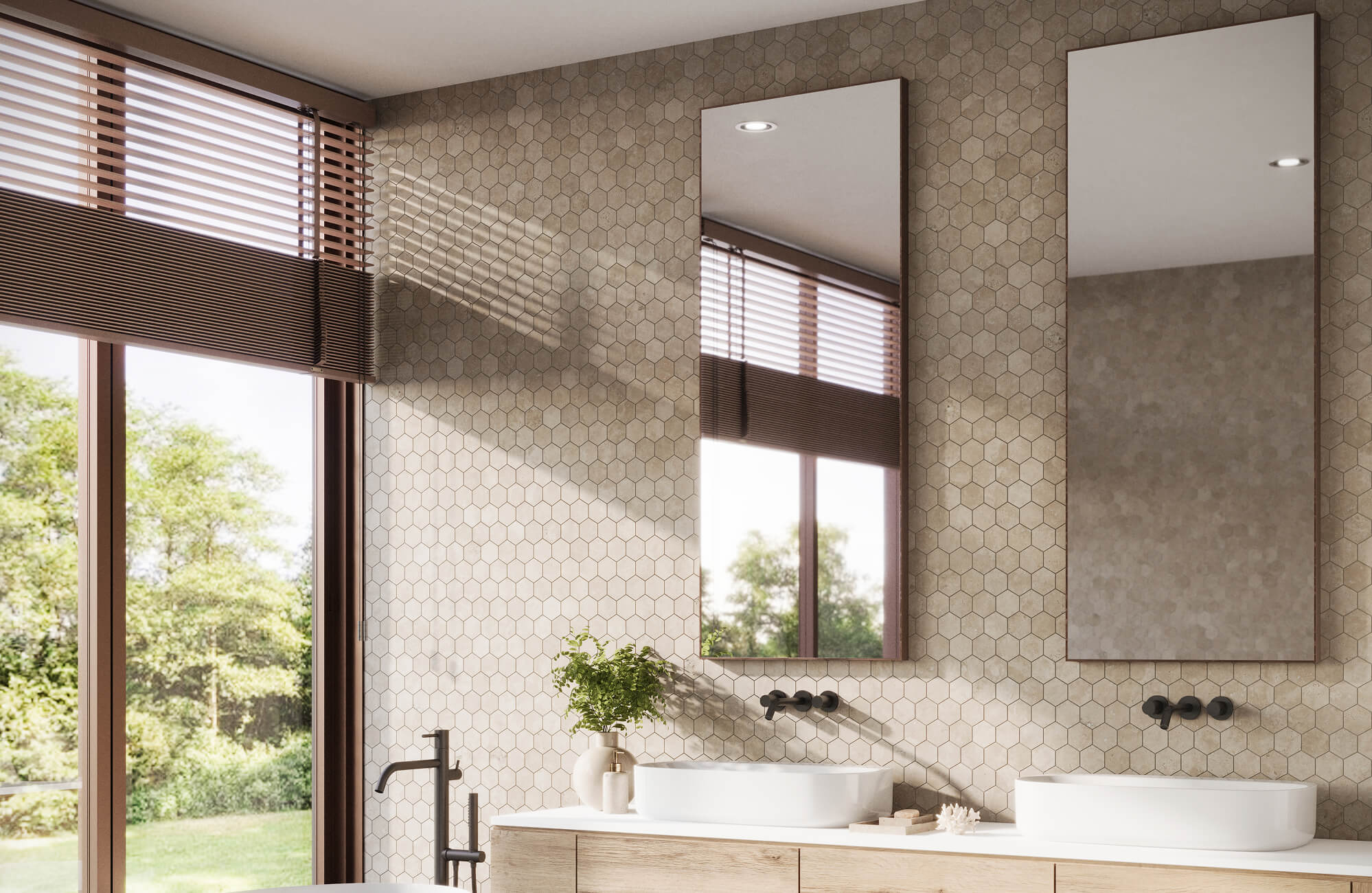
The Psychology of Spatial Perception in Bathroom Design
Bathrooms often feel confined due to limited square footage and solid wall enclosures. Large mirrors alter this perception by expanding sightlines and softening boundaries, creating a greater sense of openness.
Visual Boundaries and Depth Cues
Mirrors in bathrooms extend sightlines by reflecting walls, fixtures, and even windows, convincing the eye that the space continues beyond its physical limits. This illusion creates the impression of additional square footage without any structural renovation. When mirrors are positioned to reflect doorways, showers, or vanity areas, they also seamlessly connect different zones of the bathroom. This effect is particularly valuable in powder rooms and narrow en-suites where every inch counts. By aligning with the brain’s interpretation of depth cues, mirrors make compact bathrooms feel more open and interconnected. As a result, they become subtle architectural enhancers that redefine how small bathrooms are experienced.
Reducing Spatial Confinement
Bathrooms with small footprints often feel heavy and restrictive. By reflecting areas of openness, mirrors reduce the visual weight of enclosing walls and replace them with a sense of spaciousness. For example, a full-width vanity mirror can visually double the wall it occupies, making the bathroom appear wider and less confining. This design choice creates comfort and ease, particularly in bathrooms where movement is otherwise restricted. Designers strategically use mirrors to offset the psychological heaviness of low ceilings or narrow layouts. In doing so, they transform restrictive bathrooms into spaces that feel lighter, freer, and more welcoming.
Cognitive Ease and Comfort
Bathrooms that feel larger tend to feel more relaxing, which is essential in a space designed for daily routines and personal care. Mirrors promote this sense of comfort by softening boundaries and creating continuous sightlines. The brain also associates openness with livability, which makes expansive-looking bathrooms appear more functional and soothing. In compact bathrooms, a large mirror above the vanity can make the space feel less cramped and more uplifting. In spa-inspired bathrooms, mirrors elevate ambiance by reinforcing an atmosphere of calm and balance. By combining psychological ease with visual enlargement, mirrors enhance both comfort and design in bathroom spaces.
Light Reflection and Brightness Amplification
Bathrooms rely heavily on proper lighting, and mirrors amplify illumination to create brighter, more functional environments. By redistributing both daylight and artificial light, large mirrors enhance usability while elevating atmosphere.
Harnessing Natural Daylight
When placed opposite or adjacent to a bathroom window, large mirrors maximize natural light by bouncing it deeper into the room. This technique reduces shadows and instantly brightens compact bathrooms. The reflection of outdoor views further blurs the line between inside and outside, creating a sense of openness. In bathrooms with limited windows, mirrors act as a substitute for natural light by amplifying whatever daylight is available. Designers frequently recommend oversized vanity mirrors to improve brightness without requiring additional fixtures. In this way, mirrors become both practical and aesthetic solutions for maximizing daylight in bathrooms.
Enhancing Artificial Lighting
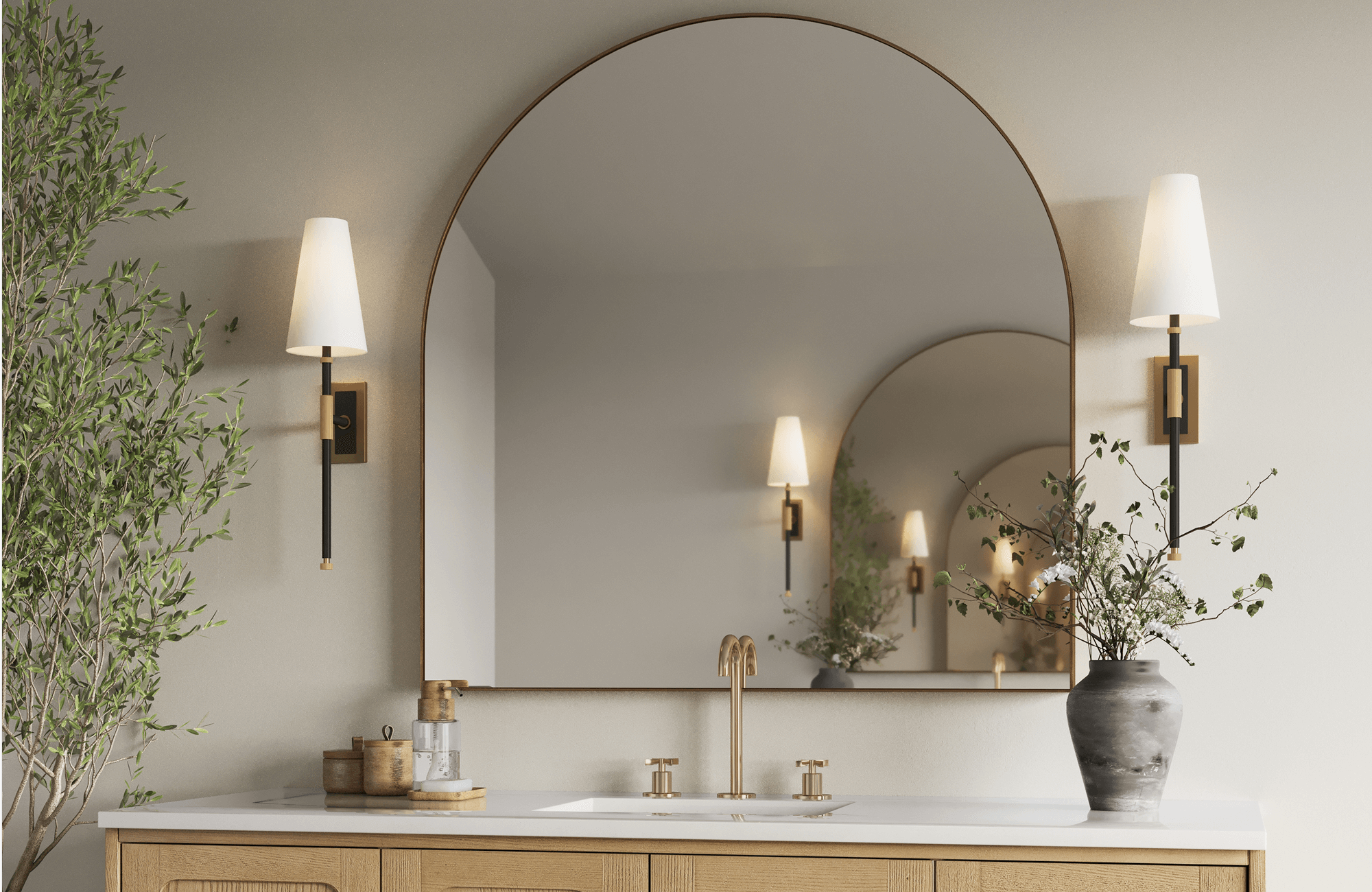
The reflective qualities of mirrors enhance bathroom lighting fixtures such as sconces, pendants, or LED strips. Positioned strategically, they magnify illumination and soften areas that might otherwise appear dim. This creates layered brightness that improves visibility for grooming while also enhancing ambiance. In luxury bathrooms, mirrors double the presence of decorative light fixtures, adding a dramatic and elegant effect. A carefully positioned mirror ensures that lighting feels intentional and evenly distributed. Edward Martin’s Esmeralda Wide Mirror in Polished Brass, as shown in the photo above, paired with twin sconces, demonstrates this beautifully. Its expansive surface bounces warm light across the vanity, while the polished brass frame subtly echoes the glow, creating a cohesive atmosphere of refinement and radiance.
Energy Efficiency Benefits
Large mirrors support energy efficiency in bathroom design. By redistributing light, they reduce the need for extra fixtures or higher-wattage bulbs. This not only lowers energy consumption but also supports sustainable interior practices. Oversized mirrors pair well with eco-friendly LED systems, maximizing brightness while minimizing energy use. In bathrooms without direct windows, mirrors ensure efficient performance of artificial lighting systems. As a result, they become essential tools for bathrooms that value both sustainability and style.
Strategic Placement for Maximum Visual Expansion
In bathrooms, mirror placement determines how convincingly the space feels enlarged. Proper orientation ensures reflections enhance proportions and maintain visual balance.
Horizontal vs. Vertical Orientation
The orientation of mirrors affects how space is perceived in a bathroom. For example, a horizontally mounted mirror above a vanity expands the width of the wall, making narrow bathrooms appear broader. Vertical mirrors, on the other hand, draw the eye upward, visually increasing ceiling height in low bathrooms. This adaptability also makes mirrors indispensable in addressing bathroom design challenges. By selecting orientation carefully, designers can manipulate spatial perception with precision. Orientation, therefore, becomes a strategic tool for tailoring bathroom proportions.
Corner and Angled Installations
Placing mirrors in bathroom corners or at angles introduces multidimensional reflections. This technique creates depth and makes compact bathrooms appear larger and more dynamic. Angled mirrors can capture both the vanity and the shower, uniting separate zones into one cohesive visual flow. This approach also prevents bathrooms from feeling static or boxed in. By introducing subtle movement through reflection, angled installations add energy to small bathrooms. Carefully executed, they transform ordinary bathrooms into visually engaging environments.
Feature Walls and Focal Points
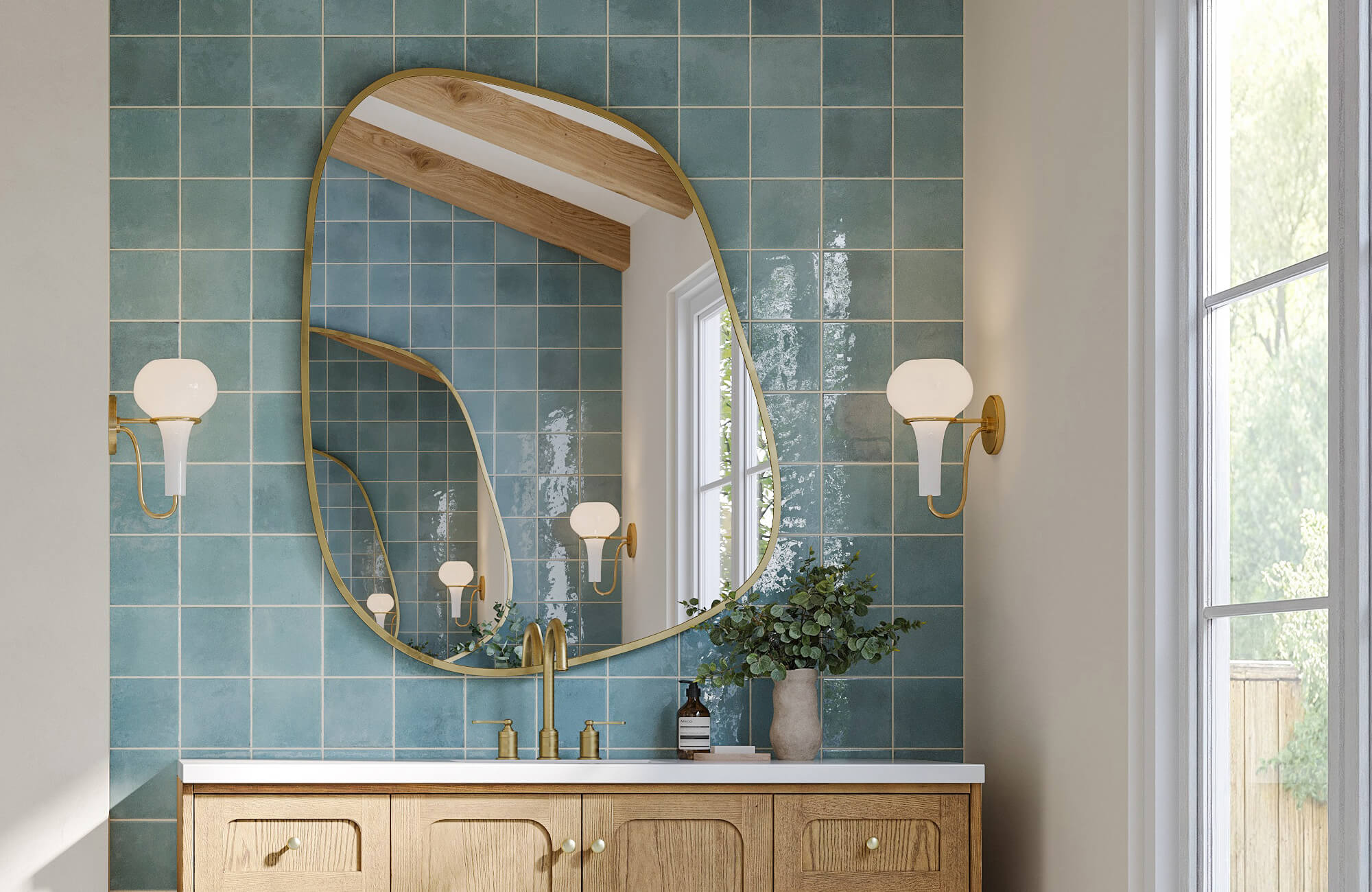
Mirrored feature walls add boldness while enhancing scale in bathroom interiors. A wall-to-wall mirror above a double vanity, for instance, doubles the visual impact of the space. In larger bathrooms, mirrors can highlight focal points such as freestanding tubs or statement lighting fixtures. This technique not only expands perceived scale but also reinforces design cohesion. When thoughtfully integrated, feature mirrors provide both functional brightness and striking visual appeal. A striking example is the Shirley Large Mirror in Antique Brass Iron, as shown in the photo above. It is centered above a vanity and framed by elegant sconces, illustrating this perfectly—its sculptural organic shape against a tiled feature wall transforms it into the room’s centerpiece, proving how mirrors can simultaneously act as focal points and expand the perception of space.
Material Quality and Frame Considerations
The effect of a bathroom mirror depends on its glass clarity, framing, and finish. Selecting the right specifications ensures that mirrors contribute to both function and style.
Glass Clarity and Reflection Accuracy
High-quality float glass mirrors deliver clear, distortion-free reflections, which are essential in a functional space like a bathroom. In contrast, poor-quality glass disrupts accuracy, reducing the illusion of space and compromising usability. Crisp reflections help the brain interpret depth as authentic, which strengthens spatial perception. For grooming tasks, this clarity also ensures precision and reliability. Designers often insist on premium mirrors in bathrooms, where clarity serves both practical needs and aesthetics. Thus, glass quality becomes foundational for bathroom mirror effectiveness.
Frame Design and Proportions
The choice of frame affects how a mirror integrates into bathroom design. Frameless or slim-profile frames maximize reflection, blending seamlessly with modern minimalist interiors. By contrast, ornate or bulky frames, while decorative, can interrupt continuity and reduce the perception of space. Frame selection also depends on whether the goal is to prioritize spaciousness or add stylistic emphasis. When proportion and design are carefully balanced, frames complement rather than detract from the mirror’s purpose.
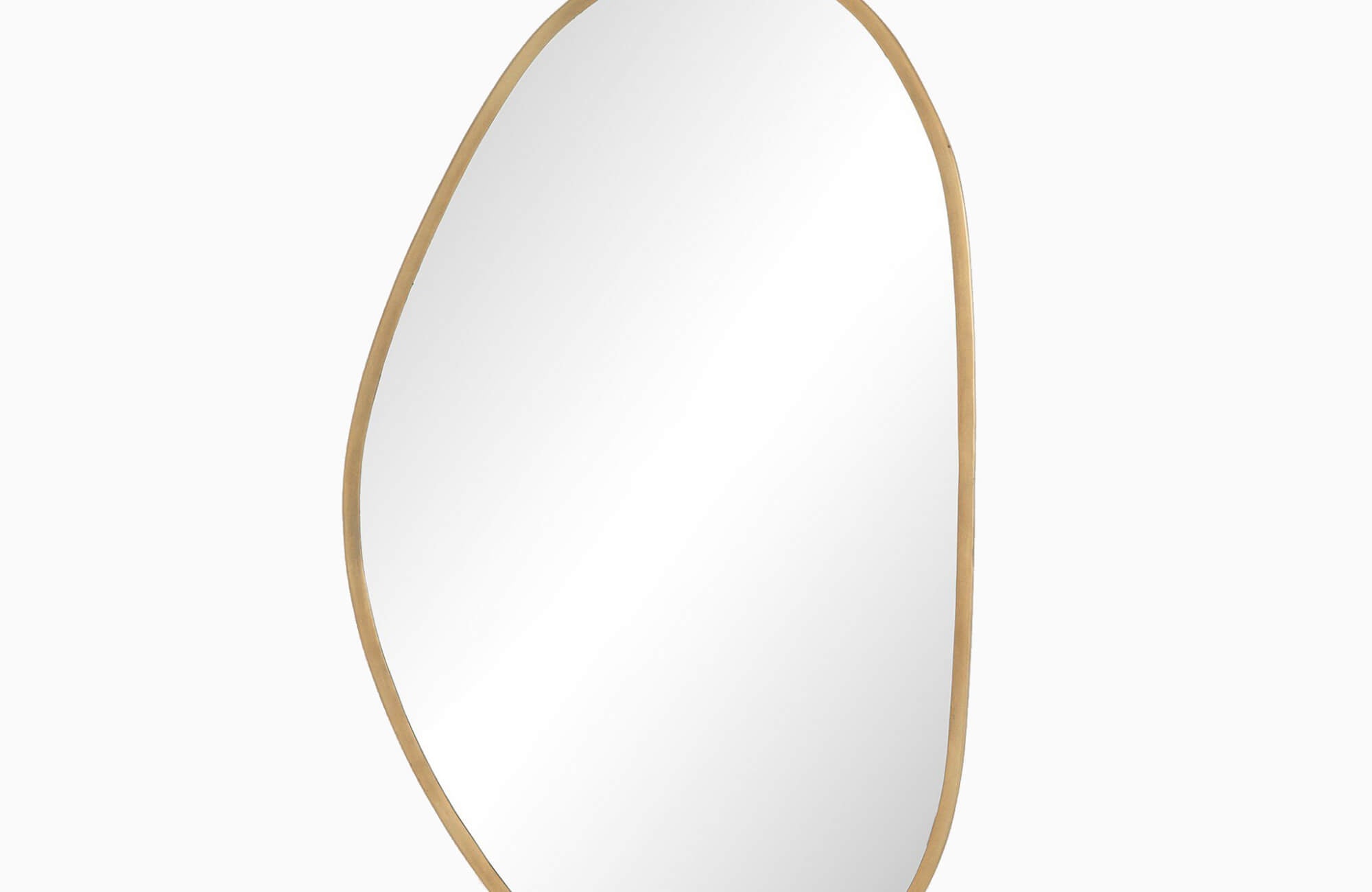
As featured in the photo above, our Rory Mirror in Antique Brass Iron, with its elegant organic shape and slender metallic edging, demonstrates this perfectly—its sculptural form introduces artistry while the refined frame maintains openness, allowing the mirror to function as both a decorative statement and a space-enhancing feature in bathroom interiors.
Specialty Finishes for Design Versatility
Specialized finishes allow bathroom mirrors to adapt to different design goals. Antiqued glass adds character to traditional bathrooms, while smoked or tinted finishes create sophistication in contemporary settings. In each case, these finishes soften brightness while still enhancing depth. By tailoring finishes to the bathroom’s design, mirrors preserve both practicality and style. This versatility ensures they complement a wide range of bathroom aesthetics. With the right finish, mirrors achieve a balance of function and decorative artistry.
Limitations and Practical Design Considerations
Despite their benefits, bathroom mirrors must be chosen and placed with care. Overuse or poor integration can overwhelm the space rather than enhance it.
Avoiding Visual Clutter
An excessive number of mirrors can create disorientation in bathrooms, especially when they reflect cluttered surfaces. Instead, reflections should highlight clean sightlines, such as vanities or windows, rather than emphasize mess. In many cases, one large, well-placed mirror achieves a better result than several smaller ones. This approach avoids fragmented reflections that can make the bathroom feel chaotic. By emphasizing simplicity and clarity, mirrors enhance aesthetics while preserving harmony. Ultimately, balance allows mirrors to elevate beauty without diminishing comfort.
Maintenance and Safety Factors
Large bathroom mirrors require consistent upkeep to maintain their reflective clarity. Moisture, steam, and fingerprints can quickly reduce their effectiveness, making regular care essential. Safety is also a priority, as mirrors in bathrooms must be able to withstand high humidity. Using tempered or safety-backed glass ensures durability and minimizes risk. Professional installation further guarantees that mirrors remain securely anchored even in demanding conditions. With these precautions in place, mirrors continue to be safe, effective, and long-lasting bathroom features.
Complementary Design Strategies
Mirrors deliver the greatest impact when combined with other space-enhancing techniques in bathrooms. Light, neutral color palettes amplify brightness, while layered lighting strengthens depth. Streamlined fixtures and minimal accessories prevent reflections from appearing overcrowded. This cohesive design approach ensures mirrors feel integrated rather than overpowering. By blending mirrors with complementary strategies, bathrooms achieve both practicality and elegance.
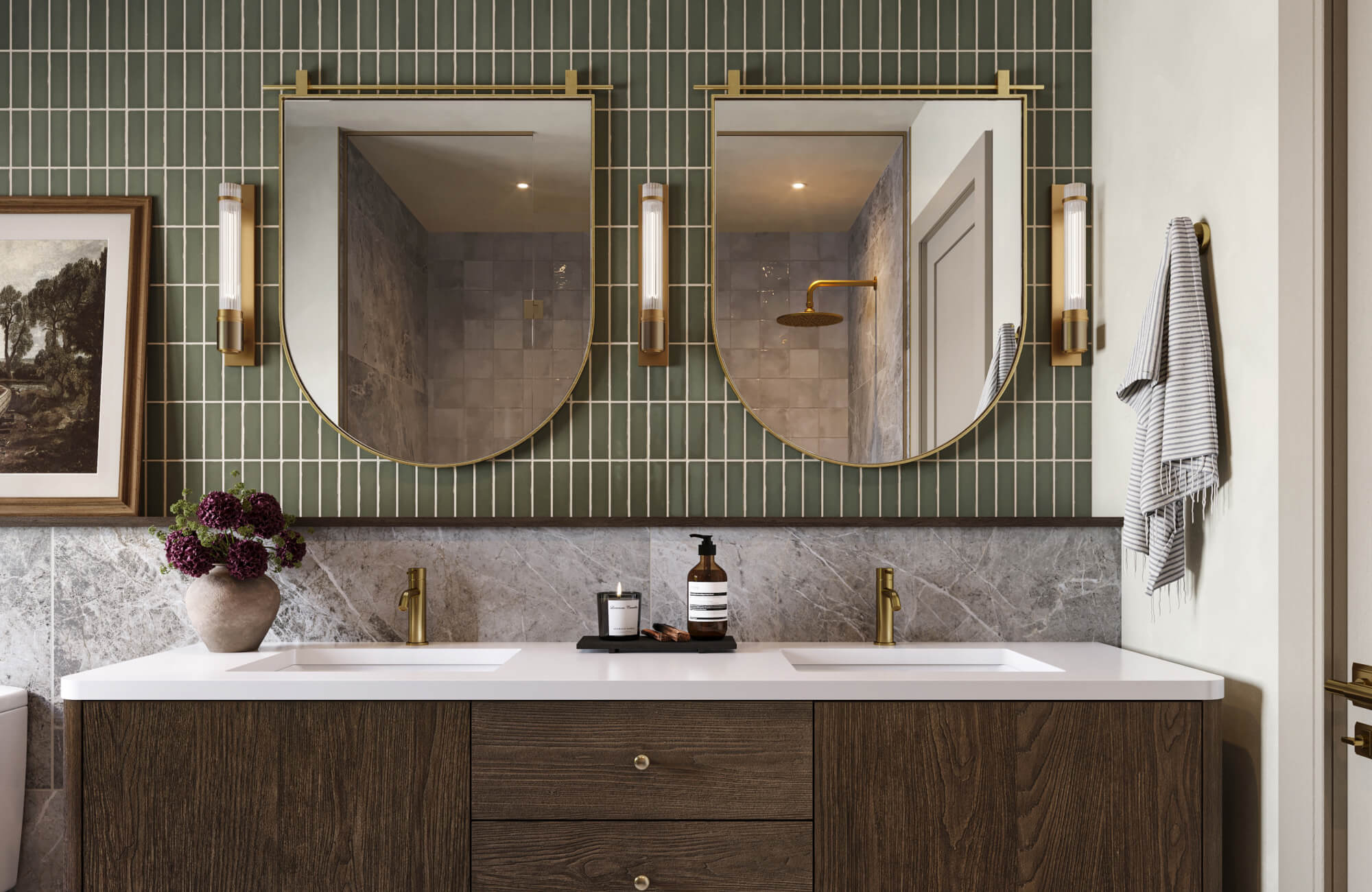
Edward Martin’s Clancy Small Arch Mirror in Antique Brass, as shown in the photo above, demonstrates this beautifully. Its warm brass finish ties seamlessly to the faucets and sconces, while the arched silhouette softens the geometric lines of tile and cabinetry, proving how mirrors can complete a balanced, harmonious bathroom design.
The Lasting Impact of Large Bathroom Mirrors
Large mirrors have the power to transform bathrooms into luminous, expansive, and harmonious spaces. By reflecting light and extending boundaries, they reshape perception with effortless sophistication. When chosen with quality and placed with intention, they evolve from functional necessities into design statements of enduring beauty. In every bathroom, large mirrors stand as timeless elements that elevate interiors with grace, openness, and balance.
For those seeking to bring this vision to life, Edward Martin’s expert design services provide tailored solutions that merge elegance with practicality. To explore how the right mirror can redefine your bathroom, we invite you to contact us and begin your transformation today!
Follow us on Instagram
@EDWARD.MARTIN
)
)
)
)
)
)
)
)
)
)
)
)
)
)
)
)