Corner vanities are a smart way to maximize your bathroom layout. Rather than letting corners go to waste, these vanities turn unused areas into practical storage and stylish focal points. They can also improve movement in the room, creating a layout that feels more open and balanced. Whether you’re refreshing a compact powder room or enhancing a spacious master bath, the right design can bring both efficiency and character to the space. In this article, we’ll examine the various types of corner vanities and how each one can meet your needs.

Compact Corner Vanities for Small Bathrooms
Small bathrooms call for careful planning, and a compact corner vanity can be a game-changer. Designed to maximize limited space, these vanities offer both function and style without overcrowding the room.
Wall-Mounted Styles
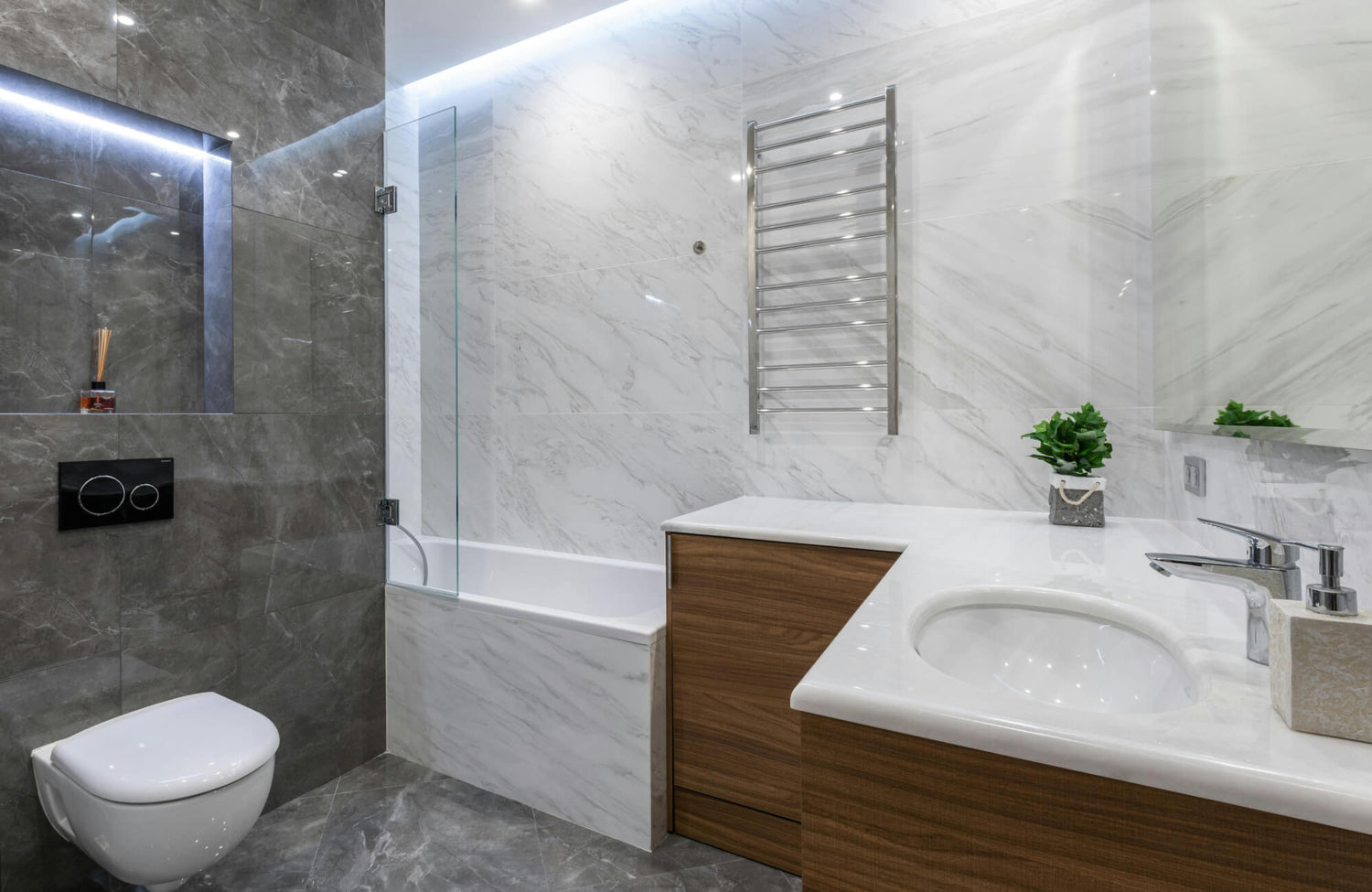
Wall-mounted, or floating, corner vanities can make a bathroom feel more spacious by keeping the floor visible. Because they attach directly to the wall, they can simplify cleaning and maintain an open look. Many still include storage within the base, but the design remains light and streamlined. A piece like Edward Martin’s Royce 36" Single Vanity in Chestnut with a 3 cm White Zeus Quartz Top, as shown in the photo above, illustrates how this style combines modern appeal with everyday practicality.
They’re also practical in apartments or powder rooms with limited space, providing a functional sink area without overwhelming the floor. Additionally, they complement modern bathrooms, where clean lines and a minimalist look are key to the overall design.
Pedestal Corner Units
Pedestal vanities are a timeless choice for bathrooms that require only a sink with minimal storage. They tuck neatly into a corner, leaving the surrounding floor open and uncluttered. While they don’t provide cabinets or drawers, they work especially well in guest bathrooms or half baths where simplicity is all that’s required. Their slim profile also makes them ideal for tight corners that might feel crowded with a larger vanity.
Narrow Depth Options
When you need a bit more counter space but can’t spare much floor area, narrow-depth corner vanities offer a practical middle ground. They project less into the room while still providing enough surface for everyday essentials like soap or a toothbrush holder. This design strikes a balance between function and compactness, helping the bathroom feel open and comfortable. The slimmer depth is particularly valuable in narrow layouts, where even a few extra inches of clearance can improve comfort and flow.

Double Sink Corner Vanities
In shared bathrooms, having a single sink can quickly become inconvenient. A corner vanity with two sinks is a creative way to introduce functionality without requiring a full wall installation.
Angled Double Basin Designs
Some corner vanities are designed with two sinks set at an angle to each other. This arrangement makes the corner the central focus, giving each person space without competing for room. It’s a clever way to maximize efficiency in family bathrooms, making morning routines less stressful. The angled layout also improves movement around the vanity, helping the bathroom feel less crowded. For larger households, this setup further provides a functional solution without requiring a full wall installation.
L-Shaped Configurations
L-shaped vanities extend along two adjoining walls, creating plenty of counter space for dual sinks. Because they use two sides of the room, they provide more surface area for toiletries, decorative accents, or daily essentials. This setup works particularly well in larger bathrooms where you want both openness and generous function. The extended layout also helps separate personal areas, allowing each person to define their own space. In master bathrooms, this configuration often becomes a focal point that anchors the entire design.
Integrated Storage Solutions
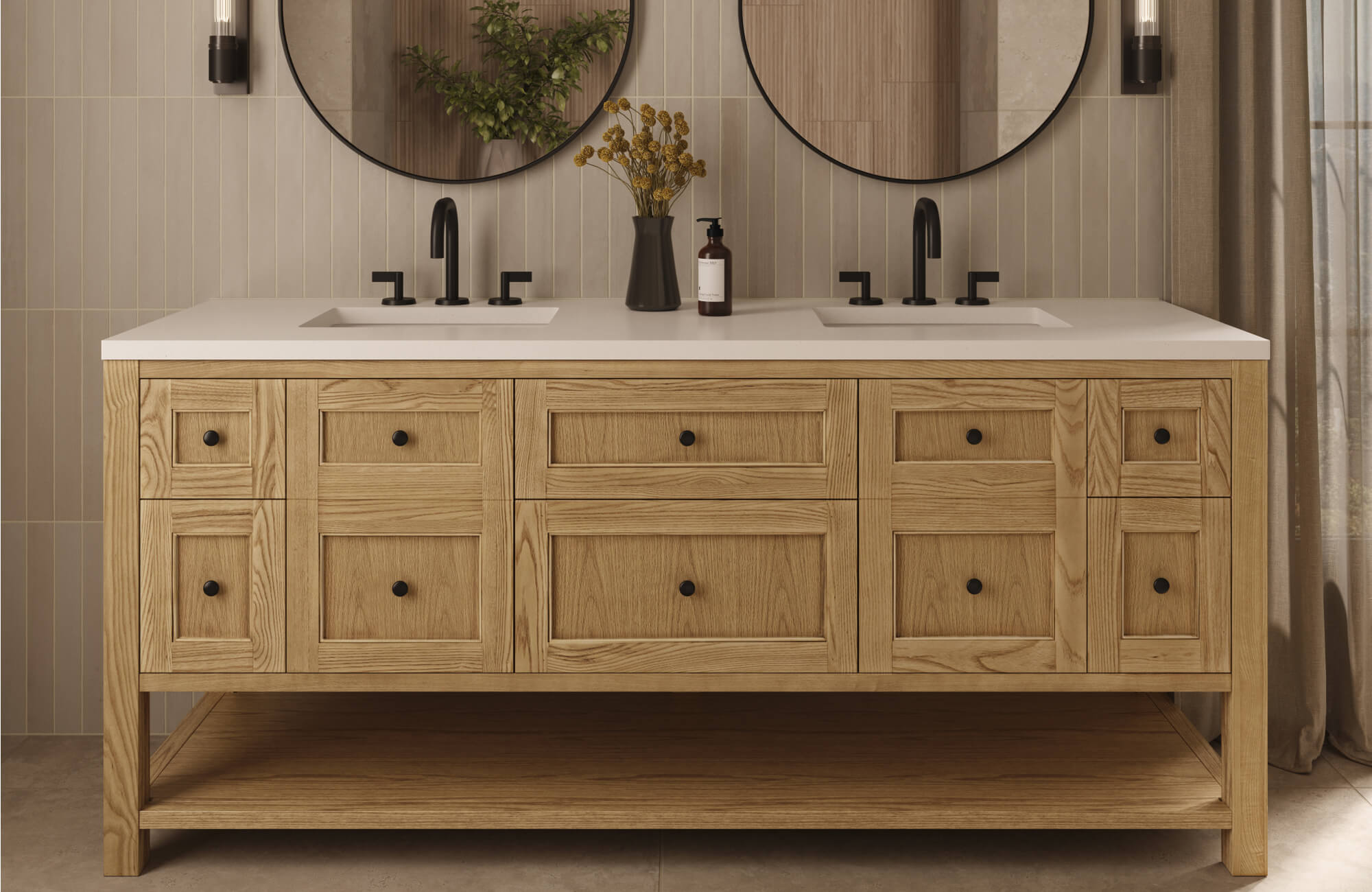
Double sink vanities often include extra storage to handle the demands of multiple users. Cabinets beneath each sink or central drawers between them keep items organized and prevent clutter. With proper storage, even a busy family bathroom can remain orderly and easy to use. A design like Edward Martin’s Holly 72" Double Vanity in Sunwashed Oak with a 3 cm White Zeus Quartz Top demonstrates how generous drawer space and concealed cabinets can streamline daily routines. Many designs also incorporate dividers or pull-out trays, making it easier to separate personal items. This kind of thoughtful organization ensures that everyone has quick access to what they need without crowding the counter.

Stylish Corner Vanities with Unique Shapes
Not every vanity needs to be rectangular. Unique shapes can add personality to your bathroom while making better use of the corner. These designs stand out visually and often provide practical advantages.
Curved Front Designs
Curved vanities can soften the overall look of the bathroom and make pathways easier to navigate. If your bathroom has tight walkways, the rounded front prevents sharp corners from intruding on your movement. They also lend a touch of elegance, breaking away from the usual straight-edged designs. This design works especially well in smaller spaces, where every inch matters, but comfort and safety cannot be overlooked. In larger bathrooms, a curved vanity can further serve as a graceful centerpiece that adds character without feeling bulky.
Triangular and Diamond Bases
Triangular or diamond-shaped bases make full use of corner geometry. By tapering back into the wall, they can provide stability while allowing the countertop to extend in front. This layout can make a compact sink area feel larger without overwhelming the room. It’s a subtle but effective way to maximize limited space. These shapes also introduce a geometric element to the design, giving the bathroom a more distinctive and intentional feel. For compact bathrooms, they further provide a creative alternative to the standard rectangular vanity.
Custom Angled Cuts
Bathrooms with unusual layouts sometimes require made-to-order vanities. Custom angled cuts allow the vanity to match the exact dimensions of your corner, eliminating wasted gaps. This approach ensures a polished look and is often the best solution for older homes where corners are not perfectly square. It also gives you more freedom to decide on the size, shape, and storage features, making the piece truly tailored to your space. For households with unique bathroom designs, a custom vanity can also be the key to combining efficiency with a seamless aesthetic.

Storage Focused Corner Vanities
Some bathrooms demand more than just a sink. If storage is a concern, certain corner vanities are designed specifically to help you stay organized without sacrificing style.
Cabinet Heavy Units
Cabinet-based vanities can offer enclosed storage for bulkier items such as towels and cleaning supplies, helping the bathroom stay neat and organized. Adjustable shelving adds flexibility, so you can adapt the space to different needs. Larger cabinet doors can also fit bins or organizers, making it easier to sort and store multiple categories of items. This design is particularly useful for households that require a central place for both everyday essentials and backup supplies.
Open Shelving Options
Open shelving provides easy access while doubling as a place to showcase décor. Rolled towels, woven baskets, or decorative jars can make the bathroom feel warm and welcoming. This style is ideal if you want storage that doubles as display, and it helps smaller bathrooms feel more open by avoiding the bulk of full cabinetry. With thoughtful styling, open shelves can further balance function with character, creating a relaxed, spa-like atmosphere.
Drawer-Based Designs
Drawers are highly effective for keeping smaller items neatly organized and within easy reach. Toiletries, makeup, and grooming tools all stay off the counter, helping the bathroom look clean and uncluttered. Within a corner vanity, drawers provide structured storage that keeps everything close at hand. A design like Edward Martin’s Gemma 36" Single Vanity in Washed Blonde Oak Veneer with a Carrara Marble Top, as shown in the photo above, highlights how drawers can combine practicality with timeless style.
Deep drawers can also hold bulkier items such as hairdryers, while shallow ones keep everyday essentials neatly sorted. For anyone who values order, a drawer-based vanity offers a system that keeps the bathroom both functional and tidy.

Material and Finish Variations in Corner Vanities
Choosing the right material and finish is about more than looks. These factors also influence durability, maintenance, and long-term value.
Solid Wood Construction
Wood brings warmth and character to a bathroom and, when properly sealed, can remain durable for many years. Common choices like oak, maple, and walnut stand up well to everyday use while maintaining a timeless look. Wood vanities also offer versatility in finishes, from the natural beauty of stained grain to the crisp simplicity of painted surfaces.
Engineered Materials
For an affordable and moisture-resistant option, engineered materials such as MDF, laminate, or veneer are a practical choice. They handle humidity better than untreated wood and are available in a wide variety of finishes. A design like Edward Martin’s Maxine 36" Single Vanity in Washed Natural Veneer with a Carrara Marble Top, as shown in the photo above, highlights how these materials can bring both durability and style into a bathroom. They’re also easy to clean, making them especially reliable for bathrooms that see frequent use.
Countertop Pairings
The countertop is central to both the appearance and functionality of your vanity. Marble and quartz offer durability with a touch of elegance, while ceramic and solid surface options are practical and easy to maintain. Your choice should reflect not only your style preferences but also the level of upkeep you’re comfortable with.

Modern vs Traditional Corner Vanity Styles
Style is the finishing touch that ensures your vanity feels at home in your bathroom. Modern, traditional, and transitional designs each can create a distinct look.
Sleek Modern Units
Modern vanities focus on clean lines and simplicity. Flat-front cabinets, neutral tones, and integrated sinks can create a minimal look that keeps the space feeling open and uncluttered. They fit well in contemporary bathrooms where functionality and understated style are the priority. Many designs also feature floating bases or handle-free cabinets that enhance the streamlined effect. For those who appreciate a minimalist lifestyle, modern vanities offer both efficiency and a refined, polished appearance.
Classic Traditional Designs
Traditional vanities highlight craftsmanship and detail. Raised panels, decorative hardware, and ornate finishes can bring character and depth to the space. They fit naturally into bathrooms with a timeless or vintage feel, adding a sense of heritage and comfort. Many feature-rich wood tones or painted finishes that draw attention to their detailing. In larger bathrooms, a traditional corner vanity can also serve as a statement piece that anchors the entire design.
Transitional Blends
For those who prefer a balance between modern and traditional, transitional styles offer welcome flexibility. A vanity with clean lines and classic finishes can fit seamlessly into a variety of décor styles. This makes it a smart choice if you want a piece that will feel current even as your bathroom design evolves. Transitional vanities also work well with a wide range of tile, fixtures, and accessories. Their adaptability makes them a practical investment for anyone who enjoys refreshing a space without replacing major elements.
Choosing the Right Corner Vanity
The best corner vanity for your bathroom depends on its size, how the space is used, and the style you want to achieve. Compact designs are ideal for small bathrooms, while double sink or storage-focused options work well for families and shared spaces. Materials and finishes influence both durability and appearance, and the style you choose helps define the room’s overall character. By weighing these factors, you can find a corner vanity that combines function with style and maximizes the use of your bathroom space.
If you’re ready to explore your options, contact us to learn more about available designs and finishes. Our design services can also help you find the perfect corner bathroom vanity that suits both your needs and your style.