Once reserved for floors, black bathroom tiles are now making a bold statement on walls. Thanks to advancements in material engineering, durable, water-resistant options like glazed porcelain and ceramic, offered in finishes from satin to matte, are now well-suited for high-moisture vertical applications, combining style with reliable performance.
Beyond durability, black wall tiles bring a strong visual impact and design flexibility. Whether highlighting a feature wall, framing a vanity, or adding contrast to lighter elements, they elevate the space, particularly when paired with thoughtful lighting and complementary materials. Throughout this article, we’ll explore how to use black bathroom tiles on walls with confidence, creativity, and technical know-how.

The Allure of Black Tiles on Bathroom Walls
Black tiles aren’t just a dramatic design choice; they’re a smart way to add personality, versatility, and visual depth to your bathroom walls. By understanding how they influence color, style, and space, you can use them to create a look that’s both bold and beautifully balanced.
Creating a Statement with Dark Hues
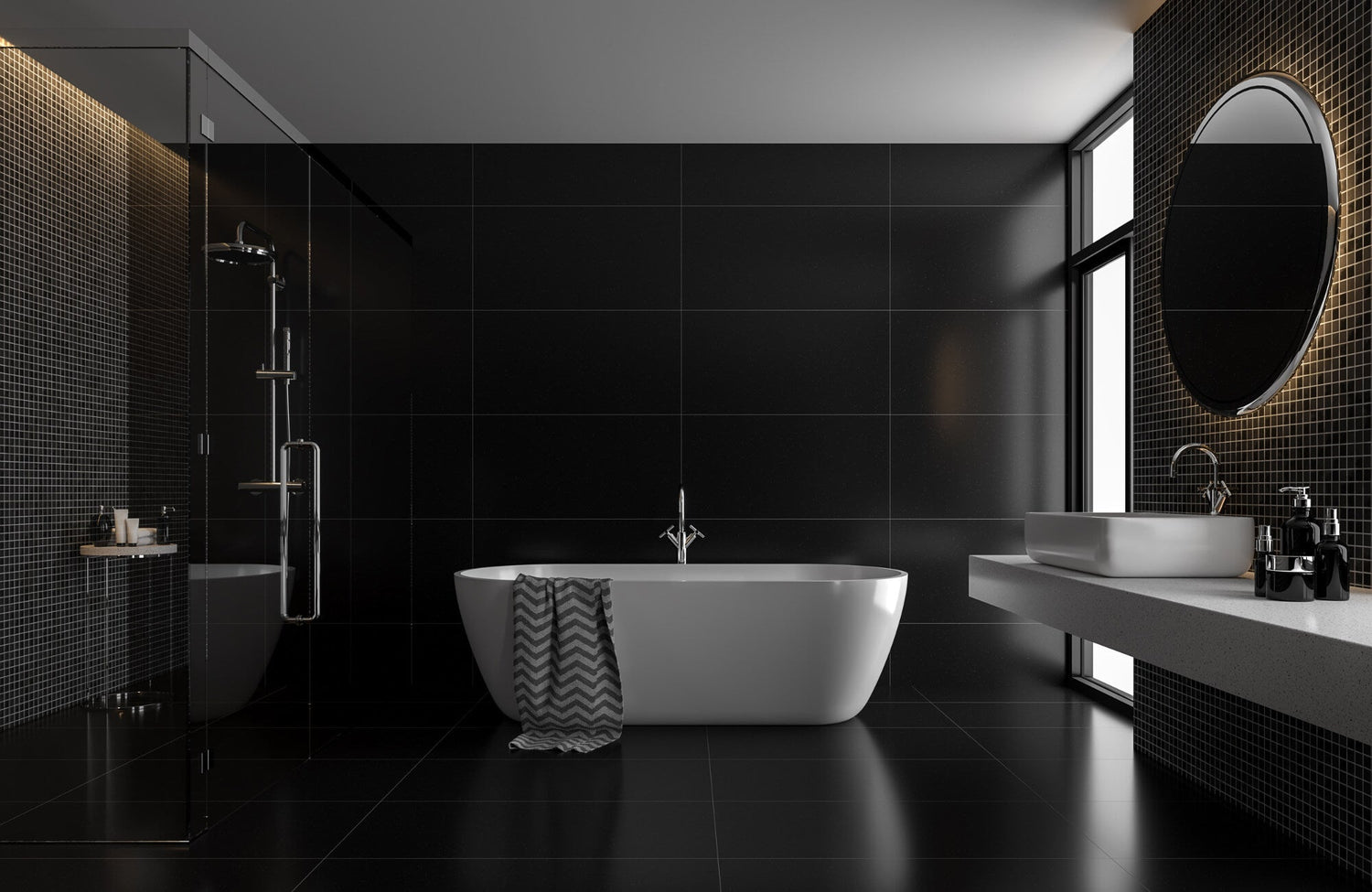
At a glance, black tiles naturally command attention, offering a level of depth and contrast that lighter surfaces can’t achieve. The psychological effect of black, often associated with elegance and strength, makes it ideal for creating high-impact focal points, especially when used behind vanities, in shower enclosures, or on feature walls. Finishes like polished porcelain, matte ceramic, or natural slate maintain this dramatic presence while delivering moisture resistance and long-term durability.
Take, for instance, Edward Martin’s Leona 24x24 Matte Porcelain Tile in Nero Marquina, as featured in the picture above. Its marble-inspired look, with soft veining and a glare-reducing matte finish, introduces architectural drama without overwhelming the space. It also serves as an anchor that works well in both modern and transitional settings.
Versatility in Design Styles
Beyond their bold aesthetic, black tiles are surprisingly adaptable across a wide range of interior styles. In minimalist bathrooms, rectified large-format porcelain tiles offer a clean, uninterrupted surface. For more traditional or transitional spaces, black subway tiles in patterns like herringbone or offset bring texture and timeless appeal.
In contrast, industrial bathrooms benefit from rugged materials like concrete-effect porcelain or slate, often paired with exposed plumbing and steel-framed accents. Meanwhile, spa-inspired spaces soften the look with black marble-look tiles featuring delicate veining for a more calming, luxurious vibe. With choices ranging from mosaics to oversized panels, black tiles provide a versatile foundation for nearly any design intent.
Enhancing Depth and Dimension
In addition to style flexibility, black tiles also enhance spatial perception. Their light-absorbing qualities create contrast and shadow, giving flat surfaces a sculptural, more dimensional feel. Combining textures, such as matte tiles with glossy accents, adds depth and keeps the surface visually engaging.
To fully realize this effect, thoughtful lighting is essential. Recessed LEDs, under-vanity strips, or warm-toned pendants can bring out the richness of black tiles without making the space feel heavy. In smaller bathrooms, especially, large-format tiles with minimal grout lines can make walls appear broader and more cohesive, reducing visual clutter and reinforcing a clean, modern aesthetic.

Practical Considerations for Wall Application
While black tiles make a striking visual impact, their long-term success on bathroom walls depends on getting the technical details right. From choosing the right materials to navigating installation nuances, each step directly influences both performance and appearance.
Material and Finish Choices
As a first consideration, selecting the appropriate tile type and finish is essential for bathroom wall applications. Porcelain tiles, with a water absorption rate below 0.5%, are ideal for wet zones like showers thanks to their superior density and stain resistance. Ceramic tiles, while easier to cut and more cost-effective, are better reserved for areas with minimal moisture exposure unless they feature enhanced glazes.
In addition, the surface finish directly influences both appearance and maintenance. Glossy finishes reflect more light and can make small spaces feel larger, but they’re more likely to show water spots and fingerprints. Matte finishes, by contrast, provide a softer look that conceals smudges, while textured tiles, such as flamed or raked options, introduce tactile depth, though they may require more upkeep. For optimal performance, it’s also wise to consider the tile’s slip resistance (COF/DCOF) and surface durability (PEI rating), even for wall installations.
To illustrate, Edward Martin’s Adeline 1x4 Matte Porcelain Mosaic Tile in Midnight is an excellent example of a tile that balances subtle texture with a light-diffusing matte finish. As shown in the photo above, its narrow format adds visual rhythm while pairing effortlessly with materials like stone or warm-toned wood.
Grout Selection and Maintenance
Grout selection significantly impacts both structural integrity and visual cohesion. Epoxy grout is highly recommended for bathroom applications due to its water-resistant, non-porous properties, making it especially valuable in wet zones such as showers. In contrast, cementitious grout may require sealing and more frequent upkeep.
Equally important is grout color. Dark or color-matched grout helps maintain a seamless look and conceals discoloration, while light grout can emphasize tile patterns but requires more maintenance. When working with matte or textured tiles, applying a grout release agent beforehand helps prevent haze and simplifies cleanup. Additionally, maintaining narrow grout lines (typically 1/16"–1/8") contributes to a more refined aesthetic, though it demands greater installation precision.
Installation Challenges and Best Practices
Black tile installation demands meticulous attention to detail, as flaws like lippage (uneven edges) are far more noticeable on dark, reflective surfaces. Using rectified tiles and leveling systems helps achieve a flat, even finish. Surface preparation is also critical as walls must be smooth, dry, and properly primed. A thin-set mortar that meets ANSI A118.4 or A118.15 standards ensures lasting adhesion, while waterproof membranes protect the underlying structure in wet areas.
Moreover, techniques like laser-guided alignment, dry fitting, and positioning cuts in less visible areas (such as corners or behind fixtures) contribute to a professional result. Lighting should also be considered early on; diffused or recessed fixtures help minimize glare and shadowing, allowing the tile’s finish to shine as intended. Ultimately, while skilled DIYers may be tempted to tackle the job, professional installation is highly recommended to ensure precision, avoid costly errors, and protect the tile’s long-term performance.

Illuminating Black Walls Strategic Lighting
Lighting strongly influences how black wall tiles are perceived; get it right, and the space feels rich and inviting; get it wrong, and it risks feeling flat or closed in. To strike the right balance, it’s important to consider how light layers, reflects, and interacts with fixtures throughout the room.
Layering Light for Function and Mood
A comprehensive lighting scheme should include three foundational layers: ambient, task, and accent lighting. Because black tiles naturally absorb light, ample ambient lighting, via ceiling-mounted fixtures or recessed cans, is crucial for establishing an evenly illuminated base. For best results, select fixtures with a high Color Rendering Index (CRI) of 90 or above to ensure true-to-tone color and visual comfort.
Task lighting is also essential in functional zones like vanities. Vertical sconces mounted at eye level provide balanced coverage, reducing shadows while enhancing facial visibility. Additionally, LED strip lighting beneath vanities, inside niches, or along shelving subtly increases usability without detracting from the overall design. To add further dimension, accent lighting, such as backlit mirrors or directional spotlights, can draw attention to textures and finishes. When layered effectively and paired with dimmable or smart controls, lighting becomes a tool for adjusting both mood and function throughout the day.
Reflective Surfaces and Natural Light Maximization
In addition to artificial lighting, black tile design benefits greatly from the integration of light-reflective surfaces. Glossy finishes, polished chrome hardware, glass enclosures, and mirrored cabinetry help disperse light throughout the space, enhancing brightness without diminishing the tile’s bold character.
Leveraging natural light can significantly affect the ambiance as well. Whether through a skylight, enlarged window, or frosted glass panel, incorporating natural daylight elevates both the comfort and perceived spaciousness of a bathroom. To support this effect, use light-colored ceilings or wall paint to diffuse brightness more evenly and reduce contrast with dark tiles. Furthermore, strategic placement of metallic accents or reflective mosaic tiles near windows or light sources can subtly increase illumination, softening the overall mood.
The Role of Fixture Style and Placement
Beyond brightness, the style and placement of fixtures directly influence how black tile is perceived. Depending on the design direction, you might incorporate sleek linear LEDs for modern minimalism, art deco sconces for a touch of vintage flair, or industrial pendants with warm-toned bulbs to add visual warmth and contrast.
Just as critical as the fixture type is its positioning. For example, placing a light directly over a tile seam may result in unwanted reflections or uneven shadows. Instead, slightly offsetting the fixture can soften glare and emphasize the texture of the tile. Additionally, angled recessed lights or adjustable track heads work well for highlighting specific features like tiled shower walls or architectural niches. In moisture-prone areas, always select IP-rated waterproof fixtures to ensure safe operation and lasting durability.
To see how this all comes together, consider Edward Martin’s Palmer 3x12 Glossy Porcelain Tile in Nero, as displayed in the picture above. Its reflective surface pairs beautifully with layered lighting strategies, especially when accented by a concealed LED strip behind the mirror, proving how thoughtful lighting and tile coordination can elevate both form and function.

Balancing Dark Tones with Complementary Elements
To keep black bathroom walls from feeling heavy or overpowering, it’s all about what you pair them with. Thoughtfully mixing in contrast, warmth, and natural elements can bring out their best while creating a space that feels both grounded and inviting.
Incorporating Contrasting Colors and Textures
One of the most effective strategies for softening black tile is through purposeful contrast, especially with lighter colors and textured finishes. For example, soft whites, warm greys, and beiges lift the visual weight of dark surfaces and brighten the room overall. At the same time, mixing materials, like glossy tiles with honed stone or ribbed panels, adds dimensional interest and prevents a monochrome scheme from feeling flat.
To further enhance comfort, textiles such as linen curtains, woven baskets, or plush bath rugs can introduce softness and sound absorption. A compelling example of this balanced approach is how Edward Martin’s Sloane 12x24 Matte Porcelain Tile in Charcoal was used. As featured in the photo above, its organic texture and deep hue ground the lower half of the wall, while pairing seamlessly with lighter elements above for a refined, cohesive finish.
Warmth Through Wood and Metallic Accents
In addition to contrast, incorporating warm-toned materials like wood and metal can dramatically shift the atmosphere of a black-tiled bathroom. Oak or walnut vanities, floating shelves, and even ceiling beams add a tactile, organic quality that counterbalances black’s cool tones.
Meanwhile, metallic finishes such as brushed brass, antique bronze, or copper introduce a subtle sheen and upscale feel. These elements work beautifully on lighting, hardware, and mirror frames. For a more contemporary palette, matte black or gunmetal fixtures can maintain tonal consistency while adding depth. Together, wood and metal details provide structure and warmth, softening the space and enhancing its visual richness.
Greenery and Natural Elements
To round out the palette, natural elements, especially greenery, offer a soothing contrast to the boldness of black tiles. Humidity-loving plants like pothos, ferns, and peace lilies bring vibrancy and life to the space, standing out beautifully against dark backdrops. This not only supports biophilic design principles but also enhances the bathroom’s sense of calm and comfort.
In combination with plant life, natural stone materials such as river rock, marble, or limestone further ground the space with tactile elegance. Accessories like bamboo trays, ceramic vases, or woven hampers can reinforce a connection to nature while softening hard surfaces. Ultimately, these organic accents help transform black-tiled walls into a cohesive, serene environment that balances drama with ease.

Design Scenarios and Inspiration
Black tiles may seem bold, but they’re surprisingly adaptable when used with intention and style. Depending on the design direction, they can feel sleek and modern, raw and industrial, or soft and serene, all without losing their signature edge.
The Modern Minimalist Black Bathroom
In a modern minimalist context, black tiles are used to define clean lines and visual clarity. Large-format matte porcelain tiles are especially effective, minimizing grout lines to create a monolithic, uninterrupted surface. Fixtures also typically reflect the same restraint: floating vanities, frameless mirrors, and concealed hardware maintain a streamlined aesthetic.
To prevent the space from feeling too austere, introducing a single contrasting element, such as a white freestanding tub or a pale wood vanity, adds balance and softness without disrupting the tonal harmony. Moreover, open-plan layouts with walk-in, curbless showers emphasize spatial flow and accessibility, key tenets of modern design.
For instance, Edward Martin’s Hendrix 12x24 Matte Porcelain Tile in Coal is a fitting choice for this look. Its subtle linear pattern introduces texture without distracting from the overall simplicity, while the matte finish diffuses light and enhances the room’s calm, uncluttered character.
Industrial Chic with Black Tiles
By contrast, the industrial aesthetic thrives on raw materials and exposed structure, making black tiles a natural fit. Wall applications often incorporate charcoal subway tiles, raked ceramics, or even black-painted brick veneer, typically arranged in staggered or stacked formats to evoke the character of old factories.
These rugged surfaces pair effortlessly with exposed plumbing, pipe-style lighting, and reclaimed wood vanities, while architectural accents like steel-framed glass or galvanized metal shelving reinforce the utilitarian theme. The effect is cohesive yet curated, blending texture and tone in a way that feels grounded.
To amplify the ambiance, warm-toned pendant lights or adjustable track fixtures can also highlight the varied surface details of black tile. This careful lighting strategy keeps the space from feeling cold, adding depth and warmth while preserving the industrial edge.
Luxurious Spa Retreat
On the other end of the design spectrum, black tiles can evoke tranquility and indulgence when styled in a spa-inspired setting. Marble-look porcelain tiles with delicate veining, such as Nero Marquina styles, bring refined elegance to vertical surfaces, especially when paired with light stone or travertine flooring for visual contrast.
Spa-style bathrooms emphasize comfort and ritual through symmetry, soft materials, and natural textures. Coordinated vanities, brushed brass fixtures, soft linen curtains, and backlit mirrors also contribute to a serene, cohesive design language. Enhancements like built-in niches, aromatherapy elements, or integrated steam showers add both luxury and functionality.
Finally, layered and dimmable lighting brings it all together, offering users the flexibility to adjust between practical brightness and a softer, more restorative ambiance, transforming the space into a true personal sanctuary.

Common Misconceptions and How to Avoid Them
Despite their growing popularity, black bathroom tiles still face a few stubborn myths that can lead to hesitation or missed design opportunities. From space concerns to upkeep and overall vibe, it’s worth taking a closer look at what’s true and what isn’t.
The Myth of a Smaller Space
One of the most common misconceptions is that black tiles inherently make a bathroom feel smaller or confined. While it’s true that dark tones absorb more light than pale surfaces, this doesn’t automatically result in a cramped atmosphere. With thoughtful application, black tiles can actually enhance spatial depth and introduce a sense of architectural structure.
For instance, using large-format tiles minimizes grout lines, creating clean expanses that feel more open. Additionally, applying black selectively, such as on a feature wall or inside a shower enclosure, introduces visual contrast without dominating the room. When paired with vertical tile layouts, reflective finishes, and layered lighting, black tiles can also contribute to a sense of height and airiness, especially when balanced by light-toned ceilings and flooring.
Overcoming Maintenance Worries
Another misconception is that black tiles are difficult to maintain, particularly in bathrooms where water spots, soap scum, or mineral residue might show more visibly. However, maintenance is largely a matter of choosing the right product and adopting effective cleaning habits.
For ease of upkeep, matte or satin finishes are preferable to glossy, as they better conceal fingerprints and minor smudges. Additionally, opting for dense, low-porosity porcelain or glazed ceramic tiles, combined with epoxy grout, offers strong resistance to moisture and staining. Regular cleaning with pH-neutral cleaners and microfiber cloths helps maintain a polished look with minimal effort. And for long-term performance, it’s always best to consult the manufacturer’s care guidelines to protect both surface finish and structural integrity.
Avoiding a Harsh or Cold Aesthetic
Some homeowners worry that black tile will make their space feel stark, cold, or overly modern. In reality, black acts as a versatile neutral and can either ground a design or amplify warmth, depending on how it’s styled.
To counterbalance any perceived severity, incorporate organic materials such as wood, brushed metal, and natural stone. Combining matte black tiles with ribbed or fluted finishes, soft textiles, and earthy accents also helps create a more layered and welcoming environment. In short, black should act as a supporting backdrop, not a dominant force.
To visualize this effortlessly, Edward Martin’s Augmented Reality (AR) Visualization Tool enables you to preview tile selections directly in your bathroom. Simply tap “View in Your Space” to overlay your favorite tile and test it alongside real lighting and finishes. If the result feels right, you can even order samples shipped straight to your home, bridging the gap between inspiration and execution with confidence.
Elevating Walls with Black Tile
Ultimately, black bathroom wall tiles offer more than bold style, they deliver a high-performance surface that’s both timeless and technically reliable. With low porosity, excellent durability, and cross-style versatility, they suit everything from minimalist to spa-inspired environments.
When executed with care, using smart lighting, balanced materials, and precision installation, black tiles don’t just complement your design; they define it. For curated tile collections and expert guidance tailored to your project, visit Edward Martin online or connect with a showroom specialist!