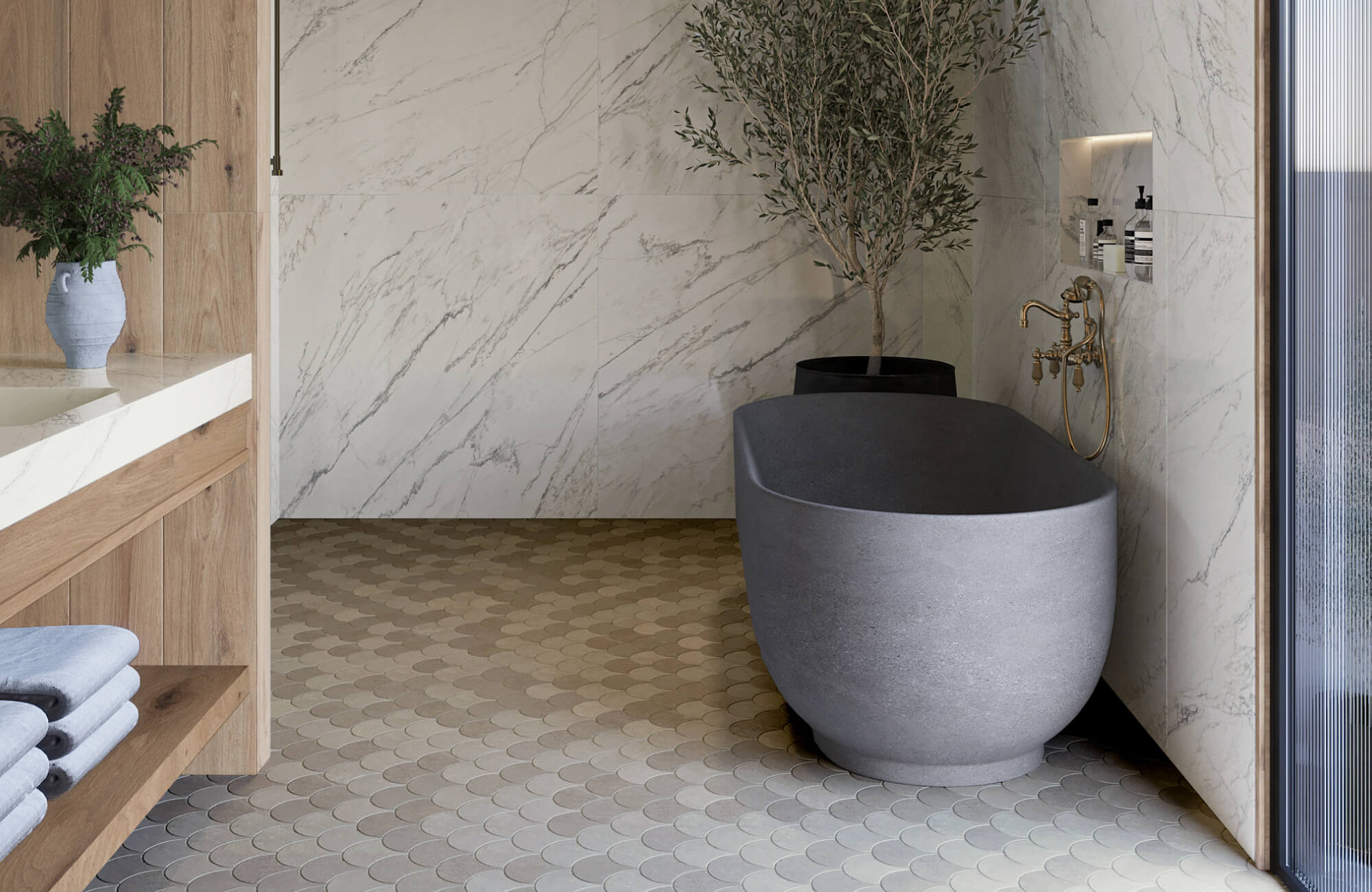
Just because a tile is built for the bathroom floor does not automatically mean it belongs on the wall, but in the right setting, it absolutely can create a striking and highly durable result. The appeal is easy to understand: bathroom floor tiles are often tougher, more moisture-resistant, and available in sophisticated finishes that can make shower surrounds, feature walls, or full-height applications feel far more architectural.
Still, weight, wall preparation, installation complexity, and visual balance all deserve careful consideration before moving forward. In this article, we’ll break down when bathroom floor tiles make sense on walls, where they can become more challenging, and how to approach the decision more confidently.

Advantages of Using Floor Tiles on Walls
Using bathroom floor tiles on walls can be a smart move when you want materials that do more than simply look good. Along with opening up modern design possibilities, they can bring added durability and moisture resistance to bathroom areas that deal with constant daily exposure, provided the installation conditions are right
Enhanced Durability and Longevity
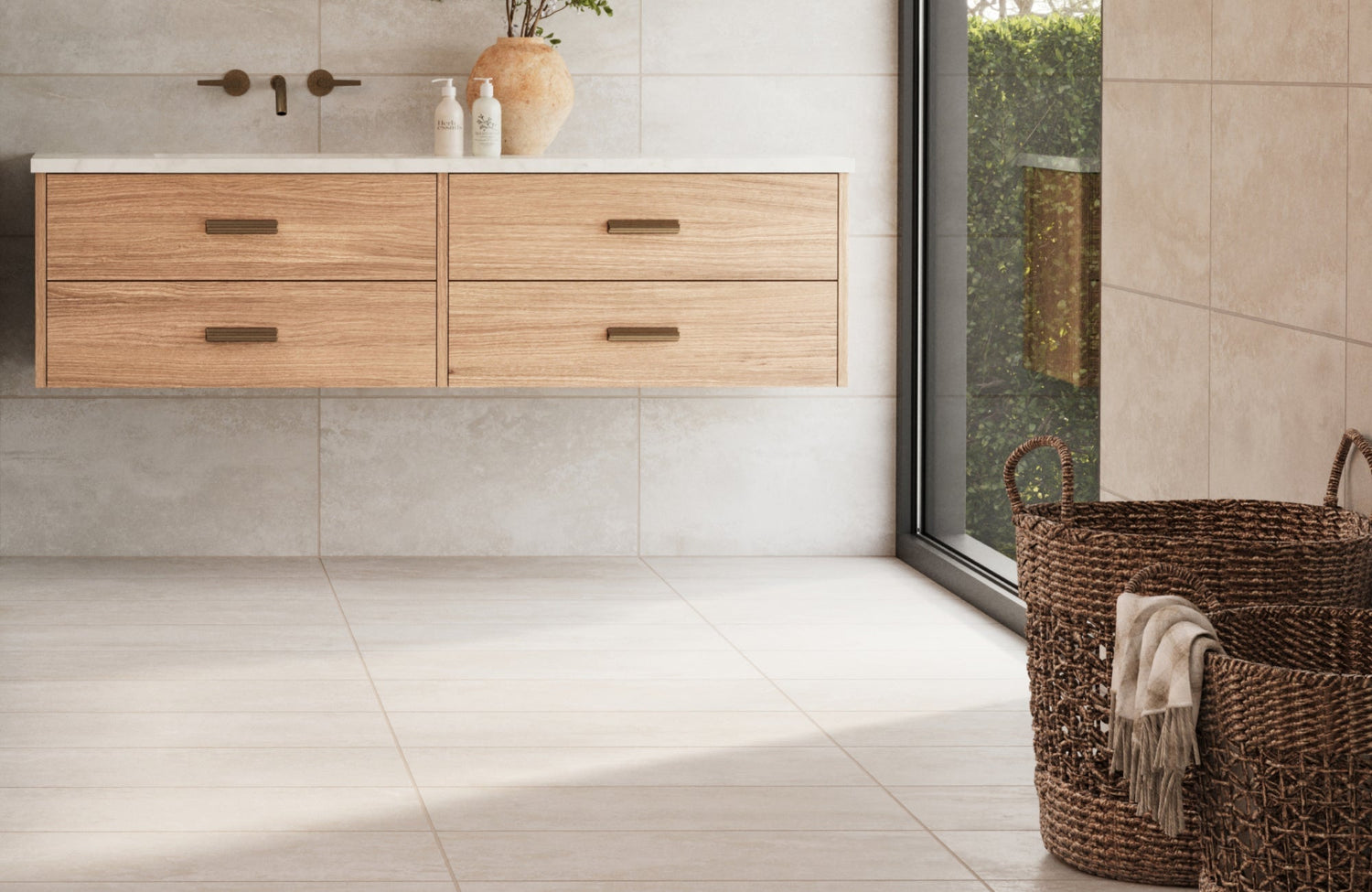
One of the biggest reasons homeowners consider floor tiles for walls is simple: they are built to handle tougher conditions. Unlike many wall tiles that are designed primarily with lighter-duty vertical applications in mind, floor tiles are made to withstand regular wear, moisture exposure, temperature fluctuations, and more demanding cleaning routines. That added resilience can be especially appealing around showers, bathtubs, or vanity areas where splashes, humidity, and daily use are constant. As shown above, our Marco 24 x 48 Matte Porcelain Tile in Mist is a strong example of this kind of performance, offering the dense durability and moisture resistance that make porcelain floor tile a compelling option when longevity matters just as much as appearance.
Cost-Effectiveness
Using bathroom floor tiles on walls can sometimes make financial sense, but not always in the way people first assume. The savings usually come less from the tile price itself and more from design consolidation, especially if you are already using the same tile on the floor and want a continuous floor-to-wall application rather than purchasing multiple materials. That kind of streamlined selection can simplify planning and create a more cohesive finished look. However, installation costs may rise if the tiles are heavier, larger, or more demanding to install vertically, so the real cost advantage depends on the specific tile choice and the complexity of the project rather than the category alone.
Versatility in Design and Style
Floor tile is no longer limited to purely utilitarian finishes, which is part of why this crossover works so well today. Many bathroom floor tiles now come in sophisticated stone looks, marble-inspired veining, wood visuals, textured surfaces, and large-format options that can create very different moods depending on the design direction you want. Whether you are after something warm and organic, sleek and minimal, or more dramatic and statement-driven, the available range gives you far more flexibility than the old assumption that floor tile is purely practical. In many cases, some of the most visually compelling bathroom surfaces now come from products originally designed for the floor.
Increased Property Value
A bathroom finished with durable, well-chosen materials tends to age much better both functionally and visually, which can absolutely support long-term home value. That does not mean simply putting floor tile on a wall automatically increases resale appeal, but a thoughtfully executed bathroom with timeless materials, cohesive finishes, and strong durability tends to leave a better impression than surfaces that show wear quickly. If you are already investing in a bathroom renovation, choosing materials that can hold up well over time often makes far more sense than selecting something based purely on short-term appearance.
Heat and Stain Resistance
Bathrooms deal with more than just water. Soap residue, hair products, skincare spills, cleaning chemicals, and fluctuating humidity all put surfaces through regular stress, which is where floor tile’s performance advantages can become especially useful. High-quality porcelain and ceramic options are typically non-porous or highly moisture-resistant, making them much easier to keep looking clean compared to more delicate surfaces. If your priority is a bathroom that still looks polished with realistic day-to-day use, that level of resistance can be a meaningful advantage rather than just a technical specification.

Challenges of Using Floor Tiles on Walls
Using bathroom floor tiles on walls can absolutely work, but it is not always as straightforward as choosing a tile you like and installing it vertically. Some of the biggest limitations have less to do with appearance and more to do with weight, installation requirements, maintenance realities, and how the finished design will actually function over time.
The Weight Changes The Installation Conversation
One of the biggest practical differences between bathroom floor tile and standard wall tile is weight, and that can affect much more than people initially expect. Floor tiles are typically denser and thicker because they are engineered to handle constant pressure, impact, and long-term wear underfoot. Once that same material moves onto a vertical surface, the installation becomes much more demanding because gravity is now working against the tile rather than with it. Larger formats especially can require stronger setting materials, temporary supports during installation, and much tighter installation precision to prevent shifting, lippage, or future adhesion issues. So while the finished look may feel seamless and elevated, getting there can be significantly more involved than a standard wall tile installation.
Your Bathroom Walls May Need More Prep Than You Think
Even if you have found a floor tile you love, the wall behind it may not be ready to support that decision without additional work. Standard drywall is not always the right substrate for heavier tile applications, especially in bathrooms where moisture exposure adds another layer of long-term stress. Depending on the tile size, material, and installation area, your contractor may recommend cement backer board, waterproof membranes, or other structural reinforcement before installation can even begin. That kind of prep is not necessarily a dealbreaker, but it can change the timeline, labor requirements, and overall cost of the project. If you are budgeting based only on the tile itself, this is one of the areas that can catch you off guard.
Cleaning May Not Feel As Easy As The Finished Look Suggests
A tile that looks beautiful in a showroom or performs brilliantly on the floor can behave very differently once it becomes part of your shower wall or vanity surround. Many bathroom floor tiles are intentionally textured or slip-resistant to improve traction, which is great underfoot but not always as convenient on a vertical surface where soap residue, shampoo splashes, skincare products, and dust can gradually build up. Those textured finishes can take a little more effort to wipe clean compared to smoother wall tile options. Grout can add another layer of upkeep, too, especially if the layout introduces more joints or smaller tile repetition. If your goal is a bathroom that feels easy to maintain with realistic everyday use, the cleaning experience deserves just as much thought as the visual outcome.
Some Design Directions Become More Limiting
Floor tiles can open up beautiful design possibilities, but they do not automatically offer the same flexibility as lighter wall-focused products. If you are imagining detailed decorative layouts, smaller accent work, curved surfaces, or very refined finishing transitions, the thickness and weight of floor tile can start working against that vision. Certain trims and edge profiles may not integrate as cleanly, and some installations simply become harder to execute with the level of polish you may be after. This does not mean floor tile limits good design, but it does mean some ideas translate much more naturally than others. If your bathroom concept leans heavily toward decorative or detail-driven, standard wall tile may sometimes give you more freedom to execute it cleanly.

Key Considerations Before Using Floor Tiles on Walls
Using bathroom floor tiles on walls can create a striking and durable result, but it is the kind of design decision that benefits from careful planning rather than impulse. Beyond choosing a tile you love, it is worth thinking through how the wall will support the material, how the scale will affect the room, and whether the final look aligns with how you want the bathroom to feel. Getting those decisions right early makes the finished installation far more likely to feel intentional, practical, and built to last.
Tile Size and Wall Strength
The size and weight of bathroom floor tiles matter much more once they move from the floor onto a vertical surface. Unlike lightweight wall tiles, floor tiles place significantly more stress on the substrate, which means the wall needs to be able to support that added load long term, not just during installation.
Structural Requirements
A successful installation starts with a properly prepared surface. Depending on the tile size and installation area, standard drywall may not provide enough support on its own, especially in moisture-prone bathrooms, as mentioned earlier. Reinforcements such as cement backer board, waterproof underlayment, or additional framing support may be necessary to create a more stable foundation and reduce the risk of detachment over time.
Tile Size Impact
Larger floor tiles can create a beautifully clean and expansive look, but they also make installation much more demanding. As shown above, our Wren 12x24 Matte Porcelain Tile in Dune delivers that sleek, uninterrupted aesthetic many homeowners love, though larger formats require much more precise handling and reliable adhesion because of their size and weight. Smaller floor tiles may feel easier to manage during installation, but they still require proper bonding materials and sound wall preparation to perform well over time. The goal is not simply choosing the size that looks best, but the one that realistically suits both your design vision and installation conditions.
Installation Considerations
Because gravity is now part of the equation, the installation process becomes much less forgiving. Heavy-duty thin-set mortars, especially those with polymer additives, are often essential for securing heavier floor tiles vertically. In some installations, temporary ledger boards or support systems may also be needed while the adhesive cures to prevent shifting or tile slippage. This is one of those areas where professional installation often becomes less about convenience and more about protecting the long-term integrity of the finished result.
Bathroom Size and Layout
The bathroom itself should help guide whether floor tiles make sense on the walls and how far that design move should go. In smaller bathrooms, heavier-looking tiles, darker tones, or highly textured finishes can sometimes make the space feel more enclosed if they dominate too much wall area. Lighter colors, softer finishes, or more strategic placement can help preserve a more open and breathable feel instead. Larger bathrooms naturally offer much more flexibility, where full-height floor tile applications can create a more immersive, spa-like effect without visually crowding the room. The goal is not just making the tile fit physically, but making sure it supports how you want the room to feel once everything is in place.
Design Goals and Preferences
Using bathroom floor tiles on walls works best when the decision supports a clear design direction rather than simply pushing durability alone. The visual outcome should still feel balanced, intentional, and aligned with how you want the bathroom to function and read as a finished space.
Contrasting Elements for Depth and Texture
Using floor tile on every surface is not the only path to a cohesive design. In many cases, pairing floor tile with more traditional wall tile creates a stronger result because the contrast introduces depth without overwhelming the space. A statement material like our Aniston 24x48 Matte Porcelain Tile in Calacatta Viola, for example, can create a dramatic focal wall when balanced with quieter surrounding finishes. Layering different textures or finish types can also make the bathroom feel much more thoughtfully designed rather than visually flat.
Considering Light Reflection and Room Ambiance
Finish selection can completely shift how the bathroom feels once everything is in place. Glossy or polished surfaces reflect more light, which can help smaller bathrooms feel brighter and a bit more open, while matte or textured finishes tend to create a softer, more grounded atmosphere with a quieter visual presence. If you are unsure how those differences will actually translate in your own space, modern tools like our augmented reality (AR) visualization can make the planning process much more practical by letting you preview tile styles, colors, and layouts before committing to the installation.
Budget and Installation Costs
Using bathroom floor tiles on walls can absolutely be worth the investment, but it helps to budget with the full picture in mind. The tile itself is only one part of the equation, since wall reinforcement, specialized adhesives, additional prep work, and professional labor can all influence the final cost. In some cases, choosing a durable porcelain floor tile across multiple surfaces may help simplify material selection and create a more cohesive design, but installation complexity can quickly offset any perceived savings if the project becomes technically demanding. Thinking through those practical costs early helps prevent design decisions from becoming budget surprises later.

Maintenance and Cleaning
Once bathroom floor tiles are installed on walls, maintenance is less about heavy upkeep and more about using the right habits so the finish continues to look intentional instead of gradually losing its appeal. Smooth porcelain surfaces are generally easy to wipe down, but bathrooms naturally collect soap residue, mineral deposits, hair product splashes, and moisture film that can dull the surface over time if ignored. A pH-neutral cleaner or mild detergent mixed with warm water is usually enough for routine cleaning without gradually damaging the tile finish or grout. Working from top to bottom also helps prevent dirty water from running across sections you have already cleaned, which makes the process much less frustrating. If the floor tile you chose has texture or slip-resistant detailing, expect a little more hands-on cleaning since buildup can settle into those surface variations much more easily than on smoother wall tiles.
Grout usually ends up being the part that asks for the most attention, not the tile itself. Even when the tile surface handles moisture well, grout lines are naturally more porous and much more likely to trap residue, discolor over time, or become a breeding ground for mildew if the bathroom stays damp too often. That becomes even more relevant if you use smaller-format floor tiles or layouts with heavier grout presence, since there are simply more joints to maintain. A consistent cleaning routine with a grout-safe cleaner and a firm brush can go a long way before deeper staining becomes an issue. Sealing grout every year or two, depending on the material and bathroom conditions, also makes a noticeable difference by helping moisture and contaminants stay closer to the surface instead of soaking in.
It also helps to think about maintenance based on how the bathroom is actually used, rather than treating every tiled wall the same. A guest bathroom that sees occasional use will naturally be much easier to maintain than a primary shower that deals with daily humidity, shampoo residue, and constant water exposure. If your wall tile sits near a vanity, beauty products and toothpaste splatter may become the bigger issue instead. The sooner residue gets wiped away, the easier the upkeep tends to be, especially with products that can leave stubborn marks if left to sit too long. Floor tiles can absolutely be a durable wall solution, but like most material choices, they stay looking their best when the maintenance routine matches the realities of the space.
Making Bathroom Floor Tiles Work Beautifully On Walls
Using bathroom floor tiles on walls can create a bathroom that feels far more intentional, durable, and visually elevated than many homeowners initially expect. When the tile choice, wall preparation, and overall design direction are thoughtfully aligned, this approach can deliver everything from seamless spa-like surfaces to bold statement walls that hold up beautifully in moisture-heavy environments. The key is treating it as a strategic design decision rather than simply swapping one tile category for another.
If you are weighing tile sizes, finishes, layouts, or wondering whether a specific floor tile truly makes sense for your bathroom walls, our Personalized Design Consultation can help you make those decisions with much more confidence. From balancing durability with aesthetics to refining a bathroom that feels cohesive from floor to wall, our team can help you create a space that feels both beautifully resolved and built to last.